The Maryland Zoo in Baltimore Photos of Maryland Zoo's Main Valley from 1990-2004?

TheGytrash

Well-Known Member
Does anyone have any photos of animal exhibits the old Main Valley area of the zoo from the 90's-early 2000's? I've been searching Google for years and you'd be surprised how hard it is to find anything. (The tiger exhibit would be my top priority, but anything would be good.)

I first visited this zoo as a kid in 2002-2003, when the Main Valley was on its last legs. I have vague but specific memories of a tiger, a kookaburra, a caracal, and perhaps either a mountain lion or snow leopard (or both?) I remember the signage said something about how tiger was the Towson mascot and I felt like its cage felt small and bare for it. While the Main Valley cages were antiquated, I remember most had a fair amount of natural materials/foliage and enrichment.

Revisiting the zoo in recent years and seeing the old Main Valley exhibits on display was such a blast from the past and gave me weird deja vu about my first visit. But all of the signage seems to be about its earlier years and I'd love to know more about what it was like right before closing.

Does anyone have old photos, maps, or even memories they'd to share of this time period?
 
I have a pretty large collection that I’m organizing of photos from that era. The vast majority of them aren’t mine which is why I don’t share them. They’re cobbled together from newspapers and old reports.

You are correct in remembering snow leopards - they were one of the last occupants of the Valley before it's closure (they occupied the row of cages next to the current prairie dog exhibit). The valley had puma up until the very early 2000s. The last occupants of the old-style cages were - snow leopard, Arctic fox, red ruffed lemur, bobcat, caracal, bald eagle, crocodile monitor (seasonally), white-cheeked gibbon, and Amur tiger (called Siberians at the time, and yes, Fasier was the mascot of Towson U) at the end. When I was kid growing up in Baltimore, those exhibits held sun bear, spectacled bear, spotted hyena, jaguar, puma, leopard, and red panda. Before that, they held lions, peccary, bushpig, macaques, brown bear, polar bear, Asian black bear, and a host of other species.

The kookaburra and other birds were arranged in a set of kiosks on the opposite side of the path, alongside the Crane Barn. The Mansion House (the admin building on the hill) was the Bird House until the 1970s, when the birds were relocated, half to those kiosks, half to a since-removed aviary in the Giraffe House.

The late 1990s saw a lot of the larger animals phased out for smaller ones, cages being combined to make fewer, larger habitats, and the addition of more natural features. They actually weren't too too bad in the end with the limited, smaller species selection. Infrastructure was very poor, though. In the early 2000s the zoo looked at adding some heaters down there to make the exhibits more suitable for tropical mammals, only for the electricians to say that the system couldn't handle even a tiny bit more strain.

Most of those cages (except for a few structures deemed historically significant, which will be preserved) will be demolished to make way for the zoo's new masterplan.
 
Oh wow, thank you! Reading your description, I could suddenly picture so much of what you were talking about. That first visit to the zoo was such a cherished childhood memory and although I returned only a few years later, it felt totally different without the Main Valley. I remember seeing an old overgrown cage over the wall blocking off the Main Valley on my next few visits and wondering if any of the animals were still back there. It gave off Secret Garden vibes knowing that whole section of the zoo was walled off.

Where in the zoo were the tigers located? In my memory, they were near the polar bear pool (during my visit they'd already announced Polar Bear Watch but the polar bears were still in the old pool), but when I walked through the 'ruins' of Main Valley recently, I didn't see any enclosures like the one I'm remembering, so my mind is probably playing tricks on me.

(It's also possible the tigers had access to multiple cages joined together, like you said, and I assumed they only had the one. I was used to the National Zoo, where the tigers are VERY far from people, so this slightly agitated tiger so close to me made me nervous. If I remember correctly, there were signs warning about it spraying pee, so that's probably why it stood out the most to me.)
 
The tiger exhibit was the last cage of the Main Valley, where the snowy owl is now, which was renovated/expanded for them in late 80's or early 90's, I forget which. Prior to that, they were in one of the smaller barred cages. It was at this point that the zoo transitioned from Bengals (except for a brief period with Sumatrans) to Amur. They didn't have conjoined cages, just that one larger cage at the end.

As part of the 2000 master plan (the one that resulted in Polar Bear Watch), the wading bird exhibits were supposed to be replaced with a larger Siberian tiger exhibit, but that was scraped when things went pear-shaped in 2004/2005 and the Valley was shuttered.
 
Is that grizzly exhibit where the prairie dogs are now?
Yes, but not grizzly bears - there were two paired exhibits for Kodiak bears. The current prairie dog exhibit is where the first and largest of the old Kodiak exhibits was. The second bear pit is still there, but not visible from the public area (on the road up to the old Mammal House). The last occupant of those exhibits was one of the American black bears, which used to be where the bobcats are now.
 
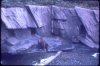
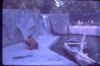
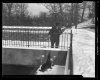
The sealion photo was emptied and had a wall constructed and turned into the former prairie dog exhibit. Polar beats were on exhibit just behind the keeper. The male was Anana if I remember right.
At one point one of the smaller cages housed an aardwolf called Arthur and Golden pheasants joined him temporarily. The other aardwolves all lived in the terrible old mammal house at top of hill.
 
I know the Old Mammal House is off-limits and not viewable, and I know I never saw it as a kid (it would have already been closed), but I'm so curious to know what it looked like.

I think I remember aardwolves and the black bear from African Journey and Maryland Wilderness respectively when I visited in 2002-2003.
 
The sealion photo was emptied and had a wall constructed and turned into the former prairie dog exhibit. Polar beats were on exhibit just behind the keeper. The male was Anana if I remember right.
At one point one of the smaller cages housed an aardwolf called Arthur and Golden pheasants joined him temporarily. The other aardwolves all lived in the terrible old mammal house at top of hill.
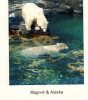
Anana was a female. The male at that time was Magnet. Aardwolves did live in the Valley and the Mammal House, as well as Chimp Forest and a small enclosure by warthog
 
Alaska was already at the zoo with Magnet in the old polar bear exhibit on my first visit-- that's the only photo of the Main Valley I have from the trip!
 

Attachments

  • magney alaska.jpg
    magney alaska.jpg
    41.9 KB · Views: 29
Oh, I wasn't intending to argue, I just find it interesting to see how much changed between 1990-2004. It seems like Alaska only lived in the old exhibit for a very short time before Polar Bear Watch opened (I think she was a new arrival at the zoo when I went.) Then I realized that despite creating a thread for people to share Main Valley photos, I hadn't even shared MY one Main Valley photo!
 
I'm very curious about the old mammal house, as well!
Any particular questions about it? I've got pictures somewhere, but I never took many growing up - it was pre-digital camera, and it was very tough getting photos in there. I've been in it since it closed, but can't share those.

Design wise it was a pretty basic structure - all of the exhibits were on a central island (a combination of small, glass-fronted cages, bar-fronted cages - bars welded, to prevent apes from unscrewing anything - set behind glass, and a single large day-room, which was originally a playroom for young apes, but towards the end was as mixed-species aardwolf/hyrax/hornbill/squirrel exhibit). When he was designing it, Arthur Watson opted not to have outdoor access for the exhibits - he hated going to zoos and having animals darting back and forth between the indoor and outdoor exhibits, making them hard for visitors to see. The strangest feature of the building, I always thought, was the floor in the public area, which had a weird slant (the idea being that adults and kids would stand on different levels to see the animals - in reality it would be an ADA nightmare in modern times).

The basement is cavernous, and was extensive holding space for small animals, though not in the best of conditions, especially but modern standards. Prior to the hospital being built, it also served as sort of a clinic.

In the 70s or 80s there was money set aside to expand the building to make a larger gorilla habitat with outdoor access, but as happened on more than one occasion, Watson ended up using the money for an entirely different project (yet another thing which wouldn't fly these days).
 
Last edited:
Any particular questions about it? I've got pictures somewhere, but I never took many growing up - it was pre-digital camera, and it was very tough getting photos in there. I've been in it since it closed, but can't share those.

Design wise it was a pretty basic structure - all of the exhibits were on a central island (a combination of small, glass-fronted cages, bar-fronted cages - bars welded, to prevent apes from unscrewing anything - set behind glass, and a single large day-room, which was originally a playroom for young apes, but towards the end was as mixed-species aardwolf/hyrax/hornbill/squirrel exhibit). When he was designing it, Arthur Watson opted not to have outdoor access for the exhibits - he hated going to zoos and having animals darting back and forth between the indoor and outdoor exhibits, making them hard for visitors to see. The strangest feature of the building, I always thought, was the floor in the public area, which had a weird slant (the idea being that adults and kids would stand on different levels to see the animals - in reality it would be an ADA nightmare in modern times).

The basement is cavernous, and was extensive holding space for small animals, though not in the best of conditions, especially but modern standards. Prior to the hospital being built, it also served as sort of a clinic.

In the 70s or 80s there was money set aside to expand the building to make a larger gorilla habitat with outdoor access, but as happened on more than one occasion, Watson ended up using the money for an entirely different project (yet another thing which wouldn't fly these days).

Thank you for that information :) I would love photos if you have the time! The large basement is interesting, in comparison with the extremely tiny back areas for the cave and other structures in the Maryland area. Is there any current building in a zoo that is similar, shape-wise?
 
I'm very curious about the old mammal house, as well!
It was absolutely terrible. Dont have photos. Classic stuff, small tiled cells behind bars with keeper walk in front and then glass windows through which guests viewed animals. I remember 6 banded armadillo, crested mangabeys and aardwolves but mostly it was primates
 
I'm curious to know what the building looked like from the outside! I can't find any pics! (Or even where it is geographically located on the property.)
 
Back
Top