Auckland Zoo Auckland Zoo News 2024

Yes, they are wild. The nest site (Captain’s logs) are situated in the open air plaza of the Australian precinct. It’s great to see wild birds consider Auckland Zoo’s grounds a suitable nesting site! :)
This is adorable! By the looks of things, it's completely wild kingfishers who have made their nest in this tree!
Yeah, I assumed that. I thought it was worth mentioning as those who frequently visit may want to look out for them during their next visit.:)
 
This is amazing. A little while ago, there were birds nesting in the tree outside the siamang habitat, but I was unable to determine which species of bird they were.

I remember as a child reading in Kid’s Zone about an observational study a group of students had carried out on the zoo’s orangutans and chimpanzees (early 2000’s). There was apparently a bird’s nest (species unspecified) in the vicinity of the chimpanzee exhibit and one of the chicks fell into the exhibit and was killed/eaten by the then adolescent Luka during their afternoon of observation. I remember it intrigued me as although I was a child, I was very much aware chimpanzees weren’t peaceful, fruit/vegetable eating creatures.

Your comment about the Siamang exhibit made me think of this as the old chimpanzee exhibit apparently held wolves prior and during the demolition of the ape exhibits in 2017, they uncovered disused wolf dens underground.
 
I remember as a child reading in Kid’s Zone about an observational study a group of students had carried out on the zoo’s orangutans and chimpanzees (early 2000’s). There was apparently a bird’s nest (species unspecified) in the vicinity of the chimpanzee exhibit and one of the chicks fell into the exhibit and was killed/eaten by the then adolescent Luka during their afternoon of observation. I remember it intrigued me as although I was a child, I was very much aware chimpanzees weren’t peaceful, fruit/vegetable eating creatures.

Your comment about the Siamang exhibit made me think of this as the old chimpanzee exhibit apparently held wolves prior and during the demolition of the ape exhibits in 2017, they uncovered disused wolf dens underground.

I too have always been aware of chimpanzee habits and how they will occasionally hunt for meat in the wild. That is fascinating, that disused wolf dens were found, it makes me wonder what else might be hidden around the zoo!

Speaking of birds and siamang, in 2022 I witnessed a quite alarming incident where Intan and Kera, on the aerial pathways, caught a seagull and appeared to be playing "tug of war" with the squawking bird to the dismay of several visitors who thought that the gibbons would kill and eat the gull. The siamang pair eventually let it go, however. And I once saw the two of them pursued from the aerial pathways back to their habitat by a flock of seagulls, and on my last visit to the zoo, Intan was up there teasing seagulls while Kera was feeding nearby!
 
I too have always been aware of chimpanzee habits and how they will occasionally hunt for meat in the wild. That is fascinating, that disused wolf dens were found, it makes me wonder what else might be hidden around the zoo!

That’s one of the many things I like about Auckland Zoo, the history. The re-purposing of historic buildings like the Giraffe House and the Elephant House, the retention of old exhibits (like the bear pit housing red pandas) and features such as old bridges and hidden pathways. The original walls of the 1987 orangutan exhibit are used in the current complex; and there’s the original path leading under the old viewing deck, which brings back a lot of memories from my childhood and teen years.

They were doing some work on the old bridge within the New Zealand precinct and I confirmed my assumptions this was strengthening work were correct with the construction team. One said they can’t get rid of the bridge because it’s historic and I replied, “Good.”
 
That’s one of the many things I like about Auckland Zoo, the history. The re-purposing of historic buildings like the Giraffe House and the Elephant House, the retention of old exhibits (like the bear pit housing red pandas) and features such as old bridges and hidden pathways. The original walls of the 1987 orangutan exhibit are used in the current complex; and there’s the original path leading under the old viewing deck, which brings back a lot of memories from my childhood and teen years.

They were doing some work on the old bridge within the New Zealand precinct and I confirmed my assumptions this was strengthening work were correct with the construction team. One said they can’t get rid of the bridge because it’s historic and I replied, “Good.”

I too am fascinated by the zoo's history and architecture, and occasionally it's fun, when not visiting the animals, to have a look around and spot traces of the "old zoo" I remember as a child. If I remember correctly, someone mentioned on here that part of the old polar bear exhibit still existed, though I was unable to see much due to the children's birthday party area that now stands there being fenced off.
 
I too am fascinated by the zoo's history and architecture, and occasionally it's fun, when not visiting the animals, to have a look around and spot traces of the "old zoo" I remember as a child. If I remember correctly, someone mentioned on here that part of the old polar bear exhibit still existed, though I was unable to see much due to the children's birthday party area that now stands there being fenced off.

That was me. I was told the Polar bear dens are still intact and used as a zoo storage facility. I don’t have a lot of zoo dreams (surprisingly) but have dreamt about going in there several times now; each time imagining it differently.

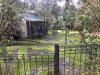
This is a photo I took of the area. The main wall ran parallel behind the shed you can see to the left. Photographs of the Polar bear exhibit throughout the decades showed a large Willow tree overhanging the semi-circle shaped exhibit, with the pool situated approximately where the grass is.

upload_2024-2-9_19-38-19.jpeg
 

Attachments

  • upload_2024-2-9_19-38-19.jpeg
    upload_2024-2-9_19-38-19.jpeg
    289 KB · Views: 156
That was me. I was told the Polar bear dens are still intact and used as a zoo storage facility. I don’t have a lot of zoo dreams (surprisingly) but have dreamt about going in there several times now; each time imagining it differently.

This is a photo I took of the area. The main wall ran parallel behind the shed you can see to the left. Photographs of the Polar bear exhibit throughout the decades showed a large Willow tree overhanging the semi-circle shaped exhibit, with the pool situated approximately where the grass is.

View attachment 684518

Wow, thanks for this! I did wonder if it was you who posted about the polar bear dens. I did try to see them, but there's no really good way to view them - most places where you theoretically could stand to see them are blocked off for security reasons.

Thank you for the photo, that is an amazing shot. I think the original wall of the bear pit with the icicles is part of that area, but it's completely overgrown now. I do wish that part could have been preserved somehow, as it was quite spectacular to look at.
 
Two further Greater Flamingo chicks have hatched.

The first chick hatched on February 7 with the second following the day after (February 8).

Foster parents of the two chicks are: Errol & Zeni and Fuchsia & Jay.

Announced on socials:

More exciting news from this flamboyance of flamingos!

The flock have recently welcomed two more plucky flamingo chicks - the second hatched on the 7 February, with the third winging its way out the next day.

This breeding season our skilled keepers have been trialling a new approach to clutch management. Our bird team will monitor all of the eggs laid, and once a fertile egg is confirmed it is strategically placed in the nest of a flamingo pair that has laid an infertile egg. This ensures that birds that have not successfully produced fertile eggs can also have a chance at parenting and allows for successful breeders to lay a second clutch of eggs that they can then rear themselves.

Bird keeper Sarah shares her excitement, “It’s awesome to witness foster parents Errol & Zeni and Fuchsia & Jay embrace parenthood for the first time and successfully care for their adoptive chicks. It also means we will welcome more chicks this season, which is fantastic news!”
 
Two further Greater Flamingo chicks have hatched.

The first chick hatched on February 7 with the second following the day after (February 8).

Foster parents of the two chicks are: Errol & Zeni and Fuchsia & Jay.

Announced on socials:

More exciting news from this flamboyance of flamingos!

The flock have recently welcomed two more plucky flamingo chicks - the second hatched on the 7 February, with the third winging its way out the next day.

This breeding season our skilled keepers have been trialling a new approach to clutch management. Our bird team will monitor all of the eggs laid, and once a fertile egg is confirmed it is strategically placed in the nest of a flamingo pair that has laid an infertile egg. This ensures that birds that have not successfully produced fertile eggs can also have a chance at parenting and allows for successful breeders to lay a second clutch of eggs that they can then rear themselves.

Bird keeper Sarah shares her excitement, “It’s awesome to witness foster parents Errol & Zeni and Fuchsia & Jay embrace parenthood for the first time and successfully care for their adoptive chicks. It also means we will welcome more chicks this season, which is fantastic news!”

It’s great to see double-clutching used as a method for increasing the flock size. The keepers had all but written off the 2024 breeding season due to the disruption to the flock in renovating their exhibit last year; but instead, it’s seen the record of three surviving chicks in one year matched (all going well); with the potential this record could be broken!
 
Two further Greater Flamingo chicks have hatched.

The first chick hatched on February 7 with the second following the day after (February 8).

Foster parents of the two chicks are: Errol & Zeni and Fuchsia & Jay.

Announced on socials:

More exciting news from this flamboyance of flamingos!

The flock have recently welcomed two more plucky flamingo chicks - the second hatched on the 7 February, with the third winging its way out the next day.

This breeding season our skilled keepers have been trialling a new approach to clutch management. Our bird team will monitor all of the eggs laid, and once a fertile egg is confirmed it is strategically placed in the nest of a flamingo pair that has laid an infertile egg. This ensures that birds that have not successfully produced fertile eggs can also have a chance at parenting and allows for successful breeders to lay a second clutch of eggs that they can then rear themselves.

Bird keeper Sarah shares her excitement, “It’s awesome to witness foster parents Errol & Zeni and Fuchsia & Jay embrace parenthood for the first time and successfully care for their adoptive chicks. It also means we will welcome more chicks this season, which is fantastic news!”
When the California Condor got down to 21 birds in the wild they were all removed for captive breeding, It was found after a few years that they could increase the numbers rapidly by double clutching them and in some cases triple clutching them, It helped build up their numbers quickly!, Perhaps this should use used more often!
 
When the California Condor got down to 21 birds in the wild they were all removed for captive breeding, It was found after a few years that they could increase the numbers rapidly by double clutching them and in some cases triple clutching them, It helped build up their numbers quickly!, Perhaps this should use used more often!

This method has been used in the region for Andean condor and Little blue penguin. Aside from building up numbers in Auckland’s flamingo flock, it has the added benefit of exposing non-breeding birds to the experience of raising young. It’s an enriching experience for the whole flock and is a commonsense way to maximise reproductive output.
 
Release of critically endangered New Zealand fairy tern:

From socials:

New Zealand fairy tern are New Zealand’s most endangered bird with fewer than 40 surviving today. This breeding season marks the fourth year of the Zoo’s conservation partnership with the Department of Conservation to hatch and hand-rear New Zealand fairy tern for release – with the goal to boost their numbers in the wild.

Earlier this summer, four juvenile birds were transferred from the Zoo to a purpose-built aviary within a predator-proof fenced area. Here, the chicks could develop safely, hone their flight skills and learn to fish ‘on the wing’, under the care of Zoo and DOC, before joining the adult New Zealand fairy tern that frequent this area.

One of the four Zoo-reared birds was large enough to be equipped with a GPS tracker prior to leaving the aviary at Te Arai, which has already started to provide valuable data to the conservation team.
 
Sumatran Tiger Cub Named

The cub has been named Cahya:


Sumatran tiger cub Cahya is thriving | Auckland Zoo News

From socials:

Tiger cub update! Zayana’s eight-week-old female cub now weighs in at over 5kg and is growing more active and playful by the day!

Our carnivore team have chosen the name Cahya (pronounced Cha-hi-ya) - which is the colloquial, shortened form of the Indonesian language word ‘cahaya’, and means ‘light.’
 
With these recent hatches, how many flamingos does the zoo have now?

I believe they have 25 flamingos (including the three chicks from this year). It’s great to see the renovations to the exhibit have already had a positive impact on breeding success, with the possibility of more chicks to come; though my preference would have been for a larger exhibit to better manage the growth of the flock into the future.
 
I believe they have 25 flamingos (including the three chicks from this year). It’s great to see the renovations to the exhibit have already had a positive impact on breeding success, with the possibility of more chicks to come; though my preference would have been for a larger exhibit to better manage the growth of the flock into the future.

It was my hope that the zoo would incorporate a larger flamingo exhibit into a new African precinct when elephant Burma departs for Adelaide, instead of the larger rhino complex they now have planned.
 
I believe they have 25 flamingos (including the three chicks from this year). It’s great to see the renovations to the exhibit have already had a positive impact on breeding success, with the possibility of more chicks to come; though my preference would have been for a larger exhibit to better manage the growth of the flock into the future.
Went to the zoo this Thursday and am happy to report there are five chicks now this year, the highest number of chicks they have had. The two new chicks are definitely recent as they are still under the parents while the three older chicks can now be seen wading in the pond with the other flamingos.
 
Went to the zoo this Thursday and am happy to report there are five chicks now this year, the highest number of chicks they have had. The two new chicks are definitely recent as they are still under the parents while the three older chicks can now be seen wading in the pond with the other flamingos.

That’s fantastic news. While the mortality rate of chicks is reasonably high, they stand an excellent chance of exceeding the record of three surviving chicks in one season. If all three chicks survive, that will take them to around 27 birds, meaning their capacity of 40 flamingos could be reached within a few years. The larger flock size may even encourage reproduction of unrepresented founders.

Hamilton Zoo’s wetlands has been stagnant for many years. I’d love to see them drain it and convert it into a flamingo habitat if they were able to receive surplus from Auckland Zoo.
 
North Island brown kiwi released:

From socials:

Four healthy juvenile kiwi that were hatched and reared at the Zoo were recently released on predator-free Rotoroa Island NZ in the Hauraki Gulf.

This includes the two chicks that we previously shared updates on, that hatched on Christmas and Boxing Day respectively. Skilled bird keepers Nat and Jasmine gave the kiwi their last weigh-in and health check before leaving for Rotoroa. On this creche island, kiwi can grow bigger and stronger without the threat of introduced predators.
 
Auckland Zoo assists in hand-rearing of Fatu Hiva monarch chick:

Auckland Zoo and the Polynesian Ornithological Society achieve first breakthrough for bird on the brink | Zoo News

From socials:

An incredible breakthrough for a bird on the brink!

A precious critically endangered Fatu Hiva monarch chick is currently being hand-reared as part of an emergency conservation partnership between Auckland Zoo and Manu-SOP – bringing the world-wide total of this species to 20 birds!

The 14-gram chick was removed from a precariously tilting tree nest to prevent it from falling and is being cared for at a special purpose-built intensive management facility set up on Fatu Hiva island by the Zoo and SOP Manu.

Auckland Zoo curator of birds Dr Juan Cornejo, who is leading the partnership’s ex-situ intensive management project, says this latest achievement – a first for this genus of flycatchers - is a promising breakthrough after an incredible amount of work by the team over the past year.

Once fledged, this newest addition to the Fatu Hiva population will be moved from its brooder to an outdoor aviary on the island, screened to protect it from mosquitos, and therefore malaria.
 
Back
Top