Melbourne Zoo Melbourne Zoo Review (November/December 2023)

Part Four: Wild Sea

I could have crammed Wild Sea into my first visit, but I didn’t want to cram Wild Sea; I wanted to savour it. Wild Sea opened in December 2009 and as such, is a relatively modern precinct.

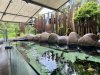
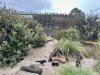
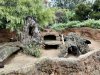
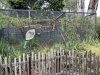
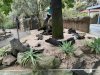
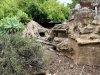
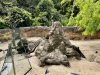
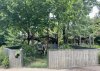
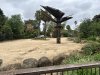
It begins with a winding track featuring an example of a New Guinea fishing trap. The space began life as a pelican exhibit and I can’t help but feel some wild rescues would enhance what is effectively an empty exhibit.

Old pelican exhibit/New Guinea fishing trap:

upload_2024-5-17_22-37-3.jpeg

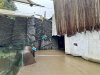
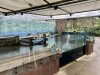
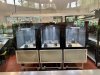
The first occupied exhibit is an open air tank, housing Port Jackson shark and Fiddler rays; as well as other smaller fish species. It’s not especially large, but offers good views and was attracting reasonable interest.

Shark/ray tank:

upload_2024-5-17_22-0-6.jpeg

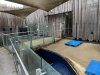
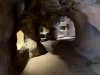
Adjacent to the shark/ray tank is the entrance to the underwater viewing window for the pinniped pool. I thought the architecture was intriguing and befitting a facility of Melbourne Zoo’s prestige.

Entrance to underwater viewing:

upload_2024-5-17_22-3-3.jpeg

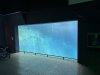
The pinniped underwater viewing was spectacular. The atmosphere created by the light of the viewing window juxtaposed against the darkness of the building was throughly immersive. It reminded me of aquariums I’ve visited and brought back childhood memories of Marineland Napier’s dolphin underwater viewing tunnel. There were no cetaceans to be found in this pool; but rather an Australian sea lion (Bella) and two New Zealand fur seals (Iha and Pania).

Underwater viewing window:

upload_2024-5-17_22-8-13.jpeg

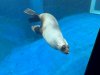
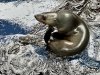
Bella is without a doubt one of the most charismatic animals at Melbourne Zoo and the most interactive pinniped I’ve seen at any zoo. She holds a fascination for soft toys and would dart from the main window to the side window in pursuit of any presented to her, wowing the crowds. With the exception of the elephants, I don’t believe I saw a single exhibit with greater visitor engagement than the pinniped pool.

Bella:

upload_2024-5-17_22-13-23.jpeg

Within the building is a series of small tanks housing species like Pot-bellied sea horse. They livened up the walls of the access way leading to the outdoor viewing of the pinniped pool.

Outside is the entrance to the pinniped holding area/dens. The pinnipeds would periodically emerge from the depths and bask in the sunshine, attracting attention with their creaking vocalisations.

Pinniped beach/dens:

upload_2024-5-17_22-20-14.jpeg

Basking in the sun:

upload_2024-5-17_22-22-11.jpeg

I was surprised to see the pinniped pool features a wave machine, something I didn’t know prior to visiting. It operates throughout the day and greatly excites the pinnipeds.

Wave machine:

upload_2024-5-17_22-25-14.jpeg

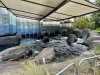
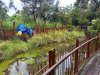
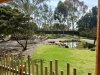
The Little blue penguin exhibit followed on from the pinnipeds and consisted of a decent sized open air pool and adjoining beach. The penguins weren’t particularly active on my visit, though I’ve always found this species of penguin reserved compared to other species.

Penguin pool:

upload_2024-5-17_22-28-3.jpeg

Penguin beach:

upload_2024-5-17_22-28-40.jpeg

Overall, I was really impressed with the Wild Sea precinct. It’s basically an improved version of Auckland Zoo’s Sea Lion and Penguin Shores, which opened in 2001 and is a complex I’ve always considered to have aged well. As mentioned, the pinnipeds were the stars of the show and I thought the wave machine was an innovative way to enhance the lives of the pool’s occupants.
 

Attachments

  • upload_2024-5-17_22-0-6.jpeg
    upload_2024-5-17_22-0-6.jpeg
    245.7 KB · Views: 129
  • upload_2024-5-17_22-3-3.jpeg
    upload_2024-5-17_22-3-3.jpeg
    208.4 KB · Views: 133
  • upload_2024-5-17_22-8-13.jpeg
    upload_2024-5-17_22-8-13.jpeg
    114.2 KB · Views: 133
  • upload_2024-5-17_22-13-23.jpeg
    upload_2024-5-17_22-13-23.jpeg
    84.3 KB · Views: 119
  • upload_2024-5-17_22-20-14.jpeg
    upload_2024-5-17_22-20-14.jpeg
    222.9 KB · Views: 125
  • upload_2024-5-17_22-22-11.jpeg
    upload_2024-5-17_22-22-11.jpeg
    321.5 KB · Views: 139
  • upload_2024-5-17_22-25-14.jpeg
    upload_2024-5-17_22-25-14.jpeg
    258 KB · Views: 124
  • upload_2024-5-17_22-28-3.jpeg
    upload_2024-5-17_22-28-3.jpeg
    213.8 KB · Views: 135
  • upload_2024-5-17_22-28-40.jpeg
    upload_2024-5-17_22-28-40.jpeg
    299.5 KB · Views: 131
  • upload_2024-5-17_22-37-3.jpeg
    upload_2024-5-17_22-37-3.jpeg
    311 KB · Views: 137
Part Four: Wild Sea

I could have crammed Wild Sea into my first visit, but I didn’t want to cram Wild Sea; I wanted to savour it. Wild Sea opened in December 2009 and as such, is a relatively modern precinct.

It begins with a winding track featuring an example of a New Guinea fishing trap. The space began life as a pelican exhibit and I can’t help but feel some wild rescues would enhance what is effectively an empty exhibit.

Old pelican exhibit/New Guinea fishing trap:

View attachment 703964

The first occupied exhibit is an open air tank, housing Port Jackson shark and Fiddler rays; as well as other smaller fish species. It’s not especially large, but offers good views and was attracting reasonable interest.

Shark/ray tank:

View attachment 703955

Adjacent to the shark/ray tank is the entrance to the underwater viewing window for the pinniped pool. I thought the architecture was intriguing and befitting a facility of Melbourne Zoo’s prestige.

Entrance to underwater viewing:

View attachment 703956

The pinniped underwater viewing was spectacular. The atmosphere created by the light of the viewing window juxtaposed against the darkness of the building was throughly immersive. It reminded me of aquariums I’ve visited and brought back childhood memories of Marineland Napier’s dolphin underwater viewing tunnel. There were no cetaceans to be found in this pool; but rather an Australian sea lion (Bella) and two New Zealand fur seals (Iha and Pania).

Underwater viewing window:

View attachment 703957

Bella is without a doubt one of the most charismatic animals at Melbourne Zoo and the most interactive pinniped I’ve seen at any zoo. She holds a fascination for soft toys and would dart from the main window to the side window in pursuit of any presented to her, wowing the crowds. With the exception of the elephants, I don’t believe I saw a single exhibit with greater visitor engagement than the pinniped pool.

Bella:

View attachment 703958

Within the building is a series of small tanks housing species like Pot-bellied sea horse. They livened up the walls of the access way leading to the outdoor viewing of the pinniped pool.

Outside is the entrance to the pinniped holding area/dens. The pinnipeds would periodically emerge from the depths and bask in the sunshine, attracting attention with their creaking vocalisations.

Pinniped beach/dens:

View attachment 703959

Basking in the sun:

View attachment 703960

I was surprised to see the pinniped pool features a wave machine, something I didn’t know prior to visiting. It operates throughout the day and greatly excites the pinnipeds.

Wave machine:

View attachment 703961

The Little blue penguin exhibit followed on from the pinnipeds and consisted of a decent sized open air pool and adjoining beach. The penguins weren’t particularly active on my visit, though I’ve always found this species of penguin reserved compared to other species.

Penguin pool:

View attachment 703962

Penguin beach:

View attachment 703963

Overall, I was really impressed with the Wild Sea precinct. It’s basically an improved version of Auckland Zoo’s Sea Lion and Penguin Shores, which opened in 2001 and is a complex I’ve always considered to have aged well. As mentioned, the pinnipeds were the stars of the show and I thought the wave machine was an innovative way to enhance the lives of the pool’s occupants.

I didn't realise that Melbourne Zoo didn't have its pelicans anymore. Without wanting to raise your expectations too high, considering your review I think you'll love the underwater viewing windows at Great Southern Oceans, provided the animals are in the water instead of all sleeping on the sand.
 
I didn't realise that Melbourne Zoo didn't have its pelicans anymore. Without wanting to raise your expectations too high, considering your review I think you'll love the underwater viewing windows at Great Southern Oceans, provided the animals are in the water instead of all sleeping on the sand.

The pelicans left in 2021 (for Healesville).

I was really impressed with Wild Sea. Looking back on old threads (including one from when the precinct first opened), I see a lot of criticism for Wild Sea; but it’s got many positive attributes. I related it to being an improved version of Auckland’s exhibit, which is interesting as a few years earlier, Melbourne Zoo opened their orangutan sanctuary which I similarly consider an upgrade of Auckland’s 1987-2017 orangutan exhibit.

I don’t know about yourself, but I’ve always found sea lions far more engaging than seals. I greatly miss Auckland’s California sea lions. The seals would spend very little time in the water in the sea lion’s presence and even though their last remaining fur seal regularly takes to the water now they’re gone, he’s nowhere near as interactive at the viewing window.
 
The pelicans left in 2021 (for Healesville).

I was really impressed with Wild Sea. Looking back on old threads (including one from when the precinct first opened), I see a lot of criticism for Wild Sea; but it’s got many positive attributes. I related it to being an improved version of Auckland’s exhibit, which is interesting as a few years earlier, Melbourne Zoo opened their orangutan sanctuary which I similarly consider an upgrade of Auckland’s 1987-2017 orangutan exhibit.

I don’t know about yourself, but I’ve always found sea lions far more engaging than seals. I greatly miss Auckland’s California sea lions. The seals would spend very little time in the water in the sea lion’s presence and even though their last remaining fur seal regularly takes to the water now they’re gone, he’s nowhere near as interactive at the viewing window.

Out of all the pinniped species, I'm most familiar with Australian sea lions. I also have a soft spot for Long-nosed fur seals, due to a rescued male called Ronnie at Taronga in the late 2000s. I was also very fortunate to see the Leopard seals at Taronga many times while they were there and they were fascinating.

I wonder if some of the early criticism for Wild Sea came from its original name, Stories by the Sea, which I think many considered a bit childish and not matching up to Taronga's precinct, which opened about 18 months before. For mine, the different precincts have different strengths - Taronga has harbour views, a seal presentation and breeding pinnipeds, but Melbourne incorporates more species beyond mammals and birds.

That's a good point about Melbourne's developments in the 2000s being upgraded versions of the precincts at Auckland in the late 20th and early 21st centuries. It will be interesting to see the future of Wild Sea.
 
Out of all the pinniped species, I'm most familiar with Australian sea lions. I also have a soft spot for Long-nosed fur seals, due to a rescued male called Ronnie at Taronga in the late 2000s. I was also very fortunate to see the Leopard seals at Taronga many times while they were there and they were fascinating.

I wonder if some of the early criticism for Wild Sea came from its original name, Stories by the Sea, which I think many considered a bit childish and not matching up to Taronga's precinct, which opened about 18 months before. For mine, the different precincts have different strengths - Taronga has harbour views, a seal presentation and breeding pinnipeds, but Melbourne incorporates more species beyond mammals and birds.

That's a good point about Melbourne's developments in the 2000s being upgraded versions of the precincts at Auckland in the late 20th and early 21st centuries. It will be interesting to see the future of Wild Sea.

Melbourne’s New Zealand fur seals are getting on in years, so I imagine a clearer picture of the future of Wild Sea will emerge as they pass. Bella is younger and will ideally receive companions, which would indicate a long term commitment to housing pinnipeds versus phasing out.

With TOTE scheduled for a major overhaul and multiple empty exhibits, I struggle to see Melbourne Zoo making any drastic changes to Wild Sea, which is fully functional and fit for purpose; not to mention, popular with the general public.
 
Part Five: Australian Bush

My journey into the Australian Bush precinct began with an exhibit that was under redevelopment. Since my visit, it has reopened as an exhibit housing koala and quokka.

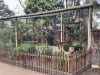
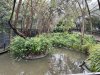
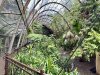
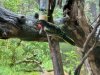
The exhibit that followed is undoubtedly the highlight of the precinct: The Great Flight Aviary. The aviary opened in 1934 and remains a magnificent structure. It’s approximately 120 metres long, framed with steel arches and clad with mesh. At the north-east end is a domed roof. A boardwalk winds through the aviary, which is divided into sections - rainforest, wetland and scrubland. I always appreciate seeing historic buildings/exhibits, but rarely do they remain fit for their original purpose. The zoo’s Southern cassowary had recently moved into the aviary on my visit, but I didn’t see her.

Great Flight Aviary:

upload_2024-5-24_21-16-3.jpeg

Great Flight Aviary:

upload_2024-5-24_21-15-43.jpeg

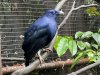
Male Satin bowerbird:

upload_2024-5-24_21-17-12.jpeg

Exhibits for Lace monitor and Tasmanian devil followed. The Tasmanian devil exhibit wasn’t as inspiring as the Lion Gorge exhibits and I’m not disappointed to see the exhibit has since been replaced with echidna and potoroo.

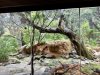
The wombat complex was very impressive. An outdoor exhibit housing Southern hairy-nosed wombat was complimented by artificial tunnels for the visitors to walk through, complete with viewing windows. I though it was a really innovative way to showcase this burrowing species.

Southern hairy-nosed wombat exhibit:

upload_2024-5-24_21-12-49.jpeg

Wombat viewing tunnels:

upload_2024-5-24_21-12-18.jpeg

The kangaroo exhibit underwent an upgrade that was completed in February 2023. It houses Kangaroo Island kangaroo; as well as Swamp wallaby and Tammar wallaby. The grass is irrigated by a recycled water system and supplements the macropod’s natural diet of tree bark and leaves. It was a beautifully landscaped exhibit and include a variety of terrain including bark beds and a water area.

Kangaroo/wallaby exhibit:

upload_2024-5-24_21-13-42.jpeg

There were native bird exhibits including aviaries for Tawny frogmouth, Rainbow lorikeet and Regent honeyeater; and an open air exhibit for a bonded pair of male Black swans, which consists of a large pond surrounded by trees. Wild birds were particularly attracted to the lorikeet aviary, with @Summer Tanager noticing an Indian myna and a Common myna in my photo.

Rainbow lorikeet aviary:

upload_2024-5-24_21-18-52.jpeg

Regent honeyeater exhibit:

upload_2024-5-24_21-19-58.jpeg

Regent honeyeater:

upload_2024-5-24_21-21-56.jpeg

Having seen koala housed in remarkably homogenous open air exhibits throughout several Australian zoos and wildlife parks, I was intrigued to see Melbourne’s colony of Southern koala exhibited in an aviary on my visit.

Southern koala aviary:

upload_2024-5-24_21-11-25.jpeg

On the whole, I think Melbourne Zoo’s native precinct compliments the zoo’s many exotic exhibits well. It’s strongest appeal may be to international visitors, who would regard some of the more common native species as a novelty; though I appreciated the inclusion of Regent’s honeyeater. It lacks headliner native species such as Dingo, Platypus (and since my visit, Tasmanian devil); though I note these can be seen in other areas of the zoo.
 

Attachments

  • upload_2024-5-24_21-11-25.jpeg
    upload_2024-5-24_21-11-25.jpeg
    323 KB · Views: 121
  • upload_2024-5-24_21-12-18.jpeg
    upload_2024-5-24_21-12-18.jpeg
    122.7 KB · Views: 116
  • upload_2024-5-24_21-12-49.jpeg
    upload_2024-5-24_21-12-49.jpeg
    339.7 KB · Views: 118
  • upload_2024-5-24_21-13-42.jpeg
    upload_2024-5-24_21-13-42.jpeg
    307.1 KB · Views: 122
  • upload_2024-5-24_21-15-43.jpeg
    upload_2024-5-24_21-15-43.jpeg
    324.2 KB · Views: 125
  • upload_2024-5-24_21-16-3.jpeg
    upload_2024-5-24_21-16-3.jpeg
    359.5 KB · Views: 114
  • upload_2024-5-24_21-17-12.jpeg
    upload_2024-5-24_21-17-12.jpeg
    242.5 KB · Views: 116
  • upload_2024-5-24_21-18-52.jpeg
    upload_2024-5-24_21-18-52.jpeg
    334.7 KB · Views: 115
  • upload_2024-5-24_21-19-58.jpeg
    upload_2024-5-24_21-19-58.jpeg
    287.1 KB · Views: 120
  • upload_2024-5-24_21-21-56.jpeg
    upload_2024-5-24_21-21-56.jpeg
    191 KB · Views: 119
A boardwalk winds through the aviary, which is divided into sections - rainforest, wetland and scrubland. I always appreciate seeing historic buildings/exhibits, but rarely do they remain fit for their original purpose. The zoo’s Southern cassowary had recently moved into the aviary on my visit, but I didn’t see her.
Interestingly it does seem like a fair portion of the foliage within the 'rainforest section' of the GFA has been removed. It seems they're planting new trees which is a shame as I really appreciated the 'thickness' of the foliage there aligning well with the rainforest theme.

With Zillie, her favourite spot is actually under the boardwalk. You may be able to glimpse her after exiting the aviary and peering back into the aviary (along the path).
Exhibits for Lace monitor and Tasmanian devil followed. The Tasmanian devil exhibit wasn’t as inspiring as the Lion Gorge exhibits and I’m not disappointed to see the exhibit has since been replaced with echidna and potoroo.

The wombat complex was very impressive. An outdoor exhibit housing Southern hairy-nosed wombat was complimented by artificial tunnels for the visitors to walk through, complete with viewing windows. I though it was a really innovative way to showcase this burrowing species.
Considering the age of these exhibits, it's really a testament to Melbourne that they still fit their purposes very well. Over three decades on, the Wombat Burrow is still as popular and innovative as before.

Interestingly the former Tasmanian Devil enclosure (now Echidna/Portoroo enclosure) used to hold Melbourne's Koalas up until a decade ago. Whilst it's arguably on the small side, I do fondly remember the incredibly up close views the exhibit provided for them, something the current exhibits lack today.
There were native bird exhibits including aviaries for Tawny frogmouth, Rainbow lorikeet and Regent honeyeater; and an open air exhibit for a bonded pair of male Black swans, which consists of a large pond surrounded by trees. Wild birds were particularly attracted to the lorikeet aviary, with @Summer Tanager noticing an Indian myna and a Common myna in my photo.
Another little note is that the Regent Honeyeaters now occupy the former Orange Bellied Parrot aviary. Unless Melbourne still hold them off display, they may not have this species anymore.

It was also nice to hear the Black Swans moved into that pond last year; it had been uninhabited for as long as I can remember and a resident was long overdue. I'd long hoped Brolga would be the eventual addition, but Black Swans are still a welcome addition nonetheless.
 
On my first visit, I visited the Gorilla Rainforest, Trail of the Elephants and Lion Gorge in that order so will review them first; followed by the Main Trail.

On my second visit, I revisited the above; as well as visiting Wild Sea, Growing Wild, Australian Bush and the Reptile House.

I continue to really enjoy your step-by-step guide to Melbourne Zoo. Once you are finished with your upcoming Reptile House review, it would be neat to have you either rank all the various sections/precincts of Melbourne Zoo in order of your favourites, or perhaps list your top 3 choices. ;)
 
I continue to really enjoy your step-by-step guide to Melbourne Zoo. Once you are finished with your upcoming Reptile House review, it would be neat to have you either rank all the various sections/precincts of Melbourne Zoo in order of your favourites, or perhaps list your top 3 choices. ;)

Thank you! I estimate they’ll be around 5-6 posts to come. :)

Still to come is:

Growing Wild
Historical features
Main Trail
Reptile House

After that, I have a few extras including highlights (species I hadn’t previously seen etc.). That would be a great place to add in my ranking of the precincts.
 
Part Six: Growing Wild

Growing Wild opened in 2012 and is promoted as an interactive precinct designed especially for children aged three to eight. It’s therefore fair to say this was the precinct I was the least excited about.

Amongst the sculptures, tunnels and children’s play areas are a handful of exhibits, with the main species being Slender-tailed meerkat and Aldabra giant tortoise.

The meerkats have a total of three exhibits. I’m aware this is a polarising topic for some, with double ups a frequent point of criticism. I will mention Auckland Zoo’s old meerkat exhibits (1991-2017) as an excellent example of multiple exhibits done well. Three exhibits with an indoor sun room were built on the site of an old bear pit, with an underground tunnel system (remodelled from the entrance to the old bear dens) giving the visitors an eye to eye view of the meerkats. Melbourne’s set up by contrast lacked the flow of Auckland’s old exhibits (which were used to manage multiple groups) and seemed disjointed in set up. At a minimum, I would look at establishing a mixed species exhibit with Cape porcupine in one of the exhibits.

Slender-tailed meerkat exhibit:

upload_2024-5-31_19-34-26.jpeg

Slender-tailed meerkat exhibit:

upload_2024-5-31_19-34-53.jpeg

Slender-tailed meerkat exhibit:

upload_2024-5-31_19-35-18.jpeg

A small grass exhibit with low fencing housed an adult female Aldabra giant tortoise named Jean, who is over 80 years old; and six subadult Aldabra giant tortoises. They have recently moved to the main tortoise exhibit near the Reptile House; with the two adult males taking their place in Growing Wild.

The most interesting part of the precinct was a hatchery for Victorian grassland earless dragons. This species, once thought to be extinct, was rediscovered in 2023 and is critically endangered.

Victorian grassland earless dragon hatchery:

upload_2024-5-31_19-41-2.jpeg

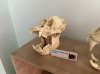
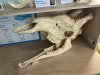
Keeper Kids has an indoor play area that was fortunately empty on my visit. I went inside on the promise of seeing some exotic animal skulls, including African lion, Sumatran orangutan and Rothschild’s giraffe. The giraffe in question was Melbourne Zoo’s previous breeding bull, Makulu, who died in 2018 aged 23 years.

Rothschild’s giraffe skull:

upload_2024-5-31_19-40-5.jpeg

Sumatran orangutan skull:

upload_2024-5-31_19-39-34.jpeg

On the whole, Growing Wild was my least favourite precinct, but that was to be expected given I’m not the target demographic. An increased variety of species would serve this precinct well in my opinion; or even a full-scale remodelling as discussed in length in the Melbourne Zoo development thread. I accept this is unlikely however, given the greater development priorities throughout the zoo and the fact this precinct is relatively new.
 

Attachments

  • upload_2024-5-31_19-34-26.jpeg
    upload_2024-5-31_19-34-26.jpeg
    284 KB · Views: 103
  • upload_2024-5-31_19-34-53.jpeg
    upload_2024-5-31_19-34-53.jpeg
    339.5 KB · Views: 100
  • upload_2024-5-31_19-35-18.jpeg
    upload_2024-5-31_19-35-18.jpeg
    319.5 KB · Views: 100
  • upload_2024-5-31_19-39-34.jpeg
    upload_2024-5-31_19-39-34.jpeg
    76.6 KB · Views: 98
  • upload_2024-5-31_19-40-5.jpeg
    upload_2024-5-31_19-40-5.jpeg
    139.8 KB · Views: 103
  • upload_2024-5-31_19-41-2.jpeg
    upload_2024-5-31_19-41-2.jpeg
    170.4 KB · Views: 109
Part Seven: Main Trail

Main Trail runs through the centre of the zoo and is dotted with exhibits that are best classified as miscellaneous in that they don’t belong to any of the six precincts. The Main Drive is the view as you enter through the Main Gate and sets the scene of a picturesque zoological gardens.

Main Drive:

upload_2024-6-7_23-46-45.jpeg

To the right of the main drive is two Nepalese red panda exhibits. I was a little underwhelmed by these non-descript exhibits, which although well planted, appeared dated compared to Auckland’s newest exhibit; or Hamilton’s large exhibit, which 25 years after it opens, still looks remarkably fresh.

Nepalese red panda exhibit:

upload_2024-6-7_23-31-32.jpeg

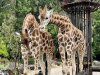
If you take the left path, this will lead you past the giraffe exhibit. The Giraffe House and exhibit opened in 1913 and the design of the largest building was apparently based on the topography of Mt. Buffalo. It’s a spacious exhibit, even more so following the departure of the zebra and was home to 1.2 giraffe on my visit. It was nice to see the eldest female, Nakuru, again; having previously seen her as a calf at Auckland Zoo. I noticed she was pregnant, which was confirmed by the volunteers. I was saddened to hear she subsequently lost the calf, but wish the herd and their keepers success for the future. A new giraffe house was under construction on my visit, which will be useful for managing the expansion of the herd.

Giraffe exhibit:

upload_2024-6-7_23-38-45.jpeg

Klintun and Nakuru:

upload_2024-6-7_23-39-11.jpeg

Adjacent to the Giraffe exhibit is an empty exhibit, which previously housed Eastern bongo. It’s sat empty for many years and would be better utilised for something like bull nyala in my opinion.

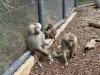
Continuing on this route was one of the exhibits I was most excited to see, the Hamadryas baboon exhibit. The exhibit opened in 2012 and houses a troop of 5.10 baboons. The original aim was to maintain a troop in the mid-20’s, but the troop are currently on a breeding hiatus. I had a great time identifying the individuals in the troop including the ageing males; the prime aged Melako; the sub-adult males that were comparatively drab; and females like Macey, who were identifiable by the proximity of the youngest of her five offspring. I was intrigued to see one of the females had a prominent wattle under her chin and was advised this is JuJu, who has a habit of storing her food (it’s not a growth on her throat as it first appeared).

Hamadryas baboon exhibit:

upload_2024-6-7_23-40-47.jpeg

Melako, Macey and Mei:

upload_2024-6-7_23-41-37.jpeg

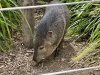
Towards the Rail Gate is another vacant exhibit, formerly home to a Malayan tapir; and the Collared peccary exhibit. I last saw this species as a child at Wellington Zoo in the 2000’s and their status as the last three individuals of their species in the region was certainly not lost on me; even if it was on everybody else visiting the zoo that day. I didn’t see them on the first visit, but got lucky on the second visit and saw them every time after that. I spent a lot of time at this exhibit, making the most of a species I’ll likely never see again in Australasia.

Collared peccary exhibit:

upload_2024-6-7_23-43-57.jpeg

Jabali:

upload_2024-6-7_23-44-48.jpeg

Taking the right branch of the Main Trail led me to the Platypus House, known as the Platypusary. It opened in 1980 and offers great views of the zoo’s Platypus, a male named Sam.

Platypus House:

upload_2024-6-7_23-45-35.jpeg

Also to the right and approaching the Reptile House were outdoor exhibits for Aldabra giant tortoise and Horsfield’s tortoise. The Aldabra giant tortoise exhibit had been recently expanded and was particularly spacious for the two adult males occupying it. A younger cohort of six subadults have since moved in; along with an adult female.

Aldabra giant tortoise exhibit:

upload_2024-6-7_23-48-29.jpeg

Overall, I thought the Main Trail was a great compliment to the other precincts. The flow was somewhat loose, featuring exhibits from multiple continents and biomes, but each species represented a nice addition to the collection. The spacious baboon exhibit was a highlight for myself and offered a chance to see one of the three largest troops in the region. I would also encourage anyone visiting to make the most of the peccaries before they disappear from the region.
 

Attachments

  • upload_2024-6-7_23-31-32.jpeg
    upload_2024-6-7_23-31-32.jpeg
    284.8 KB · Views: 88
  • upload_2024-6-7_23-38-45.jpeg
    upload_2024-6-7_23-38-45.jpeg
    227.6 KB · Views: 85
  • upload_2024-6-7_23-39-11.jpeg
    upload_2024-6-7_23-39-11.jpeg
    309.8 KB · Views: 86
  • upload_2024-6-7_23-40-47.jpeg
    upload_2024-6-7_23-40-47.jpeg
    200.1 KB · Views: 87
  • upload_2024-6-7_23-41-37.jpeg
    upload_2024-6-7_23-41-37.jpeg
    362.6 KB · Views: 89
  • upload_2024-6-7_23-43-57.jpeg
    upload_2024-6-7_23-43-57.jpeg
    336.4 KB · Views: 83
  • upload_2024-6-7_23-44-48.jpeg
    upload_2024-6-7_23-44-48.jpeg
    352.2 KB · Views: 89
  • upload_2024-6-7_23-45-35.jpeg
    upload_2024-6-7_23-45-35.jpeg
    321 KB · Views: 84
  • upload_2024-6-7_23-46-45.jpeg
    upload_2024-6-7_23-46-45.jpeg
    249.3 KB · Views: 85
  • upload_2024-6-7_23-48-29.jpeg
    upload_2024-6-7_23-48-29.jpeg
    296 KB · Views: 89
Thank you @steveroberts. I will post the eighth part this Friday, which will cover the Reptile House. I was honestly astounded away by this incredible building and the variety of species it held.

It’s amazing how well it holds up considering it’s age. Always the highlight of my visit and species are often rotated so there’s usually something new.
 
It’s amazing how well it holds up considering it’s age. Always the highlight of my visit and species are often rotated so there’s usually something new.
I actually do appreciate this aspect. Although not quite a novelty, if you visit every few months or so you are guaranteed to see a few species in different places. Makes for a far more intriguing visit every time.
 
It’s amazing how well it holds up considering it’s age. Always the highlight of my visit and species are often rotated so there’s usually something new.

I was amazed when I learned the building was built in 1969. Thanks to updates by yourself and other frequent visitors like @NathanTheAsian and @ReturnOfPaddyRick, I see updates to the collection are frequent.
 
Part Eight: Reptile House

Prior to visiting Melbourne Zoo, I’ve read about every one of their exotic mammal exhibits; in some cases (Gorilla Rainforest), since childhood. However, regarding the Reptile House, I’ll confess I knew very little. I’d heard reference made to Melbourne Zoo’s impressive reptile collection and had read news stories on a few of the species over the years; but otherwise, I more or less arrived on a blank slate.

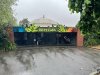
I first visited the Reptile House on the second of my four visits. It was raining when I arrived and the weather rapidly worsened, so the novel building became even more alluring. Unfortunately, a number of Melbourne Zoo’s buildings don’t open when the entrance gates do, so there was a slight delay.

Reptile House:

upload_2024-6-14_21-9-47.jpeg

The weather put people off and so I was lucky enough to have the Reptile House to myself for much of the hour I spent in there. To my 10 year old (or even teenage) self, I never would have imagined I’d spend an hour in a reptile house, but this complex was exceptional and I found myself fascinated by the exhibits.

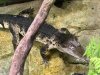
The species I was most looking forward to seeing was the Philippine crocodile. Melbourne Zoo has previously bred this critically endangered species, but now hold only the male from their former breeding pair. His name is Luzon.

Philippine crocodile:

upload_2024-6-14_21-3-44.jpeg

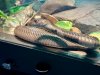
At the time of my visit, snakes had never been exhibited in a New Zealand zoo and so it was exciting to see the diverse range of species in Melbourne’s collection. The Monocled cobra was the highlight.

Monocled cobra:

upload_2024-6-14_21-11-21.jpeg

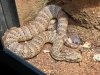
Common death adder:

upload_2024-6-14_21-12-8.jpeg

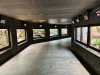
Considering the Reptile House opened in 1969, it’s testament to its design that it remains fully functional to this day. The layout is exemplary, with wide pathways and exhibits positioned on both sides creating an excellent flow. This photo sums up the layout well:

Reptile House interior:

upload_2024-6-14_21-16-33.jpeg

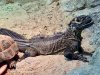
The Philippine sail-finned water dragon shared an exhibit with Elongate tortoise and Chinese three-striped box tortoise on my visit, which was cool to see.

Philippine sail-finned water dragon:

upload_2024-6-14_21-20-8.jpeg

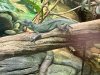
I recall reading about Melbourne Zoo’s import of basilisk from Singapore Zoo and being particularly excited to see this species. It was a no-show on my second and third visits, but I finally got lucky on my fourth visit.

Double-crested basilisk:

upload_2024-6-14_21-23-52.jpeg

Boyd’s forest dragon:

upload_2024-6-14_21-40-41.jpeg

Melbourne Zoo’s Frog House is adjacent to the Reptile House and considering the entrance is tucked away, it’s my belief many people would visit the zoo for the first time and not even realise it was there. I did just that until I realised I hadn’t seen the Crucifix frog and set out to find it.

Frog House:

upload_2024-6-14_21-31-52.jpeg

The Crucifix frog is named for the hot cross bun style marking on its back. Melbourne Zoo notably bred this species for the first time in captivity in 2019, by replicating a thunderstorm via a 10 hour video.

Crucifix frog exhibit:

upload_2024-6-14_21-39-13.jpeg

All in all, I was much impressed by Melbourne Zoo’s Reptile House. As mentioned by @Yoshistar888, it’s collection is dynamic, with species regularly added/removed and indeed there have already been new additions since my visit. Though a handful of reptile exhibits compliment some of the primarily mammal based precincts, it was nice to see the majority of the reptiles displayed in a single building.
 

Attachments

  • upload_2024-6-14_21-3-44.jpeg
    upload_2024-6-14_21-3-44.jpeg
    260.2 KB · Views: 62
  • upload_2024-6-14_21-9-47.jpeg
    upload_2024-6-14_21-9-47.jpeg
    224.7 KB · Views: 59
  • upload_2024-6-14_21-11-21.jpeg
    upload_2024-6-14_21-11-21.jpeg
    122 KB · Views: 63
  • upload_2024-6-14_21-12-8.jpeg
    upload_2024-6-14_21-12-8.jpeg
    281.8 KB · Views: 59
  • upload_2024-6-14_21-16-33.jpeg
    upload_2024-6-14_21-16-33.jpeg
    180 KB · Views: 66
  • upload_2024-6-14_21-20-8.jpeg
    upload_2024-6-14_21-20-8.jpeg
    294.5 KB · Views: 63
  • upload_2024-6-14_21-23-52.jpeg
    upload_2024-6-14_21-23-52.jpeg
    230.7 KB · Views: 60
  • upload_2024-6-14_21-31-52.jpeg
    upload_2024-6-14_21-31-52.jpeg
    281.6 KB · Views: 62
  • upload_2024-6-14_21-39-13.jpeg
    upload_2024-6-14_21-39-13.jpeg
    206.1 KB · Views: 62
  • upload_2024-6-14_21-40-41.jpeg
    upload_2024-6-14_21-40-41.jpeg
    187 KB · Views: 59
Back
Top