fantasy zoo (brown coal mine, Lignite mine)

location suitable for a zoo

  • not a suitable zoo location

    Votes: 13 65.0%
  • don't know

    Votes: 4 20.0%
  • suitable zoo location

    Votes: 3 15.0%

  • Total voters
    20

gerome

Well-Known Member
I'm working on a fantasy zoo concept set inside a lignite mine in Germany. These mines are massive open-air operations that are expected to cease in the future due to environmental concerns. The unique location presents a range of challenges, such as the presence of toxic waste (heavy metals) and the risk of flooding (since the mine is at a lower elevation).

I find this scenario fascinating and am planning to design a map for it, as well as build part of it in Planet Zoo.

I would love to get feedback on how I can improve the zoo in these key areas:

  1. Animal husbandry practices, particularly given the environment.
  2. Risk reduction strategies to mitigate the challenges posed by the location.
  3. Ideas to make the zoo as engaging and unique as possible for visitors.


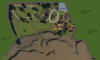
Map of the park (This what has been done so far it is not finished yet)
upload_2024-9-6_13-12-33.png
 

Attachments

  • upload_2024-9-6_13-12-33.png
    upload_2024-9-6_13-12-33.png
    617.6 KB · Views: 217
The highest elevation of the park will be divided into two themed regions:

Little Nepal (work in progress):
A Nepal-inspired area featuring species such as takins, Indian rhinos, and red pandas.

The World of Color:
This vibrant section will showcase some of the most colorful species on Earth. The entire area will revolve around the theme of color, with a medium-sized indoor building housing various species, including tooth-carps, reptiles, frogs, and shrimp. Next to building the will be habitat for blue fairy penguins
 
The World of Color:
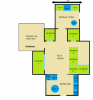
at the entrance of the world of color you enter medium sized building.

The killifish Lake
In the first room a variety of colour fish belong to the killifish group are displayed. In these tanks the following species are displayed:

Tank 1: Fundulopanchax gardneri
Tank 2: Aphyosemion bivittatum (twostripe lyretail, two-banded killi, red lyretail)
Tank 3: redtail notho (Nothobranchius guentheri)
Tank 4: simpsonichthys magnificus
Tank 5: striped panchax (Aplocheilus lineatus)
Tank 6: clown killi (Epiplatys annulatus)

The blue room
One of the rarest colors in nature is blue, which is why I think it would be exciting to dedicate an entire section of the zoo to blue animals. This is a concept I haven't seen before, and it could offer a unique and engaging experience for guests. The exhibit would also provide educational content explaining why certain species evolve to display blue coloration.

The outdoor area will feature blue fairy penguins, while the indoor section will include the following species housed in terrariums:

Terrarium 1: emerald tree monitor (Varanus prasinus) (blue morph)
Terrarium 2: indonesian pit viper (Trimeresurus insularis) (blue morph)
Terrarium 3: mangrove crab
Terrarium 4: blue poison arrow frog (Dendrobates tinctorius)
Terrarium 5: electric blue gecko ( Lygodactylus williamsi )
Terrarium 6: tokay gecko (Gekko gecko)
Terrarium 7: smooth green snake (Opheodrys vernalis) (blue morph)
upload_2024-9-6_14-34-42.png


Attachments

  • upload_2024-9-6_14-34-42.png
    upload_2024-9-6_14-34-42.png
    285.8 KB · Views: 205
The World of Color:
at the entrance of the world of color you enter medium sized building.

The killifish Lake
In the first room a variety of colour fish belong to the killifish group are displayed. In these tanks the following species are displayed:

Tank 1: Fundulopanchax gardneri
Tank 2: Aphyosemion bivittatum (twostripe lyretail, two-banded killi, red lyretail)
Tank 3: redtail notho (Nothobranchius guentheri)
Tank 4: simpsonichthys magnificus
Tank 5: striped panchax (Aplocheilus lineatus)
Tank 6: clown killi (Epiplatys annulatus)

The blue room
One of the rarest colors in nature is blue, which is why I think it would be exciting to dedicate an entire section of the zoo to blue animals. This is a concept I haven't seen before, and it could offer a unique and engaging experience for guests. The exhibit would also provide educational content explaining why certain species evolve to display blue coloration.

The outdoor area will feature blue fairy penguins, while the indoor section will include the following species housed in terrariums:

Terrarium 1: emerald tree monitor (Varanus prasinus) (blue morph)
Terrarium 2: indonesian pit viper (Trimeresurus insularis) (blue morph)
Terrarium 3: mangrove crab
Terrarium 4: blue poison arrow frog (Dendrobates tinctorius)
Terrarium 5: electric blue gecko ( Lygodactylus williamsi )
Terrarium 6: tokay gecko (Gekko gecko)
Terrarium 7: smooth green snake (Opheodrys vernalis) (blue morph)
View attachment 728470


I really like this and the only things I would change are adding in Victoria crowned pigeon and giant blue morpho butterfly and just saying but the fish in tank ones name is blue lyretail.
 
I really like this and the only things I would change are adding in Victoria crowned pigeon and giant blue morpho butterfly and just saying but the fish in tank ones name is blue lyretail.

I try to keep the building bit more compact to keep it more realstic looking. So I would not know if there is enough space for those species. It could be expansion later on
 
Last edited:
The penguin cove will contain the little blue fairy penguin expanding upon the blue color theme.

upload_2024-9-6_22-45-41.png
 

Attachments

  • upload_2024-9-6_22-45-41.png
    upload_2024-9-6_22-45-41.png
    889.6 KB · Views: 201
For the next room the general room of the building

Terrarium 8: veiled chameleon (Chamaeleo calyptratus)
Tank 7: ocellaris clownfish (Amphiprion ocellaris)
Terrarium 9: emerald tree boa (Corallus caninus)
Tank 8: Sulawesi shrimp species , ( Caridina dennerli , Caridina woltereckae , )
 
At the exit of the building area for birds can be found this is outside area

upload_2024-9-8_20-35-21.png

The species are:
1. Southern carmine bee-eater
2. Grey crowned crane
3. American flamingo


Attachments

  • upload_2024-9-8_20-35-21.png
    upload_2024-9-8_20-35-21.png
    684.4 KB · Views: 200
Adjacent to the 'World of Colour' section, the 'Little Nepal' area begins, situated on one of the lower ridges formed by previous brown coal mining. The first habitat will feature a mixed-species exhibit with takin and red pandas. Specific areas within the enclosure will be accessible only to the red pandas, with foliage strategically placed to restrict takin movement.

I'm curious to know if people believe this is a realistic habitat setup or if these species wouldn't thrive together in an environment similar to what is depicted in the photos.

upload_2024-9-20_15-43-9.png

upload_2024-9-20_15-43-45.png
 

Attachments

  • upload_2024-9-20_15-43-9.png
    upload_2024-9-20_15-43-9.png
    834.9 KB · Views: 151
  • upload_2024-9-20_15-43-45.png
    upload_2024-9-20_15-43-45.png
    597.5 KB · Views: 155
I know there red-panda mixed species exhibits out there with ungulates, there is one in dierenrijk
 
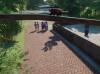
Zoo Parc Overloon in the Netherlands has climbing structures for its red pandas above the walkway to their entrance.

Walkway to entrance with red panda climbing structures, 2022-10-09 - ZooChat

As long as the trees connected by the structure and fencing of exhibits are properly constructed and secured, it should be possible. An animal falling accidentally or jumping in a panicked state is of course never totally impossible. Also note that red pandas are known escape artists, many zoos that have them have had an escape at some point.

With regards to red pandas and ungulates, I have seen it done with small ungulates like muntjac and tufted deer several times. I'm not totally sure about larger ungulates, although I think it would be feasible with appropriate secure areas for the red pandas. Pairi Daiza has a mix of bharal and binturong, maybe that is something you could take a look at.
 
Zoo Parc Overloon in the Netherlands has climbing structures for its red pandas above the walkway to their entrance.

Walkway to entrance with red panda climbing structures, 2022-10-09 - ZooChat

As long as the trees connected by the structure and fencing of exhibits are properly constructed and secured, it should be possible. An animal falling accidentally or jumping in a panicked state is of course never totally impossible. Also note that red pandas are known escape artists, many zoos that have them have had an escape at some point.

With regards to red pandas and ungulates, I have seen it done with small ungulates like muntjac and tufted deer several times. I'm not totally sure about larger ungulates, although I think it would be feasible with appropriate secure areas for the red pandas. Pairi Daiza has a mix of bharal and binturong, maybe that is something you could take a look at.

I think your right, I made spaces of the red-pandas more seperate, I don't want to give up the large ungulates mix for it is what makes this exhibit intressething to work on
 
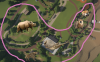
the rest of the nepal section. is the are inside the pink. you can see it the upload fimage with it.

it contains
The indian rhino
The striped hyena
The gharial
The red-panda and takin habitat

the indian rhino might be able to co-habitat with another species. I am still looking at options do
 

Attachments

  • upload_2024-9-26_17-53-38.png
    upload_2024-9-26_17-53-38.png
    979.8 KB · Views: 9
the indian rhino might be able to co-habitat with another species. I am still looking at options do

Indian rhinos are actually surprisingly suitable for mixed species habitats, so you've got a lot of options:
Blackbuck, Nilgai, Muntjac, Hog deer, Axis deer, even Visayan warty pigs
 
I already know this going to make this post extremely messy, but I wanna keep it as work in progress zoo post. with like final detailing in the end.

I wanna start working on another part of the park. that which I will call the motion center for now.
the motion center will be about displaying variety of animals that diffrent ways of moving about.

so far I want to include

1. Nautilus (*******)
2. A gibbon species (brachiation)
3. Sidewinder snake (sidewinding)
4. A species of marsupial (saltation ,hopping)

any other ideas are welcome
 
Back
Top