Saint Louis Zoo Saint Louis Zoo news 2024

Some updates regarding River’s Edge:
-All continent related signage has been removed, implying that the mish-mash of geography is here to stay for the time being.
-The Giant Anteater and Capybara exhibits are empty with signs out confirming so. The capybara enclosure has a mysterious new climbing frame in it, along with some hot wire and tree guards with no hints at what it is all for. Wondering if this will be where they are keeping Coatis until the Children’s Zoo is completed. I can’t really think of anything else they would throw in that exhibit that can climb.
-The Giant Anteater is signed over in the original Painted Dog enclosure, but, as usual, the anteater is nowhere to be found. (This is my fourth year of regularly going and I’ve never seen this anteater once.)


In other parts of the zoo,
-prairie dogs have not been on exhibit for the past few weeks I’ve visited.
-The snow leopard and female Amur leopards have switched enclosures
-The ring-tailed lemurs are currently occupying the main spider monkey habitat. I have not seen the spider monkeys recently.
-Today I also saw the reptile house had a Lesser Sundas Python on display, which I believe is a new species here.
 
Updates from today's visit:
-The great horned owl exhibit on the Bird Garden trail is covered by a curtain, and the exhibit is no longer signed for any animal species. I tried to take a peak to see if they are trying to acclimate a new animal but I did not see any animal inside nor did I hear one vocalizing or moving.
-Tawny frogmouth is removed from the Bird Garden Trail walk-in aviary.
-The part of the Bird House were the red-legged seriema exhibit is located is blocked off. This blocks viewing of gray-winged trumpeters, one of the rhinoceros hornbills, and of course red-legged seriema.
-Golden-breasted starling is back on exhibit in the Bird House. One is with the pheasant pigeon across from the gopher tortoise, and the other is in the exhibit across from the indoor laughing kookaburra exhibit with spur-winged plover.
-There is a Luzon bleeding-heart dove on exhibit with bearded barbet in the exhibit to the left of the Bali myna/Kenyan crested guineafowl mixed exhibit.
-There is a Luzon bleeding heart dove chick in the exhibit next to the ring-necked dove.
-There is an unsigned Jambu fruit dove pair mixed with Palawan peacock pheasant. The Saipan white -eye is not signed and I never saw it. I would assume that means it is not present, but I rarely saw it when it was signed, so that is not entirely conclusive.
-There are no horned guans on exhibit. The exhibit in the back left corner of the Bird House is currently occupied by tawny frogmouths.
-Some crested wood partridges have replaced the spur-winged plovers in the exhibit across from the buff-crested bustard and buffalo weaver (the species is still on exhibit with the bee-eaters and in an adjacent exhibit with golden-breasted starling.
-The giant tortoises are no longer on exhibit outdoors.
-Splendid leaf frog has moved in to the exhibit most recently occupied by western bearded anole.
-The Mexican alligator lizard is back on exhibit.
-Horned pit viper has moved in to the former Nikolsky's adder exhibit. The previous horned viper exhibit is now cleared out and unoccupied.
-The Spurrel's leaf frog is no longer on exhibit.
-Smallwood's anole is no longer on exhibit. It has been replaced by western bearded anole. There is also an unsigned Andean marsupial frog in the exhibit.
 
Hi everyone:

Next week I'm flying out to Illinois and I'm also driving to the St. Louis Zoo.

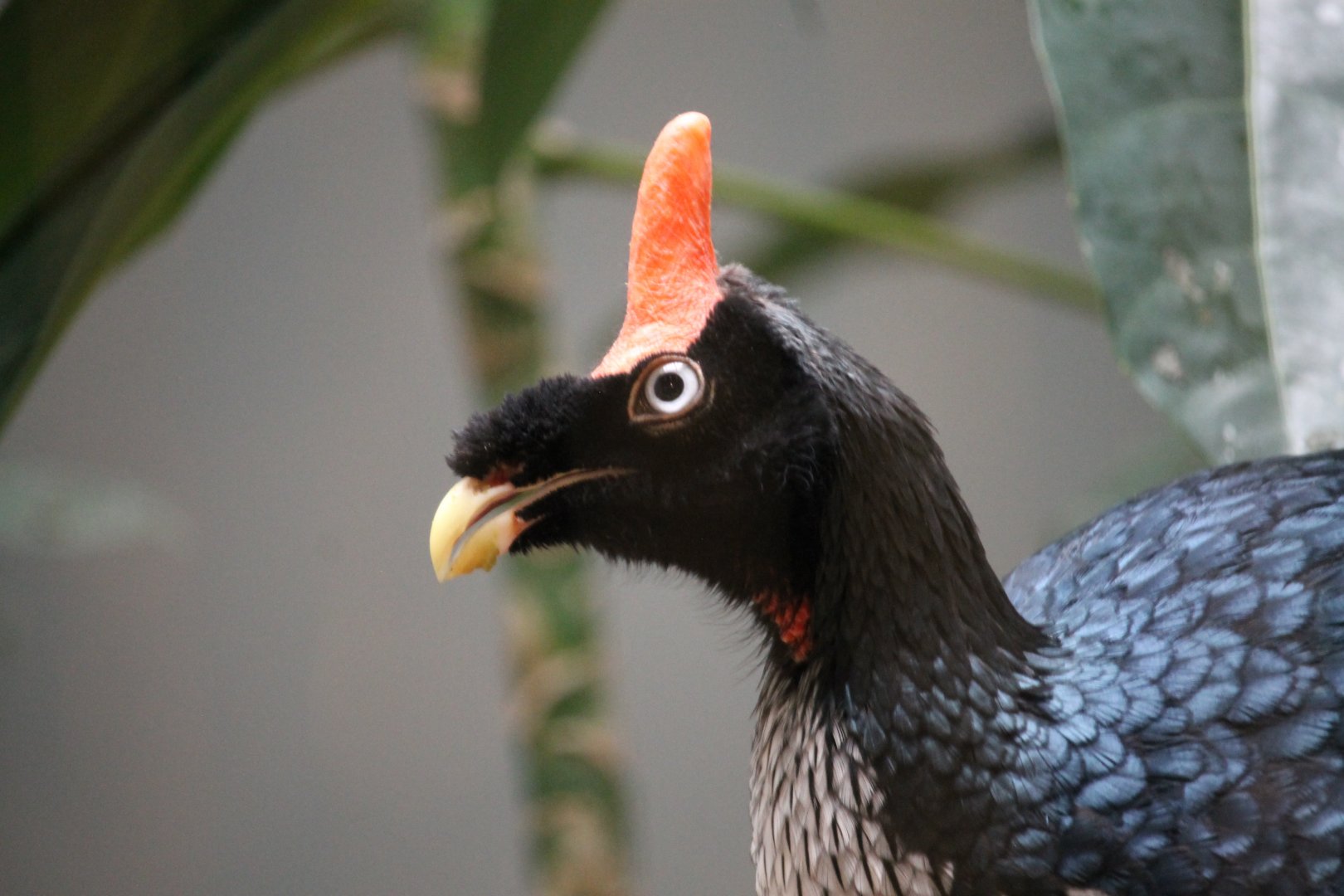
My target species for the trip is their horned guan. Is the horned guan still at the zoo and is it currently on exhibit?
 
Hi everyone:

Next week I'm flying out to Illinois and I'm also driving to the St. Louis Zoo.

My target species for the trip is their horned guan. Is the horned guan still at the zoo and is it currently on exhibit?
Hi! Unfortunately, I have not seen the horned guans on exhibit for a while. I am really sorry, but I would say your chances of seeing one are slim.
 
Two things you could try
1) call the zoo, identify yourself as a zoo nerd and explain you are coming to St. Louis expressly to see the horned guan and you understand they are not on display, but is there any way you could see them behind the scenes? (which almost certainly means in the basement).
This might be getting hold of the right person on the right day thing but I think its got a decent shot

2) if they say no , then try the same thing with a keeper. But thats problematical because
they are not that often to be found.
 
The reptile and bird houses tend to see species rotated on and off exhibit quite frequently. The horned guan seem to be off right now; however, last year they were off for a bit iirc but by my visit in September, they had returned.
 
Signs have been placed in River’s Edge at the old Capybara Exhibit.

They are for: Two-Toed Sloth and Prehensile Tailed Porcupine! I didn’t see either in the exhibit but it was cool to see that it’s open again.

There was also construction going on at the main original Andean Bear viewing, mostly looking like it was dealing with the mesh. Maybe strengthening so we can get a new Andean Bear?
 
Updates from today's visit:

-A male Soemmerring's gazelle is now in the former babirusa exhibit behind the giraffe yard.
-The antelope exhibit closest to the kangaroos is vacant.
-There is a new red-legged seriema in the space usually used as the bateleur eagle indoor exhibit. It also has access to the adjacent exhibit.
-There is a young helmeted curassow on exhibit in the Bird House in the far left corner. The front of the exhibit was blocked off so people can't come right up to the edge of the exhibit, but you can still get a good view.
-The great horned owl exhibit on the Bird Garden Trail is still unsigned, but the curtain is gone. The exhibit appears vacant.
-The Guatemalan tiger rump tarantula has been replaced by garden fruit tapers in the Insectarium.
-The house fly maggots are off exhibit in the Insectarium but are still signed.
-There is a new fish tank in the Insectarium that features ocellaris clownfish and brown tang, among a few other species I was not able to ID, and it was too busy to be able to stop there for enough time to document through photos or to take notes without disrupting the flow of traffic. All the species were unsigned.
-The window into the Insectarium keeper area no longer features leaf-cutter ants. Replacing them are cactus longhorn beetles (Moneilema gigas) and Polynesian tree snails (Partula nodosa).
-The butterfly biofacts in the insectarium are removed. Their exhibits have signage that seem to suggest their replacements will be live animals instead.
-The zoo seems to be trying to replace the butterfly ID cards with a QR code that directs you to a PDF of the card. Signage at the entrance of the Butterfly Wing prompts you to scan it. However, it did appear that some cards were in the return area, so they are not completely phased out yet.
-The green honeycreepers in the Butterfly Wing are now signed.
-There are now Southeast Asian box turtles in the Butterfly Wing, which are also signed.
-Mandarin ratsnake has been replaced with Sri Lankan pitviper.
-Black-tailed horned pitviper has been replaced by yellow blotched palm-pitviper.
-Penguin and Puffin Coast was closed, and the pathway into the building was blocked at the entrance. The Humboldt penguins were still out.
 
Updates from today's visit:

-A male Soemmerring's gazelle is now in the former babirusa exhibit behind the giraffe yard.
-The antelope exhibit closest to the kangaroos is vacant.
-There is a new red-legged seriema in the space usually used as the bateleur eagle indoor exhibit. It also has access to the adjacent exhibit.
-There is a young helmeted curassow on exhibit in the Bird House in the far left corner. The front of the exhibit was blocked off so people can't come right up to the edge of the exhibit, but you can still get a good view.
-The great horned owl exhibit on the Bird Garden Trail is still unsigned, but the curtain is gone. The exhibit appears vacant.
-The Guatemalan tiger rump tarantula has been replaced by garden fruit tapers in the Insectarium.
-The house fly maggots are off exhibit in the Insectarium but are still signed.
-There is a new fish tank in the Insectarium that features ocellaris clownfish and brown tang, among a few other species I was not able to ID, and it was too busy to be able to stop there for enough time to document through photos or to take notes without disrupting the flow of traffic. All the species were unsigned.
-The window into the Insectarium keeper area no longer features leaf-cutter ants. Replacing them are cactus longhorn beetles (Moneilema gigas) and Polynesian tree snails (Partula nodosa).
-The butterfly biofacts in the insectarium are removed. Their exhibits have signage that seem to suggest their replacements will be live animals instead.
-The zoo seems to be trying to replace the butterfly ID cards with a QR code that directs you to a PDF of the card. Signage at the entrance of the Butterfly Wing prompts you to scan it. However, it did appear that some cards were in the return area, so they are not completely phased out yet.
-The green honeycreepers in the Butterfly Wing are now signed.
-There are now Southeast Asian box turtles in the Butterfly Wing, which are also signed.
-Mandarin ratsnake has been replaced with Sri Lankan pitviper.
-Black-tailed horned pitviper has been replaced by yellow blotched palm-pitviper.
-Penguin and Puffin Coast was closed, and the pathway into the building was blocked at the entrance. The Humboldt penguins were still out.
Wow, these are some of the biggest updates to the insectarium I can remember! These are very welcome!

-The window into the Insectarium keeper area no longer features leaf-cutter ants. Replacing them are cactus longhorn beetles (Moneilema gigas) and Polynesian tree snails (Partula nodosa).
This is a very surprising change. The leaf-cutter ant setup has been there for as long as I can remember, at least 15 years. I wonder if something happened to the colony to prompt this change. While they probably won't be as fun to watch, the new inhabitants are welcome, especially the partula snail.

-The zoo seems to be trying to replace the butterfly ID cards with a QR code that directs you to a PDF of the card. Signage at the entrance of the Butterfly Wing prompts you to scan it. However, it did appear that some cards were in the return area, so they are not completely phased out yet.
The ID cards are terribly outdated, this is a welcome change.

The green honeycreepers in the Butterfly Wing are now signed.
-There are now Southeast Asian box turtles in the Butterfly Wing, which are also signed.
It is nice to see the signage in the insectarium is getting all around improvements.
 
An email I received from the zoo regarding their horned guans:

“We no longer have Horned Guans on exhibit, they have been moved to another zoo.”

When I talked to the keeper there, they elaborated that the flights they were in were inadequate for their well-being. The keeper stated that they are behind-the-scenes at their new location.

The zoo wouldn’t share where they transferred to, and I expressed my disappointment in telling them the horned guans were the main reason why I came to visit the zoo.

The species that made the trip not a complete loss were the elegant-crested tinamou, buff-crested bustard, and bearded barbet. Also, seeing the northern carmine bee-eaters was also a treat and FINALLY getting great pictures of the saddle-billed storks was *chef’s kiss* I’ve tried for years to get decent pictures of saddle-billed storks but they were either too far away or the tour or cart moved too fast for me to get decent shot.

The only other zoo in the United States that I’m aware of that have horned guans is the Dallas World Aquarium. I’ll have to plan a trip to go out and see them.
 
Last edited:
An email I received from the zoo regarding their horned guans:

“We no longer have Horned Guans on exhibit, they have been moved to another zoo.”

When I talked to the keeper there, they elaborated that the flights they were in were inadequate for their well-being. The keeper stated that they are behind-the-scenes at their new location.

The zoo wouldn’t share where they transferred to, and I expressed my disappointment in telling them the horned guans were the main reason why I came to visit the zoo.

The species that made the trip not a complete loss were the elegant-crested tinamou, buff-crested bustard, and bearded barbet. Also, seeing the northern carmine bee-eaters was also a treat and FINALLY getting great pictures of the saddle-billed storks was *chef’s kiss* I’ve tried for years to get decent pictures of saddle-billed storks but they were either too far away or the tour or cart moved too fast for me to get decent shot.

The only other zoo in the United States that I’m aware of that have horned guans is the Dallas World Aquarium. I’ll have to plan a trip to go out and see them.
If I'm not mistaken, the Horned Guans at DWA are kept BTS like their Resplendent and Crested Quetzals, though it has been over a year since I've last visited so things could have changed.
 
An email I received from the zoo regarding their horned guans:

“We no longer have Horned Guans on exhibit, they have been moved to another zoo.”

When I talked to the keeper there, they elaborated that the flights they were in were inadequate for their well-being. The keeper stated that they are behind-the-scenes at their new location.

The zoo wouldn’t share where they transferred to, and I expressed my disappointment in telling them the horned guans were the main reason why I came to visit the zoo.

The species that made the trip not a complete loss were the elegant-crested tinamou, buff-crested bustard, and bearded barbet. Also, seeing the northern carmine bee-eaters was also a treat and FINALLY getting great pictures of the saddle-billed storks was *chef’s kiss* I’ve tried for years to get decent pictures of saddle-billed storks but they were either too far away or the tour or cart moved too fast for me to get decent shot.

The only other zoo in the United States that I’m aware of that have horned guans is the Dallas World Aquarium. I’ll have to plan a trip to go out and see them.
They will be missed! I'm grateful I had the chance to get one last look at them the last day of last year.

 
Back
Top