You are using an out of date browser. It may not display this or other websites correctly.
You should upgrade or use an alternative browser.
You should upgrade or use an alternative browser.
San Diego Zoo San Diego Zoo News 2024
- Thread starter pachyderm pro
- Start date
- Status
- Not open for further replies.



Nile Hippo Expert
Well-Known Member
A new 1.0 Raccoon named Skipper is now at the zoo's Wildlife Explorers Base Camp. He is 6 months old and made his public debut on November 12th.
Focusing on the San Diego Zoo and Safari Park | Male Raccoon, Skipper | Facebook
Focusing on the San Diego Zoo and Safari Park | We have a new Raccoon Animal Ambassador in the Basecamp, Skipper | Facebook
Focusing on the San Diego Zoo and Safari Park | Male Raccoon, Skipper | Facebook
Focusing on the San Diego Zoo and Safari Park | We have a new Raccoon Animal Ambassador in the Basecamp, Skipper | Facebook


0.1 Bonobo "Belle" was transferred to Columbus Zoo earlier this month. In return, the zoo received nearly 8 year old female Bonobo "Bertie" from Columbus.
Where did you get this piece of news?

Haybale
Well-Known Member
0.1 Bonobo "Belle" was transferred to Columbus Zoo earlier this month. In return, the zoo received nearly 8 year old female Bonobo "Bertie" from Columbus.
I seen a post in the FB Focusing group that said Belle was sent for breeding. She is 10yo vs Maddie is 15yo, seems a bit surprising!
I'll certainly take look next week!

RJB Wildlife
Well-Known Member
A couple updates from the zoo:
- The main Elephant yard in Elephant Odyssey is undergoing construction. It appears that the pool is the focus as the rock work is being raised as there is rebar placed around the entire pool barrier.
- A group of MacLeay’s Spectre insects are in Spineless Marvels where the Rhinoceros Katydids were.
- The Emerald Tree Monitors are back on habitat in the Reptile House.
- The Henkel’s Leaf-Tailed Gecko and African Bush Viper habitats have been covered with plywood in the Reptile House.
- The main Elephant yard in Elephant Odyssey is undergoing construction. It appears that the pool is the focus as the rock work is being raised as there is rebar placed around the entire pool barrier.
- A group of MacLeay’s Spectre insects are in Spineless Marvels where the Rhinoceros Katydids were.
- The Emerald Tree Monitors are back on habitat in the Reptile House.
- The Henkel’s Leaf-Tailed Gecko and African Bush Viper habitats have been covered with plywood in the Reptile House.
RussellMael
Member
Anymore updates on the Maned Wolves?
RJB Wildlife
Well-Known Member
The area behind the Maned Wolf habitat is still under construction, as of right now it’s TBD.Anymore updates on the Maned Wolves?
Nile Hippo Expert
Well-Known Member
So sad to hear that, there were six Guanacos living there just three years ago, though I can remember hearing that they were an aging herd, and I believe Pete, the zoo's llama, is also very old.The Zoo is down to one remaining guanaco
Haybale
Well-Known Member
The Zoo is down to one remaining guanaco
The breeding male capybara has been removed from the mixed tapir/capybara exhibit and moved into a sectioned off portion of the guanaco/llama exhibit.
I had heard it was the 2 males from the litter of 4 that were split off?


Attachments


USZOOfan42
Well-Known Member
Question- should I upload media from here, SDZSP, Birch Aquarium, Living Coast Discovery Center and Omaha Zoo if they are from 2023? Seems dumb but seems a little odd or upload photos from that long ago. I finally found my old memory card.

I think it’s perfectly fine to upload to their according galleries. What I think most of us do when uploading is adding to the title or description of the photo uploaded, we add the date when taken. I’ve done so myself so everyone knows it wasn’t a recent capture.Question- should I upload media from here, SDZSP, Birch Aquarium, Living Coast Discovery Center and Omaha Zoo if they are from 2023? Seems dumb but seems a little odd or upload photos from that long ago. I finally found my old memory card.
That's very sad.The Zoo is down to one remaining guanaco
Are guancos recommended to be phased-out of North American collections?

The guanaco phase-out was not necessarily an intentional one in the sense that a decision was made to decrease their numbers, focus on other species, etc. (even up until the most recent change to the Species Survival Plan system, guanacos were still considered a "Managed Program"), but rather that interest in them simply dwindled over time and now very few animals remain. Most of the handful of animals that remain in accredited zoos are geriatric and past breeding age, so we will very likely see guanaco all but disappear within the next five to ten years. It will be very sad to lose our only wild representative of the South American Camelids.That's very sad.
Are guancos recommended to be phased-out of North American collections?
Last edited:

King of Komodo Dragons
Well-Known Member
Are camelids like Guanacos nearly impossible to import like Bovids are?The guanaco phase-out was not necessarily an intentional one in the sense that a decision was made to decrease their numbers, focus on other species, etc. (even up until the most recent change to the Species Survival Plan system, guanacos were still considered a "Managed Program"), but rather that interest in them simply dwindled over time and now very few animals remain. Most of the handful of animals that remain in accredited zoos are geriatric and past breeding age, so we will very likely see guanaco all but disappear within the next five to ten years. It will be very sad to lose our only wild representative of the South American Camelids.
Ruminants, in general, are extremely difficult to import. There are slightly fewer restrictions for importing non-Bovids, but only slightly. For example, there was an attempt by several zoos to collaborate and import vicuña from Europe about a decade ago, and while Southwicks was able to receive theirs, the imports fell through for the other institutions involved.Are camelids like Guanacos nearly impossible to import like Bovids are?

Aardwolf
Well-Known Member
It's also a lot of trouble and expense for an animal that, to 99% of the public, is a llama - one that, mixed-species successes aside, can also be very dangerous to keepers and other animals (I worked with guanaco at one non-AZA facility, and remember one day a keeper running up to tell the owner of the zoo that the male guanaco had just killed a deer fawn. The owner replied, "Oh good, he's vicious - that means he'll be a good breeder." I was dumbfounded).
I worked at a second zoo that had the species (AZA this time), and when our herd started to age out, the logistics and expense of getting new ones - all the available animals were on the opposite coast - were just too daunting for us to justify, and so we went out of that species. Guanaco are something I feel like could have worked with the C2S2 model, if there had been sufficient animals and interest - they'd have done great at, say, The Wilds. But... llama.
I worked at a second zoo that had the species (AZA this time), and when our herd started to age out, the logistics and expense of getting new ones - all the available animals were on the opposite coast - were just too daunting for us to justify, and so we went out of that species. Guanaco are something I feel like could have worked with the C2S2 model, if there had been sufficient animals and interest - they'd have done great at, say, The Wilds. But... llama.

I feel guanacos are one of those animals that's benefit in places like SDZSP, the Wilds, Fossil Rim, etc.
It's unfortunate that an interesting species isn't being managed properly (tbh, the lack of ungulate interest in general is a bummer) but some animals are just really challenging with conventional zoo management. Especially one that's as allegedly mean as a guanaco
It's unfortunate that an interesting species isn't being managed properly (tbh, the lack of ungulate interest in general is a bummer) but some animals are just really challenging with conventional zoo management. Especially one that's as allegedly mean as a guanaco
Last edited:

Local_Shark
Well-Known Member
I dunno if this is even remotely relevant to all our resident guanaco enjoyers, and it's definitely outside my area of expertise, but: even if SD Zoo loses its guanacos, they won't be the last in California. The Santa Ana Zoo, which is really local to me, has a handful of them in a mixed-species South American grassland exhibit with rheas. They're some of the physically largest animals left at SAZ, and are seemingly being positioned as the new big draw for guests alongside the rheas, giant anteater, and a few other South American species. They had been working on another big Central/South America-focused renovation more recently, as this particular exhibit opened in 2010. Here's a pic:
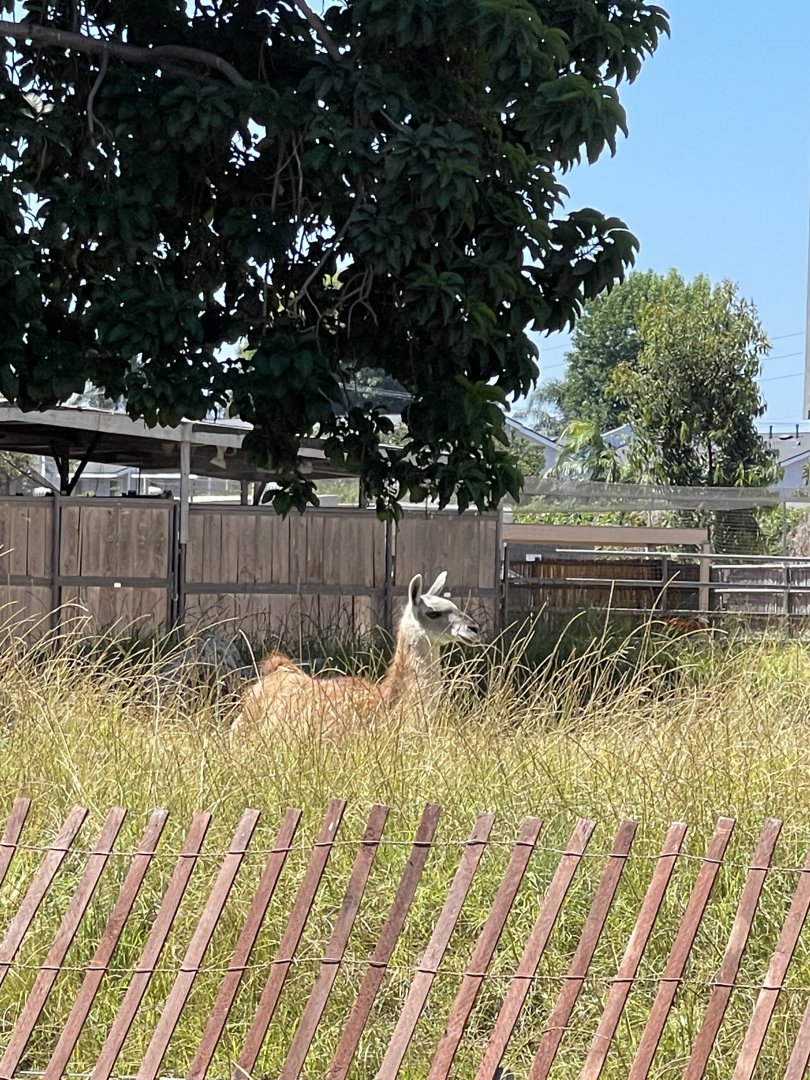
Guanaco (Lama guanacoe) in Tierra de las Pampas
This was taken during my visit on July 19, 2022, but I do know for a fact that the guanacos are...
Last edited:
- Status
- Not open for further replies.