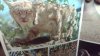
I was a regular visitor to Melbourne Zoo at this time, and I clearly recall a lynx species at the zoo. Which one, I have no clear recollection, but if I had to put money on it, I would go Canadian.

It seems to me there are two possibilities:

1. Either the zoo or the authors of the report misidentified the species.
2. The producers of the guidebook (I think it might have been Steve Parish at the time) used a stock photo of a lynx.

Either is possible, but the second is more likely.
The caption just says "Lynx", but the photo is clearly of the Eurasian species. It is though entirely possible that it is just a stock photo.
 
Here is the Jaguar photo from that Melbourne Zoo guidebook, as requested by @Zoofan15.
View attachment 753431

Thanks for sharing. The female Jaguar is Dora, who was born 1970 at Melbourne Zoo and died there in 1988.

This photo also featured in the 1980 and 1983 editions of the guidebook.

It’s probable the twins are Dora’s 1979 litter:

1.0 Brian
Born at Melbourne Zoo 27/09/1979
Died at Melbourne Zoo 30/06/1983

1.0 Errol
Born at Melbourne Zoo 27/09/1979
Died at Melbourne Zoo 28/03/1995
 
@Osedax @Zoofan15 Cool photos, its nice to see a good photo of one of the Temmick's Golden Cats too (of which MZ had every reason to be extra proud of given their success with breeding hey).

@MRJ re - the Lynx photo, lol thats an interesting possible choice for them to of done with the photo as likely a stock photo, personally if was the producers of a guidebook for a specific zoo, would obviously prefer to take a photo of an actual individual animal who lives at the zoo (do admire Steve Parrish's wildlife photography though heaps, many great pictures in native wildlife books back in the day that was the learning about of many native individual species for the first time before the internet age, didnt know he had an involvement with Melbourne Zoo even if just as guidebook producer. Thanks for the info).
 
Last edited:
@MRJ re - the Lynx photo, lol thats an interesting possible choice for them to of done with the photo as likely a stock photo, personally if was the producers of a guidebook for a specific zoo, would obviously prefer to take a photo of an actual individual animal who lives at the zoo (do admire Steve Parrish's wildlife photography though heaps, many great pictures in native wildlife books back in the day that was the learning about of many native individual species for the first time before the internet age, didnt know he had an involvement with Melbourne Zoo even if just as guidebook producer. Thanks for the info).
Firstly, I am not saying it was a stock photo, just that it is a possibility. Mind you, the fact it was just labeled "lynx" is a bit of a clue, not inaccurate and not claiming to be the actual animals in the zoo.

I'm sure if it was a book published under Steve's name it would have been his photo. However, this sort of project would have been done on a budget and may not have justified a trip to Melbourne and the time required to get a photo of the actual animals at the zoo.
 
@MRJ

Yeah fair enough. Dont worry personally have nothing but admiration for Steve Parrish, he was for me personally, the introducer to most native Australian animals through incredible photographs in his books, before the late great Steve Irwin took over further educating with his series (+ visits to Taronga, Perth Zoo, Aus' Reptile Park, Featherdale, + Bannamah & Cohunu in WA helped with in-person seeing and learning about many native species)

Yeah understand you meant a big ''if'' hypothetical and was just a ''it could be this or it could be that'' theory, totally get that. Yeah if on a shoestring budget to save costs then stock photos could be obtained.

- but back to thread topic.

A photo of Calang the Sumatran Tiger was printed as the first inside photo in Perth Zoo's early 1994 zoobook (and he only arrived in late January that year, and personally received copy of that edition of the zoobook in March '94) and often wonder if the time it takes at printing presses meant that perhaps Calang's photo was taken while he was still at Melbourne Zoo prior to being moved to Perth perhaps (wish still had the book, long lost in family moving boxes, would love to of uploaded on here, was great photo of (Asian Elephants) Tricia with little Permai, Teduh and Putra Mas and other great photos).

@Zoofan15 @Osedax (and MRJ still too)

Re: Bobcats and Canadian Lynxes
Know from the ≈1975 (Map - 1975 - ZooChat) map of Perth Zoo on its media thread courtesay of Newzooboy and also my dad's recollection that there was at least one Lynx at Perth Zoo though not sure if was/were (a) **Bobcat(s) or (a) Canadian Lynx(es) (@tetrapod you remember it/them too yeah, next to the Cheetah's exhibit, the Cheetah's who came as Tom Spence's pets). **(Bobcats being called Bay Lynxes sometimes and being Lynxes themselves albeit common name that doesn't include the word within).

Pretty cool too we had at least 2 Canadian Lynxes in Australia back in that era too, while pity no Eurasian Lynxes (at least by then none or unnacounted for but think the former) still cool we had the two North American Lynx species but (two more examples of the once considerable American {both continents} mammal species at zoos in Australia back then that dwindled in recent decades with the focus on SE Asian and African being the major focuses exotically.)
 
Last edited:
@MRJ

Yeah fair enough. Dont worry personally have nothing but admiration for Steve Parrish, he was for me personally, the introducer to most native Australian animals through incredible photographs in his books, before the late great Steve Irwin took over further educating with his series (+ visits to Taronga, Perth Zoo, Aus' Reptile Park, Featherdale, + Bannamah & Cohunu in WA helped with in-person seeing and learning about many native species)

Yeah understand you meant a big ''if'' hypothetical and was just a ''it could be this or it could be that'' theory, totally get that. Yeah if on a shoestring budget to save costs then stock photos could be obtained.

- but back to thread topic.

A photo of Calang the Sumatran Tiger was printed as the first inside photo in Perth Zoo's early 1994 zoobook (and he only arrived in late January and received that book in March '94) and often wonder if the time it takes at printing presses meant that perhaps Calang's photo was taken while he was still at Melbourne Zoo prior to being moved to Perth perhaps (wish still had the book, long lost in family moving boxes, would love to of uploaded on here, was great photo of (Asian Elephants) Tricia with little Permai, Teduh and Putra Mas and other great photos).

@Zoofan15 @Osedax (and MRJ still too)

Re: Bobcats and Canadian Lynxes
Know from the ≈1975 (Map - 1975 - ZooChat) map of Perth Zoo on its media thread courtesay of Newzooboy and also my dad's recollection that there was at least one Lynx at Perth Zoo though not sure if a **Bobcat(s) or a Canadian Lynx(es) (@tetrapod you remember it/them too yeah, next to the Cheetah's exhibit, the Cheetah's who came as Tom Spence's pets). **(Bobcats called Bay Lynxes sometimes and being Lynxes themselves albeit common name that doesn't include the word within).

Pretty cool too we had at least 2 Canadian Lynxes in Australia back in that era too, while pity no Eurasian Lynxes (at least by then none or unnacounted for but think the former) still cool we had the two North American Lynx species but (two more examples of the once considerable American {both continents} mammal species at zoos in Australia back then that dwindled in recent decades with the focus on SE Asian and African being the major focuses exotically.)

It’s difficult to say regarding the photo of Calang. He was Perth Zoo’s first Sumatran tiger, so there presumably would have been a lot of fanfare around his arrival and numerous photos taken - by both the press and the zoo’s media team. There’s a similarly a really nice photo of the then 18 month old Selatan in the media following her arrival at Taronga Zoo in 1992.

Zoos certainly tend to recycle photos - the Jaguar and cubs photo at Melbourne Zoo being an example of this (appearing in at least three guidebooks between 1980 and 1985). As a child, I was given a sticker at Wellington Zoo with a tiger on it and asked if it was the zoo’s male tiger, Rokan. The lady told me she thought it was the previous male (referring to Rokan’s father, Jambi, who had been deceased for two years).

There’s a photo in Melbourne Zoo’s 1992 guidebook, which has always mystified me - a photo of a melanistic and golden Jaguar side by side. To my knowledge, Maya was their first (and only) melanistic Jaguar and arrived 1989. At that time, Melbourne Zoo had a golden Jaguar, but he was a male (they wouldn’t have shared an exhibit). I wonder now if the photo was taken at Taronga and was of Maya and his mother.
 
I would say that the problem lies with 'lynx' being used by Australian zoos for bobcats, Eurasian lynx and Canadian lynx (also historically for caracal!). Cannot recall whether it was bobcats or another lynx held at Perth. The Melbourne pic looks like a Canadian (definitely not a bobcat). Also Melbourne held melanistic jaguars prior to 1989 (unless it was leopards), as I recall a pair held in the big cat exhibits.
 
Also Melbourne held melanistic jaguars prior to 1989 (unless it was leopards), as I recall a pair held in the big cat exhibits.

I believe you’re thinking of Melbourne Zoo’s melanistic leopards, which were there until at least the 1990’s.

There’s a shot of one of them at 0.44 in this 1992 video:


If I had confirmation Lunoc (male Jaguar born 1972) was golden, then that would confirm - all of the cubs around this era appeared to be, so I’m assuming he was. I’ve seen photos of Dora (female Jaguar born 1970), who is golden; and obviously a pairing of two golden Jaguar would only produce golden cubs.

Probably explains why melanstic Jaguar brothers Ali and Branco received so much hype when they were imported in 1979 from Rotterdam Zoo.
 
I would say that the problem lies with 'lynx' being used by Australian zoos for bobcats, Eurasian lynx and Canadian lynx (also historically for caracal!). Cannot recall whether it was bobcats or another lynx held at Perth. The Melbourne pic looks like a Canadian (definitely not a bobcat). Also Melbourne held melanistic jaguars prior to 1989 (unless it was leopards), as I recall a pair held in the big cat exhibits.
Melbourne Zoo definately had melanistic leopards in the ‘80’s and earlier. Can’t comment on later. I don’t remember the malanistic joguars.
 
@Zoofan15 Great video find man, cool to see all the different animals in it, still a really cool zoo, would of been unique in a lot of ways visiting back then in the early '90s too (big habitat for all the Gorillas bar Rigo; but could see three great ape species all in proximity to eachother, the enormous Lion exhibit, biggest number of different felids and great other number of primates + reptile house looks great (that was a Philippine Crocodile hey; plus last city zoo could see American Bison; that Giraffe with that awkwardly position stick twirling on edge of mouth seemed like an unintentional but charming trick lol).
 
@Zoofan15 Great video find man, cool to see all the different animals in it, still a really cool zoo, would of been unique in a lot of ways visiting back then in the early '90s too (big habitat for all the Gorillas bar Rigo; but could see three great ape species all in proximity to eachother, the enormous Lion exhibit, biggest number of different felids and great other number of primates + reptile house looks great (that was a Philippine Crocodile hey; plus last city zoo could see American Bison; that Giraffe with that awkwardly position stick twirling on edge of mouth seemed like an unintentional but charming trick lol).

Auckland Zoo received a pair of melanistic leopard cubs from the Chicago Zoo in 1967. Auckland Zoo had previously supplied a golden leopard named Kim (1961) to Melbourne Zoo in 1962; but melanistic leopards were a novelty.

It wouldn’t surprise me if Melbourne’s melanistic leopards came from Auckland Zoo (circa 1970’s). Auckland Zoo’s last ones had died out by 1992 according to the species list published in A Tiger by the Tail.

History of Leopards at Auckland Zoo

Description of exhibit:


In 1950, the leopards were noted as being held in a deep pit by the kiosk. Unlike the adjacent tiger pit, it was completely covered by bars and netting. Much of the pit consisted of sloping rock as well as a cave, which ended in a dead end. At the rear of the exhibit was a vertical sloping wall, in which the doors to the den were set. This wall remains in place to this day.

Source: Paraphrased from an article in the Ashburton Guardian (15/03/1950).

History:

A female leopard was imported from India in September 1925 and escaped just few days after her arrival. The body of the leopard was found drowned in Lady Bay (near St. Heliers) the following month.

Auckland Zoo acquired a pair of leopards that produced a total of five litters in as many years. The first litter was twins born in September 1937. They were sold to a circus. The second litter was born December 1938 and killed by the father. The third litter was born January 1940 and consisted of triplets. One died and one was sent to Taronga Zoo later that year. The fate of the third cub is unknown. The fourth litter consisted of triplets and was born December 1940; followed by the fifth litter (triplets again) in November 1942.

In March 1950, Auckland Zoo imported a pair of young leopards from Singapore. Shortly after their arrival, the female escaped. She was discovered in the undergrowth not far from the zoo and shot by an army officer, who had been called in response to a sighting.

On 13/07/1950, the death of the zoo’s elderly male leopard (Stumpy) was announced. He was noted to have fathered several offspring (presumably the five litters detailed above). His death left Auckland Zoo with the young male leopard imported from Singapore.

In September 1950, a female leopard arrived from Singapore. She was named Greta and replaced the female shot and killed in March of that year.

Triplets were born in September 1954. Two of the cubs were spotted and one was melanistic. The parents were likely the male and female imported in March 1950 and September 1950 respectively.

In December 1961, a female named Heidi gave birth to male cub named Kim. He initially raised by a house cat, after being rejected by his mother; with the zoo’s secretary, Pat Wilson, taking over his rearing. Kim was sent to Melbourne Zoo in November 1962 in exchange for four wombats.

In April 1962, twins were born to an elderly pair of leopards named Joe and Flo, but were rejected by their mother. The cubs died the same week they were born.

Heidi gave birth to triplets in December 1962. She rejected the litter and they were reared by an German shepherd, but two of the cubs died. The surviving cub was named Robin.

Heidi gave birth to twins 24 hours apart in May 1963. The first cub was rejected and died shortly after. The second cub was still alive a month later after being raised by a house cat. I believe this cub was Chad who was mentioned in Auckland Zoo’s history book (along with Kim and Robin).

In June 1967, two four month old black leopard cubs were imported from the US. They were noted to be the zoo’s first black leopards since the passing of the previous one in 1965. I would assume this was the cub born at Auckland Zoo in 1954.

@Brett-nz made a post on here stating that he worked at Auckland Zoo between 1985-1996 and recalls three black leopards being at the zoo named Toby, Trixie and Ace. No further details were given, but since the pair imported in 1967 would have been 18 years old by 1985, I would assume Toby and Trixie were their offspring (likely littermates as they shared an initial) and Ace was either their offspring or their sibling from another litter.

Leopards aren’t listed in the species list in Auckland Zoo’s history book (dated 1992), suggesting the last ones had died out by that time. I’m open to correction on this as I had in my mind they died around the mid-90’s; but I’m likely confusing them with Jaguar, which were there until that time. I can’t find leopards on the mid-90’s maps and the 1992 species list mentions African lion, Jaguar, Puma and Serval as being the zoo’s only felid species.
 
Clouded Leopard Birth - First in Australasia!

The Wild Cat Conservation Centre have announced the birth of the first Clouded leopard in Australasia.

From socials:

For anyone who has supported us or visited our sanctuary over the past eight years, you’ll know how much we’ve dedicated ourselves to working with clouded leopards. These magnificent and elusive animals are unlike any other wild cat species.

We’re so proud to announce the arrival of Mirri - whose name is an aboriginal word representing “The Sun”.

This achievement is monumental - Mirri is the first clouded leopard cub born in Australia, a testament to the dedication, expertise, and care of our team!
 
The female ocelet at crocodylus park is called Eva. She had a sister named Cloe who was put down in December 2013 because of tumours.

Sorry know an old post but about Eva & Chloe, apparently they were born sometime in 1994 at Adelaide Zoo so Eva survived to 23 -24 years old it seems, very impressive, and Chloe was 19 as you mentioned (saw others posts etc too from about that were very informative about them too).

Apparently Chloe was smaller than Eva and lighter coloured was much shyer and used to nap a lot during the days in certain spots of their exhibit whether as Eva was more inquisitive/curious natured and apparently more friendly in general (wonder if that meant she would come relatively close to front of their exhibit when some visitors came by? but certain it meant in general with her keepers (and she had a darker coat which believe might also of meant darker/more defined rosette markings perhaps).

I don't know when he passed away except that believe he was still alive at Crocodylus too in '07 but their sire Yari (born 1986, not sure if he was born at Adelaide too) went to Darwin with Eva & Chloe in 2003 and apparently revolved use of the on-show exhibit with them (he apparently had a coat and markings similar to Eva and was naturally stockiest of the three given his gender, apparently he also was like his daughter Eva in that he was very friendly and affectionate with his keepers). So he lived for 21 years or more.

Again sorry know was an old post and topic lol. Its interesting that 1.0 Yari the ocelot was given the same name as Yari 0.1 the jaguar at Auckland Zoo for nearly 20 years who died Feb '87.
 
Last edited:
Its interesting that 1.0 Yari the ocelot was given the same name as Yari 0.1 the jaguar at Auckland Zoo for nearly 20 years who died Feb '87.

Thanks for the information @steveroberts, really interesting!

There’s a river in Columbia named the Yari River, so that’s presumably the origin of the name (with Jaguar and Ocelot both being excellent swimmers).

Name double ups remain common to this day with Dubbo and Werribee both making their male Southern white rhinoceros calves Jabulani being one of many recent examples; along with the multiple Bakari, Berani’s, Zuri’s etc we have.

One of the most curious naming double ups was when Shabani (1996) the Western lowland gorilla was imported by Taronga Zoo in 1996. They already had a male Common chimpanzee named Shabani (1994), whose mother’s first offspring had been named Kibale (1990-1992).
 
Caracal birth

Zookeeper Chad has posted on his instagram story a video of a caracal with a kitten suckling. I’m aware that both Mogo Wildlife Park and Hunter Valley Wildlife Park both have caracals at the moment, but I’m unaware of their current groupings
 
Last edited:
Back
Top