Zoo Barcelona Zoològic de Barcelona News

News:
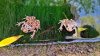
- A hundred Mallorcan midwife toads (Alytes muletensis) have been released back into the wild in the Tramuntana mountain range of Mallorca by the zoo.
Zoo de Barcelona participates in different research, conservation and environmental education programs and has experience in the management of threatened wildlife. Now, thanks to this agreement, there will be collaboration on threatened species such as the Mallorcan midwife toad (Alytes muletensis), the Ibiza wall lizard (Podarcis pityusensis) and Lilford's wall lizard (Podarcis lilfordi), as well as other protected species that are of interest of conservation. In addition, the collaboration is also extensive in the development of environmental education and awareness projects about the protected wild fauna of the Balearic Islands. Thus, the agreement contemplates the exchange of scientific and technical knowledge between both institutions and the creation of a commission to monitor the actions that must be carried out within the framework of the agreement.
The need for these protective actions derives from the current unfavorable situation of some species, as well as from the application of regional, state and international regulations in this matter. Therefore, the Ministry of Agriculture, Fisheries and the Natural Environment of the Balearic government carries out conservation and recovery plans for endangered wild species, which may include ex situ conservation actions and breeding programs in specialized centers with the aim of reintroduction or population reinforcement in natural habitats. In this sense, the Barcelona Zoo has the appropriate facilities and specialized personnel to develop this type of performance.

Alliberem prop d’un centenar de ferrerets a la serra de Tramuntana de Mallorca
3_11.jpg
 

Attachments

  • 3_11.jpg
    3_11.jpg
    185.6 KB · Views: 247
News:
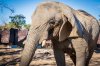
- Yoyo, one of the three African bush elephant (Loxodonta africana) cows that call Barcelona their home has passed at the estimated age of 54, the oldest African elephant in captivity.
With an estimated age of 54, Yoyo died this morning. Her state of health had worsened in recent weeks due to problems linked to his advanced age, which has been evolving towards an increasingly delicate state that has not been able to be reversed, despite the efforts of the veterinary team and zoo keepers.
The life expectancy of her species under human care is 39 years, so when the elephant arrived at the Zoo 16 years ago she was already an older animal. His time in a circus had left her with physical and psychological consequences that required a lot of dedication. Thanks to the specialized attention of the Zoo's technical team, her condition improved over the years and Yoyo formed a cohesive and united family with her companions, Susi and Bully, who also came from similar experiences.

Mor la Yoyo, l’elefanta més longeva del món
Gf4dm_mWoAA2tEb.jpg
 

Attachments

  • Gf4dm_mWoAA2tEb.jpg
    Gf4dm_mWoAA2tEb.jpg
    205.1 KB · Views: 207
Last edited:
News:
- Yoyo, one of the three African bush elephant (Loxodonta africana) cows that call Barcelona their home has passed at the estimated age of 54, the oldest African elephant in captivity.
With an estimated age of 54, Yoyo died this morning. Her state of health had worsened in recent weeks due to problems linked to his advanced age, which has been evolving towards an increasingly delicate state that has not been able to be reversed, despite the efforts of the veterinary team and zoo keepers.
The life expectancy of her species under human care is 39 years, so when the elephant arrived at the Zoo 16 years ago she was already an older animal. His time in a circus had left her with physical and psychological consequences that required a lot of dedication. Thanks to the specialized attention of the Zoo's technical team, her condition improved over the years and Yoyo formed a cohesive and united family with her companions, Susi and Bully, who also came from similar experiences.

Mor la Yoyo, l’elefanta més longeva del món
View attachment 757747

Sad news, but she wasn't the oldest African elephant, Bahati in Ramat Gan is several years older and still alive.
 
Glad you corrected this because I was very skeptical of the claim, I should have checked more profusely.
Honestly, it's on the news outlets that stated it as such.
In any case, since they're down to two elephants and the BCN zoo's board is... Well, not particularly receptive of receiving new "non-native" animals, I do wonder if they'll keep elephants in the long term.
 
Honestly, it's on the news outlets that stated it as such.
In any case, since they're down to two elephants and the BCN zoo's board is... Well, not particularly receptive of receiving new "non-native" animals, I do wonder if they'll keep elephants in the long term.
It looks like a really modern facility with strong steel fencing so I'm sure they can do breeding or bachelor herds with some tweaks to the habitat.
 
I don't see it as something that simple, given the zoo's situation I doubt they will even attempt to bring in more elderly cows.
I agree with you there... As I've been saying lately, the Barcelona Zoo's most crushing flaw is being in Barcelona... It just CANNOT flourish in this city.
 
Has there been any progress on this? I know things have often moved slowly at Barcelona and wonder how this is going.
Yeah, that plan fell through. This is how it always goes...
An honest slogan for Barcelona zoo (and the city itself really) should be "Disappointment is 100% guaranteed!"
 
News:
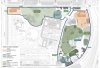
- The Barcelona Zoo is facing the most profound transformation since it was inaugurated in 1892. The park is immersed in a transition that emphasizes above all the conservation plans for native and endangered fauna in which it is involved. In transition from will to deeds, the enclosure faces a change of era with an extensive remodeling, which is accompanied by the renunciation of certain emblematic animals remaining at the park.
The transformation seeks to prioritize the conservation of native fauna and threatened species, which would mean the end of the presence of some emblematic animals in the Ciutadella grounds. The plans presented by the zoo suggest that species such as elephants, tigers, penguins,... could disappear from the zoo, although this proposal still lacks definitive approval, the species list the project will display is far from finished and still being debated. The document proposes maintaining 188 species compared to the current almost 300, the media reports. Some of the animals the articles mention will apparently keep being housed at the zoo include Katanga lions, Chapman's zebras, crocodiles (species not determined), Rothschild's giraffes, flamingoes (species not determined, but at least greater), different tortoise/turtle species, western lowland gorillas, Bornea orangutans, chimpanzees, Iberian wolves, Eurasian otters, Montseny brook newts, mediterranean pond turtles, saharan dorcas gazelles, meerkats, scimitar-horned oryxes, Lyle's flying foxes, ring-tailed lemurs, south american tapirs, giant anteaters and pygmy hippopotamuses. The two mentioned new species are the Iberian lynx :rolleyes: and striped hyena. It's important to note that everything presented here can be subjected to change, as this is mostly a masterplan proposal.
The complete transformation would reach 65 million euros,and is part of the general renovation of the Ciutadella park. The new zones proposed by the zoo are subdivided into three big thematic areas; ORIGENS, EVOLUCIÓ and BIODIVERSITAT. Within those areas we can find the following sub-zones, everything written between brackets is speculation rather than anything mentioned in the articles:
ORIGENS:
- Els nostres origens (Primates and education about human origins)
- Bioscope (Evolution in general, maybe home to smaller animals)
EVOLUCIÓ:
- Aillats (Island species)
- Els sentits de l’evolució (Renovation of the current bird house)
- Espai invertebrats (The zoo's invertebrate house has been open to the public since 2022. It's mentioned as part of the master plan)
- Explorem la vida (Not sure)
BIODIVERSITAT:
- Sahel (Already well established (giraffes, lions, mongooses,...), possible new exhibits for animals like scimitar-horned oryx, Mhorr gazelles, dorcas gazelles,...)
- Descobrim la Mediterrània (Mediterranean species such as Iberian wolf, Eurasian otter, barbary macaque,... the article showcases concept art of an aviary for flamingoes and other waders that would fit in this area)
- Cuida’ls: This new experience has already been constructed and is visitable by zoo-goers as we speak. "This space, designed for all ages and open to educational centers, helps visitors understand which species are endangered and the role of the Barcelona Zoo in biodiversity conservation. Through immersive visuals, play, and discovery, it showcases what actions can be taken to protect biodiversity and emphasizes the importance of responsible pet ownership". It doesn't house animals.
- Jardí de la biodiversitat (Some sort of greenhouse/building? Not sure)
- Bosc Humit (Humid forest species, something that can fit in the current spider monkey islands)
------------------------------
In my modest opinion, the Barcelona zoo has had many master plan attempts that have fallen off or never picked up traction, I kinda like what I'm seeing here and I'd love it to actually be constructed, but I won't get my hopes up too much...

Vuelve la Semana de las Terrazas de los Hoteles de Barcelona: más de 130 actividades gratis en 10 días
El Zoo de Barcelona prepara su mayor revolución en más de un siglo

Imagen de WhatsApp 2025-06-05 a las 11.54.56_99abaa23.jpg Imagen de WhatsApp 2025-06-05 a las 11.54.56_83e387b9.jpg

------------------------------------
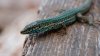
- The zoo has also started a captive breeding program of the endangered Ibiza wall lizard (Podarcis pityusensis) alongside the Govern de les Illes Balears. The captures of 17 healthy and genetically different specimens have been carried out (ten individuals from Ibiza and seven from Formentera), which have been transferred to the Barcelona Zoo and will constitute the first reproducers of the ex-situ populations.
The general director of Natural Environment and Forest Management, Anna Torres, who this Friday will visit the zoo facilities and the terrariums that house the 17 specimens, highlighted that "this initiative promotes the preservation of the Pitiusas lizard and allows us to work on the viability of repopulation with this species. Furthermore, to reverse the current trend, we will continue to promote actions to combat invasive snakes, which, without a doubt, today constitute the most serious threat to lizards."

El Govern y el Zoo de Barcelona impulsan un plan piloto para garantizar la conservación de la lagartija de las Pitiusas
3160440.jpg
 

Attachments

  • Imagen de WhatsApp 2025-06-05 a las 11.54.56_99abaa23.jpg
    Imagen de WhatsApp 2025-06-05 a las 11.54.56_99abaa23.jpg
    167.7 KB · Views: 63
  • Imagen de WhatsApp 2025-06-05 a las 11.54.56_83e387b9.jpg
    Imagen de WhatsApp 2025-06-05 a las 11.54.56_83e387b9.jpg
    192.7 KB · Views: 61
  • 3160440.jpg
    3160440.jpg
    86.6 KB · Views: 62
Last edited:
I could see this going though quite well

I think getting rid of the big animals is fine since they're already quite cramped at the zoo. As well, I especially welcome a more comprehensive series of zones.

If they could have their cake and eat it too, then I'd scout Barcelona for a sister site where the giants like elephants can be held
 
When I read the first sentences my first thought was that it was another proposal to completely remove non-native and exotic species from the zoo completely. As I kept reading on I’m very glad that that wasn’t the case and that they’re committed to continuing to maintain some of their more exotic species such as great apes, giraffes, lions etc. Overall a pretty decent and ambitious master plan for a zoo that’s been long overdue of one.
 
Back
Top