
I did not post many photos here in 2024. I took quite a few, but I built up a backlog for processing due to several computer problems. Then during a visit to Hoo Farm with @bongorob, the battery cover fell off my old D500, which seemed a sign that it was time to consider a new camera. @SMR had already made me envous of his mirrorless Canon, and then Nikon announced the new Z6iii and after I had the chance to handle one at a dealer's open day, I took the plunge. I chose the kit with a 24-120mm zoom, plus an adapter to let me use my old F-mount lenses and a 50mm macro (my old 40mm macro is for the crop-sensor D500, so it can't cover the full-size sensor in my new kit).
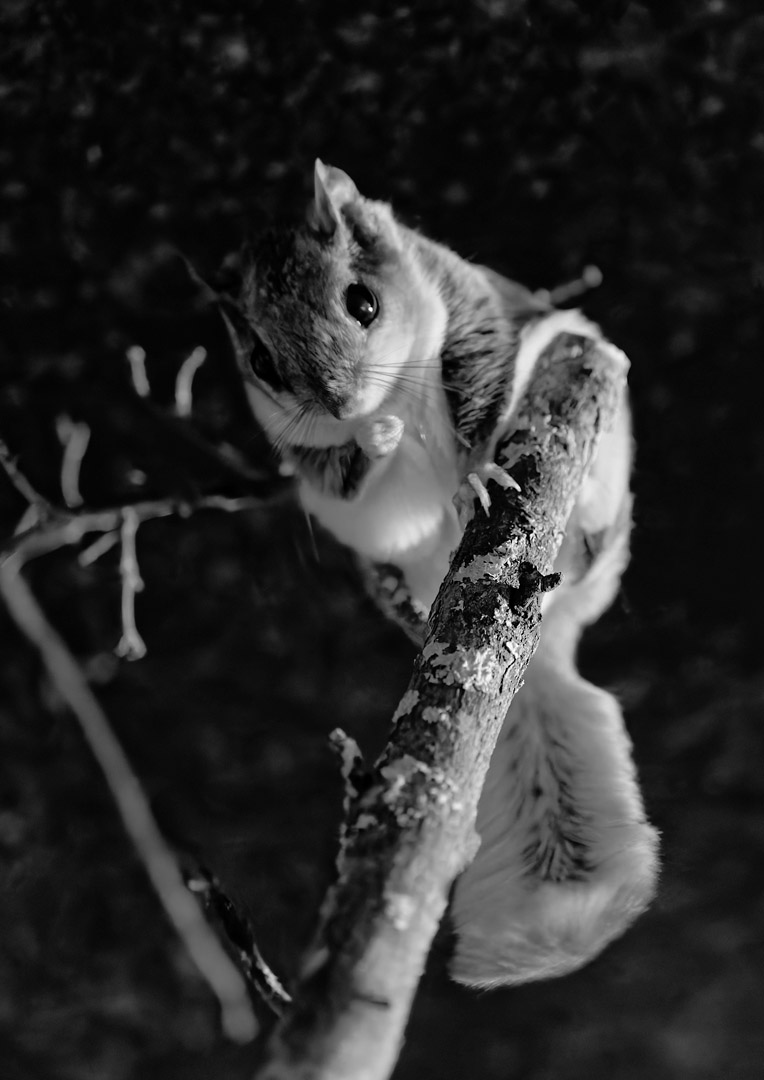
I needed a few zoo visits to become reasonably familiar the basic controls, although I am still learning how to tune the settings exactly the way I want in different situations. A visit to Regent's Park showed me how the digital viewfinder made it easier to get a images of an aye-aye in the Clore (although the actual photos were poor). So just before Christmas I went to Zooquaria, to have a workout with their fishes (with horrible results) and in the nocturnal section. The sensors in mirrorless cameras are designed to give decent results in poor light, so I was in new territory setting the ISO at 4000 or more. I found that the red lighting in the section was so dim that the camera's autofocus was very slow to do its job. However I did get some photos, not all successful, but I was pleased as I had never been able to take photos of a kinkajou or a flying squirrel before.
The red lighting prevented any real indication of other colours in the creatures, but I didn't mind converting them to black and white. And I had another trick up my sleeve, I had matched my new camera with new software, DXo Photolab 8, which can use AI to improve image sharpness and reduce noise - but it has also given me another steep learning curve to find my way up.
Here are my notes on the images I posted in our Gallery.
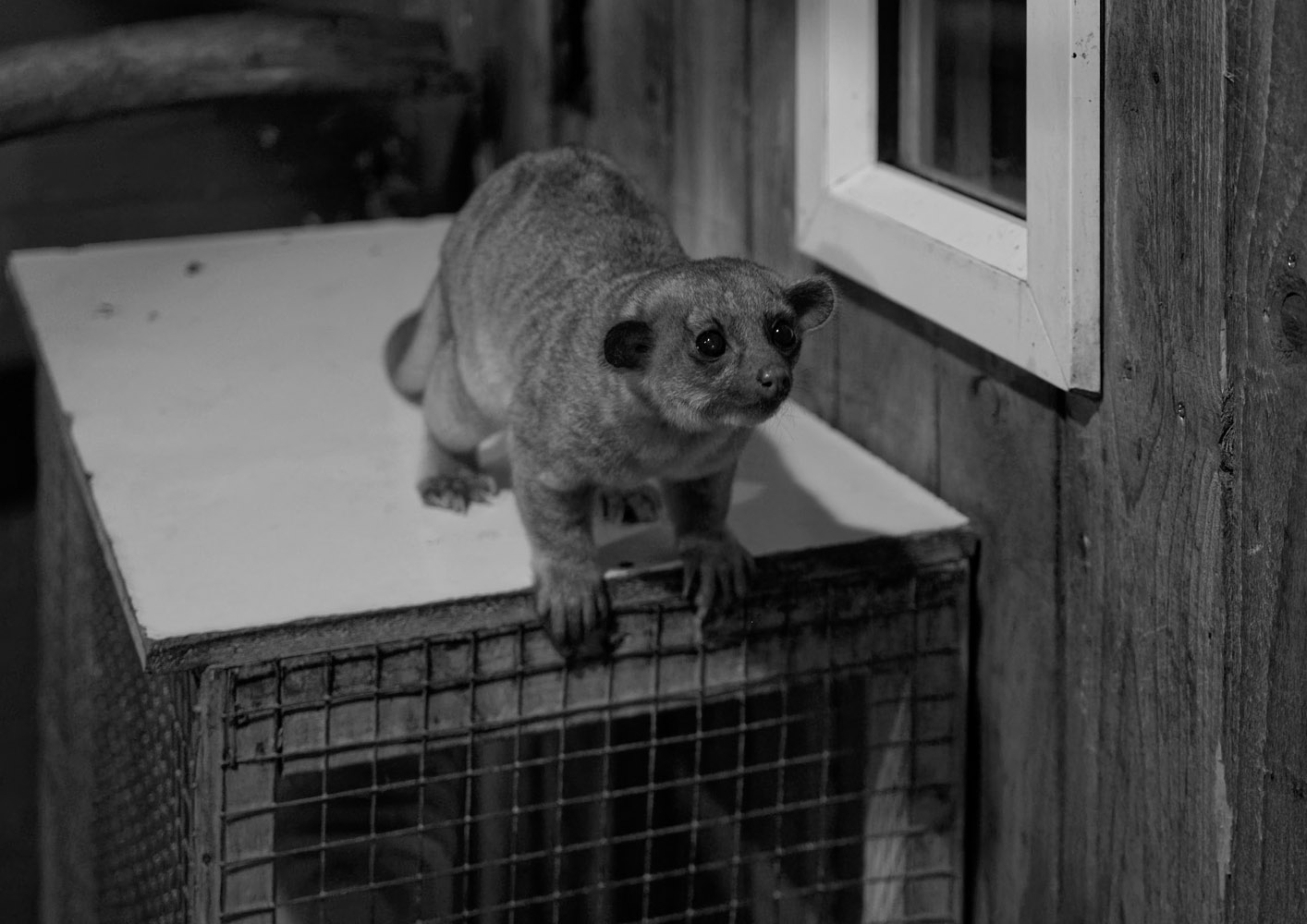
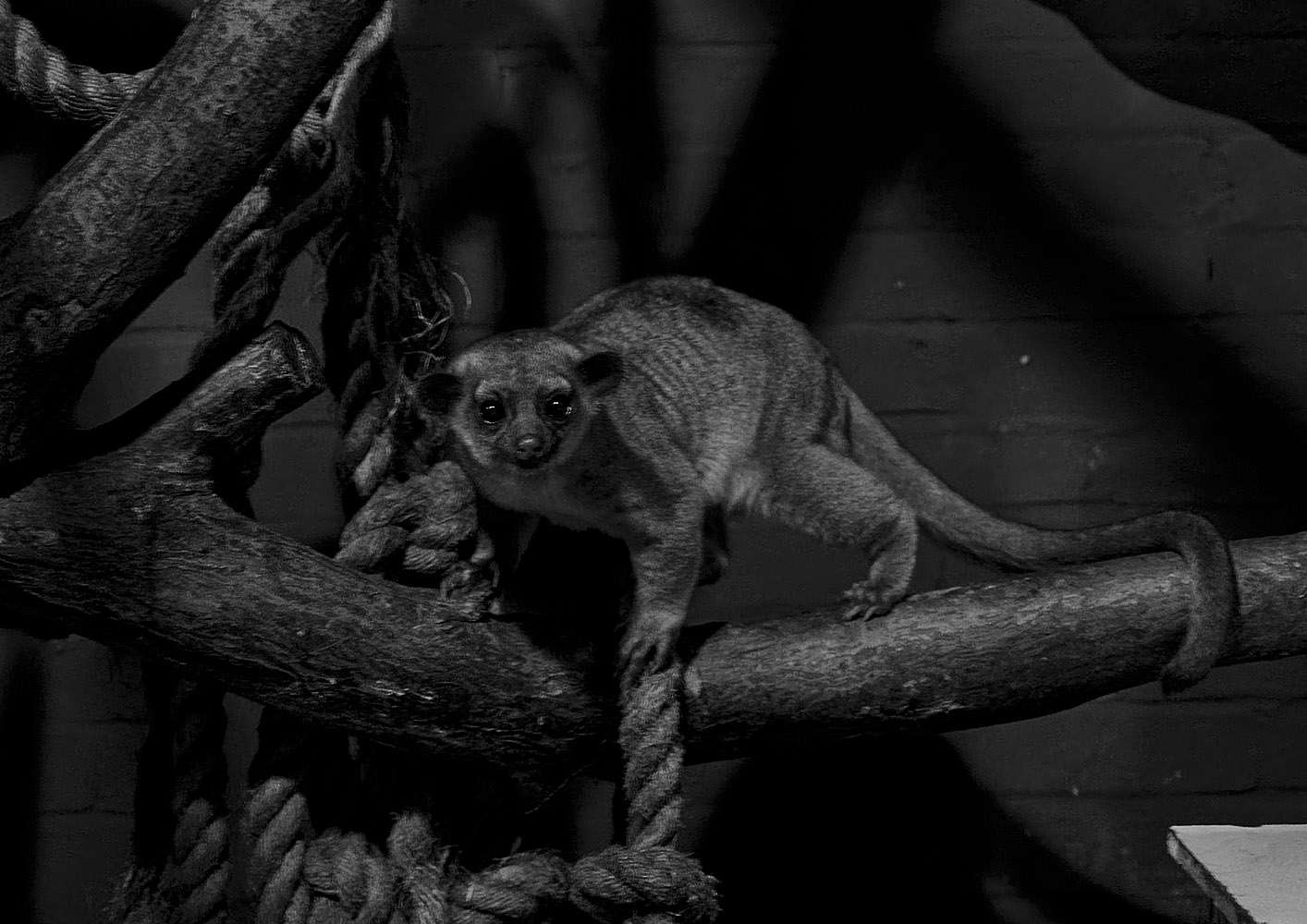 1st image: Nikkor Z 50mm f/2.8 at 4000ISO, f/3.5 and 1/15ths, 1.0 EV underexposure (to get the night time feel). 2nd image: same settings except aperture f/3
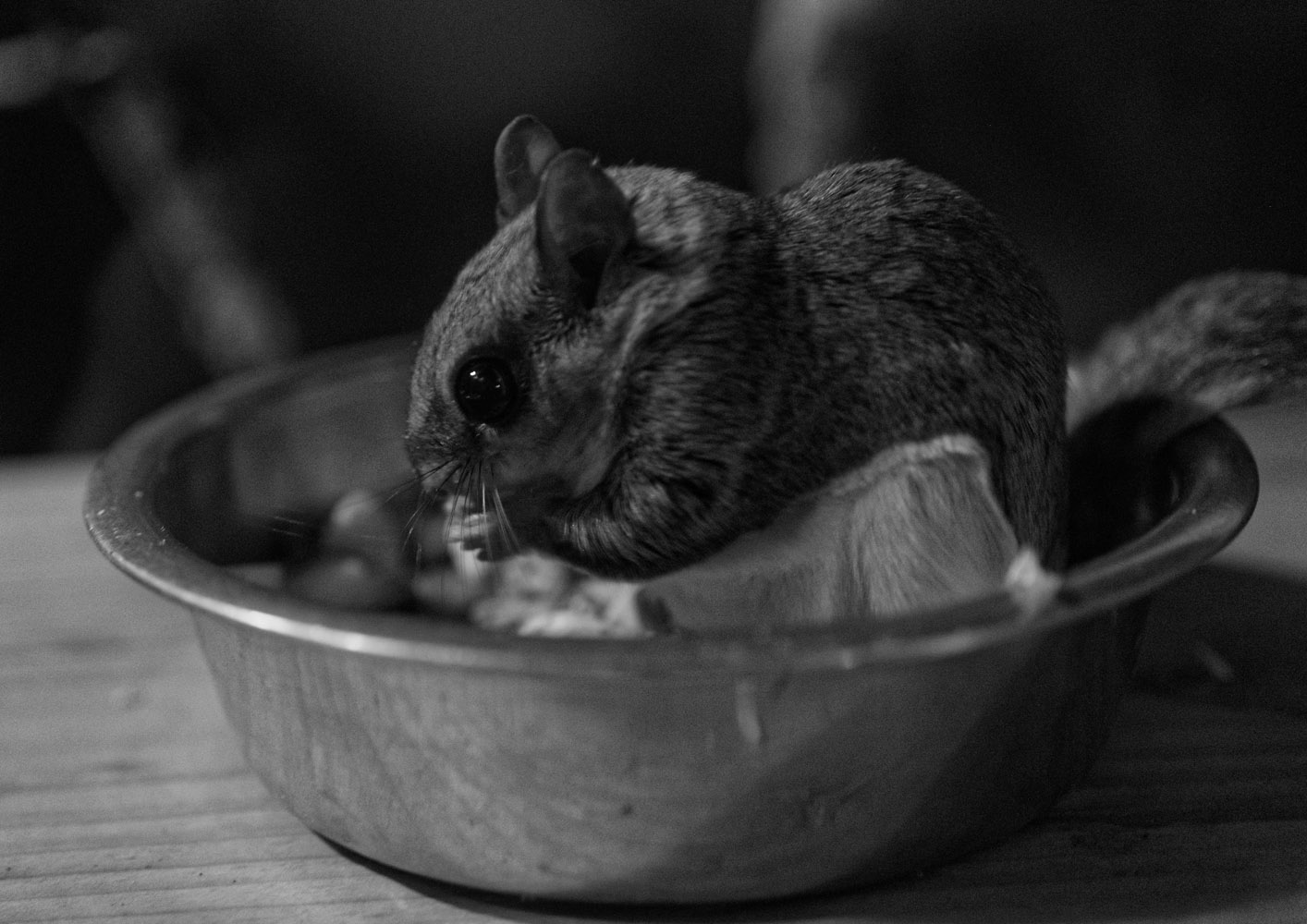
 3rd image: same settings as 1st.
4th image: same settings except, 6400ISO, f/3.2and 1/10s.
I had the camera mounted on a monopod, with VR on and using the electronic shutter (which is virtually soundless).
I know these are far from being the best photos I have ever taken, but I am encouraged by them. With a bit more experience with the software I might be able to improve them a little. However I think a faster lens would probably help by speeding accurate focus and longer focal length might be useful too. Perhaps an 85mm f/1.4 might be ideal . . .
I needed a few zoo visits to become reasonably familiar the basic controls, although I am still learning how to tune the settings exactly the way I want in different situations. A visit to Regent's Park showed me how the digital viewfinder made it easier to get a images of an aye-aye in the Clore (although the actual photos were poor). So just before Christmas I went to Zooquaria, to have a workout with their fishes (with horrible results) and in the nocturnal section. The sensors in mirrorless cameras are designed to give decent results in poor light, so I was in new territory setting the ISO at 4000 or more. I found that the red lighting in the section was so dim that the camera's autofocus was very slow to do its job. However I did get some photos, not all successful, but I was pleased as I had never been able to take photos of a kinkajou or a flying squirrel before.
The red lighting prevented any real indication of other colours in the creatures, but I didn't mind converting them to black and white. And I had another trick up my sleeve, I had matched my new camera with new software, DXo Photolab 8, which can use AI to improve image sharpness and reduce noise - but it has also given me another steep learning curve to find my way up.
Here are my notes on the images I posted in our Gallery.
4th image: same settings except, 6400ISO, f/3.2and 1/10s.
I had the camera mounted on a monopod, with VR on and using the electronic shutter (which is virtually soundless).
I know these are far from being the best photos I have ever taken, but I am encouraged by them. With a bit more experience with the software I might be able to improve them a little. However I think a faster lens would probably help by speeding accurate focus and longer focal length might be useful too. Perhaps an 85mm f/1.4 might be ideal . . .
