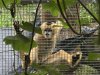
austrlain zoo gower
Well-Known Member
Why can’t capybara be housed in Victoria?


I feel like I heard somewhere that a new gibbon or primate exhibit was being considered to as well as orangutan expansion but I may have heard wrong to
Different states have different rules, usually pertaining to biosecurity. Tasmania only allows castrated male coati for example.Why can’t capybara be housed in Victoria?
Queensland only allows single sex groups of female meerkats (not breeding groups);
Not correct.
The Darling Downs Zoo worked for 10 years to have the Queensland government change it's Meerkat policy. Other Australian states could keep Meerkats for 40 years prior to that.
In 2015 we displayed the first group of Meerkat [6] in this state but were not allowed to breed them.
Another few year's battling and we finally were permitted to breed them in 2022. It can be done!
Some other states still have restrictions on what can and can't be bred in their jurisdictions [Victoria and WA come to mind] but those restrictions usually don't reflect the reality of modern day exotic animal containment standards and biosecurity protocols in our zoos.
There is also a political slant in some states to allow government owned zoos to breed but denying privately owned zoos that right.


No your right on the money - I've heard the same.I feel like I heard somewhere that a new gibbon or primate exhibit was being considered to as well as orangutan expansion but I may have heard wrong to
I was told on my visit, 1 week ago by a volunteer that they are hopefully going to breed the White cheeked gibbons. She mentioned a new enclosure being built for orangutan's and gibbons for breeding opportunities. She told me she is leaving with the elephants to go work at Weribee full time. A primate expansion, Komodo dragon enclosure, possibly tapir and binturong would
Be an excellent replacement for the elephants
Most of the elephant keepers will be heading across to Werribee. An orangutan expansion was on the cards. I'd assume a decision would have been made on this and obviously it would come down to whether the criteria I mentioned above are met.I was told on my visit, 1 week ago by a volunteer that they are hopefully going to breed the White cheeked gibbons. She mentioned a new enclosure being built for orangutan's and gibbons for breeding opportunities. She told me she is leaving with the elephants to go work at Weribee full time. A primate expansion, Komodo dragon enclosure, possibly tapir and binturong would
Be an excellent replacement for the elephants
Li-lian turns 18 years old this year and given she’s failed to breed with partners, I’m not overly optimistic she’ll successfully breed. A new exhibit could give her increased privacy, but whether that alone will be conducive to breeding, I don’t know.
An orangutan expansion will be very exciting. Perth has four viable breeding females and the masterplan is unclear whether it will support the housing of a large colony or a slimmed down colony in a larger exhibit/exhibts. Moving a pair of females such as Pulang (1993) and Lestari (2012) to Melbourne would allow Perth to concrete on breeding Dinar (1987) with Sekara (1990) and Teliti (2009).
Most of the elephant keepers will be heading across to Werribee. An orangutan expansion was on the cards. I'd assume a decision would have been made on this and obviously it would come down to whether the criteria I mentioned above are met.
Equally good to hear Melbourne still intend to breed their White Cheeked Gibbons. Li Lian hasn't conceived in a while now and has had issues with being comfortable around visitors. Not sure if that would relate to her not conceiving as of yet but it's a possibility.
I still holding out hope for breeding, I think her age is not a concern at the moment. 18 years old gibbons can still easily conceive. Sexual maturation for the species if around 6-8 years of age. However most gibbons only start having offspring at age 11 or older. Considering White Cheeked gibbon can live to there 40s in captivity there is lots of time left!
MZ have incorporated many things to help give her privacy, including the black glass, not allowing guest right up to the glass, and growing the sides of the enclosure. From what one of the keepers told me she if very selective with who she likes and who she doesn't . On my visit at least, she came right up to the glass, and interacted with me, furthermore when I was talking to the keeper, she was fine with me and 3 other individuals being very close to her.
Breeding will come in time. Building a large new enclosure, with foliage and larger back of house facilites may also help her conceive, if they were not featured on the orangutan expansions, the Japanese island could be a good spot, as it is set back from the visitors, along with large night quarter and vegetation that she can hide in.
Isador is getting on in age, she is 42 years old, the average life span in captivity is around 40, all though many individuals have lived pass this. Sampit is around 28 years old, so still has a long life ahead of him. Whilst Isador still seems to be in great condition, once she eventually passes, Sampit could live in the tree top apes and monkeys, whilst the gibbons move in to the island. They might either find him a new mate, or incorporate a non breeding pair or male. The breeding focus will be on Kemala and Batak. An orangutang expansion, could facilitate, a non breeding and breeding enclosure for the siamang
In terms of Forest of Wonder
Here is what I envision
The trail would remain focused on species from South East Asia. The 3rd elephant paddock along with the small island in the lake, would facilitate an expansions to the Orangutan expansions. High arboreal lines similar to Perth and Aukland Zoo. The First elephant enclosure, with the largest pool, would accomodate a species of Tapir, ideally Malayan, however this is unlikely. Another species we have given up on because of health problems partly caused by inadequate enclosures. Bairds Tapir, are more likely replacement. They could them completely redevelop the 2nd enclosure, which is the largest. Possibly for Komodo dragon and binturong. Tapir may get along with the Orangutans, I have been to many zoo where they live together. They could retain some of the barns, or even the one in the 3rd paddock for the tapir. There could be a smaller binturong enclosure built, or possibly renovating the squirrel monkey at forest havest, to make it look no like a prison cell, with glass. The squirrel monkeys are likely going to pass on soon as they are elderly individuals. Overall this could be an effective area, whilst to completely domilisihng everything, it may also be quite cost effective, when compared to other options. They may also choose not just Asian primates possibly spider monkey. If they didn't the tree top apes and monkey could have renovation to incorporate a 3 large enclosures for spider monkey, cotton top tamarin and emperor tamarin. Colobus could move into the mandrill enclosure, and possibly an expansion of the hippos. There is now 3 colobus the already cramped enclosure could be bigger.
How can this be? The barrier keeps the visitors meters back from the glass and the glass is a privacy glass ie. the gibbons can't see back through it?On my visit at least, she came right up to the glass, and interacted with me, furthermore when I was talking to the keeper, she was fine with me and 3 other individuals being very close to her.
I've always thought the Japanese Island would be perfect for White Cheeked Gibbons, and Li Lian especially. The exhibit itself rarely has visitors and it's dense foliage and layout would enable adequate privacy that her current exhibit doesn't provide.Breeding will come in time. Building a large new enclosure, with foliage and larger back of house facilites may also help her conceive, if they were not featured on the orangutan expansions, the Japanese island could be a good spot, as it is set back from the visitors, along with large night quarter and vegetation that she can hide in.
Isidor is the male and Sampit is the female. Saimangs have been known to live into their late 40's, however Isidor is now considered 'elderly'. An Orangutan/Saimang expansion in the future may hopefully allow them to accommodate the current younger pair and additional Saimang (such as Sampit) eventually.Isador is getting on in age, she is 42 years old, the average life span in captivity is around 40, all though many individuals have lived pass this. Sampit is around 28 years old, so still has a long life ahead of him. Whilst Isador still seems to be in great condition, once she eventually passes, Sampit could live in the tree top apes and monkeys, whilst the gibbons move in to the island. They might either find him a new mate, or incorporate a non breeding pair or male. The breeding focus will be on Kemala and Batak. An orangutang expansion, could facilitate, a non breeding and breeding enclosure for the siamang
No your right on the money - I've heard the same.
It really depends on Melbourne's plans for orangutans going forward. Do they intend to breed; Do they intend to just hold a single breeding pair? Currently the region has four facilities dedicated to holding Sumatrans; and only one facility breeding (Perth). It really depends on the region and whether there will be a need for Melbourne to accommodate more Orangutans in the future.
How can this be? The barrier keeps the visitors meters back from the glass and the glass is a privacy glass ie. the gibbons can't see back through it?
What does concern me is that Li-lian has failed to breed with two mates now, which suggests there may be an underlying issue - whether that’s infertility (including social fertility - behavioural non-breeder); or whether it’s as simple as the exhibit design not affording her sufficient privacy is unknown. A new exhibit will certainly eliminate the possibility of the latter; though given the standard of exhibits throughout the region in the 20th century (with breeding occurring without issue), I’m doubtful that’s the stand-alone cause.

Are you sure about that? It must be a fairly new update if that is the case, it wasn't like that when I visited a few months back. Also the privacy glass 100% doesn't give them the same view as us. They can't see back through it.The barrier only covers the 3/4 of the middle section of the window, guest can still get up to the sides of the glass. The animals can still see slightly through the glass. Hence why she was up so close, when a keeper who she was working with. I confirmed this with a keeper. I was told in person that they get the same view as us. I mostly interacted with the keeper, where the mesh is on the left side of the enclosure as you exit TTAAM. Hence how I got this photo. Not many people stop to look at this area. The Japanese island would suit these animals very well. From what I have seen and heard, the Tree top apes enclosures lack proper back of house facilities. So the arrival of offspring may not be seen as that good of a scenario for that enclosure . That is why they would be better in the Japanese garden, where there is a place guest cannot see them along with more dense foliage.
Are you sure about that? It must be a fairly new update if that is the case, it wasn't like that when I visited a few months back. Also the privacy glass 100% doesn't give them the same view as us. They can't see back through it.
I have noticed her and the male especially tend to hang out on the mesh on the boardwalk side of the exhibit.
I really hope they go through with it. A new primate exhibit for orangs and gibbons with aerial high ropes especially if done right I.e over visitor areas would be such a fantastic exhibit and draw card.
With the elephants vacating there space. It's a chance for the zoo to do a completely new redesign and create something quite nice. Gibbons and oramgs are popular species as well.