Lacuniacha Lacuniacha News

SivatheriumGuy

Well-Known Member
5+ year member
New species:
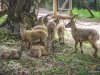
- The park has welcomed a herd of Alpine ibex (Capra ibex) that are part of the recently created EEP for this species. The herd has been formed by various individuals from different German and Czech parks, 10 individuals of said species live now in Lacuniacha.
The arrival of this species has supposed the phasing out of the Southeast Iberian ibex (Capra pyrenaica hispanica) herd that has lived at this park since 2001, taking over their former exhibit. This is also the only herd of Alpine ibex that can be observed at any Spanish zoo.

Lacuniacha recibe esta semana 10 ejemplares de íbice alpino
Ibex alpino en Lacuniacha - Lacuniacha
manada-de-ibices.jpg
 

Attachments

  • manada-de-ibices.jpg
    manada-de-ibices.jpg
    157.4 KB · Views: 52
New species:
- The park has welcomed a herd of Alpine ibex (Capra ibex) that are part of the recently created EEP for this species. The herd has been formed by various individuals from different German and Czech parks, 10 individuals of said species live now in Lacuniacha.
The arrival of this species has supposed the phasing out of the Southeast Iberian ibex (Capra pyrenaica hispanica) herd that has lived at this park since 2001, taking over their former exhibit. This is also the only herd of Alpine ibex that can be observed at any Spanish zoo.

Lacuniacha recibe esta semana 10 ejemplares de íbice alpino
Ibex alpino en Lacuniacha - Lacuniacha
View attachment 727098
Allthough, I do like that - threatened - European caprids are exhibited in European temperate climate zoos ..., I do find the choice of replacing the local and related full species Pyrenean ibex (the subspecies hispanica from central Spain as the Pyrenean and Lusitanica subspecies are now extinct ...) one that I cannot support.

I also noted the park maintains a group of Alpine chamois Rupicapra rupricapra and not the rare local native full species Pyrenean chamois Rupicapra pyrenaica pyrenaica), the nominate subspecies only found in Espagna (Cantrabian mountains and Spanish Pyrenees and France (restricted to Pyrenees) a and the related Italian Pyrenean chamois Rupicapra pyrenaica ornata (Abruzzi Mountains).
 
Allthough, I do like that - threatened - European caprids are exhibited in European temperate climate zoos ..., I do find the choice of replacing the local and related full species Pyrenean ibex (the subspecies hispanica from central Spain as the Pyrenean and Lusitanica subspecies are now extinct ...) one that I cannot support.

I also noted the park maintains a group of Alpine chamois Rupicapra rupricapra and not the rare local native full species Pyrenean chamois Rupicapra pyrenaica pyrenaica), the nominate subspecies only found in Espagna (Cantrabian mountains and Spanish Pyrenees and France (restricted to Pyrenees) a and the related Italian Pyrenean chamois Rupicapra pyrenaica ornata (Abruzzi Mountains).
I agree with you when it comes to the ibexes, at least the consolation of getting a new species of caprid at a Spanish park is a nice addition.
But the park doesn't have alpine chamois, they house Rupicapra pyrenaica pyrenaica. If you looked at the website the taxonomy is not properly updated, if you look at the description of the species you might notice that they refer to the cantabrian chamois as Rupicapra rupicapra parva instead of the proper subspecies name, Rupicapra pyrenaica parva.
 
I agree with you when it comes to the ibexes, at least the consolation of getting a new species of caprid at a Spanish park is a nice addition.
But the park doesn't have alpine chamois, they house Rupicapra pyrenaica pyrenaica. If you looked at the website the taxonomy is not properly updated, if you look at the description of the species you might notice that they refer to the cantabrian chamois as Rupicapra rupicapra parva instead of the proper subspecies name, Rupicapra pyrenaica parva.
OK, yeah ... they did not put that right in their info on their site. Nice to see that they do have Pyrenean Chamois from the Cantabrian mountain range (ssp. parva).
 
OK, yeah ... they did not put that right in their info on their site. Nice to see that they do have Pyrenean Chamois from the Cantabrian mountain range (ssp. parva).
You misinterpreted my post, what I meant is that the website cites the cantabrian subspecies as Rupicapra rupicapra, not that it houses it. The paragraph explains that there are two different subspecies of chamois in Spain.
Lacuniacha has Rupicapra pyrenaica pyrenaica ;)
 
Back
Top