Public Indoor Enclosures for the Larger Big Cats

wild boar

Well-Known Member
What major zoos have indoor enclosures for the larger big cat species (so excluding clouded leopards) that the general public is able to see?

I know the Como Park Zoo and Conservatory has two dayrooms for their lions in addition to the outdoor yard, although as of late they have been used for other species as well. I think the Great Plains Zoo also has both indoor and outdoor exhibit spaces for their lions.

The Bronx Zoo until recently kept an Amur leopard inside JungleWorld without access to an outdoor enclosure. Apparently the Downtown Aquarium Denver only has an indoor enclosure for its tigers.

Are there other major zoos that either only have indoor enclosures for their big cats or have both public indoor and outdoor enclosures for them?
 
What major zoos have indoor enclosures for the larger big cat species (so excluding clouded leopards) that the general public is able to see?

I know the Como Park Zoo and Conservatory has two dayrooms for their lions in addition to the outdoor yard, although as of late they have been used for other species as well. I think the Great Plains Zoo also has both indoor and outdoor exhibit spaces for their lions.

The Bronx Zoo until recently kept an Amur leopard inside JungleWorld without access to an outdoor enclosure. Apparently the Downtown Aquarium Denver only has an indoor enclosure for its tigers.

Are there other major zoos that either only have indoor enclosures for their big cats or have both public indoor and outdoor enclosures for them?
And a further question is: “Why don’t they?”. Obviously, lions, Malayan tiger are in residence all year at the Bronx Zoo.
There used to be “ Lion Houses” in every major zoo with indoor and outdoor enclosures for large cats : lions, tigers, jaguar, leopards from equatorial climates .
Berlin - Tierpark and Tiergarten - have spacious indoor and outdoor enclosure for their felids - large and small.
As do most European zoos
Cost must be factored.
You can be that they are maintained in a holding cage in winter months but that would not be esthetically or cosmetically attractive to zoo visitors and and destroy the illusion
 
Many zoos are able to keep their lions outside in the winter. I don’t know why the Bronx zoo doesn’t. Maybe because the exhibit is so old? I don’t know if it has modern advancements like heated rocks to keep the lions more comfortable in colder weather.

In general I assume few zoos have indoor viewing for big cats because they are typically cold tolerant, so indoor viewing would be unnecessary if the animals are visible year round outdoors regardless.
 
Many zoos are able to keep their lions outside in the winter. I don’t know why the Bronx zoo doesn’t. Maybe because the exhibit is so old? I don’t know if it has modern advancements like heated rocks to keep the lions more comfortable in colder weather.

In general I assume few zoos have indoor viewing for big cats because they are typically cold tolerant, so indoor viewing would be unnecessary if the animals are visible year round outdoors regardless.
I do not know if that applies to Malay tigers, jaguar , Asian leopards , felids from the Neo Tropical, Asian and equatorial Ethiopian realms.
The cats are, obviously, housed in indoor enclosures when off the exterior. exhibits.
I believe it comes down to cost .
The zoos do not wish to exhibit the animals in cages to the public .
Obviously , that is how they are housed when not in their exterior enclosures.
Cost . The cost of exhibiting animals , in a climate controlled exhibit that esthetically appeals to the sensibly of the public is prohibitive . Insurance and fire regulations play a large part as well
ImThe Bronx Zoo houses lions, multiple gorillas, rhinos and elephants - none are exhibited indoors -save for one or two gorillas that are rotated in a small exhibit space.
Could they build a large enough indoor enclosure to exhibit these animals year round ? Yes
I doubt they are shipped off to Florida for the winter .
The animals are there all year round but tbe illusion would be destroyed if one had to see the gorillas behind bars or the rhinos in a barn
Money
 
Last edited by a moderator:
I do not know if that applies to Malay tigers, jaguar , Asian leopards , felids from the Neo Tropical, Asian and equatorial Ethiopian realms.
The cats are, obviously, housed in indoor enclosures when off the exterior. exhibits.
I believe it comes down to cost .
The zoos do not wish to exhibit the animals in cages to the public .
Obviously , that is how they are housed when not in their exterior enclosures.
Cost . The cost of exhibiting animals , in a climate controlled exhibit that esthetically appeals to the sensibly of the public is prohibitive . Insurance and fire regulations play a large part as well
ImThe Bronx Zoo houses lions, multiple gorillas, rhinos and elephants - none are exhibited indoors -save for one or two gorillas that are rotated in a small exhibit space.
Could they build a large enough indoor enclosure to exhibit these animals year round ? Yes
I doubt they are shipped off to Florida for the winter .
The animals are there all year round but tbe illusion would be destroyed if one had to see the gorillas behind bars or the rhinos in a barn
Money

Yes, of course it comes down to costs. These animals (by and large) don't spend their non-exhibit time in large natural looking enclosures, they are usually just indoor areas made out of concrete and steel with some enrichment items and water to drink.

Animals are not shipped to other states in the winter. That would be a massive cost and very stressful on the animals.

Broadly most can be exhibited year round outdoors except in the most extreme cold climates. "tropical" cats are largely OK with being given a choice of staying inside or going outside.

"Asian" is too broad of a term, it covers everything from snowy northern China and Russia to the tropical south Asia and India - so animals that live in vastly different terrain and ecosystems.

There are quite a few indoor ape exhibits, in contrast to big cats.
 
Last edited by a moderator:
The first thing thaf comes to mind when thinking about indoor big cat habitats at least for me is the cats building at the Milwaukee county zoo. It’s been awhile since I was there but I remember there being surprising large indoor exhibits for lions, amur tigers, jaguars, and possibly more? I remember being quite surprised by their size and presentation, although I didn’t really see a need for the amur tigers to have an indoor exhibit be idea getting a closer view of them.
 
Yes, of course it comes down to costs. These animals (by and large) don't spend their non-exhibit time in large natural looking enclosures, they are usually just indoor areas made out of concrete and steel with some enrichment items and water to drink.

Animals are not shipped to other states in the winter. That would be a massive cost and very stressful on the animals.

Broadly most can be exhibited year round outdoors except in the most extreme cold climates. "tropical" cats are largely OK with being given a choice of staying inside or going outside.

"Asian" is too broad of a term, it covers everything from snowy northern China and Russia to the tropical south Asia and India - so animals that live in vastly different terrain and ecosystems.

I believe Palearctic would have the term to describe Pt.Ataica and Amur leopards - North Eurasian species and South Asian to indicate Pt. Sumatrensis and, formerly
Pt. Sondaicus and Balica.
 
Last edited by a moderator:
Many zoos are able to keep their lions outside in the winter. I don’t know why the Bronx zoo doesn’t. Maybe because the exhibit is so old? I don’t know if it has modern advancements like heated rocks to keep the lions more comfortable in colder weather.

In general I assume few zoos have indoor viewing for big cats because they are typically cold tolerant, so indoor viewing would be unnecessary if the animals are visible year round outdoors regardless.
There aren't many zoos that have public indoor enclosures for big cats because, as you said, they're typically not necessary. However, there are some zoos that have those indoor exhibit spaces. My question is which zoos would that be.
 
There aren't many zoos that have public indoor enclosures for big cats because, as you said, they're typically not necessary. However, there are some zoos that have those indoor exhibit spaces. My question is which zoos would that be.
Lincoln Park Zoo, Chicago at Pepper Center has indoor and outdoor facilities for public exhibition of lions
 
Public-facing indoor enclosures for large mammals are generally being phased out. I think a lot of this is because even for zoos with extensive outdoor habitats alongside indoor, a photograph of a large animal in an indoor habitat out of context can still easily look bad. Lincoln Park, Omaha and Denver still had indoor cat facilities until the last decade and both were closed down, look them up on here and all of the gallery comments are very negative, often for understandable reasons. In addition, for cold-tolerant animals as discussed above they are often not necessary. Brookfield phased out their lion house a couple decades ago and part of the discussion was that the lions and tigers did not go inside much.

Lincoln Park Zoo still had an indoor lion house until some recent years, but the indoor habitats were considered outdated for even medium-sized cats or large cats with access to multiple indoor spaces - since the renovation, it simply acts as a viewing building to the outdoor lion enclosure.

Milwaukee County Zoo's Big Cat Country still has several indoor exhibits, and the indoor tiger exhibit in particular usually has at least one individual visible. I have seen lions, hyenas, tigers, jaguars and serval inside this building. The cheetah did not like the intended indoor exhibit so it was used for serval instead. The snow leopard is cold-tolerant and always outside. Many feel the big cats do not have enough space at this zoo and the tigers sometimes exhibit stereotypical behavior, but I think if the outdoor enclosures were expanded out, the indoor exhibits would not be a big problem.

Racine sometimes keeps lions indoors in the winter still, I believe, although on my fall visits they have usually been outside.

The first thing thaf comes to mind when thinking about indoor big cat habitats at least for me is the cats building at the Milwaukee county zoo. It’s been awhile since I was there but I remember there being surprising large indoor exhibits for lions, amur tigers, jaguars, and possibly more? I remember being quite surprised by their size and presentation, although I didn’t really see a need for the amur tigers to have an indoor exhibit be idea getting a closer view of them.
I believe the zoo has more tigers right now than can be kept in the same enclosure and so usually at least one is inside and at least one is outside and they rotate. I am not completely certain that this is the case but on my visits there's always at least one in each space.
 
Toronto has an indoor dayroom for its Amur tigers, in fact it has two large outdoor yard, a maternity yard and two indoor day rooms which can be combined into one. This is in addition to BTS holding spaces. That being said it was built for when the Giant Pandas were here with the plan of being turned into the Amur tigers after they left.

Our sumatrans are completely outdoors, but have the option for indoors, but this is BTS. The jaguar enclosure (although empty and planning for Renos) is covered but not indoor. We have no indoor viewing for Lions, Cheetahs or Cougars.

That being said on a nice day in winter the cheetahs will be out and it isn't uncommon to see th lions out in the heated cave all winter long.
 
Apparently the Downtown Aquarium Denver only has an indoor enclosure for its tigers.

The Downtown Aquarium Denver does have an outdoor area that the tigers have access to, but I believe it is fully bts and it can't be seen by visitors regularly.

Edit: I believe I am mistaken and that only Downtown Aquarium Houston has an outdoor exhibit.
 
Last edited:
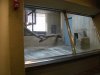
Cleveland used to have indoor exhibits for their snow leopards, but they were.... less than great to say the least. (Photos from Flickr)
3232365789_36b2fc29dc_k.jpg
3232366999_791a665ee9_k.jpg
Before anyone panics, the leopards have long since left these exhibits and they're now used for small primates.
 

Attachments

  • 3232365789_36b2fc29dc_k.jpg
    3232365789_36b2fc29dc_k.jpg
    129.9 KB · Views: 40
  • 3232366999_791a665ee9_k.jpg
    3232366999_791a665ee9_k.jpg
    123.8 KB · Views: 38
Cleveland used to have indoor exhibits for their snow leopards, but they were.... less than great to say the least. (Photos from Flickr)
View attachment 771344
View attachment 771345
Before anyone panics, the leopards have long since left these exhibits and they're now used for small primates.
All zoological facilities have indoor holding facilities for their animals - just not for public consumption.
COULD the public be allowed access to these, BTS spaces if they merely wanted to SEE animals and not have AN EXPERIENCE.
But, of course, that would relegate them to seeing animals behind bars, in a cage or in a barn setting. The difference between seeking a specimen on a mount in a museum or in a diorama that recreates its natural environment on the African savanna or Amazonian rainforest.
Zoos are a synthesis of art and science.
When I was young the Bronx , Central Park, Prospect Park and Staten Island zoos all had interior and exterior housing for all their Panthera specimens : lions, tropical tigers and leopards, jaguar , multiple felids.
Of course they were all small, inadequate cages - outside and inside.
Could zoos build large , indoor habitats that mirror actual natural conditions?
OF COURSE with thermatically controlled conditions , vegetation in expansive biodomes? Yes
You need: money , willingness to spend it and the expertise to design and maintain it.
It is the same reason the NY Yankees, NY Mets and NY Giants have spent hundreds of millions of dollars on stadia yet in an era of climate change , where there more precipitation than ever before , the refuse to install retractable roofs: MONEY - the difference between spending millions and billions.
Cleveland used to have indoor exhibits for their snow leopards, but they were.... less than great to say the least. (Photos from Flickr)
View attachment 771344
View attachment 771345
Before anyone panics, the leopards have long since left these exhibits and they're now used for small primates.
 
Back
Top