Wildlife HQ have announced the birth of a Rufous Bettong - reported on their FB page.
Its wonderful to see that they are doing so well with the smaller species.Twin Emperor Tamarins have been born to breeding pair Pedro and Santiago - reported on their FB page.


Wildlife HQ Zoo Visit – Part One (18/02/2024)
I visited Wildlife HQ Zoo today with my girlfriend on a warm, partially overcast day with a few light showers. The sun came out a few times, making for a pleasant visit. I had to choose between Wildlife HQ and Darling Downs Zoo, but ultimately went with Wildlife HQ since my girlfriend wanted to visit Noosa and go for a swim afterward.
We arrived mid-morning, snapped a few pictures with the adjacent Big Pineapple, and made our way down to the zoo. I have to say, I was surprised—I expected a quiet, slightly overgrown roadside zoo like Gorge Wildlife Park back home, but Wildlife HQ was bustling and beautifully maintained. The gardening staff deserves serious credit for keeping the place so well-manicured.
Wildlife HQ Zoo Entrance ^
First Impressions & Entrance
The entrance fee felt a little steep, especially since this isn’t quite on the level of major zoos ($42 an Adult). By comparison, Gorge Wildlife Park charges half the price ($24) yet only has a slightly less impressive collection. After entering, we were immediately flanked by two Maned Wolf enclosures, where I counted five wolves in total. The enclosures were lush, tropical, and spacious, and the wolves were the most active I’ve ever seen in a zoo.
Maned Wolf Enclosures
Following that, we came across the Capybara enclosure, which had a unique rocky design with multiple waterfalls, and a Lumholtz’s Tree Kangaroo exhibit. From there, we reached two beautifully designed enclosures for White-Cheeked Gibbons and Spider Monkeys, each featuring a tall central tree that both species actively used.
Capybara, Spider Monkey, and White-Cheeked-Gibbon Exhibits.
Reptiles & Small Mammals
Heading west, we entered a loop of small enclosures housing reptiles and marsupials. While the map labels this section as "Australian Natives," I found it frustrating that it included species like the American Alligator and Rhinoceros Iguana. The enclosures were fairly standard but had thoughtful design elements suited to their inhabitants, such as the Greater Bilby habitat.
American Alligator and Greater Bilby Enclosures
Next, we visited the reptile house, a heritage-listed barn dedicated to Bob Irwin Sr. Despite its modest size, it held an impressive collection, including Boyd’s Forest Dragon, Spotted Tree Monitor, Fijian Crested Iguana, Gilbert’s Dragon, Central Netted Dragon, Freshwater Long-Neck Turtle, Jungle Python, Olive Python, Ball Python, Black-Headed Python, Central Carpet Python, Corn Snake, Double-Crested Basilisk, and Alligator Snapping Turtles. Seeing the latter was a cool treat, as I’d never encountered them before, though the individuals here were still quite small.
Reptile House and Tasmanian Devil Enclosure
Final Part One & a Mystery Exhibit
We looped back through the western third of the zoo, stopping by the Southern Hairy-nosed Wombat (My South Australian Pride soared when I saw these fellas), Bettong, and Potoroo enclosures, as well as the mixed Meerkat-Porcupine exhibit (though the porcupine was unfortunately inactive, big surprise!). All these exhibits were standard-sized but well-landscaped, continuing the zoo’s impressive attention to gardening.
Southern Hairy-nosed Wombat and Meerkat/Cape Porcupine Enclosures
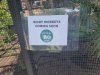
As we passed the area marked "Snakes" on the map, we noticed an unlabelled new enclosure with a sign reading, "New inhabitants! Please keep quiet as we settle in." Curious, I asked a keeper about the species, but she couldn’t reveal any details, saying they were in 14-days quarantine after arriving from somewhere in Australia and that we’d have to wait for a social media post for more information. I hung around and managed to snap a picture of the animals—they looked like some form of Lorises, or Marmosets? Hard to say. What do you guys think? The fact that they’re a new addition to the zoo has me intrigued.
New mystery unidentified species at Wildlife HQ, any guesses welcome
They came from within Australia though
Stay tuned for Part Two, where I’ll start from the island exhibit!

Wildlife HQ Zoo Visit – Part One (18/02/2024)
I visited Wildlife HQ Zoo today with my girlfriend on a warm, partially overcast day with a few light showers. The sun came out a few times, making for a pleasant visit. I had to choose between Wildlife HQ and Darling Downs Zoo, but ultimately went with Wildlife HQ since my girlfriend wanted to visit Noosa and go for a swim afterward.
We arrived mid-morning, snapped a few pictures with the adjacent Big Pineapple, and made our way down to the zoo. I have to say, I was surprised—I expected a quiet, slightly overgrown roadside zoo like Gorge Wildlife Park back home, but Wildlife HQ was bustling and beautifully maintained. The gardening staff deserves serious credit for keeping the place so well-manicured.
Wildlife HQ Zoo Entrance ^
First Impressions & Entrance
The entrance fee felt a little steep, especially since this isn’t quite on the level of major zoos ($42 an Adult). By comparison, Gorge Wildlife Park charges half the price ($24) yet only has a slightly less impressive collection. After entering, we were immediately flanked by two Maned Wolf enclosures, where I counted five wolves in total. The enclosures were lush, tropical, and spacious, and the wolves were the most active I’ve ever seen in a zoo.
Maned Wolf Enclosures
Following that, we came across the Capybara enclosure, which had a unique rocky design with multiple waterfalls, and a Lumholtz’s Tree Kangaroo exhibit. From there, we reached two beautifully designed enclosures for White-Cheeked Gibbons and Spider Monkeys, each featuring a tall central tree that both species actively used.
Capybara, Spider Monkey, and White-Cheeked-Gibbon Exhibits.
Reptiles & Small Mammals
Heading west, we entered a loop of small enclosures housing reptiles and marsupials. While the map labels this section as "Australian Natives," I found it frustrating that it included species like the American Alligator and Rhinoceros Iguana. The enclosures were fairly standard but had thoughtful design elements suited to their inhabitants, such as the Greater Bilby habitat.
American Alligator and Greater Bilby Enclosures
Next, we visited the reptile house, a heritage-listed barn dedicated to Bob Irwin Sr. Despite its modest size, it held an impressive collection, including Boyd’s Forest Dragon, Spotted Tree Monitor, Fijian Crested Iguana, Gilbert’s Dragon, Central Netted Dragon, Freshwater Long-Neck Turtle, Jungle Python, Olive Python, Ball Python, Black-Headed Python, Central Carpet Python, Corn Snake, Double-Crested Basilisk, and Alligator Snapping Turtles. Seeing the latter was a cool treat, as I’d never encountered them before, though the individuals here were still quite small.
Reptile House and Tasmanian Devil Enclosure
Final Part One & a Mystery Exhibit
We looped back through the western third of the zoo, stopping by the Southern Hairy-nosed Wombat (My South Australian Pride soared when I saw these fellas), Bettong, and Potoroo enclosures, as well as the mixed Meerkat-Porcupine exhibit (though the porcupine was unfortunately inactive, big surprise!). All these exhibits were standard-sized but well-landscaped, continuing the zoo’s impressive attention to gardening.
Southern Hairy-nosed Wombat and Meerkat/Cape Porcupine Enclosures
As we passed the area marked "Snakes" on the map, we noticed an unlabelled new enclosure with a sign reading, "New inhabitants! Please keep quiet as we settle in." Curious, I asked a keeper about the species, but she couldn’t reveal any details, saying they were in 14-days quarantine after arriving from somewhere in Australia and that we’d have to wait for a social media post for more information. I hung around and managed to snap a picture of the animals—they looked like some form of Lorises, or Marmosets? Hard to say. What do you guys think? The fact that they’re a new addition to the zoo has me intrigued.
New mystery unidentified species at Wildlife HQ, any guesses welcome
They came from within Australia though
Stay tuned for Part Two, where I’ll start from the island exhibit!


Wildlife HQ Zoo Visit – Part One (18/02/2024)
I visited Wildlife HQ Zoo today with my girlfriend on a warm, partially overcast day with a few light showers. The sun came out a few times, making for a pleasant visit. I had to choose between Wildlife HQ and Darling Downs Zoo, but ultimately went with Wildlife HQ since my girlfriend wanted to visit Noosa and go for a swim afterward.
We arrived mid-morning, snapped a few pictures with the adjacent Big Pineapple, and made our way down to the zoo. I have to say, I was surprised—I expected a quiet, slightly overgrown roadside zoo like Gorge Wildlife Park back home, but Wildlife HQ was bustling and beautifully maintained. The gardening staff deserves serious credit for keeping the place so well-manicured.
Wildlife HQ Zoo Entrance ^
First Impressions & Entrance
The entrance fee felt a little steep, especially since this isn’t quite on the level of major zoos ($42 an Adult). By comparison, Gorge Wildlife Park charges half the price ($24) yet only has a slightly less impressive collection. After entering, we were immediately flanked by two Maned Wolf enclosures, where I counted five wolves in total. The enclosures were lush, tropical, and spacious, and the wolves were the most active I’ve ever seen in a zoo.
Maned Wolf Enclosures
Following that, we came across the Capybara enclosure, which had a unique rocky design with multiple waterfalls, and a Lumholtz’s Tree Kangaroo exhibit. From there, we reached two beautifully designed enclosures for White-Cheeked Gibbons and Spider Monkeys, each featuring a tall central tree that both species actively used.
Capybara, Spider Monkey, and White-Cheeked-Gibbon Exhibits.
Reptiles & Small Mammals
Heading west, we entered a loop of small enclosures housing reptiles and marsupials. While the map labels this section as "Australian Natives," I found it frustrating that it included species like the American Alligator and Rhinoceros Iguana. The enclosures were fairly standard but had thoughtful design elements suited to their inhabitants, such as the Greater Bilby habitat.
American Alligator and Greater Bilby Enclosures
Next, we visited the reptile house, a heritage-listed barn dedicated to Bob Irwin Sr. Despite its modest size, it held an impressive collection, including Boyd’s Forest Dragon, Spotted Tree Monitor, Fijian Crested Iguana, Gilbert’s Dragon, Central Netted Dragon, Freshwater Long-Neck Turtle, Jungle Python, Olive Python, Ball Python, Black-Headed Python, Central Carpet Python, Corn Snake, Double-Crested Basilisk, and Alligator Snapping Turtles. Seeing the latter was a cool treat, as I’d never encountered them before, though the individuals here were still quite small.
Reptile House and Tasmanian Devil Enclosure
Final Part One & a Mystery Exhibit
We looped back through the western third of the zoo, stopping by the Southern Hairy-nosed Wombat (My South Australian Pride soared when I saw these fellas), Bettong, and Potoroo enclosures, as well as the mixed Meerkat-Porcupine exhibit (though the porcupine was unfortunately inactive, big surprise!). All these exhibits were standard-sized but well-landscaped, continuing the zoo’s impressive attention to gardening.
Southern Hairy-nosed Wombat and Meerkat/Cape Porcupine Enclosures
As we passed the area marked "Snakes" on the map, we noticed an unlabelled new enclosure with a sign reading, "New inhabitants! Please keep quiet as we settle in." Curious, I asked a keeper about the species, but she couldn’t reveal any details, saying they were in 14-days quarantine after arriving from somewhere in Australia and that we’d have to wait for a social media post for more information. I hung around and managed to snap a picture of the animals—they looked like some form of Lorises, or Marmosets? Hard to say. What do you guys think? The fact that they’re a new addition to the zoo has me intrigued.
New mystery unidentified species at Wildlife HQ, any guesses welcome
They came from within Australia though
Stay tuned for Part Two, where I’ll start from the island exhibit!
Yep, those are indeed Night Monkeys. Incredibly distinctive species!Wow, the long awaited Night monkeys!
I recall @Patrick Keegan visiting in January 2023 and reporting a sign advising they were coming soon. Great to see they’re finally on exhibit.
The mammal exhibits are nicely landscaped, though I feel like the gibbons would benefit from more ropes or opportunities for arboreal locomotion.
Photo by @Patrick Keegan (January 2023):
View attachment 772395
Yep, those are indeed Night Monkeys. Incredibly distinctive species!
I wonder where they arrived from as I didn't know we had any in Australia?
It would be good to see these monkeys in more Australian facilities, especially as they're relatively rare as a whole in captivity; a regional breeding program with these guys would be fantastic.
Enjoying this walkthrough of one of the local zoos and thanks for reporting about the night monkeys. The long-necked turtles are new as well - just the usual Eastern Long-necked Turtles or something else?Next, we visited the reptile house, a heritage-listed barn dedicated to Bob Irwin Sr. Despite its modest size, it held an impressive collection, including Boyd’s Forest Dragon, Spotted Tree Monitor, Fijian Crested Iguana, Gilbert’s Dragon, Central Netted Dragon, Freshwater Long-Neck Turtle, Jungle Python, Olive Python, Ball Python, Black-Headed Python, Central Carpet Python, Corn Snake, Double-Crested Basilisk, and Alligator Snapping Turtles. Seeing the latter was a cool treat, as I’d never encountered them before, though the individuals here were still quite small.
Yep, those are indeed Night Monkeys. Incredibly distinctive species!
I wonder where they arrived from as I didn't know we had any in Australia?
It would be good to see these monkeys in more Australian facilities, especially as they're relatively rare as a whole in captivity; a regional breeding program with these guys would be fantastic.
We have a lot of hidden primates in Aus for research. We hold one of the few highest level viral holding and research facilities here, we also do a lot of vector research and testing of cancer and other drug tirals.
Naturally the public really dont like this, so it’s kept very quiet. But the reality is we either test on living closed systems in monkeys or humans, and the humans seem to be of limits.


Wildlife HQ Zoo Visit – Part Two (18/02/2024)
Finally got around to writing part two!
As we walked deeper into the zoo, we passed an unlabelled new Night Monkey enclosure—I counted three Night Monkeys inside for those wondering. Nearby was a unique mixed exhibit featuring both a Common Wombat and an Echidna. Continuing on, we reached Wildlife HQ’s only feature exhibit, labeled on the map as Ring-tailed Lemur Island. However, instead of lemurs, the island is currently home to a trio of Cotton-top Tamarins.
Wildlife HQ's Lemur/Monkey Island
Despite the species being relatively common, this exhibit is a standout—not because of what it holds, but because of its setting. The surrounding lake and forest are stunning, and we spent a long time sitting on a bench, watching the Tamarins interact with Water Dragons and basking turtles. At one point, we even saw a Tamarin snatch food from a Water Dragon’s open mouth! In my opinion, this is the prettiest island exhibit in the region.
Mixed Free-ranging Eastern Grey Kangaroo and Emu Enclosure (Relatively stock standard), nice to see such green grass though in summer (this wouldn't be the case in SA!).
After soaking in the scenery, we crossed the miniature railway and headed toward the Siamang enclosure. Nestled near a picturesque bamboo grove, the contrast between the beautiful surroundings and the exhibit itself was stark. The Siamangs were housed in a rather awkward-looking black mesh cuboid with artificial climbing frames and toys that felt out of place against the lush backdrop. That said, the Siamang pair seemed content, brachiating frequently.
Siamang Enclosure
From there, we walked through a dense section of Koala and Tasmanian Devil enclosures. These were standard for any Australian wildlife park, but I was surprised to see the devils so active despite the hot and humid weather. The map also indicated an Eastern Quoll exhibit in this area, but unfortunately, it was vacant and under renovation—a disappointment, as I had never seen the species before, coming from SA.
Tasmanian Devil and Koala enclosures (Both standard and spacious)
Next, we passed a duo of Meerkat exhibits, followed by a cool peanut-shaped closed mesh enclosure housing a cute family of Tamarins. Nearby was a heavily planted exhibit for a sleepy Goodfellow’s Tree Kangaroo. Free-roaming kangaroos, a couple of emus, and a very tame young Fallow Deer (likely donated by the public) wandered through the area. Adjacent to this section, construction was underway on a new kiosk and grandstand.
Meerkat, Emperor Tamarin, and Goodfellow's Tree Kangaroo enclosures
Turning left, we arrived at the Dingo enclosures, which housed two pairs of dogs. One duo, noticeably younger and more energetic, was actively digging under the fence in an apparent attempt to reach the other pair!
Dingo Enclosures
At the northern corner of the zoo, we came across the aerial pathways exhibits. These interconnected habitats began with a trio of Common Marmosets, leading to a family of Emperor Tamarins, a group of Ring-tailed Lemurs, and finally, a lone Binturong. The pathways allow for species to switch enclosures easily when gates are opened, meaning a single small Marmoset could potentially traverse up to six different enclosures—a really cool feature!
The Chain of Aerial Pathways Enclosures
It’s a shame Wildlife HQ no longer has Servals—if they do, I didn’t see any. I really hope the region isn’t phasing them out altogether.
As we made our way back down toward the zoo’s star species, the Sun Bear, we passed another major drawcard: the Hamadryas Baboons. The troop was quiet, and their enclosure—a black mesh cuboid—wasn’t particularly impressive, though it was relatively spacious. I counted six baboons in total (one large alpha male and five smaller individuals), but I couldn’t get a clear answer on their plans to transfer out their youngest female.
Hamadryas Baboon Enclosure
Part Three will be picked up from the African Wild Dog exhibit and include my final thoughts on the zoo!
Very nice review and wonderful photos. Love the use of the overhead tunnels.Wildlife HQ Zoo Visit – Part Two (18/02/2024)
Finally got around to writing part two!
As we walked deeper into the zoo, we passed an unlabelled new Night Monkey enclosure—I counted three Night Monkeys inside for those wondering. Nearby was a unique mixed exhibit featuring both a Common Wombat and an Echidna. Continuing on, we reached Wildlife HQ’s only feature exhibit, labeled on the map as Ring-tailed Lemur Island. However, instead of lemurs, the island is currently home to a trio of Cotton-top Tamarins.
Wildlife HQ's Lemur/Monkey Island
Despite the species being relatively common, this exhibit is a standout—not because of what it holds, but because of its setting. The surrounding lake and forest are stunning, and we spent a long time sitting on a bench, watching the Tamarins interact with Water Dragons and basking turtles. At one point, we even saw a Tamarin snatch food from a Water Dragon’s open mouth! In my opinion, this is the prettiest island exhibit in the region.
Mixed Free-ranging Eastern Grey Kangaroo and Emu Enclosure (Relatively stock standard), nice to see such green grass though in summer (this wouldn't be the case in SA!).
After soaking in the scenery, we crossed the miniature railway and headed toward the Siamang enclosure. Nestled near a picturesque bamboo grove, the contrast between the beautiful surroundings and the exhibit itself was stark. The Siamangs were housed in a rather awkward-looking black mesh cuboid with artificial climbing frames and toys that felt out of place against the lush backdrop. That said, the Siamang pair seemed content, brachiating frequently.
Siamang Enclosure
From there, we walked through a dense section of Koala and Tasmanian Devil enclosures. These were standard for any Australian wildlife park, but I was surprised to see the devils so active despite the hot and humid weather. The map also indicated an Eastern Quoll exhibit in this area, but unfortunately, it was vacant and under renovation—a disappointment, as I had never seen the species before, coming from SA.
Tasmanian Devil and Koala enclosures (Both standard and spacious)
Next, we passed a duo of Meerkat exhibits, followed by a cool peanut-shaped closed mesh enclosure housing a cute family of Tamarins. Nearby was a heavily planted exhibit for a sleepy Goodfellow’s Tree Kangaroo. Free-roaming kangaroos, a couple of emus, and a very tame young Fallow Deer (likely donated by the public) wandered through the area. Adjacent to this section, construction was underway on a new kiosk and grandstand.
Meerkat, Emperor Tamarin, and Goodfellow's Tree Kangaroo enclosures
Turning left, we arrived at the Dingo enclosures, which housed two pairs of dogs. One duo, noticeably younger and more energetic, was actively digging under the fence in an apparent attempt to reach the other pair!
Dingo Enclosures
At the northern corner of the zoo, we came across the aerial pathways exhibits. These interconnected habitats began with a trio of Common Marmosets, leading to a family of Emperor Tamarins, a group of Ring-tailed Lemurs, and finally, a lone Binturong. The pathways allow for species to switch enclosures easily when gates are opened, meaning a single small Marmoset could potentially traverse up to six different enclosures—a really cool feature!
The Chain of Aerial Pathways Enclosures
It’s a shame Wildlife HQ no longer has Servals—if they do, I didn’t see any. I really hope the region isn’t phasing them out altogether.
As we made our way back down toward the zoo’s star species, the Sun Bear, we passed another major drawcard: the Hamadryas Baboons. The troop was quiet, and their enclosure—a black mesh cuboid—wasn’t particularly impressive, though it was relatively spacious. I counted six baboons in total (one large alpha male and five smaller individuals), but I couldn’t get a clear answer on their plans to transfer out their youngest female.
Hamadryas Baboon Enclosure
Part Three will be picked up from the African Wild Dog exhibit and include my final thoughts on the zoo!
Wildlife HQ Zoo Visit – Part Two (18/02/2024)
Finally got around to writing part two!
As we walked deeper into the zoo, we passed an unlabelled new Night Monkey enclosure—I counted three Night Monkeys inside for those wondering. Nearby was a unique mixed exhibit featuring both a Common Wombat and an Echidna. Continuing on, we reached Wildlife HQ’s only feature exhibit, labeled on the map as Ring-tailed Lemur Island. However, instead of lemurs, the island is currently home to a trio of Cotton-top Tamarins.
Wildlife HQ's Lemur/Monkey Island
Despite the species being relatively common, this exhibit is a standout—not because of what it holds, but because of its setting. The surrounding lake and forest are stunning, and we spent a long time sitting on a bench, watching the Tamarins interact with Water Dragons and basking turtles. At one point, we even saw a Tamarin snatch food from a Water Dragon’s open mouth! In my opinion, this is the prettiest island exhibit in the region.
Mixed Free-ranging Eastern Grey Kangaroo and Emu Enclosure (Relatively stock standard), nice to see such green grass though in summer (this wouldn't be the case in SA!).
After soaking in the scenery, we crossed the miniature railway and headed toward the Siamang enclosure. Nestled near a picturesque bamboo grove, the contrast between the beautiful surroundings and the exhibit itself was stark. The Siamangs were housed in a rather awkward-looking black mesh cuboid with artificial climbing frames and toys that felt out of place against the lush backdrop. That said, the Siamang pair seemed content, brachiating frequently.
Siamang Enclosure
From there, we walked through a dense section of Koala and Tasmanian Devil enclosures. These were standard for any Australian wildlife park, but I was surprised to see the devils so active despite the hot and humid weather. The map also indicated an Eastern Quoll exhibit in this area, but unfortunately, it was vacant and under renovation—a disappointment, as I had never seen the species before, coming from SA.
Tasmanian Devil and Koala enclosures (Both standard and spacious)
Next, we passed a duo of Meerkat exhibits, followed by a cool peanut-shaped closed mesh enclosure housing a cute family of Tamarins. Nearby was a heavily planted exhibit for a sleepy Goodfellow’s Tree Kangaroo. Free-roaming kangaroos, a couple of emus, and a very tame young Fallow Deer (likely donated by the public) wandered through the area. Adjacent to this section, construction was underway on a new kiosk and grandstand.
Meerkat, Emperor Tamarin, and Goodfellow's Tree Kangaroo enclosures
Turning left, we arrived at the Dingo enclosures, which housed two pairs of dogs. One duo, noticeably younger and more energetic, was actively digging under the fence in an apparent attempt to reach the other pair!
Dingo Enclosures
At the northern corner of the zoo, we came across the aerial pathways exhibits. These interconnected habitats began with a trio of Common Marmosets, leading to a family of Emperor Tamarins, a group of Ring-tailed Lemurs, and finally, a lone Binturong. The pathways allow for species to switch enclosures easily when gates are opened, meaning a single small Marmoset could potentially traverse up to six different enclosures—a really cool feature!
The Chain of Aerial Pathways Enclosures
It’s a shame Wildlife HQ no longer has Servals—if they do, I didn’t see any. I really hope the region isn’t phasing them out altogether.
As we made our way back down toward the zoo’s star species, the Sun Bear, we passed another major drawcard: the Hamadryas Baboons. The troop was quiet, and their enclosure—a black mesh cuboid—wasn’t particularly impressive, though it was relatively spacious. I counted six baboons in total (one large alpha male and five smaller individuals), but I couldn’t get a clear answer on their plans to transfer out their youngest female.
Hamadryas Baboon Enclosure
Part Three will be picked up from the African Wild Dog exhibit and include my final thoughts on the zoo!
The former Alma park zoo was in a different location to this oneI didn't realise this until I googled the location , but I went to this zoo when I was a kid! We were heading to the airport for our flight back to NZ and had a few hours to kill, so my parents took us to what was then called 'Alma Park Zoo'. I didn't like it much at the time, even from a child's perspective. The enclosures were old and small. I can remember an albino (or possibly leucistic) kangaroo and a sun bear in a too-small cage, and that's about it. It's come along so well since then! It's still a small zoo, but it does very well with what it has. I agree with you that the cotton-top tamarin island is the best part (so far). Honestly, the only parts that look subpar are the enclosures for the larger primates, and I wouldn't be surprised if they changed those soon.
I didn't realise this until I googled the location , but I went to this zoo when I was a kid! We were heading to the airport for our flight back to NZ and had a few hours to kill, so my parents took us to what was then called 'Alma Park Zoo'. I didn't like it much at the time, even from a child's perspective. The enclosures were old and small. I can remember an albino (or possibly leucistic) kangaroo and a sun bear in a too-small cage, and that's about it. It's come along so well since then! It's still a small zoo, but it does very well with what it has. I agree with you that the cotton-top tamarin island is the best part (so far). Honestly, the only parts that look subpar are the enclosures for the larger primates, and I wouldn't be surprised if they changed those soon.

It’s a shame Wildlife HQ no longer has Servals—if they do, I didn’t see any. I really hope the region isn’t phasing them out altogether.