Zoochat "A Gap In Nature" Extinct Taxon Challenge (Redux)

TeaLovingDave

Moderator
Staff member
15+ year member
Back at the start of the COVID pandemic in 2020 - but before it became clear quite how bad things were about to get, and that therefore the thread was a doomed proposition - I started a challenge thread distinct from the four yearly zoo-based challenges (UK, Europe, North America, World) and which I intended to have no fixed end-point. The purpose was simple - to see how many recently-extinct species Zoochatters could observe and (if possible) photograph within museums worldwide. Given the pandemic, it is perhaps unsurprising that after an initial flurry of interest it very rapidly petered out.

In the intervening years, I've been wanting to try getting the thread going again - but each year I haven't had the mental energy to do so when the new year actually rolled along :p however, I am making a concerted effort to improve my mental health and energy by getting back into long-form writing and thread management, and as such have chosen to view a thread posted a day or two on the subject of extinct species in museums as a good omen.

Considering the fact that I think people are a lot likelier to want to participate in a new thread rather than a bumped and revived thread, I'm starting from scratch - but to make things easier all round, I'll cross-post the important bits from the original thread below as quotations:

Having recently been reading through my copies of A Gap In Nature (Flannery, 2001) and various of the books by Errol Fuller on the subject of extinct species, I found myself reflecting on the idea that a challenge focused on the topic of extinction, and the now-lost taxa which survive only in natural history museums scattered throughout the world, would perhaps be of interest to the members of Zoochat.

This challenge, therefore, will hopefully both raise awareness of what we have already lost (and perhaps allow people to learn about species they had never heard of previously) and - bit by bit - form a useful catalogue of where exactly we can see the last remains of these gaps in the patchwork of nature.

My thinking is that this challenge will comprise two segments - the second theoretically has a completion state, although I suspect it will never be reached, whilst the first does not,


So.... what are the two segments?

  • Most representatives of extinct taxa seen in museums and other such collections BARRING GREAT AUK.
  • Most taxidermy mounts of Great Auk seen.

For the first sub-challenge, the format I am looking for in terms of posts is as follows:

1) Species name - Genus species (subspecies if relevant) - Location seen - Material seen
1) Quagga - Equus quagga quagga - Scottish National Museum - Taxidermy Mount

Duplicate taxa *are* allowed - we're aiming to promote where things are kept and displayed after all - but note that the remains have to be genuine and not artistic representations (as is the case with all "stuffed dodos") or plaster casts (as is the case with the dodo head and foot currently on-display in Oxford). The remains have to be seen on-display from a public area to count for the challenge, but any remains seen behind the scenes in museum tours or so forth can still be mentioned as an appendix to your totals. Otherwise, a few general rules:

1) Proof via photographs is not required.
2) Taxa which have been lost since c.1500 only; this means that the only moa taxon accepted is the Upland Moa, which is generally thought to have held on until around this time. No elephant birds or giant lemurs etc :p
3) Species whose continued existence is a matter of uncertainty will be allowed on a case-by-case basis; I'll say straight up that we will be counting Thylacine, Ivory-billed Woodpecker, Pink-headed Duck and Eskimo Curlew, for instance.
4) Report/update your progress on this thread as you go along.

The second sub-challenge (prompted by the fact that Fuller's The Great Auk contains a complete listing of all known surviving Great Auk material) will be similar, but limited to that species only, and taxidermy mounts alone. As many of the extant specimens are not on public display, and the location of a few is now unknown, for this one we will permit specimens which anyone has been lucky enough to see behind the scenes.

As noted, this is intended to be a fairly casual challenge with no real endpoint - and with the general hope that it will end up creating a de-facto "Photographic Guide to Recently Extinct Species". As such, although proof by photographs isn't required per the usual challenge ruleset, being able to upload and post photographs of your sightings will be very much desirable!

(As a sidenote to pique people's interest, I have another project coming up which I hope will serve a similar purpose; a revival - fully sanctioned by @CGSwans , the progenitor of the concept - of the ZooChat Cup :D which should hopefully get going in the next few days once I've worked out a few final odds and ends!)
 
As noted, this is intended to be a fairly casual challenge with no real endpoint - and with the general hope that it will end up creating a de-facto "Photographic Guide to Recently Extinct Species". As such, although proof by photographs isn't required per the usual challenge ruleset, being able to upload and post photographs of your sightings will be very much desirable!

An additional adjustment to the rules which will help to serve this purpose even better, and which works pretty well with the lack of any fixed endpoint; if you want to participate and have already uploaded photographs of one or more specimens pertaining to an extinct taxon in the past, you do not need to re-photograph them. Instead, post them here with a note that they are not currently intended for the challenge itself and are being posted for ease of reference and to improve the overall resource, and then if/when you see them again they can be retrospectively grandfathered in :)
 
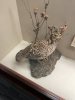
1?: Thylacine Thylacinus cynocephalus, Melbourne Museum, Taxidermy Mount?

I am not 100% sure if this is a recreation or genuine material, hopefully another regular visitor to the museum can confirm this for me. I’m pretty sure there is a genuine skeleton displayed next to it, so if this turns out to be illegitimate I will photograph that the next time I am there. Otherwise there are plenty of other Thylacine mounts in the gallery.

Melbourne Museum once had a large on-display collection of recently extinct taxon in the now defunct gallery WILD: Amazing animals in a changing world.

EDIT: there is a preserved joey in the background of this picture funnily enough, that should count for the challenge too if this is not labelled legitimate, I can go back and re-photograph that

full
 
I like the idea of this challenge. Here are my first species

1. Thylacine (Thylacinus cynocephalus), Darmstadt Landesmuseum, Germany
full


2. Quagga (Equus quagga quagga), Darmstadt Landesmuseum, Germany
full


and as add-on the family group with foal from Mainz Naturhistorisches Museum. The photo is from 2013. The Darmstadt Quagga can be seen on the left side.
full


full
 
Some Birds from Landesmuseum Darmstadt

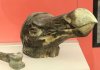
3. Rodrigues solitaire (Pezophaps solitaria), extinct since 17th century, the sister species of the Dodo
From this species only bones are left in museums.
full


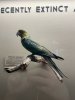
4. Paradise parrot (Psephotellus pulcherrimus), extinct since 1927

full


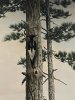
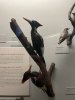
5 (?). Ivory-billed woodpecker (Campephilus principalis), offical status is CR but the last sighting happened 1987, that's why this species is presumed extinct.

full


I'm not sure if this status qualifies the woodpecker for the challenge. There is currently no evidence that the species has survived.
 
Feel free to let me know if any of the following shouldn't count for the purposes of the challenge
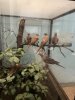
Field Museum of Natural History - 2/27/2025

1. Passenger Pigeon (Ectopistes migratorius) - Extinct since 1914
IMG_1321.jpg

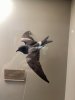
2. Guadalupe Petrel (Hydrobates macrodactylus) - Currently listed as CR by the IUCN, last sighting of a breeding individual was in 1912
IMG_1323.jpg

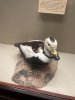
3. Labrador Duck (Camptorhynchus labradorius) - Extinct since approximately 1878
IMG_1324.jpg

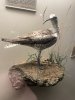
4. Northern Curlew (Numenius borealis) - Currently listed as CR by the IUCN, last confirmed sighting was in 1963
IMG_1325.jpg

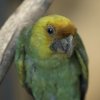
5. Carolina Parakeet (Conuropsis carolinensis) - Extinct since 1918
IMG_1326.jpg

6. Heath Hen (Tympanuchus cupido cupido) - Extinct since 1932
IMG_1327.jpg

7. Guadelupe Red-Shafted Flicker (Colaptes auratus rufipileus) - Last recorded in 1906
IMG_1329.jpg

8. Imperial Woodpecker (Campephilus imperialis) - Currently listed as CR by the IUCN, last confirmed sighting was in 1956
IMG_1332.jpg

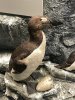
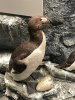
9. Great Auk (Pinguinus impennis) - Extinct since 1852
IMG_1333.jpg

10. Dusky Seaside Sparrow (Ammospiza maritima nigrescens) - Last known individual died in 1987
IMG_1334.jpg

Also, these two almost certainly don't count, but are nevertheless fall under the broader umbrella of "extinction"
a. Mexican Grizzly Bear - Used to be considered its own subspecies (Ursus arctos nelsoni), but currently seems to be considered an extinct population of grizzly bears (Ursus arctos horribilis)

b. Northern White Rhinoceros (Ceratotherium simum cottoni) - Functionally extinct, last male died in 2018
 

Attachments

  • IMG_1321.jpg
    IMG_1321.jpg
    92.7 KB · Views: 28
  • IMG_1323.jpg
    IMG_1323.jpg
    58.5 KB · Views: 28
  • IMG_1324.jpg
    IMG_1324.jpg
    73.6 KB · Views: 27
  • IMG_1325.jpg
    IMG_1325.jpg
    123 KB · Views: 27
  • IMG_1326.jpg
    IMG_1326.jpg
    67.3 KB · Views: 26
  • IMG_1327.jpg
    IMG_1327.jpg
    81.2 KB · Views: 26
  • IMG_1329.jpg
    IMG_1329.jpg
    70.3 KB · Views: 27
  • IMG_1332.jpg
    IMG_1332.jpg
    95.8 KB · Views: 26
  • IMG_1333.jpg
    IMG_1333.jpg
    162.6 KB · Views: 28
  • IMG_1334.jpg
    IMG_1334.jpg
    182.8 KB · Views: 27
Feel free to let me know if any of the following shouldn't count for the purposes of the challenge
Field Museum of Natural History - 2/27/2025

1. Passenger Pigeon (Ectopistes migratorius) - Extinct since 1914
View attachment 773821

2. Guadalupe Petrel (Hydrobates macrodactylus) - Currently listed as CR by the IUCN, last sighting of a breeding individual was in 1912
View attachment 773822

3. Labrador Duck (Camptorhynchus labradorius) - Extinct since approximately 1878
View attachment 773823

4. Northern Curlew (Numenius borealis) - Currently listed as CR by the IUCN, last confirmed sighting was in 1963
View attachment 773824

5. Carolina Parakeet (Conuropsis carolinensis) - Extinct since 1918
View attachment 773825

6. Heath Hen (Tympanuchus cupido cupido) - Extinct since 1932
View attachment 773826

7. Guadelupe Red-Shafted Flicker (Colaptes auratus rufipileus) - Last recorded in 1906
View attachment 773827

8. Imperial Woodpecker (Campephilus imperialis) - Currently listed as CR by the IUCN, last confirmed sighting was in 1956
View attachment 773828

9. Great Auk (Pinguinus impennis) - Extinct since 1852
View attachment 773829

10. Dusky Seaside Sparrow (Ammospiza maritima nigrescens) - Last known individual died in 1987
View attachment 773830

Also, these two almost certainly don't count, but are nevertheless fall under the broader umbrella of "extinction"
a. Mexican Grizzly Bear - Used to be considered its own subspecies (Ursus arctos nelsoni), but currently seems to be considered an extinct population of grizzly bears (Ursus arctos horribilis)

b. Northern White Rhinoceros (Ceratotherium simum cottoni) - Functionally extinct, last male died in 2018
TLD can correct me if I'm wrong but I believe you can count all of those Passenger Pigeon specimens individually.
 
TLD can correct me if I'm wrong but I believe you can count all of those Passenger Pigeon specimens individually.

Judging from the response below from the original thread for the challenge, I think that might be the case
Indeed, as long as one was certain the skull was from a quagga - if it was just labelled as Equus quagga I'd be inclined to say no.

With that in mind, I'm going to try and generally keep track of just the number of extinct taxa I've seen, both collectively and on an institution-by-institution basis, though I'll at least try to make a note of when I've seen multiple individuals of a given taxon at a given place. For the Field Museum, here are the recently extinct taxa I saw multiple individual specimens of on my recent visit (will probably go back at a later date to make sure I saw/kept track of everything on display):
  • Passenger Pigeon - 8 specimens (7 in the group taxidermy I sent a photo of, plus 1 taxidermied individual in the same display case as taxa 2-7 on my original list)
  • Great Auk - 2 specimens (1 taxidermy, 1 skeleton)
  • Carolina Parakeet - 2 specimens (both taxidermy)
  • Heath Hen - at least 2 specimens (all taxidermy, will have to go back to check the actual number)
 
TLD can correct me if I'm wrong but I believe you can count all of those Passenger Pigeon specimens individually.

Correct - and the same goes for the quagga group posted by @wstefan :)

9. Great Auk (Pinguinus impennis) - Extinct since 1852

This specimen is the one referred as the "Selys Longchamps Auk" in the 1999 book by Errol Fuller on the subject; it is of unknown origin , with the earliest known record of the specimen being its purchase in Turin in 1840 by Baron Edmund de Selys Longchamps from a private collector. It was part of the Brussels Museum collection until 1966 when it was sent to Chicago in exchange for 1,902 skins of North American native birds.
 
Judging from the response below from the original thread for the challenge, I think that might be the case


With that in mind, I'm going to try and generally keep track of just the number of extinct taxa I've seen, both collectively and on an institution-by-institution basis, though I'll at least try to make a note of when I've seen multiple individuals of a given taxon at a given place. For the Field Museum, here are the recently extinct taxa I saw multiple individual specimens of on my recent visit (will probably go back at a later date to make sure I saw/kept track of everything on display):
  • Passenger Pigeon - 8 specimens (7 in the group taxidermy I sent a photo of, plus 1 taxidermied individual in the same display case as taxa 2-7 on my original list)
  • Great Auk - 2 specimens (1 taxidermy, 1 skeleton)
  • Carolina Parakeet - 2 specimens (both taxidermy)
  • Heath Hen - at least 2 specimens (all taxidermy, will have to go back to check the actual number)
Apologies in advance, this list mostly includes taxa presumed to be extinct, so feel free to let me know if I should remove any of these from my overall list

Field Museum of Natural History - 3/21/25
Taxon #11: Ivory-Billed Woodpecker (Campephilus principalis), 2 specimens (both taxidermy). Technically listed as CR by the IUCN, but there have been no universally recognized sightings since 1987
IMG_1583.JPG

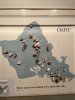
Taxa #12 - 24: O'ahu tree snails (Achatinella sp., see list below). Many of these are technically listed as Critically Endangered, but the IUCN's records for the genus as a whole seem to be severely outdated (last updated in 1996), so I used NatureServe as an alternate reference point for these taxa. The US Fish and Wildlife Service apparently started a 5-year status review for the genus as a whole in 2022, and as such their findings will almost certainly impact this list (hopefully shortening it, but I have an unfortunate feeling this list will only get longer)
  • #12 - Achatinella abbreviata (1 shell). Last sighting was in 2008
  • #13 - Achatinella apexfulva (3 shells). Technically listed as CR, but the last known specimen died in 2019
  • #14 - Achatinella bellula (2 shells). Technically listed as CR, but the last sighting of the species was in 1981
  • #15 - Achatinella cestus (1 shell). Technically listed as CR, but the last sighting of the species seems to have been in 1966
  • #16 - Achatinella decora (1 shell). Species suspected to have gone extinct some time in the 1900s
  • #17 - Achatinella elegans (1 shell). Last sightings were in 1952
  • #18 - Achatinella juddii (1 shell). Last sighting was in 1958
  • #19 - Achatinella rosea/Achatinella bulimoides rosea (1 shell). Last sighting was in 1949
  • #20 - Achatinella stewartii (1 shell). Technically listed as CR, but the last sighting of the species was in the 1970s
  • #21 - Achatinella taeniolata (1 shell). Technically listed as CR, but the last sighting of the species was in 1978
  • #22 - Achatinella turgida (2 shells, including A. swiftii). Technically listed as CR, but the last sighting of the species was in 1974
  • #23 - Achatinella viridans (1 shell). Technically listed as CR, but the last sighting of the species was in 1979
  • #24 - Achatinella vulpina (1 shell). Technically listed as CR, but the last sighting of the species was in 1965
IMG_1586.JPG

While the museum's display does also include Achatinella livida, which is currently listed as Extinct by the IUCN, I have excluded it from this list because there seems to be evidence for the existence of an extant wild population.

Also, it seems that the Field only has 2 Heath Hens on display, one in a case alongside other recently extinct birds and another in a display alongside other phasianids
 

Attachments

  • IMG_1583.JPG
    IMG_1583.JPG
    74.4 KB · Views: 6
  • IMG_1586.JPG
    IMG_1586.JPG
    80.4 KB · Views: 6
Afew miscellaneous examples from my files.
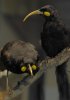
We shouldn't forget that the demand for museum specimens was one of the causes of the extinction of he huia - particularly as the demand was for both a male and a female to show the difference. This pair from the Royal Albert Museum in Exeter.
ExeterRAMM003A179.jpg


Carolina parakeet at RAMM Exeter.
ExeterRAMM003A066.jpg

The next example looks very nice, perhaps because the species only became extinct in my lifetime.
ManchstrMsm007_020.jpg
But of course the University Museum at Oxford has the daddy of them all . . . or should I say the mummy? However I think the real dodo body parts are too important to put on show, so I believe this just a replica.
OxUnivMsm01_006.jpg
 

Attachments

  • ExeterRAMM003A066.jpg
    ExeterRAMM003A066.jpg
    49.1 KB · Views: 136
  • ExeterRAMM003A179.jpg
    ExeterRAMM003A179.jpg
    44.6 KB · Views: 136
  • ManchstrMsm007_020.jpg
    ManchstrMsm007_020.jpg
    94.2 KB · Views: 116
  • OxUnivMsm01_006.jpg
    OxUnivMsm01_006.jpg
    94.4 KB · Views: 131
Horicon Marsh International Education Center - March 22 2025
1. Passenger Pigeon Ectopistes migratorius
 
The next example looks very nice, perhaps because the species only became extinct in my lifetime.
manchstrmsm007_020-jpg.777924
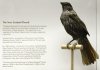
The museum signage seems rather outdated, with the Piopio now being best treated as two species (North Island and South Island with the latter also including the subspecies on Takapouwera/Stephen's Island), the both of them belonging to Oriolidae with their closest relatives being the Australasian Figbirds, I wonder how they chose their last 'confirmed' sightings, whilst it is indeed possible Piopios could've survived into your lifetime, the last 100% confirmed individual and the figure listed on most sites (eg, BirdLife, IUCN, NZBirdsOnline, ...) is a North Island specimen collected in 1902.
 
The museum signage seems rather outdated, with the Piopio now being best treated as two species (North Island and South Island with the latter also including the subspecies on Takapouwera/Stephen's Island), the both of them belonging to Oriolidae with their closest relatives being the Australasian Figbirds, I wonder how they chose their last 'confirmed' sightings, whilst it is indeed possible Piopios could've survived into your lifetime, the last 100% confirmed individual and the figure listed on most sites (eg, BirdLife, IUCN, NZBirdsOnline, ...) is a North Island specimen collected in 1902.
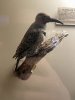
I know nothing about this species, it just caught my eye as another sad example of extinction, but presented in a more contemporary fashion than the fusty specimens around it. I took this photo in November 2011, so I looked it up in the Museum's on-line catalogue and apparently it is not still on show.
Your search results
 
Horicon Marsh International Education Center - March 22 2025
1. Passenger Pigeon Ectopistes migratorius
California Academy of Sciences - August 16 2025
2. California Grizzly Bear Ursus arctos californicus - taxidermy mount
3. Xerces Blue Glaucopsyche xerces - pinned specimen
4. Xerces Blue Glaucopsyche xerces - pinned specimen
5. Xerces Blue Glaucopsyche xerces - pinned specimen
 
1) Japanese Otter Lutra nippon, photographed at the museum inside Tennoji Zoo in Osaka, Japan.


full

Japanese Otter (Lutra nippon), zoo museum - ZooChat

full

Japanese Otter (Lutra nippon), zoo museum - ZooChat
2) Huia - Heterolocha acutirostris - Te Manawa Museum (Palmerston North, NZ) - taxidermy mounts of male and female birds

full

Huia taxidermy - ZooChat
From the South Australian Museum in Adelaide:


3) Short-tailed Hopping Mouse Notomys amplus - skull

full

Short-tailed Hopping Mouse (Notomys amplus) - ZooChat


4) Broad-cheeked Hopping Mouse Notomys robustus - skull

full

Broad-cheeked Hopping Mouse (Notomys robustus) - ZooChat


5) Shark Bay Mouse Pseudomys fieldi - skin

full

Shark Bay Mouse (Pseudomys fieldi) - ZooChat


6) White-footed Tree Rat Conilurus albipes - skull

full

White-footed Tree Rat (Conilurus albipes) - ZooChat


7) Desert Bandicoot Perameles eremiana – in spirits

full

Desert Bandicoot (Perameles eremiana) - ZooChat


8) Lesser Bilby Macrotis leucura – in spirits

full

Lesser Bilby (Macrotis leucura) - ZooChat


Also the following mounts / skins for which I didn't upload photos because they are already in the gallery:

9) Lesser Stick-nest Rat Leporillus apicalis
10) Long-tailed Hopping Mouse Notomys longicaudatus
11) Toolache Macropus greyi
12) Crescent Nail-tailed Wallaby Onychogalea lunata
13) Eastern Hare-Wallaby Lagorchestes leporides
14) Desert Rat-Kangaroo Caloprymnus campestris
15) Thylacine Thylacinus cynocephalus
 
Back
Top