Is this the first time a proboscis worm has been mentioned on Zoochat?
You are using an out of date browser. It may not display this or other websites correctly.
You should upgrade or use an alternative browser.
You should upgrade or use an alternative browser.
Chlidonias Goes To Asia, part seven: 2024-2025
- Thread starter Chlidonias
- Start date

I uploaded photos from the Tokyo Sea Life Park and Osaka Aquarium today but I won't bother doing reviews of them.
I was surprised at first that you didn't think Osaka Aquarium was worth a review (given it's one of the largest and most well-known in Japan I believe?) but then I remembered you weren't that into aquariums. That said, if you really find yourself enamored by "little bizarre creatures", I think you'd like Monterey Bay Aquarium at the moment; a lot of their weird deep-sea invertebrates look like the ones you photographed at the Sea Life Park.
Was also going to comment that Brown-headed Thrush looks an awful lot like American Robin - which you could see wild in Monterey. California trip for 2026? Just think about it

One of the neat things with Japanese aquariums is the range of extraordinary soft toys they sell in their gift shops. Frilled Sharks, Coelacanths, Dumbo Octopus, Giant Isopods, Tuna, Squid, Arapaima - stuff you'd likely never see in a Western aquarium's gift shop.
I know you're probably traveling light, but please tell me you splurged to buy at least one of those. I know several people on my side of the pond who would be over the moon to own some of those plushies.
I left my pack in the luggage room at the hotel for the day, and headed off to the Tokyo Port Wild Bird Park, formerly known as the Oi Bird Park which is a preferable name because it is shorter and quicker.
I looked at this park on Google Maps and it reminds me a lot of the top birding spots in southern California: decently sized wetland park, right by the ocean, and hemmed in by a freeway

It is also a good place if you want to see invasive Red-eared Sliders - they were everywhere. Some stretches of water were just a mass of little black heads poking out of the water.
Also sounds like any park here in California with water... or any park in the US really, although to be fair they aren't invasive in a lot of those places.

Oh it's not that I'm not into Aquariums - I love Aquariums and have worked at several, and I kept fish myself for decades. The thing is more that if I'm visiting several big Aquariums quite close together and don't write reviews immediately then they all run together in my mind. With Osaka specifically, though, it was such an awful visitor experience with the packed crowds and dark corridors and tiny tanks for marine mammals that I was there for less than an hour before I left. A lot of the tanks I didn't even get to see into because of the number of people there. It is a really badly-designed Aquarium for a place like Japan.I was surprised at first that you didn't think Osaka Aquarium was worth a review (given it's one of the largest and most well-known in Japan I believe?) but then I remembered you weren't that into aquariums. That said, if you really find yourself enamored by "little bizarre creatures", I think you'd like Monterey Bay Aquarium at the moment; a lot of their weird deep-sea invertebrates look like the ones you photographed at the Sea Life Park.
No, I wouldn't have been able to choose and would have spent too much money - they are all great! However, they are also all available on AliExpress for cheaper than in the gift shops so anyone in the world can buy them. I was looking the other day at them and they also have species I haven't seen in the shops like Goblin Sharks and Deepsea Anglerfish.I know you're probably traveling light, but please tell me you splurged to buy at least one of those. I know several people on my side of the pond who would be over the moon to own some of those plushies.
Osaka and Kobe - zoos
In Tokyo I had been staying in a district called Ikebukuro. One of the most noticeable things in that area are all the girls on the streets dressed in costumes like anime girls and holding price signs. Whatever time it was, early morning or middle of the day or in the evening. In contrast the area I was in while in Osaka wasn't a red-light district but more like a homeless district - lots of people living on the streets around the hotel.
I had managed to snag a room at the Hotel Wako for just 1700 Yen per night. It was much more basic than the other hotels I've been staying at in Japan but (as I've said several times already) I'm restricted in my booking to what is available on Trip and they usually skip the bit in between "dorm" and "standard hotel room". This hotel had a mat on the floor for sleeping, shared bathrooms (in fact, only two showers for the entire building, so you needed to get a key from reception to use one), and didn't provide the amenities like towels and such - so it was more like the places I'd normally be staying in southeast Asia. I'd initially booked for three nights but because it was so much cheaper than being in Tokyo, and I had a fair wait before my ferry to the Ogasawaras, I extended it for another three nights so I could spend more time looking for birds.
After the fourth night there I woke up with five bed-bug bites around one ankle, but no more after that - maybe there was only one bug in my room and it had been satiated. On the evening I checked out, one of the regulars from my floor walked past wearing shorts (on his way to the showers) and his legs were covered completely in what looked like hundreds of bites. I guess it's a lucky dip with the rooms there!
The overnight bus from Tokyo had got into Osaka at something like 6.30am. I got something to eat at a convenience store in the station, then took a subway to the Dobutsuen-Mae metro station. The hotel was about two minutes walk from exit 9 of this station, so as well as being cheap was extremely convenient for getting around.
It was much too early to check in of course, but I left my pack in their luggage room and headed off to the Tennoji Zoo - which is so close that I could walk there. I still had about an hour before the zoo opened and I spent that wandering around in Tennoji Park. I saw 17 species of birds there, all common ones although birds like Varied Tit, Japanese Pigmy Woodpecker and Masked Bunting are still all good birds to see for a visiting birder. Also a lot of Red-eared Sliders in the lake there.
...............................................................
Tennoji Zoo is a smallish (11 hectares) city zoo which opened in 1915. Some of the cages here are awfully small, but others are fine and the zoo is renovating or building new enclosures in several places. For example there is a new sealion and penguin exhibit opened in 2023 which is very good indeed, especially for the penguins.
One of the best enclosures in the zoo is the enormous walk-through Flight Aviary (which can also be seen from outside the zoo grounds because it is at the edge of the zoo and there is a footpath running right alongside). It houses sixteen species of birds - mainly waders like storks and herons - and looks like this inside:


Another highlight of the zoo is the reptile house, called IFAR (the name being formed from the first letters of Invertebrates, Fish, Amphibians, and Reptiles), which opened in 1995 but looks like a new building inside and has very nice displays. The African Savannah exhibit which opened in various stages (1997 for hippos, 1998 for rhinos, 2000 for the savannah, and 2006 for the carnivores) is pretty good, but the hippo and carnivore enclosures are quite small.
Unfortunately there are still some truly awful enclosures, especially for the bears and primates, but given that a lot of the zoo has been renovated over the last two decades or so, with development still ongoing, it isn't unreasonable to expect the remaining bad parts of the zoo to disappear over the coming years.
I have put a review and species list here:
Tennoji Zoo (Osaka), review and species list: March 2025 [Tennōji Zoo]
Photos in the zoo's gallery: Tennōji Zoo - ZooChat
The Tennoji Zoo also has a museum on its grounds, and amongst the displays is this Japanese Otter Lutra nippon, which is now extinct. This species was formerly common throughout Japan (except on Hokkaido, where an also-now-extinct subspecies of the Eurasian Otter lived) but the population had crashed by the 1930s. The last official sighting was in 1979, and it was declared extinct in 2012.

...............................................................
After visiting Tennoji Zoo I took another couple of metro trains across the city to visit the Osaka Aquarium.
On arrival I discovered that there are timed entry periods, and the soonest I could get in was an hour away. Still better than for some people who I heard had been waiting for hours beforehand. I walked around the port while waiting and saw some gulls and cormorants.
When my time-slot came around I had the most unpleasant aquarium-visiting experience I have ever had. The corridors inside are too narrow for the crowds and too dark so visitors are constantly bumping into one another, and there were so many people despite the timed entries that it was basically impossible to get near most of the tanks. Almost all the photos I got were with my phone over peoples' heads. A number of tanks I didn't even get to see into at all because of the number of people there. It is a really badly-designed Aquarium for a place like Japan. I was there for less than an hour before I left.
The tanks for seals and dolphins and penguins are all horribly small, and there is really inferior signage as well. Most tanks just have QR codes with a Starship Troopers-like message reading "would you like to know more?" - I mean, I'd at least like to know what is in the tanks!
The Whale Sharks were amazing, but the tank was clearly too cramped for them. There are a lot of viewing windows into the main tank so I could find a spot that was free, but you only need to watch them for a few minutes to realise that they don't have enough room in there. It looks fine at first (or in photos) but they have to constantly turn awkwardly to avoid the walls - they are just too large to swim gracefully in the tank confines like the regular sharks or rays - and after a short while I couldn't watch them any more because it was too sad to see. It's like the longer you watch them the more you don't want to watch them any more.
It is not an Aquarium to which I would ever want to go back.

What the corridors are like at Osaka Aquarium.

Rockhopper Penguin enclosure

Whale Sharks
...............................................................
My second day in Osaka, and it was raining. Fortunately my plan for today was to go to the Kobe Animal Kingdom, which is mostly indoors within a series of large greenhouses. The Suma Aqualife Park is also in Kobe, but the Osaka Aquarium had soured me on Japanese aquariums for the moment so I gave it a miss.
Although in a different city, Kobe Animal Kingdom is easily visited from Osaka by taking a train to Sannomiya Station in Kobe (just 20-30 minutes ride away), and then the Portliner train to the Keisan Kagaku Center Station (15 minutes). The zoo is directly beside this station, and the greenhouses can in fact be seen out the window on the platform when you have arrived.
For the most part I really liked this facility, and was there for about four hours. The greenhouses are basic structures and the overall feel of the place is that this is something you could do yourself if you had money and land. There is a lot to explore, and repeat visits through the greenhouses can be rewarding, but there is an unfortunate number of larger mammals such as tapirs kept in utterly too small enclosures which spoils the experience. However the tropical greenhouses look great, and the animals all look to be very well cared for. If the large mammals weren't here - or were given bigger enclosures outside - then I don't think I'd have any real complaints about the place.
The two best parts are the greenhouse for the Shoebills, where the birds are free to roam and seem to be quite happy perching right by the visitor path, and the nocturnal house. The latter was a much better display than I was expecting - all enclosures were bigger than their equivalents in the Ueno or Tennoji Zoos, with the only actually poor exhibit being a Barn Owl tethered to an open perch. There was no signs of stereotyping in any animals on my visit. Feeding had taken place just as I arrived (around 10.30am) and all the animals were very active. Best animals in here were the Striped Possums (at least two of them) and the Amami Spiny Rats.
I have put a review with photos and species lists here: Kobe Animal Kingdom, review and species list: 3 March 2025 [Kobe Animal Kingdom]
Photos in the zoo's gallery:
Kobe Animal Kingdom - ZooChat

Tropical greenhouse

Shoebill greenhouse

Striped Possum

Amami Spiny Rat
In Tokyo I had been staying in a district called Ikebukuro. One of the most noticeable things in that area are all the girls on the streets dressed in costumes like anime girls and holding price signs. Whatever time it was, early morning or middle of the day or in the evening. In contrast the area I was in while in Osaka wasn't a red-light district but more like a homeless district - lots of people living on the streets around the hotel.
I had managed to snag a room at the Hotel Wako for just 1700 Yen per night. It was much more basic than the other hotels I've been staying at in Japan but (as I've said several times already) I'm restricted in my booking to what is available on Trip and they usually skip the bit in between "dorm" and "standard hotel room". This hotel had a mat on the floor for sleeping, shared bathrooms (in fact, only two showers for the entire building, so you needed to get a key from reception to use one), and didn't provide the amenities like towels and such - so it was more like the places I'd normally be staying in southeast Asia. I'd initially booked for three nights but because it was so much cheaper than being in Tokyo, and I had a fair wait before my ferry to the Ogasawaras, I extended it for another three nights so I could spend more time looking for birds.
After the fourth night there I woke up with five bed-bug bites around one ankle, but no more after that - maybe there was only one bug in my room and it had been satiated. On the evening I checked out, one of the regulars from my floor walked past wearing shorts (on his way to the showers) and his legs were covered completely in what looked like hundreds of bites. I guess it's a lucky dip with the rooms there!
The overnight bus from Tokyo had got into Osaka at something like 6.30am. I got something to eat at a convenience store in the station, then took a subway to the Dobutsuen-Mae metro station. The hotel was about two minutes walk from exit 9 of this station, so as well as being cheap was extremely convenient for getting around.
It was much too early to check in of course, but I left my pack in their luggage room and headed off to the Tennoji Zoo - which is so close that I could walk there. I still had about an hour before the zoo opened and I spent that wandering around in Tennoji Park. I saw 17 species of birds there, all common ones although birds like Varied Tit, Japanese Pigmy Woodpecker and Masked Bunting are still all good birds to see for a visiting birder. Also a lot of Red-eared Sliders in the lake there.
...............................................................
Tennoji Zoo is a smallish (11 hectares) city zoo which opened in 1915. Some of the cages here are awfully small, but others are fine and the zoo is renovating or building new enclosures in several places. For example there is a new sealion and penguin exhibit opened in 2023 which is very good indeed, especially for the penguins.
One of the best enclosures in the zoo is the enormous walk-through Flight Aviary (which can also be seen from outside the zoo grounds because it is at the edge of the zoo and there is a footpath running right alongside). It houses sixteen species of birds - mainly waders like storks and herons - and looks like this inside:
Another highlight of the zoo is the reptile house, called IFAR (the name being formed from the first letters of Invertebrates, Fish, Amphibians, and Reptiles), which opened in 1995 but looks like a new building inside and has very nice displays. The African Savannah exhibit which opened in various stages (1997 for hippos, 1998 for rhinos, 2000 for the savannah, and 2006 for the carnivores) is pretty good, but the hippo and carnivore enclosures are quite small.
Unfortunately there are still some truly awful enclosures, especially for the bears and primates, but given that a lot of the zoo has been renovated over the last two decades or so, with development still ongoing, it isn't unreasonable to expect the remaining bad parts of the zoo to disappear over the coming years.
I have put a review and species list here:
Tennoji Zoo (Osaka), review and species list: March 2025 [Tennōji Zoo]
Photos in the zoo's gallery: Tennōji Zoo - ZooChat
The Tennoji Zoo also has a museum on its grounds, and amongst the displays is this Japanese Otter Lutra nippon, which is now extinct. This species was formerly common throughout Japan (except on Hokkaido, where an also-now-extinct subspecies of the Eurasian Otter lived) but the population had crashed by the 1930s. The last official sighting was in 1979, and it was declared extinct in 2012.
...............................................................
After visiting Tennoji Zoo I took another couple of metro trains across the city to visit the Osaka Aquarium.
On arrival I discovered that there are timed entry periods, and the soonest I could get in was an hour away. Still better than for some people who I heard had been waiting for hours beforehand. I walked around the port while waiting and saw some gulls and cormorants.
When my time-slot came around I had the most unpleasant aquarium-visiting experience I have ever had. The corridors inside are too narrow for the crowds and too dark so visitors are constantly bumping into one another, and there were so many people despite the timed entries that it was basically impossible to get near most of the tanks. Almost all the photos I got were with my phone over peoples' heads. A number of tanks I didn't even get to see into at all because of the number of people there. It is a really badly-designed Aquarium for a place like Japan. I was there for less than an hour before I left.
The tanks for seals and dolphins and penguins are all horribly small, and there is really inferior signage as well. Most tanks just have QR codes with a Starship Troopers-like message reading "would you like to know more?" - I mean, I'd at least like to know what is in the tanks!
The Whale Sharks were amazing, but the tank was clearly too cramped for them. There are a lot of viewing windows into the main tank so I could find a spot that was free, but you only need to watch them for a few minutes to realise that they don't have enough room in there. It looks fine at first (or in photos) but they have to constantly turn awkwardly to avoid the walls - they are just too large to swim gracefully in the tank confines like the regular sharks or rays - and after a short while I couldn't watch them any more because it was too sad to see. It's like the longer you watch them the more you don't want to watch them any more.
It is not an Aquarium to which I would ever want to go back.
What the corridors are like at Osaka Aquarium.
Rockhopper Penguin enclosure
Whale Sharks
...............................................................
My second day in Osaka, and it was raining. Fortunately my plan for today was to go to the Kobe Animal Kingdom, which is mostly indoors within a series of large greenhouses. The Suma Aqualife Park is also in Kobe, but the Osaka Aquarium had soured me on Japanese aquariums for the moment so I gave it a miss.
Although in a different city, Kobe Animal Kingdom is easily visited from Osaka by taking a train to Sannomiya Station in Kobe (just 20-30 minutes ride away), and then the Portliner train to the Keisan Kagaku Center Station (15 minutes). The zoo is directly beside this station, and the greenhouses can in fact be seen out the window on the platform when you have arrived.
For the most part I really liked this facility, and was there for about four hours. The greenhouses are basic structures and the overall feel of the place is that this is something you could do yourself if you had money and land. There is a lot to explore, and repeat visits through the greenhouses can be rewarding, but there is an unfortunate number of larger mammals such as tapirs kept in utterly too small enclosures which spoils the experience. However the tropical greenhouses look great, and the animals all look to be very well cared for. If the large mammals weren't here - or were given bigger enclosures outside - then I don't think I'd have any real complaints about the place.
The two best parts are the greenhouse for the Shoebills, where the birds are free to roam and seem to be quite happy perching right by the visitor path, and the nocturnal house. The latter was a much better display than I was expecting - all enclosures were bigger than their equivalents in the Ueno or Tennoji Zoos, with the only actually poor exhibit being a Barn Owl tethered to an open perch. There was no signs of stereotyping in any animals on my visit. Feeding had taken place just as I arrived (around 10.30am) and all the animals were very active. Best animals in here were the Striped Possums (at least two of them) and the Amami Spiny Rats.
I have put a review with photos and species lists here: Kobe Animal Kingdom, review and species list: 3 March 2025 [Kobe Animal Kingdom]
Photos in the zoo's gallery:
Kobe Animal Kingdom - ZooChat
Tropical greenhouse
Shoebill greenhouse
Striped Possum
Amami Spiny Rat
Last edited:
Osaka - wildlife
My third day in Osaka was rained out - it was hammering down - so I spent it inside on the internet and doing Zoochat stuff. Then the next four days ended up all being spent looking for birds. I had decided to skip the Suma Aqualife Park in Kobe, and the Oji Zoo (also in Kobe) hadn't even made it to the "maybe" stage because it is by all accounts deplorable. I contemplated a facility in Osaka called NIFREL but when I looked it up was pretty quickly taking it right back off the table again.
The one other place I wanted to visit was the Biwa Museum, which has a large aquarium with freshwater fish endemic to Lake Biwa (in Japan) and Lake Baikal (in Russia). Lake Biwa is about an hour by train north of Osaka and the lake itself was supposed to be a good birding location. Unfortunately Google sent me to the wrong place.
I'd looked up the travel directions but Google had decided I actually wanted to go to Biwa Base (which also has an aquarium) instead of the Biwa Museum, and the two places are on opposite sides of the lake to one another. I didn't realise this until I was at the station of Katata, which is actually next to the lake (on the wrong side for the Biwa Museum) but where I was going to be transferring to a second train. Initially I thought, well I'll just go to Biwa Base instead then, that's fine, but I checked their times and they weren't even open on this day.
I could see on my map that Katata was beside the lake, and from the platform I was on I could also see forested hills a few streets away in the other direction, so I simply stayed put in Katata and changed this to a bird day rather than an aquarium day.
I wasn't sure I'd be able to find a way into any of the forest I could see, but walking in a straight line up the road away from the station ended up taking me directly to Kasugayama Park. The park seems like a pretty good birding area - I probably wouldn't go out there specifically from further afield but if a person was staying in or near Katata for some reason then this would be a very good spot to check out.
The forest here seemed like it might be good for Copper Pheasants, but instead I got a different lifer with a flock of White-bellied Green Pigeons in a tall bare tree. There were all the usual forest birds around as well, with jays, Pekin Robins, various buntings and tits, as well as some Long-tailed Rosefinches and a Red-throated Flycatcher. A second lifer for the day was a Ruddy-breasted Crake in a reedy pool just by the entrance as I was leaving.

White-bellied Green Pigeons - as you might be able to tell, today was a bit dreary with rain on and off throughout the day.
Back at the station I came across a pair of Grey-headed Lapwings on a patch of waste ground. I stopped at the station's convenience store for some food, then kept going to the lake shore. On the way I passed a smaller roadside lake area called the Inner Lake (little lake, big pond, whichever you would refer to characterise it as) which had Crested Grebes and some ducks, as well as all three white egret species together (Little, Intermediate, and Great). Lake Biwa itself, a bit further along, didn't hold a lot of interest.

Grey-headed Lapwings
...............................................................
I hadn't been able to track down any Copper Pheasants while at Karuizawa a week or so ago, and I wasn't sure where else I would have a chance to look later (if anywhere), so I did some searching on the internet to see if there was anywhere around Osaka. One place that came up was Minoh Park, on the outskirts of the city. There don't appear to be any records of the species from there on eBird, but I found some references and photos taken there on other websites.
Minoh Park is an easy site to reach: from Osaka station take a train to Ishibashi station (15 minutes), and then another train from there to Minoh station (5 minutes), and then you just walk up the road through the little village by the station until you reach the entrance. Easy as that. The main road through the park leads to a waterfall, which is the main attraction here (lots of white tourists turning up!) but as I found out there are trails all through the forest up and over hills. It's a really great birding area, although being winter and in forest the number of species seen each day probably only averaged about 20.
I spent three days up here looking for my pheasants (unsuccessfully!). On the first day it was quite warm and I ended up carrying my coat around all day, so the next day I left it back at the hotel - only to find that it got much colder that day and I got snowed on!
I got a couple of lifer birds in the forests at Minoh Park, the first being a Ryukyu Minivet (originally found only in the Ryukyu Islands south of the main Japanese islands, but which has self-colonised Kyushu and Honshu - some sources now call it the Japanese Minivet) and the second being the Grey Bunting which, despite sounding drab and basically being a finch coloured entirely in grey, is somehow a really pretty little bird. They were quite common up here.
Another bird, seen as a lifer just the other day at Kasugayama Park in Katata, was the White-bellied Green Pigeon which I saw much better here and of which I even got some good photos.

White-bellied Green Pigeon - I really like the undertail patterning!
There were "warning" signs along the road through the park telling people not to feed the monkeys, so I was keeping an eye out for them. I had already seen the "Snow Monkeys" at Nagano but I wanted to see them a bit more naturally in forest without being surrounded by people holding selfie-sticks.
I didn't see any mammals on the first day up there. On the second I found a small group of Sika Deer which were my first on Honshu. I'd seen them on Hokkaido (subspecies yesoensis) - and years previously in China (subspecies sichuanicus) - so these were a "new" subspecies for me, although sources differ as to whether they should be considered nippon or aplodontus in this area.

On the third day I finally came across a macaque, just the one, foraging on a slope on the other side of the river.


...............................................................
An unexpected find at Minoh Park was an insectarium, which had a fantastic array of species, nice displays, and great signage. I definitely recommend visiting it if in this area.
I have put a review with a species list here:
Minoh Park Insect Museum (Osaka)
Photos are in the Japan Other gallery - starting at this photo, use the right arrow to go through them: Giant Flower Beetle (Mecynorhina torquata) - ZooChat.
My third day in Osaka was rained out - it was hammering down - so I spent it inside on the internet and doing Zoochat stuff. Then the next four days ended up all being spent looking for birds. I had decided to skip the Suma Aqualife Park in Kobe, and the Oji Zoo (also in Kobe) hadn't even made it to the "maybe" stage because it is by all accounts deplorable. I contemplated a facility in Osaka called NIFREL but when I looked it up was pretty quickly taking it right back off the table again.
The one other place I wanted to visit was the Biwa Museum, which has a large aquarium with freshwater fish endemic to Lake Biwa (in Japan) and Lake Baikal (in Russia). Lake Biwa is about an hour by train north of Osaka and the lake itself was supposed to be a good birding location. Unfortunately Google sent me to the wrong place.
I'd looked up the travel directions but Google had decided I actually wanted to go to Biwa Base (which also has an aquarium) instead of the Biwa Museum, and the two places are on opposite sides of the lake to one another. I didn't realise this until I was at the station of Katata, which is actually next to the lake (on the wrong side for the Biwa Museum) but where I was going to be transferring to a second train. Initially I thought, well I'll just go to Biwa Base instead then, that's fine, but I checked their times and they weren't even open on this day.
I could see on my map that Katata was beside the lake, and from the platform I was on I could also see forested hills a few streets away in the other direction, so I simply stayed put in Katata and changed this to a bird day rather than an aquarium day.
I wasn't sure I'd be able to find a way into any of the forest I could see, but walking in a straight line up the road away from the station ended up taking me directly to Kasugayama Park. The park seems like a pretty good birding area - I probably wouldn't go out there specifically from further afield but if a person was staying in or near Katata for some reason then this would be a very good spot to check out.
The forest here seemed like it might be good for Copper Pheasants, but instead I got a different lifer with a flock of White-bellied Green Pigeons in a tall bare tree. There were all the usual forest birds around as well, with jays, Pekin Robins, various buntings and tits, as well as some Long-tailed Rosefinches and a Red-throated Flycatcher. A second lifer for the day was a Ruddy-breasted Crake in a reedy pool just by the entrance as I was leaving.
White-bellied Green Pigeons - as you might be able to tell, today was a bit dreary with rain on and off throughout the day.
Back at the station I came across a pair of Grey-headed Lapwings on a patch of waste ground. I stopped at the station's convenience store for some food, then kept going to the lake shore. On the way I passed a smaller roadside lake area called the Inner Lake (little lake, big pond, whichever you would refer to characterise it as) which had Crested Grebes and some ducks, as well as all three white egret species together (Little, Intermediate, and Great). Lake Biwa itself, a bit further along, didn't hold a lot of interest.
Grey-headed Lapwings
...............................................................
I hadn't been able to track down any Copper Pheasants while at Karuizawa a week or so ago, and I wasn't sure where else I would have a chance to look later (if anywhere), so I did some searching on the internet to see if there was anywhere around Osaka. One place that came up was Minoh Park, on the outskirts of the city. There don't appear to be any records of the species from there on eBird, but I found some references and photos taken there on other websites.
Minoh Park is an easy site to reach: from Osaka station take a train to Ishibashi station (15 minutes), and then another train from there to Minoh station (5 minutes), and then you just walk up the road through the little village by the station until you reach the entrance. Easy as that. The main road through the park leads to a waterfall, which is the main attraction here (lots of white tourists turning up!) but as I found out there are trails all through the forest up and over hills. It's a really great birding area, although being winter and in forest the number of species seen each day probably only averaged about 20.
I spent three days up here looking for my pheasants (unsuccessfully!). On the first day it was quite warm and I ended up carrying my coat around all day, so the next day I left it back at the hotel - only to find that it got much colder that day and I got snowed on!
I got a couple of lifer birds in the forests at Minoh Park, the first being a Ryukyu Minivet (originally found only in the Ryukyu Islands south of the main Japanese islands, but which has self-colonised Kyushu and Honshu - some sources now call it the Japanese Minivet) and the second being the Grey Bunting which, despite sounding drab and basically being a finch coloured entirely in grey, is somehow a really pretty little bird. They were quite common up here.
Another bird, seen as a lifer just the other day at Kasugayama Park in Katata, was the White-bellied Green Pigeon which I saw much better here and of which I even got some good photos.
White-bellied Green Pigeon - I really like the undertail patterning!
There were "warning" signs along the road through the park telling people not to feed the monkeys, so I was keeping an eye out for them. I had already seen the "Snow Monkeys" at Nagano but I wanted to see them a bit more naturally in forest without being surrounded by people holding selfie-sticks.
I didn't see any mammals on the first day up there. On the second I found a small group of Sika Deer which were my first on Honshu. I'd seen them on Hokkaido (subspecies yesoensis) - and years previously in China (subspecies sichuanicus) - so these were a "new" subspecies for me, although sources differ as to whether they should be considered nippon or aplodontus in this area.
On the third day I finally came across a macaque, just the one, foraging on a slope on the other side of the river.
...............................................................
An unexpected find at Minoh Park was an insectarium, which had a fantastic array of species, nice displays, and great signage. I definitely recommend visiting it if in this area.
I have put a review with a species list here:
Minoh Park Insect Museum (Osaka)
Photos are in the Japan Other gallery - starting at this photo, use the right arrow to go through them: Giant Flower Beetle (Mecynorhina torquata) - ZooChat.



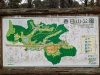
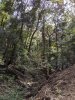
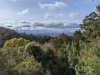
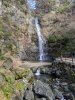
Photos from Minoh Park:

Forest interior

The waterfall

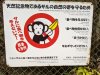
Monkey sign

View of Osaka in the distance
Forest interior
The waterfall
Monkey sign
View of Osaka in the distance
Attachments

Lafone
Well-Known Member
Osaka - wildlife
My third day in Osaka was rained out - it was hammering down - so I spent it inside on the internet and doing Zoochat stuff. Then the next four days ended up all being spent looking for birds. I had decided to skip the Suma Aqualife Park in Kobe, and the Oji Zoo (also in Kobe) hadn't even made it to the "maybe" stage because it is by all accounts deplorable. I contemplated a facility in Osaka called NIFREL but when I looked it up was pretty quickly taking it right back off the table again.
The one other place I wanted to visit was the Biwa Museum, which has a large aquarium with freshwater fish endemic to Lake Biwa (in Japan) and Lake Baikal (in Russia). Lake Biwa is about an hour by train north of Osaka and the lake itself was supposed to be a good birding location. Unfortunately Google sent me to the wrong place.
I'd looked up the travel directions but Google had decided I actually wanted to go to Biwa Base (which also has an aquarium) instead of the Biwa Museum, and the two places are on opposite sides of the lake to one another. I didn't realise this until I was at the station of Katata, which is actually next to the lake (on the wrong side for the Biwa Museum) but where I was going to be transferring to a second train. Initially I thought, well I'll just go to Biwa Base instead then, that's fine, but I checked their times and they weren't even open on this day.
I could see on my map that Katata was beside the lake, and from the platform I was on I could also see forested hills a few streets away in the other direction, so I simply stayed put in Katata and changed this to a bird day rather than an aquarium day.
I wasn't sure I'd be able to find a way into any of the forest I could see, but walking in a straight line up the road away from the station ended up taking me directly to Kasugayama Park. The park seems like a pretty good birding area - I probably wouldn't go out there specifically from further afield but if a person was staying in or near Katata for some reason then this would be a very good spot to check out.
The forest here seemed like it might be good for Copper Pheasants, but instead I got a different lifer with a flock of White-bellied Green Pigeons in a tall bare tree. There were all the usual forest birds around as well, with jays, Pekin Robins, various buntings and tits, as well as some Long-tailed Rosefinches and a Red-throated Flycatcher. A second lifer for the day was a Ruddy-breasted Crake in a reedy pool just by the entrance as I was leaving.
White-bellied Green Pigeons - as you might be able to tell, today was a bit dreary with rain on and off throughout the day.
Back at the station I came across a pair of Grey-headed Lapwings on a patch of waste ground. I stopped at the station's convenience store for some food, then kept going to the lake shore. On the way I passed a smaller roadside lake area called the Inner Lake (little lake, big pond, whichever you would refer to characterise it as) which had Crested Grebes and some ducks, as well as all three white egret species together (Little, Intermediate, and Great). Lake Biwa itself, a bit further along, didn't hold a lot of interest.
Grey-headed Lapwings
...............................................................
I hadn't been able to track down any Copper Pheasants while at Karuizawa a week or so ago, and I wasn't sure where else I would have a chance to look later (if anywhere), so I did some searching on the internet to see if there was anywhere around Osaka. One place that came up was Minoh Park, on the outskirts of the city. There don't appear to be any records of the species from there on eBird, but I found some references and photos taken there on other websites.
Minoh Park is an easy site to reach: from Osaka station take a train to Ishibashi station (15 minutes), and then another train from there to Minoh station (5 minutes), and then you just walk up the road through the little village by the station until you reach the entrance. Easy as that. The main road through the park leads to a waterfall, which is the main attraction here (lots of white tourists turning up!) but as I found out there are trails all through the forest up and over hills. It's a really great birding area, although being winter and in forest the number of species seen each day probably only averaged about 20.
I spent three days up here looking for my pheasants (unsuccessfully!). On the first day it was quite warm and I ended up carrying my coat around all day, so the next day I left it back at the hotel - only to find that it got much colder that day and I got snowed on!
I got a couple of lifer birds in the forests at Minoh Park, the first being a Ryukyu Minivet (originally found only in the Ryukyu Islands south of the main Japanese islands, but which has self-colonised Kyushu and Honshu - some sources now call it the Japanese Minivet) and the second being the Grey Bunting which, despite sounding drab and basically being a finch coloured entirely in grey, is somehow a really pretty little bird. They were quite common up here.
Another bird, seen as a lifer just the other day at Kasugayama Park in Katata, was the White-bellied Green Pigeon which I saw much better here and of which I even got some good photos.
White-bellied Green Pigeon - I really like the undertail patterning!
There were "warning" signs along the road through the park telling people not to feed the monkeys, so I was keeping an eye out for them. I had already seen the "Snow Monkeys" at Nagano but I wanted to see them a bit more naturally in forest without being surrounded by people holding selfie-sticks.
I didn't see any mammals on the first day up there. On the second I found a small group of Sika Deer which were my first on Honshu. I'd seen them on Hokkaido (subspecies yesoensis) - and years previously in China (subspecies sichuanicus) - so these were a "new" subspecies for me, although sources differ as to whether they should be considered nippon or aplodontus in this area.
On the third day I finally came across a macaque, just the one, foraging on a slope on the other side of the river.
...............................................................
An unexpected find at Minoh Park was an insectarium, which had a fantastic array of species, nice displays, and great signage. I definitely recommend visiting it if in this area.
I have put a review with a species list here:
Minoh Park Insect Museum (Osaka)
Photos are in the Japan Other gallery - starting at this photo, use the right arrow to go through them: Giant Flower Beetle (Mecynorhina torquata) - ZooChat.
The pigeons are very striking! Love the deer too, that must have been a fun encounter.
Following on from your extinct Japanese Otter taxidermy photo, I was just reading up about the extinct Japanese Wolf. There are only four known taxidermies worldwide apparently. One is in the Ueno Zoo(?) while another is in the big Museum in Ueno Park. I don't suppose you got to see either of them?
Sorry, I read this when you first posted it and intended to reply but then forgot about it.Following on from your extinct Japanese Otter taxidermy photo, I was just reading up about the extinct Japanese Wolf. There are only four known taxidermies worldwide apparently. One is in the Ueno Zoo(?) while another is in the big Museum in Ueno Park. I don't suppose you got to see either of them?
I have no idea where in the zoo the wolf would be displayed, and I didn't visit the museum. Wish I had done now, of course!
Tokyo again
I came back from Osaka on another overnight bus, saving a night's accommodation costs. In Tokyo I stayed again at the same hotel in Ikebukuro - it was still the cheapest one on Trip, I knew my way around the neighbourhood, and Ikebukuro is one of the stations on the main metro loop so it makes getting around simple.
After dropping my pack at the hotel's luggage room, I headed straight off to Tama Zoo. Like most of Tokyo's zoos it is very easy to get to by public transport, and in the case of Tama it even has its own dedicated train and station decorated with animal paintings.

Tama Zoo is one of the "main" Japanese zoos which everyone recommends to be seen, but I found it a bit disappointing and lacklustre. I remember thinking that I couldn't decide which was a worse zoo - Ueno or Tama - but looking through my photos I'm not sure exactly why. The enclosures are, for the most part, very much better than Ueno's although there are still some poor ones. On balance, I'd say that Tama is a better zoo than Ueno, but Ueno has more rarities and unusual species.
It is a really annoying zoo to navigate though, which may have had something to do with my ill feelings towards it. It is a hilly site and pretty large, and there is a tangle of paths going every which way with no option but to keep doubling back if you want to see everything.
The two highlights of the zoo for proper animal enthusiasts are the Mole House, and the Insectarium - Insectopia buildings which are superb insect houses.

The Mole House (pictured above) is just a nondescript little shed which would be so very easy to miss. Inside are several glass-topped cases of dirt and leaves which the moles burrow through, and then tubes lead up and over to feeding tanks. Smaller "aquarium"-style tanks on the side walls house shrews. Unfortunately for me, most of the tanks had green labels on them saying that the animals were not currently on show! There were only two species on display when I was there - the Japanese Mole Mogera wogura and the Ezo Least Shrew Sorex minutissimus hawkeri - but at least I did see both of them.

Japanese Mole

Ezo Least Shrew - the shrew is on the right-hand end of the log. This species is almost the smallest non-flying mammal in the world (the smallest is the Etruscan Shrew Suncus etruscus, but I doubt there's much in it).

The lion enclosure, which is large enough that they drive special tour buses through to view the lions up close.
I have put a review and species list here: Tama Zoo visit and species list, March 2025 [Tama Zoo]
.....................................................................
The next zoo I went to was the Saitama Childrens Zoo, which I declare to be the best zoo in Tokyo.
This zoo doesn't get a lot of mention on Zoochat, with only a single dedicated thread. I hadn't actually been planning on going to Saitama at all, but it was that news thread which prompted me to do so because there was a post in it about Damara Mole-Rats being bred there. I'd never seen one of these and I decided I wanted to.
The zoo was a total surprise. The site is very large and well-forested so it is pleasant to walk around, and almost all the enclosures are somewhere between good and excellent. Even the domestic animals have large yards instead of little stalls. The worst enclosures are some of the aviaries which are quite small (think backyard aviary size) and the reptile tanks are also too small but that is standard for zoos. In contrast, Ueno is packed full of very poor, even downright atrocious, enclosures, and Tama has its fair share of those as well. I found it to be far superior to both those zoos.
The main downside for Zoochatters is that there are few native Japanese species here, and not many large mammals. However amongst the small mammals they have a lot of interesting species - Quokka, Amami Spiny Rat, Chacoan Mara, Plains Viscacha, Yellow-spotted Rock Hyrax, and more.
If a person was visiting Tokyo, had time for only two zoos, and wanted to see native Japanese animals and unusual exotics, I would suggest to them a pairing of Inokashira Park Zoo and Saitama Childrens Zoo.
I have put a review and species list here: Saitama Childrens Zoo species list, March 2025

Damara Mole-Rats, the reason I decided to go to this zoo.

Common Gundis

Fennec Fox

Chinese Alligator
.....................................................................
The third animal collection I visited this time round in Tokyo was the Sunshine Aquarium. This is very close to where I was staying but I had never managed to fit it in until now. I had a devil of a time trying to find how to actually get there though! I walked over from the hotel but when I got near the Google route became less clear and more, let's say, "inaccurate". It was one of those routes that Google likes to provide which take you in a circuit around streets which have no need to be used. Eventually I found my way into the building - it is a regular city building, with the aquarium up on the top floors - and then had even more trouble trying to find out how to get to the floor the aquarium was on, which doesn't sound like a problem any normal person should have but there it is.
The aquarium is really good, lots of interesting species and nice displays, although the signage is somewhat lacking, and then you turn a corner and see the Baikal Seals. Their tank is like a fishbowl but for seals. A sealbowl. It is shockingly small. Somehow it didn't look as bad as other tanks I've seen in Japan for sealions though. I think it's because Baikal Seals are tiny as seals go, just fat little balls with flippers and they sort of bob and float through the water, whereas sealions and other seals are large and sleek and swim like they have jet-packs on. Still a depressing thing to see.

There's a whole outdoors section to the aquarium as well, which is where other mammals and birds are kept (sealions, otters, penguins, pelicans) and almost everything out here is quite bad (or very bad). This is where you can experience that a Californian Sealion in a very small tank is so much worse than a Baikal Seal in a very small tank.

Here are some photos of the aquarium side of things:

Spotlined Sardines

African freshwater tank, with tetras, cichlids, bichirs, catfish, butterflyfish, and six (!) species of mormyrids.

Largehead Hairtails, which are a species of cutlassfish.

Green Eel Gobies

Starry Batfish
.....................................................................
That concluded my Tokyo animal collection visitations. In the city (over three runs through Tokyo) I visited Inokashira Park Zoo, Ueno Zoo, Tama Zoo, and Saitama Childrens Zoo; and Sumida Aquarium, Tokyo Sea Life Park, and Sunshine Aquarium.
The other thing I did while in Tokyo this time around was make a day-trip out to Oshima, the closest of the Izu Islands which lie to the south of Tokyo. There is a zoo on that island, so technically that's another zoo I visited while in Tokyo because the islands are included within that district. Oshima will be covered in the next post so that this one doesn't get too long.
I posted that on March 23 - almost a month ago! I got the first week (Tokyo) and second week (Osaka) done, but then things got stalled. I have some time now - so here is the third week, which is Tokyo again (and not really a week, but close enough), and then I can move on to the Ogasawaras.I should hopefully be able to just breeze through those next three weeks of posts...
I came back from Osaka on another overnight bus, saving a night's accommodation costs. In Tokyo I stayed again at the same hotel in Ikebukuro - it was still the cheapest one on Trip, I knew my way around the neighbourhood, and Ikebukuro is one of the stations on the main metro loop so it makes getting around simple.
After dropping my pack at the hotel's luggage room, I headed straight off to Tama Zoo. Like most of Tokyo's zoos it is very easy to get to by public transport, and in the case of Tama it even has its own dedicated train and station decorated with animal paintings.
Tama Zoo is one of the "main" Japanese zoos which everyone recommends to be seen, but I found it a bit disappointing and lacklustre. I remember thinking that I couldn't decide which was a worse zoo - Ueno or Tama - but looking through my photos I'm not sure exactly why. The enclosures are, for the most part, very much better than Ueno's although there are still some poor ones. On balance, I'd say that Tama is a better zoo than Ueno, but Ueno has more rarities and unusual species.
It is a really annoying zoo to navigate though, which may have had something to do with my ill feelings towards it. It is a hilly site and pretty large, and there is a tangle of paths going every which way with no option but to keep doubling back if you want to see everything.
The two highlights of the zoo for proper animal enthusiasts are the Mole House, and the Insectarium - Insectopia buildings which are superb insect houses.
The Mole House (pictured above) is just a nondescript little shed which would be so very easy to miss. Inside are several glass-topped cases of dirt and leaves which the moles burrow through, and then tubes lead up and over to feeding tanks. Smaller "aquarium"-style tanks on the side walls house shrews. Unfortunately for me, most of the tanks had green labels on them saying that the animals were not currently on show! There were only two species on display when I was there - the Japanese Mole Mogera wogura and the Ezo Least Shrew Sorex minutissimus hawkeri - but at least I did see both of them.
Japanese Mole
Ezo Least Shrew - the shrew is on the right-hand end of the log. This species is almost the smallest non-flying mammal in the world (the smallest is the Etruscan Shrew Suncus etruscus, but I doubt there's much in it).
The lion enclosure, which is large enough that they drive special tour buses through to view the lions up close.
I have put a review and species list here: Tama Zoo visit and species list, March 2025 [Tama Zoo]
.....................................................................
The next zoo I went to was the Saitama Childrens Zoo, which I declare to be the best zoo in Tokyo.
This zoo doesn't get a lot of mention on Zoochat, with only a single dedicated thread. I hadn't actually been planning on going to Saitama at all, but it was that news thread which prompted me to do so because there was a post in it about Damara Mole-Rats being bred there. I'd never seen one of these and I decided I wanted to.
The zoo was a total surprise. The site is very large and well-forested so it is pleasant to walk around, and almost all the enclosures are somewhere between good and excellent. Even the domestic animals have large yards instead of little stalls. The worst enclosures are some of the aviaries which are quite small (think backyard aviary size) and the reptile tanks are also too small but that is standard for zoos. In contrast, Ueno is packed full of very poor, even downright atrocious, enclosures, and Tama has its fair share of those as well. I found it to be far superior to both those zoos.
The main downside for Zoochatters is that there are few native Japanese species here, and not many large mammals. However amongst the small mammals they have a lot of interesting species - Quokka, Amami Spiny Rat, Chacoan Mara, Plains Viscacha, Yellow-spotted Rock Hyrax, and more.
If a person was visiting Tokyo, had time for only two zoos, and wanted to see native Japanese animals and unusual exotics, I would suggest to them a pairing of Inokashira Park Zoo and Saitama Childrens Zoo.
I have put a review and species list here: Saitama Childrens Zoo species list, March 2025
Damara Mole-Rats, the reason I decided to go to this zoo.
Common Gundis
Fennec Fox
Chinese Alligator
.....................................................................
The third animal collection I visited this time round in Tokyo was the Sunshine Aquarium. This is very close to where I was staying but I had never managed to fit it in until now. I had a devil of a time trying to find how to actually get there though! I walked over from the hotel but when I got near the Google route became less clear and more, let's say, "inaccurate". It was one of those routes that Google likes to provide which take you in a circuit around streets which have no need to be used. Eventually I found my way into the building - it is a regular city building, with the aquarium up on the top floors - and then had even more trouble trying to find out how to get to the floor the aquarium was on, which doesn't sound like a problem any normal person should have but there it is.
The aquarium is really good, lots of interesting species and nice displays, although the signage is somewhat lacking, and then you turn a corner and see the Baikal Seals. Their tank is like a fishbowl but for seals. A sealbowl. It is shockingly small. Somehow it didn't look as bad as other tanks I've seen in Japan for sealions though. I think it's because Baikal Seals are tiny as seals go, just fat little balls with flippers and they sort of bob and float through the water, whereas sealions and other seals are large and sleek and swim like they have jet-packs on. Still a depressing thing to see.
There's a whole outdoors section to the aquarium as well, which is where other mammals and birds are kept (sealions, otters, penguins, pelicans) and almost everything out here is quite bad (or very bad). This is where you can experience that a Californian Sealion in a very small tank is so much worse than a Baikal Seal in a very small tank.
Here are some photos of the aquarium side of things:
Spotlined Sardines
African freshwater tank, with tetras, cichlids, bichirs, catfish, butterflyfish, and six (!) species of mormyrids.
Largehead Hairtails, which are a species of cutlassfish.
Green Eel Gobies
Starry Batfish
.....................................................................
That concluded my Tokyo animal collection visitations. In the city (over three runs through Tokyo) I visited Inokashira Park Zoo, Ueno Zoo, Tama Zoo, and Saitama Childrens Zoo; and Sumida Aquarium, Tokyo Sea Life Park, and Sunshine Aquarium.
The other thing I did while in Tokyo this time around was make a day-trip out to Oshima, the closest of the Izu Islands which lie to the south of Tokyo. There is a zoo on that island, so technically that's another zoo I visited while in Tokyo because the islands are included within that district. Oshima will be covered in the next post so that this one doesn't get too long.
Oshima
South of Tokyo is a long string of little islands called the Izu Islands, which eventually reach all the way down and blend into the Ogasawara Islands even further south. There is one particular island in the group which birders go to, Miyakejima, on which they look for several endemic birds. The Izu Thrush is the main resident bird of importance, but the Owston's Tit has recently been split from the Varied Tit, and then there are the Izu Warbler and Japanese Robin which are breeding-migrants (i.e. they spend the winter in Southeast Asia and return to the islands in spring to breed).
Getting to Miyakejima requires either a flight or an overnight ferry. I was going to go but I kept humming and hawing about it, and eventually realised I didn't really want to. It was a tad too early in the year to guarantee the warbler or robin, and it seemed like a bit of effort and money for just the other two birds, especially because the tit isn't much different in appearance to the Varied Tit.
I did some Googling and discovered that the Izu Thrush isn't actually endemic to just that single island as birder reports would imply, but is found throughout the Izu Islands as well as on Yakushima which I would be visiting after the Ogasawaras (having added that into my plans after seeing the Yakushima Sika at Inokashira Park Zoo soon after I first arrived in Japan). I had a look at the ferry schedules for the other islands and saw that Oshima, which is the closest of the islands to Tokyo, has multiple jet-ferries a day going back and forth,. The island is about 120km from Tokyo but the trip takes just two hours, and a look on eBird showed Izu Thrush recorded from there. Additionally, the island has an introduced population of Taiwan Macaques.
I decided to go to Oshima as a day-trip and look for the thrush and macaques. If I didn't find the thrush I would still have another chance for it on Yakushima, and I was going to Taiwan after Japan anyway so if I didn't see the macaques then no big deal. I also found out there was a zoo on the island, which was unexpected!
The ferry cost 19,060 Yen return, so it wasn't cheap (that's about NZ$225). I must have been looking at the wrong column or something originally because I wasn't expecting it to be anywhere near that price, but I was already standing at the ticket counter so I just went with it.
The ferry is a jet-foil, which rides "above" the water on a high keel with water jetted out the back, so the ride is "supposed" to be smooth. It's actually really juddery and passengers aren't allowed outside during the ride, so I couldn't look for seabirds on the way over or back.
I hadn't been able to find any information on where to look for the thrushes or the macaques, or indeed for anything else. Googling for the macaques mostly brought up pages about Japanese Macaques on the Izu Peninsula (on the mainland by Tokyo) or pages about the zoo, and anything specifically about the Taiwanese Macaques simply said that they were "common" on the island. Googling for birds mainly brought up zoo-related pages or those general "ten beautiful birds found on Oshima" type websites.
There are only a few bus routes on the island, and they are quite infrequent for the most part, so when the ferry came in at Okata Port I just caught the first bus heading eastwards towards Oshima Park (where the zoo is). The whole island was supposed to be forested, more or less, so I figured I'd just get off at a good-looking spot and try my luck.
The Camellia Tunnel was where I left the bus and started walking. I almost immediately saw what looked like a thrush on the road ahead, but it turned out to be a Blue Rock Thrush (not actually a thrush, despite the name). These were common everywhere on the island as it happened, and I also saw quite a few Pale Thrushes which got my hopes up every time.

Blue Rock Thrush. This is a female or immature bird - males are slate-blue with an orange belly.
I found a side-road which lead up to some forest and I did see a thrush flying away in here, but didn't get enough of a look at it to tell which species it was. Further along the main road I detoured off onto a walking track which ran sort of parallel to it along the coast. It was nicer in here than on the road, although it was more scrubby coastal forest than tall forest. I figured the thrushes could probably be found anywhere though.
Around midday I paused to take out my lunch from my bag, and I heard something moving up the slope. Was it a thrush digging through the leaves? No, something dark was sneaking through the undergrowth, a Taiwanese Muntjac. Strangely enough, there are three species of mammals from Taiwan introduced to Oshima - the macaque, the muntjac, and the Pallas' Squirrel. All of them were originally inhabitants of the zoo, which was established in 1935. The squirrels resulted from a typhoon in the 1930s destroying their cage and setting them free, the Macaques date from a similar escape in the 1940s, and the muntjacs from yet another typhoon in 1970. I later saw a squirrel in the zoo grounds, stealing food from one of the cages, but I didn't find any macaques unfortunately. And I never did find an Izu Thrush either.
The Oshima Park Zoo has free entry and turned out to be a surprisingly good zoo, with very large aviaries and a great rocky enclosure for Barbary Sheep and Ring-tailed Lemurs (said to be the largest primate enclosure in Japan). Even most of the smaller enclosures were fine. There was also a sort of tropical house, technically the Aldabra Tortoise house but with all sorts of other animals inside like sloths and fruit bats.
I went round the zoo in less than an hour because I had to catch the last bus back to the ferry. I was busy trying to find all the birds in the big Flight Aviary when I happened to glance at my watch and realised the bus was leaving in a few minutes, and had to run to the stop which luckily was nearby
I have put a little review and a species list here: Oshima Park Zoo (Izu Islands), March 2025

The view the Llamas have.

The Flight Aviary.

The lava-rock enclosure for Ring-tailed Lemurs and Barbary Sheep. For scale, waaaay at the back is the flock of Barbary Sheep.
South of Tokyo is a long string of little islands called the Izu Islands, which eventually reach all the way down and blend into the Ogasawara Islands even further south. There is one particular island in the group which birders go to, Miyakejima, on which they look for several endemic birds. The Izu Thrush is the main resident bird of importance, but the Owston's Tit has recently been split from the Varied Tit, and then there are the Izu Warbler and Japanese Robin which are breeding-migrants (i.e. they spend the winter in Southeast Asia and return to the islands in spring to breed).
Getting to Miyakejima requires either a flight or an overnight ferry. I was going to go but I kept humming and hawing about it, and eventually realised I didn't really want to. It was a tad too early in the year to guarantee the warbler or robin, and it seemed like a bit of effort and money for just the other two birds, especially because the tit isn't much different in appearance to the Varied Tit.
I did some Googling and discovered that the Izu Thrush isn't actually endemic to just that single island as birder reports would imply, but is found throughout the Izu Islands as well as on Yakushima which I would be visiting after the Ogasawaras (having added that into my plans after seeing the Yakushima Sika at Inokashira Park Zoo soon after I first arrived in Japan). I had a look at the ferry schedules for the other islands and saw that Oshima, which is the closest of the islands to Tokyo, has multiple jet-ferries a day going back and forth,. The island is about 120km from Tokyo but the trip takes just two hours, and a look on eBird showed Izu Thrush recorded from there. Additionally, the island has an introduced population of Taiwan Macaques.
I decided to go to Oshima as a day-trip and look for the thrush and macaques. If I didn't find the thrush I would still have another chance for it on Yakushima, and I was going to Taiwan after Japan anyway so if I didn't see the macaques then no big deal. I also found out there was a zoo on the island, which was unexpected!
The ferry cost 19,060 Yen return, so it wasn't cheap (that's about NZ$225). I must have been looking at the wrong column or something originally because I wasn't expecting it to be anywhere near that price, but I was already standing at the ticket counter so I just went with it.
The ferry is a jet-foil, which rides "above" the water on a high keel with water jetted out the back, so the ride is "supposed" to be smooth. It's actually really juddery and passengers aren't allowed outside during the ride, so I couldn't look for seabirds on the way over or back.
I hadn't been able to find any information on where to look for the thrushes or the macaques, or indeed for anything else. Googling for the macaques mostly brought up pages about Japanese Macaques on the Izu Peninsula (on the mainland by Tokyo) or pages about the zoo, and anything specifically about the Taiwanese Macaques simply said that they were "common" on the island. Googling for birds mainly brought up zoo-related pages or those general "ten beautiful birds found on Oshima" type websites.
There are only a few bus routes on the island, and they are quite infrequent for the most part, so when the ferry came in at Okata Port I just caught the first bus heading eastwards towards Oshima Park (where the zoo is). The whole island was supposed to be forested, more or less, so I figured I'd just get off at a good-looking spot and try my luck.
The Camellia Tunnel was where I left the bus and started walking. I almost immediately saw what looked like a thrush on the road ahead, but it turned out to be a Blue Rock Thrush (not actually a thrush, despite the name). These were common everywhere on the island as it happened, and I also saw quite a few Pale Thrushes which got my hopes up every time.
Blue Rock Thrush. This is a female or immature bird - males are slate-blue with an orange belly.
I found a side-road which lead up to some forest and I did see a thrush flying away in here, but didn't get enough of a look at it to tell which species it was. Further along the main road I detoured off onto a walking track which ran sort of parallel to it along the coast. It was nicer in here than on the road, although it was more scrubby coastal forest than tall forest. I figured the thrushes could probably be found anywhere though.
Around midday I paused to take out my lunch from my bag, and I heard something moving up the slope. Was it a thrush digging through the leaves? No, something dark was sneaking through the undergrowth, a Taiwanese Muntjac. Strangely enough, there are three species of mammals from Taiwan introduced to Oshima - the macaque, the muntjac, and the Pallas' Squirrel. All of them were originally inhabitants of the zoo, which was established in 1935. The squirrels resulted from a typhoon in the 1930s destroying their cage and setting them free, the Macaques date from a similar escape in the 1940s, and the muntjacs from yet another typhoon in 1970. I later saw a squirrel in the zoo grounds, stealing food from one of the cages, but I didn't find any macaques unfortunately. And I never did find an Izu Thrush either.
The Oshima Park Zoo has free entry and turned out to be a surprisingly good zoo, with very large aviaries and a great rocky enclosure for Barbary Sheep and Ring-tailed Lemurs (said to be the largest primate enclosure in Japan). Even most of the smaller enclosures were fine. There was also a sort of tropical house, technically the Aldabra Tortoise house but with all sorts of other animals inside like sloths and fruit bats.
I went round the zoo in less than an hour because I had to catch the last bus back to the ferry. I was busy trying to find all the birds in the big Flight Aviary when I happened to glance at my watch and realised the bus was leaving in a few minutes, and had to run to the stop which luckily was nearby
I have put a little review and a species list here: Oshima Park Zoo (Izu Islands), March 2025
The view the Llamas have.
The Flight Aviary.
The lava-rock enclosure for Ring-tailed Lemurs and Barbary Sheep. For scale, waaaay at the back is the flock of Barbary Sheep.
The Ogasawara Islands, part 1
[The first few paragraphs of this were posted several weeks ago on an earlier post, but I am recapping it here because that was a while ago now]
One of the most important parts of my Japan trip was a visit to the Ogasawara Islands, which lie 1000km to the south of the main islands. They are also known as the Bonin Islands, which is what I have always called them (and what the endemic animals have attached to their names) but I have since switched to Ogasawara because otherwise nobody in Japan knew what I meant.
The only way to reach the islands is via an overnight ferry, which only runs on a six-day cycle (two days at sea to get there, two full days at the islands, and then two days at sea back to Tokyo). I had tried to get tickets when I got back into Tokyo after Karuizawa three weeks previously but it turned out that I needed to have accommodation already booked on the islands before I could buy a ferry ticket. I knew this was the case during holiday periods, but didn't think that was now - but apparently "we are now in Spring and that is the busy season". Luckily the National Land office is upstairs in the ferry terminal and they can arrange packages of ferry and hotel together. Less luckily, because it was now "the busy season" there were no hotels unbooked for the coming week.
There are two islands for visitors, Chichijima which is the "main" island and Hahajima which is a smaller island some way to the south. I had planned to stay on Hahajima, because that island has all the endemics, but there are only three hotels on that island and all were booked for the entirety of March. On Chichijima there was one hotel free during March, but only from the 13th, and it cost 30,000 Yen per night (i.e. after removing the 56,500 Yen return fare for the ferry, 90,000 was left which was for three nights accommodation on the island). I rather suspect that rate is not the "actual" hotel rate, but what it costs with their package, because it was an ordinary hotel and that price didn't include meals either. However I didn't have a choice really, so I paid in cash what amounted to about NZ$1700 for the ferry and hotel. It was for six days overall though, which breaks down to about NZ$280 per day. Still expensive (for me) but it sounds better than saying $1700.
I spent the intervening time in Tokyo and Osaka visiting zoos and aquariums and looking for wild birds, which was covered in the previous few posts.
The ferry takes exactly 24 hours between Tokyo and Chichijima. I don't know how they manage it so exactly, but it leaves Tokyo at 11am and arrives at Chichijima at 11am the next day. An interesting thing with the ferry (this and some of the others I took) was that they give you a boarding pass to show when you board the ship, but then they collect it back when you disembark and if you have lost it in the meantime (or thrown it away thinking you wouldn't need it again) you have to pay for the trip again! (At least that's the warning, I'm not sure if they would actually make you pay again - it would certainly be an expensive mistake you wouldn't make again!).
There are private cabins on the ship but I took the cheapest option which is like a dorm room, but the "beds" are just rows of mats on the floor. Prices change through the year, but at the time I went one of these economy tickets was 28,250 Yen each way (that's about NZ$330). There are also shared rooms with fewer beds for about double that price, and then private rooms for 80 or 90,000 Yen. I didn't need my own room because I was going to be out on deck for the daylight hours, and then sleeping the rest.

The room on the ferry. The mats are laid out into the centre of the room, and the cubicles are the head-end. Luggage can go on the shelf above.
This ferry trip is supposed to be superb for pelagic seabirds. The same thing keeps being said about all the other ferry trips I've done, yet somehow I still don't see any birds!
Tokyo Bay is really long - it's 80km long - and it takes forever to reach the mouth, so I'm standing out on deck the whole time seeing nothing but gulls and the occasional cormorant, thinking "this is just great..." and then the ship exited the mouth of the bay and suddenly there were Streaked Shearwaters everywhere!
For almost the entire day after leaving Tokyo Bay there were Streaked Shearwaters in droves. Thousands, tens of thousands, possibly jabillions of them - and then at quarter to five in the evening they suddenly stopped, as if the ship had reached an invisible Streaked Shearwater Barrier. There were a few random individuals here and there from then on until dark, but 4.45pm marked a dramatically abrupt end to their presence.
It was pretty much only Streaked Shearwaters all day though, apart for a few Laysan and Black-footed Albatrosses. I had seen Laysan Albatrosses from the ferry to Hokkaido near the start of my Japanese trip, but the Black-footed Albatrosses were a new one for me. They are completely dark brown in colour and are really elegant birds, much nicer than the white albatrosses, although I don't doubt that is just because I have seen hundreds of white albatrosses and no brown ones.
There were also a couple of Pantropical Spotted Dolphins seen briefly near the ship.
The next morning I was out on deck from first light but there was nothing at all seen until about 7.45am, and then suddenly there were Wedge-tailed Shearwaters everywhere. It was like the reverse of yesterday's Streaked Shearwater disappearance. One minute there was just empty sea, and the next there were shearwaters swarming over the waves.
However, similar to yesterday's Streaked Shearwater monopoly, almost everything I could see was a Wedge-tailed Shearwater. There were a couple more Black-footed Albatrosses, a few Bulwer's Petrels, a couple of Brown Boobies, and (best of all because it was a lifer and my first storm petrel of any species) a Leach's Storm Petrel seen right next to the ship.
I was really wanting to see a Short-tailed Albatross but there were none, and also none (or at least none close enough to be seen) of any of the other petrels like Bonin Petrel which were supposed to be common on this route.
[The first few paragraphs of this were posted several weeks ago on an earlier post, but I am recapping it here because that was a while ago now]
One of the most important parts of my Japan trip was a visit to the Ogasawara Islands, which lie 1000km to the south of the main islands. They are also known as the Bonin Islands, which is what I have always called them (and what the endemic animals have attached to their names) but I have since switched to Ogasawara because otherwise nobody in Japan knew what I meant.
The only way to reach the islands is via an overnight ferry, which only runs on a six-day cycle (two days at sea to get there, two full days at the islands, and then two days at sea back to Tokyo). I had tried to get tickets when I got back into Tokyo after Karuizawa three weeks previously but it turned out that I needed to have accommodation already booked on the islands before I could buy a ferry ticket. I knew this was the case during holiday periods, but didn't think that was now - but apparently "we are now in Spring and that is the busy season". Luckily the National Land office is upstairs in the ferry terminal and they can arrange packages of ferry and hotel together. Less luckily, because it was now "the busy season" there were no hotels unbooked for the coming week.
There are two islands for visitors, Chichijima which is the "main" island and Hahajima which is a smaller island some way to the south. I had planned to stay on Hahajima, because that island has all the endemics, but there are only three hotels on that island and all were booked for the entirety of March. On Chichijima there was one hotel free during March, but only from the 13th, and it cost 30,000 Yen per night (i.e. after removing the 56,500 Yen return fare for the ferry, 90,000 was left which was for three nights accommodation on the island). I rather suspect that rate is not the "actual" hotel rate, but what it costs with their package, because it was an ordinary hotel and that price didn't include meals either. However I didn't have a choice really, so I paid in cash what amounted to about NZ$1700 for the ferry and hotel. It was for six days overall though, which breaks down to about NZ$280 per day. Still expensive (for me) but it sounds better than saying $1700.
I spent the intervening time in Tokyo and Osaka visiting zoos and aquariums and looking for wild birds, which was covered in the previous few posts.
The ferry takes exactly 24 hours between Tokyo and Chichijima. I don't know how they manage it so exactly, but it leaves Tokyo at 11am and arrives at Chichijima at 11am the next day. An interesting thing with the ferry (this and some of the others I took) was that they give you a boarding pass to show when you board the ship, but then they collect it back when you disembark and if you have lost it in the meantime (or thrown it away thinking you wouldn't need it again) you have to pay for the trip again! (At least that's the warning, I'm not sure if they would actually make you pay again - it would certainly be an expensive mistake you wouldn't make again!).
There are private cabins on the ship but I took the cheapest option which is like a dorm room, but the "beds" are just rows of mats on the floor. Prices change through the year, but at the time I went one of these economy tickets was 28,250 Yen each way (that's about NZ$330). There are also shared rooms with fewer beds for about double that price, and then private rooms for 80 or 90,000 Yen. I didn't need my own room because I was going to be out on deck for the daylight hours, and then sleeping the rest.
The room on the ferry. The mats are laid out into the centre of the room, and the cubicles are the head-end. Luggage can go on the shelf above.
This ferry trip is supposed to be superb for pelagic seabirds. The same thing keeps being said about all the other ferry trips I've done, yet somehow I still don't see any birds!
Tokyo Bay is really long - it's 80km long - and it takes forever to reach the mouth, so I'm standing out on deck the whole time seeing nothing but gulls and the occasional cormorant, thinking "this is just great..." and then the ship exited the mouth of the bay and suddenly there were Streaked Shearwaters everywhere!
For almost the entire day after leaving Tokyo Bay there were Streaked Shearwaters in droves. Thousands, tens of thousands, possibly jabillions of them - and then at quarter to five in the evening they suddenly stopped, as if the ship had reached an invisible Streaked Shearwater Barrier. There were a few random individuals here and there from then on until dark, but 4.45pm marked a dramatically abrupt end to their presence.
It was pretty much only Streaked Shearwaters all day though, apart for a few Laysan and Black-footed Albatrosses. I had seen Laysan Albatrosses from the ferry to Hokkaido near the start of my Japanese trip, but the Black-footed Albatrosses were a new one for me. They are completely dark brown in colour and are really elegant birds, much nicer than the white albatrosses, although I don't doubt that is just because I have seen hundreds of white albatrosses and no brown ones.
There were also a couple of Pantropical Spotted Dolphins seen briefly near the ship.
The next morning I was out on deck from first light but there was nothing at all seen until about 7.45am, and then suddenly there were Wedge-tailed Shearwaters everywhere. It was like the reverse of yesterday's Streaked Shearwater disappearance. One minute there was just empty sea, and the next there were shearwaters swarming over the waves.
However, similar to yesterday's Streaked Shearwater monopoly, almost everything I could see was a Wedge-tailed Shearwater. There were a couple more Black-footed Albatrosses, a few Bulwer's Petrels, a couple of Brown Boobies, and (best of all because it was a lifer and my first storm petrel of any species) a Leach's Storm Petrel seen right next to the ship.
I was really wanting to see a Short-tailed Albatross but there were none, and also none (or at least none close enough to be seen) of any of the other petrels like Bonin Petrel which were supposed to be common on this route.
Attachments
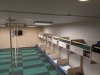
The Ogasawara Islands, part 2: Chichijima
My schedule for the Ogasawaras went like this:
On the 13th March I left Tokyo at 11am (spending all day at sea); 14th arrive at Chichijima at 11am; 15th and 16th were full days on the islands (the first to be spent on Chichijima and the second on Hahajima); 17th leave Chichijima at 3pm (the rest of the day at sea); and 18th all day at sea until arriving back at Tokyo at 3pm.
Because of the way the ferry timetables work, you can only get to Hahajima on one day of your stay (in my case on the 16th) unless you are staying on Hahajima. This is because the local ferry goes to Hahajima on the day the main ferry arrives from Tokyo (the 14th in my case) but doesn't come back until the next day. On the day after that (the 16th) the ferry leaves Chichijima for Hahajima at 7.30am, and returns the same day at 2pm, so you only get about four hours there (it is a two hour trip). You can get there on the final day as well, if you really needed to, but on that day the ferry comes back at midday in order to meet the departing ferry for Tokyo, so you'd only have about two hours there. Tickets for the Hahajima ferry are bought on the day, not in advance.
Being oceanic islands there are only a few species of native land vertebrates. Three endemic bird species are already extinct (the Bonin Wood Pigeon, Bonin Grosbeak, and Bonin Thrush). The two remaining endemic birds are the Bonin White-eye which is now only found on Hahajima, and the Bonin Greenfinch which is now restricted to small islets off Hahajima as a breeding bird but sometimes occurs on the other islands outside the breeding season. This latter bird has traditionally been treated as a subspecies of the Oriental Greenfinch but has recently been split as a full species. The fact that it has been almost eliminated by introduced rats is a good indication that it is an endemic species long isolated here and not just a relatively recent colonist. Because it is now so restricted, I did not see a Bonin Greenfinch.
There are several endemic subspecies of Japanese birds as well, the one I was most interested in being the Red-headed Wood Pigeon, a distinctive brightly-coloured form of the Japanese Wood Pigeon, which occurs on both islands. There are also local subspecies of Japanese Bush Warbler and Eastern Buzzard.
Finally there is, of course, the endemic Bonin Flying Fox.
On arrival at Chichijima the ferry passengers are met at the dock by staff or owners from the various hotels they are booked into. It's not really necessary in most cases - the town is tiny - but some of the hotels are in far parts of the island. My hotel was called Horizon Dream and was about two minutes walk away.
After checking in and putting my pack in my room, I had to find out what to do about food. There were a few restaurants and cafes about but they seemed expensive. The hotel didn't include meals but it did have a small kitchen. I went to the supermarket and sifted through their meagre stock, coming back with a selection of vegetables, meat and noodles.
Then I jumped on a local bus to the last stop in the southern part of the island, at Kominato Beach where there are a couple of trails. You can rent bicycles in town for 1000 Yen for three hours, or 1500 Yen for six hours, but the bus is only 200 Yen and it is really hot here! It does only run every hour or hour-and-a-half though, so it depends on what you want to be doing.
The bus stop at Kominato Beach is officially the southernmost bus stop in Tokyo because, despite being 1000km away, the Ogasawaras are still classed as Tokyo for government reasons.
It turned out to be scrubby coastal forest here, so no good for pigeons I don't think. I did see an introduced Green Anole (which was brown), and a Japanese Bush Warbler which looks quite noticeably different to the "mainland" form with a longer tail and bill. Lots of Brown-eared Bulbuls, Blue Rock Thrushes and introduced Japanese White-eyes throughout the area as well.

Male Blue Rock Thrush
I took the next bus back but got off at Ogiura Beach where there was another trail up into the hills, which was much better forest but was really quiet apart for the same birds that I had seen at Kominato Beach. There are only a few species of land birds on the islands, but I knew the Red-headed Wood Pigeon had been seen in this general area so I was disappointed not to find any yet.
Back at the hotel at the end of the day I had a Google, and found out that Ogamiyama Park right above town is apparently "good" for the pigeon and flying fox, so I would try there tomorrow. The pigeon was said to be common on Hahajima so I wasn't too worried that I hadn't see it yet on Chichijima.
In the morning it was raining, but a light misty rain so it was nice and cool unlike yesterday which was very hot and humid. There was an entrance path to Ogamiyama Park just a little bit down the street from the hotel. I walked up this path and five minutes later was looking at a Red-headed Wood Pigeon! It had actually been sitting on the handrail of the walkway and flew to a nearby branch when I surprised it (or it surprised me, whichever), then it sat there while I got some photos before jumping down to the ground and walking away into the forest. I came back that way later and it was sitting on the rail again calling, with another one responding from back in the trees. It was just as well I saw this bird so well - I didn't find any on Hahajima the next day!


There wasn't really anything else to look for on Chichijima (the flying fox had to wait until night) so I went to the visitor centre up the road which had lots of interesting displays about the island's wildlife and history. Definitely worth visiting if on the islands. The lady at the counter told me that a good place to see the flying foxes in the evening was the Ogiura Beach area (where I was yesterday afternoon), so I went back there at the end of the day.
I caught the 5.20pm bus to the Kouryu Center bus stop (the one after the Ogiura Beach stop). I got there at 5.30pm, and a few minutes later a bat flew past overhead. Soon lots of bats were passing by. I tried taking photos but they were all rubbish, being against the sky in failing light, and were mostly out of focus anyway. The bats were coming from the forest quite close - I followed the road around that way from the bus stop but came to a dead end. I saw a couple of people photographing a Red-headed Wood Pigeon though. Had to wait for the 6.42pm bus back to the hotel.
My schedule for the Ogasawaras went like this:
On the 13th March I left Tokyo at 11am (spending all day at sea); 14th arrive at Chichijima at 11am; 15th and 16th were full days on the islands (the first to be spent on Chichijima and the second on Hahajima); 17th leave Chichijima at 3pm (the rest of the day at sea); and 18th all day at sea until arriving back at Tokyo at 3pm.
Because of the way the ferry timetables work, you can only get to Hahajima on one day of your stay (in my case on the 16th) unless you are staying on Hahajima. This is because the local ferry goes to Hahajima on the day the main ferry arrives from Tokyo (the 14th in my case) but doesn't come back until the next day. On the day after that (the 16th) the ferry leaves Chichijima for Hahajima at 7.30am, and returns the same day at 2pm, so you only get about four hours there (it is a two hour trip). You can get there on the final day as well, if you really needed to, but on that day the ferry comes back at midday in order to meet the departing ferry for Tokyo, so you'd only have about two hours there. Tickets for the Hahajima ferry are bought on the day, not in advance.
Being oceanic islands there are only a few species of native land vertebrates. Three endemic bird species are already extinct (the Bonin Wood Pigeon, Bonin Grosbeak, and Bonin Thrush). The two remaining endemic birds are the Bonin White-eye which is now only found on Hahajima, and the Bonin Greenfinch which is now restricted to small islets off Hahajima as a breeding bird but sometimes occurs on the other islands outside the breeding season. This latter bird has traditionally been treated as a subspecies of the Oriental Greenfinch but has recently been split as a full species. The fact that it has been almost eliminated by introduced rats is a good indication that it is an endemic species long isolated here and not just a relatively recent colonist. Because it is now so restricted, I did not see a Bonin Greenfinch.
There are several endemic subspecies of Japanese birds as well, the one I was most interested in being the Red-headed Wood Pigeon, a distinctive brightly-coloured form of the Japanese Wood Pigeon, which occurs on both islands. There are also local subspecies of Japanese Bush Warbler and Eastern Buzzard.
Finally there is, of course, the endemic Bonin Flying Fox.
On arrival at Chichijima the ferry passengers are met at the dock by staff or owners from the various hotels they are booked into. It's not really necessary in most cases - the town is tiny - but some of the hotels are in far parts of the island. My hotel was called Horizon Dream and was about two minutes walk away.
After checking in and putting my pack in my room, I had to find out what to do about food. There were a few restaurants and cafes about but they seemed expensive. The hotel didn't include meals but it did have a small kitchen. I went to the supermarket and sifted through their meagre stock, coming back with a selection of vegetables, meat and noodles.
Then I jumped on a local bus to the last stop in the southern part of the island, at Kominato Beach where there are a couple of trails. You can rent bicycles in town for 1000 Yen for three hours, or 1500 Yen for six hours, but the bus is only 200 Yen and it is really hot here! It does only run every hour or hour-and-a-half though, so it depends on what you want to be doing.
The bus stop at Kominato Beach is officially the southernmost bus stop in Tokyo because, despite being 1000km away, the Ogasawaras are still classed as Tokyo for government reasons.
It turned out to be scrubby coastal forest here, so no good for pigeons I don't think. I did see an introduced Green Anole (which was brown), and a Japanese Bush Warbler which looks quite noticeably different to the "mainland" form with a longer tail and bill. Lots of Brown-eared Bulbuls, Blue Rock Thrushes and introduced Japanese White-eyes throughout the area as well.
Male Blue Rock Thrush
I took the next bus back but got off at Ogiura Beach where there was another trail up into the hills, which was much better forest but was really quiet apart for the same birds that I had seen at Kominato Beach. There are only a few species of land birds on the islands, but I knew the Red-headed Wood Pigeon had been seen in this general area so I was disappointed not to find any yet.
Back at the hotel at the end of the day I had a Google, and found out that Ogamiyama Park right above town is apparently "good" for the pigeon and flying fox, so I would try there tomorrow. The pigeon was said to be common on Hahajima so I wasn't too worried that I hadn't see it yet on Chichijima.
In the morning it was raining, but a light misty rain so it was nice and cool unlike yesterday which was very hot and humid. There was an entrance path to Ogamiyama Park just a little bit down the street from the hotel. I walked up this path and five minutes later was looking at a Red-headed Wood Pigeon! It had actually been sitting on the handrail of the walkway and flew to a nearby branch when I surprised it (or it surprised me, whichever), then it sat there while I got some photos before jumping down to the ground and walking away into the forest. I came back that way later and it was sitting on the rail again calling, with another one responding from back in the trees. It was just as well I saw this bird so well - I didn't find any on Hahajima the next day!
There wasn't really anything else to look for on Chichijima (the flying fox had to wait until night) so I went to the visitor centre up the road which had lots of interesting displays about the island's wildlife and history. Definitely worth visiting if on the islands. The lady at the counter told me that a good place to see the flying foxes in the evening was the Ogiura Beach area (where I was yesterday afternoon), so I went back there at the end of the day.
I caught the 5.20pm bus to the Kouryu Center bus stop (the one after the Ogiura Beach stop). I got there at 5.30pm, and a few minutes later a bat flew past overhead. Soon lots of bats were passing by. I tried taking photos but they were all rubbish, being against the sky in failing light, and were mostly out of focus anyway. The bats were coming from the forest quite close - I followed the road around that way from the bus stop but came to a dead end. I saw a couple of people photographing a Red-headed Wood Pigeon though. Had to wait for the 6.42pm bus back to the hotel.

The Horizon Dream hotel

View from the hotel

The local supermarket

View from the hill track above Kominato Beach. The town can be seen way in the distance.
Attachments



Pandanus boninensis at Ogamiyama Park. This species is endemic to the Ogasawara Islands. Unlike the pandanus I see in southeast Asia, these are distinctly squat and chunky.

And another photo of the Red-headed Wood Pigeon taken with my phone.
Attachments
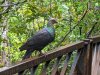
The Ogasawara Islands, part 3: Hahajima
Tickets for the ferry to Hahajima can only be bought on the day so I got to the terminal early just in case, but there was no need because it is quite a big ferry and there were plenty of spaces. The sea was calm and it was an easy crossing, although the only seabirds were Wedge-tailed Shearwaters, Brown Boobies, and a couple of Black-footed Albatrosses.

Male Brown Booby

Female Brown Booby
Lots of Humpback Whales were spouting, some very close to the ferry, but they were unpredictable so the only photos I got didn't show anything worthwhile. There were some unidentifiable dolphin fins at one point as well. No Bonin Petrels were seen, but I was secretly hoping I wouldn't see any on the ferry in this direction anyway because then the Bonin White-eye would be my 100th life bird for this trip.
The Bonin White-eye was the bird I wanted to see in the islands. Possibly the bird I most wanted to see in the whole of Japan. It used to be included amongst the honeyeaters but is now known to be an aberrant white-eye. Originally it was found all over the Ogasawara Islands but is now restricted to Hahajima.
On the island I had committed to staying in the vicinity of the village because of a trip report which said the Bonin White-eye was common there. On Chichijima I had gone as far from the town as the bus would take me to try and find a Red-headed Wood Pigeon and found nothing, and then the next day found one just a few minutes walk away from the hotel, so I wasn't making that mistake again.
On arrival I headed to the right and followed the road around the harbour. Where a little stream ran into the ocean there were Turnstones and Golden Plovers bathing in the fresh water, Little Egrets hunting along the edge, and there were Coots, Wigeon and a Grey Heron a bit further up the stream itself. The road curled uphill, and as I walked up I saw a Bonin White-eye almost immediately in the roadside vegetation, in the company of the regular Japanese White-eyes, but it was very brief with no chance of a photo. I wasn't worried - they were "common around the village" after all.

Pacific Golden Plover and Turnstones

Common Coot
I followed the road for a bit, part was through forest and part not. No luck. I saw an Eastern Buzzard overhead though which was welcome - I had been told that on the other island (Chichijima) they are only found in the interior hills so I didn't think I was going to be seeing one at all. I returned to the place I saw the Bonin White-eye. All the other birds were still coming and going in the roadside trees - Japanese white-eyes, Brown-eared Bulbuls, Blue Rock Thrushes - but no Bonin White-eyes.

Blue Rock Thrush - this is a female or immature bird.
Back through the village, following all the streets I could and checking all the trees. No Bonin White-eyes. I came to a road which led uphill through thick forest, so I tried that. I saw a pair of Bonin White-eyes way up in the canopy. No good for photos. I kept going to a fork. Still no joy. This was why I had wanted to stay on the island - so I could spend plenty of time on this instead of having a stressful four-hour limit!
Which way to go, left or right? I took the left road which led back towards the village. I still had a couple of hours before the ferry but I didn't know how long this road was because the map I had didn't appear to be accurately to scale, and it's better to have a leisurely walk looking for birds than trying to rush. And just a minute or two later - a Bonin White-eye in a low tree right over the side of the road, perfect for photos, and it didn't just fly away as soon as the camera was pointed at it, as birds usually do (!), but stayed flitting from branch to branch for several minutes. Tragedy averted!


I ended up seeing several more of them along the road, although none resulted in good photos so I was glad of that one particular bird.

I saw another endemic animal along this road as well, but it was a reptile rather than a bird. In a little clearing with piles of building supplies sitting around I saw first a Green Anole. This is an American lizard accidentally introduced to the islands, where it is a threat to the native lizards and invertebrates. It is currently restricted to the two main islands with towns - Chichijima and Hahajima - and there are lizard traps around all the ports to stop their spread to other islands.

Green Anole
Just nearby I noticed a movement by the path and saw there were Ogasawara Snake-eyed Skinks sunning themselves there. These are the only endemic lizards on the islands. There are also two geckos but they are widespread species (Lepidodactylus lugubris and Hemidactylus frenatus). I didn't see any geckos while here, but I did hear them calling at night from the forest while watching the flying foxes at Ogiura.


Ogasawara Snake-eyed Skinks
The return ferry trip had many fewer Humpbacks than the morning trip - only seen directly off the coasts of the two islands and none in between - and no albatrosses. Also no Bonin Petrels, annoyingly. However I had two surprise sightings (probably of the same bird returning, rather than of two separate birds) of a male Brewster's Booby, like a regular Brown Booby but with a distinctive white head which stood out even when the bird was some distance away. This species breeds in the Gulf of California and is a vagrant to Japan, although interestingly there is a sighting on eBird of a female bird in October last year from this same ferry. It could well be a regular site for them.
Back on Chichijima I went back to Ogiura to see if I could get some usable photos of the flying foxes but just got the same blurry silhouettes as they flew overhead. The Hahajima ferry gets back to Chichijima at 4pm and the next bus round to Ogiura isn't until 5.20pm so I couldn't go earlier to look for where the roost might be.
The bats are pretty different in flight than most flying foxes I've seen. They are quite small (relatively speaking) and in flight they reminded me of bumblebees - not in size obviously, but because they are short-bodied so when flying they look like round fluffy balls and they seem to "flutter" their wings much more than "flap" them, if that makes sense. They sort of come across as giant microbats.
Tickets for the ferry to Hahajima can only be bought on the day so I got to the terminal early just in case, but there was no need because it is quite a big ferry and there were plenty of spaces. The sea was calm and it was an easy crossing, although the only seabirds were Wedge-tailed Shearwaters, Brown Boobies, and a couple of Black-footed Albatrosses.
Male Brown Booby
Female Brown Booby
Lots of Humpback Whales were spouting, some very close to the ferry, but they were unpredictable so the only photos I got didn't show anything worthwhile. There were some unidentifiable dolphin fins at one point as well. No Bonin Petrels were seen, but I was secretly hoping I wouldn't see any on the ferry in this direction anyway because then the Bonin White-eye would be my 100th life bird for this trip.
The Bonin White-eye was the bird I wanted to see in the islands. Possibly the bird I most wanted to see in the whole of Japan. It used to be included amongst the honeyeaters but is now known to be an aberrant white-eye. Originally it was found all over the Ogasawara Islands but is now restricted to Hahajima.
On the island I had committed to staying in the vicinity of the village because of a trip report which said the Bonin White-eye was common there. On Chichijima I had gone as far from the town as the bus would take me to try and find a Red-headed Wood Pigeon and found nothing, and then the next day found one just a few minutes walk away from the hotel, so I wasn't making that mistake again.
On arrival I headed to the right and followed the road around the harbour. Where a little stream ran into the ocean there were Turnstones and Golden Plovers bathing in the fresh water, Little Egrets hunting along the edge, and there were Coots, Wigeon and a Grey Heron a bit further up the stream itself. The road curled uphill, and as I walked up I saw a Bonin White-eye almost immediately in the roadside vegetation, in the company of the regular Japanese White-eyes, but it was very brief with no chance of a photo. I wasn't worried - they were "common around the village" after all.
Pacific Golden Plover and Turnstones
Common Coot
I followed the road for a bit, part was through forest and part not. No luck. I saw an Eastern Buzzard overhead though which was welcome - I had been told that on the other island (Chichijima) they are only found in the interior hills so I didn't think I was going to be seeing one at all. I returned to the place I saw the Bonin White-eye. All the other birds were still coming and going in the roadside trees - Japanese white-eyes, Brown-eared Bulbuls, Blue Rock Thrushes - but no Bonin White-eyes.
Blue Rock Thrush - this is a female or immature bird.
Back through the village, following all the streets I could and checking all the trees. No Bonin White-eyes. I came to a road which led uphill through thick forest, so I tried that. I saw a pair of Bonin White-eyes way up in the canopy. No good for photos. I kept going to a fork. Still no joy. This was why I had wanted to stay on the island - so I could spend plenty of time on this instead of having a stressful four-hour limit!
Which way to go, left or right? I took the left road which led back towards the village. I still had a couple of hours before the ferry but I didn't know how long this road was because the map I had didn't appear to be accurately to scale, and it's better to have a leisurely walk looking for birds than trying to rush. And just a minute or two later - a Bonin White-eye in a low tree right over the side of the road, perfect for photos, and it didn't just fly away as soon as the camera was pointed at it, as birds usually do (!), but stayed flitting from branch to branch for several minutes. Tragedy averted!
I ended up seeing several more of them along the road, although none resulted in good photos so I was glad of that one particular bird.
I saw another endemic animal along this road as well, but it was a reptile rather than a bird. In a little clearing with piles of building supplies sitting around I saw first a Green Anole. This is an American lizard accidentally introduced to the islands, where it is a threat to the native lizards and invertebrates. It is currently restricted to the two main islands with towns - Chichijima and Hahajima - and there are lizard traps around all the ports to stop their spread to other islands.
Green Anole
Just nearby I noticed a movement by the path and saw there were Ogasawara Snake-eyed Skinks sunning themselves there. These are the only endemic lizards on the islands. There are also two geckos but they are widespread species (Lepidodactylus lugubris and Hemidactylus frenatus). I didn't see any geckos while here, but I did hear them calling at night from the forest while watching the flying foxes at Ogiura.
Ogasawara Snake-eyed Skinks
The return ferry trip had many fewer Humpbacks than the morning trip - only seen directly off the coasts of the two islands and none in between - and no albatrosses. Also no Bonin Petrels, annoyingly. However I had two surprise sightings (probably of the same bird returning, rather than of two separate birds) of a male Brewster's Booby, like a regular Brown Booby but with a distinctive white head which stood out even when the bird was some distance away. This species breeds in the Gulf of California and is a vagrant to Japan, although interestingly there is a sighting on eBird of a female bird in October last year from this same ferry. It could well be a regular site for them.
Back on Chichijima I went back to Ogiura to see if I could get some usable photos of the flying foxes but just got the same blurry silhouettes as they flew overhead. The Hahajima ferry gets back to Chichijima at 4pm and the next bus round to Ogiura isn't until 5.20pm so I couldn't go earlier to look for where the roost might be.
The bats are pretty different in flight than most flying foxes I've seen. They are quite small (relatively speaking) and in flight they reminded me of bumblebees - not in size obviously, but because they are short-bodied so when flying they look like round fluffy balls and they seem to "flutter" their wings much more than "flap" them, if that makes sense. They sort of come across as giant microbats.



The Ogasawara Islands, part 4: last day
The ferry back to Tokyo doesn't leave until 3pm so I used my final day for trying to locate the flying fox roost in order to get some photos.
I got off the bus at the Ogiura Beach stop and followed that road around. I knew from the previous evenings the direction the bats were coming from and in fact it didn't take me long to find them. If a person was to be following my route, from the Ogiura Beach bus stop you would keep walking along that same road (not turning the corner which the bus does to reach the Kouryu Center bus stop) and, not much further along, the road which you're on curves sharply to the left, and between that curve and the next right-hand curve is a stand of Casuarina trees in which the bats were roosting.
Some bats were roosting individually but most were hanging in tight clusters, like big furry fruits. They were easy enough to see, but photographing them was more difficult. Casuarinas are very open trees with curtains of wispy drooping needles - they look kind of like anorexic pine trees - which meant that the bats were against the sky. I took lots of useless photos hoping to get some that worked.

There were bats also roosting in broad-leaved trees behind the Casuarinas but they were even harder to photograph because they were hidden inside or behind leaves. I did finally manage to spot a single bat more or less in the open, of which I got some photos.


The trip to the islands from Tokyo had been smooth and clear, but the reverse trip was not. The sea was rough, and after only an hour they stopped access to the outside decks. Sleeping was fun - being woken up regularly by being shunted across the mat by the lurching ship!
The next morning the rear of the ship was accessible but not the side decks until well into the day. I sighted a good number of Black-footed Albatrosses nevertheless and, prize of the morning, a single Short-tailed Albatross, so now I have seen three of the four species of Phoebastria (the fourth being the Waved Albatross P. irrorata of the Galapagos). Otherwise the only birds seen were Streaked Shearwaters.
The Short-tailed Albatross is an especially significant bird because it is one of those animals which when I was growing up were destined for certain extinction and I never thought I'd see one. The species was hunted so intensively on its breeding islands for its feathers that it was wiped out throughout almost its entire range. The sole remaining breeding site was the island of Torishima (formerly on other islands around southern Japan and Taiwan), but the plunder was so great that it was thought to have become extinct even there by the end of the 1940s. A few had survived, however, out on the oceans, and with protection the number has since increased to about 6000 birds today. Between 2008 and 2012 seventy chicks were translocated from Torishima to Mukojima (in the Mukojima Islands, just north of Chichijima) where they were hand-raised in the hope they would return to that island as breeding birds. Decoys and recorded calls attract them back to the nesting area. Parent-reared chicks have been fledged on the island every year since 2016. The recovery of the Short-tailed Albatross is one of the greatest conservation successes in the Pacific.
The ferry back to Tokyo doesn't leave until 3pm so I used my final day for trying to locate the flying fox roost in order to get some photos.
I got off the bus at the Ogiura Beach stop and followed that road around. I knew from the previous evenings the direction the bats were coming from and in fact it didn't take me long to find them. If a person was to be following my route, from the Ogiura Beach bus stop you would keep walking along that same road (not turning the corner which the bus does to reach the Kouryu Center bus stop) and, not much further along, the road which you're on curves sharply to the left, and between that curve and the next right-hand curve is a stand of Casuarina trees in which the bats were roosting.
Some bats were roosting individually but most were hanging in tight clusters, like big furry fruits. They were easy enough to see, but photographing them was more difficult. Casuarinas are very open trees with curtains of wispy drooping needles - they look kind of like anorexic pine trees - which meant that the bats were against the sky. I took lots of useless photos hoping to get some that worked.
There were bats also roosting in broad-leaved trees behind the Casuarinas but they were even harder to photograph because they were hidden inside or behind leaves. I did finally manage to spot a single bat more or less in the open, of which I got some photos.
The trip to the islands from Tokyo had been smooth and clear, but the reverse trip was not. The sea was rough, and after only an hour they stopped access to the outside decks. Sleeping was fun - being woken up regularly by being shunted across the mat by the lurching ship!
The next morning the rear of the ship was accessible but not the side decks until well into the day. I sighted a good number of Black-footed Albatrosses nevertheless and, prize of the morning, a single Short-tailed Albatross, so now I have seen three of the four species of Phoebastria (the fourth being the Waved Albatross P. irrorata of the Galapagos). Otherwise the only birds seen were Streaked Shearwaters.
The Short-tailed Albatross is an especially significant bird because it is one of those animals which when I was growing up were destined for certain extinction and I never thought I'd see one. The species was hunted so intensively on its breeding islands for its feathers that it was wiped out throughout almost its entire range. The sole remaining breeding site was the island of Torishima (formerly on other islands around southern Japan and Taiwan), but the plunder was so great that it was thought to have become extinct even there by the end of the 1940s. A few had survived, however, out on the oceans, and with protection the number has since increased to about 6000 birds today. Between 2008 and 2012 seventy chicks were translocated from Torishima to Mukojima (in the Mukojima Islands, just north of Chichijima) where they were hand-raised in the hope they would return to that island as breeding birds. Decoys and recorded calls attract them back to the nesting area. Parent-reared chicks have been fledged on the island every year since 2016. The recovery of the Short-tailed Albatross is one of the greatest conservation successes in the Pacific.

What species of crab is this sign about? Is it warning people to watch for them in the road?