Domestic animals mixed with wild ones

Utahraptor

Active Member
We all know the classic African exhibit where guests can see wild animals (zebras, red river hogs, giraffes, ostriches, antelopes) sharing the space with Ankole watussi, or the cheetahs having dog companions to help with stress.

What other domestic-wild mix you can think of?
 
This seems to be a common practise in Indonesia. Ragunan Zoo have several aviaries with Victoria crowned pigeon and some songbirds with chickens and pigeons. Taman Safari Bogor have their family of Mishmi takins with domestic gooses. A lot of walkthrough aviaries in Indonesian zoos and other facilities tend to have domestic poultry in the mix for some reason.
 
Pairi daiza combines Aldabra giant tortoise and goats in a walktrhough enclosure. On the walk through farm they also have some wild animals like red necked wallabies, patagonian maras, Fallow deer and rheas who casually walk along the visitors and the domestic species.
 
I don't know if this odd mix still exists at Artis (Amsterdam), but this enclosure held camels, cattle, donkeys and reindeer.
But you could of course argue that all these animals are domestic.
full

photo: snowleopard
 
A few that I have seen, with the domestic species bolded for clarity in all below examples:
  • Bactrian Camels with Przewalski's Horses at Whipsnade.
  • Bactrian Camels with Persian Onagers at Chester.
  • Bactrian Camels with Persian Goitered Gazelles at Zürich.
  • Bactrian Camels and Ankole with Ostrich and Scimitar-horned Oryx at Longleat.
  • Anglo-Nubian Goats with an Asian Elephant at Longleat.
  • Ankole with White Rhinoceros, Congo Buffalo, Sable, Grevy's Zebra, Common Eland and Ostrich at Woburn.
  • A selection of domestic chickens and ducks with Bennett's and Parma Wallabies at Dartmoor.
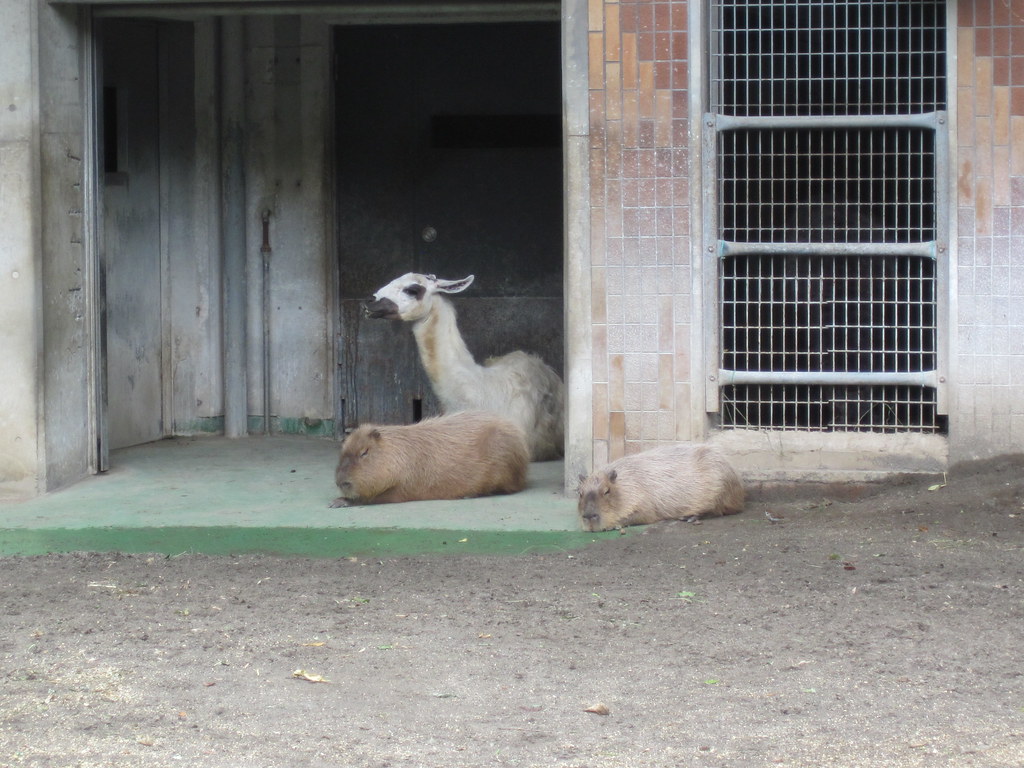
I am sure there are several more that I am forgetting. In particular, I feel as though I have seen domestic Llamas or Alpacas used in South American mixes with the likes of Capybara, mara, rhea and tapir before. My first thought here was Tierpark Dessau, but per ZTL theirs are in fact Guanaco, so I could well be misremembering.
 
I am sure there are several more that I am forgetting. In particular, I feel as though I have seen domestic Llamas or Alpacas used in South American mixes with the likes of Capybara, mara, rhea and tapir before. My first thought here was Tierpark Dessau, but per ZTL theirs are in fact Guanaco, so I could well be misremembering.

Apparently, this Mix apparently happened on Ueno zoo aswell
4099556945_94ff7b02ef_b.jpg

(Photo from Sereny Forbes on Flickr)

and also happened on Reid park zoo at some point:
full

(Photo from Arizona Docent)
 
Domesticated camelids (dromedary and Bactrian camels, llamas, and alpacas) seem especially prone to being mixed with wild species when they are kept at zoos. This is probably because they seem exotic enough that people may not immediately recognize they’re not in fact wild animals, and Bactrian camels and the South American domestic camelids can serve as stand-ins for their wild counterparts.
 
Very common in Australian zoos to have domestic (but of wild-type plumage) budgerigars and cockatiels in mixed aviaries with wild Australian birds. I'd imagine this is simply for the ease of acquiring domestic birds rather than wild ones, and the domestics would be easier to keep (I recall hearing that wild budgerigars are very flighty and easily spooked when contained).
 
On my last visit to Cotswold Wildlife Park there were some emus with the donkeys in the farmyard section. This was in addition to the main emu enclosure. In the past additional emus have occasionally temporarily been housed elsewhere in the park. I assume this is another example.
 
Lazy 5 Ranch in Mooresville, NC has a whole mess of domestic animals mixed in with wild species in their drive-thru safari. You have domestic pigs (mostly pot-bellies), Llamas, domestic water buffalo, domestic cattle, and goats mixed with zebras, nilgai, eland, asian deer, and aoudads, all in the same space (although said space is very large and does allow the animals to spread out).

Metro Richmond Zoo, which I just visited this past weekend, has a small corral with domestic goats, sheep, and......blackbuck. Yeah, it completely caught me off-guard.
 
Very common in Australian zoos to have domestic (but of wild-type plumage) budgerigars and cockatiels in mixed aviaries with wild Australian birds. I'd imagine this is simply for the ease of acquiring domestic birds rather than wild ones, and the domestics would be easier to keep (I recall hearing that wild budgerigars are very flighty and easily spooked when contained).
Very common? I think that might be an exaggeration. Not that I visit too many zoos these days, I really can't recall seeing that mix anywhere ever.
 
I would also like to mention two other mixes:

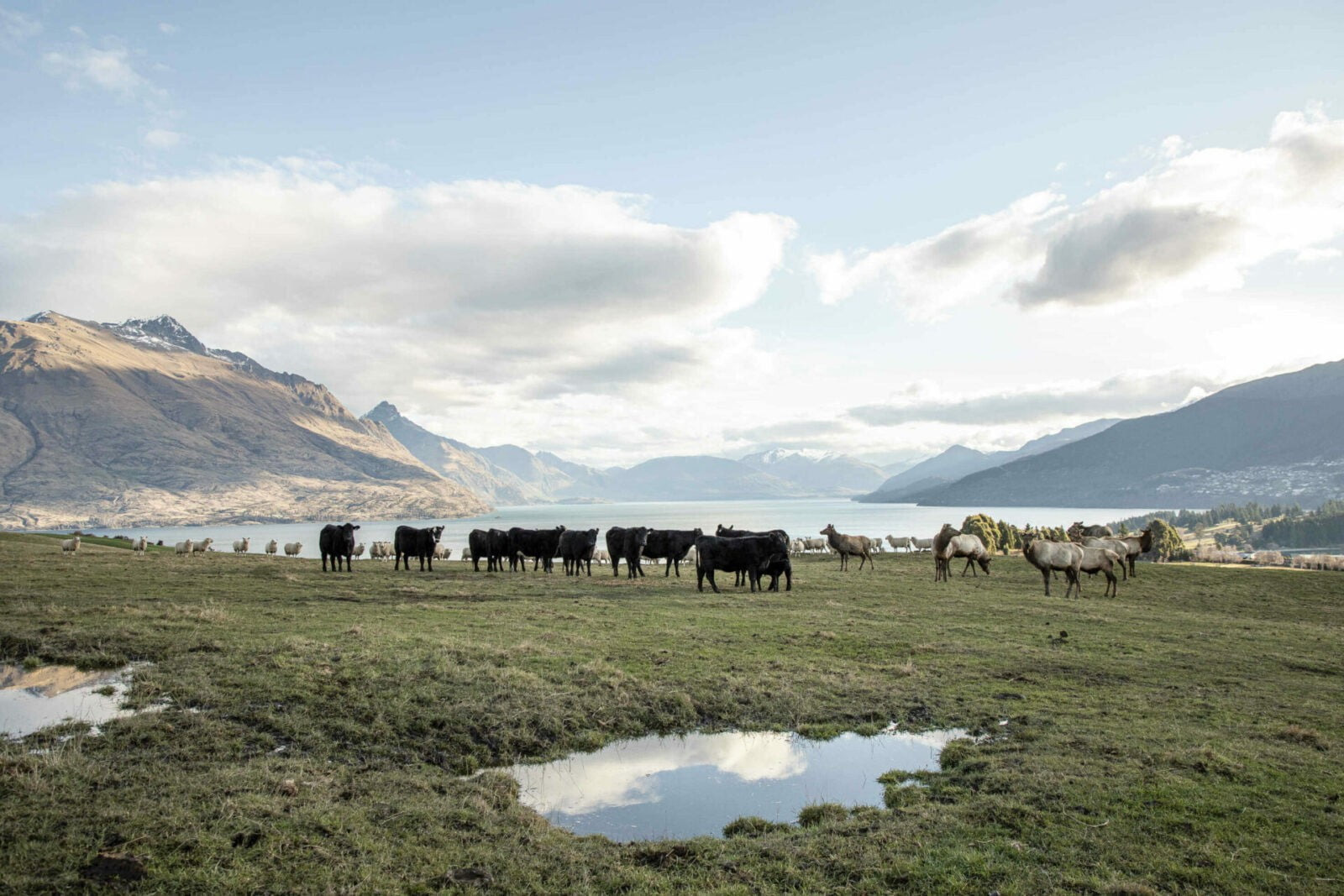
The first one is the multiple cattle breeds with Red deers on Deer park heights (that while not a traditional zoo in any means, still fit the criteria of domestic animals share an "exhibit" with wild animals):
deerpark-animals-52_optimized.jpg

(Photo from they site)

And also the several mix that includes Helmeted guineafowl, considering that most animals in zoos are the domestic guineafowls, Such as those ones who used to live on John Ball zoo:
full

(photo by MountainBongo)
 
Tierpark Hamm mixes rhea lama and guanako in one of their enclosures. Giving a direct comparison between the domestic and wild form.
 
Very common? I think that might be an exaggeration. Not that I visit too many zoos these days, I really can't recall seeing that mix anywhere ever.
Phillip Island wildlife park certainly has domestic budgies, cockatiels and zebra finch in their avairys...
 
Phillip Island wildlife park certainly has domestic budgies, cockatiels and zebra finch in their avairys...
Yes, that is one. I'm not sure if Phillip Island Wildlife Park is indicative of most Australian zoos, though.

I will admit at times, especially with zebra finches, even after taking a lot of care, mutations can pop up in nests of "wild type" birds. It has certainly happened to us. I believe it is similar with cockatiels. However wild budgies are very different in body shape and size to domestic birds, even when they have similar plumage.
 
Back
Top