Auckland Zoo Auckland Zoo News 2025

Do we know what zoo or wildlife park the kangaroos came from? I'd assume it'd be somewhere in Tasmania, but maybe mainland zoos stock this subspecies too.

According to Auckland Zoo’s website, they came from Tasmania. Tasmania has a number of facilities that hold Forester kangaroo including Tasmania Zoo, Hobart Zoo and Aquarium, Bonorong Wildlife Sanctuary, East Coast Natureworld and Wings Wildlife Park.
 
Giant weta breeding season update:

From socials:

Wētāpunga breeding season is in full swing at the Zoo! With over two thousand hatched – and counting - wētāpunga nymphs emerge from their eggs as tiny, pale versions of the adults. Their bodies are almost translucent, with hues of white, green, and pale brown.

Our ectotherm team gets to work—spending up to 4–5 hours at a time feeding the animals with fresh leaves from native trees such as karaka, karamu, māhoe, and kohekohe and cleaning their habitats.


The entire process from nymph to fully grown adult takes between 15 and 24 months, with wētāpunga reaching their sexual maturity shortly afterwards. Once mature, adult wētāpunga live for between 6-9 months, which means their total lifespan from egg to adult is about three years.

These Zoo-bred wētāpunga will be released onto the predator-free islands where populations have already been established, adding essential new genetic material to improve the viability of each sub-population and ensure the species survival for generations to come.
 
Auckland Zoo News

Update from my visit (03/05/2025):

Nita the male Tasmanian devil had indeed died (as I suspected on my last visit). His exhibit (two smaller interconnected exhibits) has been renovated and now houses the two females; while the larger exhibit is under redevelopment. Presumably the zoo will acquire new Tasmanian devils in the near future.

A screen has been put up dividing the Australian walkthrough exhibit into two - Emu on one side; Forester kangaroo on the other, though the kangaroos can access both sides. A keeper was spending time with the kangaroos, who seemed reluctant to explore the extent of their exhibit (all except one kangaroo remained at the far back throughout my visit).

The Southern white rhinoceros were being run in two herds on my visit: Zambezi (1992) was off display; while Jamila (2012) and their three offspring Nyah (2020), Amali (2022) and Zuka (2024) were on exhibit. The rationale behind this is separating Zambezi from his eldest daughter to prevent inbreeding (without putting the young cow on contraception).

Kiraka the giraffe did not look pregnant. The size difference between her daughter Kabili and the other adult females (Rukiya and Kiraka) was very much evident, which is to be expected of a freemartin giraffe (female giraffe who gestated with a male twin). To my knowledge, only one other captive born female giraffe from a set of male/female twins has survived to maturity (born 1990 at a zoo in France) and she was reported to have taken on a masculinised appearance - similar in height/stature to a bull giraffe.

The Freeflight aviary felt very under-stocked. Species signed were North Island kaka, New Zealand wood pigeon, Tui, Red-crowned parakeet and North Island saddleback. I visited with my son and we both saw a New Zealand wood pigeon; and he said he saw a Tui. Neither of us saw any of the other species signed on this visit. The Islands aviary apparently holds North Island saddleback, but appears to have been empty on both this visit and my February visit.

The old elephant exhibit has been extensively landscaped for the dinosaur exhibition; but the moat and pool remain intact.

The Siamang had access to the aerial ropes on my exhibit, while the Bornean orangutan were in their usual exhibit for the duration. Melur and Daya appear very close, which was nice to see. They chose to sit together for a period of time, while Bahmi played nearby. When Daya climbed to the top of the tower, Bahmi followed (with a blanket) to antagonise her. Daya swiped the blanket off him and Bahmi descended. These interactions (Bahmi annoying Daya) seem to be a reoccurring theme on my visits.

I saw both female False gharial, after only seeing one on most of my 2024 visits. Sumpit was in her usual spot by Viewing Window 2; Malu was under the ledge by Viewing Window 4. The new doors appear to be working effectively at retaining the humidity. Due to the foot traffic through this exhibit, it’s easy to see why they were needed.

Photos from my visit:

Auckland Zoo - ZooChat
A
 
Auckland Zoo News

Update from my visit (03/05/2025):

Nita the male Tasmanian devil had indeed died (as I suspected on my last visit). His exhibit (two smaller interconnected exhibits) has been renovated and now houses the two females; while the larger exhibit is under redevelopment. Presumably the zoo will acquire new Tasmanian devils in the near future.

A screen has been put up dividing the Australian walkthrough exhibit into two - Emu on one side; Forester kangaroo on the other, though the kangaroos can access both sides. A keeper was spending time with the kangaroos, who seemed reluctant to explore the extent of their exhibit (all except one kangaroo remained at the far back throughout my visit).

The Southern white rhinoceros were being run in two herds on my visit: Zambezi (1992) was off display; while Jamila (2012) and their three offspring Nyah (2020), Amali (2022) and Zuka (2024) were on exhibit. The rationale behind this is separating Zambezi from his eldest daughter to prevent inbreeding (without putting the young cow on contraception).

Kiraka the giraffe did not look pregnant. The size difference between her daughter Kabili and the other adult females (Rukiya and Kiraka) was very much evident, which is to be expected of a freemartin giraffe (female giraffe who gestated with a male twin). To my knowledge, only one other captive born female giraffe from a set of male/female twins has survived to maturity (born 1990 at a zoo in France) and she was reported to have taken on a masculinised appearance - similar in height/stature to a bull giraffe.

The Freeflight aviary felt very under-stocked. Species signed were North Island kaka, New Zealand wood pigeon, Tui, Red-crowned parakeet and North Island saddleback. I visited with my son and we both saw a New Zealand wood pigeon; and he said he saw a Tui. Neither of us saw any of the other species signed on this visit. The Islands aviary apparently holds North Island saddleback, but appears to have been empty on both this visit and my February visit.

The old elephant exhibit has been extensively landscaped for the dinosaur exhibition; but the moat and pool remain intact.

The Siamang had access to the aerial ropes on my exhibit, while the Bornean orangutan were in their usual exhibit for the duration. Melur and Daya appear very close, which was nice to see. They chose to sit together for a period of time, while Bahmi played nearby. When Daya climbed to the top of the tower, Bahmi followed (with a blanket) to antagonise her. Daya swiped the blanket off him and Bahmi descended. These interactions (Bahmi annoying Daya) seem to be a reoccurring theme on my visits.

I saw both female False gharial, after only seeing one on most of my 2024 visits. Sumpit was in her usual spot by Viewing Window 2; Malu was under the ledge by Viewing Window 4. The new doors appear to be working effectively at retaining the humidity. Due to the foot traffic through this exhibit, it’s easy to see why they were needed.

Photos from my visit:

Auckland Zoo - ZooChat
A

Thanks for the update! On my most recent zoo visit (this past Sunday) I was lucky enough to get a good view of the new kangaroos; they were feeding in the centre of the habitat, and I was able to see the whole group and was very much impressed with them - although I did not spot any joeys on that visit.

Sounds like it's business as usual for the orangutans! Bahmi was behaving pretty much as you've described, with regard to interactions with Daya, only taking breaks to occasionally cuddle with Melur and nurse. I noticed that Charlie was also paying more attention to Daya, which is promising. She is certainly looking much more like a mature female than when she first arrived!

The siamang pair also had access to the aerial pathways when I was there, and several times Intan sat above the orangutan exhibit, perhaps hoping for a stare-down with Charlie, who steadfastly ignored him.

I also noticed that two species of lizard, the blue-tongued and Cunningham's skinks, are now on display on the Australia track. I wonder if the zoo has decided to close Lizard Lane indefinitely due to the significant flood damage it sustained, and will be housing the lizards elsewhere going forward?
 
I also noticed that two species of lizard, the blue-tongued and Cunningham's skinks, are now on display on the Australia track. I wonder if the zoo has decided to close Lizard Lane indefinitely due to the significant flood damage it sustained, and will be housing the lizards elsewhere going forward?

The Cunningham’s skink exhibit is particularly impressive and was alive with skinks of different ages when I visited. The Blue-tongued skink aren’t the best fit for their exhibit in my opinion, but views of their predecessors were limited in any case. The highlight of the indoor Australian pavilion is undoubtedly the Lace monitors.

I wouldn’t be surprised if Lizard Lane remained closed indefinitely. The damage from the floods would have been easy enough to fix in the three years they’ve had to do it, so I’m assuming the decision not to is more around the uncertainty of the event (flooding) happening again in the future. It’s a shame as it was an area of the zoo that’s been around for some time (at least 1990’s).
 
The Cunningham’s skink exhibit is particularly impressive and was alive with skinks of different ages when I visited. The Blue-tongued skink aren’t the best fit for their exhibit in my opinion, but views of their predecessors were limited in any case. The highlight of the indoor Australian pavilion is undoubtedly the Lace monitors.

I wouldn’t be surprised if Lizard Lane remained closed indefinitely. The damage from the floods would have been easy enough to fix in the three years they’ve had to do it, so I’m assuming the decision not to is more around the uncertainty of the event (flooding) happening again in the future. It’s a shame as it was an area of the zoo that’s been around for some time (at least 1990’s).

Agree on the Cunningham's skinks! I spent quite a bit of time observing them and was also impressed with their new housing. I didn't spot any of the blue-tongued skinks at all, disappointingly. And yes, the lace monitors are certainly a highlight of the pavilion, along with the Goliath stick insects (although I'm not really a bug fan, I do have a soft spot for those!) I was lucky enough to be able to spot several very large females on my last visit!

I also noticed that golden bell frogs are no longer housed in the pavilion - perhaps the animals have since passed away and they've decided not to replace them?

If Auckland ever does experience severe flooding again, it makes sense to close down the Lizard Lane exhibit, although I too am disappointed that it has to be this way.
 
Thanks for the update!
The Southern white rhinoceros were being run in two herds on my visit: Zambezi (1992) was off display; while Jamila (2012) and their three offspring Nyah (2020), Amali (2022) and Zuka (2024) were on exhibit. The rationale behind this is separating Zambezi from his eldest daughter to prevent inbreeding (without putting the young cow on contraception).
I assume Auckland will transfer Nyah out soon. Perhaps they're waiting for Amali to mature before transferring both cows out together (potentially across to Australia). With the Dinosaur trail being built on the former elephant enclosure, it doesn't seem like there's any rush to convert that enclosure into a second rhino enclosure.
The Freeflight aviary felt very under-stocked. Species signed were North Island kaka, New Zealand wood pigeon, Tui, Red-crowned parakeet and North Island saddleback. I visited with my son and we both saw a New Zealand wood pigeon; and he said he saw a Tui. Neither of us saw any of the other species signed on this visit. The Islands aviary apparently holds North Island saddleback, but appears to have been empty on both this visit and my February visit.
That's interesting I actually saw all of the species when I visited last July with the exception of the Saddleback. The Tuis and Kakas Wood Pigeons are usually reliable from up on the viewing platform. I think I was just lucky to see the other three species on the lower trail. If you take the time and wait around, you'd probably have a better opportunity of catching them. I was in there for 20 minutes at least. I've also never seen the North island Saddleback in the Islands Aviary from memory.
The Siamang had access to the aerial ropes on my exhibit, while the Bornean orangutan were in their usual exhibit for the duration. Melur and Daya appear very close, which was nice to see. They chose to sit together for a period of time, while Bahmi played nearby. When Daya climbed to the top of the tower, Bahmi followed (with a blanket) to antagonise her. Daya swiped the blanket off him and Bahmi descended. These interactions (Bahmi annoying Daya) seem to be a reoccurring theme on my visits.
This seems to be normal behaviour for infants that are growing up in groups with mostly older individuals, and no other individuals their own age. I saw Bahmi doing the exact same when I visited last year; antagaonising Daya with a stick and wrestling with her. I also used to see the same behaviour from Kanzi the gorilla at Melbourne who would do the same to Yuska. At least Daya (and Yuska) are/were mostly attentive and willing to be playmates to the youngsters.
 
I assume Auckland will transfer Nyah out soon. Perhaps they're waiting for Amali to mature before transferring both cows out together (potentially across to Australia). With the Dinosaur trail being built on the former elephant enclosure, it doesn't seem like there's any rush to convert that enclosure into a second rhino enclosure.

I agree. Auckland Zoo mentioned last year that Nyah would be transferring out in the future and is now cycling. I assume Australia as there’s only four bulls across New Zealand’s zoos (including her sire and juvenile brother) and all are closely related to her. It’s recommended cows of this species go promptly into a breeding situation upon reaching sexual maturity given the implications of delayed breeding. That’s not to say they wouldn’t wait another year or so and send her with Amali however.
This seems to be normal behaviour for infants that are growing up in groups with mostly older individuals, and no other individuals their own age. I saw Bahmi doing the exact same when I visited last year; antagaonising Daya with a stick and wrestling with her. I also used to see the same behaviour from Kanzi the gorilla at Melbourne who would do the same to Yuska. At least Daya (and Yuska) are/were mostly attentive and willing to be playmates to the youngsters.

I really hope Melur is allowed to breed once more to tie in with Daya producing her first offspring. Auckland Zoo has only done this once before with Indra and Dara delivering their first infants together in 1989. I can only imagine how many interactions Intan and Datuk had growing up.

It’s interesting you note that as Madju and Bahmi have both been lone infants and notably precocious. One keeper attributed it to Melur’s parenting style being more relaxed than Indra’s; but Datuk and Intan had each other for company and Isim may have been subdued by having two older juveniles in the exhibit when he came on the scene five years later. He did relish in the company of the Sydney females when they were imported in 2001 however.
 
I agree. Auckland Zoo mentioned last year that Nyah would be transferring out in the future and is now cycling. I assume Australia as there’s only four bulls across New Zealand’s zoos (including her sire and juvenile brother) and all are closely related to her. It’s recommended cows of this species go promptly into a breeding situation upon reaching sexual maturity given the implications of delayed breeding. That’s not to say they wouldn’t wait another year or so and send her with Amali however.


I really hope Melur is allowed to breed once more to tie in with Daya producing her first offspring. Auckland Zoo has only done this once before with Indra and Dara delivering their first infants together in 1989. I can only imagine how many interactions Intan and Datuk had growing up.

It’s interesting you note that as Madju and Bahmi have both been lone infants and notably precocious. One keeper attributed it to Melur’s parenting style being more relaxed than Indra’s; but Datuk and Intan had each other for company and Isim may have been subdued by having two older juveniles in the exhibit when he came on the scene five years later. He did relish in the company of the Sydney females when they were imported in 2001 however.

I too would hope that Melur will be allowed to breed again. Not only would that tie in nicely with Daya producing her first infant, but Melur's paternal line is under-represented - Melur is the only one of her sire Laki's living descendants who has produced offspring.

Daya is well-placed for motherhood, as she is well used to youngsters and their antics due to having two younger siblings back in the Netherlands, and therefore she is remarkably patient with Bahmi's testing her limits. She also has a role model for maternity in Melur. I hope that Auckland Zoo will not delay Daya breeding too much longer, given Charlie's advanced aged. It's unlikely we'll see a situation like the one at Dudley Zoo, where a young female who conceived rejected her infant and handed the baby over to her own mother (although if such a thing happened, Melur could be a possible foster mother).
 
Auckland Zoo TV series

I have been finding the series interesting, but agree with previous posts that the series is not like the early seasons of the Zoo. I was fortunate enough to watch a camera crew filming an operation being performed on a Green Turtle in the Vet Hospital back on 11/4/25. I am eager to see if it will appear in a future episode before the series finishes.
 
Auckland Zoo TV series

I have been finding the series interesting, but agree with previous posts that the series is not like the early seasons of the Zoo. I was fortunate enough to watch a camera crew filming an operation being performed on a Green Turtle in the Vet Hospital back on 11/4/25. I am eager to see if it will appear in a future episode before the series finishes.

My biggest criticism is the heavy focus on the zoo’s conservation work, especially stories about wild populations of species that aren’t even held at Auckland Zoo. It’s great that Auckland Zoo undertakes this work, but I’m far more interested in hearing about what’s going on at Auckland Zoo (as I suspect the majority of the viewers are).

It’s believed Auckland Zoo has the only freemartin giraffe in captivity - let’s hear about that! Let’s get an update on Lizard Lane; a segment on future planning; an episode on the dynamics of the orangutan colony; an episode on the breeding of Greater flamingo (including removal of the eggs for incubation to promote double clutching and then subsequent cross-fostering).
 
My biggest criticism is the heavy focus on the zoo’s conservation work, especially stories about wild populations of species that aren’t even held at Auckland Zoo. It’s great that Auckland Zoo undertakes this work, but I’m far more interested in hearing about what’s going on at Auckland Zoo (as I suspect the majority of the viewers are).

It’s believed Auckland Zoo has the only freemartin giraffe in captivity - let’s hear about that! Let’s get an update on Lizard Lane; a segment on future planning; an episode on the dynamics of the orangutan colony; an episode on the breeding of Greater flamingo (including removal of the eggs for incubation to promote double clutching and then subsequent cross-fostering).

I agree with all of this. I'd especially like to hear more about the orangutan colony, and how Daya has fitted into the family dynamics. There are also plenty of other interesting developments, such as the one you've mentioned, plus the significant birth of rhino Zuka, the import of Forester Kangaroos, and the birth of the first meerkat pups in ages! Conservation work is all very worthy, but us zoo fans want more about the zoo!
 
Galapagos giant tortoise update:

An update that Auckland Zoo’s Galapagos giant tortoise hatchlings are no longer on display due to outgrowing their crèche. Signage outside the exhibit advises they’ve been moved to an off-display exhibit until they’re big enough to join the adult tortoises.

Auckland Zoo welcomed six surviving hatchlings between 2021-2022:

0.0.1 Apple (26/01/2021) Smiley x Chippie
0.0.1 Darwin (26/01/2021) Smiley x Chippie
0.0.1 Guava (26/01/2021) Smiley x Chippie
0.0.1 Isabela (26/01/2021) Smiley x Chippie
0.0.1 Fernadina (07/11/2021) Smiley x Chippie
0.0.1 Santiago (09/03/2022) Smiley x Chippie

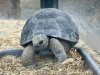
Santiago at 2 years 7 months (photo from previous visit):

upload_2025-5-16_17-14-17.jpeg
 

Attachments

  • upload_2025-5-16_17-14-17.jpeg
    upload_2025-5-16_17-14-17.jpeg
    211.3 KB · Views: 41
Galapagos giant tortoise update:

An update that Auckland Zoo’s Galapagos giant tortoise hatchlings are no longer on display due to outgrowing their crèche. Signage outside the exhibit advises they’ve been moved to an off-display exhibit until they’re big enough to join the adult tortoises.

Auckland Zoo welcomed six surviving hatchlings between 2021-2022:

0.0.1 Apple (26/01/2021) Smiley x Chippie
0.0.1 Darwin (26/01/2021) Smiley x Chippie
0.0.1 Guava (26/01/2021) Smiley x Chippie
0.0.1 Isabela (26/01/2021) Smiley x Chippie
0.0.1 Fernadina (07/11/2021) Smiley x Chippie
0.0.1 Santiago (09/03/2022) Smiley x Chippie

Santiago at 2 years 7 months (photo from previous visit):

View attachment 792912
Hopefully more will be bred. @Kifaru Bwana
 
Hopefully more will be bred. @Kifaru Bwana
I am not sure if I am equally happy about the Auckland ex situ breeding program since all are purported hybrids of Honolulu mix crossing several Galapagos tortoise species. While it is absolutely great and fabuluous that the Auckland Zoo Reptile Department has managed to breed Galapagos tortoises per se, alas all the offspring at Honolulu Zoo were basically siblings or near-siblings as well as the purity in terms of what Galapagos tortoise species (potential multiple...).

The only glimmer of hope I hold out is to (personally) elucidate the parentage to species level of the original and potential original breeders (as part of the bloodlines remains a strong unknown). This means researching some of the major collections further holding Honolulu Zoo Galapagos past originals as well as the current offspring and where the original imports ended up.....

Thanks anyway, though, for listing the names, DoB and numbers of the Galapagos tortoise offspring. A further bullet point remains that parentage is known of the F2 generation....!

If I would speculate about why the zoo has not had breeding success beyond 2011/12 ..., mmmm I ..., maybe it is better I do not say anything more publicly (I am not implying the obvious here and I feel it is unfit to do speculate ..... on the Forum).
 
I am not sure if I am equally happy about the Auckland ex situ breeding program since all are purported hybrids of Honolulu mix crossing several Galapagos tortoise species. While it is absolutely great and fabuluous that the Auckland Zoo Reptile Department has managed to breed Galapagos tortoises per se, alas all the offspring at Honolulu Zoo were basically siblings or near-siblings as well as the purity in terms of what Galapagos tortoise species (potential multiple...).

The only glimmer of hope I hold out is to (personally) elucidate the parentage to species level of the original and potential original breeders (as part of the bloodlines remains a strong unknown). This means researching some of the major collections further holding Honolulu Zoo Galapagos past originals as well as the current offspring and where the original imports ended up.....

Thanks anyway, though, for listing the names, DoB and numbers of the Galapagos tortoise offspring. A further bullet point remains that parentage is known of the F2 generation....!

If I would speculate about why the zoo has not had breeding success beyond 2011/12 ..., mmmm I ..., maybe it is better I do not say anything more publicly (I am not implying the obvious here and I feel it is unfit to do speculate ..... on the Forum).
I spoke to one of the managers at the zoo in 1999 he told me that the tortoises had avoided the then concrete pool all the time, I suggested that they replace the water with sand I am not sure if that happened but I do know that years before the San Deigo zoo had some work done in the Giant tortoise exhibit which resulted in some piles of sand being left over in which if was found that the Tortoises were using it not only for being able to be a better mating area but also some eggs being laid in it so luckily a good lesson leant!
 
Last edited:
I spoke to one of the managers at the zoo in 1999 he told me that the tortoises had avoided the then concrete pool all the time, I suggested that they replace the water with sand I am not sure if that happened but I do know that years before the San Deigo zoo had some work done in the Giant tortoise exhibit which resulted in some piles of sand being left over in which if was found that the Tortoises were using it not only for being able to be a better mating area but also mating some eggs being laid in it so luckily a good lesson leant!
The pools in the current complex are both concrete from what I can remember. Although they do have a few mud wallows outdoors too.

There is a great deal of sand laid out across the complex (especially in the indoor area), which the Giant Tortoises certainly make great use of.
 
I spoke to one of the managers at the zoo in 1999 he told me that the tortoises had avoided the then concrete pool all the time, I suggested that they replace the water with sand I am not sure if that happened but I do know that years before the San Deigo zoo had some work done in the Giant tortoise exhibit which resulted in some piles of sand being left over in which if was found that the Tortoises were using it not only for being able to be a better mating area but also mating some eggs being laid in it so luckily a good lesson leant!
The pools in the current complex are both concrete from what I can remember. Although they do have a few mud wallows outdoors too.

There is a great deal of sand laid out across the complex (especially in the indoor area), which the Giant Tortoises certainly make great use of.

The breeding success was also attributed to the return of the second male (Willy) to Auckland Zoo, who acted as a stimulant male (motivating Smiley to breed the females).

The exhibit underwent renovations to allow the males to be both housed on site; but separately to avoid male-male aggression (that previously led to Smiley biting off Willy’s reproductive organ - the reason only Smiley has sired offspring).

Indoor area (males seperate):

upload_2025-5-16_23-54-38.jpeg

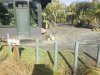
Outdoor exhibit:

upload_2025-5-16_23-55-37.jpeg
 

Attachments

  • upload_2025-5-16_23-54-38.jpeg
    upload_2025-5-16_23-54-38.jpeg
    191.3 KB · Views: 38
  • upload_2025-5-16_23-55-37.jpeg
    upload_2025-5-16_23-55-37.jpeg
    241.6 KB · Views: 40
Back
Top