Taronga Zoo Recent history of Taronga and developments etc

De Brazza’s Monkey Twins (1993)

In 1993, Taronga Zoo welcomed De Brazza’s monkey twins, the first twins of their species born in Australia. This article mentions their birth brought the zoo’s troop to seven monkeys:

Cameroon the De Brazza Guenon monkey has her hands full with her newborn twins - the first twins of their species born in captivity in Australia. The latest additions to Cameroon's family, born on April 23, join their siblings, Camulla and Kenya, their aunt, Binti, and their father, Sophocles, at Taronga Zoo. The twins have yet to be named because keepers haven't been able to get close enough to determine their sex.

Source: Sydney Morning Herald (May 14, 1993)

A follow up article notes a naming competition drew 171 entries, with the winning names ‘Habari’ and ‘Rafiki’ chosen by Taronga’s supervisor of exotic mammals.

It was exciting to hear of this species return to Australia in 2023. I hope a sustainable population of this species can one day be established in the region. They would be an ideal replacement for Vervet monkey at Werribee.
The last De Brazzas at Taronga passed sometime during 2011. Their former exhibit was then re-purposed in 2012 for the arrival of Kibali.

Considering their lifespan it's possible the last individual/s were offspring of Cameroon and Sophocles.

The article surrounding the twins also gives the impression that Binti is a sibling of either Cameroon or Sophocles; potentially indicating they were born to the initial founding pair.

I know Melbourne also held De Brazzas, but there's no records of them ever breeding them. It's possible they just held surplus males bred at Taronga.
 
The last De Brazzas at Taronga passed sometime during 2011. Their former exhibit was then re-purposed in 2012 for the arrival of Kibali.

Considering their lifespan it's possible the last individual/s were offspring of Cameroon and Sophocles.

The article surrounding the twins also gives the impression that Binti is a sibling of either Cameroon or Sophocles; potentially indicating they were born to the initial founding pair.

I know Melbourne also held De Brazzas, but there's no records of them ever breeding them. It's possible they just held surplus males bred at Taronga.

Although ‘aunt’ is sometimes used as a throwaway reference to other females in the group, I agree that’s a likely assumption. My money would be on Cameroon and Binti being sisters as they both have African names (whereas Sophocles is a Greek name); and the social structure of this species is a single adult male living with a small group of related females (i.e. females remain in their natal troop). While we know zoos didn’t (and still don’t) always adhere to this, it would have been the simplest way to establish a cohesive troop.

Bearing in mind a breeding group only contains one adult male, it’s a possibility male offspring were sent to Melbourne Zoo to form a bachelor troop. Habari and Rafiki were named without knowing their gender (and no further updates could be found on them). It’s a possibility they and/or their siblings were Melbourne’s males.

The captive lifespan of up to 30 years even allows for the slim possibility the adults mentioned in that article were among the last remnants of Taronga’s troop. Sexual maturity is 5-6 years and the birth interval is circa 12 months; so factoring in their third birth was in 1993 and the latest the parents could have been born was circa 1986.
 
Although ‘aunt’ is sometimes used as a throwaway reference to other females in the group, I agree that’s a likely assumption. My money would be on Cameroon and Binti being sisters as they both have African names (whereas Sophocles is a Greek name); and the social structure of this species is a single adult male living with a small group of related females (i.e. females remain in their natal troop). While we know zoos didn’t (and still don’t) always adhere to this, it would have been the simplest way to establish a cohesive troop.

Bearing in mind a breeding group only contains one adult male, it’s a possibility male offspring were sent to Melbourne Zoo to form a bachelor troop. Habari and Rafiki were named without knowing their gender (and no further updates could be found on them). It’s a possibility they and/or their siblings were Melbourne’s males.

The captive lifespan of up to 30 years even allows for the slim possibility the adults mentioned in that article were among the last remnants of Taronga’s troop. Sexual maturity is 5-6 years and the birth interval is circa 12 months; so factoring in their third birth was in 1993 and the latest the parents could have been born was circa 1986.
Melbourne attempted to mix theirs with the gorillas in the mid 2000s - and Motaba unfortunately ended up killing one due to the monkeys antagonising the gorillas.

Melbourne had to seperate the remaining two - and they remained in the Treetop Trail for another five or so years before passing or being sent elsewhere. I believe the group were all boys, but I could be wrong.
 
I went through the same thought process when I saw the post. Even as someone who does social media as part of my job, it's not out of the question it's an old photo - Taronga shared a photo of Mr Hobbs, their sun bear, years after he passed, as if he was still alive and well.

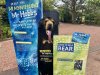
Furthermore, Taronga still has a signage board inviting you to ‘meet’ Mr Hobbs:

upload_2025-4-5_8-48-37.jpeg

A smaller board (see top right on the green pane) has since been added to acknowledge his passing.

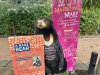
The Mr Hobbs board should really be taken down and is presumably only there to pair with Mary’s board:

upload_2025-4-5_8-51-5.jpeg
 

Attachments

  • upload_2025-4-5_8-48-37.jpeg
    upload_2025-4-5_8-48-37.jpeg
    262.6 KB · Views: 49
  • upload_2025-4-5_8-51-5.jpeg
    upload_2025-4-5_8-51-5.jpeg
    278.6 KB · Views: 55
Yeah 100% man, really true, so cringey to see in retrospect and was so wrong.

Theres this video too of the zoo from 1970 btw


(cool seeing Keith the Komodo' in this one too)

& newsreel 1966


& the zoo's dolphins 1969


the dolphins are in this wobbly 1968 footage the zoo too (is that an Asian black bear in one of the bear pits?)

Certainly looks like an Asiatic Black Bear. Also what looks like a Tayra in the first video!
 
1.0 ''Male Clouded Leopard''
born: wild of Asia c.1956
captured: c.1956
arrived Taronga Zoo: 12 August 1957 (12/8/1957)
died Taronga Zoo: 5 February 1969 (5/2/1969)

0.1 ''Female Clouded Leopard''
born: wild of Asia c.1957
captured: c.1957
arrived Taronga Zoo: 15 January 1958 (15/1/1958)
died Taronga Zoo: 9 May 1959 (9/5/1959)

upload_2025-3-10_21-30-52-modified-png.787100


source: thaks @Zoofan15 for finding and sharing (Fairfax/ Getty Images)

caption: 'Sir Edward Hallstrom today made impressions of the footprints of animals at Taronga Zoo in an attempt to identify the footprint of a mystery animal which has been destroying sheep in the Uralla area.Here Sir Edward and Chick Cody coax a young Cloudy Leopard...'

Thanks for sharing @steveroberts.

Sexual maturity in this species is attained at around two years of age, so it’s interesting to note that this was the age the female died. I wonder if it was a failed breeding introduction to the male.

They were only a year apart in age, so alternatively they may have achieved a successful integration of the pair when the female was one year old and the male was two years old; with the female then dying a year later of an unrelated reason.

Based on what we know of this species and the available data, my guess would be the former. It could also explain why Taronga never sourced another mate for their male, letting him live out his remaining years alone until he died at the age of 13 years (a decent innings for that era).
 
Thanks for sharing @steveroberts.

Sexual maturity in this species is attained at around two years of age, so it’s interesting to note that this was the age the female died. I wonder if it was a failed breeding introduction to the male.

They were only a year apart in age, so alternatively they may have achieved a successful integration of the pair when the female was one year old and the male was two years old; with the female then dying a year later of an unrelated reason.

Based on what we know of this species and the available data, my guess would be the former. It could also explain why Taronga never sourced another mate for their male, letting him live out his remaining years alone until he died at the age of 13 years (a decent innings for that era).

Think you are probably right man. Sorry shouldn't of deleted original post.

1.0 ''Male Clouded Leopard''
born: wild of Asia c.1956
captured: c.1956
arrived Taronga Zoo: 12 August 1957 (12/8/1957)
died Taronga Zoo: 5 February 1969 (5/2/1969)

0.1 ''Female Clouded Leopard''
born: wild of Asia c.1957
captured: c.1957
arrived Taronga Zoo: 15 January 1958 (15/1/1958)
died Taronga Zoo: 9 May 1959 (9/5/1959)

--

@Ara said:
(8/4/2008)
''Ah yes; everyone's favourite cat - the clouded leopard..... Taronga had also had one back in the 1960s which no-one ever saw but it's keepers. It lived in the enclosure now used for fennecs (until c.2012) but spent all day in the den....'''
 
Last edited:
Ingrid: Taronga Zoo’s Last Polar Bear

Article:

A polar bear suffering in below standard conditions at Sydney's Taronga Zoo is expected to be flown to a New Zealand zoo before the end of the year.

Ingrid is being given away by her owner at no cost to Auckland Zoological Park because she has become lonely since the recent the death of her mate and because of the deterioration of her pound to the point where it is no longer fit to use.

Auckland Zoo staff said yesterday there might be some problems in adopting the 22-year-old. Her pure white coat has been badly stained by rust from her. cage and treatment is needed to bring her appearance up to scratch. There is also some question as to whether she will befriend two bears already at the zoo - but there is still a separate area for her should she be aloof.

Taronga Zoo planned to demolish the pound - built in 1916 - where Ingrid has been housed for 20 years, for a new development. Ingrid had not been exhibited for some time and Sydney weather conditions were not appropriate to polar bears.

Source: Sydney Morning Herald (August 6, 1984).

Further information:

Ingrid arrived at Taronga Zoo on 11/07/1964 from Detroit Zoo where she had been born, along with two other young females. Their DOB’s were as follows:

0.1 Unnamed (02/11/1963)
0.1 Unnamed (14/11/1963)
0.1 Unnamed (31/12/1963)

All were sired by the same male, demonstrating what Detroit Zoo’s legendary success in breeding this species during the 1960’s. Taronga Zoo doesn’t have on record which of these was Ingrid, so her DOB can only be narrowed down to November/December 1963.

Ingrid arrived at Auckland Zoo in October 1984, joining their two bears Joachim (1962-1995) and Lisbeth (1962-1990).

Ingrid died in October 1995, a few weeks before Joachim in December 1995. They were Auckland Zoo’s last Polar bears.
 
Taronga Zoo Commercial (2002)

‘Samaki’s First Steps’ promotes the birth of Samaki the chimpanzee. Samaki was born November 2001 and was the third infant (second surviving) of his mother Shiba. There’s some good footage of the colony, including 21 year old Shiba.

Additional footage includes Indian rhinoceros Dora and either Prafula or Omaha the Snow leopard.

 
Taronga Zoo Commercial (2002)

‘Samaki’s First Steps’ promotes the birth of Samaki the chimpanzee. Samaki was born November 2001 and was the third infant (second surviving) of his mother Shiba. There’s some good footage of the colony, including 21 year old Shiba.

Additional footage includes Indian rhinoceros Dora and either Prafula or Omaha the Snow leopard.


Great find man. Think recognise her the keeper maybe from a chimpanzee talk at the zoo back in the day or a doco' or something (or both), yeah the 2011 Taronga series think might be where she was in the episode too when they moved back to refurbished Chimp Park. Great seeing Dora again, and either Prafula or Omaha. The zoo started using that Afrobeat-Wilderness-fusion inspired background tune from late '90s for a while with a few commercials.
 
Last edited:
Great find man. Think recognise her the keeper maybe from a chimpanzee talk at the zoo back in the day or a doco' or something (or both), yeah the 2011 Taronga series think might be where she was in the episode too when they moved back to refurbished Chimp Park. Great seeing Dora again, and either Prafula or Omaha. The zoo started using that Afrobeat-Wilderness-fusion inspired background tune from late '90s for a while with a few commercials.

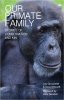
Oh true. Yeah that’s Lou Grossfeldt. She left Taronga in 2015 to work at Mogo Zoo; and since 2019, has worked at Sydney Zoo. She’s also the author of this book:

upload_2025-5-10_1-57-55.jpeg

Lou Grossfeldt has held positions including Taxon Advisory Group (TAG) Coordinator for New World monkeys and regional stud book keeper for Western lowland gorilla and Black and white ruffed lemur.
 

Attachments

  • upload_2025-5-10_1-57-55.jpeg
    upload_2025-5-10_1-57-55.jpeg
    91.7 KB · Views: 20
Oh true. Yeah that’s Lou Grossfeldt. She left Taronga in 2015 to work at Mogo Zoo; and since 2019, has worked at Sydney Zoo. She’s also the author of this book:

View attachment 791859

Lou Grossfeldt has held positions including Taxon Advisory Group (TAG) Coordinator for New World monkeys and regional stud book keeper for Western lowland gorilla and Black and white ruffed lemur.
Great keeper! I personally have the book - and it does provide a few little fascinating insights into Taronga's primates back in the early 2000's. A few interesting stories in there.

As of right now, she's the studbook keeper for Chimps at Sydney - not the gorillas anymore.
 
Taronga Zoo Commercial (2002)

‘Samaki’s First Steps’ promotes the birth of Samaki the chimpanzee. Samaki was born November 2001 and was the third infant (second surviving) of his mother Shiba. There’s some good footage of the colony, including 21 year old Shiba.

Additional footage includes Indian rhinoceros Dora and either Prafula or Omaha the Snow leopard.


You Belong in a Zoo (Taronga Version)

Credit to @steveroberts for finding the Taronga version of this ad. The highlight is at 0.16 - pause to see a line up of their chimps, including Suzie (holding an infant Shiba) on the far right:


Great finds! The Kodiak bear in the footage would likely be Barney or Cynthia, as Bethyl (who was the last Kodiak bear in the country) only had one ear and the bear in the footage has two.

Taronga Zoo's specific television advertising campaigns continued into the early 2000s. I remember advertising in the summer of 2003/2004 when Taronga had a litter of lion cubs (1.1, Johari and Asali, born to Kuchani in August 2003) and tiger cubs (2.1, Sendiri, Dumai and Jumilah, born to Assiqua in October 2003) at the same time.

Oh true. Yeah that’s Lou Grossfeldt. She left Taronga in 2015 to work at Mogo Zoo; and since 2019, has worked at Sydney Zoo. She’s also the author of this book:

View attachment 791859

Lou Grossfeldt has held positions including Taxon Advisory Group (TAG) Coordinator for New World monkeys and regional stud book keeper for Western lowland gorilla and Black and white ruffed lemur.

I also bought this book recently and am looking forward to starting to read it.
 
Great finds! The Kodiak bear in the footage would likely be Barney or Cynthia, as Bethyl (who was the last Kodiak bear in the country) only had one ear and the bear in the footage has two.

Taronga Zoo's specific television advertising campaigns continued into the early 2000s. I remember advertising in the summer of 2003/2004 when Taronga had a litter of lion cubs (1.1, Johari and Asali, born to Kuchani in August 2003) and tiger cubs (2.1, Sendiri, Dumai and Jumilah, born to Assiqua in October 2003) at the same time.


I also bought this book recently and am looking forward to starting to read it.

In an era before socials, it was a great way to capture the target audience and inspire them to come to the zoo to see the new babies. The ads would feature a snapshot of some other animal species, but it was good to see a focussed segment on a current event.

Samaki was notable as the first surviving chimpanzee infant at Taronga in five years. When the ad screened in 2002, it would be another year until the first surviving gorilla infants were born in 2003; so his birth was big news - and followed by three more surviving infants between 2002-2003.
 
Longest version of the commerical could find {they're all the same quality} (first 56 seconds, after that blank screen to stop it going to youtube shorts), has footage of either Dina 0.1 or Keith 1.0 the Komodo dragon(s) (think Keith) and one of the Sumatran tigers (at least think its one of the Sumatran tigers Meta or Nico) and others:

 
Last edited:
Longest version of the commerical could find {they're all the same quality} (first 56 seconds, after that blank screen to stop it going to youtube shorts), has footage of either Dina 0.1 or Keith 1.0 the Komodo dragon(s) (think Keith) and one of the Sumatran tigers (at least think its one of the Sumatran tigers Meta or Nico) and others:


Thanks for sharing Steve. The tiger looks like a male and doesn’t match the stripe pattern of Nico, so I’m of the belief this is one of the hybrids (which apparently had a decent percentage of Sumatran tiger in them).
 
Thanks for sharing Steve. The tiger looks like a male and doesn’t match the stripe pattern of Nico, so I’m of the belief this is one of the hybrids (which apparently had a decent percentage of Sumatran tiger in them).

Thanks man. Maybe Quintus (the last)? Wondering if the baby orangutan is in the footage is Jason? Given as you worked out and thanks again for, the commerical probably filmed and aired c1981 or '82.
 
Back
Top