
Baringogiraffe12
Well-Known Member
I believe he is a Sumatran tiger.What is Tailor?
I believe he is a Sumatran tiger.What is Tailor?


a type of swiftWhat is Tailor?

Does this zoo have a large population of white storks?After my recent visit. I go and give a major info dumb.
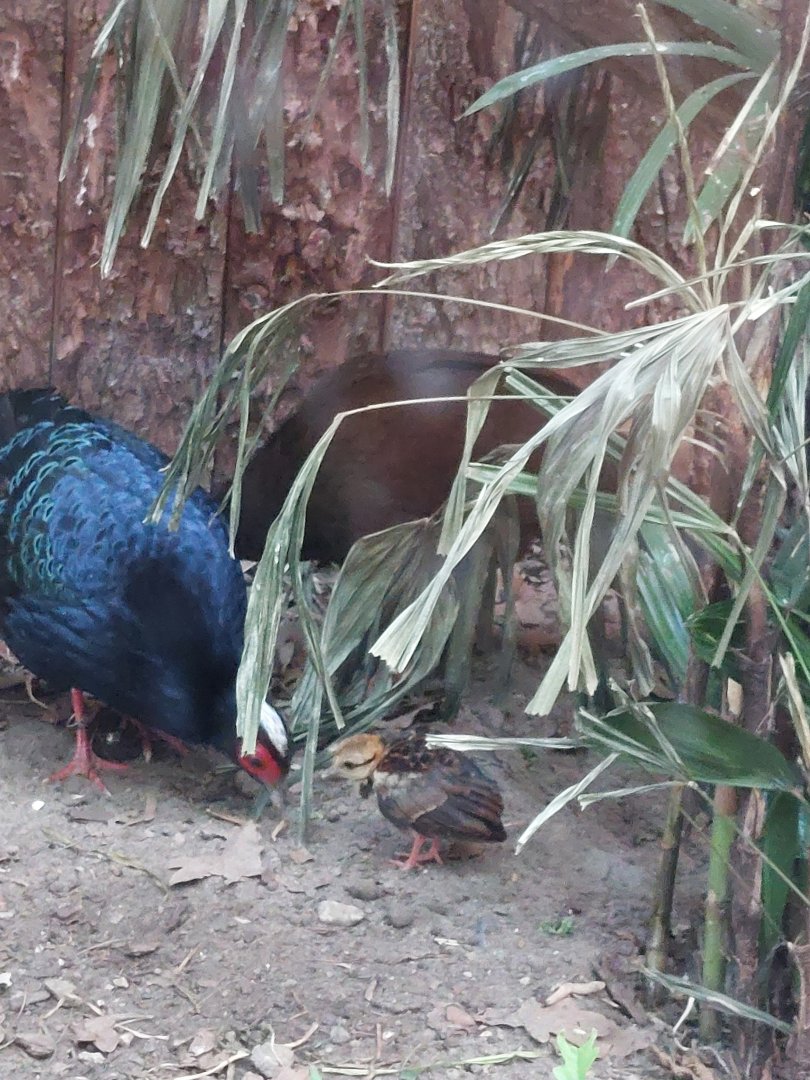
There are a few new species. The Nui Chua Stickinsect (Nuichua rabaeyae), who live in the insect house. And the species which slowly turns in to another meerkat or Ring-tailed Lemur, the Edward's pheasant (Lophura edwardsi). As well as at least 1 colorade rover toad (Incilius alvarius), in the same terraria as the bluechinned roughscaled lizards (Sceloporus cyanogenys). And some Amano shrimp in the south east asian aquaria and great ramhorn snail in the Lake Patzcuaro salamanders tank in the zoo school.
A few species (all birds) changed in the Zoo since last year. Both the scarlet and the green winged macaws left the zoo. Their aviaries next to the tigers are now home to the last of the trumpeter hornbills (Bycanistes bucinator), which after the death of the female only holds a single male. The vulterine guneafowl (Acryllium vulturinum), wich used to live together with them in the bird house left the collection. The former trumpeter hornbill aviary, is now home to the bali myna and nicobar pigeons. The former smaller aviary which kept the nicobar pigeons and bali myna is now home to the new edward's pheasant and the Red-whiskered bulbul, the later used to be free roaming in the vister path inside the bird house, but now are exclusively in the aviary. Also from the bird house, the nothern lapwing are not kept in the wader aviary any longer.
The construction work on the new "Nature Garden area" Between the bistro, the white storks is already largely in the way. The area will focus on native insects, plants and traditional gardening. But also will contain native herps in outdoor terraria. The only conformed species so far is the sand lizard (Lacerta agilis).
Besides this, there were mutable births. Mainly, multiple gelada, 1 lion-tailed macaque, 1 bactrian camel, 1 chapman's zebra, and, multiple bennet's wallabies, and 2 of the edward's pheasant who just came only a few months ago in the zoo
Also, 1 new liontailed macaque from Leipzig, 8 reticulated hillstream loaches (Sewellia lineolata) from cologne and 2 waldraps from Vienna came this year to already existing groupsEdwards's pheasants with chick
This new pair breed only shortly after arrive in the Zoo this years.

Yes, it was in fact for a long time the largest population of white storks in the entire state of Northrhein-Westphalia. Over 100 pairs.Does this zoo have a large population of white storks?

Is this also the largest population in Europe? I heard that the number of white storks here peaked at over 400.Yes, it was in fact for a long time the largest population of white storks in the entire state of Northrhein-Westphalia. Over 100 pairs.
Seeing that you are Chinese, you may confuse the species. The european white stork (Boyciana boyciana) is not an endengered species. In Germany alone there a circa 8000 animals. The oriental white stork (Ciconia boyciana) from East Asia is a highly endangered species has only around 2000 animals globally. From what I could find online, the largest european withe stork colony is in the spanish town of Alfaro with over 500 pairs there alone.Is this also the largest population in Europe? I heard that the number of white storks here peaked at over 400.
In fact, I only wanted to know about white stork (Ciconia ciconia) in European zoos, not wild populations.Seeing that you are Chinese, you may confuse the species. The european white stork (Boyciana boyciana) is not an endengered species. In Germany alone there a circa 8000 animals. The oriental white stork (Ciconia boyciana) from East Asia is a highly endangered species has only around 2000 animals globally. From what I could find online, the largest european withe stork colony is in the spanish town of Alfaro with over 500 pairs there alone.
ahh, sorry for misunderstanding. The problem in Rheine you could not really tell how many of these birds are "wild" or "zoo animals". As the large majority of the birds have their wings not clipped, and are able to leave the zoo ground any time they want to. Most of them nests in the large trees all over the zoo and surrounding park, epically in the Barbary macaque exhibit, Many of the zoos animals also migrate to Africa. It would be fair to describe the population mostly as "semi-captive".In fact, I only wanted to know about white stork (Ciconia ciconia) in European zoos, not wild populations.
Wow! Before this I thought they all belonged to Naturzoo Rheine. Thanks for your reply.ahh, sorry for misunderstanding. The problem in Rheine you could not really tell how many of these birds are "wild" or "zoo animals". As the large majority of the birds have their wings not clipped, and are able to leave the zoo ground any time they want to. Most of them nests in the large trees all over the zoo and surrounding park, epically in the Barbary macaque exhibit, Many of the zoos animals also migrate to Africa. It would be fair to describe the population mostly as "semi-captive".

Even though I am mot the kind of person to look at the time, and takes his time. I would say defentivly doeble in under 3 hours. Don't forgett the Terrarias at the Zooschool next to the Bistro. It has a few raretiesI have a question regarding Naturzoo Rheine.
I am planning to visit later this month, but I was wondering how many hours it would take to tour the zoo and take photos for a first time visitor?
This is in order to know whether it would be doable to visit this place on a day where we might miss some hours of the morning due to a long drive.


