Snowleopard's 2024 Road Trip: Thailand, Malaysia, Singapore & Indonesia

Sun Bear/Small-clawed Otter mixed-species exhibit:

full
I forgot where did I found it from, but there was a confirmation by the Zoo that the same mix in the main zoo stated that the otters can act very aggresive towards the sun bears. I don't know how that mix still hold up today.

Javan Leopard exhibit:
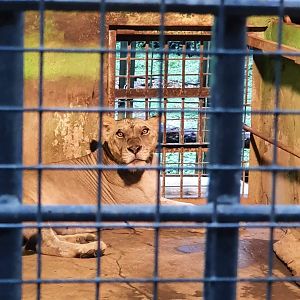
As you notice by the background, this Javan leopard exhibit is visible from the main zoo, although from a very small glass viewing. The Javan leopard and the sun bear + Asian small-clawed otter are located in the next door hotel called Hotel Pohon Iin.

The zoo's restaurant is dimly lit and as one eats it's possible to gaze out at an exhibit combining Sun Bears with Small-clawed Otters, a Javan Leopard enclosure and a big fish tank with Arowanas.
As stated previously, the restaurant is located in a hotel called Hotel Pohon Iin, which are still managed by Jawa Timur Park 2 (A branch of the Jatim Park franchise that also encompass Batu Secret Zoo, Eco Active Park, the Animal Museum, and the brand new Drive Thru Park).

Back in the past, cheetah and African lions are held in one of the exhibits here. The exhibit that is now an aquarium there was reportedly a former ocelot exhibit, before being off-display for a while and now on-display at the Zoo.

The central hall is stunning:

full
I'm very biased towards the Zoological Museum of Bogor, where I've been to since childhood and have a very large number of Indonesian endemic (Including the type specimen of the Komodo dragon). But, I would say that Museum Satwa (Animal Museum) definitely rank above it in term of the gorgeous interior and some of their fantastic display.

I'm aware that the management mentioned that the animals here weren't "hunted or killed" for their body, but instead died naturally and later on got their hide and other body parts extracted. My nitpick is that some of the display are definitely Jatim Park-esque with the weird display, such as a band of crocodiles playing banjoes.

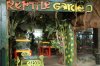
Moving on from the museum and a delightful lunch with a leopard looking at us, the New Reptile Garden is a cave-like area with 45 exhibits inside. I'm not sure how 'new' it is, but this whole section is terrific and it was a joy to wander around from terrarium to terrarium.
These can be considered new, atleast back when it first opened in I think around 2018. Previously, the original "Reptile Garden" is a simple room with a simple display of reptiles. Really show how much the zoo progressed since 2010, but I don't get still having the 'new' part up after all this years.

Photos of the old Reptile Garden.
upload_2025-5-16_2-25-53.jpeg

upload_2025-5-16_2-26-51.jpeg

upload_2025-5-16_2-25-23.jpeg
 

Attachments

  • upload_2025-5-16_2-25-23.jpeg
    upload_2025-5-16_2-25-23.jpeg
    201.1 KB · Views: 157
  • upload_2025-5-16_2-25-53.jpeg
    upload_2025-5-16_2-25-53.jpeg
    193.8 KB · Views: 151
  • upload_2025-5-16_2-26-51.jpeg
    upload_2025-5-16_2-26-51.jpeg
    131.9 KB · Views: 159
DAY 15: Friday, August 16th

Directly next door to Batu Secret Zoo is this next stop...

Zoo/Aquarium #42: Eco Active Park (Kota Batu, Indonesia)

Named Eco Green Park when Konstantin and I visited, and now called Eco Active Park, this is a zoo teeming with birds.

full


Funnily enough, for a bird park, one of the first things that visitors come across is a Meerkat exhibit. There's also Nutrias (of course!) and Black-tufted Marmosets in this general area.

full


There's a whole whack of random items alongside the first few walking paths, such as a mini village that depicts the aftermath of a landslide, some giant swan statues, a huge buffalo statue made out of car parts, and even a 'TV Elephant'. I've uploaded more than 150 photos of this zoo into the gallery for those that wish to see even more images. There's also a very small structure, called 'Bird Gallery', that contains several taxidermy dioramas.

'TV Elephant' and a sign for the kiddie penguin slide:

full


Things then settle down into actual animal exhibits, with Walking Birds first up. The enclosures are quite basic and functional, but the species selection is terrific and includes 6 types of crane.

full


Here can be found at least 3 exhibits with Cassowaries and the species list is the following:

Walking Birds (13 species): Ostrich, Emu, Southern Cassowary, Northern Cassowary, Lesser Adjutant, Marabou Stork, White Stork, Sarus Crane, Saddle-billed Crane, Blue Crane, Demoiselle Crane, Black Crowned Crane and Grey-crowned Crane.

Lesser Adjutant exhibit in Walking Birds:

full


Then one comes across a Pheasantry and this is not a definitive list but nevertheless is pretty close to all the species in the area. There are additional aviaries on either side of the long row.

Pheasantry (minimum 8 species): Maleo, Golden Pheasant, Lady Amherst’s Pheasant, White-crested Kalij Pheasant, Chinese Ring-necked Pheasant, Germain's Peacock Pheasant, Bornean Crested Fireback and Siamese Fireback.

full


There's also a Pigeon Coop (5 species): Polish Helmet Pigeon, Jacobin Pigeon, Lahore Pigeon and at least two other pigeon species.

Visitors enter a long hallway, with glass viewing on either sides, in what is called World of Parrot. I don't have a full species list for this zone as there are a ton of birds and I rarely make comprehensive lists of birds at zoos as signage can fluctuate greatly.

full


Many of the aviaries seem tight on space.

full


It's not at all difficult to literally see every single species at this zoo. The aviaries in World of Parrot remind me of off-show breeding aviaries. At times, very puny little things.

full


You name a parrot that you'd like to see and it's probably at this zoo:

full


World of Parrot (minimum of 55 species and likely at least 15 more): Military Macaw, Chestnut-fronted Severe Macaw, Illiger Macaw, Yellow-collared Macaw, Blue-headed Macaw, Red-shouldered Macaw, Red-bellied Macaw, Festive Amazon, Yellow-naped Amazon, Blue-fronted Amazon, Green-cheeked Amazon, White-crowned Parrot, Blue-headed Parrot, Brown-headed Parrot, Red-bellied Parrot, Red-winged Parrot, Red-cheeked Parrot, Indian Ring-neck Parrot, Jardine Parrot, African Grey Parrot, Alexandrine Parrot, Senegal Parrot, Moluccan King Parrot, Meyer’s Parrot, Vasa Parrot, Pesquet’s Parrot, Eclectus Parrot, Riedel’s Eclectus Parrot, Great Billed Parrot, Derbyan Parakeet, Plum-headed Parakeet, Stella Lorikeet, Red-collared Lorikeet, Flores Lorikeet, Blue-throated Conure, Red-fronted Conure, Patagonian Conure, Nanday Conure, Peach-fronted Conure, Ornate Lory, Dusky Lory, Black-capped Lory, Black-winged Lory, Black Lory, Edward Lory, Red Lory, Galah, Palm Cockatoo, Blue-eyed Cockatoo, Bare-eyed Cockatoo, Long-billed Corella Cockatoo, Ducorp’s Cockatoo, Goffin Cockatoo, Sulphur-crested Cockatoo and Yellow-crested Cockatoo.

After finishing up with the parrots, which would literally take half a day for bird nerds, visitors are plunged into Duck Kingdom.

full


That means loads of waterfowl in a series of small ponds.

Waterfowl Zone (minimum 17 species and probably several others): Indian Green Peafowl, Australian Pelican, Scarlet Ibis, Ruddy-headed Goose, Orinoco Goose, Canadian Goose, Andean Goose, Magellan Goose, Magpie Goose, Black Swan, Black-necked Swan, Whooper Swan, Radjah Shelduck, Rosybill Pochard, White-faced Whistling Duck, Black-bellied Whistling Duck and White-necked Stork.

There are species such as Andean Goose, Barnacled Goose, Blue-winged Goose, etc., in a second Waterfowl Zone in a different part of the zoo.

full


Looking very Harry Potter-ish, the Owl House is home to quite a few owls but the accommodation leaves a lot to be desired. The building has a long row of glass-fronted aviaries and at least the collection is impressive.

Owl House (10 species): Spotted Wood Owl, Spotted Eagle Owl, Eurasian Eagle Owl, Barred Eagle Owl, Buffy Fish Owl, Sunda Scops Owl, Barn Owl, Oriental Bay Owl, Snowy Owl and Spectacled Owl.

full


This zoo had a Humboldt Penguin exhibit when we were there in August, but I've heard that since then it's become an enclosure for South American Fur Seals.

full


For anyone wishing to hold a White-bellied Sea Eagle, or a series of other raptors, this is an area with tethered birds and visitors have the opportunity to handle them.

full


Eco Active Park has a row of Vulture Aviaries (5 species): Ruppell’s Griffon Vulture, White-headed Vulture, White-backed Vulture, Hooded Vulture and Egyptian Vulture.

White-backed Vulture aviary:

full


A Crowned Eagle is the highlight of the raptor zone:

full


There's at least two rows of really tiny, bare aviaries like the kinds at Wildlife World Zoo in Arizona (USA).

full


Row of small aviaries (15 species): Turquoise Green-cheeked Conure, Golden Conure, Patagonian Conure, Crimson-bellied Conure, Sun Conure, Brown-throated Conure, Red-bellied Parrot, Princes Parrot, Jardine Parrot, Severe Macaw, White-bellied Caique, Long-tailed Parakeet, Derbyan Parakeet, Plum-headed Parakeet and Red-breasted Parakeet.

The big walk-through parrot aviary is called Castle Parrot:

full


There's even an Eco Science Center that is like a mini science museum, but part of it was under construction during our visit and so I cannot fully review the building.

full


Mammal species list: Black-tufted Marmoset, Meerkat and Nutria. (and now South American Fur Seals)

Summary:

Eco Active Park
would appeal greatly to bird nerds and I've had several questions about the zoo since my August visit. The collection is immense and I wouldn't be surprised if there's a grand total of maybe 200 bird species at the zoo as I've personally listed at least 135 species just in this review. The zoo has a 'Cowboy and Bird of Prey Show', a couple of kiddie rides, a musical plaza, and once again I was struck by the fact that all these Indonesian zoos (even the wonderful Taman Safari II Prigen) feel the need to include amusement park areas near animal exhibits.

In terms of the collection, Eco Active Park offers up a lot to see and I do know some people who have visited and been awed by going from aviary to aviary and seeing a wonderfully diverse collection of birds. If Batu Secret Zoo, right next door, has almost 100 on-show mammal species, 70 reptile and amphibian species, a bunch of invertebrates, a Nocturnal House, an Aquarium with probably 100+ fish species, a safari zone and even a massive taxidermy museum, and then one adds in all the 200 or so bird species at Eco Active Park, in a single day a visitor can perhaps see 500 species between the neighbouring zoos. That's a great day out by all accounts.

My problem with Eco Active Park is that there's very few of the aviaries that are above average in quality. A lot of the aviaries are downright puny, with some raptors on leashes and the owls all in glass boxes that should be at least doubled in size. Here is a zoo jam-packed with functional, basic aviaries that aren't always aesthetically pleasing, and there's also signs of decay with chipped paint and crumbling cement in certain zones. It's a mixed-bag and a bit old-fashioned, and obviously once someone tours Bird Paradise in Singapore then immediately every other bird park looks naff, but I do feel that Eco Active Park is a zoo that requires a little TLC in every nook and cranny.

Up next: We had pre-booked a 5-hour bus ride to Surakarta and so that took us deep into the evening and we snoozed in our seats. Konstantin and I were finished with both Bali and East Java and we were headed to Central Java.

Updated Itinerary:

DAY 1: Friday, August 2nd

1- Bangkok Snake Farm (Bangkok, Thailand)
2- Peuan Deratchan Mini Zoo (Bangkok, Thailand)
3- Bangkok Butterfly Garden (Bangkok, Thailand)
4- Pata Zoo (Bangkok, Thailand)
5- Sea Life Bangkok Ocean World (Bangkok, Thailand)

DAY 2: Saturday, August 3rd

6- Wildlife Rescue Center No. 1 (Nakhon Nayok, Thailand)
7- Sriayuthaya Lion Park (Nong Khanak, Thailand)
8- Lopburi Zoo (Lopburi, Thailand)

DAY 3: Sunday, August 4th

9- Khao Kheow Open Zoo (Chon Buri, Thailand) 3-part review
10- Pattaya Crocodile Farm (Pattaya, Thailand)
11- Underwater World Pattaya (Pattaya, Thailand)
12- Monsters Aquarium (Pattaya, Thailand)

DAY 4: Monday, August 5th

13- Chiang Mai Zoo (Chiang Mai, Thailand) 2-part review
14- Tiger Kingdom (Chiang Mai, Thailand)
15- Siam Insect Zoo (Chiang Mai, Thailand)
16- Lanna Mini Zoo (Chiang Mai, Thailand)
17- Chiang Mai Night Safari (Chiang Mai, Thailand) 2-part review

DAY 5: Tuesday, August 6th


18- Songkhla Zoo (Songkhla, Thailand) 2-part review

DAY 6: Wednesday, August 7th

19 - Safari World Bangkok (Bangkok, Thailand) 2-part review

DAY 7: Thursday, August 8th
- 'Toki Day'

20 - Penang Bird Park (Penang, Malaysia)
21 - Zoo Taiping (Taiping, Malaysia) 2-part review
22 - Lost World of Tambun (Ipoh, Malaysia)

DAY 8: Friday, August 9th

23 - Zoo Negara (Ampang, Malaysia) 2-part review
24 - KL Butterfly Park (Kuala Lumpur, Malaysia)
25 - KL Deer Park (Kuala Lumpur, Malaysia)
26 - KL Bird Park (Kuala Lumpur, Malaysia)

DAY 9: Saturday, August 10th

27 - Zoo Melaka (Melaka, Malaysia) 2-part review
28- Taman Buaya Crocodile Park (Melaka, Malaysia)
29- Melaka Butterfly & Reptile Sanctuary (Melaka, Malaysia)

DAY 10: Sunday, August 11th

30- Singapore Zoo (Singapore) 2-part review
31- River Wonders (Singapore) 2-part review
32- Night Safari (Singapore)

DAY 11: Monday, August 12th

33- Bird Paradise (Singapore) 2-part review
34- S.E.A. Aquarium (Singapore)

DAY 12: Tuesday, August 13th

35- Bali Zoo (Bali, Indonesia) 2-part review
36- Bali Reptile Park (Bali, Indonesia)
37- Bali Bird Park (Bali, Indonesia)

DAY 13: Wednesday, August 14th

38- Taman Safari III Bali (Bali, Indonesia) 2-part review

DAY 14: Thursday, August 15th

39- Surabaya Zoo (Surabaya, Indonesia) 3-part review
40- Taman Safari II Prigen (Prigen, Indonesia) 4-part review (including the Prigen Conservation Breeding Ark)

DAY 15: Friday, August 16th

41- Batu Secret Zoo (Kota Batu, Indonesia) 4-part review
42- Eco Active Park (Kota Batu, Indonesia)
 
Last edited:
It's worth noting that every facilities of Jawa Timur Park (Jatim Park), especially their animal parks, have their own management and curating that are very different to each other. Which is why there's a very clear difference between them.

Batu Secret Zoo, who is under the curator Mariusz Lech and has been revitalized into a far more modern standard as well as building one of the largest breeding projects in Indonesian zoos, is different compared to Eco Active Park, which from what I'm aware the manager or curator is more of a parrot hobbyists and pet owner compared to an actual conservationists or experienced zoo manager (Which kind of explain the awful enclosures, tons of parrots species, and what appears to be a lack of passerines despite being a massive collection)
 
Last edited:
DAY 16: Saturday, August 17th

Welcome to Central Java...

Today was a national holiday in Indonesia, as the populace was celebrating Independence Day and the number of colourful, red-and-white flags and banners everywhere was amazing to see. So many people wore red and white and we even managed to pull some red and white shirts out of our backpacks to join in on the fun. On August 17th, 1945, Indonesia gained its independence and Konstantin and I were thrilled to be part of the 79th annual celebrations. We visited two zoos on the Saturday and two zoos on the Sunday of the national holiday weekend, and all 4 places were packed with families. Since we were in Central Java, I'm fairly certain we didn't see any other Caucasians touring zoos during our 4-zoo weekend blitz. This was one of the highlights of the whole trip, as numerous people (mostly teenagers) came up to us and wanted to pose for photos. I would joke with Konstantin that he was becoming a viral star in Indonesia, as he happily obliged anyone who asked for a selfie with him. I suppose that seeing white tourists touring zoos is still a total anomaly in Central Java, and literally every single person we encountered was a pleasure to meet. The hospitality in Southeast Asia knows no boundaries and we were blessed to have had safe passage through 4 nations on our trip.

On the official Government of Canada website, both last year and even as of today, travel to Indonesia is highlighted in bold yellow with the words "Exercise a high degree of caution in Indonesia due to political and social tensions and the threat of terrorism throughout the country". There's a whole series of warnings, focusing partially on Indonesian Papua, and if you were an anxious person then you'd immediately abandon all notion of travelling to Indonesia!

I had teachers at the high school where I work telling me it was fine to tour Thailand, Malaysia, Singapore and even the island of Bali, but several implored me not to go to Java. I was going to get killed by snipers or be involved in a ransom. My wife would get a message saying "hand over your collection of 3,000 zoo maps or you will never see Scott again!" However, Konstantin and I are two guys in our forties who have done a lot of travelling to sketchy places, and the homicide rate in cities like Detroit, St. Louis and Oakland far exceeds anywhere in Indonesia. Just look at the number of mass shootings in the USA each year and you can't walk around being scared in these places. When I was last in Detroit (2018), I inadvertently chose a motel that was in a super gritty, partially trashed neighbourhood, but I kept to myself and was fine. Some of the homes around Saint Louis Zoo or Jackson Zoo and many other American cities are filled with drugs, poverty and crime. There are signs at some U.S. zoos talking about concealed weapons and how you aren't supposed to bring in your guns. What a glorious, but seriously messed-up country. In Indonesia, Konstantin and I didn't go to any bars, we didn't stay out late at night, we had safety in numbers, and zoos are as safe a location as one can find in this world. Even when we were walking down busy streets, or searching out bus stations, restaurants and shopping malls, at no point did we ever feel scared or worried about getting mugged.

The only two things that ever scared us in Indonesia would be these (and I'm semi-joking):

#1 - Other than some hotels and McDonald's restaurants, there's no toilet paper anywhere. Everywhere has little hoses.

#2 - Crossing a street was scary as drivers bomb along at high speeds and they have no desire to stop for backpack carrying zoo nerds.

Other than that, Indonesia was glorious and felt far safer than so many cities I could list in North America. Even when I take my wife and 4 kids to Vancouver Aquarium in Stanley Park, which is a ritzy area full of nice homes, there's a whole section of downtown Vancouver with literally more than a thousand homeless people on the streets and it's super sketchy. Big homeless 'tent cities' can be seen in Seattle and Portland and all the big cities even down through the coast of California, but Konstantin and I toured Java from one end to the other over 8 days and we never even once saw a 'tent city' homeless camp. Do they even exist there? They are everywhere in North America, including my city of Abbotsford (pop. 160,000) and we have two homeless camps that are always being raided by the police.

Zoo/Aquarium #43: Solo Safari (Surakarta, Indonesia)

Apparently Jurug Solo Zoo was an awful hellhole, with loads of bad press and sketchy animal dealings. The company Taman Safari Indonesia, who already own several parks in the nation, stepped in and renovated the entire place and renamed it 'Solo Safari'. There's a catchy theme song of the same name that plays at all the Taman Safari parks on loudspeakers. It's either super annoying or you cannot get it out of your head while looking at captive animals. ;)

The original zoo was bulldozed and the first series of developments opened in early 2023, with the second wave of new exhibits opening in late 2023. This is essentially a brand-new zoo and I uploaded approximately 100 photos of Solo Safari into the gallery. The big Asian hoofstock paddock (7 species) is impressive, the African Savanna (7 species) is spectacular, the walk-through Aviary is excellent, and there are very good exhibits for Komodo Dragons, African Lions and several other species. There's a few enclosures that are poor and could be much larger (Asian Elephant, Common Hippo, Tiger) and it's a small place that doesn't take long to see, but I would still recommend a visit. Plus, @twilighter and I had incredible hospitality there and we even shot a couple of videos for the zoo's Instagram social media account. How often does a small zoo in Central Java get a Canadian and a Bulgarian showing up out of the blue? :)

This zoo is not as expansive as Taman Safari III Bali, or Taman Safari II Prigen, a pair of really large zoos that I've already reviewed in this thread. There's also Taman Safari I Bogor coming up, which is another massive, all-day zoo. With Solo Safari (zoo IV in the movie series :p) it was a case of bulldozing a nasty old zoo and replacing it with a small, shiny zoo that can be toured in under two hours.

Solo Safari has a massive thatched roof entrance, with fabulous wood-designed furniture beneath the giant dome. It's a wonderful first impression.

full


Solo Safari has a series of 5 mammal exhibits near the entrance, scattered around in a haphazard fashion. Here can be seen Lowland Anoa, Common Palm Civets, Binturongs, Sun Bears and Agile Wallabies. All 5 of those species are very common in Indonesian zoos.

Common Palm Civet exhibit. We saw two of the civets sleeping just beneath the mushroom looking shelter on the right.

full


The Sun Bear enclosure is piss-poor, as it's a tiny grotto with deep walls on the edges.

full


This area includes a big, grassy Komodo Dragon exhibit and you can see two lizards in my photo.

full


So many zoos in this part of Asia have world-class Komodo Dragon exhibits and Solo Safari is no different. There's extensive mock-rock and many viewing angles of the dragons.

full


The Asian Panorama is spacious and it contains the following 7 species: Nilgai, Blackbuck, Bawean Deer, Javan Rusa Deer, Chital, Banteng and Malayan Tapir. What a lineup of species!

full


At this point, visitors cross a large lake that bisects the zoo. Primate Islands Boardwalk is a beautiful stroll past a flock of pelicans and these 5 primate species: Bornean Orangutan, Siamang, Agile Gibbon, Silvery Gibbon and East Javan Langur. One flaw with this area is that there is almost no height to any of the primate habitats, with the branches and ropes being too close to the ground. These enclosures look good from a distance, but up close they could be improved in the future.

full


Siamang exhibit:

full


The African Savanna really is gorgeous, with lots of shade and little sunlit clearings over a multi-acre paddock. Plains Zebra, Common Eland, Waterbuck, Blue Wildebeest, Kafue Lechwe, Watusi Cattle and Ostrich are the 7 species there as of last August. Plus there is a separate yard for Sitatunga. There is one section that has the 'African Savanna Zipline', which seems like a stupid gimmick to add to this gorgeous area.

full


There are multiple views of the African Savanna and it's possible to walk along both lengths to view all the ungulates, but the best view might be from the zoo's restaurant patio.

full


The window on the far left-hand side is a Sunda Leopard Cat exhibit, then moving clockwise there is a Meerkat exhibit (with the pile of rocks), and the bulk of the right-hand side is a spacious African Lion exhibit. This air-conditioned restaurant offers up a cool respite from the blazing Indonesian heat and humidity outside.

full


African Lion exhibit from zoo restaurant:

full


Solo Safari has a substantial walk-through Aviary that stands out on the horizon. It is yet another stunning walk-through aviary in a Southeast Asian zoo. The structure contains the following 7 species: Black Swan, Indian Peafowl, Moluccan Eclectus Parrot, Black-naped Oriole, Oriental Magpie-robin, Javan Myna and Sunda Collared Dove.

Then there are two rows of additional aviaries:

Row of bird of prey aviaries (5 species): White-bellied Sea Eagle, Changeable Hawk-eagle, Javan Hawk-eagle, Crested Serpent Eagle and Brahminy Kite.

Row of other aviaries (6 species): Wreathed Hornbill, Rhinoceros Hornbill, Oriental Pied Hornbill, Goffin Cockatoo, Sulphur-crested Cockatoo and Palm Cockatoo.

full


full


full


There is a Jungle River complex with 4 species: Common Hippo, Pygmy Hippo, Small-clawed Otter and Saltwater Crocodile.

Is the Common Hippo exhibit as brand-new as the rest of the zoo (2023) or is this enclosure a remnant from the Jurug Solo Zoo era? It's a disappointing size.

full


Check out the zookeeper, who is directly next to the Pygmy Hippo inside that little shelter. It seems risky to me! In Southeast Asian zoos, keepers go in with elephants, hippos, cassowaries, tigers, you name it.

full


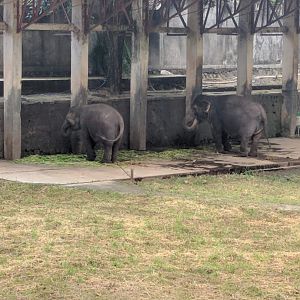
A very poor exhibit is for Asian Elephants and we saw two at the zoo. It doesn't seem as if there is any kind of barn and the only shelter are those two, tent-like metal structures just behind the brick wall. That's where the elephants were during our visit and we could just barely see them moving around with their keepers.

full


The Tiger exhibit here is just okay, with walls that seem a little low to me, with zero overhang, and the one Tiger on display was limping badly. (At least that one couldn't jump out!) The facade of the holding area is temple-themed.

full


full


Mammal species list (34 species): Asian Elephant, Common Hippo, Pygmy Hippo, Plains Zebra, Banteng, Lowland Anoa, Nilgai, Blue Wildebeest, Common Eland, Kafue Lechwe, Ellipsen Waterbuck, Sitatunga, Blackbuck, Javan Rusa Deer, Bawean Deer, Axis Deer, Watusi, Bactrian Camel, Malayan Tapir, Tiger, African Lion, Sunda Leopard Cat, Serval, Sun Bear, Bornean Orangutan, Siamang, Agile Gibbon, Silvery Gibbon, East Javan Langur, Small-clawed Otter, Binturong, Common Palm Civet, Agile Wallaby and Meerkat.

Summary:

Solo Safari
has its highs and lows. The Asian Panorama and African Savanna are both stunning, each spacious paddock with 7 species and there's a lot of viewing opportunities. The walk-through Aviary is fantastic. The zoo's air-conditioned restaurant, with views inside of the Sunda Leopard Cat, Meerkat and African Lion enclosures, is tremendous. Komodo Dragons do well here, and the same goes for Saltwater Crocodiles and several other species. That all adds up to a lot of positives.

The flaws would be the accommodation for Asian Elephants, which time and time again are treated like domestic sheep or goats in Southeast Asian zoos. Having a large space for elephants to roam simply doesn't seem like a priority. The exhibits for Common Hippos, Tigers, Lowland Anoa and a few others are all tight on space, which is surprising as this is literally a brand-new zoo that has risen on the ashes of an older, decrepit facility. It will be genuinely interesting to see what the Taman Safari organization does with Solo Safari, as this zoo is so much smaller than the other parks and I'd be intrigued to know their attendance figures. Will families keep returning to a zoo that doesn't offer up as much as others? Perhaps, as there are few other options in the region.

Up next: We had a two hour Uber/Grab drive southwest from Solo Safari in Surakarta to Gembira Loka Zoo in Yogykarta. Thankfully, Solo Safari opened at 8:30 a.m. and was not very large, as it allowed us to add on Gembira Loka Zoo later in the afternoon.
 
Last edited:
Today was a national holiday in Indonesia, as the populace was celebrating Independence Day and the number of colourful, red-and-white flags and banners everywhere was amazing to see. So many people wore red and white and we even managed to pull some red and white shirts out of our backpacks to join in on the fun. On August 17th, 1945, Indonesia gained its independence and Konstantin and I were thrilled to be part of the 79th annual celebrations. We visited two zoos on the Saturday and two zoos on the Sunday of the national holiday weekend, and all 4 places were packed with families. Since we were in Central Java, I'm fairly certain we didn't see any other Caucasians touring zoos during our 4-zoo weekend blitz. This was one of the highlights of the whole trip, as numerous people (mostly teenagers) came up to us and wanted to pose for photos. I would joke with Konstantin that he was becoming a viral star in Indonesia, as he happily obliged anyone who asked for a selfie with him. I suppose that seeing white tourists touring zoos is still a total anomaly in Central Java, and literally every single person we encountered was a pleasure to meet. The hospitality in Southeast Asia knows no boundaries and we were blessed to have had safe passage through 4 nations on our trip.

On the official Government of Canada website, both last year and even as of today, travel to Indonesia is highlighted in bold yellow with the words "Exercise a high degree of caution in Indonesia due to political and social tensions and the threat of terrorism throughout the country". There's a whole series of warnings, focusing partially on Indonesian Papua, and if you were an anxious person then you'd immediately abandon all notion of travelling to Indonesia!

I had teachers at the high school where I work telling me it was fine to tour Thailand, Malaysia, Singapore and even the island of Bali, but several implored me not to go to Java. I was going to get killed by snipers or be involved in a ransom. My wife would get a message saying "hand over your collection of 3,000 zoo maps or you will never see Scott again!" However, Konstantin and I are two guys in our forties who have done a lot of travelling to sketchy places, and the homicide rate in cities like Detroit, St. Louis and Oakland far exceeds anywhere in Indonesia. Just look at the number of mass shootings in the USA each year and you can't walk around being scared in these places. When I was last in Detroit (2018), I inadvertently chose a motel that was in a super gritty, partially trashed neighbourhood, but I kept to myself and was fine. Some of the homes around Saint Louis Zoo or Jackson Zoo and many other American cities are filled with drugs, poverty and crime. There are signs at some U.S. zoos talking about concealed weapons and how you aren't surprised to bring in your guns. What a messed-up country. In Indonesia, Konstantin and I didn't go to any bars, we didn't stay out late at night, we had safety in numbers, and zoos are as safe a location as one can find in this world. Even when we were walking down busy streets, or searching out bus stations, restaurants and shopping malls, at no point did we ever feel scared or worried about getting mugged.

The only two things that ever scared us in Indonesia would be these (and I'm semi-joking):

#1 - Other than some hotels and McDonald's restaurants, there's no toilet paper anywhere. Everywhere has little hoses.

#2 - Crossing a street was scary as drivers bomb along at high speeds and they have no desire to stop for backpack carrying zoo nerds.

Other than that, Indonesia was glorious and felt far safer than so many cities I could list in North America. Even when I take my wife and 4 kids to Vancouver Aquarium in Stanley Park, which is a ritzy area full of nice homes, there's a whole section of downtown Vancouver with literally more than a thousand homeless people on the streets and it's super sketchy. Big homeless 'tent cities' can be easily seen in Seattle and Portland and all the big cities even down through the coast of California, but Konstantin and I toured Java from one end to the other over 8 days and we never even once saw a big 'tent city' homeless camp. Do they even exist there? They are everywhere in North America, including my city of Abbotsford (pop. 160,000) and we have two homeless camps that are always being raided by the police.
I love to hear your honest opinions on yours and Konstantin tour of Java, Bali, and other SEA areas. We don't often see a lot of foreigners enthusiasticly visited Java (Or any other islands that are not Bali or other places filled with pretentious, rich Global Northerners enclaves). But, Indonesia is not a perfect country and does have it's own problems just like any other country especially with the current government (Essentialy the continuation of the previous, slightly less problematic one), though might not as "severe" as those seen elsewhere. You two visited mostly the larger, mostly stable and developed cities, which of course don't see too many violent crimes or such.

Obviously, you won't see literal shootout inside zoos here, but sometimes, local commanders of a police of military garrison often visited these facilities, mostly for "safety coordination" prior to holiday seasons, where these zoos are packed and needed security oversight, which might be intimidating to some. I remember a visit to Solo Safari on around June of 2024, where a large military vehicles and men in uniform appears around the entrance, turns out a local commander was visiting around while being guided by the zoo's management.

While Java and Bali are mostly safe, it's not the same as other areas, like the Jakarta-controlled parts of New Guinea (West Papua) as you mentioned. While mugging and kidnapping are mostly rare in frequency, from time to time, issues like bike gang, local government-affiliated militias, and fundamentalist group still cause a ruckus in even the more urbanized cities and towns.

Living in Yogyakarta as a college student and being a frequent visitor to the local Gembira Loka Zoo, it's actually somewhat common to see a group of homeless people especially on night time. You have to wonder where they go during the day time, that's to consider the authority aren't involved in "moving them" elsewhere.

Aside from that, traffic here a horrendous. Pedestrian road are either good (Only present in the center of the city) and even nothing at all. Crossing the road are almost impossible with these arrogant peoples which how they get their license are definitely questionable. So, I do agree on that front with you there ;)


It's either super annoying or you cannot get it out of your head while looking at captive animals.
It's definitely annoying to hear, but you'll get used to it. Though sometimes it definitely will stay in your head. I remember being caught off-guard hearing LET'S GO LET'S GO LET'S GO SAFARI! near a ramen store of a shopping mall in Jakarta, until I remember that this is where Jakarta Aquarium, also owned by Taman Safari Indonesia, is located in. I guessed the song was only newly installed there.

Plus, @twilighter and I had incredible hospitality there and we even shot a couple of videos for the zoo's Instagram social media account. How often does a small zoo in Central Java get a Canadian and a Bulgarian showing up out of the blue?
I actually tried to find that post out of curiousity on their Instagram, which I didn't find. Perhaps a IG story-exclusive post :rolleyes:

It's definitely a interesting phenomenon. Larger city zoos, which often see foreigners, definitely aren't suprised to see a tall white folks and their children around looking at the animals they wouldn't see in their home country. It's almost a universal view for these Javanese zoos that foreign visitors = zoo photographers or rarity hunters. This is to the point that local actors aren't even though about.

I remember being mistaken as a English native-speaker during a security inspection before entering the Schmutzer Primate Centre in Ragunan Zoo, probably because of the cameras that he saw in the bag as he inspected. I got asked if I worked in avnews stations in the Bird Park of Taman Mini Indonesia Indah. It's a weird experience and generally a harmless one, though thinking about it, there's something quite sad about what might be considered as a inferioty view towards your fellow Indonesians, who they see as the "mindless consumerists" who enjoyed petting the animals compared to the more "smarter and well-aware" white guests that seeks the rarest of the rarest.

The Asian Panorama is spacious and it contains the following 7 species: Nilgai, Blackbuck, Bawean Deer, Javan Rusa Deer, Chital, Banteng and Malayan Tapir. What a lineup of species!
As of today, they actually didn't have the tapir on-display. It have been gone since last year, last seen in around June of 2024. Signage of the tapir are still up, though the animals aren't present.

It used to be located at the back of the "Asian Panorama". The Asian Panorama used to be a very ambitious mix, with all said species (Except the tapir) combined, even the cassowaries used to be mixed with them. As of now, the small banteng family are largely separated from the other species, though some deers are still present along with the bantengs.

There is one section that has the 'African Savanna Zipline', which seems like a stupid gimmick to add to this gorgeous area.
Unlike most of the Taman Safari Indonesia parks, Solo Safari is the one that almost explicitly promoted as a local tourism site. I've stated in this thread so many times before, Indonesian facilities see local guests as a entertainment-minded consumers, which in some ways aren't wrong (Though zoos here often promoted that views).

Would it be suprising for non-Indonesian zoo goers to learn that if you ask what's the most seeked parts of the zoo to ordinary Indonesians, while you'd might imagine local rarities or even just the "common" but interesting species like Komodo dragons or birds-of-paradise, the answers are mostly rides (Both animal and machine-based rides), haunted/3D houses, and photo opportunities? A lot of Indonesians view zoos not as a place to see and learn about animals, but as just another theme park (Which might be justifiable, but still), which sadly resulted in resources and capitals being allocated towards these department as opposed to the animal living conditions and their own conservation projects (A very real cases in Indonesian zoos). Leave that teaching about animals part to exotic pet creators and YouTubers.

The "Savannah Zipline" is part of that. If you're a ordinary Indonesians, why wouldn't you be thrilled of sitting on chair that is moved through a zipline as there's a small group of zebras, ostrich, and others below you?

Is the Common Hippo exhibit as brand-new as the rest of the zoo (2023) or is this enclosure a remnant from the Jurug Solo Zoo era? It's a disappointing size.
This are new exhibits, there is an old, abandoned hippo exhibit that is the remnants of the pre-revitalized Jurug Solo Zoo-era located near the management building.

Solo Safari offers a "barrier-less" encounters with the animals, which means that a lot of these species have very small cages as way to tear down the "barrier" between the animals and the visitors (Which in my view seems to be as way for these animals to be clearly seen by the visitors).

A lot of the animals at the zoo have very small enclosures for these reasons, especially the hippos, anoas, sun bears, and others.

A very poor exhibit is for Asian Elephants and we saw two at the zoo. It doesn't seem as if there is any kind of barn and the only shelter are those two, tent-like metal structures just behind the brick wall. That's where the elephants were during our visit and we could just barely see them moving around with their keepers.
The "elephant exhibit" in Solo Safari also works as an elephant presentation, which is what you would expect in these "presentation". They only have two elephants, including an female elephants named Dian. Another female, named Manohara, died in 2024 alongside a second elephant named Inova, in a span of just a couple of months. They died of liver infection and elephant endotheliotropic herpesviruses (EEHV), though not specified which one gets which.

The flaws would be the accommodation for Asian Elephants, which time and time again are treated like domestic sheep or goats in Southeast Asian zoos. Having a large space for elephants to roam simply doesn't seem like a priority. The exhibits for Common Hippos, Tigers, Lowland Anoa and a few others are all tight on space, which is surprising as this is literally a brand-new zoo that has risen on the ashes of an older, decrepit facility. It will be genuinely interesting to see what the Taman Safari organization does with Solo Safari, as this zoo is so much smaller than the other parks and I'd be intrigued to know their attendance figures. Will families keep returning to a zoo that's much smaller than the others? Perhaps, as there are few other options in the region.
It's something that I have give my answer and view above :rolleyes:


@Mossman Joe might give better answers, as he had visited and quite familiar with the zoo even during the Jurug Solo Zoo-era. He have been a good friend of mine and have a give a lot of interesting informations of this zoo and elsewhere.
 
I love to hear your honest opinions on yours and Konstantin tour of Java, Bali, and other SEA areas. We don't often see a lot of foreigners enthusiasticly visited Java (Or any other islands that are not Bali or other places filled with pretentious, rich Global Northerners enclaves). But, Indonesia is not a perfect country and does have it's own problems just like any other country especially with the current government.

It's almost unheard of for anyone from Canada (or Bulgaria!) to visit Java. Occasionally, over the course of my lifetime, I've run into someone who has been to Bali as that's a popular island destination. But Java is a whole different situation.

Aside from that, traffic here is horrendous.

You are correct and for the first time ever, on any zoo trip, I never drove at all and I was thankful every single day for that decision. The hundreds of motorbikes crisscrossing the roads in all directions was enough for Konstantin and I to worry about crashes for the duration of our journey in Southeast Asia. Chaos on the roads!

It's definitely a interesting phenomenon. Larger city zoos, which often see foreigners, definitely aren't surprised to see a tall white folks and their children around looking at the animals they wouldn't see in their home country.

It was truly fascinating for us to really stand out while travelling across Java for 8 days. Other locations on the trip (Thailand, Malaysia, Singapore, the island of Bali) were so different, with tourists here and there, but on Java it seemed as if it was only Konstantin and I as white people for days on end. Having locals take photos with us was completely unexpected.

As of today, they actually didn't have the tapir on-display. It have been gone since last year, last seen in around June of 2024. Signage of the tapir are still up, though the animals aren't present.

It's too bad that Solo Safari no longer has a Malayan Tapir in the Asian hoofstock paddock. We actually saw at least one tapir during our visit and I even have a photo of it in the gallery and so as of August 17th the zoo continued to showcase the species. Considering how many dozens of Malayan Tapirs there are in captivity in Southeast Asia, it should be easy to obtain another individual.

The "elephant exhibit" in Solo Safari also works as an elephant presentation, which is what you would expect in these "presentation".

At some Indonesian Asian zoos, it seems that a couple of Asian Elephants spend their days either giving rides or taking part in presentations. Prigen, Bogor, Bali, Lembang, Solo, etc., all had an area with elephants doing something for the public.
 
It's too bad that Solo Safari no longer has a Malayan Tapir in the Asian hoofstock paddock. We actually saw at least one tapir during our visit and I even have a photo of it in the gallery and so as of August 17th the zoo continued to showcase the species. Considering how many dozens of Malayan Tapirs there are in captivity in Southeast Asia, it should be easy to obtain another individual.
Damn, I didn't pay attention to that and missed that photo of yours. Definitely a weird way to house their tapir in a small patch of land taken from the main Asian Panorama exhibit and seems like an attempt to safe up space (Despite a still massive patch of land on the road to exit, of course they decided to put a theme park there).

I'm pretty sure the tapir's not gone, atleast I hope so. Signage are still present and the exhibit that was for the tapir are still up and not demolished. The Asian Panorama saw quite a number of changes, since it's one of the zoo's most ambitious mix (Since mixing more than two Asian large herbivores are very rare in non-Safari Park zoos here). So ambitious, that the mix have 7 species all together with barely any barrier between each other; Javan rusa deer, Bawean deer, chital, blackbuck, nilgai, Javan banteng, and southern cassowary. For some reason, they also want a tapir in there too, but they slow down a bit by putting actual barriers between the tapir's and the others.

Something might've "happened", because the cassowaries immediately gone off-display like months later and electric wired-fences are present that separated the small banteng family with the other deers. So, it seems like more of a overhaul more than anything, to make managing that exhibit easier and less complicated. Having the tapir displayed that way might seems improper, but I don't really knows their future plans with the single tapir.

At some Indonesian Asian zoos, it seems that a couple of Asian Elephants spend their days either giving rides or taking part in presentations. Prigen, Bogor, Bali, Lembang, Solo, etc., all had an area with elephants doing something for the public.
It's sadly the demands here in Indonesia and I guess most of SEA. They're already too popular for both local and foreigners (Who feels that these entertainments aren't present in their home countries) and these facilities couldn't let go. In Indonesian, only Ragunan Zoo, Gembira Loka Zoo, Bandung Zoological Garden, and some others has completely phased out their elephant rides. Taman Safari Bogor, despite some positives, still have these rides, though not as heavily promoted as before.

There's some cases where elephant rides are so popular and in demands, that zoos which originally "attempts" to phase it out actually brings them again. Semarang Zoo is such case.

An November 2024 visit from Stephen Koyle of the non-profit organization Elephant Care Unchained and several local wildlife right activists appears to result in a minor shift of the remaining three Sumatran elephant (2 M:1 F) husbandry, including the phasing out of commercial elephant ride and performance as well a occasional walk along some part of the zoo ground.

I've visited the zoo today, this one just flat out wrong.

All of the elephants are still chained even within their small exhibit, and in a twist, elephant rides are still present. My bad assumption is that the zoo "secretly" reopened these elephant rides seconds after Elephant Care Unchained doesn't "took too much attention" to them. Though, most likely, popular demands for elephant rides are unavoidable and the zoo, especially when the local government have stakes in them, sees these rides as for the "entertainment-sake" of these largely local visitors. This kind of issues are very much present at local city zoos.

I talked a bit about it in the Semarang Zoo thread.

It was truly fascinating for us to really stand out while travelling across Java for 8 days. Other locations on the trip (Thailand, Malaysia, Singapore, the island of Bali) were so different, with tourists here and there, but on Java it seemed as if it was only Konstantin and I as white people for days on end. Having locals take photos with us was completely unexpected.
From personal observations, I don't think guests & staffs care that much if you're in the big zoos like Ragunan Zoo, Batu Secret Zoo, or one of the Taman Safari parks. But, I'd imagine the staffs of other city zoos became more friendlier and give more service towards foreigners. My view is that they might feel a bit appreciative that a tourist somehow ended up buying tickets to their facility where most, if not all, of your daily visitors are local families and couple.

There's a couple of interesting zoos and facilities in the smaller cities, where foreign tourists are almost unheard of. I'd imagine other guests, staffs, and even just random local will swarm and follow your around inside those facilities :D

Though, having Indonesians wanting to take photos with you both are a bit interesting for me, since I thought that sentiment are gone atleast in the larger cities.
 
#1 - Other than some hotels and McDonald's restaurants, there's no toilet paper anywhere. Everywhere has little hoses.

The opposite experience applies to a lot of Indonesians travelling abroad, we're just really used to using bidets (as they're called) and using toilet paper can feel off at first.

Apparently Jurug Solo Zoo was an awful hellhole, with loads of bad press and sketchy animal dealings.

Hellhole is certainly one way to describe it. A lot of local Surakarta/Solo citizens refuse to go anywhere near the zoo owing to its bad reputation of being filthy and having horrible conditions for its animals. I've documented some of these conditions on ZooChat:

709470-4ec716235ca5f0e78f003f4d5964f754.jpg
[/URL]

A large elephant paddock (much larger than what Solo Safari has now actually), yet these elephants were still chained at the foot. The older of these elephants, Dian is still in Solo Safari.

709815-70f82709c854910028352b38c0e5981d.jpg
[/URL]

A lone female lion is kept in a concrete cage that's too small for it, the location of this individual is unknown at the moment.

There's also the case of Tori, the orangutan, which developed a smoking addiction after picking up thrown cigarette butts from visitors. She was rehabilitated in 2012.

Smoking orangutan moved to island rehab

To my surprise, she's still very much alive and well!
Tori should be 27 this year and currently lives in Solo Safari alongside her mate Didik (another old Jurug individual) and her newest child, Dito

There's a catchy theme song of the same name that plays at all the Taman Safari parks on loudspeakers. It's either super annoying or you cannot get it out of your head while looking at captive animals.

Thankfully, they've added at least a couple of more subdued and lyric-less renditions of the theme, which makes future trips slightly less annoying :)
 
DAY 16: Saturday, August 17th

After finishing up at Solo Safari, a zoo that can be toured in two hours or less, we took an Uber/Grab from Surakarta to Yogyakarta.

Zoo/Aquarium #44: Gembira Loka Zoo (Yogyakarta, Indonesia) - Part 1 of 2

On a typically hot and humid day in Indonesia, on Independence Day weekend, Konstantin and I went from a brand-new zoo in the form of Solo Safari (2023) to a much older establishment. Gembira Loka Zoo opened in 1956 and covers 54 acres/22 hectares. It's got a fairly diverse collection of animals, with more than 40 mammal species, more than 50 bird species, close to 70 reptile and amphibian species and even a small Aquarium.

I uploaded approximately 160 photos of Gembira Loka Zoo into the gallery and this is a zoo with a variety of highs and lows. Check out the map below. The section beneath the vast lake (bottom right) is essentially the entrance area with a domestic animal zone, and there's hardly any exotic animals. The section on the upper right-hand side is full of junky, antiquated exhibits except for a gorgeous Siamang island. That leaves the vast bulk of the zoo in the top left-hand side, with a mixture of new and old enclosures. I enjoyed seeing some rare species and the Reptile Park is packed with a lot of interesting animals and exhibits.

This zoo is quite a bit of walking and the massive lake in the middle, called Mayang Tirta, divides the grounds. In truth, almost all the interesting animals and half-decent exhibits are found in the upper left side.

full


Zoo entrance:

full


The central lake is so large that visitors can take boat rides on it.

full


Look at how packed this store is! At certain times of the day, all of that food is sitting in direct sunlight.

full


I only took a couple of photos of the Petting Zoo area, with its array of domestic animals, as the place was jam-packed with families and it was impossible to get images without loads of children in them. Konstantin and I then took a long walk around the lake, heading to the upper left hand side of the zoo map.

The first real zoo exhibit we saw was for a half-dozen Asian Elephants in a sandy paddock.

full


After seeing a lot of chained elephants in Thailand, but then progressing across Southeast Asia to some world-class zoos, we thought that was behind us. Unfortunately, we sat and watched an Asian Elephant with chains on 3 of his legs and it was so heartbreaking that it was difficult to look away. For the hours we were at the zoo, he remained chained by 3 legs the entire time, swinging his one free leg (right rear one) back and forth, back and forth, back and forth, endlessly. Nothing like seeing a chained elephant on concrete to make one question the keeping of megafauna in captivity. The only positive was that the other elephants in the exhibit did interact with the chained one, often coming up and touching trunks or caressing his side.

Later on, I saw several keepers go in with the herd of elephants and one keeper raised his ankus and the elephants either froze in one place or literally leaned their weight up against the walls and let the keepers go past with their wheelbarrows to scoop up the dung. We all know how those elephants ended up fearing the ankus and it's a disheartening situation.

full


Moving onwards, we next went to Zona Primata to locate some rare primates. Here can be found some incredibly scarce species, as I've only seen Tonkean Macaques 3 times ever, Mitered Surilis 3 times, Heck's Macaques twice, and nearby is a Malayan Civet and that's my only ever sighting. There's also Siamangs, East Javan Langurs, Sulawesi Crested Macaques and Common Palm Civets in this primate-heavy zone.

This Mitered Surili gave me the middle finger!

full


A Heck's Macaque was having a good scratch.

full


Tonkean Macaque:

full


Malayan Civet:

full


There was a series of at least 5 gibbon exhibits, including 3 in the photo below, signed as Agile Gibbons and Bornean White-bearded Gibbons, but it's possible that one of them was a Muller's Gibbon instead.

full


Siamang exhibit:

full


A walk-through area for Ring-tailed Lemurs, a Binturong 'presentation animal', some hornbills and other birds looks new.

full


There's a range of smaller mammals in this part of the zoo, scattered in haphazard fashion in a series of exhibits. Meerkats, two Coati exhibits, two Javan Porcupine enclosures, plus both Prevost's Squirrels and Cream-coloured Giant Squirrels.

The Coati exhibit with at least 8 inhabitants probably dates from the zoo's opening in 1956. What are the chances that this thing held Sun Bears at one point?

full


Zona Cakar ('Scratch Zone') is a carnivore area that is one of the newest sections of the zoo. This area is far different from the decades old, rather rundown exhibits we had seen up to this point. A full modernization is taking place in this part of Gembira Loka Zoo.

Species list:
Sumatran Tiger, Javan Leopard, Fishing Cat, Sun Bear and Small-clawed Otter. There was construction work being done on a large enclosure for Spotted Hyenas and a sign up for Clouded Leopards, with the hyenas now in place but I'm not sure what the status is on the 'cloudies'. Zona Cakar is actually a terrific area and in some ways the best part of the whole zoo.

Sumatran Tiger exhibit:

full


full


Javan Leopard exhibit:

full


A really nice Fishing Cat exhibit:

full


Here is one of the best Sun Bear exhibits I saw in Southeast Asia, as usually the accommodation for this species is atrocious.

full


There's a second Sun Bear exhibit (more of an old pit), a Serval enclosure, and an African Lion exhibit, with incredibly steep cement walls, to round off the area.

full


Up next: The second half of my Gembira Loka Zoo review.
 
Love to see a frequently-visited zoo for me to get a highlight here. I recalled visiting the zoo a day after yours and Konstantin, so if I wasn't lazy on that day I could've bumped to you both!

I have visited the zoo on May 4, I will be happy to share a species list and a major update at the end of your Gembira Loka Zoo review!

After seeing a lot of chained elephants in Thailand, but then progressing across Southeast Asia to some world-class zoos, we thought that was behind us. Unfortunately, we sat and watched an Asian Elephant with chains on 3 of his legs and it was so heartbreaking that it was difficult to look away. For the hours we were at the zoo, he remained chained by 3 legs the entire time, swinging his one free leg (right rear one) back and forth, back and forth, back and forth, endlessly. Nothing like seeing a chained elephant on concrete to make one question the keeping of megafauna in captivity. The only positive was that the other elephants in the exhibit did interact with the chained one, often coming up and touching trunks or caressing his side.

Later on, I saw several keepers go in with the herd of elephants and one keeper raised his ankus and the elephants either froze in one place or literally leaned their weight up against the walls and let the keepers go past with their wheelbarrows to scoop up the dung. We all know how those elephants ended up fearing the ankus and it's a disheartening situation.
It's one of the few unfortunate part of Gembira Loka Zoo, which I personally put as one of Java's top 10 zoos and aquariums. Keeping elephants like this appears to be norm unfortunately, in almost every places keeping elephants; chained, excessive interactions, rides, horribly small enclosures, and such.

Gembira Loka Zoo have attempted modernization efforts since the 2010's, which does show if you compare the zoo today to them back in 2010, where they only started upgrading. But, old habit die hards. Indonesian zoos often received "profesional elephant caregivers" which are almost always have questionable experiences, often still doing rides or using steel and wooded long sticks to hit the elephants if they're "misbehave". I remember during a November 2024 visit, the elephants were screaming and roaring for like few minutes, atleast one staff are on top of like around five adult elephants. It's also worth noting that the elephants of Gembira Loka Zoo are often used for certain cultural ceremonies in Yogykarta (Since it's a autonomous province of Indonesia which have a Sultan as both the leader of the Sultanate of Yogyakarta and the governer of that province).

I haven't heard of this in Gembira Loka, but staffs in Taman Safari Bogor often angrily shouted at the younger elephants to "behave" for photo opportunities. It's sadly still practiced in Indonesian zoos, which are still proud of their great elephants despite the way the treated them, it's a insane dynamic in Indonesia of a otherwise belove gentle giants.

There was a series of at least 5 gibbon exhibits, including 3 in the photo below, signed as Agile Gibbons and Bornean White-bearded Gibbons, but it's possible that one of them was a Muller's Gibbon instead.
Gembira Loka Zoo doesn't actually have white-bearded gibbon, perhaps in the past but I could not confirm.

The gibbon in the horrifyingly-small aviary that is signed as that species is an agile gibbon. The three large aviaries have an pale-colored agile gibbon, an female agile gibbon and her baby in the center, and an Müller's gibbon. Actual signages for agile gibbons aren't present at all, the aviaries only labelled simply as the Müller's gibbon for all three.

The Coati exhibit with at least 8 inhabitants probably dates from the zoo's opening in 1956. What are the chances that this thing held Sun Bears at one point?
You'll be correct, this used to have sun bears. Back in the day, these exhibit styles are the "trend" for that species; Gembira Loka, Bandung, a even worse display at Surabaya with the addition of steel cages, and some other smaller examples. After the first phase of Zona Cakar finished construction and opened in 2016, the bears moved there (With a couple of young bears moved to a deep hole-exhibit formerly for the tigers). As of now, I have no clue why they decided to not demolished them into something else (Say, a hypothetical nocturnal/small mammal house?), regardless if the bears are there or not, it's still a horrendously bad and dirty enclosures for the current inhabitants (Not to mention the apparent overpopulation of the coatis in a small space).

The enclosures back when they still houses sun bears.

upload_2025-5-20_0-26-38.jpeg

upload_2025-5-20_0-27-4.jpeg

There was construction work being done on a large enclosure for Spotted Hyenas and a sign up for Clouded Leopards, with the hyenas now in place but I'm not sure what the status is on the 'cloudies'. Zona Cakar is actually a terrific area and in some ways the best part of the whole zoo.
I'd love to talk about the recent updates on that part of the zoo! The new area is a collection of large and modern exhibits for African lions (Single pair on-display, as well as an male and two females off-display that were imported last year), spotted hyena (Single pair on-display, another pair off-display), and Javan leopard (Two females).

The single, male Sumatran clouded leopard is sadly appears to be no longer on-display at the moment. No clue though if he's dead or not since the zoo barely even mention anything about the clouded leopard since 2024.

I have talked in length about the clouded leopard in Gembira Loka thread.

Despite my personal year-long hope that we will be seeing the Sunda clouded leopard again eventually, it appears the species won't be returning anytime soon.

His former exhibit, which was taken over by the hyenas for most of 2024, are now housing a pair of caracal. There's no information on the male leopard whereabouts, though there's possibility of the individual being sick or too lethargic to be put on-display again.

The male Sunda clouded leopard first arrived at the zoo in 2012. He arrived rather unannounced and was unexpected by the zoo. The truck carrying the leopard was from Muntilan in Central Java. The driver reported that the cat was given away by his boss, the previous owner, who afraid of being caught in an illegal wildlife trafficking allegation. Despite the stigma of keeping formerly illegaly-kept animal, the leopard remained at the zoo since the management have no clue where to sent it, with back then having no further reply after informing the BKSDA (Indonesian wildlife protection agency).

After some years and adapting to crowd of visitors, the clouded leopard became part of the early Zona Cakar (Carnivora Zone) in 2016, until he was taken off-display in early 2024.
 

Attachments

  • upload_2025-5-20_0-26-38.jpeg
    upload_2025-5-20_0-26-38.jpeg
    29.2 KB · Views: 131
  • upload_2025-5-20_0-27-4.jpeg
    upload_2025-5-20_0-27-4.jpeg
    52.6 KB · Views: 130
DAY 16: Saturday, August 17th

I looked at elephants, ultra-rare primates (Zona Primata) and carnivores (Zona Cakar) in part one and here's the second half of my review.

Zoo/Aquarium #44: Gembira Loka Zoo (Yogyakarta, Indonesia) - Part 2 of 2

'Taman Burung' is the name given to the bird area at the zoo, with the grounds for the most part dividing animals up taxonomically. Scenic, open exhibits for Black Swans and Pied Stilts are at the entrance, followed by a series of aviaries with lush undergrowth as backdrops. Lory Kingdom is a walk-through, as is a domed aviary.

Lesser Bird of Paradise aviary:

full


There's a lot of raptor aviaries, with species such as White-bellied Sea Eagle, Changeable Hawk Eagle, Crested Serpent Eagle, Oriental Honey Buzzard, Brahminy Kite, Barred Eagle Owl and Buffy Fish Owl.

The following list is not 100% comprehensive, but it gives a very good indication of birds that are signed at Gembira Loka Zoo.

Bird species list (27 species): African Penguin, Southern Cassowary, Lesser Flamingo, Australian Pelican, Green Peafowl, Scarlet Ibis, Bali Myna, Oriental Pied Hornbill, Rufous Hornbill, Wreathed Hornbill, Oriental Darter, Pied Stilt, Black Swan, Lesser Bird-of-Paradise, African Grey Parrot, Moluccan Eclectus Parrot, Pesquet’s Parrot, Galah, Goffin’s Cockatoo, Yellow-crested Cockatoo, Barred Eagle Owl, Buffy Fish Owl, Changeable Hawk Eagle, White-bellied Sea Eagle, Crested Serpent Eagle, Oriental Honey-Buzzard and Brahminy Kite.

Walk-through aviary signed species (14 species): Dusky Lory, Red Lory, Black-capped Lory, Coconut Lorikeet, Sun Conure, Fischer’s Lovebird, Cockatiel, Moluccan King Parrot, Green Peafowl, Masked Lapwing, Western Swamphen, Dark Mandar, Victoria Crowned Pigeon and Western Crowned Pigeon.

A walk-through aviary is quite pleasant and there's a separate row of hornbill aviaries inside.

full


Rufous Hornbills, Oriental Pied Hornbills and other birds can be found here.

full


Beyond the birds, the zoo has a row of old-fashioned enclosures that are in need of modernization. Species in this row include the following: Pygmy Hippo, Javan Rusa Deer, Lesser Mouse-deer, Binturong, Capybara and False Gharial.

The exhibit for Pygmy Hippos has no barn to speak of and the only shelter is the roof over the concrete pads.

full


'Taman Reptil & Amfibi' is the name of the Reptiles & Amphibians Park section of the zoo and this is an excellent area for species hunters. There is a significant collection of cold-blooded critters and the most astonishing aspect of this zone is that it's all entirely outdoors. There is no traditional Reptile House whatsoever.

full


Cuvier's Dwarf Caiman exhibit:

full


Assorted terrariums (tight on space!):

full


New Guinea Crocodile exhibit:

full


Holy turtle exhibits Batman!

full


More rows of outdoor terrariums:

full


Yet more terrariums, this time with a mesh roof overhead:

full


A different style of reptile exhibits, again with the mesh roof:

full


You could probably reach over and pet a Saltwater Crocodile here:

full


Reptiles & Amphibians Park species list (67 species): False Gharial, Saltwater Crocodile, New Guinea Crocodile, Cuvier’s Dwarf Caiman, King Cobra, Indonesian Spitting Cobra, Common Death Adder, White-lipped Island Pit Viper, Wagler’s Pit Viper, Gold-ringed Cat Snake, Wart Snake, Red-tailed Racer Snake, California King Snake, Speckled King Snake, White-banded King Snake, Florida King Snake, Desert King Snake, Mexican Black King Snake, Corn Snake, Asian Vine Snake, Green Anaconda, Reticulated Python, Burmese Python, Red-tailed Boa, Papuan Ground Boa, Green Tree Python, Sumatran Short-tailed Python, Crocodile Monitor, Mangrove Monitor, Yellow-spotted Monitor, Savannah Monitor, Emerald Monitor, Mexican Spiny-tailed Iguana, Black Spiny-tailed Iguana, Amboina Sailfin Lizard, Sulawesi Sailfin Lizard, Giant Sailfin Dragon, Red Tegu, Black-and-white Tegu, Caiman Lizard, Red-eyed Crocodile Skink, Sudan Plated Lizard, Day Gecko, Leopard Gecko, Chameleon Forest Dragon, Maned Forest Lizard, Aldabra Giant Tortoise, African Spurred Tortoise, Asian Giant Tortoise, Red-footed Tortoise, Southeast Asian Box Turtle, Pig-nosed Turtle, Malaysian Giant Turtle, Black Pond Turtle, Roti Snake-necked Turtle, Red-bellied Short-necked Turtle, Painted Terrapin, Red-eared Slider, American Bullfrog, African Bullfrog, Banded Bullfrog, Argentine Horned Frog, Common Tree Frog, Australian Green Tree Frog, False Toad (Pseudobufo subasper), Axolotl and Greater Siren.

Plus, these additional 7 species: Mexican Red-knee Tarantula, Orange Baboon Tarantula, Peacock Tarantula, Asian Forest Scorpion, Giant Malaysian Leaf Insect, Stick Insect and Giant Dead Mantis.

Moving on from the extensive collection of reptiles and amphibians, there's a handful of absolutely dire little aviaries that are more like god-awful puny cages.

Pesquet's Parrot cage:

full


Chimpanzees and Bornean Orangutans are across from the elephants, in poor island homes.

Here is the chimp accommodation:

full


Bornean Orangutan exhibit:

full


There's even an Aquarium at this zoo. I counted 20 tanks, and I didn't make a species list, but I did make note of Bubble Eye Goldfish, Giant Mottled Eel, Clown Featherback, Red-tail Catfish, Tiger Shovelnose Catfish, Leopard Catfish, Emperor Snakehead and Giant Snakehead on signs. The four Aquascaped exhibits (Bonsai, Jungle, Dutchstyle and Natural) are quite nice and across the lane there's a separate mini-aquatic area that stands alone and has signs for Arapaima, Alligator Gar and Red-bellied Piranha.

full


The last section of the zoo is a bit of a walk away from the bulk of the exhibits, and what's there is pretty grim. Small paddocks with weird cement moated edges for species such as Nilgai (two exhibits), Watusi Cattle (two exhibits), Agile Wallaby (two exhibits), Malayan Tapir, South American Tapir, Dromedary, Ostrich and Southern Cassowary (two exhibits). This whole section of the zoo was basically empty with visitors even on Independence Day weekend, and obviously the enclosures are too small and sterile by modern day standards. All of the exhibits are off to the far right-hand side of the zoo and seem almost forgotten about.

One of the Nilgai paddocks.

full


A series of pools make up the Common Hippo exhibit:

full


A pair of connected (via ropes) Siamang islands are excellent.

full


Mammal species list (43 species): Asian Elephant, Common Hippo, Pygmy Hippo, Nilgai, Javan Rusa Deer, Axis Deer, Java Mouse-deer, Watusi, Dromedary, Malayan Tapir, South American Tapir, Tiger (Sumatran), African Lion, Javan Leopard, Fishing Cat, Serval, Sun Bear, Spotted Hyena, Bornean Orangutan, Chimpanzee, Siamang, Muller’s Gibbon, Agile Gibbon, Mitered Surili, East Javan Langur, Tonkean Macaque, Heck’s Macaque, Sulawesi Crested Macaque, Squirrel Monkey, Black-tufted Marmoset, Common Marmoset, Ring-tailed Lemur, Small-clawed Otter, Binturong, Meerkat, Coati, Common Palm Civet, Malayan Civet, Sunda Porcupine, Agile Wallaby, Cream-coloured Giant Squirrel, Prevost’s Squirrel and Capybara.

Summary:

Gembira Loka Zoo
is very much a mixed bag. It's nowhere near the high standards of Taman Safari II Prigen (reviewed already) or Taman Safari I Bogor (to be reviewed in the future), which each have their world-class elements. But it's also not a total hellhole either. The primate zone has some fantastic species, although the accommodation is hit and miss. The new carnivore complex is terrific and if that's a sign of the future then the zoo will hopefully continue to modernize. I really enjoyed the Reptiles & Amphibians Park with it's 70 species all outdoors, but even that area could use some upgrading. The aviaries are mostly okay, but this zoo still has far too many enclosures that are at least a half-century or older. There is a comprehensive animal collection but in exhibits that are not up to modern standards. We had a great day out and it was a fun adventure, although if I'm being honest I would estimate that it might be a top 10 zoo in Indonesia but perhaps no higher.

Up next: Konstantin and I hopped aboard a train and we had an EIGHT HOUR train ride from Yogyakarta to Bandung as we made a big leap into West Java. It was time to snooze through the night and get ready for two more zoos the next day!
 
DAY 17: Sunday, August 18th

The day before was Solo Safari in Surakarta, then Gembira Loka Zoo in Yogyarkarta, then an 8-hour train ride far into the night from Central Java to West Java. Now it was time for two more zoos on the Sunday of Independence Day weekend.

Zoo/Aquarium #45: Bandung Zoo (Bandung, Indonesia)

This is an historic zoo, opened in 1930 and very much a traditional, old-fashioned establishment with exhibits that need modernization. The good news is that Taman Safari Indonesia, which already runs the excellent safari parks in the country, plus several hotels and an aquarium, has revitalized Jurug Solo Zoo into Solo Safari (2023) and has now taken over Bandung Zoo as of 2025. That means the future will hopefully be very bright for this place as Taman Safari Indonesia continues to expand its realm throughout the nation.

What's fascinating is seeing all the duplicate exhibits for a number of animals at Bandung Zoo. I saw 4 Tiger exhibits, 4 Malayan Tapir exhibits, 4 Orangutan exhibits, 3 Sun Bear exhibits, 3 Binturong exhibits and several Saltwater Crocodile exhibits. Even some bird species (like Lesser Adjutants and Wreathed Hornbills) have two aviaries each. The zoo could feasibly have a lot more diversity if there was an exchange of duplicate animals for new species.

Before Konstantin and I visited Bandung Zoo, the ZooChat gallery had only 16 photos from this establishment and we knew next to nothing about the place. Now, thankfully there can be found a full set of images as I uploaded approximately 110 photos to this site.

full


The very first thing that visitors see is a unique mixed-species exhibit with Siamangs, Small-clawed Otters and Australian Pelicans.

full


The zoo has FOUR Orangutan exhibits, for both Bornean and Sumatran Orangutans, but none of the enclosures are very good and there's a lot of old tires in them. Silvery Gibbons are found nearby in a similar exhibit.

full


The African Savanna is okay but a bit boring, and there are 6 species signed. Giraffe, Plains Zebra, Common Eland, Blue Wildebeest, Waterbuck and Kafue Lechwe.

full


I have a photo of 4 Binturongs on a single log, above the Malayan Tapir exhibit...one of FOUR Malayan Tapir enclosures scattered around the zoo.

full


Surrounded by lush jungle is a puny exhibit for a single Asian Elephant. You can see the animal on the far right, with hotwire surrounding a steep moat and therefore the actual space given to the pachyderm is extremely minimal. There is a photo of the 'barn' in the gallery and it's essentially just an open-air shed that almost looks like it's a temporary situation.

full


A row of ancient, crappy, very basic primate cages contain the following 5 species: Grizzled Leaf Monkey/Javan Surili, West Javan Langur, Sulawesi Crested Macaque, Moor Macaque and Japanese Macaque. It was great to see the rare animals, but disappointing to look at their poor accommodation.

West Javan Langur:

full


After gazing at some absolutely magnificent Banteng paddocks on this trip, we saw one individual locked inside its open-air 'barn'.

full


Bandung Zoo has the usual deer species that we saw pretty much every single day on our trek (Javan Rusa Deer, Sambar Deer, Chital), as well as the typical raptors that we also saw every day (Javan Hawk Eagle, Changeable Hawk Eagle, White-bellied Sea Eagle, Crested Serpent Eagle). To be honest, the deer and raptors are fantastic creatures to come across in zoos, but Konstantin and I were spoiled as we saw all of those species in huge numbers across Southeast Asia. It's amusing when zoo nerds get all excited to see a rare species, but then day after day of seeing them takes away a little of the charm. ;)

Bird of prey aviaries:

full


Many zoos also have Lesser Adjutants in Southeast Asia, and Bandung Zoo had two aviaries for the species.

full


Much less common was seeing Woolly-necked Storks (their aviary is shown below) and we had some really close-up views of a Helmeted Friarbird as well (image in gallery).

full


Yet another substantial walk-through aviary, but one with almost zero signage whatsoever.

full


You can always count on zoos in this region to have multiple outdoor Saltwater Crocodile exhibits.

full


There are two exhibits for New Guinea Crocodiles and another for False Gharials, but in every example the pools are way too small.

full


There are a couple of rows of reptile terrariums.

full


I liked the 'Turtle Row' area with at least 8 species on display in outdoor pens.

full


One ex-herp terrarium held two Leopard Cats and you can see both animals here as there's nowhere to hide! (This brings back memories of Cincinnati's dreadful old Cat House enclosures)

full


This is the smallest of the zoo's THREE Sun Bear exhibits. Ugh. These two bears were pacing back and forth and we didn't linger long here.

full


Here is the largest of the Sun Bear exhibits.

full


There's a row of carnivore enclosures, including this one for 'Bengal' Tigers, one of FOUR Tiger exhibits at the zoo. Javan Leopards and Striped Hyenas are also found in this section.

full


Mammal species list (32 species): Asian Elephant, Giraffe, Plains Zebra, Waterbuck, Blue Wildebeest, Common Eland, Kafue Lechwe, Sambar Deer, Javan Rusa Deer, Chital, Banteng, Dromedary, Malayan Tapir, Tiger (Amur, Bengal), African Lion, Javan Leopard, Sunda Leopard Cat, Sun Bear, Striped Hyena, Bornean Orangutan, Sumatran Orangutan, Siamang, Silvery Gibbon, Grizzled Leaf Monkey/Javan Surili, West Javan Langur, Sulawesi Crested Macaque, Moor Macaque, Japanese Macaque, Small-clawed Otter, Binturong, Common Palm Civet and Large Flying Fox.

Sample of bird species at the zoo: White-bellied Sea Eagle, Javan Hawk Eagle, Changeable Hawk Eagle, Crested Serpent Eagle, Greater Flamingo, Lesser Adjutant, Woolly-necked Stork, Purple Heron, Australian Pelican, Ostrich, Northern Cassowary, Southern Cassowary, Wreathed Hornbill, Helmeted Friarbird, plus the big walk-through aviary with no signage.

Reptile species list (26 species): Saltwater Crocodile, New Guinea Crocodile, False Gharial, Reticulated Python, Burmese Python, Amethystine Python, King Cobra, Javan Spitting Cobra, Indo-Chinese Rat Snake, Oriental Rat Snake, Keeled Rat Snake, Mangrove Cat Snake, Asian Water Monitor, Clouded Monitor, Green Iguana, Weber’s Sailfin Lizard, Chameleon Forest Dragon, Bearded Dragon, Asian Giant Tortoise, Bornean River Turtle, Sulawesi Forest Turtle, Southeast Asian Box Turtle, Roti Island Snake-necked Turtle, Asian Leaf Turtle, Pig-nosed Turtle and Red-eared Slider.

Summary:

Bandung Zoo
is not a good zoo and there's not much to recommend about it. I already know that 99.5% of all readers will never visit, but part of me would actually like to go back in a decade because now that Taman Safari Indonesia has taken over the facility I am hopeful of some massive development of the grounds. As things stand, very few of the mammals are in exhibits that are anything close to being impressive, but the birds and reptiles fare better and at least that's a start. Already a large area has been closed off to the public, with two big pools/lakes in that region and one was the old hippo enclosure. All shut down now.

I will end off by saying that Bandung Zoo, even with all the decrepit exhibits that you can see via my photos in the gallery, was PACKED with families during our visit. This was one of the zoos where Konstantin had selfies taken with at least 2 or 3 people and the holiday weekend meant it was a zoo bursting at the seams. Lots of kids running around, big crowds of people leaning over the Sun Bear pits, and everyone seemed happy and joyous. I distinctly recall chatting with Konstantin about how it was remarkable that there was so much joy to be had strolling around the jungle grounds and seeing all the families, and it reminded us of our own households back home, and yet Bandung Zoo is very old and in quite poor condition. It is literally a 95 year-old zoo with so many subpar exhibits that a lot of the enclosures need to be bulldozed into dust, and yet the happy hordes of Indonesians seemed oblivious. It was exciting to be immersed in the culture, but part of me wanted to whisk everyone elsewhere and show them what a truly great zoo looks like.

Up next: Only 30 minutes south was our second and final zoo of the day, still on the outskirts of West Java. It was time to visit Lembang Park & Zoo.
 
DAY 17: Sunday, August 18th

I already posted a comprehensive review of Bandung Zoo and we then caught a 30-minute Uber/Grab to our second and final zoo of the day.

Zoo/Aquarium #46: Lembang Park & Zoo (Lembang, Indonesia)

Here is another zoo that Konstantin and I knew very little about, but just like Bandung it was very busy as the Independence Day weekend brought out huge crowds. Lembang has some real rarities and there's certainly a lot of new enclosures that have been built, but it feels like a commercial zoo and not one that is dedicated to conservation. Nevertheless, it was a very enjoyable visit and it's a new zoo, having only just opened in late 2019 or early 2020. I uploaded approximately 120 photos into the gallery.

Walking down a sloping pathway, several visitors were excited to see the brand-new Common Hippo exhibit that had just opened in mid-2024. It's a very basic enclosure, with a slab of cement and we only saw a single hippo in residence. If you didn't know it had just opened, it would be easy to assume the exhibit was decades old.

full


What appears to be painted 'ruined walls' are in one of the Tiger enclosures, with two Tiger exhibits being attached to the zoo's restaurant.

full


Things are better in a nicely landscaped bird area, with several rarities on display in modern aviaries.

Magnificent Riflebird and Twelve-wired Bird of Paradise aviary:

full


Greater Bird of Paradise and Lesser Bird of Paradise aviaries:

full


A series of aviaries with different levels and sections.

full


Flame Bowerbird:

full


There's a small, open-topped (!!) Lesser Adjutant exhibit and I was probably pushing my luck getting this close to one of the birds.

full


There's a fairly barren walk-through aviary that costs an extra fee (which we didn't pay) and there's a motley collection of macaws and cockatoos inside. It's possible to hold some of the birds as well. The structure itself is eye-catching and like a smaller version of the walk-through aviary at Solo Safari.

full


The sign says Hairy-nosed Otter but it's actually an exhibit for Smooth-coated Otters.

full


An absolutely awful patch of cement for a lone Sun Bear:

full


I saw a slumbering Brown Hyena at Lembang Park & Zoo.

610 zoos and aquariums = first ever Brown Hyena!

full


This Grizzled Tree Kangaroo was very active and moved all around its exhibit. There are two exhibits for this species at Lembang.

full


We saw a few keepers go in and out of the Asian Elephant paddock, which in truth is not very impressive whatsoever. It's crazy to think this is a brand-new zoo!

full


Just past the elephants is a safari zone, but at the time many of the enclosures were empty of animals, the lineup to do the short safari tour was immense as it was a holiday weekend, and we had a 4-hour trip west waiting for us. We decided to skip waiting in line. Hopefully this area has now filled out with animals and exhibits, as it was still under construction as of August 2024.

A waterfowl zone has a lot of odd-looking shelters scattered across the area.

full


This section has a really nice waterfowl aviary, various birds in all directions, and visitors can risk getting wet by crossing the 'lily pads'. Lembang is generally quite strong in birds.

full


The zoo has 13 primate species, but many are kept in a long row of chain-link cages that look like this one (for Southern Pig-tailed Macaques). Again...a brand-new zoo. :eek:

full


Much better are a series of aviaries, all in a row, for 6 hornbill species: Wreathed Hornbill, Rufous Hornbill, Black Hornbill, Oriental Pied Hornbill, Knobbed Hornbill and Rhinoceros Hornbill. This photo shows 2 or 3 of the aviaries and they have some immense height.

full


After visiting a couple of zoos with superb reptile collections in above average exhibits (Batu Secret Zoo and Gembira Loka Zoo), the Reptile House at Lembang Park & Zoo was a bit smaller in scope. I counted 3 aquarium tanks and 20 reptile/amphibian exhibits. There's 9 constricting snakes and some large individual specimens.

full


full


This zoo heavily promotes 'Edutainment':

full


Mammal species list (31 species): Asian Elephant, Common Hippo, Javan Rusa Deer, Fallow Deer, Tiger (Bengal), African Lion, Caracal, Serval, Sun Bear, Brown Hyena, Sumatran Orangutan, Siamang, Silvery Gibbon, Muller’s Gibbon, Agile Gibbon, Natuna Island Surili, Sulawesi Crested Macaque, Southern Pig-tailed Macaque, Red-tailed Monkey, Tufted Capuchin, Red-handed Tamarin, Cotton-top Tamarin, Common Marmoset, Smooth-coated Otter, Small-clawed Otter, Meerkat, Grizzled Tree Kangaroo, Binturong, Prevost’s Squirrel, Plantain Squirrel and Prairie Dog.

Reptile House (27 herp species): Saltwater Crocodile, Yellow Anaconda, Reticulated Python, Burmese Python, Boa Constrictor, White-lipped Python, Carpet Python, Olive Python, Green Tree Python, Ball Python, Pueblan Milk Snake, Corn Snake, Komodo Dragon, Quince Monitor, Biak Tree Monitor, Amboina Sailfin Lizard, Argentine Black-and-white Tegu, Red Tegu, Veiled Chameleon, Green Iguana, Leopard Gecko, Blue-tongue Skink, Bearded Dragon, African Spurred Tortoise, Leopard Tortoise, Common Snapping Turtle, Red-eared Slider, a tank with Asian Arowana and some other unsigned fish.

Bird species list (fairly comprehensive): Ostrich, Magnificent Riflebird, Twelve-wired Bird of Paradise, Lesser Bird of Paradise, Greater Bird of Paradise, Bali Starling, Eurasian Hoopoe, Javan Green Magpie, Fire-tufted Barbet, Sunda Laughingthrush, Kookaburra, Toco Toucan, Lesser Adjutant, Golden-fronted/Flame Bowerbird, Black-winged Starling, Red-and-green Macaw, plus the walk-through aviary.

Birds in waterfowl area: Australian Pelican, Barnacle Goose, Red-breasted Goose, Ruddy Shelduck, Common Shelduck, Red-crested Pochard, White-eyed Pochard, Hooded Merganser, White-faced Whistling Duck, Wandering Whistling Duck, Western Swamphen, White-cheeked Pintail and Southern Wigeon.

Row of raptor aviaries: Black Kite, Brahminy Kite, Crested Serpent Eagle, Javan Hawk Eagle, Changeable Hawk Eagle and Barred Eagle Owl (nearby).

Row of hornbill aviaries: Wreathed Hornbill, Rufous Hornbill, Black Hornbill, Oriental Pied Hornbill, Knobbed Hornbill and Rhinoceros Hornbill.

Summary:

Lembang Park & Zoo
does poorly for mammals. As exciting as it was to see ultra-rare species (Brown Hyena, Smooth-coated Otter, Grizzled Tree Kangaroo, Muller's Gibbon, Red-tailed Monkey, Natuna Island Surili), in hindsight I'm not sure if even a single one of the zoo's 30+ mammal species is held in an exhibit that I'd call above average. For a brand-new zoo to open with so many mediocre enclosures is disappointing. Konstantin and I had a great day out visiting this establishment, and it was jammed with families in all directions, but the quality of the exhibits should be better for a zoo this new and shiny.

The Reptile House is decent, with close to 30 species and the outdoor Saltwater Crocodile and Komodo Dragon exhibits are okay, but everything for the cold-blooded critters is tight on space. Again, why not aim big if you are a contemporary facility? Where Lembang excels is with birds, with some nicely planted aviaries, some genuine rarities, an assortment of probably 50+ species in various areas across the zoo, and there's not too much to complain about when it comes to the avian collection.

It was fascinating for us to tour Bandung Zoo (built in 1930) and then Lembang Park & Zoo (2019) half an hour apart on the same day. I'd be curious to know which zoo will be more popular in the future, as Bandung has recently been taken over by Taman Safari Indonesia and is slated for redevelopment. In many ways, some of the exhibits at Lembang were not much larger than the almost century-old enclosures at Bandung.

Up next: We took a 4-hour trip to our next destination, the massive Taman Safari I Bogor. That is a big, minimum 7-hour zoo that ended up being one of the favourites of the entire trip. We saw Siberut Macaques, Kloss's Gibbons and a world-class Giant Panda complex high in the chilly Indonesian mountains.
 
Last edited:
The zoo could feasibly have a lot more diversity if there was an exchange of duplicate animals for new species.
It's not really the main focus of the zoo in recent years, focusing more on the revitalizing some aspects (To a dissapointing results) and adding more entertainments aspects to bring in more families and couples.

These are quite obvious with the recent additions of meerkats, which are one of the many popular and widely-keep species as a cheap way to attract local guests. The zoo used to have a very interesting collection, similar to Ragunan and Surabaya (These three zoos I consider the three main city zoos of Java), including tree-kangaroos, sitatungas, brown bear, proboscis monkey, Komodo dragon, and Natuna Islands surili. As mentioned, the zoo doesn't seems to be looking forward to get them anymore due to said reasons, though probably for the better if you remember what the exhibit look like.

The very first thing that visitors see is a unique mixed-species exhibit with Siamangs, Small-clawed Otters and Australian Pelicans
It used to have Malayan/Sunda porcupines there too, no idea why they moved them out. But, there's a quite viral video taken at the zoo of the siamang poking one of porcupine, which in turn chased the gibbon. I guess that's answer the question.

The otter can't really interact with the siamang, they have their own island and they couldn't reach the rather elevated siamang island.

The African Savanna is okay but a bit boring, and there are 6 species signed. Giraffe, Plains Zebra, Common Eland
This was one of the many part of the zoo that was added after the first soft takeover by Taman Safari Indonesia in 2017, which also include the nearby African lion exhibit.

Zebra, eland, ostrich, lechwe, waterbuck, and Ankole-Watusi seems to be a package of sort from Taman Safari Indonesia, the same mix are present in Solo Safari, with the only difference with Bandung having giraffes. Though Bandung apparently canned the addition of Ankole-Watusi in the mix.

I have a photo of 4 Binturongs on a single log, above the Malayan Tapir exhibit...one of FOUR Malayan Tapir enclosures scattered around the zoo.
This is one of the addition made after the soft takeover by TSI, the binturong platform are Made that way since this exhibit also serve as the zoo's binturong feeding and interaction, a widely marketed experience by the zoo.

A row of ancient, crappy, very basic primate cages contain the following 5 species: Grizzled Leaf Monkey/Javan Surili, West Javan Langur, Sulawesi Crested Macaque, Moor Macaque and Japanese Macaque. It was great to see the rare animals, but disappointing to look at their poor accommodation.
This is one of the dozens leftover of the pre-2027 zoo's. It's worth noting that the zoo only "drasticly" upgrade some aspects that they were flamed and are controversy in, such as the sun bears and elephants. I have yet to hear any complaint on most other aspects, which is why there's probably not incentive to upgrade the primate exhibits and others.

One ex-herp terrarium held two Leopard Cats and you can see both animals here as there's nowhere to hide! (This brings back memories of Cincinnati's dreadful old Cat House enclosures)
The herp area that contains these are the zoo's original reptile house, quite noticable with the old building style.

Some of the terrariums have been made into housing mammals, so this might be a attempt of the zoo to build their own mammal house, similar to the slightly better one at Ragunan Zoo. The mammals (And one bird) apparently consist of Sunda leopard cat, sugar glider, Javan slow loris, small-toothed palm civet, Sumatran masked palm civet, Sunda pangolin, scops owl, and a larger exhibit for large flying fox.

This is the smallest of the zoo's THREE Sun Bear exhibits. Ugh. These two bears were pacing back and forth and we didn't linger long here.
This is one of the most well-known aspects of the zoo, receiving international attentions years ago due to the horrible conditions there for the bears.

The exhibits are still there and are slightly make "better", emphasis on that due it just simply painting the exhibit into sandy brown to make a more "natural" feeling. Making the bears fatter are also the main focus for them, instead of making better living enviroment for them.
 
I don't need to add more regarding Lembang, there's a reason why the thread for that zoo in the Indonesian forum is rarely active.

Lembang Park and Zoo, to me, is the epitome of what's worse about not just Indonesian zoos, but how Indonesians treat wildlife in general. It's somewhat questionable if the zoo originated (Or managed) from a private collection of the management, because it does look that way. The apparent population of farmed morphs as a genuine display of it's own (Not representing the general species) is telling. While the birds collection are interesting, the origin of their smaller mammals and birds are very questionable, especially the flame bowerbird and some others that have technicaly not "ethical" source (Not to mention that the zoo hardly breed, research, or even do a good job with the living conditions of these animals). The way the zoo managed their collection does speak private collection; small but fancy exhibits, lack of conservation, and the rather fast and sudden addition of some of the smaller animals.

Despite of that, there is practically zero calls or controversy noted to this zoo. On the contrary, this zoo are considered to be among the most popular to the general Indonesians. The zoo put a very heavy emphasis on a sham term called "edutainment" that is very popular in Indonesia. It's essentialy just animal interactions, like rides or feeding, under the guide of "education". Zoos that push these "edutainment" focus more on that entertainment part, while there's mostly small to barely any actual efforts done with the animals conditions themselves. Even for just displays, animals are often lacks any privacy in a sometimes already small or even cheap exhibits, in a way so guests can see the animals clearer. In short, Lembang focus more on being a theme park, not a zoo.

Another things that makes Lembang a bit more horrible is their influence. A lot of zoos try to become just like Lembang, as seen with so many new zoos like Suraloka Interactive Zoo, the slightly original Habitat Park, and a lot of others. In recent years, there's a boom of exotic pet keeping contents by rich collectors that doesn't seems to know any better, aside from a symbol of wealth and status in a lot of cases (There's even odd mix between exotic animals keeping and masculinity and even nationalism). Lembang in some ways facilitate these issue, since they have hosted and are very good friends with a lot of major exotic pet keeping figures and creators, which they're also known for. Some of these "special" guests have tons of perks, including going into the cheetah exhibit and straight up just pet them.

In short, Lembang Park & Zoo should simply be called "Lembang Exotic Farm & Petting Zoo"
 
I must've a good foresight to the future, but I meant pre-2017.

Following a earlier and softer takeover by Taman Safari Indonesia, in response to the growing controversies following the death of elephants and the horrible living condition of the sun bears, Bandung Zoo received minor upgrades. These include the savanna exhibit, African lion exhibit, the new outdoor reptiles terrariums, and minor upgrades to the orangutan and sun bear exhibits. In recent years, minor updates also come with new exhibit for the silvery gibbon (Taking over from a old horse stable) and the revitalization of the turtle/tortoise complex. Though, in a lot of departments, the conditions largely unchanged from the pre-2017 zoo design.

There's apparently plans to make a modern, open-enclosure exhibit after this year full takeover by Taman Safari Indonesia, probably similar to Solo Safari. Though, progress appears to be slow, especially with the current legal issue involving the previous managers of the zoo.
 
DAY 18: Monday, August 19th

I've already posted 6 days of Indonesian zoo reviews and that leaves 4 more days to go. There are quite a few smaller facilities left to talk about, but two big ones in the form of Ragunan Zoo and Taman Safari I Bogor. At the end of the trip, when it came time to decide which zoo we felt was our favourite (and arguably best) of the 25 zoos we toured in Indonesia, it was always going to be either Taman Safari II Prigen or Taman Safari I Bogor. Our final vote was for Bogor.

Zoo/Aquarium #47: Taman Safari I Bogor (Bogor, Indonesia)

I uploaded approximately 420 photos of Taman Safari I Bogor into the gallery. It was rather remarkable to see such a notable zoo with just a few pages of animal images on ZooChat and there was essentially a complete absence of exhibit shots. That has been rectified by my comprehensive overview of what @twilighter and I are convinced is the best zoo in Indonesia and one of the best zoos in all of Southeast Asia. This is the original Taman Safari (before all the sequels ;)) and it opened in 1981 on 136 acres/55 hectares. Just like at Prigen, we stayed in the resort hotel and accommodation in Indonesia for western travellers is quite inexpensive. The hotel is older and not nearly as nice as the one in Prigen, with its infinity pool and African Savanna.

First of all, I will talk about the Giant Panda Complex, which is located a short bus ride out from the main zoo. It is a spectacular, world-class exhibit complex that was one of the highlights of the entire 59-zoo Southeast Asian trip. Also, the Safari ride at Bogor is fantastic, especially driving through many enclosures for species (Lions, Tigers, Common Hippos) that are usually in side exhibits. Bogor has a terrific primate complex, a very long Reptile Tunnel/Nocturnal House, a huge Komodo Dragon area with a half-dozen exhibits for the lizards, and the zoo has around 80 mammal species and that includes 20 primate species. Nothing is perfect, as the Dolphin Stadium is an eyesore and the Birds of Prey aviaries are too small, but overall Bogor is a zoo that's a must-see for anyone in the region. It's located approximately two hours south of Jakarta in West Java.

I've seen Giant Pandas at 11 zoos (plus the temporarily empty Giant Panda complex at Chiang Mai Zoo in Thailand) and nobody does pandas like Bogor. This place even tops Ouwehands Zoo in the Netherlands in terms of theming. There is only one way to see the pandas and that is to walk through the grounds to the upper left-hand side of the zoo map, then board a bus that drives visitors up a long and winding road into the chilly Indonesian mountains. Here, lying in wait, is an amazing area where the pandas are the showcase species. They arrived in 2017, in the shape of 'Hu Chun' and 'Cai Tao', and you can bet this whole area cost a fortune to build.

full


There's a theater, a beautiful restaurant, a huge gift shop, sculptures, statues, animal exhibits and everything is panda-themed and packed with ornate architecture. There is a WOW moment around every corner, even though the actual enclosures for the pandas are standard-issue exhibits that aren't huge in terms of space and in fact should be much larger. It's the whole environment that is immersive in the sense that one feels as if they are somewhere that would actually have pandas roaming around in the montane forest. You look out the extensive viewing windows and almost expect to see a panda munching on bamboo in the undergrowth.

This is the view all around the Giant Panda complex and it's breathtaking.

full


There is a fancy eating area that looks into a Giant Panda exhibit.

full


Another vast eating area that looks out into the mountainside. I bet it gets rather cold here at different times of the year as there was a chill in the air that was different from the rest of the muggy, humid, hot zoo away from the hilltops.

full


We saw both bears, each slumbering away, but they are at times almost an afterthought with everything else to see here.

full


Thick jungle can be seen outside the window, while the cooler area high in the mountains is perfect for the Giant Pandas and other captive Asian wildlife.

full


It's not just about the black-and-white blob bears, as there can be found Red Pandas here as well. Heavily promoted feeding experiences, with visitors entering the exhibit with a container of food, go on all the time.

full


Check out the views that the Mishmi Takins have. Jaw-dropping.

full


@GregOz

A small, brightly decorated aviary is home to Golden Pheasants.

full


Through this archway, which reminds me of the iconic Elephant Gate at Berlin Zoo, is a place for Bactrian Camel rides.

full


The whole complex has a lot of educational material and signs, including one corner that's a 'village market'.

full


The large gift shop even has a Takin giving a ride to a Giant Panda!

full


Just outside the gift shop is an exhibit for Indo-Malayan Bamboo Rats. There's also a small Koi tank nearby.

full


The whole Giant Panda experience is phenomenal and I uploaded approximately 80 photos all titled 'Giant Panda Complex' into the gallery (which helps with a quick search). Seeing species such as Giant Panda, Red Panda, Mishmi Takin, Indo-Malayan Bamboo Rat, Golden Pheasant, White Stork and Koi in a part of Taman Safari I Bogor separate from everything else, and all still very new, is a must-see for any zoo nerd travelling through Southeast Asia. This complex has loads of statues, sculptures, even some cool rock formations, and Konstantin and I spent an hour there and we even ordered some sushi and a couple of drinks and we sat back and let it all soak in.

full


Moving on from the pandas, and just like the other Taman Safari parks in Prigen and Bali, Bogor has a drive-through Safari ride where visitors are transported through exhibits on a long trek. There are herds of African and Asian species such as Asian Elephant, Giraffe, Plains Zebra, Common Eland, Scimitar-horned Oryx, Kafue Lechwe, Impala, Blue Wildebeest, Waterbuck, Watusi Cattle, Aoudad, Banteng, Blackbuck, Nilgai, Javan Rusa Deer, Axis Deer, Hog Deer and even Wisent, plus satellite exhibits for species such as Malayan Tapir, Babirusa, Small-clawed Otter, Capybara and Mara.

If you go to the Taman Safari I Bogor gallery and type in 'Safari', you will see approximately 60 photos that I've added from our bus ride.

The bus literally drove right past some big pools for Common Hippos and we were very close to the animals as they grazed in their spacious paddock. A herd of Waterbuck mingled with the hippos and it was a fantastic situation. Can you imagine San Diego Zoo Safari Park having anything similar to this? I used to love the WGASA monorail ride there, but in recent years the 'Africa Tram' has become just plain boring. Ponderously going past arid, dusty, desiccated enclosures with herds far off in the distance is something that many people have raved about at SDZSP, but at Taman Safari I Bogor visitors go directly past the animals, at times in the same space. Hippos next to the bus, various ungulates strolling alongside the vehicle, having to stop for the Blue Wildebeest that were blocking the way at a small stream, Tigers walking directly in front of the bus...these are all exciting experiences that had people out of their seats or with their faces pressed to the windows. In San Diego, there's boredom and ridiculously mundane narration while at the Taman Safari parks (Bali, Prigen, Bogor) there's excitement and awe. Honestly, there is no comparison as the Indonesian parks win hands-down for a better overall visitor experience on the various Safari tours. That all might sound a tad harsh, but it's the truth, Ruth!

full


Taman Safari I Bogor has no less than SIX exhibits for Pygmy Hippos (remember, hippos are as common as rats in Southeast Asia), with most of those enclosures seen via the Safari ride.

Here's an example of a typical Pygmy Hippo exhibit at Bogor.

full


There's a big African Savanna type area, with multiple antelope species both inside and outside the TWO Giraffe exhibits. A herd of Giraffe can be seen taking shelter from the heat underneath one of those mushroom roof shelters.

full


Our bus tour went directly past Tigers and I counted at least FOUR exhibits with either Tigers or Lions on the ride. There's also an open-topped African Leopard exhibit, plus Cheetahs and even a Brown Bear enclosure. I uploaded loads of photos in the gallery of every enclosure.

full


Here is a Plains Zebra wandering around the acres of space available for the ungulates, plus there is a gorgeous, lush Cheetah habitat in the background.

full


Bornean Orangutan exhibit:

full


Up next: I've looked at the Giant Panda Complex and the Safari tour in this first part of the review, both terrific elements of the zoo. We spent a couple of hours touring those two areas, plus there's so much more to see and do here at this large facility. The next chunk of what will be an extensive review of Taman Safari I Bogor, arguably Indonesia's best zoo, will take a look at other delights.
 
Despite of that, there is practically zero calls or controversy noted to this zoo. On the contrary, this zoo are considered to be among the most popular to the general Indonesians. The zoo put a very heavy emphasis on a sham term called "edutainment" that is very popular in Indonesia. It's essentialy just animal interactions, like rides or feeding, under the guide of "education". Zoos that push these "edutainment" focus more on that entertainment part, while there's mostly small to barely any actual efforts done with the animals conditions themselves. Even for just displays, animals are often lacks any privacy in a sometimes already small or even cheap exhibits, in a way so guests can see the animals clearer. In short, Lembang focus more on being a theme park, not a zoo.

This is also what I've observed on my recent visit to aquariums like Jakarta Aquarium too. Edutainment are the worst sham in indo zoo industry and its just gonna go worse from here.
 
There's a big African Savanna type area, with multiple antelope species both inside and outside the TWO Giraffe exhibits. A herd of Giraffe can be seen taking shelter from the heat underneath one of those mushroom roof shelters.

The last time I see this the giraffe exhibit was completely swarmed by a herd of common eland. Like it is a breeding place for them I have never saw that amount of elands within a single place.
 
We saw both bears, each slumbering away, but they are at times almost an afterthought with everything else to see here.

I was very lucky to see Cai Tao very active when I visited. It made the Istana Panda experience a whole lot better (plus they are awarded as one of the most active pandas back in 2018 and 2019 I believe)
 
Back
Top