Snowleopard's 2024 Road Trip: Thailand, Malaysia, Singapore & Indonesia

Jakarta Birdland I believe opened rather recently, in around 2022, making them the newest animal park of Ancol Dreamland. Their outdoor area outside of the walkthrough aviary used to be part of the next door Samudra Ancol, formerly part of an pirate stunt show.

Personally, it still has it's flaws. Being just a singular walkthrough aviary with multiple (sub) species being tossed around in there, like a bird sandbox. It does still have their own merits, including probably having currently the only white-faced cuckoo dove in an public facility.

My overall impression is that just about every single Indonesian zoo "wheels and deals", meaning that there are wildlife traders and zoo curators making deals for animals every day. Even when we were at Batu Secret Zoo, the curator who guided us around made many phone calls and he said that zoos are trading animals with collectors every day of the week. It's the norm in Indonesia. We didn't know much of anything about all these zoos beforehand, but upon reflection it seems that trading animals with tons of collectors (both government supported and possibly others that are in it just for the money) is a normal part of Indonesian life.
You're right when saying that this occured in most zoos and aquarias in Indonesia. Most, if not all, fishes, reptiles, and even more smaller animals are acquired this way. It's more of a double-edged sword more than anything.

We have quite a large community of enthusiasts/hobbyist/collectors that have genuine interest in local wildlifes, either through rescues, education, or breeding farms. The animal parks of Jagat Satwa Nusantara in Taman Mini Indonesia Indah and the 2023-opened Animalium BRIN in Cibinong are practically managed by these communities, under government-affiliation (Since these facilities are technicaly owned by the government).

Though, they're quite dwarfed by a large number of well-known actors that are there to do profits, even poachers in some cases. Some zoos (Including the great one) have even been implicated in a illegal wildlife trafficking ring.
 
Jakarta Birdland I believe opened rather recently, in around 2022, making them the newest animal park of Ancol Dreamland. Their outdoor area outside of the walkthrough aviary used to be part of the next door Samudra Ancol, formerly part of an pirate stunt show.

Personally, it still has it's flaws. Being just a singular walkthrough aviary with multiple (sub) species being tossed around in there, like a bird sandbox. It does still have their own merits, including probably having currently the only white-faced cuckoo dove in an public facility.


You're right when saying that this occured in most zoos and aquarias in Indonesia. Most, if not all, fishes, reptiles, and even more smaller animals are acquired this way. It's more of a double-edged sword more than anything.

We have quite a large community of enthusiasts/hobbyist/collectors that have genuine interest in local wildlifes, either through rescues, education, or breeding farms. The animal parks of Jagat Satwa Nusantara in Taman Mini Indonesia Indah and the 2023-opened Animalium BRIN in Cibinong are practically managed by these communities, under government-affiliation (Since these facilities are technicaly owned by the government).

Though, they're quite dwarfed by a large number of well-known actors that are there to do profits, even poachers in some cases. Some zoos (Including the great one) have even been implicated in an illegal wildlife trafficking ring.

I just spent a very happy day being stunned by the unexpected high standard of the Taman Mini Indah collections (I am avoiding reading SnowLeopard’s reviews before I visit places myself).

I’d love to learn more about how these collections are operated and the role of local enthusiasts.
 
I’d love to learn more about how these collections are operated and the role of local enthusiasts.
They took in a number of local hobbyist and enthusiasts for their parks management. These include several (legal) falconers to handle their birds-of-prey collection. They also hired local aquascaping and terrarium artists, which makes them visually pleasing, though some of these are for aesthetic more than anything (some of the animals aren't suitable in these terrariums).

Their huge collection of interesting and rare native faunas, I believe, are also a taken in by these enthusiasts. Very recently they built an new terrarium for a recently-arrived gecko species, Cyrtodactylus pecelmadiun, a very obscure species generally but are quite well-known for local herp enthusiasts in Indonesia.
 
Well, I reckon the reptile and freshwater sections would sit very comfortably as a highlight of any European zoo - there’s inevitably a few large fish that should be in larger tanks but even that was rare.

The bird park is lovely too, and perhaps the third best I’ve been to (so far) in SEA, after the current and former Singapore parks.
 
DAY 20: Wednesday, August 21st

After visiting Faunaland Ancol, Sea World Ancol and Jakarta Bird Land, we walked a few minutes to our 4th zoo of the day...

Zoo/Aquarium #55: Samudra Ancol Marine Park (Jakarta, Indonesia)

Another Southeast Asian zoo, yet another grandiose entrance. This one reminds me of walking across a drawbridge at a castle. Konstantin skipped this park, as he simply wasn't keen on it and after 55 zoos on the trip he was well deserving of a rest!

full


And of course every zoo needs a Bear/Croc/Hippo statue at the entrance...

full


As you can see from the zoo's map, the combination of Dolphin Bay and Dolphin Adventure (the stadium) takes up about a third of the acreage. This zoo only has 7 mammal species, a few birds and not much else in the way of captive wildlife.

full


The Indo-Pacific Bottlenose Dolphin area, with more than 20 potted plants in the foreground.

full


There's a big dolphin stadium here, but I skipped the show. Konstantin was relaxing in the air-conditioned foyer back at Sea World Ancol, everyone else was inside the dolphin stadium watching the dolphin's perform, and I pretty much had the rest of this zoo to myself in the blazing heat. There's more than one genie statue and clearly a theme going on here.

full


Even the toilets are colourful:

full


The absolutely puny off-show holding area for the Indo-Pacific Bottlenose Dolphins back in the day (and curiously still not demolished).

full


Lunch food options:

full


The zoo is immensely proud of its brand-new exhibit for Sun Bears that only just opened in 2023. There are two huge signs near the entrance advertising the bears, I was told by two staff members to "make sure I saw the bears" and there was even a young teenager standing by the exhibit showing people where to go to see these famous Sun Bears. The zoo has held the species for a long time, but the exhibit itself is brand-new.

full


The thing is, the exhibit isn't even very good! There's a little bit of shade and vegetation at the back, but it's minor. One wooden platform with a few logs is decent, but most of this enclosure is ghastly mock-rock and little mini green lawns. Ragunan Zoo had 14 Sun Bear enclosures, but at least most of those were spacious and had a variety of terrain. This new one at Samudra Ancol Marine Park is mediocre in my opinion.

full


You can see the pacing Sun Bear at the back:

full


Not much better is the South American Sea Lion exhibit. Sea Lion and Friends offers up daily shows, but long-time readers will know that I almost never watch shows in zoos, whether they are for dolphins, pinnipeds, birds, Tigers, etc. I'm just never interested in sitting seeing a show if I can avoid it and thankfully Konstantin feels the same way.

full


Penguin Kingdom is absolutely enormous. It's a gargantuan building that's freezing cold with air-conditioning and home to Humboldt Penguins, Small-clawed Otters, Mermaids and a Touch Tank. In many ways, this is the best thing in the zoo.

full


You could host a zoo nerd convention in the mammoth interior of Penguin Kingdom.

full


Come to think of it, seeing Mermaids might be one show that I should have stuck around for. ;)

full


Small-clawed Otter exhibit:

full


Teenagers all over the world spend their days scrolling and looking at reels, even when there's a group of Humboldt Penguins behind them.

full


The Pyramids 5D Theatre:

full


An Indonesian zoo wouldn't be complete without at least one Binturong exhibit, although this one is dreadful.

full


The zoo has a few birds, such as Bali Myna, Yellow-crested Cockatoo and this Eclectus Parrot aviary.

full


Mammal species list (7 species): Alpaca, Sun Bear, Small-clawed Otter, Binturong, Agile Wallaby, Indo-Pacific Bottlenose Dolphin and South American Sea Lion.

Summary:

Samudra Ancol Marine Park
is just like the other 3 Ancol parks in terms of time spent there as it can be easily toured in an hour or less. It's a bit different from the others, with the marine theme fairly haphazard. Faunaland Ancol is a small zoo packed with extreme rarities (and I will never forget that albino Siamang!), Sea World Ancol is an aquarium, Jakarta Bird Land is the newest zoo and completely avian focused, but Samudra Ancol Marine Park has a few mammals that don't really fit in that regard, such as the Sun Bears, Agile Wallabies and Alpacas. It was also the least busiest of the 4 zoos we did in one day and outside of the dolphin show and the penguins, I'm not sure how enticing it is for regular visitors. Other than one other photo, I'm literally the only person to ever upload images from this zoo into the gallery.

Up next: We had lunch, bought a couple of tickets to go on a 35-minute cable car ride that takes visitors over a large section of the grounds, strolled along a waterfront area and still had time to kill on this particular day. The 4 zoos we visited in Ancol only took around 4 hours to see in total, and that's with stopping to take hundreds of photos. Konstantin and I then went back into Faunaland Ancol for a second visit (free with a hand stamp) and later that evening we visited the Faunaland Off-Show Zoo & Wildlife Breeding Centre in the pitch-black. Due to the lack of photos, that will be a quick review and I'll post it soon.
 
DAY 20: Wednesday, August 21st

After visiting Faunaland Ancol, Sea World Ancol, Jakarta Bird Land and Samudra Ancol Marine Park (and then Faunaland Ancol a second time!), Konstantin and I had a 5th different zoo to tour on yet another epic day for us.

Zoo/Aquarium #56: Faunaland Off-Show Zoo & Wildlife Breeding Centre (Jakarta, Indonesia)

After another long day of zoos, Konstantin and I were invited to tour a private zoo in the evening. The facility we spent a few hours at is the off-show site of Faunaland Ancol and apparently there are several off-show zoos and breeding centres in the suburbs of Jakarta owned by wildlife collectors and zoo managers. It was located perhaps an hour away from the Ancol parks, in a residential neighbourhood. We were toured around by the owner in the pitch-black via flashlight, and he talked a lot about how it was always a struggle to maintain government support, as both Faunaland and this separate, private off-show zoo are partially government funded. Some years the government funding is extremely limited, while in other years it's a bounty of riches and I suppose that's the same all over the world. From meeting curators in person and via zoo nerds online, it’s apparent that in Indonesia there is always a fine line with zoos being phenomenal conservation arks and also aiming for profit and sustainability. The zoos in that nation, even the modernized Taman Safari Indonesia parks, want to conserve animals and showcase wildlife in exceptional exhibits, BUT also want to make money via trading species to collectors and having paid opportunities such as riding elephants. It’s a constant battle, but an intriguing one to witness firsthand. Zoos "wheel and deal" animals every week of the year and it's totally normal in Indonesia.

Strolling around in the dark with the owner and several staff members, Konstantin and I saw a small herd of Arabian Oryx, some Tigers and African Lions, and a quarantine building with Servals, a Caracal, literally 10 Marbled Cats and even a Spotted Cuscus. Later that evening, we toured a construction site with a whole row of empty, partially built enclosures where the Marbled Cats will live once they move on from their period of quarantine and as I type this I expect that all those 10 Marbled Cats are now in larger enclosures and hopefully breeding. This zoo also has a huge, fantastic False Gharial complex with at least 20 of the crocodilians in a spacious habitat, rows of outdoor pools filled with breeding, endangered turtles, and occasionally there’s the chance to take in confiscated animals that are usually seized by authorities at airports. That’s how this off-shoot of Faunaland ended up with an Ursine/Bear Tree Kangaroo and two Banded Linsang.

Mammal species list (13 species): Arabian Oryx, Tiger (Bengal), African Lion, Marbled Cat, Serval, Caracal, Asiatic Golden Cat, Dhole (Sumatran subspecies), Sun Bear, Ring-tailed Lemur, Spotted Cuscus, Ursine Tree Kangaroo and Banded Linsang.

This Ursine Tree Kangaroo (called a Bear Tree Kangaroo by the owner) was apparently confiscated from someone in Indonesia. The door to its exhibit was opened for us and the animal is very tame and will take hand-held food from the zoo's workers.

full


I took this photo using my iPhone, which I used for all 7,000 photos on the trip. Konstantin and I were able to pet the two Banded Linsangs through the barrier and their hair was incredibly soft and quite luxurious. I thought they'd be skittish animals, but they were almost like tame pets.

full
 
Last edited:
DAY 21: Thursday, August 22nd

One last zoo day...

Zoo/Aquarium #57: Taman Mini Indonesia Indah: Aquarium Dunia Air Tawar (Jakarta, Indonesia)

Opening in 1975 and covering a whopping 363 acres/147 hectares, TMII is a massive development that includes artifacts and buildings from all 33 Indonesian provinces. There must be at least 15 different museums, an aquarium, a reptile zoo, a bird park, a huge lake in the center, plus pavilions, temples, monuments, statues and assorted other attractions in a sprawling landscape. It's overwhelming but in a good way.

Entrance to TMII:

full


full


Indonesia Museum:

full


I didn't note the species, but TMII has several ultra-tiny bird cages on its grounds and a few are occupied.

full


Outside the Aquarium is an enormous wetlands (and a Ferris Wheel in the distance!):

full


Here is the first room of the Aquarium:

full


This room is called Nusantara Aquarium and contains a ton of tanks:

full


African Lungfish exhibit:

full


Freshwater tanks (signed for Sturgeon during my visit):

full


A very impressive Aquascape display:

full


The big walk-through Atrium was devoid of life:

full


A fairly empty walk-through Jungle gallery:

full


Many of the Aquarium's tanks display assorted ecosystems:

full


Touch Tank:

full


Summary:

Dunia Air Tawar Aquarium
was a facility that I described a year ago as under construction, solid yet unremarkable, but with potential. When Konstantin and I were there, we saw at least 5 empty tanks and the two big walk-through zones had almost zero animals whatsoever. Visiting during the revitalization project meant that we didn't see the Aquarium in all its glory and in truth we were pretty much done after around 45 minutes. The establishment has a lot of tanks set in walls that might offer up some gems to fish nerds, but there is a distinct lack of a WOW moment with anything spectacular. It's all solid, workmanlike, worth seeing, and perhaps even better now that some of the updates have been finished.

On a side note: We also toured the Insect Museum, although I don't count it as a zoo as there were no live specimens. In the past year, construction work has begun on this facility and the plan is to once again have live animals inside, which is genuinely exciting. TMII has been undergoing a modernization and both the Aquarium and Insect Museum have greatly benefited from this process according to Indonesian zoo nerds.

Here are 3 photos I took of the Insect Museum's displays, with a lot of fresh-smelling new wood having been used on the cabinets and walls.

full


full


full


There are many other attractions around the vast grounds of Taman Mini Indonesia Indah, such as the Museum of Transportation.

full


There's even an Indonesian Stamp Museum!

full


A Lesser Adjutant and another museum:

full


Up next: Komodo Indonesian Fauna Museum & Reptile Park
 
For future notes, there is currently four animals parks under the brand Jagat Satwa Nusantara within Taman Mini Indonesia Indah that was revitalized and reopened in 2024. Though this parks has been standing for decades since the 80's and 90's. There is going to be a fifth brand new park that is focused on mammals, presumebly located at the back of the Dunia Air Tawar and the the Insect Museum (Where an rather neglected squirrel and assorted mammal complex used to stand). Rarities like the Sunda pangolin (Reportedly already breed off-display) and New Guinea short-beaked echidna are confirmed along with several other mammals, a lot of these animals has been kept off-display for some times.

I didn't note the species, but TMII has several ultra-tiny bird cages on its grounds and a few are occupied.
These displays are likely to be a display of the cultures of certain provinces in Indonesia, since songbird keeping are considered to be quite a cultural values. Taman Mini Indonesia Indah, as it's name suggest, is meant to "miniaturized" Indonesia, so there's multiple complexes in dedication to all 38 provinces in Indonesia as well as a museum on East Timor, as well as numerous other museums and parks dedicated to Indonesian societies and other objects.

This is still unfortunate, though likely these birds are bought by some staff members to fill this displays as opposed to the whole management itself. There's a lot of case of staffs putting small cages for birds around in certain smaller zoos or even some bigger zoos as well.

Outside the Aquarium is an enormous wetlands (and a Ferris Wheel in the distance!):
The ferris wheel is part of the next door Taman Legenda, an themed park themed around the folklore throughout Indonesia.

This room is called Nusantara Aquarium and contains a ton of tanks:
As of now, the room has been closed to make way for a new "Indonesian aquatic ecosystem zone", no clue of it's content.

African Lungfish exhibit:
The tank also include an South American lungfish, a long-time individuals held by the Aquarium since around the 2000's. The marbled lungfish I believe are only brought in since 2023.

Freshwater tanks (signed for Sturgeon during my visit):
These are pools and as of now has been divided between each other. It was originally and more well-known as an arapaima pool.

Each side now have one reptile species each, including the smooth-fronted caiman (Transfer from Museum Komodo) and the alligator snapping turtle (Old-time individual held for decades).

A fairly empty walk-through Jungle gallery:
A few months ago, the area has been rescaped and remodelled slightly, now each tank has a couple of large fishes, including the aquarium's popular arapaimas, as well as several other larger fishes.

Many of the Aquarium's tanks display assorted ecosystems:
Since 2025, each room or section has it's own themes. The first half contains rooms for fishes from the Indonesian islands, including Sumatra, Borneo, Java, the Lesser Sunda Islands, and Papua. The second half contains a more international collection, like fishes from Africa, South America, and such.

Dunia Air Tawar Aquarium was a facility that I described a year ago as under construction, solid yet unremarkable, but with potential. When Konstantin and I were there, we saw at least 5 empty tanks and the two big walk-through zones had almost zero animals whatsoever. Visiting during the revitalization project meant that we didn't see the Aquarium in all its glory and in truth we were pretty much done after around 45 minutes. The establishment has a lot of tanks set in walls that might offer up some gems to fish nerds, but there is a distinct lack of a WOW moment with anything spectacular. It's all solid, workmanlike, worth seeing, and perhaps even better now that some of the updates have been finished.
The huge merit of Dunia Air Tawar for me is of course their massive freshwater fish collection, some of which aren't found elsewhere. Jagat raya Satwa Nusantara are quite proud of this achievement of having and even breeding some of these rarities from birds, reptiles, fishes, and even mammals, something that are unfortunately quite rare in Indonesian zoos and aquarias.

It does have it's own flaws as always, including tiny tanks for some species, farm-bred morphs, and certain management choices that still shows that this guys had only been experienced in domestic collections beforehand. But still, it's one of the few good aquarium with Jagat Satwa Nusantara to me being the best facility in Indonesia (These parks are under the same management)

On a side note: We also toured the Insect Museum, although I don't count it as a zoo as there were no live specimens. In the past year, construction work has begun on this facility and the plan is to once again have live animals inside, which is genuinely exciting. TMII has been undergoing a modernization and both the Aquarium and Insect Museum have greatly benefited from this process according to Indonesian zoo nerds.
It has been revitalized recently and saw the returns of several butterfly species, as well as an interaction platform for several stick insects (Eurycnema versirubra).

There appears to be plan to add few more invertebrates (Including coconut crabs), but I haven't heard if these have come to fruition yet.

A Lesser Adjutant and another museum:
The museum is called the Indonesian Soldiery Museum (Museum Keprajuritan Indonesia), in dedication to the military history of the country, which include the pictured replica of a military fort.

The lesser adjutants aren't exactly wild. These storks from the Bird Park has adapted to roam to entire Taman Mini Indonesia Indah complex freely and had breed before, but they tend to return back to the Bird Park.
 
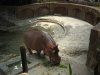
Just a fun fact this facility used to hold a single nile hippo as part of the animal show back in the day (around 2010s). It has passed away since then
Correct, though I wouldn't call it a "fun" fact :p

An male hippo named To Ming Tse, which he had reportedly came from Japan. He was quite a huge attraction for some years as he was quite tame with a feeding show, which the park even had the gimmick that To Ming Tse was attracted to Javanese gamelan tune. Though sadly he had an unfortunately small enclosure. He had been a significant individual animal from my childhood as I was frequent to Ancol back then and used to see him quite a lot (Which I think had a role in my liking for hippos), though I do realize how terrible his living conditions unfortunately was.

To Ming Tse in his exhibit (As of now has been demolished).
upload_2025-6-16_13-6-52.jpeg

upload_2025-6-16_13-7-5.jpeg

To Ming Tse in the now-defunct "variety animal show".
 

Attachments

  • upload_2025-6-16_13-6-52.jpeg
    upload_2025-6-16_13-6-52.jpeg
    42.5 KB · Views: 132
  • upload_2025-6-16_13-7-5.jpeg
    upload_2025-6-16_13-7-5.jpeg
    26.8 KB · Views: 137
DAY 21: Thursday, August 22nd

After the Aquarium, it was time for a Reptile Park a short walk away...

Zoo/Aquarium #58: Taman Mini Indonesia Indah: Komodo Indonesian Fauna Museum & Reptile Park (Jakarta, Indonesia)

Opening as a taxidermy museum in 1976 and inaugurated in 1978, around a quarter-century ago the area was converted into a Reptile Park. However, it's much newer than that and the 'Komodo Museum' opened to the public in 2016. This is a fantastic establishment and well worth visiting.

Who wouldn't want to visit a reptile zoo inside a freaking huge Komodo Dragon? :p

full


full


This excellent facility has an indoor area and then an outdoor loop that goes around the enormous lizard. The four quadrants are chelonians (top left), crocodilians (top right), Komodo Dragons (bottom right) and big lizards (bottom left). There's even a cafe here.

full


One flaw for the animals is that it is possible for visitors to be able to walk around some of the terrariums and peer in from all sides. Having said that, the indoor exhibits are spacious and well-furnished, as one would expect from an establishment that only just opened in 2016.

full


Komodo Island Pit Viper:

full


full


The Papuan Biodome has the following species, according to @Rizz Carlton
  • Hypsilurus godeffroyi
  • Tiliqua gigas evanescens
  • Carettochelys insculpta
  • Chelodina novaeguinae
  • Elseya novaeguinae
  • Emydura subglobosa
  • Datnoides campbelli
  • Melanotaenia boesemani
They also have lophosaurus dilophus and Australian green tree frog that are well-hidden within the biotope.

full


Outside can be found a crocodilian section, including TWO exhibits for Saltwater Crocodiles.

full


There's also an exhibit for False Gharials, one for Siamese Crocodiles and this one for New Guinea Crocodiles and all 5 crocodilian enclosures are near each other in one corner of the park.

full


There's another zone with 3 or 4 Komodo Dragon exhibits. Man oh man, Konstantin and I saw a TON of dragons in Southeast Asian zoos.

full


A trio of chelonian exhibits are nearby, such as this one for Bornean River Turtles. The zoo also has Pancake Tortoises and Forsten's Tortoises here in open-topped outdoor enclosures.

full


Here is an enclosed exhibit for Blue-tailed Monitors and Quince Monitors.

full


This exhibit held 3 species: Black Tree Monitor, Emerald Tree Monitor and Timor Monitor.

full


Crocodile Monitor exhibit:

full


Sulawesi Black Sailfin Lizard exhibit:

full


Rhinoceros Iguanas and Cuban Rock Iguanas (see below) have similarly-sized open-topped outdoor terrariums. A few of these exhibits are tight on space.

full


This large chelonian habitat has 3 species: Aldabra Tortoise, Asian Forest Tortoise and Malaysian Giant Turtle.

full


Branderhorst's Snapping Turtle exhibit:

full


Other chelonians in outdoor yards are African Spurred Tortoises, Leopard Tortoises, Red-footed Tortoises, Yellow-footed Tortoises, Alligator Snapping Turtles and Common Snapping Turtles.

Spiny Turtle and Wallacean Box Turtle exhibit:

full


Summary:

Komodo Indonesian Fauna Museum & Reptile Park
is terrific, modern and full of delights around every corner. It only takes an hour or maybe 1.5 hours to tour, but is packed with a lot of exemplary exhibits and the collection is impressive. There's circa 25 species indoors, all in above-average terrariums, and outside is even better with the crocodilian pools, dragon enclosures and chelonian exhibits.

Up next: With the Aquarium done, the Insect Museum toured (but with no live animals), the Reptile Park done, plus we puttered around in a few museums across the vast grounds of Taman Mini Indonesia Indah, it was time for the Bird Park to end off the trip!
 
Opening as a taxidermy museum in 1976 and inaugurated in 1978, around a quarter-century ago the area was converted into a Reptile Park. However, it's much newer than that and the 'Komodo Museum' opened to the public in 2016. This is a fantastic establishment and well worth visiting.
No clue why they still retain the "museum" name, they barely have any dead or mounted displays :p

The old museum primarily houses mammals and birds of various regions. The museum later on refurbished in around 2016 to exclusive houses reptiles and amphibians, including a large exhibit depicting Komodo dragons and their habitat. The reptile mounts and wet specimens are, mostly, former inhabitants.

One flaw for the animals is that it is possible for visitors to be able to walk around some of the terrariums and peer in from all sides. Having said that, the indoor exhibits are spacious and well-furnished, as one would expect from an establishment that only just opened in 2016.
That's something quite unfortunate and has deplete some of the species with the lack of privacy. Previously, their gecko terrariums has multiple species, though with the lack of privacy and how the terrarium was build (Lack of cover, aren't suitable for a mix of geckos with different needs, etc.), now it only have one surviving species, which is the Halmahera giant gecko (Gehyra marginata).

One of the main issues with Jagat Satwa Nusantara/Taman Mini Indonesia Indah that they often put aesthetics first than what most of the animals need, making guests and the management themselves thinking to themselves that these are totally "good" for the animals.

The Papuan Biodome has the following species, according to @Rizz Carlton
  • Hypsilurus godeffroyi
  • Tiliqua gigas evanescens
  • Carettochelys insculpta
  • Chelodina novaeguinae
  • Elseya novaeguinae
  • Emydura subglobosa
  • Datnoides campbelli
  • Melanotaenia boesemani
They also have lophosaurus dilophus and Australian green tree frog that are well-hidden within the biotope.
The signage as of February 2025 also mention frilled lizard as well, one of the park's old inhabitants. Though, obviously you'll have a hard time seeing some of these animals, especially the non-aquatic ones.

After some close examination, I'm not sure anymore that they have hypsilurus godeffroyi, but instead hypsilurus cf. nigrigularis, due to some differences in morphology. But, even then I'm still not sure of the ID, hence why I added cf. on my label.
upload_2025-6-17_23-37-7.jpeg

They had plans to add some scleropages jardinii in the water early on, but temperature issues hindered that attempt.

Sulawesi Black Sailfin Lizard exhibit:

full
Since later half of 2024, as the Indochinese box turtles occupied one of the indoor biotope that was formerly themed around Sulawesi, one of it's previous inhabitants, the Sulawesi forest turtles, has been moved in there as well. Though, you can only slightly see it in the rather murky water as they're still very small, in comparison to the turtles at Batu Secret Zoo.

Branderhorst's Snapping Turtle exhibit:

full
As of today, the exhibit now houses some Parker's snake-necked turtles (Chelodina parkeri). Photography of the turtles are almost impossible due to them always staying in the murky water.

Spiny Turtle and Wallacean Box Turtle exhibit:

full
The exhibit also held several unsigned Chinese stripe-necked turtles, a species native to China, of various sizes. I assume these are inhabitants from the pre-revitalization management, they used to take in some "unwanted" pets, including a huge numbers of turtles.
 

Attachments

  • upload_2025-6-17_23-37-7.jpeg
    upload_2025-6-17_23-37-7.jpeg
    30.6 KB · Views: 148
I keep enjoying your thread, especially because I traveled across Malaysia and Indonesia extensively.

I hope zoo designers from Europe and North America also read this thread and will adapt some Asian zoo solutions to Western zoos. Aviaries can be several hectares in size? Large herds of Asian deer and cattle are not boring? Primates can be kept together with ungulates? There can be multiple exhibits for one bear or orangutan species in a zoo? Small wild ungulates are not boring, but can be displayed in a children zoo? There can be contact between visitors and elephants, which have been tamed as domestic animals for only 4000 years anyway? Some of these I suggested before and some Zoochatters said it was all impractical or impossible...
 
DAY 21: Thursday, August 22nd

Here is the 59th and final zoo review of the trip...and it was zoo #610 all-time for me.

Zoo/Aquarium #59: Taman Mini Indonesia Indah: Bird Park (Jakarta, Indonesia)

Under the brand, known as Jagat Satwa Nusantara, Konstantin and I toured the Aquarium, Reptile Park and Bird Park on one day last August. Since then, the Insect Museum has seen the addition of live animals and a new 'Mammal Park' will give TMII technically FIVE zoos in the near future.

Taman Burung, the Bird Park, is brilliantly maintained and clean, modern and sleek. There's a large walk-through aviary on the right called Wallacea & Sahul, and another large walk-through aviary on the left called Sunda Besar. Within and around these two monster aviaries are a whole series of small satellite aviaries as well. I won't post an extensive species list, but I'd be curious to know just how many birds are here if anyone knows. Like many bird parks, the signage is hit-and-miss.

full


The entrance to the Aviari Wallacea Sahul:

full


full


full


A long row of side aviaries within the main structure:

full


full


Hooded Butcherbird aviary:

full


Northern Cassowary exhibit:

full


What appears to be a series of smaller, satellite aviaries is really one large connected walk-through structure within a cluster of domes.

full


There's a very long tunnel that leads to the second half of the grounds as well as a small cafe.

full


The grounds here are beautiful:

full


The Greater Sunda Aviary is another massive contraption and this one even has a second level of viewing up in the canopy.

full


The entrance area has a Javan Hawk Eagle aviary.

full


There's also multiple side aviaries, including this one for 3 species: Milky Stork, Glossy Ibis and Purple Heron.

full


There are aviaries for Wreathed Hornbills, Wrinkled Hornbills and Rhinoceros Hornbills (see below):

full


This aviary has Black Hornbills and Bornean Crested Firebacks:

full


Across the street from the Bird Park is a whole series of aviaries (many still containing birds) that are closed to the public. It's now an off-show holding and breeding facility and there's a substantial number of buildings, but it can only be seen from a distance these days.

full


Indonesia Museum:

full


Papua zone:

full


Summary:

Taman Mini Indonesia Indah
is an amazing cultural attraction, literally a few hundred acres in size and with an Aquarium, a Bird Park, a Reptile Park, an Insect Museum, a future Mammal Zoo, plus 15 museums and a whole bunch of buildings that are all quite remarkable to tour both indoors and outside. It's a true experience spending a day here. I heard someone compare it to the Smithsonian Institution in Washington, D.C., which has around 20 museums and a full-sized zoo. In both cases, it's possible to spend days venturing from building to building, marvelling at the displays.

Up next: I'll post my final itinerary and then have a series of wrap-up posts with various lists and statistics, as well as some trends I noticed in Southeast Asian zoos. As @Jurek7 and others have commented, there's certainly some world-class elements to zoos in this region of the world. From massive walk-through aviaries to incredible rarities, to having multiple exhibits for the same species and a real sense of walking through a jungle in many zoos, it was a trip of a lifetime.
 
It's been a huge pleasure for me to follow through this reviews and for me to add more contexts and informations to your Indonesian reviews. I'll miss a long trip thread like this again in the future, specifically one talking about Indonesia :p

Thank you for making this thread!

I won't post an extensive species list, but I'd be curious to know just how many birds are here if anyone knows. Like many bird parks, the signage is hit-and-miss.
The bird park claim to have more than 200 (sub)species, which include several birds that are exclusively off-display, like the king bird-of-paradise.

The signages for the Bird Park should be almost accurate in term of ID, the problem is that some of the signed birds aren't even on-display or some birds that aren't signed at all.

There's a large walk-through aviary on the right called Wallacea & Sahul, and another large walk-through aviary on the left called Sunda Besar.
To be more precise, as their name suggest, these aviaries contain birds from their namesakes areas. Though, Wallacea & Sahul also include the addition of several exotic birds.

There is also a singular aviary called Plaza Puyuh (Partridge Plaza), which include species like the chestnut-bellied partridge and king quail, as well as the greater green leafbird and orange-billed lorikeet. There's also the Plaza Raptor or a Birds-of-Prey Plaza, which appears to have been defunct since the start of 2025. Of course not to mention the free-roaming waterbirds, like the Australian pelican, little black cormorant, black swan, and some domestic goose, as well as lesser adjutants though they're not a common sight, prefering to roam the entire Taman Mini complex instead.
 
Final Itinerary:

DAY 1: Friday, August 2nd

1- Bangkok Snake Farm (Bangkok, Thailand)
2- Peuan Deratchan Mini Zoo (Bangkok, Thailand)
3- Bangkok Butterfly Garden (Bangkok, Thailand)
4- Pata Zoo (Bangkok, Thailand)
5- Sea Life Bangkok Ocean World (Bangkok, Thailand)

DAY 2: Saturday, August 3rd

6- Wildlife Rescue Center No. 1 (Nakhon Nayok, Thailand)
7- Sriayuthaya Lion Park (Nong Khanak, Thailand)
8- Lopburi Zoo (Lopburi, Thailand)

DAY 3: Sunday, August 4th

9- Khao Kheow Open Zoo (Chon Buri, Thailand) 3-part review
10- Pattaya Crocodile Farm (Pattaya, Thailand)
11- Underwater World Pattaya (Pattaya, Thailand)
12- Monsters Aquarium (Pattaya, Thailand)

DAY 4: Monday, August 5th

13- Chiang Mai Zoo (Chiang Mai, Thailand) 2-part review
14- Tiger Kingdom (Chiang Mai, Thailand)
15- Siam Insect Zoo (Chiang Mai, Thailand)
16- Lanna Mini Zoo (Chiang Mai, Thailand)
17- Chiang Mai Night Safari (Chiang Mai, Thailand) 2-part review

DAY 5: Tuesday, August 6th


18- Songkhla Zoo (Songkhla, Thailand) 2-part review

DAY 6: Wednesday, August 7th

19 - Safari World Bangkok (Bangkok, Thailand) 2-part review

DAY 7: Thursday, August 8th
- 'Toki Day'

20 - Penang Bird Park (Penang, Malaysia)
21 - Zoo Taiping (Taiping, Malaysia) 2-part review
22 - Lost World of Tambun (Ipoh, Malaysia)

DAY 8: Friday, August 9th

23 - Zoo Negara (Ampang, Malaysia) 2-part review
24 - KL Butterfly Park (Kuala Lumpur, Malaysia)
25 - KL Deer Park (Kuala Lumpur, Malaysia)
26 - KL Bird Park (Kuala Lumpur, Malaysia)

DAY 9: Saturday, August 10th

27 - Zoo Melaka (Melaka, Malaysia) 2-part review
28- Taman Buaya Crocodile Park (Melaka, Malaysia)
29- Melaka Butterfly & Reptile Sanctuary (Melaka, Malaysia)

DAY 10: Sunday, August 11th

30- Singapore Zoo (Singapore) 2-part review
31- River Wonders (Singapore) 2-part review
32- Night Safari (Singapore)

DAY 11: Monday, August 12th

33- Bird Paradise (Singapore) 2-part review
34- S.E.A. Aquarium (Singapore)

DAY 12: Tuesday, August 13th

35- Bali Zoo (Bali, Indonesia) 2-part review
36- Bali Reptile Park (Bali, Indonesia)
37- Bali Bird Park (Bali, Indonesia)

DAY 13: Wednesday, August 14th

38- Taman Safari III Bali (Bali, Indonesia) 2-part review

DAY 14: Thursday, August 15th

39- Surabaya Zoo (Surabaya, Indonesia) 3-part review
40- Taman Safari II Prigen (Prigen, Indonesia) 4-part review (including the Prigen Conservation Breeding Ark)

DAY 15: Friday, August 16th

41- Batu Secret Zoo (Kota Batu, Indonesia) 4-part review
42- Eco Active Park (Kota Batu, Indonesia)

DAY 16: Saturday, August 17th

43- Solo Safari (Surakarta, Indonesia)
44- Gembira Loka Zoo (Yogyakarta, Indonesia) 2-part review

DAY 17: Sunday, August 18th

45- Bandung Zoo (Bandung, Indonesia)
46- Lembang Park & Zoo (Lembang, Indonesia)

DAY 18: Monday, August 19th

47- Taman Safari I Bogor (Bogor, Indonesia) 4-part review
48- Royal Safari Garden Resort (Bogor, Indonesia)

DAY 19: Tuesday, August 20th

49- Ragunan Zoo (Ragunan, Indonesia) 4-part review
50- BXSea Aquarium (Jakarta, Indonesia)
51- Jakarta AQuarium Safari (Jakarta, Indonesia)

DAY 20: Wednesday, August 21st

52- Faunaland Ancol (Jakarta, Indonesia)
53- Sea World Ancol (Jakarta, Indonesia)
54- Jakarta Bird Land (Jakarta, Indonesia)
55- Samudra Ancol Marine Park (Jakarta, Indonesia)
56- Faunaland Off-Show Zoo & Wildlife Breeding Centre (Jakarta, Indonesia)

DAY 21: Thursday, August 22nd

57- Taman Mini Indonesia Indah - Aquarium Dunia Air Tawar (Jakarta, Indonesia)
58- Taman Mini Indonesia Indah - Komodo Reptile Park (Jakarta, Indonesia)
59- Taman Mini Indonesia Indah - Bird Park (Jakarta, Indonesia)

19 zoos in Thailand
10 zoos in Malaysia
5 zoos in Singapore
25 zoos in Indonesia

Total of 59 zoos on the trip (including 8 aquariums, 7 bird parks, 5 reptile zoos and 3 insect zoos)
 
This might be the place to say how much I have really enjoyed this thread - I'm going to follow in the footsteps of @snowleopard and @twilighter next year and they have already been hugely helpful and generous with their knowledge.

My wife might not be so thankful to this thread and to be going to so many zoos on her honeymoon, but hopefully there will be lots of wild birds to keep her happy as well!
 
Final Itinerary:

DAY 1: Friday, August 2nd

1- Bangkok Snake Farm (Bangkok, Thailand)
2- Peuan Deratchan Mini Zoo (Bangkok, Thailand)
3- Bangkok Butterfly Garden (Bangkok, Thailand)
4- Pata Zoo (Bangkok, Thailand)
5- Sea Life Bangkok Ocean World (Bangkok, Thailand)

DAY 2: Saturday, August 3rd

6- Wildlife Rescue Center No. 1 (Nakhon Nayok, Thailand)
7- Sriayuthaya Lion Park (Nong Khanak, Thailand)
8- Lopburi Zoo (Lopburi, Thailand)

DAY 3: Sunday, August 4th

9- Khao Kheow Open Zoo (Chon Buri, Thailand) 3-part review
10- Pattaya Crocodile Farm (Pattaya, Thailand)
11- Underwater World Pattaya (Pattaya, Thailand)
12- Monsters Aquarium (Pattaya, Thailand)

DAY 4: Monday, August 5th

13- Chiang Mai Zoo (Chiang Mai, Thailand) 2-part review
14- Tiger Kingdom (Chiang Mai, Thailand)
15- Siam Insect Zoo (Chiang Mai, Thailand)
16- Lanna Mini Zoo (Chiang Mai, Thailand)
17- Chiang Mai Night Safari (Chiang Mai, Thailand) 2-part review

DAY 5: Tuesday, August 6th


18- Songkhla Zoo (Songkhla, Thailand) 2-part review

DAY 6: Wednesday, August 7th

19 - Safari World Bangkok (Bangkok, Thailand) 2-part review

DAY 7: Thursday, August 8th
- 'Toki Day'

20 - Penang Bird Park (Penang, Malaysia)
21 - Zoo Taiping (Taiping, Malaysia) 2-part review
22 - Lost World of Tambun (Ipoh, Malaysia)

DAY 8: Friday, August 9th

23 - Zoo Negara (Ampang, Malaysia) 2-part review
24 - KL Butterfly Park (Kuala Lumpur, Malaysia)
25 - KL Deer Park (Kuala Lumpur, Malaysia)
26 - KL Bird Park (Kuala Lumpur, Malaysia)

DAY 9: Saturday, August 10th

27 - Zoo Melaka (Melaka, Malaysia) 2-part review
28- Taman Buaya Crocodile Park (Melaka, Malaysia)
29- Melaka Butterfly & Reptile Sanctuary (Melaka, Malaysia)

DAY 10: Sunday, August 11th

30- Singapore Zoo (Singapore) 2-part review
31- River Wonders (Singapore) 2-part review
32- Night Safari (Singapore)

DAY 11: Monday, August 12th

33- Bird Paradise (Singapore) 2-part review
34- S.E.A. Aquarium (Singapore)

DAY 12: Tuesday, August 13th

35- Bali Zoo (Bali, Indonesia) 2-part review
36- Bali Reptile Park (Bali, Indonesia)
37- Bali Bird Park (Bali, Indonesia)

DAY 13: Wednesday, August 14th

38- Taman Safari III Bali (Bali, Indonesia) 2-part review

DAY 14: Thursday, August 15th

39- Surabaya Zoo (Surabaya, Indonesia) 3-part review
40- Taman Safari II Prigen (Prigen, Indonesia) 4-part review (including the Prigen Conservation Breeding Ark)

DAY 15: Friday, August 16th

41- Batu Secret Zoo (Kota Batu, Indonesia) 4-part review
42- Eco Active Park (Kota Batu, Indonesia)

DAY 16: Saturday, August 17th

43- Solo Safari (Surakarta, Indonesia)
44- Gembira Loka Zoo (Yogyakarta, Indonesia) 2-part review

DAY 17: Sunday, August 18th

45- Bandung Zoo (Bandung, Indonesia)
46- Lembang Park & Zoo (Lembang, Indonesia)

DAY 18: Monday, August 19th

47- Taman Safari I Bogor (Bogor, Indonesia) 4-part review
48- Royal Safari Garden Resort (Bogor, Indonesia)

DAY 19: Tuesday, August 20th

49- Ragunan Zoo (Ragunan, Indonesia) 4-part review
50- BXSea Aquarium (Jakarta, Indonesia)
51- Jakarta AQuarium Safari (Jakarta, Indonesia)

DAY 20: Wednesday, August 21st

52- Faunaland Ancol (Jakarta, Indonesia)
53- Sea World Ancol (Jakarta, Indonesia)
54- Jakarta Bird Land (Jakarta, Indonesia)
55- Samudra Ancol Marine Park (Jakarta, Indonesia)
56- Faunaland Off-Show Zoo & Wildlife Breeding Centre (Jakarta, Indonesia)

DAY 21: Thursday, August 22nd

57- Taman Mini Indonesia Indah - Aquarium Dunia Air Tawar (Jakarta, Indonesia)
58- Taman Mini Indonesia Indah - Komodo Reptile Park (Jakarta, Indonesia)
59- Taman Mini Indonesia Indah - Bird Park (Jakarta, Indonesia)

19 zoos in Thailand
10 zoos in Malaysia
5 zoos in Singapore
25 zoos in Indonesia

Total of 59 zoos on the trip (including 8 aquariums, 7 bird parks, 5 reptile zoos and 3 insect zoos)
This was an absolute banger of a thread, thanks for sharing your journey! Thank you @snowleopard for telling us all about these zoos in Asia we learned some new things!
 
A huge THANK YOU needs to go to @twilighter as it was his idea for the whole trip. Konstantin was possibly curious to venture off on an epic 'Snowleopard style road trip' to see what it's like and I'm not sure he knew what he was getting into. Haha! Well, 59 zoos later and he surpassed 200 zoos all-time right at the end of the trek. Due to Konstantin's organizational skills and contacts in the world of zoos, we had some really special moments at various establishments.

At Songkhla Zoo (Thailand), a curatorial team took us behind the scenes in two different areas, detailed in my review of that zoo. Who could resist Flat-headed Cats? At Zoo Taiping, Lost World of Tambun and Zoo Negara, we were taken around on guided tours at all 3 of those Malaysian zoos. At Taman Safari II Prigen, Batu Secret Zoo and Faunaland Off-Show Zoo & Wildlife Breeding Centre, we had guides for parts of our visits to those 3 Indonesian zoos. All of that adds up to 7 occasions where we met staff members and enjoyed learning a little more about the histories of each collection. In every example, it was Konstantin who arranged those meetings. As a bonus, we also met up with @Toki for our 3-zoo 'Toki Day' in Malaysia and that was a real highlight of the whole trip. We also had a splendid dinner and nocturnal tour of Prigen's off-show area with @Mossman Joe and @Sicarius, two more zoo nerds. I'm hoping that I remembered everyone, but I do know that some zoo nerds who helped set up meetings with curators would like to remain anonymous.

I've really enjoyed corresponding with zoo nerds who have read all my reviews and now want to head off to the land of raging heat and humidity. It's been exciting to see how people are picking and choosing which zoos they will tour next year, as there's certainly a lot of options. Thailand arguably has as its best facility the one with hundreds of Crab-eating Macaques all over the grounds and that epic Banteng hillside jungle, which is none other than Khao Kheow Open Zoo. There's also Chiang Mai Zoo and Chiang Mai Night Safari in the north, where you will see 75 mammal species at the latter facility in 3 hours. Safari World Bangkok was better than expected and there are some zoo nerds who want to tour Monsters Aquarium just for the rarities. For example, there are two squirrels at that place that are apparently found nowhere else in captivity.

Malaysia has Zoo Taiping and Zoo Negara as must-sees, both terrific jungle zoos. I've even had inquiries about Melaka Butterfly & Reptile Sanctuary, where I listed approximately 130 species in my review and that place has a collector's touch and is well worth touring.

Then there's Singapore, which is a whole level above anything else in terms of overall quality. Those zoos combined top Berlin (2nd) and San Diego (3rd) in my personal rankings as zoological destinations. Singapore is elite.

Lastly, Indonesia has a really enjoyable 4-zoo option on the island of Bali, plus there's Taman Safari I Bogor as my favourite zoo of the nation, Taman Safari II Prigen in the second slot, Batu Secret Zoo and its vast collection of animals (there are supposedly 45 primate species including the behind-the-scenes area), and full days at the Ancol zoos and Taman Mini Indonesia Indah zoos offer up a lot of variety and cultural attractions. Even Ragunan Zoo, which is badly outdated in some areas, has the magnificent Schmutzer Primate Centre and Konstantin and I spent two hours just in that one separate zone and the whole zoo is 8 hours of non-stop walking.

I've said it before, but there's only two zoos out of the 59 that I absolutely despised and regretted visiting and those were Lopburi Zoo and Pattaya Crocodile Farm, both in Thailand in the first couple of days of the trip.

I'd never been a "species hunter zoo nerd" before, but Konstantin asked me to accompany him on a Southeast Asian trip while I was in the midst of my Snowleopard's Mammals: A Lifetime List of Species thread and so naturally I became excited about the prospect of seeing some new species that I'd never seen before. Who could have imagined that I'd come across SO MANY new animals in the span of 3 weeks? I wouldn't even know how many birds (hello Philippine Eagle at Bird Paradise!), reptiles (Bangkok Snake Farm had a bunch of snakes I'd never seen before), amphibians, insects and fish were brand-new to me on the trip, but I do know the number of new mammals I saw and naturally I have a list of them. ;)

I saw 55 mammal species I'd never seen before in my previous 551 zoos: Marbled Cat, Flat-headed Cat, Sunda Clouded Leopard, Sunda Leopard Cat, Smooth-coated Otter, Large Indian Civet, Small Indian Civet, Small-toothed Palm Civet, Three-striped Palm Civet, Javan Mongoose, Banded Linsang, Indonesian Mountain Weasel, Sumatran Hog Badger, Javan Ferret Badger, Greater Hog Badger, Brown Hyena, Gursky's Spectral Tarsier, Horsfield’s Tarsier, Proboscis Monkey, Black-shanked Douc Langur, Laotian Langur, Indochinese Silvered Langur, Javan Surili, Mitered Surili, Natuna Island Surili, White-thighed Surili, Guianan Red Howler Monkey, Assam Macaque, Moor Macaque, Heck's Macaque, Northern Pig-tailed Macaque, Siberut Macaque, Gorontalo Macaque, Bornean White-bearded Gibbon, Kloss's Gibbon, Sunda Pangolin, Sumatran Striped Rabbit, Black Finlayson’s Squirrel, Black Giant Squirrel, Central Thai Finlayson’s Squirrel, East Javan Red Giant Flying Squirrel, Spotted Giant Flying Squirrel, Indomalayan Bamboo Rat, Asian Brush-tailed Porcupine, Malayan Porcupine, Sunda Porcupine, Grizzled Tree Kangaroo, Ursine Tree Kangaroo, Javan Warty Pig, Bawean Warty Pig, Northern Red Muntjac, Burmese Goral, Mainland Serow, West African Manatee and Indo-Pacific Bottlenose Dolphin.

Thailand, Malaysia, Singapore and Indonesia are 4 nations where it's possible to be a vastly experienced zoo nerd and still rack up 55 new mammal species. Incredible! That's why a couple of middle-aged guys like Konstantin and I were able to get up at the crack of dawn, walk around in thick heat and humidity with our backpacks, and still have the energy for 14-hour days because of our excitement at viewing animals and new zoos. I saw 4 new feline species and I'm not sure if I'll ever see any of them again. It's kind of odd that I'd never come across Smooth-coated Otters before in all my travels. I also saw 4 new civet species, 3 new badger species, extreme rarities like Banded Linsang and Indonesian Mountain Weasel, I finally saw a Brown Hyena, 5 squirrel species, 3 types of porcupines, two new species of tree kangaroo, the West African Manatees were amazing, and to come across 19 new primate species was downright astonishing. It was basically a new primate every single day of the trip, including 6 new macaque species.

Some of those rarities, in a weird twist of fate, became common. For example, after a lifetime of never once seeing Proboscis Monkeys I saw them 8 times. The first was at Singapore Zoo and then it was at 7 different zoos in Indonesia and they were usually in terrific exhibits. I saw Grizzled Tree Kangaroos once in Thailand and then 5 more times in Indonesia. Even a species I'd seen twice before (Red-shanked Douc Langur), I saw 7 times and some zoos had multiple exhibits of them. Berlin Tierpark had Javan Rusa Deer when I was there in 2019, my only ever sighting of that species, but on this trip I saw Javan Rusa Deer at 22 zoos (!!) and literally hundreds of individuals as they are incredibly common in Southeast Asian collections and I suspect that at some zoos the deer end up as carnivore food.

My updated zoo list:

GRAND TOTAL: 610 zoos/aquariums (487 zoos and 123 aquariums)

16 Nations: (I’ve also visited three other countries: Mexico, Italy and Vatican City, plus airports in England and Taiwan although I don't really count those as 'country visits')

USA – 377 zoos/aquariums
Netherlands – 43
Germany – 40
Canada – 33
Indonesia – 25
Australia – 19
Thailand – 19
Denmark – 16
Belgium – 10
Malaysia – 10
Sweden – 6
Singapore – 5
France – 2
Norway – 2
Switzerland – 2
Trinidad & Tobago – 1

Up next: I will have one more big post that will likely wrap up this entire thread. It will be an overview of Southeast Asian zoos in general, pointing out similarities and differences between the collections in SEA and zoos I've visited in North America, Europe and Australia.
 
Last edited:
I've been doing a LOT of writing on ZooChat for the past 18 months, first with the year-long Snowleopard's Mammals: A Lifetime List of Species thread, then I began this thread, which is my 12th Snowleopard's Road Trip that I've documented on the site.

So, now that I've been to exactly 610 different zoos/aquariums (approximately 410 North America, 120 Europe, 60 Asia, 20 Australia), what trends did I notice in Southeast Asian zoos?

Entrances - Many zoos in Thailand, Malaysia, Singapore and Indonesia have grandiose entrances, with huge gates, statues and sculptures that look amazing. At times, I question why so much is spent on flashy entrances when some of the animal enclosures are mediocre, but there's no doubt that at many Asian zoos there's an appealing first impression.

Chiang Mai Night Safari entrance:

full


Huge Aviaries - On the trip, Konstantin and I visited 7 bird parks and many major zoos had massive walk-through aviaries. On many occasions, the signage would be poor or practically nonexistent, but the aviaries themselves are often magnificent structures. There's a real 'bird culture' in this part of the world, with small aviaries in homes and backyards, birds as pets, Southern and Northern Cassowaries at practically every single zoo, dozens of hornbills in all directions, Birds-of-Paradise being common and certainly bird nerds will be sated with what they see in Southeast Asian collections.

The colossal Khao Kheow Open Zoo aviary:

full


Outdoor Reptile Exhibits - I was thrilled to see so many big, outdoor crocodilian pools on my Asian travels. It's in stark contrast to the Reptile Houses that are so common in North American and European zoos, with the colder climates forcing zoos to keep reptiles indoors year-round or sometimes allowing them out in the warmer summer months. In Southeast Asian zoos, I saw dozens and dozens of Komodo Dragon and monitor exhibits, piles of crocodilian enclosures, iguanas everywhere, loads of chelonians, etc. When I toured a vast number of European zoos in 2019 on a truly epic road trip, I visited 12 Reptile Houses. It was nowhere near that amount this time around, with some reptile zones, such as at Songkhla Zoo, Gembira Loka Zoo and Ragunan Zoo, having visitors remain outdoors while looking at terrariums.

False Gharial exhibit at Zoo Taiping:

full


Asian Elephants - I visited 24 zoos with Asian Elephants and 0 with African Elephants while in Asia. I've already discussed elephants a lot on this thread, but it really is remarkable to see zoos with elephants wandering around with handlers, being touched by the public, giving rides at several zoos, being fed by visitors, and even being chained up for hours on end. Elephants are like pet dogs in Southeast Asia, loved by their owners but also at times maintained in shoddy conditions that I have never seen elsewhere. Tiny barns, little enclosures, public interactions with the animals, etc., and it's all a bit mind-boggling for a Canadian zoo nerd. We often hear about the dangers of working with elephants and yet I saw an incredible number of employees go in with elephants at zoos across 4 Asian nations. It's totally normal there.

Bali Zoo:

full


Multiple Exhibits for Species - I went in depth with my statistics of the mammoth Ragunan Zoo, the Berlin Tierpark of Southeast Asia, as that facility has 18 Tiger exhibits, 16 bear exhibits (mainly all Sun Bears), 9 Orangutan exhibits, etc. But other zoos were just as prolific with their numbers, as Surabaya Zoo has 8 Komodo Dragon exhibits, 7 Binturong exhibits, 5 Sun Bear exhibits and there are many more examples. Khao Kheow Open Zoo has at least 18 feline exhibits, with half of them being for Tigers. Some of the zoos on the trip had so many repetitive enclosures that it became a bit redundant seeing the same old species each time.

One of the 18 Tiger exhibits at Ragunan Zoo:

full


Common Animals - Aside from Asian Elephants (24 zoos), Komodo Dragons, Tigers everywhere (27 zoos), Malayan Tapirs (18 zoos), Binturongs (26 zoos), Sun Bears (20 zoos), Orangutans (22 zoos), Javan Rusa Deer (22 zoos), Common Hippos (18 zoos), Pygmy Hippos (12 zoos), Giraffes (20 zoos), there are primates up the kazoo and gibbons in particular are extremely common. Some zoos have 4 or 5 gibbon species at one time.

Surabaya Zoo has 8 Komodo Dragon exhibits and they are all huge enclosures.

full


Wild Animals - I loved visiting all the jungle zoos on this trip, with wild primates and birds being common. Hundreds of Crab-eating Macaques at several zoos, but also Southern Pig-tailed Macaques, Dusky Langurs and White-thighed Surilis adds up to 4 wild primates that Konstantin and I saw on the trip, many times very close up! We even heard wild gibbons at Zoo Melaka. Sambar Deer, Great Hornbills, Asian Water Monitors and Cloud Monitors were all seen by us, plus a Buffy Fish Owl and 4 Colugos just at Singapore Zoo. Can any other zoos of the world top Southeast Asian collections for wild animals roaming the grounds?

We saw a dozen wild White-thighed Surilis at Zoo Negara and this one jumped into a porcupine enclosure to steal some food.

full


We saw 4 wild Colugos in just a few hours at Singapore Zoo:

full


Mandai Wildlife Reserve - The Mandai Wildlife Reserve zoos have to be seen to be believed. If you add up all the different species between the 5 parks, there's circa 135 mammal species (including 35 primate species), 420 bird species, 90 reptile/amphibian species, 35 invertebrate species and at least 130 fish species. Those are ballpark numbers but hopefully fairly accurate and it gives Mandai more than 800 total species. The diversity on display is world-class and that doesn't even include the wild Colugos, various monitor lizards, owls, otters and whatever else is lurking in the surrounding jungles.

Singapore Zoo is a fantastic experience, with wild animals all around as you look at exhibits that have stood the test of time. It's a rainforest jungle zoo and unlike any other zoo outside of Southeast Asia and even there it is the cream of the crop. Then there's Night Safari, which has been around for 31 years and never been replicated anywhere. River Wonders has Giant Pandas, 17 West Indian Manatees and outdoor tanks in an Aquarium-like setting that has taken aquaria presentation to new heights. Bird Paradise is without a doubt the best thing you'll ever see for birds and it's one of the greatest zoos I've ever toured. Rainforest Wild: ASIA will soon be joined by Rainforest Wild: AFRICA next year to form a 5th complete zoo and everything about Mandai is ELITE.

With a lot of new exhibits at Singapore Zoo and Night Safari having been built in the last 15 years, not to mention River Wonders, Bird Paradise and Rainforest Wild all being practically brand-new, Singapore has taken zoos to a whole new level. The two San Diego parks, which I truly love and have visited many times, are not as impressive to me as the Mandai zoos. It's not even close. When it comes to premier zoological destinations, Singapore is first in my opinion with its 5 zoos, Berlin a clear second with its two zoos, then San Diego in third. A well-respected, legendary zoo director recently corresponded with me and confirmed that nowhere can top Singapore, and he pointed out that the conservation focus there is another fantastic attribute of the Mandai parks that sometimes gets overlooked, as there's currently more than 50 conservation projects supported by Mandai Wildlife Reserve.

The 4-acre Heart of Africa aviary at Bird Paradise:

full


The 2-acre Wings of Asia aviary at Bird Paradise:

full


Giant Panda exhibit at River Wonders:

full


Konstantin capturing an image of a Proboscis Monkey at Singapore Zoo:

full


Summary:

The trip was amazing and absolutely jam-packed with zoos each and every day. Konstantin and I had to be fit and prepared for walking 20,000 steps day-after-day for 3 straight weeks. I took 12 separate flights in total, plus we had train rides, bus rides and innumerable Uber/Grab rides. It really was Planes, Trains and Automobiles! The hospitality we encountered was supreme, with practically no issues whatsoever. Southeast Asia thrives on tourism, so we never had to worry about crime or threats or any sketchy behaviour from locals. As I stated before, when we were travelling through Central Java, more often than not we were stopped for selfies and I'm sure that Konstantin went viral in some rural town. :p

I honestly do feel that such a trip is not for everyone, as there is a lot of chaos on the roads at all times and I have friends that worry about such things. The extreme heat and humidity didn't bother Konstantin and I that much, but at times the climate is energy sapping. Some of the zoos with thick undergrowth were cool in the shade, but at the end of the journey we found the 'concrete heat' of Jakarta much hotter and more difficult to handle. The weather is intense and if you aren't in reasonable shape then you'll be exhausted after a couple of days and you'll never enjoy the experience.

Southeast Asian zoos excel with birds, reptiles, amphibians and in some cases insects. Mammals also do very well at the big zoos, as even though at times their exhibits might be smaller than similar enclosures at North American and European zoos, don't forget that because of the warm climate those mammals in Asian zoos are often outdoors for longer hours and 24/7 in some cases. It's far different in northern zoos across the globe, with megafauna often locked in barns for weeks at a time in winter, and then even in summer being in their outdoor paddocks for 7 hours and then put inside for 17 hours. Many Southeast Asian zoos don't seem to know the meaning of locking their animals indoors whatsoever and therefore one could argue that the captive mammals there have much more space to roam.

Up next:

Thanks for reading this thread, but as for a future trip I don't really have an answer. Years ago, I spent months drafting a 3-week road trip through Florida, racking up 60 new zoos in the process and visiting a few old favourites. But do I really want to wade my way through some roadside gator parks and crappy American collections? The USA has some wonderful zoos, but so many junky ones that I struggle to see myself going on another road trip there any time soon. It's a nation that has the best and worst of everything.

Touring some zoos in South American nations is tempting, but costly and dangerous and I know some people who have witnessed criminal activities there and I'm torn whether it's worth the gamble. It would be super cool to add another continent to my all-time list and see a lot of rare mammals that aren't found elsewhere, but it's also a huge geographical land mass to navigate.

Japan is one country that I'd love to visit, even though the animal exhibits in many zoos appear to be quite dodgy judging from the gallery. I'd be tempted to tour a whole pile of aquariums and I generally like anything Japanese (movies, food, culture) and so this one is a real possibility.

There's other destinations as well, such as the Czech. Republic, Poland and other European nations. The best, most historic, trend-setting zoos in the world are found in Europe and so that's likely my best option for a future Snowleopard Road Trip. I've got one other zoo trip tentatively drafted and it would see me bang off a whack of zoos in southern and eastern Germany, as I already did the western half in 2019. Besides all those German beauties, I could easily tag on a few outliers such as Vienna, Prague and Plzen. I'm leaning in that direction, but it wouldn't be until at least 2027 and who even knows what will happen in the future. Life is unpredictable.
 
Last edited:
Back
Top