I have been looking forward to this one. On form, the two favourites to win the Cup, being the only sides that have won every game they have played thus far. It reminds me a little of Liverpool / PSG in the Champions League this year, or Spain / Germany in the last Euros, in that you feel as though it really should be the final.
Have only been to Prague, and will start with a 3-2 in their favour until more information is provided, as I have the feeling that they are really strong in this category. Looking forward to hearing more from the Tierpark's supporters here, though.
Here is a photographic overview of Prague's African offerings:
Africa Up Close:
An interesting exhibit devoted to the smaller and more overlooked fauna of Africa, something which has invaluable educational significance given how often the continent is perceived as only housing megafauna by the general public. Here, you will find some species such as porcupines and lemurs that are well-known to the public, but several others that are not, with the design of the house (being winding corridor with floor-to-ceiling, glass-walled enclosures protruding into the visitor path) being quite engaging.
See
here for a species list. There are quite a few good rarities here, such as Garnett's Greater Bushbaby, Mechow's Mole-rat, Bush Hyrax, Black-and-rufous Sengi and Vaillant's Mabuya.
@Robaque - possibly the highlight of the pavilion is the huge troop of Senegal Bushbabies (I counted 8 or 9 but there could have been more) in a sizeable room shared with giant jumping rats. Adjacent are Moholi Bushbabies living with tenrecs. It is normally in a night-time light setup.
@Robaque - Bush Hyrax enclosure, shared with the non-African Belanger's Treeshrew.
@lintworm - general view inside the pavilion. Mole-rats on the left, bushbabies seen from the hut on the right, snakes and honey badgers straight ahead.
Probably my favourite enclosure in the building is barely pictured: that for Mechow's Mole-rats, the only mole-rat enclosure I have seen in a zoo which provides them with soil and other natural substrate to dig in, rather than providing them with pre-made glass tunnels.
Hippo Pavilion:
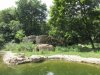
@FunkyGibbon - something more of a lowlight is the Common Hippo enclosure. Very new, and very expensive, but it is clear that all the money went on the underwater viewing, as the barren concrete land area just isn't acceptable.
The paddocks surrounding the hippos have a selection of antelope in really nice enclosures: Eastern Bongo, Nile Lechwe, and the highlight, Mhorr Gazelle.
@Bele - the undulating bongo paddock which, annoyingly, could quite easily be connected to the hippo enclosure through the big steel gate on the right, providing the hippos with grass, but this is supposedly never done.
African Savannah:
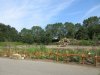
@Chapman'szebra - for Giraffe, Grevy's Zebra, Black Sable, Blesbok, Kafue Lechwe, Scimitar-horned Oryx and Ostrich. One of the largest, best and most beautiful savannahs in an urban zoo, although in my opinion slightly inferior to (for example) Zürich.
In and around the African Pavilion (indoor area for the species on the savannah) are a few more species, such as Kirk's Dik-dik, Aardvark, Meerkat and Migratory Locust.
Dja Reserve:
One of Prague's newest exhibits, this is home to a family group of gorillas, as well as several other species. It has what is by far the largest and best indoor area for gorillas that I have ever seen, and a solid outdoor area with ample space and climbing (a tad sparse at the moment but that will hopefully improve over time). There are also several interesting smaller mammals, some tortoises and beetles within the building. It is a very large structure with enormous amounts of visitor space covered with interesting educational material and vegetation, which admittedly can feel wasted at times as there could have been more animal displays, but I for one was very fond of the natural, spacious, airy feel of the hall.
@MagpieGoose - the enormous indoor viewing gallery for gorillas, who share with Kikuyu Guereza.
@twilighter - the large and undulating outdoor enclosure for the gorillas and guerezas.
@Chapman'szebra - the indoor area for Red River Hogs and De Brazza's Monkey.
There are also Gabon Talapoins in a mix with African Brush-tailed Porcupines, and Straw-coloured Fruit Bats in a mix with Gambian Pouched Rat, all four species being quite rare.
Across the Continents:
@Baldur - Brown Hyena enclosure. I have no doubt that this very rare and very beautiful species will be a significant player in the tie, as will the pair of excellent enclosures in which they are held. Large, forested and undulating with a lot of decoration, secluded portions and offshow dens for privacy, but also with multiple viewing angles to boost the likelihood of visitors seeing them.
]
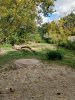
@Robaque - Addax enclosure, really good in my opinion with complete grass coverage and shade offered by mature trees.
Rock Outcrop:
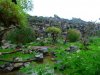
@Kalaw - the Barbary Sheep and Macaque enclosure, one of the most spectacular zoo exhibits on the globe, providing these mountainous species with a near-vertical ledge. It speaks for itself as to why an enclosure such as this is so remarkable.
@lintworm - the Ibis Aviary, which is predominantly African (although with a fair few Europeans). It's design isn't exactly ground-breaking, but it is large, with the cliff providing a scenic backdrop and a good area for the birds to roost. There is also plenty of long grass and vegetation for birds to hide from visitors should they choose to stay from the floor, and being in a walkthrough space with large pelecaniformes (Abdim's and Yellow-billed Storks) and raptors (Egyptian Vulture and Little Owl) is always a pleasure.
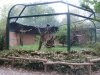
@Kalaw - the famous Great Aviary, one of the best bird of prey aviaries around. Egyptian Vulture, Booted Eagle and Black Stork are all kept here, and for all three, Africa makes up a significant portion of their range. That said, the aviary is by no means an 'African' exhibit and the assortment is fairly miscellaneous.
Bird Wetlands:
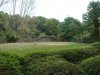
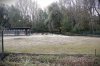
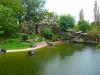
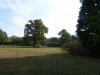
@Jana - a slight weakness for Prague in this category is this attractive meadow that is sadly wasted on pinioned waterfowl (mostly African). I would be surprised if the Tierpark doesn't have any pinioned birds of its own here, but happily proven wrong.
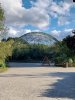
@Jana - Prague's famous Waterfowl Pavilion has several aviaries attached to it, one of which, the Okavango Aviary, is a walkthrough for African birds. Really nicely designed, reasonably tall, and featuring such rarities as Squacco Heron, Hartlaub's Duck, Red-winged Starling and African Openbill.
@vogelcommando - showing the two reasonably large and greenhouse-like indoor areas for Shoebills. Each indoor area comprises roughly half of the overall space, with a netted, outdoor portion at the back which is roughly the same size. Both are very densely planted, but unfortunately don't allow for prolonged flight. On my visit, I observed a very interesting form of enrichment, as one of the Shoebills was fishing in a bucket for live fish!
Feline and Reptile Pavilion:
The only African reptiles in this building are Gaboon Viper and Occelated Skink, neither of whom's enclosures are depicted in the gallery.
@FunkyGibbon - an aerial view of the zoo's Cheetah complex, which encompasses the large hilly paddock in the centre, and I believe the two smaller ones behind. For the cheetahs, it is excellent (large, grass-covered with a lot of privacy), but for the visitors it does have one weakness, that being very limited viewing that only shows a small portion of the enclosure in front of the hill. Hence why an aerial view from the zoo's chairlift is the most revealing.
Méfou Centre:
The older of the zoo's two gorilla houses, this one now holds a bachelor group, and is in my opinion very good. The new Pavilion was constructed not because this one was outdated, but because of the zoo's desire to keep
both a bachelor and family group, and this is obvious as the enclosure is by no means outdated.
@FunkyGibbon - showing roughly half of the hilly and forested enclosure.
Giant Tortoise Pavilion:
@vogelcommando - the Tortoise Nursery, a curious little exhibit where tortoise hatchlings from elsewhere in the zoo are raised together. Pancake Tortoise, Tunisian Spur-thighed Tortoise and Leopard Tortoise are the Africans here.
That's the 20 photo limit, but there are a couple more photos to come which I will be uploading shortly.