Chlidonias Goes To Asia, part seven: 2024-2025

Day Two


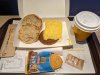
1) So I just went to McDonalds for breakfast on the second morning, because there was one right outside the hotel building. HK$40. Even this was bad. I mean, look at it! It looks like one I took out of the bin. I didn't take it apart either, that's how it came in the box. Just rubbish!

PXL_20250522_225145333.MP.jpg


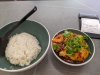
2) Lunch, HK$52. The worst yet. It's dumplings with quail eggs. I'd already drunk the coffee by the time the food arrived, and I just looked at it and thought "seriously?". It didn't even taste good; in fact it didn't really taste of much at all, and the eggs were all rubbery. I had to go to another restaurant straight after to get something else to eat which wasn't a tiny snack.

PXL_20250523_040553098.jpg


3) Second attempt at lunch. HK$58. Basically I'd just spent HK$110 on lunch. I forget what this actually was called, but it was some sort of chicken dish. It turned out to be cold rather than hot, but it was better than anything else I'd yet had in Hong Kong. Gets a fairly solid pass.

PXL_20250523_042007435.jpg


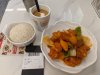
4) Finally I got a meal that was good. Sweet and sour pork for dinner - but it cost HK$93 which is about NZ$20. That's more than exactly the same thing costs as a takeaway in New Zealand!! And the staff were really unfriendly.

PXL_20250523_103545196.jpg
 

Attachments

  • PXL_20250522_225145333.MP.jpg
    PXL_20250522_225145333.MP.jpg
    134.6 KB · Views: 86
  • PXL_20250523_040553098.jpg
    PXL_20250523_040553098.jpg
    156.8 KB · Views: 87
  • PXL_20250523_042007435.jpg
    PXL_20250523_042007435.jpg
    119.9 KB · Views: 87
  • PXL_20250523_103545196.jpg
    PXL_20250523_103545196.jpg
    110.8 KB · Views: 88
Day Three


1) Breakfast, HK$48. Not bad, but extremely average. Wouldn't eat this again unless I had no choice.

PXL_20250523_230903430.jpg


2) Lunch, HK$50. Fried rice, basically. Better value (i.e. amount of food), was okay to eat (second best after the sweet and sour pork last night), the coffee was better than any of the others so far. Still not a great meal though.

PXL_20250524_044834793.jpg


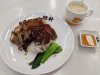
3) My first actually good meal in Hong Kong, at the Mei Hin Roast Goose Restaurant, HK$95. Roast goose on top and BBQ pork at the back. Coffee was fine. They do love just having meat on top of plain white rice as meals though.

PXL_20250524_104822801.jpg
 

Attachments

  • PXL_20250523_230903430.jpg
    PXL_20250523_230903430.jpg
    154.1 KB · Views: 85
  • PXL_20250524_044834793.jpg
    PXL_20250524_044834793.jpg
    168.9 KB · Views: 96
  • PXL_20250524_104822801.jpg
    PXL_20250524_104822801.jpg
    102.9 KB · Views: 90
Day Four


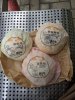
1) Breakfast was just these steamed buns I bought at a shop in a metro station for HK$9 each - the cheapest meal I had and actually better than most of the others.

PXL_20250525_011540043.jpg


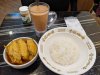
2) Lunch today was a good one, HK$54, curried potato and chicken wings. It was really good. I had to have milk tea because they didn't have coffee but that's fine.

PXL_20250525_060103472.jpg


3) Dinner back at the Mei Hin Roast Goose Restaurant, the only place I went to twice. It's sweet and sour pork, but paradoxically was not as good as the sweet and sour pork I had at the other restaurant, although the staff were much nicer which is important as well. However it cost HK$120 in total - HK$88 for the pork, HK$12 for the rice, and HK$20 for the coffee - which is about NZ$25 and the most expensive meal I had.

PXL_20250525_103650363.jpg
 

Attachments

  • PXL_20250525_011540043.jpg
    PXL_20250525_011540043.jpg
    116.7 KB · Views: 82
  • PXL_20250525_060103472.jpg
    PXL_20250525_060103472.jpg
    149.5 KB · Views: 92
  • PXL_20250525_103650363.jpg
    PXL_20250525_103650363.jpg
    125.4 KB · Views: 85
Day Five


Last meal in Hong Kong, at the train station on my way to China. Pork chop, eggs and corn, HK$49. It was fine - not bad, not great. The little bun was really good. The coffee was better than at any other place in Hong Kong.

PXL_20250525_232945555.jpg
 

Attachments

  • PXL_20250525_232945555.jpg
    PXL_20250525_232945555.jpg
    151 KB · Views: 93
Then I went to the Hong Kong Wetland Park. This park doesn't open until 10am which is far too late, but there's not much can be done about that. It took about forty minutes to get there, with a couple of metro rides and then a bus. There was an "extreme heat" warning sign there.

Did this place have a tomistoma and a collection of smaller wetland species along with the saltwater crocodile in a zoo-like building at some point?
 
Did this place have a tomistoma and a collection of smaller wetland species along with the saltwater crocodile in a zoo-like building at some point?
I don't know about the Tomistoma, but it did have a collection of smaller tanks. However the whole indoor area was being renovated when I was there so none of that was viewable.
 
I don't know about the Tomistoma, but it did have a collection of smaller tanks. However the whole indoor area was being renovated when I was there so none of that was viewable.

I just looked at the gallery and there are some pictures of a tomistoma in there.
 
Back to China!


I never thought it would ever be so easy for me to enter China!


Recapping my visa situation for China: typically when a New Zealander wanted to go to China they would have to apply for a visa in advance. This was also the case for most people from most countries, but in the case of New Zealanders we couldn't do it while travelling, we could only do it in New Zealand. The visa had to be applied for at an embassy within New Zealand, and there were all sorts of forms to fill out and documentation to provide, and it was a major hassle. It wasn't actually difficult as such, just time-consuming, and it wasn't exactly cheap either.

Then during 2024 China suddenly added New Zealand to their new list of countries from which citizens could enter China visa-free for 15 days. This was good news, but better was when early this year they increased that time to 30 days and expanded the allowed entry points from just certain airports to all sea and land borders.

When I had left China to go to Japan I had already decided to return there after Taiwan, so this just made everything much easier.

I didn't actually know how this visa-free entry would work in practice because it was all new. In theory, according to what the embassies were putting out, you just needed a passport and an exit ticket but having had experience with applying for and extending Chinese visas I didn't think it would be that easy. Typically they wanted everything in detail - travel plans, hotel reservations, addresses, everything.

To start with, at least, I had bought a train ticket from Hong Kong to Shenzhen in China, booked the first hotel in China (in the city of Guangzhou), and bought a flight from Chengdu to Bangkok. The basics were covered there, and the good thing was that New Zealanders can get in and out of Hong Kong easily so I figured if things weren't done right and I wasn't allowed into China I could easily just get a train back into Hong Kong and sort it out - I wouldn't be stuck at an airport trying to figure out what to do.


On the morning I left Hong Kong, everything went as smoothly as it could possibly go. At the Chinese border in Shenzhen I filled out a paper immigration form - the sort you might fill out on a plane with your arrival method (i.e. train number in this case), exit flight number, hotel address, that sort of thing - went to the queue at passport control, they scanned the passport, stamped it, and I walked on through. No questions, no proof required of onward travel, nothing. I couldn't believe it.

You can get a train directly from Hong Kong to Guangzhou but as I hadn't known quite how the immigration would work or how long it would take I had only got a ticket as far as Shenzhen. After getting into China I bought a ticket from the station counter onwards to Guangzhou (which is in the province of Guangdong).

Not having a visa in the passport did cause some minor issues at hotels later, especially because this entry stamp was on the page facing my expired visa (from the start of this trip). Hotels are required to record all the immigration details of foreign guests, and at the first hotel in Guangzhou the guy at the reception pointed out that my visa had expired. I said that was an old visa and the little stamp on the other page was what he needed, but he took some convincing. In another hotel in Chengdu they were also initially confused and had to consult their list of countries which don't need visas.


I had decided to start in Guangzhou simply because it is easy to get there from Hong Kong, and of course it is where the Chimelong Safari Park is. This is one of the more well-known Chinese zoos, widely regarded as "the best in China", and I wanted to see it for myself.

I'd come up with various options for my plan after Guangzhou.

A return to Fanjingshan in Guizhou was a definite. I went there earlier in the year but the mountain had been closed - literally the day before I arrived - due to snow so I never got to have my pointless search for Guizhou Snubnose Monkeys. I wanted to do that.

One idea which I had to discard (for now) was to see Brown Eared Pheasants. There is a well-known site for these birds at Xuanzhong Monastery in Shanxi, which is a province in the north of China. To get there you take a train to Taiyuan, then a bus to the village of Jiaocheng where you can stay. From there is about 5km to the monastery, which you can either walk or taxi. The pheasants are basically guaranteed there because they are habituated to people - however it seems they entirely disappear from May to late June for breeding, coming back with chicks in tow. And late May to mid-June was right when I was back in China!

Another idea was to go to Emei Feng in Fujian for Cabot's Tragopan. I'd run out of time to go there on my first run through China on this trip, so figured I could go there on this second run. I discarded this idea as well just because it seemed a bit complicated and would eat into the time I wanted for the other places I was visiting.

The third idea was one which I contemplated doing instead of Fanjingshan and the other places I'd already decided on. While I was in Guangdong (and then everywhere else in China) all the trains were playing long adverts for the Xining to Lhasa train. This is the train from which Chiru can be seen as they migrate across the Tibetan Plateau. I checked the season and it was right now! But sadly foreigners still need a Tibet permit which isn't a "here you go" affair across the counter but something which takes some time and you need to know dates and have a proper plan, so I wouldn't have been able to swing it in my limited time. But I started reading about wildlife in Qinghai (the province that Xining is in) and now I need to go there. That will have to be a later trip, which I can then combine with Tibet (and also go to Shanxi for those Brown Eared Pheasants!).

So I settled on Guangzhou, then Fanjingshan, then to Sichuan where I would make an attempt at getting into Jiuzhaigou. I was going to try for Balang Shan (a mountain site for pheasants) but then swapped it for a return to Labahe which I had visited in 2013 (this is the Red Panda site for those with long memories of my travel threads).
 
Guangzhou


In Guangzhou I was staying at a place called the 100 Hotel. It's a bit of a dump, but it was only about NZ$17 which felt so good after all those exorbitant prices (for me) in Japan and Taiwan. It was actually a fairly similar room to the one in Hong Kong but less than half the cost. However I did wonder just how does a room with no windows get so many mosquitoes inside it?! One of the tags for frequently-used phrases for the property on the booking site was "too many mosquitoes" which I had thought was amusing, until I was there and did indeed think "too many mosquitoes!" Maybe the 100 in the name refers to them?

Interestingly, the hotels in this part of China have the same "no disposable items" policy as in Taiwan, so no bathroom amenities like toothbrushes are provided in the rooms.


Haizhu Lake Park

I had looked on eBird for nearby bird sites for my first day in Guangzhou, and chose this one. It is right at a metro station so it is easy to get directly there without using buses.

Coming up from the subway I arrived at a sort of lake-side plaza, covered in people relaxing and hanging out. There were paths to either side, one along the lakeside and one a bridge over the lake, but both were closed with barriers and guards. It seemed that enjoying the lake was restricted to this one spot. I scanned the lake and its surrounds with my binoculars and saw only a Magpie-Robin, a Chinese Blackbird, and a couple of Spotted Doves. There were no waterfowl, or really anything else.

I knew the lake was quite big, so I left here and walked along the road a bit. After a minute or two I came to an area of trees, the ground covered in strappy Clivia-type plants with rough dirt foot tracks winding through them. It looked like I might be able to get through the lake from here, so I cut through the trees and came upon the path again. I could see the guard at his barrier back in that direction, but there were other people wandering along the path I was on. I really don't know the purpose of those guards because it turned out you can easily get to the paths on the other side of them.

Honestly it seems like the park is a half-abandoned site. There was a shabby sign for "Haizhu Wetland Park" but most of the paths were blocked off, some with actual locked fences, and there was rubbish everywhere. There were a couple of guys fishing at the point the path ended (or rather, where the path was made to end by a fence). There were no birds anywhere.

I looked at my map again, then walked for quite a long way around the road to where it looked like there might be better access to the lake. The gate there was locked with a big padlocked chain. There was a lady on a bike inside looking confused as to how to exit. As we were both looking at the chained gate wondering what to do, a car came out from a sort of temple off to the side, inside the fence. They unlocked their own gate, drove out, then unlocked the chain on the main gate so they could exit. The lady on the bike left, and I asked if I could go in through here to which they said yes. There were a few more people inside by the lake, so they had got in there from somewhere.

I walked along the path skirting the lake, not seeing much. There were some of the commonest birds dotted about - Black-crowned Night Heron, Little Egret, Grey Heron, Crested Mynah, Chinese Bulbul, that sort of thing. The most interesting bird was a Greater Coucal which is also common but not as commonly seen as the others. The path came to an end at a locked gate. I walked back. The gate I'd come through was locked again! I can't say I was overly surprised.

I pondered what to do. This was such a confusing place. There was only one path and it had a locked gate at either end. There was a little bridge as well, but the other side of that was also blocked by a rusty metal wall. It was water one side, fence the other side. This wasn't a little fence either, it was a six-foot fence. If anyone's seen the Taken movies, whenever Liam Neeson's character has to climb over a fence they get a stuntman to do it because Liam Neeson is old like me, and then they use about sixty cuts in the scene so you can't tell what's happening. Unfortunately I'd left my stuntman in my other pants, so I had to climb over the fence by myself. Just one of the many possible occasions where a person might wish they were Liam Neeson.

After that I just went back round to the metro station and back to the hotel.


The next two days were zoo days, visiting the Guangzhou Zoo and the Chimelong Safari Park, and I'll cover them together in the next post. I saw a Great Barbet at the zoo though, at its nest hole right outside the Giant Panda house. I'll put the photos here so that there are at least some in this post!

full


full


South China Botanical Gardens

This was my final day in Guangzhou before I left for Fanjingshan.

These gardens can be reached via a metro station called "Botanic Garden". They are a good bird site in the city, but of course coming into mid-summer was not the best time of year to be looking for them.

It wasn't exactly hot today, more like very warm, certainly nothing like Hong Kong had been, but it was so humid that it was really uncomfortable. It's like you feel like you're sweating but you're not and I had a horrible prickly sensation all over any exposed skin, like my arms were crawling with electrified ants. That itchy prick you get from a mosquito bite, it was like that all over my arms. I kept looking down to check it wasn't mosquitoes (and sometimes it was) but mostly it was nothing. It was driving me nuts.

The gardens are quite large and, like any good botanical gardens should be, are a bit of a mix of manicured beds, "wild" forest, mown lawns, rank lawns, pretty ponds, overgrown lakes. There were relatively few birds around - I only saw eighteen species - with the best ones being Masked Laughing Thrushes, a Red-billed Blue Magpie, a group of Grey Treepies, Hair-crested Drongos, and a Great Barbet.

It had been drizzling a bit, but at around noon it suddenly started pouring down, so I packed it in and went back to the hotel.


Bird-wise, I had fared little better in Guangzhou than I had in Hong Kong and it wasn't a great start to being back in China. But things would turn around nicely after this - once I got to some mountains - and I had a great time at all the following places I went in China.
 
Guangzhou zoo visits


I visited two zoos while in Guangzhou - Guangzhou Zoo itself, and the Chimelong Safari Park - and one aquarium (Ocean World, which is situated inside Guangzhou Zoo).


Ocean World is a pretty good aquarium, although as usual in east Asian aquariums the marine mammals are very short on space. Most of the tanks for fish are fine, although some of those are a bit small as well. The signage is mostly good, but there were always some unsigned species in the tanks as well and, oddly, the biggest tank in the Aquarium did not appear to have any signage at all.

There are at least four species of mammals: Beluga, Harbour Seals, sealions and dolphins (neither of the latter seen). When I arrived there was a show about to start with the "fur seals", which I think was just confusion over English names because online sources say they have sealions (South American and Californian are both mentioned in articles). The dolphins could only be seen during shows, and online sources say they are Bottlenose Dolphins.

full


From reading some older articles it seems that with the renovation - the Aquarium just reopened last year after a five-year rebuild - they have reversed the route around the Aquarium. Now your visit begins with a shark tank but it is not the big shark tank they used to have (which is now the tank you pass through the middle of on an escalator as you exit the building, and which has no sharks in it).

The shark tank they have now is fairly small, and the sharks look somewhat cramped in there. On the wall nearby are three small tanks, one of which houses Sharksuckers, which have a ridged "sucking" disc on the top of the head with which they affix themselves to sharks and get free rides all around the ocean. Free-loaders, basically.

full


full


From here on the Aquarium follows a fairly standard pattern, with a mix of marine and freshwater tropical fish, and of course a room full of jellyfish tanks with rotating light colours. It does make one wonder who first started the "jellyfish at the disco" trend. Something different, and therefore more interesting, is an area dedicated to the fish of the Pearl River system in southern China.

full


full

Emperor Snakehead (Channa maruloides), for which the sign gave the awesome English name "Black Demon God Thunder Dragon". Also the name of my next band.


I have put a review of Ocean World here:
Ocean World (Guangzhou): review and species list, May 2025


...............................................................


The two zoos I visited while in the city were the Guangzhou Zoo and the Chimelong Safari Park. Both are large zoos and both are easy to get to on public transport (both have their own metro stations), but otherwise they are very different beasts.

Zoo comparisons are obviously subjective, but Guangzhou Zoo was a much better zoo for me than Chimelong Safari Park. Superficially the latter looks more impressive, and it covers a significantly larger area, but it is basically a theme park and the animals come across as just being show-items as a part of the theme. There is also a huge difference in ticket price - Guangzhou Zoo costs just 20 Yuan, contrasting quite markedly with the Chimelong Safari Park which costs 300 Yuan! I didn't really register how much this was until I was on the train on my way there and by then I had already committed to going - it came out at NZ$76!

Both zoos are very leafy and pleasant, basically being set in a subtropical rainforest setting, and most enclosures have a lot of greenery in them. The Guangzhou Zoo is divided into broad taxonomic areas - birds, hooved animals, carnivores, primates, reptiles - while Chimelong Safari Park is a bit more random with the appearance of being organised.

While many of the enclosures at Guangzhou Zoo could have been larger, most were not too small. It's really quite a solid zoo, and is definitely one of the best Chinese zoos around.

Chimelong Safari Park, on the other hand, is often regarded as the best zoo in China but I found it to be superficial, annoying to navigate, and most importantly the over-riding impression of animals just being used as ornaments really soured me on the place. The enclosures overall were generally good - very much better than in most (any?) other Chinese zoos - but the zoo really does have a very ordinary species line-up with a few exceptions. There are a lot of your standard ABC mammals, and then birds are basically just used as ornamentation.

What I really hated here was the "parrots on sticks" situation. You literally can't go more than five minutes without coming across animals confined to a couple of bare branches being used as photo props. Not just parrots either - I saw hornbills, pelicans, spoonbills, ibis, peacocks, owls, toucans, iguanas, sloths, and more. There are dozens of them.

full


And the sheer number of pinioned birds here is crazy. It must literally be hundreds of birds. There was even an island with pinioned or wing-clipped Chinese Crested Ibis! Many of the individual birds seem to have been "recently" pinioned as adults. It was tragic seeing birds - especially noticeable in the big flock of Scarlet Ibis in the drive-through area - trying to take off and just flopping helplessly onto their belly on the ground because they were missing an entire half of one wing.


I have put a review of Guangzhou Zoo here:
Guangzhou Zoo: review and species list, May 2025 [Guangzhou Zoological Garden]

And a review of the Chimelong Safari Park here: Chimelong Safari Park: review and species list May 2025 [Chimelong Safari Park]


Some photos from Guangzhou Zoo:

full

There are some really nice reptile enclosures here.

full

Sleepy Fennec Fox

full

I forget what animal is in this enclosure...


Some photos from Chimelong Safari Park:

full


full


full
 
Fanjingshan - day one


Fanjingshan is a mountain in the province of Guizhou, about halfway between Guangzhou and Chengdu. It is the only home of the Guizhou Snub-nosed Monkey, which is one of the least-likely monkeys for anyone to be able see in the wild. Only part of the mountain is accessible to visitors, that access is by either a cable-car line or a single staircased trail, and there is only one troop of these monkeys in the tourist area. The chances of the monkeys being in the same place as you are pretty remote, especially when you see how rugged the surroundings are. Still, if you don't try you can't succeed! Even a small chance is better than not trying at all.

I've been to Fanjingshan twice previously. The first time was in 2013 and the second time was in January this year. On that most recent visit I didn't even get onto the mountain because it had been closed due to snow the day before I got there! You can re-read about that in this post if you like: Chlidonias Goes To Asia, part seven: 2024-2025


Leaving Guangzhou, at the metro station by the hotel on my way to the Guangzhou South Railway Station, I had to open my pack for security to check my knife (which they sealed into a little envelope and put an "inspected" sticker on it - which didn't stop every other station's security wanting it reopened for inspection) and my deodorant (fortunately allowed, unlike previously in China when it was confiscated for being too dangerous). Then for the first time they wanted to check my contact lens solution (because it was liquid and water needs to be checked to make sure it's not ... something other than water - I'm not sure what they think it might be).

The trains show the inside and outside temperatures (inside is usually about 24 degrees Celsius). All the way between Hong Kong and Tongren (the nearest town to Fanjingshan with a station) the outside temperatures have been around 29 and 30 degrees.

I stayed overnight in Tongren at a cheap "hotel", another one of those places where it is really a grotty high-rise apartment building with some rooms turned into a "hotel". It wasn't that bad, but not the sort of place you'd be wanting to stay in for more than one night.

I went over to the bus station when I arrived to check the morning departure times for Fanjingshan but they had already closed for the night.

In the morning I looked out the window - I was on the 19th floor and the bus station was across the street - and there were some people standing around outside the station. It was 6.50am so I figured it must be opening at 7am. The last time I was here the first bus wasn't until 9.20am so I left my bags in my room because I wasn't expecting to be leaving immediately, and went over to check on times. When I got there I found several vans outside the station all going to Fanjingshan! Today was a Sunday, so maybe on the weekdays the options are fewer, or maybe it is because last time I went in winter so there were fewer passengers.

All the vans were leaving right then, and the next bus was at 8.10am so that's the one I caught. This was an actual bus too, not a van. Last time I went it had just been a car. I would be staying back at the Xui Shui Villa like I did in January. I had messaged the owner on WeChat to make sure she had a room, and at the bus station I showed the lady at the counter the hotel's business card which has the address on it to make sure the bus was going by this route (there are two entrances to Fanjingshan, and I couldn't remember which one I had to go to [it was the East Gate]). She said it did. Once inside the station I found the bus, and asked the lady collecting the tickets if the bus went past the hotel, and she said it did. When the driver arrived I checked with him, and he said it did. So I had three different people telling me this bus went past this hotel. Because I was in China I was pretty confident this meant that I was on the wrong bus but I left it to play out, and surprisingly it was the right bus and I arrived without a hitch!


As I had hoped, the temperature at Fanjingshan village was much nicer, being at a higher altitude, not hot, a bit drizzly but that was fine with me. This is still my favourite place I've stayed in China. I genuinely could just hang out here for a month. Spend some days doing nothing, some just walking along the river looking for birds, some going up the mountain. So many birds could be seen just by sitting outside the room looking at the trees on the other side of the river. There are no mosquitoes here either, which is unusual.

From the hotel I walked to the tourist centre which is 2km up the road, following the river. The river was much fuller than in winter - it was now the rainy season - and the trees were in full leaf. Although I could hear lots of birds all the leaves made it much more difficult seeing them than in winter!

The sidewalk along the "main" road is made of tiles which were very slippery in the rain, and the same at the tourist area where much of it was tiled. I slipped multiple times while walking, luckily without actually falling over, and just on this first day (which was drizzling with intermittent downpours) I saw three other people slip on stairs, one of whom fell on his back on the edge of the mountain staircase and probably hurt himself quite badly. I could see why they would close the staircase in the winter when it would be covered in ice or snow.

In the post about my January visit I had talked about how it appeared that the whole entrance had been moved to a new location, but I was wrong. In fact they have simply built a new tourist building (where you buy the tickets) away from the entrance and put in a sort of plaza, so it all looks different. When I was there in 2013 the ticket building was right at the entrance which is why I was confused. Now, from the new ticket building you walk across to the "entrance to the scenic area" where you go through a ticket-check and then walk a short way up another road to where the vans leave from (up to the cable-car). It was at this point that I recognised the big entry gates which the vans go through, and everything became clear.

Access on the mountain is firstly on a 9.5km road taken by the park shuttles up to the lower cable-car station at 850 metres altitude, then you can choose to either walk up the staircase which is 6.5km of almost-continuous stairs or take the cable-car to the upper station at 2023 metres altitude. There are more stairs after that (8000 steps in total apparently) to the top at 2572 metres.

It was around midday when I got to the tourist centre, so I had decided to walk up the staircase but take the cable-car down. The altitude range of the snub-nosed monkeys basically lies right between the two cable-car stations, so taking the staircase seems like the "best" way of approaching things.

The lady at the ticket counter said it would be very foggy at the top and was I sure I wanted to go up. I wasn't there for the view, so I said yes.

The entry ticket is 100 Yuan, then 48 Yuan (return) for the shuttle bus to the lower cable-car station, plus 10 Yuan "insurance". The cable-car is 70 Yuan each way. Surprisingly the prices aren't much different from when I was here in 2013. Then the entrance fee was 90 Yuan and the shuttle was 20 Yuan (so 40 return), but the cable-car was actually more expensive at 90 Yuan each way.

If you need rescuing from the staircase because you aren't fit enough, it will cost you 600 Yuan.


There isn't actually much to say about my visit to the mountain today. I took about four hours walking up, but it was too foggy to see most of the birds well enough for ID. I've only got four species noted down as being seen there (out of the day's total of 17 species): Black-headed Sibia, Buffy Laughing Thrush, Yellow-browed Tit and Green-backed Tit, as well as a group of Tibetan Macaques.

The Buffy Laughing Thrushes were a lifer, and are one of the more attractive species in the group. Laughing thrushes are a varied bunch. Some are plain brown, some are intricately patterned, some are brightly-coloured. Most of them are skulkers of the undergrowth. I don't know how many there are in total, but I've seen 37 species in the wild and am always wanting to see more.

full

Buffy Laughing Thrush. This is a photo I took on one of the other days - because of the fog inside the forest I didn't get any bird photos today.


full

This one is a White-browed Laughing Thrush, a more widespread species, which I photographed along the road back to the hotel on one of the days.


In the evening I found a giant huntsman spider on the wall in my room, right by the bed. I weighed up whether I should stay or go back to New Zealand immediately. The only potential spider-containing object in the room was a small glass which likely wouldn't even be big enough to fit all the legs in but it would have to do. I had to move the bedside table slightly to get closer, and immediately the spider zipped across the wall and disappeared behind the headboard of the bed. This was much worse! I couldn't move the bed though - well I mean I could have moved it but it was a huge bed and the spider would have definitely outsmarted me and then come looking for revenge in the night - so I just had to spend the rest of my stay knowing that my end was almost certainly nigh.
 
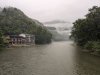
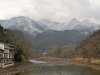
The hotel where I stayed - compare the river and surroundings in June, in the upper photo, with how it looked in January in the second photo.

PXL_20250601_023034302.jpg PXL_20250109_012535424.jpg
 

Attachments

  • PXL_20250601_023034302.jpg
    PXL_20250601_023034302.jpg
    156.8 KB · Views: 61
  • PXL_20250109_012535424.jpg
    PXL_20250109_012535424.jpg
    159.2 KB · Views: 55
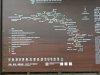
Route map of the access road etc to the top; and a sign about monkeys - though it is referring to the Tibetan Macaques and not the Snub- noses.

PXL_20250601_034820391.jpg PXL_20250601_083204567.jpg
 

Attachments

  • PXL_20250601_034820391.jpg
    PXL_20250601_034820391.jpg
    153.5 KB · Views: 60
  • PXL_20250601_083204567.jpg
    PXL_20250601_083204567.jpg
    220.9 KB · Views: 60
You do leave us in suspense. I will have to keep refreshing this page all day to see how the battle with the spider went and if you have survived.

The spider ate him in the night and assumed his identity online. Expect to see many fewer posts about the logistics of bus routes to birding sites and many more posts about the best places to catch flies in Asia.
 
Here are some photos of various invertebrates I found on the mountain, just to use up the last post on this page.


In these two first photos of the stag beetle, it looks like it is perched on random lumps of rubble - but those are actually part of the steps going up the mountain. They are a bit erratic, as steps go.

full


full


full


full


The one below is the web of an Argiope spider. These spiders spin an X into their web and position themselves on it, with the body in the centre and the legs spread along the X. It's probably a hiding strategy. In this photo the spider is behind the X. I couldn't get my phone to focus effectively on the spiders if taken from the other side - it would just focus on whatever was behind the web instead.

full


The spider itself (well, one of the spiders - obviously not the same individual as the one in the photo above because its X is not as impressive). There were quite a lot of them in the little palm trees down by the entrance. I didn't put this one in the gallery because it's out of focus.

PXL_20250603_081107817.jpg
 

Attachments

  • PXL_20250603_081107817.jpg
    PXL_20250603_081107817.jpg
    101.6 KB · Views: 49
Last edited:
Back
Top