Once Upon a Kingdom: the Speculative Kobe Animal Kingdom Thread

PossumRoach

Well-Known Member
5+ year member
Introduction

The park that we all know as Kobe Animal Kingdom initially started as Kobe Kachouen in 2006 on the artificial Port Island in, well, Kobe. It was one of the few flower-and-bird parks founded by the horticulturist Kamo Mototeru. After seven years of operation, the managing company of the park filed for bankruptcy in 2013. In 2014 the management rights of the park was later transferred to Animal Escort Services (AES), a company which managed several animal exhibitions, including Nasu Animal Kingdom. Under the leadership of the late Sato Tetsuya (the CEO of AES) the park changed its name to its current one, and started to shift its focus to mammals starting with capybaras, red kangaroos, and domestic animals. The park had an expansion in the form of the Outside Park in 2015. Despite its growing focus on mammals, the park still has many exhibits dedicated to birds and plants throughout its grounds.


A commercial of the Kachouen posted by the Kachouen’s own YouTube account, which acts as a great archive of the park. The account uploaded its last videos around the time when the management of the Kachouen was given to AES.


Kobe Animal Kingdom is an interesting facility to follow. Its commercial nature, which could be felt through its gift shop and social media, gives the impression that it isn’t much different than leisure facilities such as Adventure world or Tobu Zoo. The opportunity to interact with animals doesn't help with changing that impression either. However, the kingdom (as fans call it) and its sister location fulfill more roles of a modern zoo (other than just breeding ABC species) than most other privately run JAZA members. Despite this, the park still has some problems such as enclosures that shouldn’t take place at a modern zoo. Despite these issues, the park has proven that it has the potential to be one of the best zoos in Japan, which could be seen with its recent exhibits such as Pantanal, Squirrel Forest and Otter Sanctuary. This potential is why I follow this zoo in my free time and finally decided to make a speculation thread about it, despite only having visited it in 2016.

In this thread I will first lay out the “cornered” plan, which is already completed. The cornered plan comes with a set of rules to ensure that the plan doesn’t go too crazy, along with acting as a fun challenge. These rules are:

1) The park cannot be expanded. It is quite literally cornered.

2) I will try to avoid destroying buildings and adding new ones over old buildings. If I do, I need to come up with a reason that is satisfactory (at least satisfactory to myself.)

3) New or returning species to Japan can only be added if they aren’t subjected to biosecurity laws and CITES Appendix I. Rare species remaining in Japan affected by these laws can be added only if I can come up with a good explanation for the acquisition of the species (which will be tough for species that are considered to be dead-end.) Since the Kingdom parks did obtain animals from brokers in the past, the private trade won’t be out of the question for taxa not affected by aforementioned regulations.

4) The domestics will be staying. I know this will rustle the jimmies of people who think that zoos should only act as a gene bank with a savior-complex for wild animals, but cats and dogs do play a big role in the park’s history.


Following the “cornered” plan, I will lay out the “supernova” plan (which I admit still hadn’t started working on yet). The “supernova” plan is a plan where I get to be a little more flexible, with amendments done to the first few rules. These are:

1) I can expand the park and obtain land that I assume is unused.

2) I can bring in rarities and oddities as if the park has enough money to deal with paperwork and quarantine of animals (hence the supernova), or has to deal with a lot of customs seizures. However I will only be using this to add species that are either well-established in other regions of the world, species that have been able to be bred consecutively in captivity, or species that are otherwise getting phased out due to mismanagement or lack of interest. I won’t be adding species that are notoriously difficult to care for such as, for example, saigas and hoatzin. Species that don’t have a legal captive population will also not be included.


Before I start, I do feel like I should put a disclaimer that I am not experienced in curating zoological collections and that personal bias does play a role in the selection of species that are being added and phased out. This is a thread written for my enjoyment, and isn’t to be taken at face value. I will lay out the plan in the following order:

Indoor Park:

  • Contact Animals
  • Wild Night Animals
  • Tropical Pool
  • Big Bill
  • African Wetland
  • Asian Forest
  • Tropical Forest
  • Tropical Wetland
  • Rocky Valley (and the tiger enclosure)

Outdoor Park:

  • Pantanal
  • Otter Sanctuary
  • Squirrel forest
  • Aqua Valley
  • Domestics and Co.

Finally, I want to thank @Veno for giving me critique alongside suggestions for what can be made for Kobe Animal Kingdom, coming up with ideas could have missed out on. I also would like to thank Chlidonias, for uploading pictures of the park itself, which was an invaluable resource for seeing the scaling of the enclosures, especially when visitor videos fail to show the complete enclosures and visitor area. His review and species list is also a great reference to read along with the thread for those who are not familiar with the kingdom.
 
Indoor Park

Contact Animals/North Area

This section of the kingdom could be considered as the entrance rotunda of the park, where guests step in right after paying for admission by the northern entrance. This area is mostly known for giving guests a chance to interact with domestic animals such as dogs and cats. A random and ever-changing assortment of wild species, including animals getting reared by keepers, is also displayed in this hall.

Many people will argue that a dog and cat petting area doesn’t belong in a zoo. However, the encounter with pets could mean a lot for people who can’t keep a pet due to finances, lack of time, or apartment rules. Which is why the petting areas for the domestics will be staying, as mentioned in the rules. The dog and cat petting area is fine, or at least I remember it being so from my visit many years ago. Part of the room was made to be only accessible to cats as a retreat and the kingdom does have an outdoor pen for the dogs by the northern entrance. As long as the park still offers break times for the animals from the guests, there isn’t any pressure to change this area. The gnawing critters could use some love though. The rabbits could be given digging boxes as a form of enrichment. The guinea pigs, however, might need more changes. Guinea pigs are usually kept in Japanese zoos for the purpose of guest interaction, which is why they end up being kept in small elevated pens with barely any hiding space. A fraction of the rabbit walk-through could be fenced off to act as an enclosure for half the guinea pig herd which are on their “day off” while the other half of the herd gets petted by guests. There is also an eclectus parrot named Scoopy who is currently kept on a perch enclosure in this area. Scoopy could get transferred to the Tropical Forest area and interact with other parrots instead of being kept alone.

Since the north area itself doesn’t have a general theme, the kingdom can be a bit more flexible when choosing species to replace the animals in the other enclosures with species that are smaller. With odd species in the area, the visitors can be introduced to the spectrum of the kingdom Animalia ranging from the familiar house pets to the aforementioned oddities.

The fennec/former pudu enclosure could be used to house a smaller terrestrial species. With an enclosure cover and some plants that act as an undergrowth for the exhibit, this display could be used for black and rufous elephant shrews. While this species is not found in Japan, they aren’t subjected to any bio security restrictions, which is why I can see Kobe Animal Kingdom obtaining a breeding pair of black and rufous elephant shrews from Europe, where it is a rising star, to establish a founding pair of this species in Japan. This Afrothere is likely to get the attention of guests with its twitching tengu-like nose.

upload_2025-7-14_14-10-55.png
Sengis are likely to grab the public's attention with their alien looks. Perhaps they can inspire artists and storytellers come up with a new fantasy creature. credit: @DesertTortoise

The hyrax and meerkat box already got emptied by the time I started my first draft. If that box is to be filled with live animals, then the best option is to add a mixed species reptile enclosure, which would help spice up the mammal dominant area of the park. The animals I have in mind, blue-tongued skink and frill-necked lizard, aren’t the craziest choices in terms of rarity, but being a mixed species enclosure will impress the guests with their harmony. Guests will also spend more time by the exhibit, trying to find both species before checking another enclosure.

upload_2025-7-14_13-52-42.png
A mix species reptile enclosure not only shows guests the diversity within a certain habitat but it can also show the diversity of reptiles as well.
credit: @OskarGC


The cactus corner was already great as a pure botanical display. Which is why the park could remove the meerkats and bring them elsewhere in the park, giving the plants their spotlight back and removing the exhibit barriers completely.

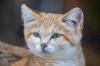
Coming up with a idea for the sand cat was a difficult task. The enclosure seems to be small for the species and the park keeps multiple individuals, which means that there’s one individual kept in a holding area which might be smaller than the exhibit itself. However, sand cats are a poster species of Kobe Animal Kingdom, making the removal of this species quite controversial amongst not just Japanese zoo fans, but also cat fans who enjoy this wild beast’s traits that make it look like a house cat.

upload_2025-7-14_13-59-26.png
The kingdom has given sand cats the nickname “Desert Angels” which definitely played a big role in the public falling in love with these small hunters. credit: @DannySG

In the end, I made the difficult decision to phase this species out. The first reason is the placement of this enclosure makes it difficult to expand the display. The exhibit cannot expand parallel to the wall due to being placed next to the door that leads to the water lilies. While it can expand towards the visitor path, it could result in congestion on the pathway towards the African Wetland aviary. The second reason is that this species is a poster species in Kobe Animal Kingdom’s sister location in Nasu as well. In my opinion the two parks seem to have similar identities in terms of species and exhibits. I think the Kobe could strive for distinguishing its identity by having two other cat species already under its care be the poster species of the park.

Then what should replace the sand cats? There are many small species that could make good use of a large box enclosure; ferrets, small rodents, small tortoises, snakes, amphibians. In the end I decided to go with an “oddity”: the naked mole-rat. However I want to take a slightly different approach than the traditional mole-rat display, which usually relies on plastic tubes, wood shavings, and toilet paper. I want the kingdom to try using a husbandry technique inspired by Tama Zoo’s use of dirt and the European technique of having shrew burrows lean against glass. There will still be a tube labyrinth in the exhibit, however, there could be one tube that leads to a narrow tank filled with compressed dirt for the mole-rats to dig through. While it’s unfortunate that the mole-rats wouldn’t be digging three dimensionally, I think that digging two dimensionality is better than not being able to actually dig dirt at all. The dirt tank would take up one window which could be covered by the roller bind on the exhibit to make sure the mole-rats could feel secure while digging. Through the other window people could see the tube labyrinth where the mole rats are transferring food and bedding for their colony. The kingdom could also go for Damaraland mole rats which could be obtained from Saitama Children’s Zoo.

upload_2025-7-14_14-17-4.png
upload_2025-7-14_14-17-51.png
Perhaps the combination of two innovative display techniques could be used to make a innovative display for a popular species that’s otherwise subjected to tubes. credit @lintworm and @Chlidonias .


The last change this area could use is a name change. Contact Animals is a name only applicable to a fraction of the area, that being the domestic animals. Which is why the kingdom could go with a more generalist and ambiguous name like “Animal Promenade” (a name previously used for the south area which is now Rocky Valley).
 

Attachments

  • upload_2025-7-14_13-52-42.png
    upload_2025-7-14_13-52-42.png
    1.5 MB · Views: 128
  • upload_2025-7-14_13-59-26.png
    upload_2025-7-14_13-59-26.png
    1,001.9 KB · Views: 109
  • upload_2025-7-14_14-10-55.png
    upload_2025-7-14_14-10-55.png
    1.7 MB · Views: 127
  • upload_2025-7-14_14-17-4.png
    upload_2025-7-14_14-17-4.png
    1 MB · Views: 115
  • upload_2025-7-14_14-17-51.png
    upload_2025-7-14_14-17-51.png
    1.2 MB · Views: 120
I was surprised by the bold idea of discontinuing the sand cat exhibit. Personally, I’ve never really liked seeing sand cats kept in small, uninviting boxes—but still, if someone asked me whether the Kingdom should phase them out, I’d honestly be very torn.


By the way, in this plan, will the fennec foxes be moved to another area within the Kingdom? Or are they going to be gradually phased out as well?


I really liked the idea of adding black and rufous elephant shrews to the Kingdom. That said, I guess it might depend on how strong the Kingdom’s connections are with European zoos. I heard that at SCZ, one of the curators who had ties with staff from Düsseldorf and Schoenebeck was involved in bringing in gundis and viscachas.
Similarly, I hope the Kingdom will be able to build connections with European zoos as well. It would be great if they could establish some sort of partnership or sister-zoo agreement—not just with Europe, but with zoos in other regions too.
 
Wild Night Animals

“Night of the Flying Squirrel-The World of Nocturnal Animals” (or “Wild Night Animals” as the kingdom calls it in English) was built on what used to be the gift shop and the parakeet walkthrough aviary in the North Area. It’s a fine nocturnal hall, with passable enclosures and a decent species roster including both local and exotic species of varying rarity and conservation status. This area isn’t in a pressing need for changes (except for one) and is quite small for large changes. However, I think it could use some small adjustments.

The kingdom could replace the southern three-banded armadillo (displayed in the same enclosure as sugar gliders) with a western woylie or a pair. While I don’t usually object against intercontinental mixes, I think the individual exhibits in the hall could use some continental accuracy. While their population is not large in Japan, woylies are one of the few Australian mammals remaining in Japanese zoos. This species could charm guests with its small size while the kingdom could participate in the conservation of this species.

upload_2025-7-17_0-22-8.png
Who wouldn’t want to help save such a cute face from extinction? credit: @Astrotom3000

The next addition I would like to try would be an attempt at a mixed species enclosure by adding four-toed hedgehogs to the Senegal galago enclosure. This taxa isn’t considered exciting for some zoo fans due to it being treated as a pet animal rather than a zoo animal. They don’t really appear much in zoos due to their nocturnal behavior. I believe that displaying four-toed hedgehogs in a nocturnal environment alongside an arboreal nocturnal mammal can show visitors some interesting behavior from both species.

upload_2025-7-17_0-21-15.png
Perhaps some visitors to the kingdom will be surprised to find out that there are hedgehogs in Africa as well. credit: @zoogiraffe

Finally, I would work on the owls, starting by removing the barn owl tied by the exit of the exhibit. The removal of this display shouldn’t need much explanation. While the other owls (milky eagle and brown wood owls) might be lucky enough to not be tied down as if they are in an owl cafe, I am under the impression that these enclosures aren’t large nor high enough for the species of owls they contain. While captive owls tend to be sedentary, some believe that this should be challenged and the owls need to fly properly. These boxes just aren’t large for large owl species to be able to move long distances. A smaller critter which could utilize both the horizontal and vertical space these enclosures offer could be a better alternative to these two owl species. Since this area doesn’t have a specific theme either, there are many possible species to choose from. Since the AES does have a history of obtaining animals from the private trade the kingdom could obtain, for example, four-eyed opossums, large-spotted genets, saharan striped polecats or ringtails. The kingdom could also stick to obtaining species such as giant Japanese flying squirrels or night monkeys from JAZA zoos. Or the kingdom could instead continue sticking with owls and keep smaller species like Japanese scops owl or white-faced owls.

upload_2025-7-17_0-21-42.png
The smaller owls could help diversify what is otherwise a mammal-centric area of the kingdom credit: @Green_mamba

By the way, in this plan, will the fennec foxes be moved to another area within the Kingdom? Or are they going to be gradually phased out as well?
I plan on keeping the fennecs and display them in another section of the kingdom.

 

Attachments

  • upload_2025-7-17_0-21-15.png
    upload_2025-7-17_0-21-15.png
    1.1 MB · Views: 102
  • upload_2025-7-17_0-21-42.png
    upload_2025-7-17_0-21-42.png
    998.8 KB · Views: 99
  • upload_2025-7-17_0-22-8.png
    upload_2025-7-17_0-22-8.png
    1.1 MB · Views: 112
Water Lilies (I accidentally called this the Tropical Pool on the introduction)

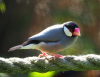
This area acts as a transition between the Northern Area and the shoebill aviary. This area offers visitors to get their feet nibbled by fishes. It is an old remnant of the Kachouen era which focuses on plants, while a great part of it was converted to what we know as the “Big Bill” exhibit that houses shoebills. This area still houses some interesting flora including limited time displays. However, I think that it could use some sound and color. By making the greenhouse further escape proof and adding heavy barriers on the entrance the kingdom can use some small birds such as Java sparrows (ideally from a wild strain without any color morphs), red-whiskered bulbuls, golden-bellied starlings, and some of the crested wood partridges. The latter is already found in the tropical forest exhibit and some animals from the flock could be transferred into this exhibit. All the park would need to do would be adding some feeding stations and some extra wooden props similar to the one used as a hanging stand for the stag-horn fern in Chlidonias’s picture, and the visitors will be set for a birdwatching challenge. The kingdom could invite guests to look for the birds while educating guests about the song bird trade.

upload_2025-7-17_22-47-39.png

I think it’s time that the JAZA gets proactive protecting the wild relatives of one of Japan’s most popular pets. The kingdom could help start this movement. credit: @KevinB

I would remove the fish massage parlor, which could be hazardous in terms of visitor health. The area the tank covers could be instead used as a land area to plant trees and shrubs which the birds could perch on or hide under.

Finally, according to the kingdom’s website, visitors can take a picture with an owl for a certain fee. I would put an end to this activity on welfare grounds. The species that are kept behind the scenes could either be used for the flight show or phased out of the kingdom.
 

Attachments

  • upload_2025-7-17_22-47-39.png
    upload_2025-7-17_22-47-39.png
    924.3 KB · Views: 116
The kingdom could replace the southern three-banded armadillo (displayed in the same enclosure as sugar gliders) with a western woylie or a pair.
The armadillo enclosure is too small for bettongs. It's not a tiny space but bettongs are very active. It wouldn't stop most Japanese zoos from putting them in there of course, but one of the owl enclosures would be more suitable, and then the armadillos retained where they are (because they are kawaii as the girl next to me said when seeing them trotting around.

Water Lilies (I accidentally called this the Tropical Pool on the introduction)
This area is called "Water Lilies" on the map, but the actual signage calls it "Tropical Pool".
 
Big bill

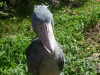
The Big Bill aviary (full name Shoebill Ecological Park Big Bill) is an interesting yet puzzling exhibit. The park has invested in changing a big chunk of the water lily area (part of which was used for the flight show) into an aviary which the climate could be manipulated to mimic the humid season, all in the name of being the first zoo in Asia to breed this charismatic species. What puzzles me however is the fact that this exhibit is a walk-through exhibit with a wide visitor path and, as far as I know, the kingdom has never had an off season where the birds are left alone to spend time together. If I had to change anything about the layout of the exhibit I would first remove or close off the deck area. If you consult this picture of the exhibit Chlidonias uploaded, you can see some visitors and log barriers amongst the plants. This is the deck area that I am referring to, and I think it results in the visitors breaching into what could have been the shoebills’s territory. Speaking of breaching the animal’s territory, until there is an actual breeding success, I would use a belt barrier throughout the entire display rather than just the entrance. The kingdom could destroy the visitor path and shrinking to half and expand the pond area, but a construction could further hinder any breeding chances they salvaged so far. The kingdom could also change its management of the shoebills by closing the area for visitors for a period of time to give the birds some privacy to encourage breeding.

upload_2025-7-18_22-7-16.png
The kingdom has done a lot of investments to achieve breeding this charismatic flagship species while keeping them in a walk through enclosure. Maybe it’s time for a compromise on the visitors’ part and give these birds a rest. credit: yours truly

There was an attempt at making a shoebills wild habitat at this exhibit, with the presence of wetland plants, carmine bee-eaters and blacksmith plovers — until it wasn’t. The exhibit is also home to the Japanese night heron, a species that has faced a sharp decline in its population and is protected by the Japanese government. Now I get that for some members of ZooChat the presence of this bird will ruin the immersion of the exhibit and therefore their day will be ruined as well. But I see the addition of this threatened species as an opportunity to tell a message about endangered birds, specifically those in the wetlands. Which is why I would bring in the black-faced spoonbills from the African Wetland exhibit and transform the shoebill ecological garden from a slice of Africa into a garden about endangered marsh birds with signs explaining guests the importance of wetlands and the perils they face.

upload_2025-7-18_22-50-50.png
The black faced spoonbill might not get the visitors’ attention from the shoebills, they are safe from hybridization in Big Bill away from the other two spoonbill species. credit: @Veno

Mabamba Camp

This part is the most recent addition of the park, which acts as an extension of Big Bill. I don’t want to end up writing a long rant about this, so to cut it short I will refer to my statement on the 15th page of the Kobe Animal Kingdom news thread as well as the concern Veno brought up on the same page. In fact, the kingdom has plans to bring the two new shoebills to the main aviary, which means that this enclosure will be empty in the future. In this thread, the kingdom could keep the new pair elsewhere outside the greenhouses. I would destroy this enclosure without even converting it into a new habitat for another species.

upload_2025-7-18_21-42-23.png
The kingdom could have waited for a while or exchanged individuals with other zoos before resorting to importing two new shoebills, which are on display in this unflattering display. credit: kyodonews

The armadillo enclosure is too small for bettongs. It's not a tiny space but bettongs are very active. It wouldn't stop most Japanese zoos from putting them in there of course, but one of the owl enclosures would be more suitable, and then the armadillos retained where they are (because they are kawaii as the girl next to me said when seeing them trotting around.
I really appreciate this input. I initially removed the armadillos because they were also found elsewhere in the kingdom. But I did come up with a new plan for then before finishing my draft for this thread, which I will bring up when the time comes.

With the sugar gliders and woylies in one of the owl enclosures I guess another option could be smaller species of mammals such as spiny mice, dormice, or African pygmy mice.

This area is called "Water Lilies" on the map, but the actual signage calls it "Tropical Pool".
I see… I am under the impression that water lilies was the official name for this area since that is the name used on the website. I can imagine that the park didn’t find it necessary to invest in a new sign, especially since there isn’t much going on in there in terms of change and animals.
 

Attachments

  • upload_2025-7-18_21-42-23.png
    upload_2025-7-18_21-42-23.png
    194.6 KB · Views: 96
  • upload_2025-7-18_22-7-16.png
    upload_2025-7-18_22-7-16.png
    1.5 MB · Views: 105
  • upload_2025-7-18_22-50-50.png
    upload_2025-7-18_22-50-50.png
    705.6 KB · Views: 99
When the Big Bill area first opened, roseate spoonbills were also housed there, but they’ve since been moved to the African Wetlands area. This may be because the shoebills didn’t take well to their presence.
 
African Wetland… or is it?

Before I talk about the actual area that is referred as “African Wetland” I would like to focus on an enclosure that is considered as a part of said exhibit according to the park despite being in the Flower Shower resting area. This is the controversial pygmy hippopotamus enclosure. The park first obtained a female Koume from Higashiyama Zoo so Higashiyama could have space for its then-new male Mirai. The kingdom later obtained male TamTam from NIFREL and paired him with Koume. I understand that these animals needed to leave their respective zoos for the breeding program urgently, but I don’t think this is a good reason why they have to be squished in a tiny glass enclosure for longer than they should. In an ideal world instead of a green house, a safari park could have stepped up and provide a larger enclosure for Koume and TamTam instead. Alas, that isn’t the case and the pair have welcomed a baby this month, meaning that the space per individual has decreased. But, for this speculation, we’ll assume that a safari park, or another zoo, does decide to take these pygmy hippopotamuses . After sending the pygmy hippos away I would first convert the pool of the exhibit into a dirt pit which would be used as a digging pit. A digging pit for who? A digging pit for meerkats… and aardvarks.

I think the aardvark would be the right substitute for pygmy hippos despite their size. They are also suitable for the feeding talks where the animal can peek its head out for feeding, an exhibit feature already built for the hippopotami. While a diurnal enclosure might not give the guests an active animal outside feeding times, the aardvark is still a charmer even when it’s sleeping. In fact the active meerkats are also going to get the visitors attention during the aardvarks’ slumber. Some guests can also be intrigued by the harmony of the two species.

upload_2025-7-20_18-32-33.png
Seeing the aardvarks around opening and closing hours might give visitors a better chance at seeing them active, but the aardvarks could still win some hearts during its sleep. credit: @LaughingDove

When the Big Bill area first opened, roseate spoonbills were also housed there, but they’ve since been moved to the African Wetlands area. This may be because the shoebills didn’t take well to their presence.

That is interesting. I thought the shoebills could cohabitate with spoonbills since they seem to be doing alright with the Japanese night herons.
 

Attachments

  • upload_2025-7-20_18-32-33.png
    upload_2025-7-20_18-32-33.png
    867.6 KB · Views: 94
Before I talk about the actual area that is referred as “African Wetland” I would like to focus on an enclosure that is considered as a part of said exhibit according to the park despite being in the Flower Shower resting area. This is the controversial pygmy hippopotamus enclosure. The park first obtained a female Koume from Higashiyama Zoo so Higashiyama could have space for its then-new male Mirai. The kingdom later obtained male TamTam from NIFREL and paired him with Koume. I understand that these animals needed to leave their respective zoos for the breeding program urgently, but I don’t think this is a good reason why they have to be squished in a tiny glass enclosure for longer than they should. In an ideal world instead of a green house, a safari park could have stepped up and provide a larger enclosure for Koume and TamTam instead. Alas, that isn’t the case and the pair have welcomed a baby this month, meaning that the space per individual has decreased. But, for this speculation, we’ll assume that a safari park, or another zoo, does decide to take these pygmy hippopotamuses . After sending the pygmy hippos away I would first convert the pool of the exhibit into a dirt pit which would be used as a digging pit. A digging pit for who? A digging pit for meerkats… and aardvarks.
I'm guessing this wasn't a feature when you last visited, but there are actually two hippo enclosures there (next to each other), not just one. Both are very small for the animals (I was shocked when I read they had bred them), roughly half pool and half land, but much better than if both animals were in one together. In my review thread, the two photos show both enclosures separately - it wasn't really possible to get a single shot showing the entire length of that section because it is alongside one of the restaurant areas (the one I have a photo of in the gallery).

For your purposes that's actually better because you can have two new species added, either a semi-aquatic small mammal or with the pools filled in which "doubles" the available living area for each enclosure.

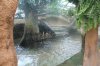
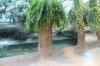
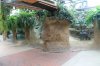
The shots below show the female's enclosure. As is often the case, the photos make it look larger than it really is - however, it is significantly larger (relative to body size) than the enclosures they had for the Brazilian Tapirs or some of the other large mammals! The middle one shows the entire land area at the right side of the photo (given the appearance of the mock-rock wall of the pool I don't think there is any land area behind it which is accessible at all); the first photo shows the hippo on the steps of the pool for some additional scale (the steps are at the right end of the pool in the middle photo and lead directly to the land area at the right); the last photo shows the land area which is very small - the "gate" is where there is a section connecting the two enclosures (I think this is probably "indoor" housing but I can't remember). I imagine if you wanted these as a single much-larger enclosure you could have this connecting area permanently open but with the ability to still close it off for separation.

IMG_9895.JPG IMG_9898.JPG IMG_9900.JPG
 

Attachments

  • IMG_9895.JPG
    IMG_9895.JPG
    183 KB · Views: 97
  • IMG_9898.JPG
    IMG_9898.JPG
    209.2 KB · Views: 92
  • IMG_9900.JPG
    IMG_9900.JPG
    170.3 KB · Views: 92
I'm guessing this wasn't a feature when you last visited, but there are actually two hippo enclosures there (next to each other), not just one. Both are very small for the animals (I was shocked when I read they had bred them), roughly half pool and half land, but much better than if both animals were in one together.
The hippopotami arrived at the park at least three years after my visit. The park did raise some funds to renovate the hippo enclosure at around 2021 so one of the enclosures might be a later addition.

The crazy thing is that before I saw your review, I used to think that there was only one enclosure due to the limited amount of media showing the full hippopotamus complex. Which is why I was under the impression that the hippopotami just had daily shifts or just shared the enclosure if the park tried to mate them. So it is a relief to know that the park has multiple enclosures for the area, albeit there should be a smaller species residing there instead.

For the thread I think two aardvark enclosures could work. If there’s an attempt at breeding, then one of the enclosures could be free of meerkats for the safety of the mother and pup/infant. The kingdom could also try to add crested or brush-tailed porcupines to the mix but that might be a bit too much for the enclosure.
 
Last edited:
African Wetland. The real deal.

This is not the kingdom’s first African wetland. Back when the kingdom first changed management, the current wolf and tiger enclosures were each a shoebill enclosure and were called the African Wetland while the central aviary was called the “Pelican Lagoon”. When most of the Animal Promenade and African Wetland species moved to the “Pelican Lagoon”, the kingdom changed the area’s name to what it is today-despite the fact that the non African birds still remain in the aviary.

upload_2025-7-22_18-41-52.jpeg
Despite the name change, the pelicans still are the star of the aviary. Seeing pelicans glide and fly is an amazing experience, especially for people who are used to seeing these birds be flight restricted. credit: the park’s official website

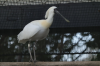
Which is why the first thing I would do is to change the roster of the birds of this exhibit. Let’s start with the species that will be leaving. The black faced spoonbills have already been transferred to the shoebill garden. Most of the Central and South American birds are to be transferred within the kingdom or phased out from the collection. Despite having populations in Africa the two shelducks, mallard, and Eurasian wigeon will be treated as Eurasian species, like the mandarin duck, and will be phased out of the park as well. The greater flamingos will be leaving due to welfare concerns to a zoo which can provide the birds with a great flock. The marabou will be leaving due to safety concerns, and to be better utilized by a zoo that has breeding experience of this species (Akiyoshidai Safari Land). The common moorhen aren’t listed on the website and they are considered to be wild birds that found their way in to the exhibit. This leaves us with the great white pelican, sacred ibis, African spoonbill, and blacksmith plover.

Due to the biosecurity measures against Anseriformes, it will be a bit difficult to come up with new species of African waterfowl, especially those which the visitors could feed. The only species of Anseriform added to the aviary could be the Egyptian goose, a species only kept at eight JAZA member zoos. Other locally sourced birds can be the eastern cattle egret and black-crowned night heron, which have a more sizable range in Africa than the Eurasian ducks the aviary used to house. Following the Ardeids, the next addition is the hamerkop, the shoebill’s closest living relatives known for building large impressive nests. While this bird does have holders in Japan, the kingdom could bring in some new blood from Europe. The kingdom could also try to (re)introduce more Charadriiformes to Japan such as pied avocet (only kept at one JAZA zoo) and spotted thick knee (not kept in any JAZA zoo). A medium sized flock of hadada ibises could also join the aviary. Finally, a small flock of helmeted guinea fowls could also be a part of the walk through for the visitors to feed and interact with. I get that a domestic species isn’t too impressive but wild guinea fowls such as vulturine and crested guinea fowls are rare to non-existent in Japan so helmeteds are the safest choice for the kingdom.

The kingdom could try adding some medium to large sized flying birds such as silvery-cheeked hornbills and pied crows, the latter having been kept in a semi-walkthrough enclosure at the kingdom before, but the presence of the ring-tailed lemurs could result in conflicts between the curious primates and the large billed birds, which is why this is more of an attempt rather than a long term goal.

For the mammals I would start by managing the lemur population. If it doesn’t already, the kingdom could act as a surplus holder managing a single sex non-breeding troop.

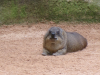
Due to the danger posed by the pelicans, the rock hyraxes unfortunately will have to stay inside their enclosure. However, to make up for this, the enclosure could be expanded. The path in the island is a loop. The hyrax enclosure could take up the parts of path that is the farthest away from the bridges that lead up to the island.

upload_2025-7-22_18-39-8.png
There was an attempt at keeping the hyraxes free range in the past. Unfortunately it did not last too long. credit: @JigerofLemuria

The kingdom could bring back the fennec foxes to their old enclosure from the Northern Area. Sure, a fennec is not an animal associated with wetland, but I think that the enclosure in the African Wetland aviary would work better for it than the former pudu exhibit.

I do want the servals to stay in the kingdom to act as one of the poster felines of the park. However, I think the enclosure is small for the species, which is why I plan on moving the serval(s) to another location in the kingdom and using the enclosure for something else. I wanted to place a mammal but I couldn’t find the right species. Mongooses, greater galagos*, and bat-eared foxes are subjected to biosecurity laws. Most other mammals that come to mind such as springhare or Malagasy carnivores such as bokyboky or ring-tailed vontsira hadn’t reached the point of frequent breeding and surplus in Europe to justify trying to create a founding population of the species in Japan. Which is why I made the difficult decision to make this enclosure into an enclosure for birds, specifically African grey parrots. The reason why I chose this species is because there is an attempt at creating a breeding project of this species led by Toyama Family Park, with the plan of releasing captive bred grey parrots back to the wild. I think it would be great if the kingdom kept a small flock of these birds, as opposed to lonely individuals or pairs as some zoos do, and helped the breeding project prosper. African greys are also better off in an enclosure because I think that having a flock of them be free range could be a liability in terms of structural, visitor, and animal safety. All this enclosure would need is several perches and nesting boxes for the parrots to chatter and expand their flock.

upload_2025-7-22_18-38-37.png
While the individuals at the kingdom wouldn’t be the primary candidates for release, the kingdom could help its fellow JAZA member run its project and play a role in the preservation of the endangered African greys. credit: @kermodei

There are technically greater galagos in the Japanese trade but their presence follows years after the last Otolemur died at a zoo, which is why I can’t help but think that they are from an illegal source and therefore should be avoided.
 

Attachments

  • upload_2025-7-22_18-38-37.png
    upload_2025-7-22_18-38-37.png
    811.1 KB · Views: 83
  • upload_2025-7-22_18-39-8.png
    upload_2025-7-22_18-39-8.png
    1.3 MB · Views: 81
  • upload_2025-7-22_18-41-52.jpeg
    upload_2025-7-22_18-41-52.jpeg
    139.7 KB · Views: 81
Asian Forest

This isn’t the most problematic exhibit the park has to offer in my opinion. However, two of the enclosures in the area, the binturong and red panda enclosure, could be considered outdated due to their small ground areas and the simplicity of the climbing features. Another problem this exhibit faces (which also goes for the tropical forest area as well) is the fact that the visitor path goes through the middle of the area resulting in smaller exhibits and animal territories. Which is why the kingdom could give the exhibit a total makeover and shift the visitor path to that side of the area. The path could also be slightly narrower to make more space for the animal territory. The new larger enclosure will be a moated enclosure just like in the past. However, none of the species could be realistically kept together, so only one of them could stay in the Asian Forest.

upload_2025-7-25_17-9-3.jpeg
If the greenhouses were larger, then a wide path in the middle would have worked better for immersion. Unfortunately this isn’t the case here. credit: yours truly

Then which species will be staying in the exhibit? Good question, let’s go through what we have.

The Pallas’s cat is a poster species of the kingdom just like the sand cat, but as I previously said, Kobe should strive for having a different identity from its sister location, and should therefore focus on other cats. It is also difficult to justify keeping this species in a green house, which could get hot and humid in the summer. Finally, this species doesn’t seem to go well with the park’s predominant tropical theming which is a part of the aforementioned identity. While the binturongs can adapt in a greenhouse better than Pallas’s cats, I believe the binturongs could be kept in a more impressive exhibit elsewhere in the kingdom. This leaves us with the red pandas.
upload_2025-7-25_17-9-47.png
The feline charm of this species does help the kingdom attract visitors. But I think the kingdom should consider comparability over marketability when deciding wether or not if this species is to stay or leave the kingdom. credit: @Goura
The reason why I am keeping red pandas, despite my irritation at their dominance in zoos, is… well…the said dominance in question. As popular endangered small mammals, red pandas don’t face the pressure of being phased out in zoos, which is why it would be unrealistic for a JAZA zoo to phase red pandas out. While not mentioned in the introduction, keeping red pandas is a rule for an attempt at a realistic speculative scenario in a Japanese zoo.

upload_2025-7-25_17-8-41.png
Like it or not, red pandas are here to stay. credit: yours truly


Kobe Animal kingdom could function as a retirement facility for red pandas who are too old to breed or animals that are genetically overrepresented. The enclosure could use some shade canopies and hammocks in addition to giant fans and climbing structures the previous exhibit already used. The moat, filled with water, could be home to aquatic turtles such as Japanese pond turtles. Another animal the kingdom can could try to add to cohabitate with the red pandas would be muntjac deer. The new muntjacs could be older individuals which won’t be as likely to jump out of their enclosure as much as younger individuals. Due to the invasive status of this species the kingdom would have to take extra precautions against its escape, such as a double-door entry to the exhibit, in case a muntjac does jump over the moat. The kingdom could offer guests the chance to feed the deer with hand shovels tied to poles, similar to the red panda feeding which could go on with this new exhibit.

upload_2025-7-25_17-16-34.png
This small adaptive ungulate is as charming as the southern pudu, which is why it would be a very welcome addition to the kingdom. credit: @Janek
 

Attachments

  • upload_2025-7-25_17-8-41.png
    upload_2025-7-25_17-8-41.png
    1.2 MB · Views: 73
  • upload_2025-7-25_17-9-3.jpeg
    upload_2025-7-25_17-9-3.jpeg
    53.3 KB · Views: 72
  • upload_2025-7-25_17-9-47.png
    upload_2025-7-25_17-9-47.png
    1.5 MB · Views: 73
  • upload_2025-7-25_17-16-34.png
    upload_2025-7-25_17-16-34.png
    1.2 MB · Views: 75
How about bringing in surplus male Indochinese green peafowls from places like Iwate Safari Park or Nasu World Monkey Park and housing them together with red pandas? Unlike with Himalayan monals or golden pheasants, I believe the risk of the red pandas attacking them would be lower. Also, since green peafowls inhabit forests in Myanmar and China, I think they would be a good match for red pandas in terms of habitat.
 
How about bringing in surplus male Indochinese green peafowls from places like Iwate Safari Park or Nasu World Monkey Park and housing them together with red pandas? Unlike with Himalayan monals or golden pheasants, I believe the risk of the red pandas attacking them would be lower. Also, since green peafowls inhabit forests in Myanmar and China, I think they would be a good match for red pandas in terms of habitat.
That would be an interesting attempt. If the kingdom is to house older red pandas then there shouldn’t be too much risk in terms the peafowl’s safety. If the tree by the Pallas’s cats is to remain after the renovation, there then it could be used as a roost to stay away from red pandas. But if the peafowl are too scared to go down at all, then I would consider the mix less than ideal. I also gave up on adding terrestrial birds like pheasants and peafowl due to the limited amount of information on mixed species featuring them and red pandas.
 
An alternative to pheasants could be passerines such as laughingthrushes, I don't think the cohabitation with the red pandas would be a problem. Though they might be listed as invasive.
The Pallas' cats seem like they are a real flagship species, I would think rehousing them somewhere else in the park to be a less risky choice.
 
An alternative to pheasants could be passerines such as laughingthrushes, I don't think the cohabitation with the red pandas would be a problem. Though they might be listed as invasive.
Timaliids are regulated within the IAS law so they might be difficult to add to the collection. Another option could be red billed blue magpies, which the kingdom has kept in the past and aren’t listed as invasive yet.

The Pallas' cats seem like they are a real flagship species, I would think rehousing them somewhere else in the park to be a less risky choice.
The problem I have with the Pallas’s cats is the fact that they deviate Kobe’s identity from something unique to just “Nasu Animal Kingdom, but at Kobe”. I understand that this could be used against many of the other species found in both parks such as the red pandas, binturongs, capybaras, and beavers. However those animals aren’t given the royal attention they are given as flagship species.
 
An alternative to pheasants could be passerines such as laughingthrushes, I don't think the cohabitation with the red pandas would be a problem. Though they might be listed as invasive.
I don't think that would work.
Passerines are petite and the Red Pandas could hurt or kill them, as they killed young muntjacs.
 
I don't think that would work.
Passerines are petite and the Red Pandas could hurt or kill them, as they killed young muntjacs.
My thinking was that they would just perch far away or fly away when approached and the pandas would be unable to catch them.
 
My thinking was that they would just perch far away or fly away when approached and the pandas would be unable to catch them.
But it's always possible that the pandas catch a bird.
And even if the pandas didn't catch them the birds would be stressed by the pandas.
 
Back
Top