Brookfield Zoo Master Plan Discussion and Speculation

Safari Wilderness the last holder of Forest Buffalo in the US said on their facebook "These are the last Red Forrest Buffalo left in the United States that we are aware of and because of laws changing they are now banned for import." Does anyone know what restrictions have put on their import and if Broofield plans to follow through with bringing back forest buffalo how they will do it? Or are they interested in obtaining Safari Wilderness animals?

Safari Wilderness | Lakeland FL
The Safari Wilderness animals are elderly and probably won't be around much longer. Importing is the only option if the zoo really intends on reacquiring them, which is a logistical nightmare due to regulations put up to protect the cattle industry, but not impossible. It has been done in recent years by other zoos (San Diego with it's Golden and Mishimi takin), however it wouldn't surprise me if forest buffalo are dropped as these plans become more concrete. They could very easily be replaced with Cape buffalo or another hoofstock species that requires way less time and effort to obtain.
 
I am hopeful the forest buffalo plan pans out. The species is still present in Europe and they're very striking. I think Safari Wilderness might be simplifying the difficulty.

If they don't, Pachy's suggestion of Cape Buffalo is a good one. I could also see sitatunga as a backup option.
 
Importing is the only option if the zoo really intends on reacquiring them, which is a logistical nightmare due to regulations put up to protect the cattle industry, but not impossible. It has been done in recent years by other zoos (San Diego with it's Golden and Mishimi takin)
It has not been done in recent years. Importing takin, and all caprines, is controlled with an entirely different set of regulations. Some of the specifics may overlap with bovine regulations, but bovine regulations are far more extensive overall, as one would expect them to be, given that most of any of these laws and regulations exist primarily to protect American cattle populations.

Edit: I am just realizing that I am commenting on a post that is more than a month-and-a-half old. However, the point still stands.
 
With Tropical Forests getting done this month, the long wait for Gates of Africa should get slightly smaller.

Not sure what opening date I should fully expect before 2032.
This is what's tricky - the real root question is going to be whether and how they break up the Gateway to Africa plans.

The zoo has already cut back on the 31st Street Hoofstock Yards in preparation for the Southwest Australian Provinces and been emptying the Pachyderm House for Gateway to Africa, and while neither project has a formal start date, I think it's safe to assume either or both are next.

"East African Forests", which seems to be the biome nickname for the 1.70 acre Hippopotamus and Nile Crocodile development, is south of Pachyderm House and separate from just about anything else, with no connections to other developments, and could theoretically begin development as a first phase regardless if anything else is ready...

However the north side of Pachyderm House is intended as a mixed savanna to be part of the grand vision for rotating hoofstock yards throughout the northeast side of the zoo, including current Habitat Africa the Savannah as well as the additions of new lion and Cheetah exhibits, and much of this is linked to the 'Savanna Passage' concept, which is also going to travel along the 'South African Forests' development area, which will include the elephants and rhinos and cover a massive land area.

"Central African Forests" is also somewhat separate from the other plans and is set to be built as an addition to the current Habitat Africa - the Forest, and has no connections to the mixed Savanna, so could theoretically be developed on a separate timeline. New habitats for Bongo, Congo buffalo and Pygmy hippo and new pangolin wouldn't disrupt the existing structure as dramatically as the other plans do as well.

I would guess that the Savanna Passage plan was never intended to be built all at once, but gradually as projects are completed. Based on the 'plan', the entire west half of the loop would be used for elephant/rhino rotation, so perhaps the east half would be developed separately for moving hoofstock between the four or so major mixed areas, and the west half constructed when the elephant/rhino plan comes to fruition, enabling them to be split projects.

I think there will likely be some kind of overlap, but it's hard to guess where that will be. Either the Pachyderm House will lead to East African Forests and Mixed Savanna being done together, or East African Forests might overlap South African Forests due to the shared Passage concept, and either way I would see Central African Forests either proceeding on a separate timeline or after these are completed. Funding will also be a huge factor - it's possible if the zoo is able to raise a lot of money quickly they may proceed with doing more at one time, or break the project down further if funding becomes difficult.
 
A few news articles about Tropical Forests mention what’s next for the zoo.

Looking Ahead-

“We're moving our sights from ‘Tropical Forests’ to 35 acres of the northwest quadrant of the zoo as we look at African savanna and African forests,” Adkesson said.

$66 million ‘Tropical Forests’ opens at Brookfield Zoo Chicago with close gorilla encounters

“The team’s next project will be an 18-acre African savannah for antelopes, elephants and giraffes among other species in the north side of the zoo spread, said Molly Keller, co-chair of initiative’s campaign leadership committee.”

Brookfield Zoo unveils sprawling, tropical primate habitat
 
“The team’s next project will be an 18-acre African savannah for antelopes, elephants and giraffes among other species in the north side of the zoo spread, said Molly Keller, co-chair of initiative’s campaign leadership committee.”

This seemed like a no-brainer considering the zoo map shows the Pachyderm House being closed for renovations. Also that quote seems to confirm that elephants really are coming back to Brookfield. Nice.
 
There was some discussion that the Australian Provinces would be one of the next projects when the zoo first started buzzing two or three years back, but I'm not surprised that Gateway to Africa was fast-tracked as a lot more emphasis was placed on it when the Next Century Plan was unveiled and the plans seem a lot more clear. It'll also be incredibly easy to fundraise for since it contains the return of some popular and highly requested species, and the attendance boosts can be funneled into funding for the projects to take place after. I'm really eager to see how they break up the plan, as I detailed in my previous post. Tropical Forests has hardly opened so not expecting anything now, but I hope we start hearing some details in the fall.
 
I'm curious about something - given how the new Gorilla Conservation Center is adjacent to the old indoor gorilla habitats in Tropic World, and also given that there's only one publicly viewable dayroom, would it make sense to construct transfer chutes from the new gorilla bedrooms to those old indoor habitats? That way there's another rotational option for the family group and Barney/Shango - they wouldn't have to open up the pathway surrounding the old gorilla island either. A transfer chute leading from the bedrooms into the smaller indoor primate habitat which last had Ramar the gorilla (which would be completely off view), and then another chute to the old gorilla island...

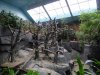
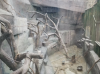
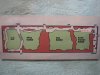
Brookfield_Zoo_231.jpg Screen Shot 2017-10-09 at 12.54.43 PM.png 1366.jpg
 

Attachments

  • Brookfield_Zoo_231.jpg
    Brookfield_Zoo_231.jpg
    188.8 KB · Views: 66
  • Screen Shot 2017-10-09 at 12.54.43 PM.png
    Screen Shot 2017-10-09 at 12.54.43 PM.png
    1 MB · Views: 66
  • 1366.jpg
    1366.jpg
    133 KB · Views: 67
I'm curious about something - given how the new Gorilla Conservation Center is adjacent to the old indoor gorilla habitats in Tropic World, and also given that there's only one publicly viewable dayroom, would it make sense to construct transfer chutes from the new gorilla bedrooms to those old indoor habitats? That way there's another rotational option for the family group and Barney/Shango - they wouldn't have to open up the pathway surrounding the old gorilla island either. A transfer chute leading from the bedrooms into the smaller indoor primate habitat which last had Ramar the gorilla (which would be completely off view), and then another chute to the old gorilla island...

View attachment 813896 View attachment 813897 View attachment 813898
No way that enclosure is ever used for gorillas again. It has way too many issues (no soft substrate, minimal privacy, loud noise levels, awkward viewing looking down on the animals, outdated holding) and would be better utilized by a smaller primate. There's a second off-show dayroom in the new gorilla house that is used by bachelors so additional space isn't necessary either.
 
No way that enclosure is ever used for gorillas again. It has way too many issues (no soft substrate, minimal privacy, loud noise levels, awkward viewing looking down on the animals, outdated holding) and would be better utilized by a smaller primate.

Still think the ring-tailed lemurs should be transferred there (of course as long as the area is renovated), they would have a better home there than in the Clouded Leopard Rainforest.
 
No way that enclosure is ever used for gorillas again. It has way too many issues (no soft substrate, minimal privacy, loud noise levels, awkward viewing looking down on the animals, outdated holding) and would be better utilized by a smaller primate. There's a second off-show dayroom in the new gorilla house that is used by bachelors so additional space isn't necessary either.

I was actually thinking something similar to what StoppableSan suggested. I'm concerned that the day rooms in the new Gorilla Conservation Center are just too small when the gorilla's are likely to spend at least 40% of their time there. It wouldn't be an issues if it was in a warmer climate where they could spend at least 80% of the days outside but in Chicago I think the best that can be expected is that they are outside 60% of the days. The new day room open to the public is at the most about 1/3 the size of the gorilla island space in Tropic World. The non-public day room is even smaller at about 2/3 the size of the public day room (I'm basing this on the emergency exit map layout that I saw on the wall in the GCC). I don't know how feasible it would be to add the transfer tunnels and renovate the old space to provide a softer substrate and lessen noise but giving animals private areas off view from the public if they desire wouldn't be too difficult. A rotation could be done with the family group and the bachelors where on days that they can't go outside are spilt amongst the public day room, private day room, and Tropic World space. A given gorilla wouldn't spend more than 15% of the days in the TW space and this would provide new areas for the animals to explore each day somewhat simulating how they move around in nature and add to their enrichment.
 
I’m pretty sure the zoo has mentioned in several articles that the idea behind Tropical Forests began with the goal of moving the gorillas out of Tropic World. They won’t be back.

As for the old gorilla enclosure in Tropic World Africa, my guess is it will stay empty for a while. After spending $66 million on Tropical Forests, I doubt the zoo has any appetite to spend millions more renovating the old gorilla exhibit. The monkey side of Tropic World Africa is already pretty empty, and I’d rather the zoo focus on that area than create another exhibit that feels just as underutilized.

I’ve also been wondering if the zoo would need to net the old gorilla exhibit for smaller or more athletic primates. Some of the old rockwork is fairly close to the visitor path, and I’m sure certain monkey species wouldn’t have any trouble clearing that distance.

All of this, coupled with the fact that the zoo is already mentioning its next major project—Gateway to Africa, a 35-acre, multi-phase development that’s going to cost a lot of money—makes it hard to imagine the zoo spending any significant amount on further primate area improvements. The current Tropic World/Tropical Forests complex, for better or worse, is likely to remain as-is for the foreseeable future.
 
I'm curious about something - given how the new Gorilla Conservation Center is adjacent to the old indoor gorilla habitats in Tropic World, and also given that there's only one publicly viewable dayroom, would it make sense to construct transfer chutes from the new gorilla bedrooms to those old indoor habitats? That way there's another rotational option for the family group and Barney/Shango - they wouldn't have to open up the pathway surrounding the old gorilla island either. A transfer chute leading from the bedrooms into the smaller indoor primate habitat which last had Ramar the gorilla (which would be completely off view), and then another chute to the old gorilla island...
Craig Billington said:
I was actually thinking something similar to what StoppableSan suggested. I'm concerned that the day rooms in the new Gorilla Conservation Center are just too small when the gorilla's are likely to spend at least 40% of their time there. It wouldn't be an issues if it was in a warmer climate where they could spend at least 80% of the days outside but in Chicago I think the best that can be expected is that they are outside 60% of the days.
I don't think this concept is feasible, unfortunately. The best case scenario, I would think, is that future major renovations to the Tropic World building could perhaps involve combining the Gorilla Conservation Center 'into' Tropic World and in doing so perhaps some space from the former enclosure may be carved into expanding the new gorilla enclosure. I don't think Brookfield will undertake significant changes to the Tropic World building until the current master plan is completed though.

The new day room open to the public is at the most about 1/3 the size of the gorilla island space in Tropic World. The non-public day room is even smaller at about 2/3 the size of the public day room (I'm basing this on the emergency exit map layout that I saw on the wall in the GCC). I don't know how feasible it would be to add the transfer tunnels and renovate the old space to provide a softer substrate and lessen noise but giving animals private areas off view from the public if they desire wouldn't be too difficult. A rotation could be done with the family group and the bachelors where on days that they can't go outside are spilt amongst the public day room, private day room, and Tropic World space. A given gorilla wouldn't spend more than 15% of the days in the TW space and this would provide new areas for the animals to explore each day somewhat simulating how they move around in nature and add to their enrichment.
There's a chance you know more than me since you have more historical experience with the zoo, but I feel fairly convinced at this point there has to be a reason that the zoo hasn't added substrate to Tropic World. It's such a no-brainer idea that there surely has to be a reason it's not been done. Someone once suggested it might have to do with the water features and filters, which considering the habitat was constructed in the seventies, and knowing even modern exhibits often avoid or minimize sand or gravel off water areas because of filtration issues, seems feasible. I don't think reducing the noise is possible without making much bigger changes.

It will never cease to fascinate me how much Tropical Forests and the Gorilla Conservation Center have actually highlighted the strengths of the old Tropic World habitat - for so many years, it's been called one of the worst gorilla exhibits in the country solely because it was indoors, without any emphasis on the exhibit itself, but now that there isn't a need to bemoan the gorillas' lack of access to sunlight and grass, we can perhaps be more objective that the old enclosure was very significant in size, especially for its age, and offered tremendous verticality and climbing. It is objectively worse for the animals' welfare in many respects and some of the core benefits for guest viewing fly directly in the face of that, but now we can recognize some of what it did right.

Still think the ring-tailed lemurs should be transferred there (of course as long as the area is renovated), they would have a better home there than in the Clouded Leopard Rainforest.
Would love this if only because I miss the fishing cats and would love to see one in the Rainforest again.
The zoo still intends to move Koala to the Australia House during future renovations, so I think the zoo still has intent to move the Ringtail Lemurs back into the Hamill Family Play Zoo once that is complete. I would love to see fishing cat return, and that seemed the plan for a while as the zoo held their last fishing cat behind the scenes, but the fact they later sent it away seems to indicate they have ended that plan, which is very disappointing.

That's not to say lemurs in Tropic World isn't a potentially exciting route to take, but if they did, I think it would need to be a more serious commitment than 'move the couple we have out of Clouded Leopard Rainforest'. The zoo would need a much larger group than the number of animals currently held. It's a huge enclosure designed for viewing large primates at a scale where they look small. If they only put two or three lemurs in there, it would be an awful viewing experience. A large, active group of lemurs, perhaps mixed species, would be a much better use of space.

No way that enclosure is ever used for gorillas again. It has way too many issues (no soft substrate, minimal privacy, loud noise levels, awkward viewing looking down on the animals, outdated holding) and would be better utilized by a smaller primate. There's a second off-show dayroom in the new gorilla house that is used by bachelors so additional space isn't necessary either.
Very well-stated and explained.

I’m pretty sure the zoo has mentioned in several articles that the idea behind Tropical Forests began with the goal of moving the gorillas out of Tropic World. They won’t be back.

As for the old gorilla enclosure in Tropic World Africa, my guess is it will stay empty for a while. After spending $66 million on Tropical Forests, I doubt the zoo has any appetite to spend millions more renovating the old gorilla exhibit. The monkey side of Tropic World Africa is already pretty empty, and I’d rather the zoo focus on that area than create another exhibit that feels just as underutilized.

I’ve also been wondering if the zoo would need to net the old gorilla exhibit for smaller or more athletic primates. Some of the old rockwork is fairly close to the visitor path, and I’m sure certain monkey species wouldn’t have any trouble clearing that distance.
I think at height, the zoo had Eastern black and white colobus, Red-tailed guenon, Allen's swamp monkey, mandrill, black crested mangabey, and maybe red-crowned mangabey in the main enclosure all at once? (I believe the Angolan colobus change was after the latter species left.) I would be very curious if they could reacquire any of these species in the near future, but all seem to be declining captive populations. There was the famous mandrill-mangabey hybrid situation, but this could be easily avoided by the zoo simply not acquiring both species at once or featuring one in the gorilla enclosure and the other in the main area.

It would be ideal to find a species that can fit the existing space with the least change possible though. I had previously brought up mandrill as I thought avoiding the hybridization would be easier, they have a similar ground-based lifestyle, similar habitat needs, seemed large enough to suit the space, sufficiently colorful to liven it, capable of living in large groups... but it is a declining population and may not be a species best suited to being held indoors year-round either. Lemurs have been discussed in this thraead a bit. I'm not sure what other primates may be viable options. Debrazza monkeys maybe?

All of this, coupled with the fact that the zoo is already mentioning its next major project—Gateway to Africa, a 35-acre, multi-phase development that’s going to cost a lot of money—makes it hard to imagine the zoo spending any significant amount on further primate area improvements. The current Tropic World/Tropical Forests complex, for better or worse, is likely to remain as-is for the foreseeable future.
Very correct. The zoo has already been shifting a lot of gears to Gateway to Africa which will take an incredible amount of focus, more than almost any upcoming project. I don't expect any changes in structure to Tropic World in the next decade, only the addition or removal of species.
 
Great video here that gives a look at the second floor of the Gorilla Conservation Center. I think his critique is pretty much spot on and similar to what many have expressed here with both the positives and negatives. For the negatives I agree there is too much exposed concrete and the gorilla day rooms are too small, however I feel more positive about the orangutan exhibit than he does.

 
Great video here that gives a look at the second floor of the Gorilla Conservation Center. I think his critique is pretty much spot on and similar to what many have expressed here with both the positives and negatives. For the negatives I agree there is too much exposed concrete and the gorilla day rooms are too small, however I feel more positive about the orangutan exhibit than he does.

Objectively some fair criticisms, credit where credit's due in terms of taking feedback into account. That being said, I'd love to see it firsthand to have a proper opinion.
 
Great video here that gives a look at the second floor of the Gorilla Conservation Center. I think his critique is pretty much spot on and similar to what many have expressed here with both the positives and negatives. For the negatives I agree there is too much exposed concrete and the gorilla day rooms are too small, however I feel more positive about the orangutan exhibit than he does.

Thos video was posted to the ZooChat Gallery a few days ago and I posted an extensive reply there. I think the video is overall well-made but disagreed with a few points.
 
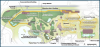
It's time to talk more about Gateway to Africa.

Gateway to Africa.png
Here's an image focused entirely on the specifics of the planned layout.


Gateway to Africa layout.png
Here I made an attempt to affix the plan over the current zoo map. It doesn't match up perfectly due to the stylization, but it's closer than I expected to. The current Australia yard will roughly match with Mixed Africa Species Flexible Habitat 1, and Mixed Africa Species Flexible Habitat 2 with the north side of the Pachyderm building. "East African Forests", the new hippopotamus and crocodile exhibits, will replace the southern part of the building. It appears an effort will be made to preserve the west mall, but I kind of hope they build into that area so the animals can have more space.

The existing Habitat Africa! The Kopje matches with the master plan enough, although to me it looks like the space for the building might be a little bigger than the current building, so perhaps there will be some modification and expansion here, though it is not labeled for renovation in the plan. Probably a revised giraffe barn and indoor viewing but hopefully a little more than that. There's a lot that could be done there -- multi-level giraffe viewing is always a plus. Something like Omaha or Whipsnade's setups. It looks a lot like the painted dog viewing structure is still there, despite no strong show of the painted dog enclosure. Perhaps the "Expanded Giraffe and Flexible Habitat 4" label is obscuring it.

It's a bit hard to tell but it looks as if the Nyala enclosure, Klipspringer enclosure, and the giraffe enclosure may be combined into a single larger Savanna, possibly preserving the existing 'Savannah Overlook' space as a viewing area for the larger combined exhibit, and allowing the existing painted dog enclosure to remain. (Although making some changes would be welcome.) The Small Antelope House, dik-dik area will be where construction for the new Cheetah enclosure would take place. The grassy area to the east of Australia House and the current Addax enclosure will become parts of Mixed Africa Species Flexible Habitat 3, adjacent to the current Australia/future Mixed Africa Species Flexible Habitat 1 space.

I did notice two interesting things here, so allow me a detour. There appear to be visitor paths leading to a smaller part of the Savannah Passage holding area. The pale rectangle neither matches the 'old building to remain' or 'new building' part of the key; however, the path appears to go 'through it' in a loop with an unlabeled outdoor exhibit, suggesting to me it could be a public space of some kind. I think it would be cool if this represented an indoor viewing barn for Savannah Passage species for winter visits or something to that effect, but it's probably wishful thinking. But also, we have an unlabeled outdoor exhibit, disconnected from Savannah Passage but noticeably small. If meerkats are going to be part of the mixed exhibits as suggested by the Club of Chicago concept art, this could perhaps be an enclosure for a savannah primate, such as baboons, or a smaller mammal, such as Cape porcupine, aardvark, or warthog, or a new enclosure for dik-dik or klipspringer. Warthog and porcupine could be mixed, and dik-diks have been mixed with other species before. It looks larger than the new outdoor pangolin enclosure and smaller than any of the new megafauna exhibits, a little similar in size to the South American monkey habitat.

Gateway to Africa mystery.png

Switching back to comparing layouts, things get a little more confusing. The new lion enclosure looks like it will be located just north of and possibly over where the current exit to Habitat Africa the Forest is, adjacent to the current giraffe enclosure, while the addax/zebra enclosures correspond to Elephant/Rhino Flexible Habitat A. The Congo Buffalo enclosure will be near the red river hog and exit section of Habitat Africa! The Forest, where there is currently a lot of educational material. The rest of 'South African Forests', with four additional Flexible Rhino/Elephant habitats will be entirely new developments on unused land - flexible enclosures C and E don't fit on the current map and will begin the process of building around Swan Lake and Salt Creek Wilderness, while C will encircle the existing, renovated Dragonfly Marsh building and B will be on currently unused land east of the last hoofstock building.

Notably, at least three holding buildings appear to be planned for the Elephant/Rhino Flexible Habitats and 'South African Forests', but none of them appear clearly to be open to the public. Flexible Habitat D looks to have a barn that might have a path connection but it's not entirely clear. There is a possible connection to the holding building for Flexible Habitats B and C, but it is not indicated as a visitor path. I would strongly encourage the zoo to ensure both elephants and rhinos will be visible in winter and build world-class barns for them. Omaha provides a great example to follow for elephants.

It looks like the new bongo and pygmy hippopotamus enclosures will replace the winding entrance path to Habitat Africa! The Forest, which does take a few minutes to get going nowadays, and will involve an add-on to the existing building to include indoor holding. I look forward to both of these species joining the zoo. I have indicated before some hope they might include a monkey species alongside the pygmy hippopotamus, like at San Diego and formerly at Tropic World. Two enclosures also means they will be able to breed. This also means they will be one of few zoos to hold both pygmy and river hippopotamus. There will also be some kind of outdoor pangolin enclosure, which I'm very curious what the plan is. There are two more circular shapes, same color as that pale rectangle above, corresponding to the pangolin and pygmy hippo enclosure, with connected path. Perhaps these are viewing structures or small buildings?

The next odd thing is although the existing Habitat Africa building is set to remain, there are no visitor paths towards it, unless they are incorrectly blended into the service paths. Instead, it appears the new pygmy hippo and bongo enclosures create a new path closer to Great Bear Wilderness, bypassing the building and then bringing guests on a path past the existing enclosures from the opposite side[?] with three outdoor enclosures for Okapi, duiker and red river hog, and then a second building[?] with old and new parts, which will lead to the Forest buffalo, which may not be seen from this path, before going past another small, unlabeled habitat (Perhaps the White Storks? Something new?) that leads back to Elephant/Rhinoceros Flexible Habitat D, which will eventually lead past the buffalo on the way to the lions and back out.

This whole section seems a bit more potentially confusing and a bit less clean in planning. Some of this might be me misunderstanding which enclosures correspond to which in the current enclosure, and the integration of the lions and elephants so close to the Forest loop may take away some of what makes the Forest feel unique and special as a standalone exhibit, but with smart planning, it doesn't need to be. The lack of access to the Forest building feels more like an oversight than an intended change and I certainly hope when official plans are unveiled, this is reflected as such. The possible building additions could potentially be exciting here but with new megafauna holding needed they may simply be indoor options for these species. I hope a few additional terrariums could be considered though at least, such as for Gaboon Viper and Chameleon once held in the Forest building but currently in the reptile buildings. Potto would be a fun choice but obviously aren't available.

The wonderful surprise is almost no species seem necessary to leave if these plans proceed. The hoofstock yards will be demolished but it's already been indicated Nyala, Addax, and Zebra will stick around in the mixed savanna setup (though I think it's possible the zoo may change away from Grevy's Zebra) and it looks the zoo intends to stay with Painted Dogs, and their existing enclosure would not need to be demolished too make way for the Savannah alterations. The existing Forest enclosures look basically untouched. The main risk will be for the klipspringer and dik-dik, unfortunately, as well as the capybara and Galapagos tortoises at Pachyderm House. However, the zoo will gain Nile Crocodile, Cheetah and Bongo as new species, and tentative additions will include Congo buffalo, Common eland, Kudu, and Gazelle, based on Dr. Mike's comments, as well as the return of Ostrich, African elephants, Pygmy and river hippopotamus, and Rhinoceros. The unlabeled exhibit could also represent a new enclosure for an existing species (dik-dik, klipspringer, porcupine, meerkat) or a returning or new species (aardvark, warthog, baboon) or a mix.

The other cool thing is that the zoo should have lots of money for the core priorities if some of the primary changes to set up the new mixed savannah enclosures will be more about combining and refreshing some existing habitats.

If all of these ideas go through, the zoo will have an incredible African megafauna collection with almost every major species.

For a few suggestions to improve the plan without deviating, I think I would suggest looking to Denver's 5-acre Predator Ridge when developing the lion enclosure and potentially making it into a rotational exhibit with at least two separate spaces. This could allow for rotating lions with Spotted hyena, allowing the zoo to add another prominent carnivore, or provide options for housing separate groups of lion, as Lincoln Park Zoo is now doing to separate their family groups. Dr. Mike has suggested the zoo may continue with the existing lion brothers currently at the Fragile Hunters/Big Cat walkway, but this will open up options. It would be cool to rotate with Painted Dogs but they wouldn't be able to use their existing enclosure and I'm not sure the space is sufficient for three large carnivores to rotate.

I really hope the zoo takes the opportunity to develop some new buildings - winter elephant and rhinoceros barns are a must, adding on to the Forest is smart, an expanded giraffe barn is worthwhile consideration for the Savannah, and a view of the Savannah Passage holding could allow the rare chance for people to view hoofstock in winter. The winters can be harsh in the midwest and guests will want to be able to see as many animals as possible in the cold, after all. New buildings also always have the chance to include new, smaller species. The Bronx Zoo's giraffe house has an aardvark exhibit, Chester's Okapi House has sengi, Toledo once had an aviary in their elephant barn, and so forth. This would be a great way to bring back aardvark, for example, or hyrax, or just to design a new home for one of the species in Desert's Edge, or to include birds that do not do as well in mixed aviary settings.

We've seen from the concept art they may be looking into using foreground areas and creeps to include (not previously announced) small mammals in the megafauna exhibit, such as meerkat and like their past attempt with Sulcata tortoise. I hope they use this liberally - it would allow for more species to be introduced but also add activity and diversity to the displays beyond the mixed hoofstock. It could be cool to see mongoose, porcupine, monitor lizards, hyrax, ground hornbill, or so forth in these sorts of spaces. Carving out such a space for porcupine and warthog, the latter of which the zoo has mixed with ostrich and waterbuck previously but can be hardy on some hoofstock, could be rewarding on days when the larger species are not as active.

Finally, I hope they include a few more birds and continue mixing birds with hoofstock such as the crowned cranes in the current nyala enclosure. Marabou stork can be mixed in savannah spaces too, as I saw at Binder Park Zoo this year, and large stork and ground hornbill have also been done. A lot of the zoo's bird collection is New World species so the addition of some more African birds would be welcome.

I'm very excited now that this is starting to feel more real.
 

Attachments

  • Gateway to Africa.png
    Gateway to Africa.png
    616.4 KB · Views: 42
  • Gateway to Africa layout.png
    Gateway to Africa layout.png
    535.9 KB · Views: 40
  • Gateway to Africa mystery.png
    Gateway to Africa mystery.png
    15.6 KB · Views: 44
Back
Top