Australasian Common Chimpanzee Population

Hamilton Zoo Update

Update from my visit (12/08/2025):

1.0 Lucifer (16/06/1988) Mike x Lucy
1.0 Luka (28/02/1993) Mike x Lucy
0.1 Lucy (24/11/1975) Bobby x Lulu
0.1 Sanda (10/04/1985) Peter x Fimi
0.1 Chiku (15/02/2016) Luka x Sanda
0.1 Kendi (17/12/2020) Luka x Sanda
0.1 Zuri (27/06/2025) Luka x Sanda

On my visit to Hamilton Zoo yesterday, I was surprised to see Sanda up on one of the climbing poles in the night house without Zuri. As it turned out, she’d left her on the ledge in a large nest of straw.

The other chimpanzees were in the night house and after a while Kendi climbed in the nest and began playing with Zuri. Then Lucy climbed in the nest and dangled Zuri by one arm, at which point Sanda came over and retrieved Zuri.

Sanda’s relaxed approach to her six week old infant is a stark contrast to her protectiveness of Kendi at this age. Hamilton have a largely harmonious troop, which combined with Sanda’s high ranking no doubt contributes to her confidence.

Kuma at Taronga Zoo was similarly relaxed with her last infant Fumo, albeit when he was 3-4 months old and starting to crawl. She would allow him to navigate his way through groups of adult chimps and be carried off by the then juvenile Sule for short periods of time.

Sanda and Chiku spent some time together up on one the platforms; and on my last visit, were grooming each other. It’s nice to see Sanda maintain a good relationship with her eldest daughter.

Chiku:

upload_2025-8-13_6-58-56.jpeg
 

Attachments

  • upload_2025-8-13_6-58-56.jpeg
    upload_2025-8-13_6-58-56.jpeg
    241.9 KB · Views: 73
Hamilton Zoo Update

Update from my visit (12/08/2025):

1.0 Lucifer (16/06/1988) Mike x Lucy
1.0 Luka (28/02/1993) Mike x Lucy
0.1 Lucy (24/11/1975) Bobby x Lulu
0.1 Sanda (10/04/1985) Peter x Fimi
0.1 Chiku (15/02/2016) Luka x Sanda
0.1 Kendi (17/12/2020) Luka x Sanda
0.1 Zuri (27/06/2025) Luka x Sanda

On my visit to Hamilton Zoo yesterday, I was surprised to see Sanda up on one of the climbing poles in the night house without Zuri. As it turned out, she’d left her on the ledge in a large nest of straw.

The other chimpanzees were in the night house and after a while Kendi climbed in the nest and began playing with Zuri. Then Lucy climbed in the nest and dangled Zuri by one arm, at which point Sanda came over and retrieved Zuri.

Sanda’s relaxed approach to her six week old infant is a stark contrast to her protectiveness of Kendi at this age. Hamilton have a largely harmonious troop, which combined with Sanda’s high ranking no doubt contributes to her confidence.

Kuma at Taronga Zoo was similarly relaxed with her last infant Fumo, albeit when he was 3-4 months old and starting to crawl. She would allow him to navigate his way through groups of adult chimps and be carried off by the then juvenile Sule for short periods of time.

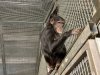
Sanda and Chiku spent some time together up on one the platforms; and on my last visit, were grooming each other. It’s nice to see Sanda maintain a good relationship with her eldest daughter.

Chiku:
View attachment 815717

That's very interesting! Sanda's confidence as a mother has really grown and I am glad that Zuri has the chance to grow up in such a harmonious troop! I'm hoping to visit Hamilton Zoo and am glad I will have a good chance of seeing Zuri. What with one lockdown or another, and with the zoo going through a period of not allowing people in the night house, I didn't get to see Kendi until she was almost 2 years old, whereas I'd watched Chiku grow up from infancy.

It's also great to see Chiku maintaining a good relationship with her mother in her adolescence - being able to observe Sanda with Kendi and Zuri will be invaluable for Chiku's future motherhood. Since she will be around 15 years of age when she transfers out, her future zoo will likely receive a breeding recommendation for her sooner rather than later.
 
That's very interesting! Sanda's confidence as a mother has really grown and I am glad that Zuri has the chance to grow up in such a harmonious troop! I'm hoping to visit Hamilton Zoo and am glad I will have a good chance of seeing Zuri. What with one lockdown or another, and with the zoo going through a period of not allowing people in the night house, I didn't get to see Kendi until she was almost 2 years old, whereas I'd watched Chiku grow up from infancy.

It's also great to see Chiku maintaining a good relationship with her mother in her adolescence - being able to observe Sanda with Kendi and Zuri will be invaluable for Chiku's future motherhood. Since she will be around 15 years of age when she transfers out, her future zoo will likely receive a breeding recommendation for her sooner rather than later.

Luka and Sanda’s three daughters have really brought the troop to life. With four adults; an adolescent; a juvenile; and an infant, the exhibit is bustling with activity.

When I visited the troop at Auckland Zoo in the 2000’s, the then adolescent Luka was very much the star. To entertain him and redirect his focus from harassing Suzie and Sally, keepers installed tunnels and a tyre attached to an elastic rope that enabled him to swing from the climbing tower down onto the grass below.

Once the troop moved to Hamilton Zoo and Luka matured, the troop of six adults (even when it briefly grew to eight adults between 2008-2011) lacked the presence Wellington’s (and certainly Taronga’s) troop. However, that has now changed, especially following the latest birth. Chiku, Kendi and Zuri are not only interesting to watch; but they elicit behaviours in the adults you wouldn’t otherwise observe. It’s been particularly interesting seeing how interested in Zuri that Lucy has become over the past few weeks.
 
Luka and Sanda’s three daughters have really brought the troop to life. With four adults; an adolescent; a juvenile; and an infant, the exhibit is bustling with activity.

When I visited the troop at Auckland Zoo in the 2000’s, the then adolescent Luka was very much the star. To entertain him and redirect his focus from harassing Suzie and Sally, keepers installed tunnels and a tyre attached to an elastic rope that enabled him to swing from the climbing tower down onto the grass below.

Once the troop moved to Hamilton Zoo and Luka matured, the troop of six adults (even when it briefly grew to eight adults between 2008-2011) lacked the presence Wellington’s (and certainly Taronga’s) troop. However, that has now changed, especially following the latest birth. Chiku, Kendi and Zuri are not only interesting to watch; but they elicit behaviours in the adults you wouldn’t otherwise observe. It’s been particularly interesting seeing how interested in Zuri that Lucy has become over the past few weeks.

Very good points. Having chimps of various life stages in the troop makes it far more lively and dynamic than a group solely comprised of adults, which the Hamilton troop was for quite some time, would be. It's especially interesting to hear about how the troop dynamics, rankings etc. have changed with Zuri's arrival.

With all of the troop now being mother-raised, too, interactions will no doubt be very different than when Suzie and Sally were in the group. Also, it's fascinating to hear how the other members of the troop are taking an interest in Zuri, with Sanda being more relaxed about their interactions with her or about having her in view of zoo visitors (but remaining protective when she needs to be!)
 
Very good points. Having chimps of various life stages in the troop makes it far more lively and dynamic than a group solely comprised of adults, which the Hamilton troop was for quite some time, would be. It's especially interesting to hear about how the troop dynamics, rankings etc. have changed with Zuri's arrival.

With all of the troop now being mother-raised, too, interactions will no doubt be very different than when Suzie and Sally were in the group. Also, it's fascinating to hear how the other members of the troop are taking an interest in Zuri, with Sanda being more relaxed about their interactions with her or about having her in view of zoo visitors (but remaining protective when she needs to be!)

Having a troop that regularly breeds is hugely beneficial for all members of the troop. Growing up with peers is important for social development of young chimpanzees and allows juvenile and adolescent females to learn maternal skills through observation.

With three of Australasia’s chimpanzee troops currently containing a single breeding female (Hamilton, Sanda; Sydney, Leakey; Wellington, Malika), another point to consider is the significance of same-sex peers.

As juveniles, gender matters little to chimpanzees. Sule (2008) and Sembe (2008) had endless play sessions at Taronga as juveniles; and Zola (2019) practices maternal care on Happy (2022) at Monarto.

However, as chimpanzees enter adolescence, gender becomes more important. Adolescent females benefit from having female peers they can transfer out with; while males spend an increased amount of time with each other as they enter the male hierarchy. Wellington’s young males Bakari (2012) and Kitwe (2014) spent the majority of their time together on my latest visit doing patrols together and trailing one of the females; while Taronga’s cohort of three adolescent males are spending an increasing amount of time together and with the adult males. As for Sule and Sembe, they’ve long deviated down different paths, with Sule now the alpha male and Sembe the lowest ranking of the nine adult females.

Through luck (three consecutive female births), Hamilton has ensured Luka and Sanda’s daughters have each other’s support (which will be invaluable for the eldest two when they transfer out together); but for Wellington to ensure three year old Akida has a male peer, Malika’s first infant would need to be male.
 
Having a troop that regularly breeds is hugely beneficial for all members of the troop. Growing up with peers is important for social development of young chimpanzees and allows juvenile and adolescent females to learn maternal skills through observation.

With three of Australasia’s chimpanzee troops currently containing a single breeding female (Hamilton, Sanda; Sydney, Leakey; Wellington, Malika), another point to consider is the significance of same-sex peers.

As juveniles, gender matters little to chimpanzees. Sule (2008) and Sembe (2008) had endless play sessions at Taronga as juveniles; and Zola (2019) practices maternal care on Happy (2022) at Monarto.

However, as chimpanzees enter adolescence, gender becomes more important. Adolescent females benefit from having female peers they can transfer out with; while males spend an increased amount of time with each other as they enter the male hierarchy. Wellington’s young males Bakari (2012) and Kitwe (2014) spent the majority of their time together on my latest visit doing patrols together and trailing one of the females; while Taronga’s cohort of three adolescent males are spending an increasing amount of time together and with the adult males. As for Sule and Sembe, they’ve long deviated down different paths, with Sule now the alpha male and Sembe the lowest ranking of the nine adult females.

Through luck (three consecutive female births), Hamilton has ensured Luka and Sanda’s daughters have each other’s support (which will be invaluable for the eldest two when they transfer out together); but for Wellington to ensure three year old Akida has a male peer, Malika’s first infant would need to be male.

Hamilton's troop indeed seems to be in a good and stable place, and Chiku and Kendi will indeed be well placed to support each other when they transfer out. Although future new females will need to provide a half-sister for Zuri so she can transfer out in turn.

As far as Wellington's troop goes, I am hoping Malika will produce a male, as not only will Akida have a close-in-age peer, but there will be a solid peer group of young males to provide vital support for each other. There already seems to be a close bond between Bakari and Kitwe from what you've told me, and I hope they will also be starting to include Akida as he grows.
 
As far as Wellington's troop goes, I am hoping Malika will produce a male, as not only will Akida have a close-in-age peer, but there will be a solid peer group of young males to provide vital support for each other. There already seems to be a close bond between Bakari and Kitwe from what you've told me, and I hope they will also be starting to include Akida as he grows.

It would be nice to see Wellington repeat the formula of importing three adolescent females like they did in 1992 (Cara, aged 11; Samantha, aged 9: and Sally, aged 7). Considering this was their last import, it’s sustained their colony extremely well over the past 33 years.

Wellington troop has an even gender ratio of 4.4 chimpanzees (acceptable when one of the males is a juvenile); but it’s worth noting the male population is much younger than the female population:

Wellington’s troop (by age):

0.1 Cara (10/09/1981) Jojo x Chiki
0.1 Sally (13/01/1985) Jojo x Spitter
0.1 Keza (06/07/1998) Marty x Samantha
1.0 Alexis (20/08/1998) Boyd x Cara
0.1 Malika (27/10/2010) Sam x Samantha
1.0 Bakari (11/06/2012) Sam x Sally
1.0 Kitwe (15/11/2014) Sam x Keza
1.0 Akida (01/11/2021) Alexis x Sally

Bringing in three females born in the 2010’s would be an excellent way to address this. Monarto are currently the best placed to provide this (Zuri, aged 13; Zola, aged 6; and Hope, aged 6) once their two youngest females reach dispersal age.
 
Opening of Taronga Zoo’s Chimpanzee Park (1980)

An article regarding the official opening of Taronga Zoo’s Chimpanzee Park:

————————

Taronga Zoo's 21 chimpanzees have moved into a new outdoor landscaped called Chimpanzee Park. The grassed area covering about half a hectare will be opened on Monday by the Minister for Lands, Mr Gordon.

The park was landscaped by Taronga's works and gardens staff for $470,000, with an extra $50,000 for roads.

It features palm trees for shade; oak trees and a fallen forest of dead trees for climbing, swinging and playing; a stream, rock ledges and caves; and an artificial termite mound. There are no bars or wire.

Source: Sydney Morning Herald (August 16, 1980).

————————

20 chimpanzees were moved across from the old cages in June 1980, consisting of six founder females and their offspring:

0.1 Fifi (1947) Died 2007
- 1.0 Jojo (1964) Exported 1986
- 1.0 Flint (1971) Exported 1982

0.1 Susie (1948) Died 1995
- 0.1 Gemini (1970) Exported 1982
- 0.1 Sutu (1974) Exported 1992
- 1.0 Sonny (1978) Died 1989

0.1 Biddy (1950) Exported 1982
- 0.1 Spitter (1960) Died 2022
- 1.0 Danny (1974) Exported 1992
- 0.1 Bianca (1979) Exported 1982

0.1 Bessie (1950) Died 2011
- 0.1 Chiki (1970) Died 2001
- 0.1 Belle (1975) Exported 1986

0.1 Mary (1956) Died 1989
- 1.0 Mike (1973) Exported 1982
- 0.1 Melissa (1978) Exported 1998

0.1 Lulu (1960) Died 2014
- 0.1 Lucy (1975) Exported 1985
- 0.1 Lisa (1979) Still at Taronga Zoo

Spitter gave birth to Sacha within a week of the move on 11/06/1980, taking the community to the 21 chimpanzees mentioned in this article.
 
Hamilton Zoo Update

Update from my visit (19/09/2025):

1.0 Lucifer (16/06/1988) Mike x Lucy
1.0 Luka (28/02/1993) Mike x Lucy
0.1 Lucy (24/11/1975) Bobby x Lulu
0.1 Sanda (10/04/1985) Peter x Fimi
0.1 Chiku (15/02/2016) Luka x Sanda
0.1 Kendi (17/12/2020) Luka x Sanda
0.1 Zuri (27/06/2025) Luka x Sanda

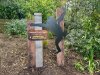
The chimpanzees were confined to their night house today, which has been renamed the ‘Exploratorium’. There’s new signage on the trail, with sculptures that appear to be from the Metalbird company (they were previously commissioned to design the vulture sculptures seen on Auckland Zoo’s Savannah).

New signage:

upload_2025-9-19_20-53-6.jpeg

Initially 12 week old Zuri was left alone on the ledge, which has become a habit for Sanda. It’s a substantial drop, which is presumably the reason safety rope has been tied underneath the lower railing should Zuri find herself near the edge. Zuri is not yet mobile, but can roll around wherever she’s left. Luka and Chiku were nearby and at one point, both came and sat with Zuri.

Luka was frustrated by being confined to the night house and later began displaying, which prompted Sanda to pick Zuri up and scream at Luka.

Sanda and Zuri:

upload_2025-9-19_20-52-46.jpeg

Lucy and Kendi remained off display for the duration of my visit (the chimpanzees have dens on the lower level out of public view); but the keeper who came to talk to the visitors noted Lucy was in good health ahead of her 50th birthday this year. They’re hopeful Lucy has at least another five years in her based on her current condition. She has a large muscular build, which I attribute to her paternal line (it’s my belief her sire Bobby was a Central chimpanzee).
 

Attachments

  • upload_2025-9-19_20-52-46.jpeg
    upload_2025-9-19_20-52-46.jpeg
    171.5 KB · Views: 45
  • upload_2025-9-19_20-53-6.jpeg
    upload_2025-9-19_20-53-6.jpeg
    356.6 KB · Views: 49
Hamilton Zoo Update

Update from my visit (19/09/2025):

1.0 Lucifer (16/06/1988) Mike x Lucy
1.0 Luka (28/02/1993) Mike x Lucy
0.1 Lucy (24/11/1975) Bobby x Lulu
0.1 Sanda (10/04/1985) Peter x Fimi
0.1 Chiku (15/02/2016) Luka x Sanda
0.1 Kendi (17/12/2020) Luka x Sanda
0.1 Zuri (27/06/2025) Luka x Sanda

The chimpanzees were confined to their night house today, which has been renamed the ‘Exploratorium’. There’s new signage on the trail, with sculptures that appear to be from the Metalbird company (they were previously commissioned to design the vulture sculptures seen on Auckland Zoo’s Savannah).

New signage:

View attachment 826774

Initially 12 week old Zuri was left alone on the ledge, which has become a habit for Sanda. It’s a substantial drop, which is presumably the reason safety rope has been tied underneath the lower railing should Zuri find herself near the edge. Zuri is not yet mobile, but can roll around wherever she’s left. Luka and Chiku were nearby and at one point, both came and sat with Zuri.

Luka was frustrated by being confined to the night house and later began displaying, which prompted Sanda to pick Zuri up and scream at Luka.

Sanda and Zuri:

View attachment 826773

Lucy and Kendi remained off display for the duration of my visit (the chimpanzees have dens on the lower level out of public view); but the keeper who came to talk to the visitors noted Lucy was in good health ahead of her 50th birthday this year. They’re hopeful Lucy has at least another five years in her based on her current condition. She has a large muscular build, which I attribute to her paternal line (it’s my belief her sire Bobby was a Central chimpanzee).

Thanks for the update! Were the chimps confined to the night-house ("Exploratorium" is a good term for it!) because of cleanup after the windstorm, renovations or some other reasons? I was interested to hear that Lucy and Kendi were off display - did the keepers explain why? And Luka must have been mightily frustrated to start displaying like that (provoking a very pointed "quit it" reaction from Sanda!) I've occasionally seen Lucifer become frustrated and start displaying, but it seems more unusual for the normally relaxed Luka!
 
Thanks for the update! Were the chimps confined to the night-house ("Exploratorium" is a good term for it!) because of cleanup after the windstorm, renovations or some other reasons? I was interested to hear that Lucy and Kendi were off display - did the keepers explain why? And Luka must have been mightily frustrated to start displaying like that (provoking a very pointed "quit it" reaction from Sanda!) I've occasionally seen Lucifer become frustrated and start displaying, but it seems more unusual for the normally relaxed Luka!

The keeper mentioned the chimpanzees had been inside for a few days, so I’d assume it’s in relation to the clean up from the high winds. The same keeper said it was just choice that Lucy was off display. I saw a glimpse of her in the cages, but you can’t really see them from the viewing window. I’ve been in there before and suddenly the whole troop has scrambled to enter the off display cages, indicating a keeper training session has begun or similar; but in this case, I would assume the chimps had free run of the dens (in additions to both sides of the Exploratorium) in order to reduce cabin fever.

Wellington has reported in the past that in the afternoons, the females would choose to stay inside while the males were outside. This was when they had a large number of adolescent and adult males and the impression was given that the females wanted a break from them.

Luka was the main one displaying, though I did see Lucifer hit Sanda at one stage. On the whole, Sanda has a good relationship with Lucifer and the keeper says she prefers him to Luka, despite Luka being the alpha male. Luka and Chiku have become very close of recent. They were sitting together again a lot yesterday.
 
Jane Goodall (1934-2025)

It was announced today that the legendary Dr. Jane Goodall has passed away at the age of 91 years.

Jane Goodall first arrived in Gombe to begin her studies of wild chimpanzees in July 1960, which was also the month Taronga Zoo’s first mother raised chimpanzee Spitter was born. It was fitting consider Jane’s work raised awareness that chimpanzees live in large multi-male/multi-female communities (as opposed to pairs) and consequently Taronga Zoo were one of the first in the world to establish a community of chimpanzees, with endless benefits to both their reproduction and welfare.

As the world’s leading expert on chimpanzees, Dr. Goodall was rightfully revered by the zoo community and many of our region’s zoos have been privileged to host her over the years. She inspired countless people around the globe of all ages, including myself who had great respect for her knowledge and expertise.

In addition to her decades of research improving the lives of captive chimpanzees, Jane’s legacy lives on in Australasia via her naming convention of giving chimpanzees name’s beginning with their mother’s initial (with several zoos observing this tradition across multiple species). Three chimpanzees living in the region - Kitwe (2014) at Wellington; and Hope (2019) and Happy (2022) at Monarto were named by Jane directly; while Gombe (1993) at Monarto (formerly Wellington) was no doubt named in honour of where Jane first began her studies, with this becoming a popular chimpanzee name around the globe (Taronga also had a Gombe).

Rest in peace Dr. Goodall.
 
Last edited:
Jane Goodall (1934-2025)

It was announced today that the legendary Dr. Jane Goodall has passed away at the age of 91 years.

Jane Goodall first arrived in Gombe to begin her studies of wild chimpanzees in July 1960, which was also the month Taronga Zoo’s first mother raised chimpanzee Spitter was born. It was fitting consider Jane’s work raised awareness that chimpanzees live in large multi-male/multi-female communities (as opposed to pairs) and consequently Taronga Zoo were one of the first in the world to establish a community of chimpanzees, with endless benefits to both their reproduction and welfare.

As the world’s leading expert on chimpanzees, Dr. Goodall was rightfully revered by the zoo community and many of our region’s zoos have been privileged to host her over the years. She inspired countless people around the globe of all ages, including myself who had great respect for her knowledge and expertise.

In addition to her decades of research improving the lives of captive chimpanzees, Jane’s legacy lives on in Australasia via her naming convention of giving chimpanzees name’s beginning with their mother’s initial (with several zoos observing this tradition across multiple species). Three chimpanzees living in the region - Kitwe (2014) at Wellington; and Hope (2019) and Happy (2022) at Monarto were named by Jane directly; while Gombe (1993) at Monarto (formerly Wellington) was no doubt named in honour of where Jane first began her studies, with this becoming a popular chimpanzee name around the globe (Taronga also had a Gombe).

Rest in peace Dr. Goodall.

I suspected this news would come someday, but I did not expect it to be this soon... meeting her was one of the most thrilling moments of my life, and she did so much good not only for chimpanzees, but for the world.

Rest in peace, Dr Jane. You will always be remembered as a bright light in all our lives.
 
Jane Goodall (1934-2025)

It was announced today that the legendary Dr. Jane Goodall has passed away at the age of 91 years.

Jane Goodall first arrived in Gombe to begin her studies of wild chimpanzees in July 1960, which was also the month Taronga Zoo’s first mother raised chimpanzee Spitter was born. It was fitting consider Jane’s work raised awareness that chimpanzees live in large multi-male/multi-female communities (as opposed to pairs) and consequently Taronga Zoo were one of the first in the world to establish a community of chimpanzees, with endless benefits to both their reproduction and welfare.

As the world’s leading expert on chimpanzees, Dr. Goodall was rightfully revered by the zoo community and many of our region’s zoos have been privileged to host her over the years. She inspired countless people around the globe of all ages, including myself who had great respect for her knowledge and expertise.

In addition to her decades of research improving the lives of captive chimpanzees, Jane’s legacy lives on in Australasia via her naming convention of giving chimpanzees name’s beginning with their mother’s initial (with several zoos observing this tradition across multiple species). Three chimpanzees living in the region - Kitwe (2014) at Wellington; and Hope (2019) and Happy (2022) at Monarto were named by Jane directly; while Gombe (1993) at Monarto (formerly Wellington) was no doubt named in honour of where Jane first began her studies, with this becoming a popular chimpanzee name around the globe (Taronga also had a Gombe).

Rest in peace Dr. Goodall.
Hope and Happiness were two of the biggest things Jane preached, so I think it's quite fitting that she selected those two names in particular for Monarto's two youngest chimps.

Jane also pioneered the naming convention of naming offspring after their mother's, using the first initial, to enable family lineage to be traced and connected. Taronga was one of the first zoos to implement this convention in the 70's for their chimps.
 
I suspected this news would come someday, but I did not expect it to be this soon... meeting her was one of the most thrilling moments of my life, and she did so much good not only for chimpanzees, but for the world.

Rest in peace, Dr Jane. You will always be remembered as a bright light in all our lives.

Jane Goodall was 91 years old, but like you, I hoped she’d be around for a few more years at least (the legendary Sir David Attenborough turns 100 next year!) If nothing else, I find it hard to imagine the world without someone who has been there not only throughout my childhood, but long before.

One of my favourite photos of Dr. Goodall is this one of her meeting Christine Tintinger at Auckland Zoo in 2014. Anyone who has had the privilege of meeting Christine will know she has much in common with Jane (namely their passion for chimpanzees); and I can only imagine how much these two inspiration women would have enjoyed sharing their experiences with each other.

upload_2025-10-2_17-16-54.jpeg
Source: Christine calls time on 44-year dream job | Auckland Zoo News
 

Attachments

  • upload_2025-10-2_17-16-54.jpeg
    upload_2025-10-2_17-16-54.jpeg
    83.6 KB · Views: 32
Jane Goodall was 91 years old, but like you, I hoped she’d be around for a few more years at least (the legendary Sir David Attenborough turns 100 next year!) If nothing else, I find it hard to imagine the world without someone who has been there not only throughout my childhood, but long before.

One of my favourite photos of Dr. Goodall is this one of her meeting Christine Tintinger at Auckland Zoo in 2014. Anyone who has had the privilege of meeting Christine will know she has much in common with Jane (namely their passion for chimpanzees); and I can only imagine how much these two inspiration women would have enjoyed sharing their experiences with each other.

View attachment 830940
Source: Christine calls time on 44-year dream job | Auckland Zoo News

I got to hear Dr Jane's talk on her final NZ visit, which I believe may have been last year - she seemed quite healthy then, so this comes as quite a shock. Thank you for the article and picture of her meeting Christine Tintinger - what year was this photo taken, do you know? I am wondering if she ever got to meet Janie, the last tea party chimp. I know Janie wasn't named after Dr Jane, but she was certainly a remarkable chimpanzee!
 
I got to hear Dr Jane's talk on her final NZ visit, which I believe may have been last year - she seemed quite healthy then, so this comes as quite a shock. Thank you for the article and picture of her meeting Christine Tintinger - what year was this photo taken, do you know? I am wondering if she ever got to meet Janie, the last tea party chimp. I know Janie wasn't named after Dr Jane, but she was certainly a remarkable chimpanzee!

I was hoping to go to her talk with one of my sons last year, but unfortunately those plans fell through. I understand there were always opportunities to ask Jane questions and I would have loved to have heard more of her insight into the Taronga community - namely who was her favourite chimpanzee.

That photo of Jane was taken in 2014, which was apparently her first to Auckland Zoo. She therefore never met Janie, who died in 2013. Given Janie’s inadequate accomodation, they may have been something of a mixed blessing; though I acknowledge that she was housed there as a consequence of it being her familiar surrounds that brought her comfort (and it was in no way reflective of Auckland Zoo’s attitudes to welfare). Since the 1980’s, they’d strived to create a natural troop and succeeded in introducing Mike and Lucy to the hand-raised Suzie and Sally. The tea-party chimps were sadly a bridge too far when it came to these introductions.
 
Rockhampton Zoo Update

From socials:

We’re excited to share that our chimpanzee troop is thriving! Thanks to the incredible work of our keepers, the newest arrivals Mary and Many were successfully introduced—and the entire troop was together in just two weeks!

Now that they’ve been living together for a little while, we’re seeing the whole troop engaging in positive behaviours like grooming, play and territorial patrols.

It will be interesting to see if the import of the female from South Korea (who was supposed to come this year) still goes ahead. Even bearing in mind Capri (daughter of Alon; half-brother of Gandali) is scheduled to transfer out long term, they still have two breeding females. Together with Alon, these three founders could produce a number of genetically valuable additions to the Australasian region over the next decade.

Hopefully we’ll hear news of a pregnancy soon given Sile has been on site for 10 months now.

1.0 Alon (2008) Alpha male
1.0n Jerry (1995)
1.0n Mani (2000)
1.0 Gandali (2020)

0.1 Mary (2002)
0.1 Sile (2006)
0.1 Capri (2018)
 
It will be interesting to see if the import of the female from South Korea (who was supposed to come this year) still goes ahead.
If the import is going ahead and hasn't been cancelled, it's possible both the male and female from Korea are now instead going to Sydney.

It would be easier for both to assimilate into that troop together, and Sydney's seemingly downsized their troop to just three older males and two older females (all in their 30's and 40's) with the exception of Leakey and Mzuri, which will help with the introductions of new chimps. Therefore, it seems Sydney are heading towards a full re-structure of their troop (ie. building it up with some younger breeding individuals).

The male will be able to breed with both Leakey and Mzuri eventually, and the female will temporarily be able to breed with Fritz (whilst he's still around). Sydney could also look at adding another few males and females into this troop over the next few years too.
 
If the import is going ahead and hasn't been cancelled, it's possible both the male and female from Korea are now instead going to Sydney.

It would be easier for both to assimilate into that troop together, and Sydney's seemingly downsized their troop to just three older males and two older females (all in their 30's and 40's) with the exception of Leakey and Mzuri, which will help with the introductions of new chimps. Therefore, it seems Sydney are heading towards a full re-structure of their troop (ie. building it up with some younger breeding individuals).

The male will be able to breed with both Leakey and Mzuri eventually, and the female will temporarily be able to breed with Fritz (whilst he's still around). Sydney could also look at adding another few males and females into this troop over the next few years too.

I agree that seems likely. There’s been a number of exchanges between Rockhampton Zoo and Sydney Zoo over the past couple of years and it’s reasonable to assume plans around the import of the 1.1 from South Korea (especially the female) have been fluid to take into account how the troops react in response to the other changes that have gone on.

The transfer of Mary to Rockhampton some six months after Leakey’s arrival could suggest a conflict between Leakey and Sile/Many arose for example. Mary could have effectively taken the place of the South Korean female at Rockhampton, which has instead been allocated to Sydney Zoo. As we saw with the 2015 Taronga introductions (and prior to this, the introduction of Fimi to the Hamilton troop), introducing adult female chimpanzees to a troop is more challenging than adolescent females (and Leakey is a known troublemaker).

If the female from South Korea goes to Sydney Zoo, she would ideally breed promptly with Fritz. If she produces a daughter, then she would be an ideal candidate to transfer out with said daughter down the line.
 
Back
Top