HEAD-TO-HEAD PROTOTYPE: Chester vs Prague - ECTOTHERMS

Chester vs Prague - ECTOTHERMS

  • Chester 5/0 Prague

    Votes: 0 0.0%
  • Chester 4/1 Prague

    Votes: 0 0.0%
  • Prague 5/0 Chester

    Votes: 0 0.0%

  • Total voters
    18
  • Poll closed .

TeaLovingDave

Moderator
Staff member
15+ year member
As the title suggests, this one will focus on the ECTOTHERMS category - as previously, the match will last for three days and although discussion of your reasoning and provision of supplementary evidence is not mandatory (except in cases of a 5:0 vote) it *is* very much encouraged.

Moreover, even if one does not feel comfortable voting, please do ask questions, post comments relating to your opinions on the evidence presented, and generally-speaking get involved in the wider discussion!
 
This is definitely a very close one indeed - I would say that Prague most certainly has the best ectotherm exhibit between the two (and possibly the best ectotherm exhibit in Europe) but that in terms of the wider collection, conservation programmes and overall exhibit quality Chester merits the edge.
 
REPTILES
Chester has 49 types of reptiles Prague doesn't have
Prague has 134 types of reptiles Chester doesn't have
AMPHIBIANS
Chester has 17 types of amphibians Prague doesn't have
Prague has 22 types of amphibians Chester doesn't have
FISH
Chester has 81 types of fish Prague doesn't have
Prague has 36 types of fish Chester doesn't have
TOTAL
Chester has 147 types of reptiles, amphibians and fish Prague doesn't have
Prague has 192 types of reptiles, amphibians and fish Chester doesn't have

I'm going to score this 3-2 to Prague
 
REPTILES
Chester has 49 types of reptiles Prague doesn't have
Prague has 134 types of reptiles Chester doesn't have
AMPHIBIANS
Chester has 17 types of amphibians Prague doesn't have
Prague has 22 types of amphibians Chester doesn't have
FISH
Chester has 81 types of fish Prague doesn't have
Prague has 36 types of fish Chester doesn't have
TOTAL
Chester has 147 types of reptiles, amphibians and fish Prague doesn't have
Prague has 192 types of reptiles, amphibians and fish Chester doesn't have

I'm going to score this 3-2 to Prague
Prague has only around 10 amphibian species on show. Most of the species mentioned on ZTL are not even kept at the zoo, but are borrowed from other collections to put on show for summer at Gočár's house every few years…
The numbers of fish and reptiles are also kind of misleading.
 
Amphibians: Prague 30-26 Chester
Fish: Prague 33-93 Chester
Reptiles: Prague 145-59 Chester
Total: Prague 208-178 Chester

So Chester has nearly triple the number of fish, and Prague has nearly triple the number of reptiles, though as merlin says some of Prague's reptiles are kept off-display. Still, I counted nearly double Chester's tally last summer. The total number is much closer than I thought it would be, with Prague only having a marginal overall edge, and that is including offshow species and those temporarily displayed amphibians in Gočár's, though I personally think it is fair to count them.

It would be nice if someone could explain Chester's offerings a bit more to me, because as I've said in the past, the tropical houses, where the bulk of their reptilian offerings are kept, were closed. I do remember loving the Amazon aquarium in the Jaguar House, I thought the series of relevant offerings in the Komodo house were quite excellent, and I liked the Sand Lizard and Adder displays though as far as native reptile enclosures go, Prague definitely takes the cake. The zoo's devoted Aquarium, in spite of all the very impressive conservation work which happens there, was a bit disappointing though, with a lot of small tanks, poor viewing and a very cramped interior.

Awaiting arguments in favour of Chester, particularly those covering the two tropical houses, I will vote 3-2 Prague, mainly because of:
  • One of the best ecotherm exhibits in Europe with the Giant Salamander Pavilion.
  • The best outdoor display of native reptiles that I have ever seen.
  • An astonishing turtle collection, with huge numbers in the 'Indonesian Jungle' paludariums and sharing with the Gharials in Chambal being highly entertaining.
  • A huge lizard collection too, with the likes of Europe's only Mongolian Sunwatchers, imported directly from Mongolia for 'Gobi,' being highlights.
  • Though Prague's fish collection is small, the best aquaria there (the paludariums and pufferfish pool in the 'Indonesian Jungle') are quite comparable to the best of Chester.
  • A lot of breeding breakthroughs, like Brahminy River Turtle and Northern Caiman Lizard,(first in captivity), and Cuban Rock Iguana (first in Europe).
  • Prague's grounds are a breeding site for Dice Snakes and Crucian Carps, the latter in particular quite easy to see.
  • A lot of quality miscellaneous displays like the Titicaca Frog tank or the giant tortoises.
When I first looked at this, I thought it could be 4-1 Prague, but the more I think about it, it certainly cannot be any more than 3-2 Prague and is actually fairly close to a Chester win. But I feel there is enough of excellence at Prague to merit the edge, with Chambal and the giant salamanders being my two favourite zoo exhibits of their size range.
 
It would be nice if someone could explain Chester's offerings a bit more to me, because as I've said in the past, the tropical houses, where the bulk of their reptilian offerings are kept, were closed. I do remember loving the Amazon aquarium in the Jaguar House, I thought the series of relevant offerings in the Komodo house were quite excellent, and I liked the Sand Lizard and Adder displays though as far as native reptile enclosures go, Prague definitely takes the cake. The zoo's devoted Aquarium, in spite of all the very impressive conservation work which happens there, was a bit disappointing though, with a lot of small tanks, poor viewing and a very cramped interior.

As this was the category which Chester pulled early on in the Cup, during a match against Zurich, I've already posted a fairly substantial amount on this subject - which I shall repost below with edits where appropriate (largely pertaining to differences in how Chester compares to Prague as opposed to Zurich, exhibit changes, updates to EEP/ESB programme information, and information I forgot last time) :D

One point I will return to anon, but which merits particular mention up-front, is that although (as you note) Prague has a pretty good selection of captive breeding records and accolades up its sleeve where ectotherms are concerned, Chester has a distinct edge in my opinion - particularly where in-situ and ex-situ conservation programmes are concerned, and this is an aspect where the collection has improved further since the Zurich match!
 
Last edited:
My methodical breakdown of what Chester has to offer will have to be broken down into multiple parts, covering all of the major exhibits and houses, and more intangible aspects such as breeding and reintroduction programmes, conservation and research work, and so forth:

TROPICAL REALM

Although the older of the two tropical houses at Chester, this house still contains a *lot* of noteworthy exhibits relevant to this category - along with a wide variety of unusual and interesting taxa. Particular highlights include:

  • A pair of large mixed terraria for poison dart frogs, anoles, amazon tree boa and Hercules Beetle:

full

full


  • A series of smaller terraria along the wall containing a variety of amphibians and invertebrates, including this large tank for Golden Mantella and Whitebellied Reed Frog; other exhibits in this area contain species such as Amazon Poison Frog and Rio Maranon Poison Frog:

full


  • A pod containing three further tanks for amphibians - they change the precise taxa on-display from time to time, but generally one of the tanks always contains Rio Cauca Caecilian, and one of the others currently contains Mexican Leaf Frog and a species of water snail - I think the third contains Strawberry Poison Frog and one other taxon which escapes me at the moment.

full


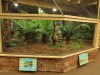
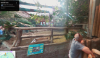
  • The new tuatara exhibit, which was converted from an old Galapagos Tortoise exhibit; slightly smaller than the old one, but still extremely good and providing them with plenty of substrate for digging; the second image, although not great quality, is a Google Streetview shot of the exhibit when it held the tortoises and shows the overall scale of the exhibit better than my own photograph does:

453173773_10164080245502571_3443046724516049336_n.jpg upload_2025-1-23_14-56-41.png

  • The old tuatara exhibit, which now contains several species of Malagasy endemic reptiles, including Parson's Chameleon, Panther Chameleon, Giant Madagascar Day Gecko, Southeastern Girdled Lizard, and Malagasy Collared Iguana. This, incidentally, is the exhibit in which the species in question bred for the first time outside New Zealand. Although I preferred the old inhabitants, it is still an extremely good exhibit for the species held within:

full

full


  • A large and recently-refurbished exhibit for Radiated Tortoise and Oustalet's Chameleon; this contains an open paddock-style exhibit and a heated indoor area:

full

full


  • One of the larger exhibits within Tropical Realm is this large enclosure and pool for a pair of Spectacled Caiman:

full


------

AQUARIUM

Although relatively small and due to close imminently due to the rising cost in electricity and maintenance of the tanks and behind-the-scenes machinery required for any such house, the aquarium at Chester Zoo is a solid little exhibit complex - a wide range of species are displayed within, in well-designed and rather pleasant tanks, and the off-show tanks located within the aquarium represent a significant portion of the EEP population of critically-endangered goodeids. Moreover, something I completely forgot to mention the last time that we discussed the Ectotherms category with regards to Chester is the fact that the collection was the first in the world to successfully breed Omani Blind Cave-fish (Garra barreimiae) and to the best of my knowledge is *still* one of only three zoological collections to have managed this achievement - the other two being Plzen and Sharjah Wildlife Centre. As such, multiple fish species are only present within European collections (and in some cases extant full-stop) thanks to the captive breeding work undertaken by Chester within this house.

Unfortunately due to the dark conditions within the aquarium, how busy it tends to be, and the tendency of Zoochatters to focus on photographing the inhabitants rather than the tanks, there aren't too many decent shots of the aquarium itself - but I've tried to find some of the best:

full

full

full

full

full
 

Attachments

  • 453173773_10164080245502571_3443046724516049336_n.jpg
    453173773_10164080245502571_3443046724516049336_n.jpg
    229.4 KB · Views: 30
  • upload_2025-1-23_14-56-41.png
    upload_2025-1-23_14-56-41.png
    866 KB · Views: 26
Last edited:
DRAGONS IN DANGER

Although the centrepiece of this house is most certainly the Komodo Dragon exhibits, there are a fair few other noteworthy aspects relevant to this category. The species has bred at Chester a few times - mostly via parthenogenesis - but there has also been at least one "traditional" breeding a few years ago, and Chester is the EEP studbook holder for this species.

  • The main indoor exhibit for Komodo Dragon:

full

full


  • The outdoor exhibit for Komodo Dragon, which I *think* they only have access to during the warmer months of the year for obvious reasons:

full

full


  • Opposite the main indoor exhibit for Komodo Dragon, there is a smaller exhibit which has variously held Malagasy iguanas and skinks, juvenile Ploughshare Tortoise and - most recently and currently - a group of juvenile Komodo Dragon. These were the subject of a research study last year, intended to get a better picture of the activity and behaviour patterns of the species in captivity compared to the same statistics in wild populations.

    The first photograph is the best image in the gallery showing the foot of the exhibit and the overall size, although it was taken during a timespan when Ploughshare were in residence rather than the current occupants; the second image shows the upper levels of the exhibit at the present time, and the third provides information about the aforementioned research study.

full

full

full


  • After the Ploughshare Tortoises originally held in the above exhibit grew larger, they were moved into their current exhibit - this photograph shows about half of the overall space, but is the best quality image I was able to find:

full


  • Immediately next to this exhibit, there is a large exhibit for Mountain Chicken - Chester Zoo is the EEP studbook holder and has bred the species on several occasions.

full


-------

MISCELLANEOUS EXHIBITS

  • This exhibit contains a large colony of Western Sand Lizard - a species which is critically-endangered in the UK, and which Chester regularly breeds for reintroduction into the dune habitats of Lancashire, Merseyside and northern Wales; the extreme right of the exhibit is separated-off and contains a smaller open-air terrarium for European Adder:

full


  • There aren't terribly-many photographs of the Butterfly House within the gallery, but it is a sizeable building which not only contains around a dozen species of butterfly, but also free-roaming species such as Trinidad Stream Frog, Tanzanian Red-legged Millipede, Graham's Anole and Panther Chameleon:

full


  • Again, we don't have many shots of the Reticulated Python exhibit within the Realm of the Red Ape house, but it is by far the biggest exhibit for the species I have seen - appropriately so, given the fact the zoo holds a particularly large individual. The exhibit provides a lot of vegetation cover and other means by which the inhabitant can escape view, including climbing material on several levels and angles. Interestingly, one entire side of the exhibit comprises a window to the outside - meaning the inhabitant is able to get a large amount of daylight and external view. These shots are rather foreshortened, but the exhibit is approximately 2 metres by 6 metres by 3 metres in total.

full

full


  • Realm of the Red Ape contains about another half-dozen exhibits for category taxa - both vertebrate and invertebrate - which are rather pleasant and well-designed; for instance this exhibit for Forest Dragon and Asian Giant Toad. Other species held within this area include Blue Tree Monitor, Boelens Python and Komodo Island Tree Viper:

full


  • The Jaguar House contains several category-relevant displays, including a large tank for Titicaca Water Frog, and an extremely good aquarium tank for around 30 species of Amazonian fish which is integrated into the base of the sloth exhibit within the house. It is worth noting here that the establishment of the European breeding programme for Titicaca Water Frog (which has spread to 20 European collections in a very short span of time) was the responsibility of Chester, which imported stock from Denver Zoo in 2019 and immediately started breeding the species and dispersing animals across Europe.

full

full


  • Gaboon Viper exhibit within the Okapi House:

full


  • Mixed exhibit for a variety of African fish within the Elephant House:

full
 
HEART OF AFRICA

The ectotherm collection within the new HoA development at Chester is located within the excellent Hidden Savannah house, which contains a wide range of reptiles, amphibians and invertebrates in a range of appealing and well-designed exhibits, and is - I would suggest - superior in exhibit quality to the new Gobi exhibit at Prague where this category is concerned:

  • One of the first exhibits one encounters when entering Hidden Savannah is the massive enclosure for Desert Locusts, which are visible both through a large window into the exhibit and via the windows of a Land Rover which is embedded within, giving a similar effect to the viewing domes and tunnels which one sometimes comes across in meerkat and mongoose exhibits:

full


  • Alongside several exhibits for small mammals outside the purview of this discussion, the main body of the house contains exhibits for species such as Red Spitting Cobra, Ethiopian Mountain Adder, African Bullfrog, Keyserling's Wonder Gecko, Plum Dung Beetle and Cat-eyed Mantis:

full

full


  • The final major exhibit within the house is a large open-topped mixed exhibit for a selection of reptile species native to arid and semi-arid grassland habitats, including Egyptian Spiny-tailed Lizard, Geyr's Spiny-tailed Lizard, Gorongosa Girdled Lizard, Oustalet's Chamaeleon, Starry Agama and Pancake Tortoise.

full

full


------

MONSOON FOREST

Although the fire several years ago caused severe damage to this building, including the complete loss of the "original" Tripa Research Station exhibit complex, the rebuilding process has led to several noteworthy improvements to the quality of ectotherm exhibitry within Monsoon Forest as a whole - including a significantly better incarnation of the Research Station. It should *also* be noted that Monsoon Forest contains a number of free-roaming reptile species - at the very least, Sun Skink and Emerald Tree Skink.

  • The "Tripa Research Station", located just beyond the entrance to Monsoon Forest, comprises a collection of tanks and terraria containing a wide range of invertebrates, fish, amphibians and reptiles intended to give the impression of a field research station in Indonesia, with a few being more permanent in design; the precise assortment of species present is somewhat flexible, with maybe 20-25 taxa present at any given time, but the exhibits I've selected below as general representations of the whole tend to be constants:

full
full

full

full

full


  • Beyond the Tripa Research Station, the next noteworthy set of exhibits are a collection of large mixed-species tanks built into the structure of the house, which have contained a number of taxa over the last few years, including Sulawesi Sailfin Lizard, Quince Monitor, Green Crested Lizard, Fea's Treefrog and Mao-Son Frog:

full

full

full


  • The next major enclosure which should be highlighted is the large Sunda Gharial exhibit; something which these photographs struggle to convey is the depth of the pool, which extends for around two or three metres under the floor level of the visitor area. As can be seen, the Gharial are mixed with Bornean Batagur and several species of small fish, and have multiple hauling-out points:

full

full

full


  • The final major exhibit relevant to this category within Monsoon Forest is a large paddock-style exhibit for Asian Giant Tortoise; there aren't many photographs in the gallery for this enclosure, but I've managed to find some which demonstrate size and design as best as possible:

full

full

full
 
Mixed Exhibit overview

The following 2023 post by @Swampy details the mixed-species reptile exhibits at Chester Zoo - some of these are no longer current, and obviously due to the nature of the thread from which it originates (focusing on mixed reptile exhibits throughout zoological collections) it only covers invertebrate, fish and amphibian taxa where these occur in the same exhibit as a reptile, but it nonetheless provides a good overview. As such I reproduce it below:

Presently at Chester:
- Western Gaboon Viper (Bitis rhinoceros) + fruit beetles (Mecynorhina ugandensis)

-Reticulated python (Malayopython reticulatus) + tokay geckos (Gekko gecko)

-Parson's chameleon (Calumma parsonii) + southeastern girdled lizard (Zonosaurus maximus)+ Henkel's leaftailed gecko (Uroplatus henkeli)

-
Parson's chameleon (Calumma parsonii) + southeastern girdled lizard (Zonosaurus maximus) +giant day gecko (Phelsuma grandis) + Cuvier's Madagascar swift (Oplurus cuvieri)

-
Green crested lizard (Bronchocela cristatella) + Fea's flying frog (Zhangixalus feae)

-Sunda gharial (Tomistoma schlegelli) + painted batagur (Batagur borneoensis) + various small fish

-Hispaniolan giant galliwasp (Caribicus warreni) + mountain chicken (Leptodactylus fallax)

-
Western girdled lizard (Zonosaurus laticaudatus)+ Cuvier's Madagascar swift (Oplurus cuvieri)

-gold dust day gecko (Phelsuma laticauda) + whitespotted reed frog (Heterixalus alboguttatus) + golden mantella (Mantella aurantiaca)

-Amazon basin emerald tree boa (Corallus batesii) + dyeing poison dart frog (Dendrobates tinctorius 'azureus') + imitator dart frog (Ranitomeya imitator)

-casqueheaded iguana (Laemanctus longipes) + golden poison dart frog (Phyllobates terribilis)

-
emerald tree skink (Lamprolepis smaragdina) + cinnamon frog (Nyctixalus pictus) + Bornean rock frog (Staurois parvus) + vampire crab (Geosesarma hagen)

-free-roaming sun skinks (Eutropis multifasciata) and emerald tree skinks (Lamprolepis smaragdina) in Monsoon Forest, including access to the Tomistoma mix mentioned above

-free-roaming Jamaican anoles (Anolis grahami) in the butterfly house, along with Trinidad stream frogs (Mannophryne trinitatis)

Tuatara and other significant captive breedings.

Although Chester Zoo has achieved several noteworthy captive breedings within this category, including (as I will detail shortly) involvement in a wide range of reintroduction projects, I believe that the fact that the collection has now successfully bred Tuatara on several occasions - something which no other zoological collection outside of New Zealand has ever managed - is highly significant, worthy of particular praise, and overshadows anything which Prague can boast in this regard.

Other captive breeding records of particular note include the first captive breeding of Omani Blind Cave-Fish worldwid, the import and first European breeding of Titicaca Lake Frog and hence responsibility for the current presence of the species throughout a large number of European collections, and (as discussed both upthread and below) the import and breeding of Tequila Splitfin, directly preventing the global extinction of this taxon.


Captive Breeding: Reintroduction Projects

As I've mentioned several times already, a significant amount of category-specific captive breeding at Chester Zoo - both at the present time and in the recent past - has directly contributed to ongoing reintroduction projects both within the UK and overseas. To the best of my knowledge, these include the following:

  • Partula varia and Partula rosea - thousands of snails bred at Chester Zoo were among those which were reintroduced to French Polynesia from 2015 onwards (further information)
  • Fen Raft Spider (Dolomedes plantarius) - this wetland species, which is critically-endangered within the UK and was believed to be on the brink of local extinction at the start of the 2010s, was the focus of a captive-breeding and reintroduction programme throughout the first half of said decade, with Chester breeding several hundred individuals for this purpose (further information)
  • Greater Bermuda Landsnail (Poecilozonites bermudensi) - this island endemic species was believed to have become extinct in the 1970s, but after it was rediscovered in 2014 individuals were exported to Chester Zoo and London Zoo for the purposes of building a captive population. Subsequently, both zoos have sent snails back to Bermuda for reintroduction, with one article in 2019 stating that Chester had been responsible for the reintroduction of thousands of individuals that year alone (further information)
  • Lesser Bermuda Landsnail (Poecilozonites circumfirmatus) - this island endemic species is believed to be extinct in the wild, with the last sighting having occurred in 2004, but small numbers had been taken into captivity by London Zoo a few years previously, with Chester subsequently also receiving stock. Chester started reintroduction of captive-bred stock in 2020, with further captive breeding and reintroductions having followed (further information)
  • Desertas Landsnail (Discula lyelliana, Geomitra coronula, Geomitra grabhami, Atlantica calathoides) - all four of these Madeiran endemic species were believed extinct until rediscovery of tiny numbers in the late 2000s and early 2010s, with Chester Zoo being responsible for the import of wild stock and establishment of a captive breeding programme; the first reintroductions of Chester-bred lyelliana and coronula took place in late 2024, with reintroductions of the remaining two taxa planned (further information)
  • Large Heath Butterfly (Coenonympha tullia) - this species used to be commonplace throughout the lowland bogs and peatlands of Lancashire, Merseyside and Greater Manchester, but significant population decline and local extirpations took place throughout the 19th and 20th centuries; Chester Zoo has been involved throughout the 2010s and early 2020s in the collection of individuals from surviving populations, their captive breeding and reintroduction to former breeding sites (further information)
  • Bermuda Skink (Plestiodon longirostris) - this critically-endangered species is the only extant terrestrial vertebrate endemic to Bermuda, with a captive-breeding programme for the taxon established by Chester in the early 2010s and a first breeding of the species taking place in 2017; I believe that the breeding population has continued to grow and that reintroductions have now commenced, but cannot find any news articles confirming the latter.
  • Tequila Splitfin (Zoogoneticus tequila) - this goodeid is endemic to a single pool in the Ameca River basin of northwest Mexico, and was ultimately extirpated in the wild in the late 1990s; however it is now fairly commonplace in captivity as a result of stock imported by Chester Zoo in 1995 shortly before its extinction in the wild, and the subsequent successful captive breeding of the species. Reintroductions of the species have taken place in recent years, with the individuals in question being descended from the original Chester import (further information)
  • Montseny Brook Newt (Calotriton arnoldi) - this Critically Endangered species is endemic to a small handful of mountain streams on the slopes of the Montseny Massif in northern Catalonia, with a wild population estimated at around 1000 individuals; Chester Zoo became involved in the captive-breeding programme for the species managed by Barcelona Zoo in 2017, and now regularly breeds the species and returns adults and larvae to Spain for reintroduction - with reintroductions of Chester-bred stock having taken place as recently as May 2024 (further information)
  • Sand Lizard (Lacerta agilis) - already discussed upthread, with captive breeding and reintroductions having taken place at Chester since the 1990s.
I'd be interested to hear from anyone who knows of any I have missed!

EEP Programmes

Chester Zoo is the EEP/ESB coordinator for the following category species/groups:

Goodeidae
Mountain Chicken
(Leptodactylus fallax)
Lake Patzcuaro Salamander (Ambystoma dumerilii)
Olm (Proteus anguinus)
Palawan Forest Turtle (Siebenrockiella leytensis)
Henkel’s Leaf-tailed Gecko (Uroplatus henkeli)
Komodo Dragon (Varanus komodoensis)

It will be noted that since the Chester vs Zurich match within this category earlier this year, Chester has added an additional EEP/ESB programme to its already-impressive roster with the creation of a breeding and conservation programme for Olm - perhaps the most interesting and unusual of all native European ectotherms!

----

I think I have made a pretty solid case; although Prague does (as I have previously acknowledged) have the single best ectotherm exhibit in Europe, and a marginally-larger overall total of ectotherm species, Chester deserves the edge - albeit a fairly slender one - given the consistent high quality of its ectotherm exhibits, an extensive and proven record of both in-situ and ex-situ conservation breeding and reintroduction of ectotherm taxa, and the significance of certain captive breeding records above and beyond anything which Prague can boast.

As such, I believe that a 3-2 vote for Chester is the fairest and most accurate vote possible - even if I acknowledge that a 52-48 result or even a 51-49 result in favour of Chester would be even better - and certainly *far* more fair and accurate than the automatic and silent 4-1 vote for Prague which has been (predictably) cast elsewhere.
 
Ectotherms as a category include some animals I don't always rush to see in zoos but I have found them being mixed into other exhibits very engaging - I actively look for them in other places as a result of visiting Chester whereas previously going into an insect house wasn't my priority. I've gone 3/2 for that zoo as I think they do this really well. I realise lots of people are hugely engaged by Ectotherms, but as a more 'average' visitor in respect to this group of animals, the method of displaying them worked and I give credit for that.

Some excellent conservation work in both places too but the mix at Chester which includes some native species was also a factor. The 'little creatures' are often under highlighted (like the pupfish at Whipsnade, the rarest things in the zoo) though it was great to see a lot of coverage about the Patula snails which obviously plays well in this category for Chester. Native species wise the Sand lizard story is another highlight and the exhibit is a lot of fun (particularly when you can actually see them in the good weather!). The breeding record and the exhibit for Tuatara also influenced my vote. I don't often vote based on something unusual animal wise, but that's a rarity I really enjoy.

I also have to call out the Komodo breeding; while I have seen and enjoyed them as adults well displayed in places like Colchester, seeing a little Komodo for the first time and learning about them as youngsters was genuinely exciting (for me). Chester holding the EEP and having that level of expertise played into my score here.

I do think the pictures of the Giant Salamander Pavilion in particular at Prague are excellent and Kalaw's passionate and knowledgeable arguments are (as usual) persuasive though - it could be 3/2 either way and I get the equivalent vote for Prague.
 
I'd be interested in any thoughts, feedback or rebuttals which anyone has to make with regards to the points I raised yesterday :) in particular, as the Cup participant with the most immediate familiarity with Prague I would be interested to hear the thoughts of @merlin both in terms of what their home zoo has to offer, and the information posted by myself!
 
I'd be interested in any thoughts, feedback or rebuttals which anyone has to make with regards to the points I raised yesterday :) in particular, as the Cup participant with the most immediate familiarity with Prague I would be interested to hear the thoughts of @merlin both in terms of what their home zoo has to offer, and the information posted by myself!
Sorry, I decided not to participate in this match, since I really am not too fond of most ectotherms. My favorite ones are amphibians and there are not many of them in Prague. Especially since I believe we should not take the temporary dart frog exhibits in count, since it only lasts a few months every few years and because those frogs are borrowed from private keepers and other institutions. It's funny nobody has mentioned there are also tarantula exhibitions going on from time to time - probably because those species are not listed on ZTL? ;)
There are some excellent things like the giant salamander house, native reptiles exhibits at the Zakázanka path, crocodile monitor exhibit or Chambal. On the other hand, it is a shame the gharials do not have access to the outdoor enclosure anymore. The reasons for that are "that the gharials did not like the outdoor enclosure, because they can hear and smell lots of stuff". That's what the head tortoise keeper has stated - she's the wife to Prague's curator of reptiles.
There used to be two amazing vivariums inside the Dja pavilion. But they changed their look for some reason. Most of the plants are gone now and it looks rather... boring and ugly.
I know Prague keeps some nice species (I really like the Gobi racerunners for example), but most of the exhibits are not even worth mentioning in my opinion. Most of the terrariums in the Terrarium pavilion are very generic. I think that the lack of photos of Prague's terrariums in the gallery only prove that. Of course, Prague keeps many and many rarities, but I think several people on here have already realized that's not something I care so much about. Especially when the sources for the animals are quite unclear.
 
Last edited:
Sorry, I decided not to participate in this match, since I really am not too fond of most ectotherms. My favorite ones are amphibians and there are not many of them in Prague. Especially since I believe we should not take the temporary dart frog exhibits in count, since it only lasts a few months every few years and because those frogs are borrowed from private keepers and other institutions. It's funny nobody has mentioned there are also tarantula exhibitions going on from time to time - probably because those species are not listed on ZTL? ;)
There are some excellent things like the giant salamander house, native reptiles exhibits at the Zakázanka path, crocodile monitor exhibit or Chambal. On the other hand, it is a shame the gharials do not have access to the outdoor enclosure anymore. The reasons for that are "that the gharials did not like the outdoor enclosure, because they can hear and smell lots of stuff". That's what the head tortoise keeper has stated - she's the wife to Prague's curator of reptiles.
There used to be two amazing vivariums inside the Dja pavilion. But they changed their look for some reason. Most of the plants are gone now and it looks rather... boring and ugly.
I know Prague keeps some nice species (I really like the Gobi racerunners for example), but most of the exhibits are not even worth mentioning in my opinion. Most of the terrariums in the Terrarium pavilion are very generic. I think that the lack of photos of Prague's terrariums in the gallery only prove that. Of course, Prague keeps many and many rarities, but I think several people on here have already realized that's not something I care so much about. Especially when the sources for the animals are quite unclear.

Fair enough :) although I think your comments would have been worth contributing to the discussion even if you still held off on voting.

Overall the match was rather quieter than I expected, with very few people actually bothering to make the case for Prague and little-to-no engagement with the points I raised regarding Chester:

Chester -- 39/85 points - 45.882%
Prague - 46/85 points - 54.118%
 
Back
Top