Chlidonias presents: Bustralia

Alice Springs Sewage Ponds again


Last day in Alice Springs. I had a bus in the afternoon to Pine Creek, the famed home of Hooded Parrots. I hadn’t got much out of the sewage ponds the other day with the lack of access, and I hadn’t been going to return there, but just the fact that I knew there were Orange Chats and White-winged Fairy-Wrens there beyond the fence bugged me and I had to give it another go before I left.

I caught the bus to the sewage ponds to save some time. There were a few birds I didn’t see this time (Black Swan and Black Duck come to mind) but the avocets were present – still too far back to be considered good viewing. A Swamp Harrier was quartering the far shore and on a closer pond there was a flock of Whiskered Terns hawking over the water, which were both new for the trip-list but not the year-list. Ditto for the Common Sandpiper bobbing about as they do along the water’s edge.

I walked repeatedly up and down the fence, trying to see every available angle in case a chat or fairy-wren was suddenly coming out into the open. After a lot of nothing, I moved to the scrubby area on the other side of the road where I sent ages trying to get photos of a Brown Honeyeater which was persistently popping in and out of view in a bush beside the track.

While I was in the process of not succeeding very well at that, my attention was drawn away from the honeyeater by a female fairy-wren. I’d seen Purple-backed Fairy-Wrens here last time, but this didn’t look right. I switched my focus to the fairy-wrens, of course, and followed them along the track as they darted in and out of cover. I never managed to get photos but I got a lot of good looks at them and came to the conclusion they were female White-winged Fairy-Wrens (of the three species here, the other two have “masks” around the eyes which give them a look distinct from the female White-wings). Unfortunately it was a party of females and one non-breeding male – which basically looks like a female bird – so I still haven’t seen a coloured male. Halfway there though!

After that I walked to the botanic gardens. It was very hot today and (again) I saw little there. I made sure I saw rock wallabies though – yesterday was the first day of this Australian trip where I hadn’t seen some kind of mammal and I wanted to keep that failure as a one-off for as long as possible!

full

Black-flanked Rock Wallaby from an earlier day.


29 bird species today, plus one mammal (Black-flanked Rock Wallaby at the gardens):

At the sewage ponds and surrounds: Australian Little Grebe, Grey Teal, Common Coot, Black-fronted Dotterel, Spur-winged Plover, Common Sandpiper, Pied Stilt, Red-necked Avocet, Whiskered Tern, Australasian Swamp Harrier, Black Kite, Crested Pigeon, Spotted Dove, Galah, Australian Ringneck , Fairy Martin, Willy Wagtail, White-winged Fairy-Wren, Magpie-Lark, Zebra Finch, Brown Honeyeater, White-plumed Honeyeater, Singing Honeyeater, Yellow-throated Miner, Little Crow.

At the Olive Pink Botanic Gardens (plus some of the above again): Black-faced Cuckoo-Shrike, Rufous Whistler, Australian Magpie, Pied Butcherbird.


full

Yellow-throated Miner, just so that there is at least one bird photo in this post!
 
Alice Springs Desert Park


This morning was chilly and breezy, although it got hotter later. I was making this the Desert Park day, but I was expecting to be there for just a couple of hours and then I’d spend the rest of the day birding in the general vicinity.

If someone had told me beforehand that I would spend eight hours at the park - with just eight aviaries, a nocturnal house, and three further enclosures (for kangaroo, emu, and dingo) - I would have been doubtful. Yet I spent almost two hours just on the first three aviaries, which are clustered quite close together a couple of minutes from the entrance. I loved this park. It is brilliant. I arrived just after the 7.30am opening time and it took me until 12.45pm to do a full loop, and then I stayed further until about 3.30pm so I could catch the 3pm bird show.

The Desert Park is just on the edge of town (about 5km away) and is easy to reach on the #400 / 401 bus which runs at roughly one to one-and-a-half hour intervals (with the first bus at 7am on weekdays, and 8.45am on Saturdays). You get off at the Albrecht Oval, and just follow the shared cycle/walking path for about 900 metres. The entry fee is AU$39.50.

The local town buses in the Northern Territory are all free at the moment, including in Alice Springs and Darwin. They were made free in September last year for a month, and then they just ended up staying free.

Alice has a big problem with homeless people who have moved in from smaller settlements to take advantage of the access to alcohol. The buses themselves would be nice enough (if they were a bit cleaner – everything gets dusty quickly in the Outback!) but because they are free the passengers, seemingly, are almost solely the homeless getting from one side of town to the other without walking, and the buses stink of BO! Not just a bit whiffy, but cut-it-with-a-knife stinking. I’ve been on a lot of janky buses in Asia, but the Alice Springs buses are the only ones where I’ve genuinely been worried I’d be catching scabies or lice when riding them.

The walk from the bus stop to the Desert Park is through the natural mallee scrub and there are quite a lot of birds to be seen – on the way I saw a Western Bowerbird, Zebra Finches, and several honeyeaters including Spiny-cheeked, Singing, and White-plumed.


full

Zebra Finches, in the wild

full

White-plumed Honeyeater (photo taken at the Botanic Gardens earlier)


The wild bird total for the whole day wasn’t great (18 species) because most of the time I was looking at the captive birds and trying to photograph them. I did see a lifer bird, however, with a Red-backed Kingfisher perched high in a tree when I was walking back to the bus stop in the afternoon. The mammal for the day was House Mouse.

full

The desert-dwelling Red-backed Kingfisher


All the birds and other animals at the Desert Park are inland species, found naturally within 400km of Alice Springs apparently. This means that the birds you’re looking at mostly aren’t your usual aviary birds (although some are, because of course this is where birds like Zebra Finches and Budgerigars come from). Instead there are grasswrens and honeyeaters and thornbills and whitefaces, which explains why I was spending so long at each aviary.


full

Southern Whiteface

full

Dusky Grasswren


All the aviaries are themed around habitats. Three of them are walk-through aviaries. The other five are all of the same basic design, having a large viewing "porch" with the aviaries having windows. There isn't much issue with reflections or glare because the viewing area is covered over.


full

Golden-backed Honeyeater collecting nest material from another visitor

full

They even have an Australian Little Grebe!


It’s not just great aviaries and unusual birds here though. The Nocturnal House is fantastic, easily the best I have ever seen. I love nocturnal houses because I love odd animals, which most night animals are, but all to often the animals inside these houses are unfortunately stuck inside much too small boxes. Here, instead of tiny boxes the animals are in large to huge enclosures, belying the idea that spaces "need" to be small to enable the animals to be seen in the dark, and especially belying the idea that rodents should be in little cubes. The Greater Stick-nest Rats, for example, were running around in a giant space gathering twigs to add to their pile, while Red-tailed Phascogales skittered back and forth behind them. Almost every animal here was seen well (only two were not seen). The visitor spaces were also great - almost like a public aquarium rather than the narrow corridors of a typical nocturnal house.


full


full


Some of my favourite zoos in Australia are the ones which have a focus on native birds and which display them in interesting “habitat-style” aviaries. I’m thinking Alice Springs Desert Park, Gorge and Featherdale in particular. There are zoos which would be considered objectively better (say, Adelaide Zoo or any of the other large ones) but subjectively the bird ones are top for me.


More of a review here: Alice Springs Desert Park, September 2025 [Alice Springs Desert Park]

And photos in the gallery here: Alice Springs Desert Park - ZooChat


full

Numbat, looking like a cross between a Euplerid and a squirrel.
Wow, that Dusky Grasswren looks just like a Wrentit, to which I assume it is totally unrelated.
 
Wow, that Dusky Grasswren looks just like a Wrentit, to which I assume it is totally unrelated.
Huh, I just looked that up - Wrentits do look really similar to grasswrens, but much smaller I think. Grasswrens are quite chunky birds so they kind of resemble rodents as they scuttle about.
 
Alice Springs – walking to(wards) Simpson’s Gap


This morning was again chilly and windy, although unlike yesterday which just remained a little breezy today it became really windy later on. This wasn’t much of an issue because even though this is desert, it isn’t sand desert. The stony ground is baked hard and covered in grasses and shrubs.

I was heading today in the direction of Simpson’s Gap, which is about 25km west of town. The furthest a bus goes out that way is the one I caught yesterday to the Desert Park, which only cuts off 5km from the journey. I was just going to walk the rest, and see what I could see along the way. I didn’t really expect to make the whole distance but the end destination isn’t the point.

I caught the 7am bus to the same stop as for the Desert Park, then walked 2.5km along the shared cycle/walking path to Flynn’s Grave. This is the same path which you take to reach the Desert Park, but turn off before you get to there. At Flynn’s Grave you cross the road and you’re at the start of the path to Simpson’s Gap. That’s another 17km and it is paved the entire way so it’s easy to walk.

There was a fair bit of activity in the mallee scrub along the path to Flynn’s Grave although the wind made it tricky for me because I generally have to rely on movement to find birds, and when it’s windy everything is moving. There were the usual Zebra Finches and Splendid Fairy-Wrens and so forth, and also a nice flock of Yellow-rumped Thornbills on the service road alongside the walking path, of which I was somewhat-successfully endeavouring to take photos when a parks vehicle roared past and scattered them.

full

Yellow-rumped Thornbill - the photo may look like it was taken at night with a flash, but that's just how harsh the light is in the desert during the daytime!


The best birds without a doubt were just after this, when I noticed some Galahs flying across the trees in the company of several other pink and white cockatoos which weren’t white enough to be corellas or sulphur-crests but not pink enough to be more Galahs. I followed them with my binoculars until they landed – and thus not against the sky – and saw that they were indeed one of my most wanted Australian birds, the Pink Cockatoo.

full


I always seem to be saying that “X Bird” is my “most wanted”, and of course once you see it then some other bird becomes your most wanted, but the two Australian cockatoos I have always really wanted to see are the Gang-Gang and the Pink Cockatoo, and now I’ve seen them both on this trip.

Pink Cockatoo isn’t a particularly apt name. They are mostly a very soft pinkish-white – I mean, they are pink, but the Galah is a much more pink bird. Their other common names are Major Mitchell’s Cockatoo and Leadbeater’s Cockatoo. I vary in what I call them, but the eponymous names are falling out of favour in this modern era of not wanting birds to be named after horrible people like Major Mitchell.

The cockatoos had landed not far away, one pair actually was in a small eucalyptus tree right beside a track running off the walking path. Photographing them was not easy – they were busy feeding amongst the leaves, and that and having to point the camera into the sun didn’t make for a good combination. Luckily they were moving about a bit in the tree and I got some shots.

full


full


The Pink Cockatoos were feeding on these hard growths pictured above. I don’t know what they are, whether they are some sort of fruiting body or some sort of insect gall – I tried googling them but didn’t get anywhere – but they were breaking them open and the inside seemed to be soft and delicious.


You can probably tell how much the wind was blowing in the photo below. The wind not only caused trouble for me trying to photograph them, with the leaves constantly moving into frame, but the cockatoos didn’t like it either. This one had got sick of two little branches which kept hitting it while it was feeding, so it very deliberately bit each one off and dropped them.

full


There are bicycle rental shops in town and my initial idea had been to bike out to Simpson’s Gap, but they don’t open until 9am and walking is free. If I had rented a bicycle I wouldn’t have seen the Pink Cockatoos (I wouldn’t have been going past here until about two hours later), so walking was definitely the right choice today.


The path from Flynn’s Grave is mostly flat, and the landscape is largely pale-whitish grassland with scattered eucalyptus trees, some of them a startling contrast of pure white trunk and bright green leaves. Birdlife was patchy, but one of those patches started with Black-faced Woodswallows perched in a nearby tree which I was trying to photograph, and then suddenly turned into a swirl of dozens of woodswallows, White-winged Trillers and Crimson Chats, all of which were too fast and not close enough to photograph but fun to watch.

full

Black-faced Woodswallows


Much more numerous than the birds were the flies. As I’ve mentioned previously the flies in inland Australia are just after your sweat and they’re welcome to it, but they are so very annoying when they think they can just drink from your eye sockets instead. Most of the places I’ve been have actually been quite light on flies, but the path to Simpson’s Gap was buzzing.

The thing which makes them most annoying is the way they ride along with you when you walk. You’re not just coming across flies as you go, you are collecting flies as you go. They settle on your back and hat and bag, and whenever you stop walking they erupt up around you like a blizzard of flies. A flizzard, if you will.


I didn’t make it all the way to Simpson’s Gap. I think I got to about 15km from Flynn’s Grave, and then turned back so that I wouldn’t miss the last bus back to town. It did seem silly not to go just that extra few kilometres, but it would have been one or two hours extra (allowing for the time spent there as well). If I’d missed the last bus then the 5km more to town isn’t far in itself, but added onto the previous 40-odd kilometres it is, and I’d have then also been walking through the middle of town after dark which was generally not recommended. As it happened I got back to the bus stop two hours before I’d anticipated because I didn’t see many birds on the way back, so could have kept going anyway!


full

Juvenile Black-shouldered Kites – when I first saw them huddled up in a eucalyptus tree I thought for a moment they might be Letter-winged Kites, which are nocturnal and roost in eucalyptus, but then I saw their parents and watched them all fly so could see the wing patterning.


Bird total for the day was 26 species, and no mammals – I had been expecting to see at least some Euros on the walk, but none:

Nankeen Kestrel, Black Kite, Black-shouldered Kite, Spotted Dove, Crested Pigeon, Galah, Pink Cockatoo, Australian Ringneck, Pallid Cuckoo, White-winged Triller, Black-faced Woodswallow, Black-faced Cuckoo-Shrike, Grey-crowned Babbler, Rufous Whistler, Willy Wagtail, Hooded Robin, Yellow-rumped Thornbill, Splendid Fairy-Wren, Purple-backed Fairy-Wren, Magpie-Lark, Zebra Finch, Crimson Chat, Spiny-cheeked Honeyeater, Singing Honeyeater, Yellow-throated Miner, Pied Butcherbird.

I much prefer the name, Fire-crested Cockatoo for the ‘Pink Cockatoo’, it’s actually accurate to the bird and cannot be confused with other pink cockatoo species, also seen them called Sunset Cockatoo and Desert Cockatoo. Whatever you call them they are superb birds, I got my first look at some in the wild quite recently at Lake Mungo in New South Wales, saw a pink blob in the distance and put my binoculars and there it was in all its glory. A couple days later I got my Vic tick with a flyover whilst stopping for lunch in Ouyen.
 
I love'Pink' cockatoo also, having known them for decades in Europe as Major M's or Leadbetters. We saw them wild around Alice Springs too, but only as single pairs and they were mostly feeding on little melon-like fruits growing by the roadside, so they were mainly on the ground. Lovely birds. I think the Desert Park may have had a total refit since I was there, the nocturnal exhibits look a lot more sophisticated in design than I remember. No Spinifex pigeons yet?
 
I much prefer the name, Fire-crested Cockatoo for the ‘Pink Cockatoo’, it’s actually accurate to the bird and cannot be confused with other pink cockatoo species, also seen them called Sunset Cockatoo and Desert Cockatoo.
In German (and Czech) language, this species is called Inka Cockatoo. Its crest resembled headwear of some tribes of native South Americans. I think this name could work in English too.
 
In German (and Czech) language, this species is called Inka Cockatoo. Its crest resembled headwear of some tribes of native South Americans. I think this name could work in English too.
Yes, an Australian cockatoo named after a South American tribe really works.
 
I much prefer the name, Fire-crested Cockatoo for the ‘Pink Cockatoo’, it’s actually accurate to the bird and cannot be confused with other pink cockatoo species, also seen them called Sunset Cockatoo and Desert Cockatoo. Whatever you call them they are superb birds, I got my first look at some in the wild quite recently at Lake Mungo in New South Wales, saw a pink blob in the distance and put my binoculars and there it was in all its glory. A couple days later I got my Vic tick with a flyover whilst stopping for lunch in Ouyen.
Agree with you. Pink cockatoo can be confused with the Galah. I like Fire-crested cockatoo, it has the feel of the outback. Sunset is not bad, either.
 
No Grey Honeyeaters at the Desert Park?

Did you get photos of the Mulgaras?
 
Huh, I just looked that up - Wrentits do look really similar to grasswrens, but much smaller I think. Grasswrens are quite chunky birds so they kind of resemble rodents as they scuttle about.
Birds of the World lists the same length (15 cm) for both Dusky Grasswren and Wrentit.
 
I much prefer the name, Fire-crested Cockatoo for the ‘Pink Cockatoo’, it’s actually accurate to the bird and cannot be confused with other pink cockatoo species, also seen them called Sunset Cockatoo and Desert Cockatoo. Whatever you call them they are superb birds, I got my first look at some in the wild quite recently at Lake Mungo in New South Wales, saw a pink blob in the distance and put my binoculars and there it was in all its glory. A couple days later I got my Vic tick with a flyover whilst stopping for lunch in Ouyen.
Agree with you. Pink cockatoo can be confused with the Galah. I like Fire-crested cockatoo, it has the feel of the outback. Sunset is not bad, either.
I've never heard any of those other names...
 
No Grey Honeyeaters at the Desert Park?

Did you get photos of the Mulgaras?
Captive Grey Honeyeaters? No.

Wild? Also no.

I didn't get any animal photos in the Nocturnal House, too dark for my camera skills. And I had to get a new phone before this trip and it doesn't take photos as well as my old one, so that wasn't any use either.
 
I've never heard any of those other names...
They were floated in the Australian bird community at the time the proposal to move away from Major Mitchell was first raised. I prefer both of them to pink, but of course the broader community does not get a vote. The one I never heard before was desert cockatoo.
 
Captive Grey Honeyeaters? No.

Wild? Also no.

I didn't get any animal photos in the Nocturnal House, too dark for my camera skills. And I had to get a new phone before this trip and it doesn't take photos as well as my old one, so that wasn't any use either.
I meant wild. The Desert Park is one of the more easily accessible places were they are regularly reported.

Bummer, no one has managed a picture yet even though they're at two different facilities now.

Wow, that Dusky Grasswren looks just like a Wrentit, to which I assume it is totally unrelated.
Having seen both they are somewhat similar.
 
Alice Springs to Pine Creek


The bus left Alice Springs at 5.30pm. It wasn’t as cold as the other bus had been (coming from Adelaide to Alice), but I still needed a sweatshirt. It gets dark around 6pm so no further birds were seen before nightfall.

The first meal-break stop was at Tennant Creek at midnight for 1.5 hours. There were police waiting at the BP for each bus and checking inside – I don’t know if this is a standard check here or if they were looking for someone. There seemed to be a lot of random people loitering in the shadows around the BP. Everyone off the bus waited inside the BP. I bought a coffee for AU$6. The coffee was good, but the toilets were disgusting.

The next break was half an hour at a roadhouse at Daly Waters at 5.55am, just on dawn. Another coffee, also $6. This was the first place I saw any birds today. There were lots of Black Kites circling above the roadhouse, and Torresian Crows and Magpie-Larks on the ground. As I re-boarded the bus I could hear lorikeets waking up in the tree above the bus. I saw three of them fly but they were in silhouette – I knew they had to be Red-collared Lorikeets but I didn’t count them because I wanted to see them properly.

What I could count were the Apostlebirds which came bounding across the forecourt, right in front of the bus! Their name comes from their supposed habit of always being in groups of twelve. These ones obviously hadn’t read their bible because there were at least twenty of them, fanning out across the petrol station.

Most of this bus ride was through wooded grasslands, and unlike the previous bus ride which was largely bird-free, on this one I was seeing birds constantly. Unfortunately they were mostly clouds of little ones, which from a moving bus I didn’t have a hope of identifying. Apart for birds, an interesting feature of this ride was the apparent trend of dressing termite mounds in clothes. There were also unusual numbers of burned-out and wrecked cars along the sides of the highway.

Somewhere south of Katherine, which is a town not a person, the bus made a pick-up at Mataranka Homestead. I had dozed off, and when I opened my eyes the road was lined with palms and pandanus forest, which was really unexpected. Greater Sulphur-crested Cockatoos of the northern race fitzroyi were flying overhead. The bus pulled up at the homestead, peacocks strutting around, and I thought “this looks like somewhere I might see lots of birds!”

Just afterwards at the actual “town” of Mataranka there was a Dollarbird on a powerline, which was the first one I’ve seen in Australia (I’ve seen lots in southeast Asia). I was already on my phone finding out how much rooms at Mataranka Homestead cost (about AU$90) – I might stop back there on my way from Darwin to Queensland, because it would make a handy break-point in a really long bus ride.


There was a break of 1.5 hours at Katherine at 9.45am. Mostly where the buses stop in the towns there are very few birds and they are usually just kites and crows and things like that. Katherine was full of birds!

Above the BP there was a swirling mass of Black Kites, the usual bird of bus stops but here in huge numbers. It was blazing hot – possibly the kites weren’t circling here intentionally, they were just caught in a rising furnace of air and either escaped when high enough or burst into flame.

Next to the BP was an open area, a sort of cross between a park and waste ground, and walking along here with my binoculars I saw four species of honeyeaters in the streetside trees (Blue-faced, Rufous-throated and Banded Honeyeaters, and Little Friarbirds) as well as White-breasted Woodswallows. And then, on the planted strip running down the centre of the town’s main street, a Great Bowerbird! Just hopping around like he was out in the bush.

The only bowerbirds I’d seen before this were the Satin, Regent and (most recently) Western Bowerbirds – the Great Bowerbird is gigantic in comparison! It’s like if you’re used to seeing Grey Squirrels and then see a marmot.

full

Great Bowerbird and Little Friarbird (this photo was taken later at the Broome Bird Observatory – I’m using it here to try and give an idea of how big Great Bowerbirds are)


I crossed the road to the Information Centre which was surrounded by fruiting trees. There were several Great Bowerbirds coming and going, White-bellied Cuckoo-Shrikes, and even more honeyeaters – Yellow-tinted and White-gaped Honeyeater were both added to the list. I could hear lorikeets but could not see them so they again escaped being counted.


Pine Creek is just an hour north of Katherine. The bus stops at the Lazy Lizard which is the caravan park where I was staying. It is directly across the road from the Water Gardens, where the Hooded Parrots can be seen. Also across the road is the town’s other accommodation, the Railway Resort, which is a hotel rather than a caravan park but the rooms at both are about the same price.

I was actually intending to stay at the Railway Resort because when I’d checked the room rates some time earlier it was AU$95 and cheaper than the Lazy Lizard. But when I went to book later, the cheapest room was now $100 and (more importantly) the booking system on their website didn’t seem to work. I went to the Lazy Lizard’s website and found their rooms were now $95, so that’s where I ended up staying. I feel like the Railway Resort would have been a better choice in hindsight, if I’d been able to book it, but never mind.

It was still a few hours before their official check-in time when the bus arrived but the room was ready anyway, which was nice. I don’t think they have many people staying in the rooms because most are arriving in campervans.

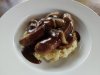
The reception is also a shop (I think the only one in the town, because the town is barely a few streets across), and next to it is a tavern. I think this, the Railway Resort, and a cafe or two are probably the only places to eat in town. I ate once at the tavern, having lunch there just after I arrived, and it was good. I had buffalo sausages and mashed potatoes which cost AU$28. I haven’t had Water Buffalo before – a new one for the list of animals I’ve eaten. The rest of the time I just bought noodles or microwave meals from the shop.


I would be at Pine Creek for two nights, which in effect gave me a half-day (when I arrived) and two full days (my onward bus wasn’t until 6.25pm). The primary reasons for an animal-watcher being there are to see Hooded Parrots at the Water Gardens (across the road), Gouldian Finches at the sewage ponds (about 3km from town), and Ghost Bats (at night, just on the edge of town). You don’t need two and a half days to do this but I’m not in any hurry to get anywhere. Also the Gouldian Finches are not reliable, so extra time doesn’t hurt.

After sorting out my gear and checking where things were in the caravan park, and then having lunch at the tavern, I crossed the road to the Water Gardens. I had seen the name in trip reports of course, but never seen any photos. I’d imagined it was a green and shady formal garden. Instead it is basically a stretch of grass with three or four ponds down the middle, and dry-country trees and palms dotted around them. It’s certainly not unpleasant, but you couldn’t really sit there and relax while watching birds without being burned to a cinder by the sun.

The first bird I saw here was a White-bellied Sea Eagle soaring overhead which was a surprise - Pine Creek is a long way from the sea! Bar-shouldered Doves were very common, and were new for the trip-list (which was also surprising really), and finally some Red-collared Lorikeets made a visual appearance for me so I could say I had “actually” seen them.

full

Bar-shouldered Dove


Despite being extremely hot, there were plenty of birds in the trees here, much like at Katherine. Peaceful Doves, Figbirds, White-throated Honeyeaters and Dusky Myzomelas were all new for the trip, and there were also Grey-crowned Babblers, White-winged Trillers and Brown Honeyeaters, as well as several of the birds I saw earlier in the morning at Katherine like the Blue-faced Honeyeaters and Little Friarbirds.

full

Dusky Myzomela


The main bird to see here though, was the Hooded Parrot. I had circled the Water Gardens’ paths a few times, and I was wondering if they just weren’t here in the middle of the day, maybe they only visit in the morning or evening to drink. Then they were suddenly there right in front of me on the grass. There were only four birds, and none of them were males but I’d take that for now. They were very quiet, walking quickly and sampling seeds from grass stems as they went. Really nice birds.

full


After a rest from the heat in the welcome air-conditioning of my room, I went back out for my second objective of the day. Ghost Bats are the largest “micro-bat” in Australia – so big that they feed on vertebrates rather than moths. They are endangered nowadays but there is a colony right here at Pine Creek, only about ten or fifteen minutes walk from the Water Gardens in an old mine shaft called Kohinoor Adit.

The mine is on Chinatown Road, which is a dead-end road leading south to the dump. I knew the mine entrance was about a kilometre along the road, but I wasn’t sure exactly where or what it looked like so I gave myself plenty of time in case I had to get un-lost. I also thought it would be getting dark at 6pm but it turned out to be 7pm here (being much further north than Alice Springs) so when I found the mine entrance – it is quite obvious and is surrounded by warning signs – I had ages to wait for night to fall.

There were lots of Blue-winged Kookaburras along Chinatown Road which were easily viewable in the tops of the trees (perhaps because it was the end of the day). This was my eighth life-bird for today! Apostlebird was the first lifer, at Daly Waters; at Katherine were Rufous-throated, Yellow-tinted and White-gaped Honeyeaters, and Great Bowerbird; and then at the Water Gardens were the Red-collared Lorikeets and Hooded Parrots.

full

Blue-winged Kookaburra, this one photographed on another day.


Apart for the Blue-winged Kookaburras, Silver-crowned Friarbirds, and a pair of Red-winged Parrots flying past, there weren’t actually many birds here so after walking up and down the road a while, seeing not much else, I ended up just standing near the mine waiting for dark which ... well, it was boring. A seat would have been nice if the town council could provide that for visiting bat-watchers. Just saying.

At dusk the mosquitoes came out which I suppose made things less boring.

full

Red-winged Parrot, this one also photographed on another day.


The turn from dusk to night is kind of the most awkward bit, because you’re staring intently at a hole in the hillside as your eyes get steadily less able to see anything, hoping you’re not going to miss the bats as they emerge, or that they don’t slip out sideways, or maybe don’t come out at all until it is pitch black. When they do start flying out they are fortunately big enough and white enough that you can see them pretty easily. It’s not hugely satisfying – they are basically big pale flutterings in the gloom - but it’s still a cool experience because not many people get to see Ghost Bats in the wild.

The Ghost Bats turned out to not be the only bat of the night. Walking back to town a flying fox flapped past. This surprised me. I had thought I’d heard the screeches of flying foxes earlier in the day but thought it must have been some kind of bird because what would fruit bats be doing in an arid inland town?

Back at the caravan park I tracked down where some screeches were coming from and found loads of Black Flying Foxes feasting on mangos. Later I googled them and discovered that Pine Creek is well-known for its flying fox camp which, the next morning, I saw was right beside the caravan park!

full

White-bellied Sea Eagle perched on the flying fox tree the next morning.


Despite being largely a travel day, the bird total was still good with 38 species recorded, and two mammals (Ghost Bat and Black Flying Fox). Also noteworthy, this was the first day where I saw any reptiles or amphibians. I’d heard little skinks moving in leaf litter elsewhere but not seen them, and had heard frogs calling (I forget where exactly) in Melbourne and Adelaide. Today I saw some skinks on Chinatown Road – I don’t know what they were, just little brown ones which would curl their tails about as a distraction – and after dark back at the caravan park there were Cane Toads hopping about.


Birds seen on the way to Pine Creek: Wedge-tailed Eagle, Whistling Kite, Black Kite, Galah, Greater Sulphur-crested Cockatoo, Sacred Kingfisher, Dollarbird, Fairy Martin, White-breasted Woodswallow, White-bellied Cuckoo-Shrike, Willy Wagtail, Magpie-Lark, Blue-faced Honeyeater, Rufous-throated Honeyeater, Yellow-tinted Honeyeater, White-gaped Honeyeater, Banded Honeyeater, Little Friarbird, Apostlebird, Great Bowerbird, Pied Butcherbird, Little Crow, Torresian Crow.

At Pine Creek (plus various of the above birds which I won’t repeat): White-bellied Sea Eagle, Bar-shouldered Dove, Peaceful Dove, Red-collared Lorikeet, Red-winged Parrot, Hooded Parrot, Blue-winged Kookaburra, Black-faced Cuckoo-Shrike, Grey-crowned Babbler, White-winged Triller, Australian Figbird, White-throated Honeyeater, Dusky Myzomela, Brown Honeyeater, Silver-crowned Friarbird.
 
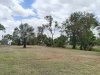
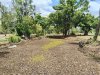
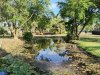
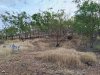
The Water Gardens at Pine Creek. One pond is covered in weed, another prettier- looking one has clear water.

IMG20250925131828.jpg IMG20250925132506.jpg IMG20250927084916.jpg


The mine entrance of Kohinoor Adit, where the Ghost Bats live:

IMG20250925172155.jpg
 

Attachments

  • IMG20250925131828.jpg
    IMG20250925131828.jpg
    259.4 KB · Views: 43
  • IMG20250925132506.jpg
    IMG20250925132506.jpg
    393.2 KB · Views: 45
  • IMG20250927084916.jpg
    IMG20250927084916.jpg
    387.4 KB · Views: 40
  • IMG20250925172155.jpg
    IMG20250925172155.jpg
    338.3 KB · Views: 45
And finally, food report - Water Buffalo sausages and mash at the tavern at Lazy Lizard, AU$28. It doesn't look attractive but it tasted really good. This is only the second "real" meal I've bought in Australia on this trip (after the fish & chips in Alice Springs) - some places I've stayed have provided breakfast, or both breakfast and dinner at the hostel in Adelaide, but otherwise I've mostly been buying food in supermarkets and similar places.

IMG20250925130118.jpg
 

Attachments

  • IMG20250925130118.jpg
    IMG20250925130118.jpg
    87.9 KB · Views: 46
Back
Top