Does anyone know how many South American sea lions L'Oceanografic Valencia has? And perhaps more information about them (male/female, name, date of birth, etc.)?
I don't have the exact data, but I can assure you that they are divided into two enclosures, in one we can find about 3/4 individuals (females and calfs) and in the other, we can find two males, several females and a calf named LiamDoes anyone know how many South American sea lions L'Oceanografic Valencia has? And perhaps more information about them (male/female, name, date of birth, etc.)?
Not really, I am a regular visitor of Bioparc but oceanografíc annual pass it more expensive and for the moment I can't afford both of them so the last time I went there was a few years ago, i hope to get back soon.I believe there are currently 1.2 from a quick look online, though perhaps more recent visitors, or regulars like I believe @Ferni is might have a more accurate answer.

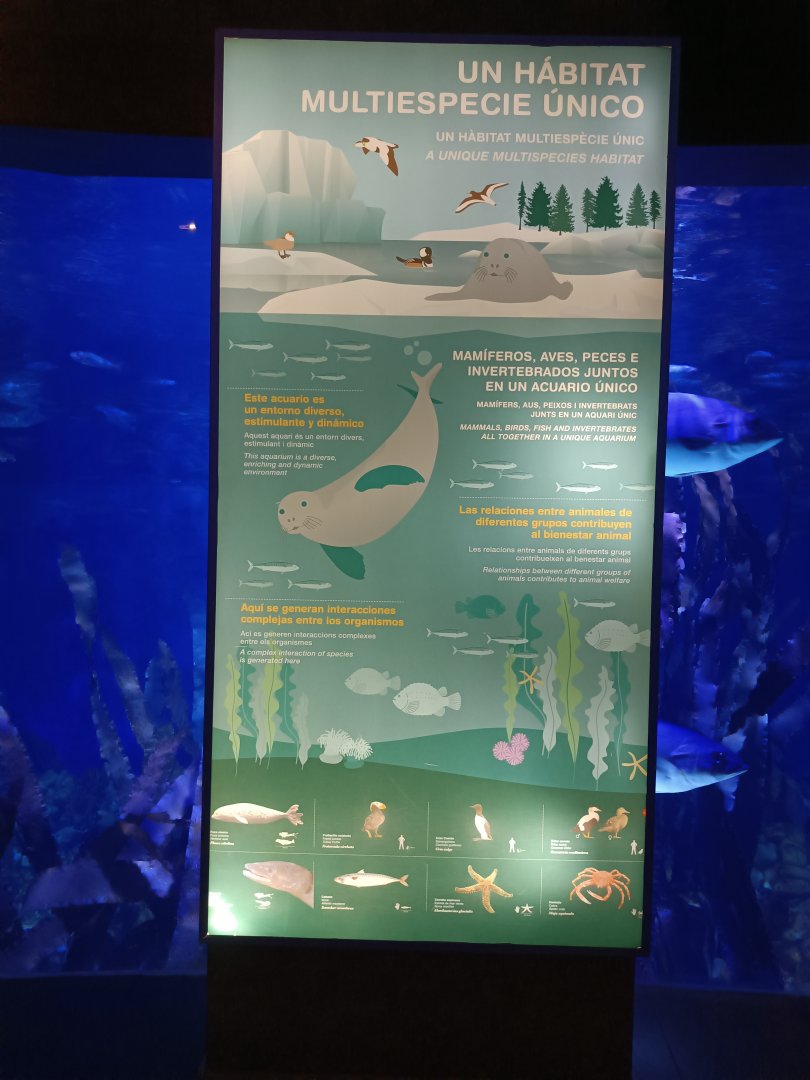
I wonder how they manage all those species in the same tank; it seems very ambitious...Last Saturday I went again to oceanografíc after a few years. And I saw a sign that maybe some of you would like to see (sorry for the quality I did a quick photo of it, but later I read it more calmly so I didn't take a better one).
The aquarium in front of the beluga one (the one with the tufted puffins and used to keep walruses) Is going to house harbour seals with the birds and the fish that are already there (at least that was what I understood when I've read it).
So I understand that the harbour seals will be kept there and the California sea Lions will have their enclosure for their own (with one sea turtle).

So I understand that the harbour seals will be kept there and the California sea Lions will have their enclosure for their own (with one sea turtle).
That's quite the ambitious mix, though I feel the seals and birds, plus the fish could cause some potential hunting, which would not be ideal. Perhaps it'd be a better mix to house the seal with the belugas, a mix which has been tested over in the US in seaworld I believe.
As far as I know there is already a seal or two living with the belugas.That's quite the ambitious mix, though I feel the seals and birds, plus the fish could cause some potential hunting, which would not be ideal. Perhaps it'd be a better mix to house the seal with the belugas, a mix which has been tested over in the US in seaworld I believe.
That plus size constraints, I'd assume they'd need to consider how to give all the birds and seals enough space on land.
Not necessarily outdoors (as a matter of fact, I think housing Antarctic species outdoors in Valencia could get complicated quickly), but I do think they should construct or renovate their exhibit entirely, give it a bit more thought (rock walls for nesting, give it a more natural feel...) and add better lighting.In my opinion, what they should do is give those birds a more suitable outdoor space and not that dark indoor exhibit...
The lack of any adequate light source in the indoors areas of the Oceanographic, is a disgrace.
By the way, just this morning I counted five harbor seals and three California sea lions in the temperate zone. Through the underwater viewing point.


Incredibly sad news, what a shame...I bring confirmation of some sad news. The birds that lived in the “wetlands” section of L'Oceanogràfic have been euthanized, following protocols against avian flu. It appears that pigeons living in abandoned sheds /warehouses near the park, may have been the source of the outbreak.
News item in a local newspaper, but without reference to the exact facility:
El Oceanogràfic detecta un caso de gripe aviar en una estancia cerrada
Pics. From the totally empty enclosure.


Indeed, all the individuals who inhabited the aviary were unfortunately sacrificed, which is why the enclosure is closed and empty. On the other hand, the other species of birds that inhabit the park are still in their enclosure but they have been vaccinated to avoid the diseaseIncredibly sad news, what a shame...