As I had mentioned before if Dubbo import a 3rd bull they could mix bloodlines between the 3 open range zoos for a good while into the futureI agree Werribee transferring over a bull immediately would be better than retaining both and then transferring out male offspring (that won’t be breeding until the age of five years). They should transfer one bull out and then swap them down the line (a decade later for example).
In order to allow the Monarto pod to breed at natural birth intervals, I’d be in favour of castrating (surplus) bulls at five years. At that point, they’ll not only be 2-3 adult breeding bulls in the region; but each bull as its castrated could have up to two younger siblings per dam as a contingency. i.e. at any given point, there could be up to seven intact bulls left in the country as each castration is undertaken. This won’t be a repeat of Auckland Zoo castrating one of only two bulls in the country (with the other dying that year).
Daughters of Brindabella and Pansy could remain in their natal pod long term, as could any castrated son.
You are using an out of date browser. It may not display this or other websites correctly.
You should upgrade or use an alternative browser.
You should upgrade or use an alternative browser.
Australasian Hippo Population
- Thread starter Zoofan15
- Start date

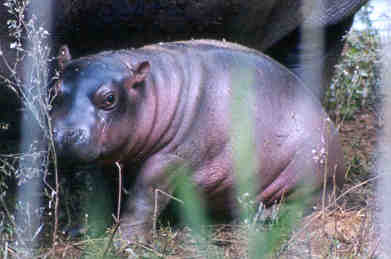
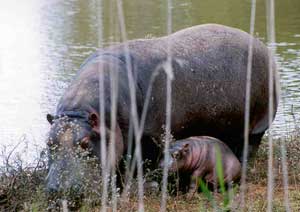
I stumbled across this article on Brindabella's first born from 2001, 'Kijana'; which I thought is quite intriguing, considering the lack of online information on this calf in particular.
Kijana was a male and he was tragically killed by Harry and Primrose when he was just fifteen months old.
Article:
The calf was born middle of March and has been under close watch by keepers here at the zoo.
“The hippopotamus can be very aggressive and in an open range environment such as this we cannot intervene with the birth process but just let nature take its course” explains Lorraine Jolly Keeper in Charge.”
The mortality rate for a hippo calf in the wild is very high with 1 out of 3 births survive and in an open range zoo you also run the same risk.
To ensure its survival keepers took many precautions such as taking the Hippo bull off display, setting up a sheltered area and giving mother and baby access to a large nursery pond.
The hippopotamus are water dwelling animals and with a gestation period of 8 months they usually give birth on land or in shallow water.
Weighing approximately 20 kg this new arrival is staying close to mum in the nursery pond away from the from our resident females.
“The hippo calf is healthy and doing very well, keeping very close to its mother Brindabella who was born here at the zoo in 1990” says Lorraine Jolly Keeper.
There's also some photos of the calf here:
Kijana was a male and he was tragically killed by Harry and Primrose when he was just fifteen months old.
Article:
The calf was born middle of March and has been under close watch by keepers here at the zoo.
“The hippopotamus can be very aggressive and in an open range environment such as this we cannot intervene with the birth process but just let nature take its course” explains Lorraine Jolly Keeper in Charge.”
The mortality rate for a hippo calf in the wild is very high with 1 out of 3 births survive and in an open range zoo you also run the same risk.
To ensure its survival keepers took many precautions such as taking the Hippo bull off display, setting up a sheltered area and giving mother and baby access to a large nursery pond.
The hippopotamus are water dwelling animals and with a gestation period of 8 months they usually give birth on land or in shallow water.
Weighing approximately 20 kg this new arrival is staying close to mum in the nursery pond away from the from our resident females.
“The hippo calf is healthy and doing very well, keeping very close to its mother Brindabella who was born here at the zoo in 1990” says Lorraine Jolly Keeper.
There's also some photos of the calf here:
Last edited:

I stumbled across this article on Brindabella's first born from 2001, 'Kijana'; which I thought is quite intriguing, considering the lack of online information on this calf in particular.
Kijana was a male and he was tragically killed by Harry and Primrose when he was just fifteen months old.
Article:
The calf was born middle of March and has been under close watch by keepers here at the zoo.
“The hippopotamus can be very aggressive and in an open range environment such as this we cannot intervene with the birth process but just let nature take its course” explains Lorraine Jolly Keeper in Charge.”
The mortality rate for a hippo calf in the wild is very high with 1 out of 3 births survive and in an open range zoo you also run the same risk.
To ensure its survival keepers took many precautions such as taking the Hippo bull off display, setting up a sheltered area and giving mother and baby access to a large nursery pond.
The hippopotamus are water dwelling animals and with a gestation period of 8 months they usually give birth on land or in shallow water.
Weighing approximately 20 kg this new arrival is staying close to mum in the nursery pond away from the from our resident females.
“The hippo calf is healthy and doing very well, keeping very close to its mother Brindabella who was born here at the zoo in 1990” says Lorraine Jolly Keeper.
There's also some photos of the calf here:
The fatal attack on Kijana was very unfortunate. Harold and Primrose breached a barrier separating them, so it was an unplanned introduction.
Related females such as Bonnie and Faith at Auckland Zoo (mother and daughter) were attributed as the cause of mortality for at least one of each other’s calves; but for unrelated females as Primrose and Brindabella (paternal half-siblings) would see each other, that risk is even higher. Clearly the most successful formula was to keep them permanently separated and eventually saw each welcome surviving daughters.
Considering it is known how aggressive hippos can be towards the young it's surprising that a secure yard and pond can't be made available for new mothers and baby?The fatal attack on Kijana was very unfortunate. Harold and Primrose breached a barrier separating them, so it was an unplanned introduction.
Related females such as Bonnie and Faith at Auckland Zoo (mother and daughter) were attributed as the cause of mortality for at least one of each other’s calves; but for unrelated females as Primrose and Brindabella (paternal half-siblings) would see each other, that risk is even higher. Clearly the most successful formula was to keep them permanently separated and eventually saw each welcome surviving daughters.
Considering it is known how aggressive hippos can be towards the young it's surprising that a secure yard and pond can't be made available for new mothers and baby?
You’re correct that that’s now standard procedure. In the wild, mothers often rejoin the pod once their calf is several months old (which is replicated in some zoos); but to state the obvious, the safety of the calf is enhanced by being within a wide open space with the option to avoid aggressive conspecifics.
This corresponds to what has been observed in zoos. Calves born in city zoos where the mother is housed with other adults (especially bulls and unrelated cows) have had the highest mortality rate.
It could have been addressed sooner seeing hippos have been kept in zoos for decades!You’re correct that that’s now standard procedure. In the wild, mothers often rejoin the pod once their calf is several months old (which is replicated in some zoos); but to state the obvious, the safety of the calf is enhanced by being within a wide open space with the option to avoid aggressive conspecifics.
This corresponds to what has been observed in zoos. Calves born in city zoos where the mother is housed with other adults (especially bulls and unrelated cows) have had the highest mortality rate.
The Future of the Breeding Programme
Thank you to @Swanson02 for providing the following update on the future of the Australasian Common hippopotamus breeding programme.
1. Werribee Open Range Zoo is still planning to import two bulls. Fingers crossed they succeed in doing so.
2. The first bull will be retained by Werribee Open Range Zoo and the current plan is to breed him with all three cows, starting with Tulip (2003) and Lotus (2008). We can assume whether Primrose (1990) breeds is determined by whether her daughters calves survive and can be successfully integrated with other members of the pod.
3. The second bull is planned to be rotated between Taronga Western Plains Zoo and Monarto Safari Park. The rotations will likely be two yearly. I will note that Dubbo has three cows that could potentially breed - Cuddles (2002), Kibibi (2014) and Kendi (2017); while Monarto has two - Brindabella (1990) and Pansy (2013). A two yearly rotation would allow at least two calves per female (theoretically).
Thank you to @Swanson02 for providing the following update on the future of the Australasian Common hippopotamus breeding programme.
1. Werribee Open Range Zoo is still planning to import two bulls. Fingers crossed they succeed in doing so.
2. The first bull will be retained by Werribee Open Range Zoo and the current plan is to breed him with all three cows, starting with Tulip (2003) and Lotus (2008). We can assume whether Primrose (1990) breeds is determined by whether her daughters calves survive and can be successfully integrated with other members of the pod.
3. The second bull is planned to be rotated between Taronga Western Plains Zoo and Monarto Safari Park. The rotations will likely be two yearly. I will note that Dubbo has three cows that could potentially breed - Cuddles (2002), Kibibi (2014) and Kendi (2017); while Monarto has two - Brindabella (1990) and Pansy (2013). A two yearly rotation would allow at least two calves per female (theoretically).
I would not be surprised if we see one or two new holders emerge if and when babies appear!The Future of the Breeding Programme
Thank you to @Swanson02 for providing the following update on the future of the Australasian Common hippopotamus breeding programme.
1. Werribee Open Range Zoo is still planning to import two bulls. Fingers crossed they succeed in doing so.
2. The first bull will be retained by Werribee Open Range Zoo and the current plan is to breed him with all three cows, starting with Tulip (2003) and Lotus (2008). We can assume whether Primrose (1990) breeds is determined by whether her daughters calves survive and can be successfully integrated with other members of the pod.
3. The second bull is planned to be rotated between Taronga Western Plains Zoo and Monarto Safari Park. The rotations will likely be two yearly. I will note that Dubbo has three cows that could potentially breed - Cuddles (2002), Kibibi (2014) and Kendi (2017); while Monarto has two - Brindabella (1990) and Pansy (2013). A two yearly rotation would allow at least two calves per female (theoretically).
I would not be surprised if we see one or two new holders emerge if and when babies appear!
That would be much welcome. Sydney Zoo and Australia Zoo are both strong candidates for acquiring Common hippopotamus in my opinion; as well as the possibility some of the smaller regional zoos might be interested.
One thing’s for sure, with all three holders breeding, they’ll be no shortage of surplus hippopotami. All three zoos will presumably be hoping for females to boost numbers in their pods should integration be successfully achieved. Male calves would be obvious candidates for transferring out; though people have commented on here that Monarto especially has a decent capacity to manage surplus bulls.
Altina also had/has an interest in them a while ago and was mentioned on their websiteThat would be much welcome. Sydney Zoo and Australia Zoo are both strong candidates for acquiring Common hippopotamus in my opinion; as well as the possibility some of the smaller regional zoos might be interested.
One thing’s for sure, with all three holders breeding, they’ll be no shortage of surplus hippopotami. All three zoos will presumably be hoping for females to boost numbers in their pods should integration be successfully achieved. Male calves would be obvious candidates for transferring out; though people have commented on here that Monarto especially has a decent capacity to manage surplus bulls.
Last edited:

Nile Hippo Expert
Well-Known Member
Has a date been set for the arrival of the two Nile Hippo bulls from France?
Has a date been set for the arrival of the two Nile Hippo bulls from France?
The import was initially supposed to be undertaken this year; but the second half of 2026 seems a more realistic expectation at this point.
I do have reservations about the idea of shipping an adult bull hippo backwards and forwards between Monarto and Dubbo, While I am not saying its can't not be done it seems far from ideal and with lot of possible risks that could occur. I believe the better option would of been that Dubbo had imported there own bull it would not only have given the population a better range of bloodlines but deleted the need of shipping a bull over such a long journey X amount of times.

Swanson02
Well-Known Member
I do have reservations about the idea of shipping an adult bull hippo backwards and forwards between Monarto and Dubbo, While I am not saying its can't not be done it seems far from ideal and with lot of possible risks that could occur. I believe the better option would of been that Dubbo had imported there own bull it would not only have given the population a better range of bloodlines but deleted the need of shipping a bull over such a long journey X amount of times.
I was told the 2nd planned bull wouldn't be going back and forth rather spending a couple of years at one then staying at the other indefinitely. He just couldn't confirm whether TWPZ or Monarto was first.
I do have reservations about the idea of shipping an adult bull hippo backwards and forwards between Monarto and Dubbo, While I am not saying its can't not be done it seems far from ideal and with lot of possible risks that could occur. I believe the better option would of been that Dubbo had imported there own bull it would not only have given the population a better range of bloodlines but deleted the need of shipping a bull over such a long journey X amount of times.
I was told the 2nd planned bull wouldn't be going back and forth rather spending a couple of years at one then staying at the other indefinitely. He just couldn't confirm whether TWPZ or Monarto was first.
It’s interesting as the second bull will clearly have the opportunity to sire a much larger number of calves than the first bull.
I’m wondering if the second bull will go to Dubbo first for two reasons:
1. Monarto have a larger capacity to manage continued breeding (i.e. for the bull to remain on site for many years versus a two year stay).
2. The Dubbo cows descend from a founder line not shared with the Werribee/Monarto cows. This opens up the possibility for exchange between Dubbo/Werribee long term (especially if the bulls are unrelated); with Dubbo requiring a bull once their’s leaves after two years.
If this all happens and breeding does kick off as hoped/planned with Calfs becoming available over time if any of the New Zealand zoos might show an interest in obtaining a pair, Perhaps Orana or one of the larger zoos?It’s interesting as the second bull will clearly have the opportunity to sire a much larger number of calves than the first bull.
I’m wondering if the second bull will go to Dubbo first for two reasons:
1. Monarto have a larger capacity to manage continued breeding (i.e. for the bull to remain on site for many years versus a two year stay).
2. The Dubbo cows descend from a founder line not shared with the Werribee/Monarto cows. This opens up the possibility for exchange between Dubbo/Werribee long term (especially if the bulls are unrelated); with Dubbo requiring a bull once their’s leaves after two years.
If this all happens and breeding does kick off as hoped/planned with Calfs becoming available over time if any of the New Zealand zoos might show an interest in obtaining a pair, Perhaps Orana or one of the larger zoos?
I really hope they will!
An IHS will be required for New Zealand zoos to acquire hippopotamus; but once a surplus becomes available, it’s entirely possible New Zealand zoos will have the motivation to acquire them.
We can likely rule out Wellington and Auckland due to spatial constraints; but if Orana can overcome their financial issues, they’d be the ideal candidate for managing a pod of Common hippopotamus. Historically, they aspired to acquire them (in the 1990’s), which sadly never eventuated. I assume they would have sourced these from Auckland Zoo, who resorted to castrating their young bull to both reduce fighting and due to no other zoo in the region wanting their surplus.
Not to go off topic but speaking of IHS it puzzles me as to why no NZ zoo has imported not even a single Giraffe to add a little new bloodlines to their own population, Surly even one import bull won't break the bank!I really hope they will!
An IHS will be required for New Zealand zoos to acquire hippopotamus; but once a surplus becomes available, it’s entirely possible New Zealand zoos will have the motivation to acquire them.
We can likely rule out Wellington and Auckland due to spatial constraints; but if Orana can overcome their financial issues, they’d be the ideal candidate for managing a pod of Common hippopotamus. Historically, they aspired to acquire them (in the 1990’s), which sadly never eventuated. I assume they would have sourced these from Auckland Zoo, who resorted to castrating their young bull to both reduce fighting and due to no other zoo in the region wanting their surplus.
Not to go off topic but speaking of IHS it puzzles me as to why no NZ zoo has imported not even a single Giraffe to add a little new bloodlines to their own population, Surly even one import bull won't break the bank!
Hamilton Zoo are building a new giraffe house (opening 2026) and plan to establish a breeding herd long term. This would be the perfect opportunity to import 1.1 or 1.2 from overseas, with first generation calves shipped out to Australia.
ElephasMaximus
Well-Known Member
I really hope they will!
An IHS will be required for New Zealand zoos to acquire hippopotamus; but once a surplus becomes available, it’s entirely possible New Zealand zoos will have the motivation to acquire them.
We can likely rule out Wellington and Auckland due to spatial constraints; but if Orana can overcome their financial issues, they’d be the ideal candidate for managing a pod of Common hippopotamus. Historically, they aspired to acquire them (in the 1990’s), which sadly never eventuated. I assume they would have sourced these from Auckland Zoo, who resorted to castrating their young bull to both reduce fighting and due to no other zoo in the region wanting their surplus.
It's something of a shame that there isn't an IHS already, since Auckland has a perfect opportunity to build a new hippo enclosure in the old elephant enclosure. However, an IHS would take several years to complete, and Auckland could probably renovate the elephant enclosure several times over in that time, so from their perspective it makes much more sense to base their renovations on stuff that's currently feasible. Maybe after they complete their current renovations, they'd still have enough room somewhere near the African precinct to accomodate pygmy hippos, if NZ ever does get a new IHS.