Mutations

Vulpes

Well-Known Member
A lot of people wont like this thread but I thought it would be interesting if we all posted some pictures of unusual coloured animals that they have seen, online, in zoos, or in the wild! not just your typical white tigers or albino burmese pythons.

here are a couple Ive come across that I thought were unusual.

450_cgy_bison_albino1_081208.jpg


White Bison

albino_ls.jpg


Moose

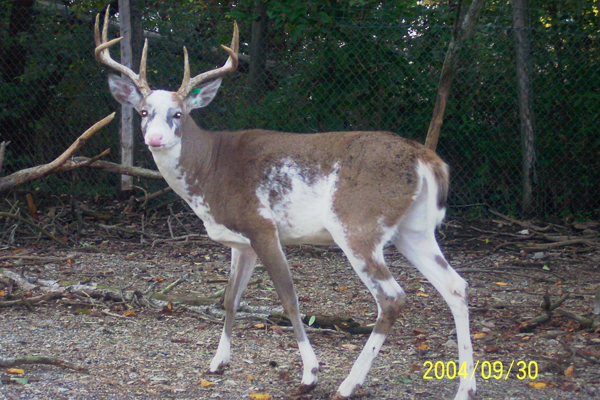
pie-bald_deer_pics_0004.jpg


Piedbald deer

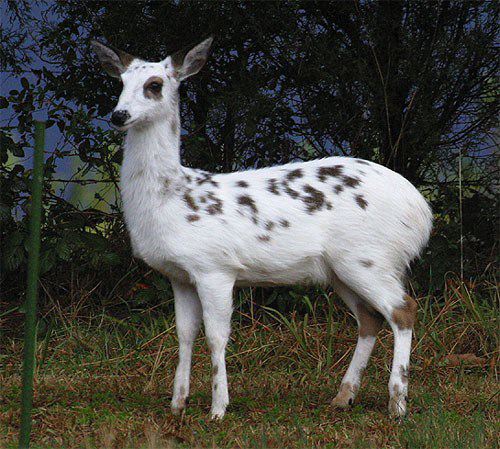
DeerWhiteTailedPiebald01.jpg


albino_chimp_jpg65d92a1f-af5f-45e4-b7c4-e5d7bc20a99d.jpg


Anybody know where this little chimp is now?

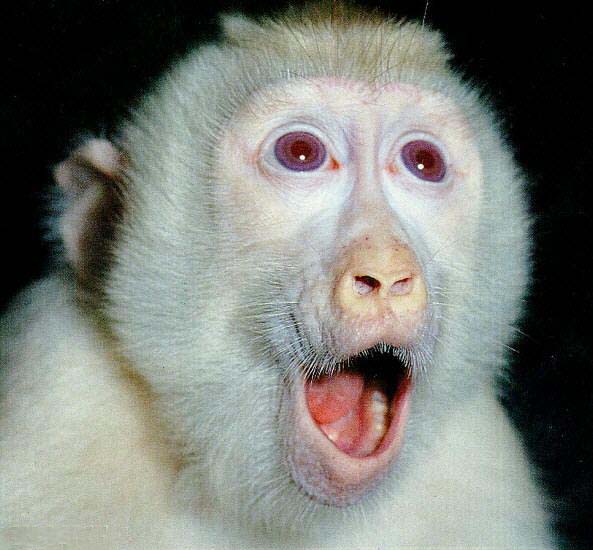
macaquealb.jpg


Albino Macaque
 
Those are really cool, especially the moose and chimpanzee. Great thread. When I get home tonight and have access to my pictures, I will post a couple (hypomelanistic diamondback, leucistic serval, maybe others).
 
The white Moose is fabulous.
Do you know what species the 2nd deer photo is of? (It almost looks like a domestic mutant but I'm sure its not).

the semi 'albino' chimpanzee died AFAIK.

From memory I've seen the following Albinos(or other mutants) in zoos;
Gorilla
Rhesus Monkey
Mona Monkey
Lechwe
Elephant(Dusit Zoo, Bangkok- wasn't really white though)
Jackdaw
Rook (cinnamon)
Blackbird
Cornsnakes/Python
Brown Bear(postcard of one in Berlin)
Lion
Tiger
 
The pale cheetah was photographed in the Sahara by the late Alain Dragesco-Joffe. Normally I would not post a photo taken by someone else, but when I was going to use this for a zoo talk I made several attempts to contact his publisher in Switzerland and even talked to the IUCN Cat Group and got nowhere. Since the photographer is deceased and I tried my best, I feel comfortable posting it.

I will do a followup post with the location of the other shots here, all of which were taken by me (except the aforementioned cheetah).

As instructed, I have not included obvious ones like king cheetah, white or golden tiger, white lion, white alligator, red jaguarundi (all of which I have).
 

Attachments

  • 001.jpg
    001.jpg
    34.5 KB · Views: 67
  • 002.jpg
    002.jpg
    43.2 KB · Views: 54
  • 003.jpg
    003.jpg
    43.7 KB · Views: 41
  • 004.jpg
    004.jpg
    49.4 KB · Views: 32
  • 005.jpg
    005.jpg
    45 KB · Views: 37
  • 006.jpg
    006.jpg
    38.3 KB · Views: 31
Ok, so you can only do 6 attachments at a time and I wanted to do 9, so here are the next three.
 

Attachments

  • 007.jpg
    007.jpg
    30.2 KB · Views: 22
  • 008.jpg
    008.jpg
    60.1 KB · Views: 27
  • 009.jpg
    009.jpg
    57 KB · Views: 28
Here are the names and locations (in order):

Cheetah - pale form (Saharan desert)
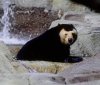
Spectacled Bear - semi leucistic?? (Houston Zoo)
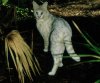
Serval - leucistic (Big Cat Rescue)
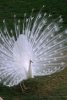
Indian Peafowl - leucistic (Reid Park Zoo)
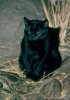
Pampas Cat - melanistic (Cincinnati Zoo)
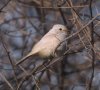
Vermillion Flycatcher - leucistic (Sweetwater Wetlands)
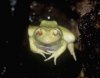
American Bullfrog - amelanistic (Nashville Zoo)
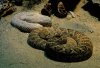
Aruba Island Rattlesnake - amelanistic & typical (San Diego Zoo)
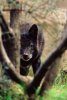
Coyote - melanistic (Fort Worth Zoo)
 
Spectacled Bear - semi leucistic?? (Houston Zoo)

I would say this Spectacled Bear just shows a more extreme 'spectacle' marking of white on the face, than most. (I think on the other side it has a black patch marking over the eye). I wouldn't term it Leucistic because of this.
 
A very famous one in the UK, I know, but I thought I'd get the first photo of it in. (Shame about the smear of algae on its breast!)
Albino Black-footed penguin, Bristol, 2004.

On a side note, as a child I once caught a wild, adult common shrew that was completely albino. A great animal, but sadly no photo of it!
 
some great pictures there, I found a couple of more:

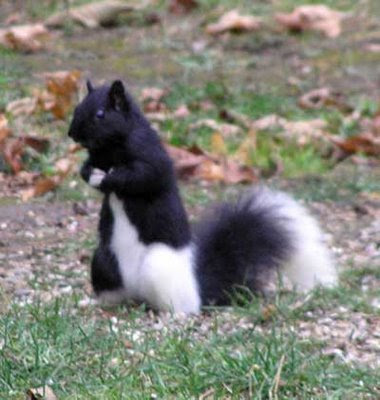
piebald_squirrel.jpg


Piebald squirrel

PiedRetic1882.jpg


Piebald Reticulated python, this is a wild caught mutation and is going to be used in future captive breeding.

piebald-774428.jpg


Piebald moose

Does anybody know if there are any piebald deer in the UK?
 
I took this picture of a partially albino (?) or pied American Robin at the Royal Boctanical Gardens in Hamilton, Ontario. I apologize for the poor quality. I used the wrong setting :p
 
Last edited:
I would say this Spectacled Bear just shows a more extreme 'spectacle' marking of white on the face, than most. (I think on the other side it has a black patch marking over the eye). I wouldn't term it Leucistic because of this.

You are probably right. One interesting note which is not visible in this photo is that both of its rear paws were also white.
 
Speaking of spectacled bears, I forgot about this reddish one from The National Zoo (DC).
 

Attachments

  • sp bear 7.jpg
    sp bear 7.jpg
    49.3 KB · Views: 28
The most interesting collection of albino animals I have seen is in a museum of natural history in Moscow. Most of the European mammals were represented and many bird species. I remember particularly the Lynx, Otter and Mole, Diver and all the European species of tit.

p.s. The albino Lechwe at Newquay was euthanized two years ago due arthritis and other age related problems.
 
You are probably right. One interesting note which is not visible in this photo is that both of its rear paws were also white.

That puts a different slant on it perhaps.. and makes it a more unusual bear. I wonder whether they occur in the wild like that?
 
Does anybody know if there are any piebald deer in the UK?

Do you know if that's a UK (grey) squirrel?

Regarding Piebald Deer;

I have seen photos of 'bald-faced' Red deer when they have a blaze or white face. They can also occur as a white(cream) phase occassionally both captive(there was/is a small herd in Bramshill Park near Basingstoke) and wild (as in occassional individuals on the Quantock Hills and elsewhere).

Fallow-White Fallow are well known but I have only ever seen 'pied' fallow at Woburn(deer Park)- they have a silver/pastel blue mutation in their herds, which is not seen elsewhere. Some of these are really white deer with 'blue' patches, but I've not seen this broken pattern in any of the other colours they have there.

I've seen photos of 'pied' European Roe Deer but not from the UK.
 
Do you know if that's a UK (grey) squirrel?

Regarding Piebald Deer;

I have seen photos of 'bald-faced' Red deer when they have a blaze or white face. They can also occur as a white(cream) phase occassionally both captive(there was/is a small herd in Bramshill Park near Basingstoke) and wild (as in occassional individuals on the Quantock Hills and elsewhere).

Fallow-White Fallow are well known but I have only ever seen 'pied' fallow at Woburn(deer Park)- they have a silver/pastel blue mutation in their herds, which is not seen elsewhere. Some of these are really white deer with 'blue' patches, but I've not seen this broken pattern in any of the other colours they have there.

I've seen photos of 'pied' European Roe Deer but not from the UK.

It is curious how the pied mutation surfaces in different species, it seems to be a trait associated with domestication. I wonder have the American deer wen through a bottle neck in the population to show this trait?

Im sure most of you have read about the experiments of Dmitry Belyaev a Russian geneticist. He bred silver foxes for their tameness and after only 10 generations, mutations began to appear such as piebald!

Russian geneticist Dmitry Belyaev focused on tamability as a guiding characteristic. His idea was not only that early humans would have selected the tamest animals to live with them, but also that selecting for a single trait could give rise to an entire set of changes in form, physiology, and behavior. Belyaev thus launched an experiment that would last longer than his life, seeking to test whether selecting for tameness would indeed produce a set of domesticated traits similar to those seen in dogs (Trut, 1999).

Belyaev chose the silver fox for his experiment; this species is related to the dog, but it is not domesticated. The initial foxes in Belyaev's experiment were not trained in any way, but simply tested for tameness at an early age. Starting at age one month, a human researcher would try to feed and pet the foxes, either alone or in the company of other foxes. The animals' responses varied from aggressive behaviors (such as biting), to indifference, to seeking interaction with the person more than with the other foxes. The tamest foxes were then selected for breeding the next generation, although fresh genes were supplied through continual outbreeding.

Belyaev and his colleagues did indeed create a population of foxes that differed in temperament and behavior from their wild cousins. The foxes changed physically as well, with alterations in coat color appearing as early as the eighth generation—typically a loss of pigment resulting in white patches. The foxes also developed floppy ears and curved tails, mirroring traits seen in dogs as well as other domesticated species (Figure 1).

One of Belyaev's hypotheses was therefore satisfied: Selecting for one trait (behavior) also changed other traits (here, aspects of the foxes' physical form). A common thread in many of the observed changes across the generations in this experiment was that the timing of key developmental steps had been altered. Belyaev predicted that hormonal and neurochemical differences would be evident, and that such changes would be regulatory in nature and would control early development in a top-down fashion. In particular, two developmental milestones were different in the tamer foxes: their eyes opened several days earlier, and their fear response kicked in about three weeks later than the norm for wild foxes. These two events might have worked together to increase the openness of young foxes to interacting with humans and doing so without fear. At the same time, Belyaev found reduced levels of the stress hormone corticosterone in the domesticated foxes. Even the changes in coat color were linked to changes in the timing of development.

The animal in picture A is a pure bred silver fox Vulpes vulpes however you would be forgiven for thinking it was a collie pup or some sort of dog fox hybrid!

Belyaev_foxes_MED.jpg


I was interested to hear about an albino otter so I googled it and came across this most impressive photograph of one

AlbinoOtter02.jpg


Dont West Midlands have white lechwe?
 
The piebald(!!!:eek:) silver fox does look quite 'border-collie-ish'. Its also Interesting how the 'dutch rabbit' pattern with facial blaze etc can occur in quite different species under domestication.

The White otter is as impressive as the Moose(just smaller). Do you know if its a UK/european one?

I think(but am not 100% certain) that the White Lechwe which crop up in various UK collections (e.g. West Midlands) are probably all descended from the Chester stock, which carry the white gene.
 
Yes the white facial blaze seems to be very much associated with domestication. Infact I have also come across this in Arctic foxes. A domestic mutation known as a shadow fox on the fur farms exhibits this trait

Im not sure if this mutation also appears in teh wild? this photo looks like it was taken in the wild

Arctic%20Fox.jpg
 
Back
Top