My photos are getting worse :(

Javan Rhino

Well-Known Member
15+ year member
Just a bit of a winge really, but maybe somebody could help. For some reason, my last couple of visits to Chester have been very unproductive. My zoom doesn't seem to go as far (I know, sounds stupid, but for 250mm it can't get anywhere close to my greenhouse from the back window which can only be about 10 paces (20 very most). Also, I can never seem to get a good colour with all pics now looking very cloudy. I was taking pics of the Himalayan monal at Chester last Saturday and they all appeared to be 'cloudy,' as if the lens had steamed up, but when I wiped the lens it made no difference. Lastly, my focus is [quite frankly] rubbish. On autofocus, a high percentage of my pics were highly blurred (as opposed to if I focused manually, where more have come out well). It can't even decide what it wants to focus on, sometimes the animal, sometimes the wire, sometimes nothing at all :mad:. Anway, I can't blame the camera, but I can't put my finger on what I'm doing too differently (other than shooting in RAW, but I've had a quite-good day with that so I don't think that's the reason). Anyway, if anybody has any advice then please do share, I'm just about ready to scream! :D

I'll post a sequence tomorrow sometime, starting with a few images taken on my compact, and then a few zoo visits in order so people can see for themselves.

Thanks :)
 
If you are using a zoom then check your focus modes as you may have changed them without noticing or more probally with the cold weather I suspect you have a protected filter on the end of your lens it is great wiping the filter but the lens glass itself my have condisation on so this needs cleaning as well not just the outter filter
Sometimes the change in tempreture will affect your focus and the condition of the photographs taken
 
If you are using a zoom then check your focus modes as you may have changed them without noticing or more probally with the cold weather I suspect you have a protected filter on the end of your lens it is great wiping the filter but the lens glass itself my have condisation on so this needs cleaning as well not just the outter filter
Sometimes the change in tempreture will affect your focus and the condition of the photographs taken

Ahh, makes sense :) (like to add quickly though that I haven't gotten around to buying a filter yet, so it was just the lens glass I was wiping).

I keep fiddling with all of the dials and options, not actually knowing what I've chosen and just hoping it will work better than previous settings :p.

Could the fact that it was raining all day have been a problem?
 
Rain can effect the quality of the photographs just a little it may have something to do with it
The best thing to do if you have been fiddling around with the dail then just reset it back to default and start again
 
As said, I'm going to post a sequence of photos so people can see where a decline begins. For each section, I will post 2 of my best pictures from that day's photographing (including a couple of 'non-zoo' shots.

--------------------------------------------------------------------------
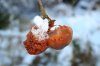
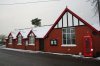
My first go with an SLR - January 2010
1) 'The Rotten Apple'
2) The village hall
--------------------------------------------------------------------------
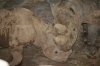
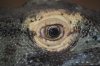
My first trip to Chester with an SLR - 17th January 2010
3) Kitani and Asani, black rhinoceros
4) Komodo eye
--------------------------------------------------------------------------
Chester Zoo - 13th February
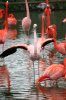
5) Flamingo (colouration says Chilean, but in the American pool?)
6) European black vulture
 

Attachments

  • The Rotten Apple.JPG
    The Rotten Apple.JPG
    3 MB · Views: 3
  • Village Hall.JPG
    Village Hall.JPG
    3.2 MB · Views: 1
  • Black Rhinoceros (6).JPG
    Black Rhinoceros (6).JPG
    3.2 MB · Views: 2
  • Komodo Dragon (8).JPG
    Komodo Dragon (8).JPG
    3.1 MB · Views: 2
  • Chilean Flamingo.JPG
    Chilean Flamingo.JPG
    1 MB · Views: 1
  • European Black Vulture (7).JPG
    European Black Vulture (7).JPG
    2.9 MB · Views: 2
Not sure how many attachments you can put in one post, so I'm breaking it down here :).

Anyway, here's the second batch, and my photography seems as if it is gently improving. In fact, it has improved so much in my opinion that I'm picking a WHOPPING 4 images from each section now.
--------------------------------------------------------------------------
Chester Zoo - 22nd May 2010.
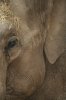
1) Asian elephant eye
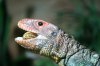
2) Caiman lizard eating snail
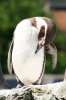
3) Humboldt penguin preening
4) Jaguars on the waterfall
-----------------------------------------------------------------------
(will edit later and continue the sequence with the missing jaguar image, Blair Drummond, Highlands, some 'out and about' photography and, of course, several more trips to Chester :))
 

Attachments

  • 223.JPG
    223.JPG
    3 MB · Views: 4
  • 189.JPG
    189.JPG
    3.1 MB · Views: 4
  • 142.JPG
    142.JPG
    2.9 MB · Views: 4
Last edited:
I have to say I agree with what's said about the affect of the weather, and you ain't alone either! I've been taking some pretty awful pictures lately, and I put most of it down to the weather (a good reliable British excuse!)

I had a great opportunity recently for a photo shoot in the snow, and compensating for overexposure but sticking to autofocus for repeted shots of a moving object, I was disappointed that most of my pictures turned out blurred. The same settings got me cracking shots of the same subject in the same location earlier in the year. I figure the weather, temperature, overcast or clear sky, all had an effect on the auto white balance on the camera. The shots that weren't blurred were pretty good and I was pleased with them, but having started out on film I dislike the digital 'you can take 100 shots to get 1 good one' ethos. It works but I somehow feel lazy or guilty, heh.

It does sound like your camera may have condensation either inside the lens or in the body itself if you wipe the lens but it makes no difference. I had that problem on a 35mm camera some time back. I can't say I solved the problem as I changed camera, but I remember I tried to acclimatise the camera for as long as possible to the ambient temperature wherever I was doing a shoot.

I'm gearing my DSLR and bridge cameras with my new monopod for some shots at Chester this Saturday. The forecast so far is for light to heavy rain unfortunately, but that may change hopefully. We'll see how it goes. ;)
 
I have to say I agree with what's said about the affect of the weather, and you ain't alone either! I've been taking some pretty awful pictures lately, and I put most of it down to the weather (a good reliable British excuse!)

I had a great opportunity recently for a photo shoot in the snow, and compensating for overexposure but sticking to autofocus for repeted shots of a moving object, I was disappointed that most of my pictures turned out blurred. The same settings got me cracking shots of the same subject in the same location earlier in the year. I figure the weather, temperature, overcast or clear sky, all had an effect on the auto white balance on the camera. The shots that weren't blurred were pretty good and I was pleased with them, but having started out on film I dislike the digital 'you can take 100 shots to get 1 good one' ethos. It works but I somehow feel lazy or guilty, heh.

It does sound like your camera may have condensation either inside the lens or in the body itself if you wipe the lens but it makes no difference. I had that problem on a 35mm camera some time back. I can't say I solved the problem as I changed camera, but I remember I tried to acclimatise the camera for as long as possible to the ambient temperature wherever I was doing a shoot.

I'm gearing my DSLR and bridge cameras with my new monopod for some shots at Chester this Saturday. The forecast so far is for light to heavy rain unfortunately, but that may change hopefully. We'll see how it goes. ;)

Yup, the weather is a bummer ;p. Out of curiosity, are you at the walk and talk on Saturday, or are you just at the zoo?
 
Are you swapping lenses much, and inside houses at all?

Didn't switch lenses at all. I went into a few houses where the lens steamed up for quite a while (Islands in Danger and Tropical Realm specifically). My two best pictures from my last visit were both in Realm of the Red Ape, one of Puluh cuddling one of the babies and one of Subis at the window. I'll attach them here so you can see :)

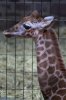
I'll also add babba giraffe 'Tula,' and Lily following her mother :)
 

Attachments

  • IMG_0990.JPG
    IMG_0990.JPG
    3.7 MB · Views: 0
  • p.JPG
    p.JPG
    7.6 MB · Views: 1
  • IMG_0944.JPG
    IMG_0944.JPG
    4 MB · Views: 2
  • IMG_1088.JPG
    IMG_1088.JPG
    4.7 MB · Views: 3
I'll be at the walk and talk. :D

Ahh cool, will see you there :). I don't know if you were on the mammal one with Tim in October since we got there late and didn't get through any introductions, but I have short hair now so don't let my avatar fool you :D
 
Ahh cool, will see you there :). I don't know if you were on the mammal one with Tim in October since we got there late and didn't get through any introductions, but I have short hair now so don't let my avatar fool you :D

Cool, I look forward to meeting everyone. I wasn't at the last event, this will be my first. Will be my first visit to Chester Zoo since a conference thingy a few years ago too so I'm looking forward to getting a good look round. :D
 
Yup, the weather is a bummer.
The weather is fantastic for photography - clear blue skies, lots of reflected light from frost and snow - and so many intricate things to see. For example, try taking a really close look at the trees around you. The hoar frost in Cheshire has been beautiful these past few days.

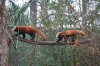
If the giraffe and red panda shots are illustrations of image quality not being the greatest, then it might be down to both being ISO 1,600. That's going to introduce a lot of noise, and you can see both chroma and luminance noise in those images. The noise will mask detail and depending on the software, the more of it you try to remove the softer the image will get.

There wouldn't be many ways around it for the giraffe image because it's dark in that house, and at 194mm and 1/30s, you'll have some camera shake in that shot too. Only a faster lens or more stable support are likely to help.

The red panda shot is better, and you might find you can back off on the ISO a little under those conditions.
 

Attachments

  • 20101208-hdr-5892-5894.jpg
    20101208-hdr-5892-5894.jpg
    884.4 KB · Views: 7
Nice pic, I massively agree that the frost is amazing. There is a massive stretch of country road where I live with trees and woodland flanking both sides. This was covered in frost, and it was like something out of a Christmas card.

I'll try and lower the ISO on Saturday whereever I can, hopefully it'll help :). Problem is, with such a small screen my photos look fine until I get them onto the computer and get the file at full size, then they look terrible :p
 
Problem is, with such a small screen my photos look fine until I get them onto the computer and get the file at full size, then they look terrible.
Bear in mind that the image on the LCD is often generated from either a small JPEG, or the JPEG embedded in the RAW file, and after the camera has processed it. A high ISO image will probably have oodles of in-camera NR applied when you view it on the LCD because by their nature the loss of detail won't be evident, whereas the RAW won't have any NR processing applied.
 
I think SMR is on the money when he mentions shutterspeed. The aperture of the lens is as important as the zoom reach. No lens is at its sharpest at its widest aperture (the lowest f number) but usually needs an f stop or two to be at its sharpest. The reduction of sunlight at this time of year means that a wider aperature is needed to get the same shot as in better light. If your lens has a limited aperature then the compensation is to use a longer shutter speed which gives a higher probability of camera shake if not tripod mounted, or the subject moving both which lead to a lack of sharpness i.e. blur. A smaller f number will mean a much narrower depth of field, i.e. the foreground is likely to be in focus with a blurred background, and so isnt suitable if trying to take pictures where the animal is some distance away or there are points at different distances that all need to be in focus. The aperature works similar to the iris of the eye, your pupils are large in twilight to allow as much light in as possible, but like pinholes in bright sunlight to stop being blinded by the light and having sensor overload. The other compensation is the iso which will be increased as the light diminishes, which SMR has also covered in detail. All of these can be set manually and it may be better to take some time and get to know each function of the camera using different priority modes and making changes to a single setting at time while photographing the same thing so you can see how it effects each photo.

The changes in humidity causes condensation, this isnt necessarily on the outer lens but could be on the side attached to the camera or even the sensor itself, dust on the sensor can lead to lack of sharpness too but will generally appear as dust marks on your picture. You can test this by taking pictures of a clean white piece of paper and looking at the resulting pictures for consistent marks.

I also agree that the autofocus settings are likely to be to blame, multi focus points tends to pick up mesh fences, single point is good for animals at a distance or portrait pictures, where the focus should be to get the eye sharp.

Automodes are great in the majority of situations but a computer chip cannot cope with every eventuality. You can get so much more from it when you know how to overide issues manually if the camera hasnt made the right choice. When you cant see the picture on the screen in enough detail, learning to look at and read the histogram information can also assist in making setting choices.

Can I recommend joing the talkphotography.co.uk forum. Its free and lots of good people there will give advice and critique photos to assist improvements
 
After a zoo visit yesterday, I have a couple more pics to attach here for anybody following my progress. I feel that I've done quite a bit better this time (not perfect, but better) - strangely I didn't have my monopod with me, and it's the first really good day I've had since buying it :eek:, can a monopod really be a hinderance, or is it just coincidence? Anyway, here's a pic and I'll edit with some more later :)
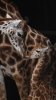
(Still a lot of noise when viewed large, I used ISO 800, f/5.6 and exposure 1/100 sec.)
 

Attachments

  • Rothschild giraffe.JPG
    Rothschild giraffe.JPG
    5.8 MB · Views: 7
Back
Top