Treasures of Asia: Section 1- Outdoor Exhibits
Treasures of Asia- Entrance and Outdoor Area
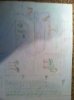
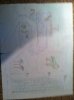
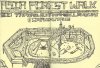
Upon entering the Asia Zone, you see, just beyond a lushly planted display of Asian bushes, ferns and flowers, the fences and brightly colored signage of a pair of exhibits that presumably, are at the bottom of the hill onto to which the path rises up. Interested, you climb onto the hill and see that the hill forms a kind of solid bridge over two exhibits at the bottom of the hill. Both have free binocular stands that can be used to view the animals at the bottom of the hill.
One is separated by hot-wire mostly concealed by plants. This one is home to a group of 4 North Sulawesi Babirusa, one male and three females. There are many tall trees standing, which give the animals shade. There are also some smaller trees, but these are protected by fence from the animals’ feeding habits. There is also a shallow pool, and farther along, a mud wallow which is kept wet by a slow water pump. Enrichment is in the form of balls hanging from trees, and treats hidden in logs for the wild pigs to find. Signage on the hill describes the habitat, behavior, and range of the Babirusa. There is also a pair of Babirusa skulls in a large glass case, one male and one female, to show that only males have the distinctive tusks. Another sign is hands-on, being a large diagram of a tree and the surrounding forest, and liftable flaps hiding glass cases of Babirusa food like fruit, roots, and fungi, so the visitor can see where Babirusas get their food from.
Walking to the other side of the bridge, you see a second exhibit, but more densely planted, with many tall trees, twice as many smaller trees and bushes, a pool, some boulders in a clearing, as well as a wooden platform on which there is a fresh slab of meat- this is carnivore habitat. And indeed, coming to claim it’s meal is a majestic female Asiatic Leopard. Using the binocular stand, you watch her tear into her meal with vigor and gulping it down. The nearby signage displays several species that leopards often prey upon, as well as general information. Nearby is another sign about how leopards are being threatened with loss of habitat and poaching in their natural habitat, and also simple tips on how visitors can help preserve the leopards and other forest animals, as well as their habitat, all over the world.
Walking down the hill, you pass a row of 4 glass-fronted habitats on either side, and at the end of the path, three massive domes rise in front of you: one triangular, and the other two tending towards circular. These glass-fronted exhibits have viewing areas covered by wooden roofs, which are supported by wood struts. The exhibits have half of the indoor quarters for the animals protruding out into the exhibit, so the space that the visitor can see is L-shaped. The animals can retreat to the back, which is more heavily planted, so the visitors have to actually look for the animal to try to find it. The first pair of exhibits (one on the left side of the path and one on the right) contain, respectively, a lone Leopard Cat and pair of Asian Raccoon Dogs. These exhibits are large, as well as long and wide, so the animals have room to roam and can also retreat into their indoor quarters if they wish to. The Leopard Cat enclosure is well planted, with many small to mid-sized trees and also some logs, branches and some rockwork for it to hide behind. The Raccoon Dogs have much the same, but with a small clearing lined with some ferns and some flat rocks for them to lie down on. The second pair of exhibits is also lushly planted, but with smaller bushes and more along the sides. This pair of habitats is home to a Malaysian Porcupine and a Chinese Ferret Badger. Both of these exhibits are slightly less planted due to their feeding habits, and have tall, sturdier bushes around the edges of the enclosure. At the back of both of these enclosures is a “cave” made out of rocks and dirt under which the animal can rest. The third set contain a Large-spotted Civet and a Ruddy Mongoose. Both of these animals have wooden platforms on or under which they can rest, some rocks to sun on, and the civet has standing logs and branches for it to climb up on. Both also have mid-sized foliage for shade, and long grass to hide amongst but not much foliage in the way if they choose to move around. The last set of exhibits provides home to not mammals, but birds. These exhibits contain a pair of Black Francolin and a pair of Hill Partridge. These birds have trees for shade, grass to rest or nest in, and also a large log and some rocks for them to hop up onto if they wish.
After snapping the last photo of the brightly covered Partridge, you turn and see the doors of the large pavilion. You open them, wondering what could be behind them..
This is just part one of a large Asia section. If you guys like it, then I'll post part two (which is the four-building pavilion with the turtle island, gharial pool, and free-flying birds, butterflies, and flying dragons [not all at the same place, of course!]).

Unless you were thinking differently than I am?