Chlidonias Goes To Asia, part three: 2013-2014

Are Gaur rare or just elusive? I thought they would have been more common and easier to see than Rinos.
a little from column A and a little from column B. They are common in some places, rare in others, but as it turned out they mostly seem to come out in the evenings and not during the day as I had expected. I'm not sure if it is because of past hunting/poaching, or if they are just naturally nocturnal in the wild. The rhinos just wander about all over the place, I don't think they really care whether it's day or night. Same with the wild water buffalo, they just stand out in the open without a care in the world.

Overall gaur are commoner than Indian rhinos though, because they are found over more countries (e.g. most of southeast Asia).
 
apparently Gir is an absolute mad-house now with tourists!

When the jeep went to reverse, a rhino walked onto the road behind them and stopped, so they were stuck between angry elephants and a rhino!

Re otters, I saw a pair of otters which looked too small to be smooth-coated and my impression was small-clawed but when I asked the guide which species are in the park he said only smooth-coated.

'Madhouse' is a pretty good description!:D

I had similar but with a rhino on either side, not Elephants. One of them had a calf, which they didn't want to approach. I found all this tension very disconcerting at times, especially after we had been chased. After that I was happiest with the rhinos that were wallowing in jheels- I knew they were 'safe' like that.

There are(or were) deffo Asian Short-clawed Otters there and common too- they go around in large groups- up to twenty strong.

(Manju's son could have been Maan, but it doesn't ring a bell.)
 
Manas National Park: 3-8 March

After Nameri National Park I was headed for Manas National Park. My plan was to take buses from Nameri to Guwahati (the city I had flown into when I arrived in Assam) where I would stay overnight, and then the next day bus to Barpeta Road, which is the closest bus station to Manas (20km away). I had checked this when I got to Kaziranga in case there was a more direct route but was told that there was not. However at Nameri I found out that in fact there was a bus that went straight from Tezpur to Barpeta Road and it would take about seven hours. Even more conveniently I could catch that bus at Balipara before it reached Tezpur. At 8.45am one morning I hopped on that bus, the fare just 230 rupees (about NZ$4.50). At 9.35am the bus reached the main bus station in Tezpur – and that is where it stayed until after noon! I couldn't find anyone with enough English to tell me what was going on so I was getting a bit grumpy. Finally the bus set off, only to be stopped again about an hour later for another half-hour. At 3.30pm the bus stopped for a meal-break at a town called Kharupetia. I had a look in the display cabinet for the food in the restaurant there, and saw a house mouse sitting behind the glass nibbling away at the rolls. House mouse was new for my Indian mammal list, but I didn't think I wanted to eat exactly the same food as them, so I just bought a loaf of bread and some peanuts at a nearby store and ate those instead. On the corner just near that restaurant was a sign for something called the “Romeo and Juliet Gent's Parlour” but I had no free time to check that out (I later saw a lot of Gent's Parlours in Guwahati and they aren't what they sound like – they are where men go to get shaved with cut-throat razors, or to get their hair cut). I knew I wasn't going to get to Barpeta Road by the designated time of 4.30pm and indeed it turned out to be 7.40pm before we arrived (and it appears that Barpeta Road is the actual name of a small village, quite different to the town of Barpeta which is some distance away). Once there I was handed over to the English-speaking manager of the bus station who told me that there were no more buses/shared taxis running that night between Barpeta Road and Bansbari where the park entrance was and where I was booked in to stay at the Florican Cottages, so I would have to stay in town and go there tomorrow. I protested that I was already booked in so I would have to pay for that night whether I arrived or not, so I would just get a regular taxi there (otherwise I would be paying two lots of accommodation for that night). It then transpired that the reason the bus had been held back in Tezpur for so long, and the reason there had been a whole bunch of police road-blocks along the way, was that there had been a bombing in Barpeta Road that day (just around the corner in fact) and so none of the taxis were going to risk travelling out at night. That settled that then. The bus manager walked me to the nearby Tourist Lodge where the only avaliable room was 1000 rupees (too expensive when I was already paying 1300 at Florican Cottages), then to the Tripsi Hotel which was full, and finally to the Assam Lodge where the rooms were just 300 rupees. I then asked him whether he could call Florican for me to let them know what had happened – I should have really asked him to do this right at the start because it turned out that the manager at Florican had been on the phone all evening trying to find out what had happened to me when I never arrived, and he said he would just come into town and pick me up. Then the guy at the desk of the Assam Lodge said I had to pay for the room because I had already signed the book. I said no because I had literally been in the building ten minutes and never even entered the room, and he and the bus manager got into a discussion about it (the hotel guy didn't speak English so he couldn't say anything to me directly). I said to the bus manager that the hotel guy could complain all night long but I wasn't paying for a room I never used. Once that was sorted out (i.e. I didn't pay and the hotel guy stayed angry) I sat outside in the street until the car got there from Florican.

Manas National Park is expensive. More expensive than Kaziranga National Park. As with Kaziranga you aren't allowed in on foot, only by jeep, and here the jeeps cost 2600 rupees per half day plus the standard 500 rupee park entry fee and 50 rupee camera fee. Two jeeps a day would set a solo traveller back 5750 rupees (about NZ$111) if he had to pay it all himself. You can also get a full-day jeep for 4200 rupees but bizarrely the park entry fee is then a whopping 2000 rupees!! If you are visiting for one day then you can pay those prices – and I have met many people just staying one day at each park – but if you're staying for a proper amount of time then you would need to have deep pockets. Probably needless to say, I wasn't going to (or able to) pay full price for all the jeeps on every day of my stay. As at Kaziranga I hoped to join up with others. The trouble is that this is a poor tourist season and relatively few tourists even come to Manas so I was at the wrong end of things right off the bat. The cottages at Florican cost 1500 rupees per night (although I got mine for 1300 a night – about NZ$25) and food is 400 per day for vegetarian or 595 for non-vegetarian. Then, just to get that bit more money out of you, they add on a 5% “service charge” to the accommodation and food (which neither Wild Grass nor Jia Borhelli did). So 1300 per night for six nights equals 7800 rupees (about NZ$150) but then they add on 390 rupees (NZ$8) as a “service charge” – not much but when you're paying so much for everything else those seemingly small amounts do add up. I didn't think much of Florican Cottages overall, and I can't say I would particularly recommend it. It was alright but no more than that. On the other hand I think it suffered in comparison with Wild Grass and Jia Borhelli which were both excellent. Maybe if I had visited Manas first on the trip I would have thought more of Florican than I did. I sort of felt a bit uncomfortable there as well, but I'm not sure why. The creepy waiter didn't help, with the way at each meal he just stood there the entire time watching me eating – very unnerving!. There was also the common thing I had found in Assam where you think you have organised something, the person (in this case the manager) would repeat back to you what you wanted so you know he has understood perfectly well, and then nothing gets organised, or what is organised is not right. It was like they were playing some sort of game to see how far they could push me. Most of my time at Manas was spent in a mixture of annoyance and frustration at both Florican and the rules of the park itself. A better idea for budget travellers might be to stay in Barpeta Road (for example, at the Assam Lodge for 300 rupees per night) and take the shared taxis to and from the park each day for 20 rupees per trip. You wouldn't be able to get into the park as early as if staying right at the gates – I think the taxis start running at about 7 or 7.30am, and they would take about an hour to reach the park – but it would save you a lot of money (at least 1000 rupees a day) which could then be used for the jeeps. I would have quickly changed to doing this myself but I had burned my bridges with the Assam Lodge when I refused to pay for that room, and I knew the Tourist Lodge rooms cost 1000 rupees which wasn't much of a saving, so I just stayed where I was.

Manas is fantastic for wildlife – it has large areas of grassland and forest and shares a border with the forests of Bhutan (the park is actually in both countries) – but as everywhere else in Assam you are restricted from seeing a lot of that wildlife because you aren't allowed into the park at night (unless you stay at the government guesthouse inside the park at Mathanguri but they don't have vehicles to get around, which makes things tricky, and the price was too high for me anyway). I asked the manager at Florican if there was any problem walking at night along the road which forms the park boundary – it is outside the park behind a haphazard wire fence and I reckon I might have been able to find porcupines and so on – but I was told that was forbidden by the park management. I said “so the people who live in the village here, they aren't allowed on that road either at night?” and the response was that the villagers were but foreigners were not. The guards can ban people from entering the park, and they are such sticklers for rules in India that if I got caught at night – even though the road is not in the park itself – they would probably ban me and I didn't want that, so once again no spot-lighting! The rules are even more aggravating when, as here, the fence is full of holes made so that the village cows and goats can get through into the park to graze and there are little kids running back and forth – but it is “too dangerous” for stupid foreigners to walk in there, even with an armed guard.

My main “targets” at Manas were, in order of expected ease-of-finding: golden langur, Bengal florican, pigmy hog and hispid hare. Golden langurs were only scientifically described in the 1950s. They are a monkey I have wanted to see for a long time but didn't think I would ever have the chance. Apparently they are 100% reliable at a village called Kakoijana near the park. The Bengal florican is a bird, a type of bustard, and they were supposed to be commonly seen at Manas (if you don't know either floricans or bustards then imagine a sort of turkey with white wings and black head and neck). The other two animals, the pigmy hog and hispid hare, are slightly trickier. The hispid hare is as good as impossible – the manager at Florican said that when night safaris were allowed inside the park (up until a few years ago) the hispid hares were seen frequently but they are never seen in the day-time. Night safaris would have been great at Manas – apart for the hispid hare there is black-naped hare, Indian crested porcupine, several civets and mongooses, three species of wild dog (dhole, jackal and fox), and seven species of cats (tiger, leopard, clouded leopard, golden cat, jungle cat, leopard cat and fishing cat). Apparently the night safaris in all the parks were stopped by the tiger preservation people who have been trying to ban all tourism in the tiger reserves. Although hispid hare was out, the pigmy hog could apparently be seen if the conditions were right (after the grass had been burned off). I was told that, on average, doing the jeep safaris for a week when the grass was still short (as it is now) might result in two pigmy hog sightings. I also added on gaur to the list, because I was told on arrival that it was another “guaranteed” animal. I really don't like it when people tell me certain animals are guaranteed (god-damn Baikal seals!!).

On my first day at Manas there was nobody to join up with in jeeps. I would probably be paying full price for some jeep rides I knew, but I wanted to stretch my time to allow as many joined rides as possible. Basically, with the money I had, I could only afford to do a maximum of four full-priced jeep rides or eight shared half-cost ones. As it turned out I was the only person staying at Florican for my entire six nights (or at least until the very last night, but that didn't do me much good). Not the only foreign person, the only person full stop. So I ended up paying for all my jeeps anyway, which meant just one per day for four days. I didn't know that in advance of course, so for the first day I just did some random birding on foot along the road by the park. In one direction, about half a kilometre from Florican, is a river, and in the other direction lies a tea and pepper-tree plantation. Between the two is scrubby grassland full of goats and cows. I think I need to start paying more attention to white wagtails when birding – this first morning I saw some by the river which turned out to be white-browed wagtails, a new species for me which I have probably been overlooking continuously. Other good birds in the morning were a flock of Finn's weavers (another lifer for me), a black-shouldered kite, striated grassbird and red junglefowl. In the plantation there was a greater goldenback woodpecker, a pair of nesting large woodshrikes, a flock of jungle babblers with rufous treepies, and a grey bushchat. In the afternoon a pair of blue-bearded bee-eaters provided good viewing in the plantation, there was a scaly thrush there as well, a few lineated barbets glowing bright green in the sun, and a thick-billed warbler in some scrub. Only a couple of the birds so far had been additions to the life/year/trip lists though. The only mammal species seen so far at Manas had been a group of hog deer.

The manager of Florican had said he would keep checking with the other lodges and let me know if there were any other tourists with which I could team up with for jeeps, but I didn't fancy my chances. For starters I suspect that none of the lodges would want one of their guests going on another lodge's jeep because then they lose out on the money (and same for my lodge if I join with another lodge's guest). I'm not exactly confident he even did ask any of the other lodges. There was nobody except me staying at Florican, so for my second morning I just booked a jeep for myself. I had heard some rain on the roof early morning but when I came out at 6am for the jeep the ground was dry. It was very dull and rainy-looking but I hoped it would hold off (the jeeps are open). All the jeeps follow the same routes I think, but it covers the main pigmy hog area and the main Bengal florican site so that was fine. Not a lot of birds were seen over the course of the morning (or, rather, a lot were seen but not stopped for). First bird species for the morning though was Indian blue peafowl. I had heard these calling in the mornings and evenings from where my room was, and I'd been looking forward to seeing them. I've seen thousands of blue peafowl before of course, but only domestic/captive ones, never real wild ones. For some reason there are none at Kaziranga but here they are everywhere, adorning the trees like giant exotic fruits and stalking imperiously through the elephant grass. The very first one I saw was just a huge elongated silhouette in a tree (so big I didn't even realise it was a bird at first) and I saw a pair of kalij pheasants before I got my first good look at a wild blue peafowl. They really are preposterous birds. Most animals which look unusual or outrageous in zoos look quite perfect when seen in the wild. Peacocks are the opposite – they look right when they are on the lawns of stately manors and palaces, but in the wild they are other-wordly. They look like a human-bred mutant – like Persian cats and dachshunds do – not like something natural. They are too big, too brightly-coloured, and when you see the males doing their courtship display in the middle of the grassland you wonder how they possibly survive out there. It is a pity they are so common in captivity because if they weren't then they would probably be one of the most amazing animals of this whole trip; as it is they are nice to see in the wild, it is good to see how they behave naturally, but in the end I am just too used to seeing them. The only other “new” bird for the day was a Bengal florican, which as it was one of the species on my “really want list” was very welcome. It was a very easy bird to find as well. We went to one of the watch-towers, the guide took about a one minute look at the surrounding grass-fields and said “there's one”. It was a male, but pretty much hidden inside a patch of long grass, only visible in parts as he moved about. Then he suddenly shot straight up into the air in a display flight, white wings fluttering, all the black neck feathers puffed out like a pelican's pouch, and came back down to ground right out in the open. He stood there for a bit looking around, as if to say “right, where are the ladies at then?” and then slowly walked back over to the long grass. He was too far back for good photos – I got some “record shots” – but with the binoculars I could see him just fine. Every time I visited that watch-tower he was there.

Because of years of poaching during the troubled times when this area was closed to tourism (the park only opened again in 2004), Manas is really disappointing for mammal-watching in comparison with Kaziranga. There a single jeep safari can net you literally dozens of rhinos and elephants, buffalo by the crate, and large herds of deer. Here, despite the great habitat, on the first morning I only saw a few hog deer (about five or six), a muntjac, a sambar, a wild pig, some capped langurs, two small groups of wild water buffalo, and admittedly quite a lot of elephants (it seemed like four or five herds but it may have been just two or three repeating themselves). But I was here for some very specific mammals. The rain did not hold off as I had hoped it would, instead it started just after the jeep did and for the first hour hammered down. Pigs like it muddy, generally speaking, but I suspect the pigmy hog does not. I saw some captive ones at Nameri and they reminded me more of agoutis or mouse deer than the larger pig species. They were very shy, even though they must have been used to people, and were easily startled back into cover. I expected the wild ones to be just the same: to come out of the grass in pairs or small family groups to forage but dash away as soon as disturbed. If I was that small I would be nervous too! I was hoping but not expecting to see a pigmy hog and the rain did not increase my expectations. No pigmy hogs were seen but at least the rain stopped. Later in the forested areas we saw a rather small wild pig on the road, so while I didn't see a pigmy hog I did see a small hog. Also in the forest was a troop of capped langurs which I hadn't known were in this park (being too focused on golden langurs!). At the north of the park is a site called Mathanguri where the forest department lodge is, and there was a male capped langur here also, taking shelter from an almost gale force wind which had sprung up after the rain left off. Finally I managed to get some good photos of a capped langur!! Mathanguri is beside a river, and that river forms part of Assam's border with Bhutan. The guide pointed out what he said was a golden langur in a very distant tree on the other side of the river. Looking into the wind is never easy with binoculars and the supposed langur was just too far away. I don't think it was a golden langur at all, I think it was a bunch of dead leaves, but I really couldn't tell one way or the other. All I can say is that it never moved the whole time I was trying to see what it was.

In the afternoon I took a walk around the tea plantation again. My birding in Assam has started to stall because now I'm mostly seeing the same birds I've already seen with only the odd new bird here and there. A pair of purple sunbirds was good though (I'd only seen the species for the first time in Burma the other month). The main path through the plantation had been dug over since yesterday. As I walked along it I saw an earthworm lying on the surface of the soil. I don't know what made me stop to look closer. It wasn't just the simple naturalist's curiosity of “oh an earthworm, I want to look at that”, more like some subconscious recognition that something wasn't quite right. Even in my hand it looked exactly like an earthworm, maybe ten centimeters long, but there was this little nagging voice in my head. As I turned it over I realised that it had a slightly paler ventral surface and darker dorsal surface. It wasn't an obvious difference but it was there, and hence it wasn't just a uniform tube like a worm should be. And looking at the dorsal surface I also realised that there was a barely noticeable distinction between the head and the body. It was a blind-snake, a member of the family Typhlopidae, also commonly called worm-snakes. This one might have been Ramphotyphlops braminus but I'm not sure. They live entirely underground and are rarely seen. This one was freshly-dead unfortunately but very exciting nevertheless. Once I knew it was a blind-snake I could then tell that the body was in fact covered in microscopic scales. It had no eyes (hence the name blind-snake) but I could just make out the tiny mouth. A magnifying glass would have definitely helped! I knew from my book-learning that typhlopids resembled earthworms, and I had even seen photos of them, but it was mind-blowing how in real life it was so amazingly like an earthworm in appearance that I almost thought it was one! Although it was dead it was still the highlight of the day, beating out even the Bengal florican. I'm not sure what that says about me as a birder.....

The next day was a bit of a repeat of the day before: a jeep by myself in the morning and a walk in the tea plantation in the afternoon. I restricted the jeep activity to the lower part of the park which is mostly grassland (the main pigmy hog area), and we basically just drove all round the roads keeping a look-out in the surrounding grass. Not a very exciting technique but the only one there is, although I did also get to have a ten minute walk through some grassland by one of the watch-towers. If proper walking was allowed I think that might be more productive than driving, because you could search in the grassland itself. You could also do the search from elephant-back which would give the advantage of greater height to look down into the grass and you'd be in the grassland itself rather than restricted to the road, but I had seen how the mahouts treat their elephants as if they were no more animate than jeeps, and seen some of the training techniques to force the elephants into submission, and I didn't want to be party to that. Even at the expense of seeing pigmy hogs I have my moral code to hold to. What I really needed was a hoverboard. No pigmy hogs were seen today, but there were some regular wild pigs, hog deer, muntjac, elephants and even a rhino and calf. All the rhinos had been poached out from Manas and the ones here now are translocations from Kaziranga; there aren't many and they are all radio-collared.

The morning jeep rides at Manas last for four hours. I had met a chap at Nameri who had just come from Manas and he told me that the jeep staff from the Bansbari Lodge where he stayed (but sadly too expensive a hotel for me) were really good and didn't mind staying out longer for an extra half-hour or more, but the ones from Florican were dead-set on not going over: once the four hours was up, that was it. This turned out to be absolutely correct. On the first day, the ride from Mathanguri back to the gate was done at a very rapid pace with no stops allowed because they wanted to finish (which means you don't actually get a full four hours of animal-watching). I also got stuck with a guide who while perfectly friendly was also perfectly useless. He appeared to know the places where pigmy hogs would be found (er, grassland – not difficult), so that was alright because that was what I was concentrating on, but he knew nothing about birds and he even ID'd some hog deer as “swamp deer” (i.e. barasingha, which I'm pretty sure don't even occur in the park). On the second day I got really annoyed with the jeep situation because we started at 7am and should have been in there until 11am. Between the grassland patches are forest patches, so I never knew exactly where we were, but at 10am they started roaring through one large forest area, and at 10.20 I realised we were very near the gate. I said it was too early to leave yet and the guide said there was a place we could walk from here. This sounded a bit like an excuse but I asked if it was through grassland and he said yes. It turned out to be a short-cut across the corner of the park, where the villagers graze their cattle, and the only higher vegetation there is cane thickets. There was no chance for pigmy hogs in there and I had just had the last forty minutes of the morning wasted when we should have been still looking in the proper habitat.

The next morning there was a break from pigmy hogs to take care of another animal on the “really want list”, the golden langur. This monkey has a very restricted range here in northern Assam and neighbouring Bhutan. It was described scientifically in the 1950s although there had been various vague published comments on the monkeys prior to that. I can't remember where I first read about it, but I have wanted to see one for about the last thirty years! I knew it was “easy” to see in Bhutan – but for foreigners that makes it not easy at all because of Bhutan's tricky visa regulations. I had met two people at Kaziranga who had stayed at Mathanguri while at Manas, and they had been allowed to enter Bhutan “illegally” to see golden langurs on the tennis court of the King of Bhutan's summer place. On the Assamese side of the border in Manas the golden langur is very difficult to find, but there are a couple of villages in the vicinity (outside the park) which harbour populations. The one which Florican takes their guests to is called Kakoijana and it is about 75km from Bansbari. I had asked Florican's manager if there was a best time of day – morning, noon, afternoon? – and been told that it didn't matter what time of day to go, it was all the same. When I got to the village though it was immediately apparent that it was one of those situations where the langurs are easy to see very early in the morning in the trees and bamboo groves just in and near the village, but then they move up into the forest in the hills behind where it would be a lot more work to find them. Fortunately I was there by 9.30am, early enough that although the monkeys had left the village a few were still quite close, in the gardens up the hill. I only saw four individuals, nowhere near as many as I had been expecting, but I saw them really well so that was alright. Unexpectedly they were quite wary – not fleeing in terror from us but not allowing any close approaches either – so the photos weren't the best; I will hopefully find at least a few lookatable ones amongst them. The langurs are not bright orange-gold but rather a pale blonde-gold, with a dark grey wash over the forelimbs. They look best in the sun when they really glow, but the colour gets washed out in photos so they look more whitish. Around Kakoijana and some other nearby villages the langurs are protected from harassment. I was told there are about 600 in the area. As a bonus the villagers are all really friendly and smiley, unlike the people at Bansbari! The golden langur is the fourteenth species of primate I have seen on this trip, and 50% of those (seven species) have been lifers.

When I first arrived at Manas I had been told that gaur are common in the park and that I was guaranteed to see them. This was good news. There are no gaur at Kaziranga and there wasn't really any great hope of seeing them when I was at Nameri. Gaur are a type of wild cattle, the males being massive black hulks, six foot at the shoulder and solid muscle. I have always pronouced gaur to rhyme with sour, probably due to Willard Price's Tiger Adventure in which he wrote something along the lines of “the name rhymes with sour and with power, two words which describe the animal perfectly”. In India everyone pronounces it like “gore”, which I guess is an equally appropriate word. In Assam it is also called by the Burmese name mythun (pronounced “mee-tun”, with the u like the oo in book), and by the British colonialists' name “Indian bison”. That last one is the most common name, and if I wanted to be understood when talking about them I had to grit my teeth and call them bison! On the first two jeep safaris, both in the morning, there were no gaur to be seen anywhere. I suspected that they were only coming out in the evening and this proved to be the case when I went out in the afternoon for my third jeep ride (after the morning golden langur trip). For the first two hours we drove slowly around the grassland areas looking for pigmy hogs. My birding has been nothing to be proud of at Manas, but this morning from one of the watch-towers I saw my 1400th species of bird, a female black-throated thrush. Later in the afternoon we went to the northern area of the park where the gaur were said to be found. Sure enough we found a male gaur, although he wasn't close and was mostly hidden by the grass. I could see his back with the characteristic shoulder hump, and the top of his head with the thick curvy horns, and then he disappeared into thicker scrub. I hoped that wasn't going to be my only sighting but fortunately we later came across an entire herd, next to a small group of wild water buffalo and a small herd of elephants. The light was no good for photos but it was good enough to watch them by. I'm not sure exactly how many there were because the calves were low enough to be mostly below the grass-line, but it was around twenty or so.

After seeing the gaur we continued on towards the exit gate. It was right on dusk by this point and by the time we reached the gate the headlights were on, but no special nocturnal animals were seen apart for a couple of nightjars. There were quite a lot of wild pigs on the way though. There are a lot of very small wild pigs at the park, and three in particular made us screech to a halt because they looked just about the right size for pigmy hogs (and the guide said that they were pigmy hogs!). Fortunately wild pigs and pigmy hogs look quite different, the two best give-aways at either end being the large ears and long tail of the wild pigs (versus the small ears and miniscule tail of the pigmy hogs) so no confusion if you get a proper look – but I was definitely glad I had seen the pigmy hogs in person at Nameri (and got photos of them to look at) otherwise I might have now been patting myself on the back saying “wooh yeah, pigmy hog!”

The afternoon jeep safaris seemed a better idea than the morning ones, so for my fourth and last ride I repeated what I had done the day before. These last two rides went quite well because I had managed to train the driver and guide to drive slowly. They have a habit of driving pretty fast around the tracks, I don't know why, and it was a bit of a struggle getting them to slow down. But for the last two rides we went slowly around the grassland sections, although as soon as we got into any forest sections immediately the speed would shoot up. Nothing different was seen, and the total of pigmy hogs seen remained at zero. I knew going in it was a bit of a long-shot but at least I gave it a good try. I still don't really know how good anybody's chances are. Jon Hall when he was in Assam (see his Mammalwatching website) was told that when the grass was short they might be seen on 50% of jeep safaris. When I arrived I was told that if doing safaris for a week you might expect two sightings, and apparently two pigmy hogs had been seen the week before from a jeep. On the other hand, given the way my guide didn't seem to know the difference between a pigmy hog and a small wild pig, I don't know how reliable any of this information is! I was also told they are sometimes seen from the elephant rides (which later became that one was seen “a long time ago”).


David Brown (Almost) Shoe Fauna Update #3: in my room at Florican Cottages I found a small toad sitting beside my shoes. He wasn't in my shoe but was very close. I put him outside so I wouldn't accidentally stand on him in the night.


FBBIRD PHEASANT TALLY:
(The lifers are in bold)

1) Ring-necked Pheasant
2) Blood Pheasant
3) Koklass Pheasant
4) White Eared Pheasant
5) Golden Pheasant
6) Temminck's Tragopan
7) Elliot's Pheasant

8) Red Junglefowl
9) Siamese Fireback
10) Kalij Pheasant
11) Indian peafowl


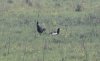
Photos below are a record shot of gaur (and yes the grass really is that high!), record shot of a Bengal florican (with peafowl), and an elephant across the border in Bhutan. In that country the elephants disguise themselves as bushes to sneak up on tourists in order to kill them more easily. Tricky devils they are.
 

Attachments

  • IMG_7990.JPG
    IMG_7990.JPG
    1.5 MB · Views: 28
  • IMG_7582.JPG
    IMG_7582.JPG
    277.7 KB · Views: 32
  • IMG_7655.JPG
    IMG_7655.JPG
    1.2 MB · Views: 34
Worm snakes are really cool animals, I looked for them in Bulgaria last year, but of course did not find them. But here in Madagascar there was one hiding in a bix box in the centre, so I got good views of it. And allthough it looks exactly like a worm, it totally behaves and moves like a snake, which makes it a very weird sight...
 
Worm snakes are really cool animals, I looked for them in Bulgaria last year, but of course did not find them. But here in Madagascar there was one hiding in a bix box in the centre, so I got good views of it. And allthough it looks exactly like a worm, it totally behaves and moves like a snake, which makes it a very weird sight...
oh, I wish my one had been alive -- that would have been a sight to see.
 
That elephant is disguised as a bush because it is being ridden by a ninja.

Getting a photo of a ninja on an elephant is a real achievement as I have never herd of one before..
 
Great trip report. Good that you got to see the Florican and displaying too.:)

Pygmy Hogs- I suspect they go about looking for Pygmy Hogs the wrong way and don't apply good 'small mammal watching' technique to it. There must be some particular areas they favour, if you(or rather the 'guides') knew where they were and could park up quietly there for some time, it might have been more productive. The jeep engine approaching is probably enough to usually scare them away before you get near. Establishing exactly what time of day they are most active would help too, though with all their antisocially strange and strict rules about times of entry/exit it would no doubt be outside of those. So the odds were no doubt stacked against you right from the start! But at least you saw them in captivity.

The stories about the bizarre restrictions on entry, 'cutting down time' on the jeep rides, being unable to slow down, and species misidentification all sound rather familiar too...:rolleyes: (The guides who 'took you for a (long) cup of tea' at the Gibbon sanctuary had me in fits too- classic!:D)

I first read about Golden Langur in the teaplanter/naturalist E.P.Gee's book 'The Wildlife of India' I believe he was the first to describe them and they are in fact named after him.

I saw Gaur in Southern India- they are very common in some parks.
 
That elephant is disguised as a bush because it is being ridden by a ninja.

Getting a photo of a ninja on an elephant is a real achievement as I have never herd of one before..
rarely can one get a photo of a ninja even not on an elephant. Most documented "ninja" photos are actually staged using captive ones. Now that you have brought it up, though, maybe the ninjas are the real reason for all the hyped-up security in the national parks -- it isn't the wild elephants the guards fear, it is the wild ninjas.
 
Great trip report. Good that you got to see the Florican and displaying too.:)

Pygmy Hogs- I suspect they go about looking for Pygmy Hogs the wrong way and don't apply good 'small mammal watching' technique to it. There must be some particular areas they favour, if you(or rather the 'guides') knew where they were and could park up quietly there for some time, it might have been more productive. The jeep engine approaching is probably enough to usually scare them away before you get near. Establishing exactly what time of day they are most active would help too, though with all their antisocially strange and strict rules about times of entry/exit it would no doubt be outside of those. So the odds were no doubt stacked against you right from the start! But at least you saw them in captivity.

The stories about the bizarre restrictions on entry, 'cutting down time' on the jeep rides, being unable to slow down, and species misidentification all sound rather familiar too...:rolleyes: (The guides who 'took you for a (long) cup of tea' at the Gibbon sanctuary had me in fits too- classic!:D)

I first read about Golden Langur in the teaplanter/naturalist E.P.Gee's book 'The Wildlife of India' I believe he was the first to describe them and they are in fact named after him.

I saw Gaur in Southern India- they are very common in some parks.
the florican display flight (really more like a super-high jump!) was neat to see and I think I might have been lucky (he only did it once in the several days I saw him).

Were the gaurs in southern India crepuscular too, or out in the day? I thought maybe at Manas they come out at night due to the poaching there in the recent past -- but they seemed completely unconcerned by the presence of the jeep when they were out.

I have no idea for the best way to look for pigmy hogs. By jeep is pretty rubbish I think -- you can cover more ground but can only see whatever is right beside the road. My own opinion is that walking through the grassland would be most productive because you would flush them. Also the wild pigs became more obvious on dusk (that's when we saw most of the smallest ones) so maybe that would be the best time -- but I don't know if the pigmy hogs would be the same. The ones at Nameri were best viewed in the mid-afternoon after the sun was well up and it had warmed up; not sure if the same would apply to wild ones.
 
Were the gaurs in southern India crepuscular too, or out in the day?

I have no idea for the best way to look for pigmy hogs. By jeep is pretty rubbish I think

From memory we saw Gaur in the daytime and in the evening. I remember sitting at a waterhole in dry forest and a group coming out of the forest to drink, they were very close.

Pygmy hogs- I think jeeps isn't good though I don't know what would be the way with most chance of success. Walking and flushing them from the grass you'd probably only get brief glimpses of them dashing away but better than nothing. Sitting/waiting quietly( if only you could..:rolleyes:) might yield better results but who knows?

No sign of Tiger in Manas then?:(
 
From memory we saw Gaur in the daytime and in the evening. I remember sitting at a waterhole in dry forest and a group coming out of the forest to drink, they were very close.

Pygmy hogs- I think jeeps isn't good though I don't know what would be the way with most chane of success. Walking and flushing them from the grass you'd probably only get brief glimpses of them dashing away but better than nothing. Sitting/waiting quietly( if only you could..:rolleyes:) might yield better results but who knows?

No sign of Tiger in Manas then?:(
sitting and waiting might pay off but imagine the chances of one just strolling out in the exact place you were watching! What I tend to find with the guides in the parks, also, is that while you are the one paying you can't always get them to do the things you want them to do! It is like you make a decision and then they just make a different decision for you and do that instead. I mean, what does it matter to them if you want to wait by a waterhole for three hours just to see what turns up -- they are getting the same amount of money. Instead it will be suggested, then urged, then demanded that "now we go on". I think a problem for proper wildlife watchers is that the jeeps/guides are generally catering to ordinary visitors who just want to see some elephants and buffalo, and so they follow set patterns and find it difficult to realise that some people want to deviate from that pattern.

No sign of tigers at Manas. I asked about them and was told one had been seen on the road "last week". Everything is "last week".
 
Wow, even without the pygmy hogs, the Ganges river dolphins are fabulous enough!
 
Instead it will be suggested, then urged, then demanded that "now we go on". I think a problem for proper wildlife watchers is that the jeeps/guides are generally catering to ordinary visitors who just want to see some elephants and buffalo, and so they follow set patterns and find it difficult to realise that some people want to deviate from that pattern.

I doubt very much any of them are trained naturalists, or even that interested. As you say, they are there to cater for the main demands of seeing 'big game' which doesn't require a lot of patience, just routine driving of the 'circuit' with brief stops. They don't understand anyone who might want to do different. Very tricky and frustrating.

When I was in Southern India we were travelling with an Indian friend who was a proper naturalist. Because he could communicate with them properly, visits to the Parks were less frustrating- they still had all their weird rules you had to abide by, but the staff etc related to him better and seemed rather more accomodating.
 
Last edited:
Chlidonias goes to Asia

Thanks for the mention. I can't agree with the whole 'Peafowl looking domestic' thing. They are a perfectly proportioned, very big pheasant, unchanged in form by domestication. Peafowl the world over are as agile on the ground and in the air as the wild ones. Most breeds of chicken, domestic ducks and geese find flight of any kind just too difficult. It could be regarded as a wonderful chance of nature that such a magnificent creature is so common and relatively simple to keep around.
 
Thanks for the mention. I can't agree with the whole 'Peafowl looking domestic' thing. They are a perfectly proportioned, very big pheasant, unchanged in form by domestication. Peafowl the world over are as agile on the ground and in the air as the wild ones. Most breeds of chicken, domestic ducks and geese find flight of any kind just too difficult. It could be regarded as a wonderful chance of nature that such a magnificent creature is so common and relatively simple to keep around.
but they are so weird!! I do like peafowl but to me they just look odd out in the wild, and I think it is purely because they are so common in captive settings. It would be kind of like seeing a lady wearing a ballgown while birdwatching -- right at a fancy function but just odd in the jungle. Although funnily enough red junglefowl, which basically look like chickens, don't look odd to me in the wild (although hearing them crowing in the middle of the jungle is a tad bewildering sometimes :D).

Speaking of flying, the blue peafowl at Manas mostly walked everywhere but the green peafowl I saw in Java (in 2009) would take to the wing as soon as they saw you. That was always an odd sight because they are so big and I would have expected them to run first and only fly as a last resort.
 
Last bit of India

The last stop in Assam after Manas National Park was the city of Guwahati. This is where I flew into from Kolkata and this is where I would fly out of back to Kolkata. The city used to be called Gauhati (pronounced go-hah-tee) – back when Pertinax visited – but it has since had an official spelling and pronunciation change to Guwahati (pronounced gwa-hah-tee although all the locals still pronounce it the old way). Just like Calcutta changing to Kolkata. I got to Guwahati by train from the Barpeta Road station near Manas. I figured I should take at least one train while in India. It isn't a “real” train ride because it is only about two hours but it is still characteristically mental. The ticket cost 45 rupees (less than a dollar) but you don't even really need to buy one because it doesn't give you a seat and the trains are so packed that there's no way tickets could be checked anyway. The train didn't pull up at the platform it was supposed to so to get to the right platform, instead of using the overhead pass half the people just climbed through the other train, between the carriages, while it was still moving, and then ran across the tracks to the other platform. When the right train did arrive everyone formed a mad scrum to get through the doors first – just like China except here there's a reason for it. In China the ticket is actually for an assigned seat, here whoever gets inside first gets the seats. Everyone else has to stand. The train ended up at the Kamakhya Junction Station. I didn't have any information on Guwahati apart for that I wanted to go to the Assam State Zoo while there, and I had no idea on the lay-out of the city, so I just followed everyone else out of the station and down the road until I saw a sign for a hotel, the Maa Sharda Guesthouse. I got a basic room there for 500 rupees (about NZ$10). It had a shared bathroom which was inhabited by more mosquitoes than I had seen in all the rest of Assam put together. The hotel is no more than fifty metres from the train tracks and about every half an hour, day and night, a train would go past blasting its horn to get people off the tracks. And yet I liked staying there more than I did staying at the Florican Cottages at Manas.

The next morning I set off early (6.30am) to get to the Assam State Zoo. The manager of the hotel had said I could get bus number 17 from beside the main road (the AT Road, a couple of minutes walk away) and that would drop me right at the gate. I had left so early because I knew it would take at least an hour on the bus, probably more, and I also suspected that trying to sort out the bus system might prove trickier than he suggested. Sure enough, the problem I immediately encountered was that only the school buses had numbers in English. The others only had them in Assamese which to me just look like squiggles, and none of the drivers or conductors speak English. I thought I would walk to the bus station instead where things might be easier to deal with. The hotel manager had implied the station was just up the road but it wasn't. I never found out how far away it was because instead I asked an auto-rickshaw driver how much to get to the zoo, he said 300 rupees (about NZ$6), and I said sure why not.

The review of the zoo is here: http://www.zoochat.com/254/visit-assam-state-zoo-guwahati-10-a-358287/

When I was at Kaziranga, Rocky Singh had told me that Gangetic dolphins could be seen in the Brahmaputra River which flows through the city (the same river which flows through Kaziranga National Park), so the next morning I walked up the AT Road to find it. The hotel manager had said ten, twenty minutes. It took an hour. I did see the river before that, but it was only between buildings. There were a lot of cattle egrets along the river's edge, along with ruddy shelducks and other ducks too far away to see properly, but no dolphins while I was watching. There are a lot of gyms in Guwahati! In that hour's walk I passed three of them, which is weird because I haven't seen anyone here who looks like they go to a gym. All the gyms have pictures of bodybuilders outside – one even called itself a “bodybuilding gym” and another had a trophy in the window. The city is a bit mad, but not like Kolkata. It is still disgusting and dirty and clogged with traffic and full of diseased dogs, but it doesn't have that same feeling of post-apocalypticalness that Kolkata does. I still wouldn't live there though. There are quite a few internet cafes about, so I ducked into one briefly. There was supposed to be a “well-known” site for greater adjutants in Guwahati, namely “the Guwahati city dump” but I didn't know where this was and when I tried asking the hotel manager he had got a little confused as to why on earth I would want to go to a dump. I'm sort of surprised there even are dump sites in Indian cities, given the amount of rubbish piled everywhere in the streets. Some googling revealed that there are numerous dumping sites in the city and the adjutants appeared to be seen at all of them, so I found one on Google Maps called the Adabari dumping ground which was within walking distance. I'm down to my last few thousand rupees and I don't want to use an ATM to just get out a small amount more because of the fees charged on foreign withdrawals, so now I'm trying to stretch it out as much as possible for the last days in the country by not spending any money on taxis and so on.

In the morning I set off up the road to look for the dump. I had a rough map drawn from Google maps but it basically had a couple of railway lines and the approximate site of the dump. I found where I should turn off the main road, and this street led into a maze of alleyways through the slums. I kept going deeper, just turning left or right depending on whichever way looked most likely, with the local slum-dwellers eyeing me suspiciously. There was no logical reason for any white person to be in here. Nobody in here spoke English of course and I had no clue how to mime looking for a rubbish dump – after all, there was rubbish everywhere, lining every lane. Perhaps this was the dump? I never found what I was looking for, and more importantly there were no birds in the sky. Above a dump there should be a blizzard of crows and kites; here the sky was completely empty in every direction. I did see a greater adjutant when I was at Kaziranga, it just would have been nice to see them in more quantity and get some photos (although I did get some good photos of breeding-plumaged birds at the Assam State Zoo).

The hotel manager had told me when I first arrived that there were no buses or shared taxis to the airport, I would have to take a regular taxi and it would cost 600 rupees (about NZ$12). This didn't sound right, and most of what else he had told me had turned out to be wrong, so when I was at the internet cafe the other day I checked this out and discovered that there is a bus to the airport, it costs 130 rupees, and it leaves from the Paltan Bazar. I also discovered that the route went along the AT Road through Migaon, right about where my hotel was. I wrote down the number of the bus company and back at the hotel asked the manager if he could ring them up to check whether I would have to go to Paltan Bazar or if they could do pick-ups along the route. “Sure, sure, it's no problem, they do pick-ups,” he says, as if he has known about the bus all along, “you just wait by the road. There are many buses going out to the airport” I suggested he call them to check this out, he kept stalling, and I kept pressing. Something I had realised just after arrival in India, back with the general manager of Wild Grass at Kaziranga, is that Indians are lazy! They really don't want to do anything, so they will just say “yes yes yes” and fob you off without doing the thing they are supposed to be doing, even if it something as easy as making a phone-call. Eventually I got him to make the call and it turned out that the bus definitely doesn't pick up along the route, I would have to go to the start point to catch the bus which on the day I did by the cheapest way possible, namely to take a city bus from the AT Road to Paltan Bazar for 8 rupees.

Paltan Bazar is a much nicer district than Migaon. It is where I would have ended up if the train from Manas hadn't terminated where it did, but I just take the dice as they roll. At Paltan Bazar there are slightly cleaner streets (only slightly, but still), hotels with names like “Fame City Hotel” and “Amaze Hotel”, shops which look like actual shops and not like someone has just taken off the front wall of their garden shed and put up a sign, restaurants which look like you could eat there without getting Hepatitis, there are Baskin Robbins' and Pizza Huts and malls. It is almost like somewhere you could live. On the other hand, who needs all that stuff anyway?

The airport security in Guwahati is even more severe than in Kolkata, although that's probably not surprising given that a plane flying out of Assam is probably more likely to be hit with terrorism than one flying into Assam. As before I had to take out my batteries and field guide from my check-in luggage to be visually checked, then after the x-raying all bags had cable-ties put through their locks so that nothing could be sneaked in afterwards. At the next security check where the hand-luggage was x-rayed I had to take the cameras out of the bag so it could be x-rayed again, and then remove the batteries from my cameras as well. And then finally there was a third security check, where everyone was again metal-detectored and frisked as they went through the gate to board the plane. Soon airport security is going to get to the stage where passengers are not allowed any hand-luggage at all and pockets will need to be completely empty.

In Kolkata I took the airport bus for 40 rupees (instead of a taxi for 280 rupees) to the Esplanade bus station which is about ten minutes walk from Sudder Street, the backpacker hang-out. I stayed at the Capital Guesthouse where there was a pretty grotty room for 590 rupees. I had one day free in the city before my flight out to Bangkok and originally I was going to try for a day-trip to the Sundarbans but I had no money left. I managed to stretch 4000-odd rupees out over the last six days in India, which was pretty good going, about NZ$15 a day, and that included buying a $30 pair of shoes. I really had to replace the South Korean shoes which I was still wearing even though the soles were coming apart and the metal inserts in the soles were starting to stick out the side. I'm amazed I never got refused on flights with what looked like the tips of hidden blades sticking out of my shoes! Anyway the sole on one was literally about to fall off so I needed new ones immediately. The problem with buying shoes over here is that my feet are way bigger than most Asians' feet. There are stalls all along the streets selling shoes for just a few dollars, but just as in South Korea the only ones I could find in my size were much more expensive. I ended up with a horrible pair of tan Indian loafers which, being emergency shoes, aren't quite big enough but they were the biggest shoes available. The only way I could look any more stupid is if I was wearing brand new South Korean shoes! I left my old shoes sitting beside the road in the box the new ones had been in. A couple of hours later when I want past on the way to catch the airport bus I saw the box was still there but the shoes had already found a new owner. I can just imagine some homeless Indian man with giant clown feet saying “finally I have found some thrown-away shoes which fit me!!” Then he would put on the shoes and strut around saying to the other homeless people “Look at me! I'm a tourist!” Ha, jokes at the expense of the destitute. Can I sink any lower?

For my last day in India I returned to the Botanical Gardens. I had been intending to go early but I finally had internet after three weeks and when I got up in the morning I got sidetracked with forums and blogs and emails and things, so didn't get to the gardens until about 9.30. It costs 100 rupees to enter the gardens, plus a 20 rupee camera fee. I gave the guy at the counter a 500 rupee note, and he very slowly counted out the change below the desk out of my line of sight. Nothing suspicious about that. He handed me the change with the notes all folded up together. As I opened them up he immediately said “oh sorry sir” and gave me the extra couple of 100s which he had “forgotten” to put in. I had come to the gardens mainly to look for three-striped palm squirrels. From what I found on the internet, both five-striped and three-striped palm squirrels live there, Kolkata being part of the two species' overlap ranges. I had seen five-striped palm squirrels before (in Perth where they are introduced, and one the last time I was in Kolkata) but I had never seen three-striped palm squirrels. Because of pouring rain on the previous visit to the gardens I hadn't seen even one squirrel there, but today was fine and sunny and there were squirrels everywhere, especially around the Giant Banyan where they were bounding all over the ground and scuttling all over the branches and trunks. All of them were five-striped palm squirrels. I'm not positive three-striped palm squirrels even do live in the Kolkata Botanical Gardens – on the internet I have seen a lot of misidentified photos taken there! I saw a small Indian mongoose meandering along one of the paths too. The regular birds from before were there as well. I had almost got to 300 birds for the year to date while in India and I was hoping to see just a couple extra in the gardens to round it up but didn't quite make it. I had also been intending to visit the Marble Palace Zoo on this day to see chousingha but after visiting the gardens for the whole morning and the early afternoon the traffic was so bad that I wouldn't have made it until almost closing so that was cancelled.

I did manage to see one extra mammal in India before I left though. While I was sitting outside the Capital Guesthouse I saw out of the corner of my eye what I thought was small rat running along the base of the wall next to me. It turned out to be an Asian house shrew, the first one I've ever seen. Much larger than expected (hence me thinking it was going to be a rat), sort of like if you had thought a capybara was going to be about the size of a hare. So my mammal total for the country ended on 26 which is pretty good considering no spotlighting.

Leaving India the security was a bit lax – I didn't have to take out either the batteries or my field guide for them to check! I was flying to Bangkok with Thai Airways, the first time I'd used them. Normally I would be flying with Air Asia but they had been fully booked for that whole week and Thai Airways wasn't much dearer. The guy at the check-in counter in the Kolkata Airport wanted to know where my Thai visa was in my passport. I said I didn't need one in my passport and he looked unbelieving, but eventually he let me through. I'm guessing they mainly get Thais and Indians going on that flight route. When I got to the border check the chap there didn't know what my Indian visa-on-arrival was and wanted to know where my “real” visa was in the passport. I had somehow timed my departure and remaining rupees perfectly and hence left the country with exactly zero rupees. In the month in India I had spent exactly 92,000 rupees (about NZ$1750), not including the flights but including the 3600 rupees visa-on-arrival. That's just under NZ$60 per day on average which, given the costs inside the parks is actually less than I had expected. India is damned expensive if going there for wildlife!


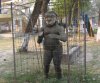
Below: a gorilla in a cage in Guwahati
 

Attachments

  • IMG_7864.JPG
    IMG_7864.JPG
    1.1 MB · Views: 22
END

The Indian part of this trip was great. I didn't think much of Kolkata but Assam was just like southeast Asia and therefore brilliant. I aim to return to cover some different parts of the subcontinent in the future. If I did the same Assam trip again, with the benefit of hindsight, I would probably give myself only half as long at each place. It is difficult knowing beforehand how long one needs anywhere, and I like to spend time and not just rush about helter-skelter like a mouse in a cheese factory, but really I didn't need as much time as I gave myself. I could have fitted into the month some of Gujarat like Gir and the Little Rann Of Kutch quite easily and still seen the Assamese parks well. Instead I was bound to Assam by the date of the return flight from Guwahati (a reason I don't like booking things ahead!), and because there was no internet over most of the route I couldn't find out about any other nearby parks I could visit as additions. If I'd been smart enough I would have only booked the flight into Assam from Kolkata but left the exit open with the plan to take a train back. If I'd done that then I would have been free to leave earlier and fly to the west to fit in some more animal-watching. Instead I ended up just passing time until the flight and that was a bit annoying.

There were numerous frustrations with the way the parks in Assam (and presumably all of India) are run, with the ridiculous fees and the ridiculous operating hours and the ridiculous bans on night visits. I was impressed at the very high numbers of genuinely interested local tourists visiting the parks, a stark contrast to places like Indonesia or China where as far as most locals are concerned the sooner the forest is razed to the ground and replaced with cities the better. However the huge difference in local-vs-foreigner fees is galling (50 rupees versus 500 rupees), especially when you see the types of camera lenses these local tourists are usually carrying – I mean, these guys aren't exactly poor! Often at Kaziranga I would be sitting in the restaurant with literally hundreds of thousands of dollars worth of camera equipment surrounding me. Most of the local tourists didn't even know there were different rates for foreigners; they would look shocked when I told them the price differences. But at least the park rules and regulations annoyed everybody, locals included, and not just me!

Most people in Assam seem very open and friendly, except at Bansbari (at Manas) where people in general seemed very unfriendly and I got a lot of blank zombified stares when I said hello as I passed people by. English is not often spoken in Assam except in the tourist lodges; elsewhere some people speak a little, most people speak none. I felt perfectly safe where-ever I was, although there was a bit of a feeling of an undercurrent of violence ready to erupt at any moment (which probably wouldn't have been the case if it hadn't been for the strikes and road-blocks and bombings and self-immolations while I was there!). The local tourists from other parts of India were always quick to point out that Assam is “still wild” and the people are basically “tribal” with a “feudal nature”. I don't know how accurate that is, but it is probably fairly true. A lot of southeast Asia is like that, and as I've said before Assam is really part of southeast Asia in nature.


Some other observations about India:

There are baby goats everywhere in Assam. Everywhere!!! There are always animals on the road – sheep, cows, dogs, chickens, you name it and it will be on a road somewhere – but the baby goats are like flies. I have no idea why or how there are so many baby goats because there don't appear to be enough adult goats around to produce them all.

There are also mosquitoes everywhere in Kolkata. I don't think I've ever been anywhere with such a consistent level of mosquito ubiquity as Kolkata. They were in the buses, they were in the taxis, they were in the airport, they were even in the planes.

Poached eggs in Assam are not poached eggs. They are fried eggs cooked just enough that they are still half raw (not just runny yolks but runny whites as well).

Shaking the head means “yes”. Shaking the head harder means “no”. And they will never say “yes” while shaking the head, they just shake their head without saying anything. One of the Indian tourists I met (from Delhi) said that this is confusing even for Indians not from the north. It goes something like this:

Me, entering shop: “Do you sell Bengal floricans?”
Shopkeeper: shakes head
Me: “OK thanks” - goes to leave
Shopkeeper: “No, sir, Bengal floricans?”
Me: “Yes, do you sell them?”
Shopkeeper: shakes head
Me: “Oh, OK thanks” – goes to leave
Shopkeeper: “Wait, sir, you wanted Bengal floricans....”
Me “Yes, Bengal floricans. Do you have them?”
Shopkeeper: shakes head
Me: “Er, right.... I'll just try the next shop then” – goes to leave, again
Shopkeeper: “Sir, sir, Bengal floricans!” Puts a box of Bengal floricans on the counter.
Me: “Oh you do sell Bengal floricans!”
Shopkeeper: shakes head
 
END?

Now I am back in Bangkok wondering what to do because my bank account is almost empty. I don't want to go back to the real world!!

First I needed new shoes. Again. The ones I got in India were no good for walking any distance in, with the back rubbing my heel and the front crushing my toes, so off I went to the Chatuchak Market where I bought another pair for 300 Baht (about NZ$12). Strangely enough, nobody would do a deal which included a trade with the Indian shoes and even the stalls selling second-hand shoes wouldn't buy them. So I just gave them to the lady at the reception desk at my guesthouse and said she could find them a home.

Tonight I am off on an overnight bus to Chiang Mai. I'm planning on getting in some more birds at Doi Inthanon before dragging my sorry carcasse home to New Zealand.
 
A shame it is ending, it has been fun to follow your story and I would almost consider doing a fund-raiser although we should have a say in the destination then or set targets (100 dollars for every pallas cat you will spot or so).
 
Back
Top