ZooChat Exhibit Design Competition #2

Some questions about species choice JB:

1) Being from Britain, can I use any species from EAZA or does it have to be from BIAZA? - for example species found in Germany, Netherlands etc but not in UK? Certainly hoping I can use any EAZA :p

2) If I fetch a species in from America as one of the two, does the species have to be well established, or can I use that species if there is only a couple of individuals. If I pick a species from the States but decide to bring in more blood from the wild, does this use up an outside home range and a from the wild, or just one?

3) If I get a species from a rescue or breeding centre in the home range, does this count as import from the wild or import from captivity outside home country?
 
Some questions about species choice JB:

1) Being from Britain, can I use any species from EAZA or does it have to be from BIAZA? - for example species found in Germany, Netherlands etc but not in UK? Certainly hoping I can use any EAZA :p

2) If I fetch a species in from America as one of the two, does the species have to be well established, or can I use that species if there is only a couple of individuals. If I pick a species from the States but decide to bring in more blood from the wild, does this use up an outside home range and a from the wild, or just one?

3) If I get a species from a rescue or breeding centre in the home range, does this count as import from the wild or import from captivity outside home country?

1. BIAZA or EAZA are both fine.

2. Species needs to have a firm enough population that can warrant an import. You can import from both another country (-ZA) and from the wild, but this will use up two imports.

3. From wild.
 
Two questions:
1) Would I be allowed to import African (Cape) Clawless Otter into the UK from the US, or are there not enough AZA holders?

2) I can't find a useful resource for species enclosure requirements. I know this question is crying out for a 'let me google that for you', but I'm now in China where I don't have google! I've followed quite a few links but they all lead to membership walls or just dead ends. Is there a database with space and enrichment requirements that other people use?

Any help appreciated.
 
Two questions:
2) I can't find a useful resource for species enclosure requirements. I know this question is crying out for a 'let me google that for you', but I'm now in China where I don't have google! I've followed quite a few links but they all lead to membership walls or just dead ends. Is there a database with space and enrichment requirements that other people use?

You can try and look up Husbandry Manuals for the animals in question, often many of them will have both minimum space requirements as well as containment techniques (ie. what kind of fence/walls to use). The Australians publicly publish a large number of theirs, and AZA publishes theirs as they come down the line.

That's all I have, does anyone else have any resources?
 
You can try and look up Husbandry Manuals for the animals in question, often many of them will have both minimum space requirements as well as containment techniques (ie. what kind of fence/walls to use). The Australians publicly publish a large number of theirs, and AZA publishes theirs as they come down the line.

That's all I have, does anyone else have any resources?

Thanks, that's really helpful. Although quite a few of the ones I've found seem to lack spatial requirements. I was a bit concerned that my plan might lead to undersized enclosures but I think I'll be fine.

Another question JB: are you going to release the topographical data for the site? I'm getting pretty close to the point where a hill in the wrong place might cause some serious problems.
 
My entry (only for review)

Here is my entry for review, any tips will be appreciated :). I attached one of the pictures here too, because that one particular picture wasn´t readable in that pdf.
 

Attachments

  • NiokoloKoba.pdf
    NiokoloKoba.pdf
    641.1 KB · Views: 121
  • Central 2.jpg
    Central 2.jpg
    193.8 KB · Views: 51
Here is my entry for review, any tips will be appreciated :). I attached one of the pictures here too, because that one particular picture wasn´t readable in that pdf.

I think this is really good. Very detailed map, nice choice of species, clear right up.

I have a couple of questions/suggestions though.

Can you tell us which country the zoo is in? And also which animals you have imported? Good for those of us who don't know which species are unique to the AZA/EAZA.

What is the enclosure marked 9 in the western area? And the visitor area marked 6 in the centre? I don't think you mentioned them.

I think you're better off choosing a specific region for your building theming rather than 'African'. It's more culturally sensitive.

My last comment would be the least important. It's quite a personal thing, but I wonder if you need quite that much 'green space'. Maybe you could expand some of the enclosures or add another one? Totally subjective of course.

Hope this was of some use.
 
Here is my entry for review, any tips will be appreciated :). I attached one of the pictures here too, because that one particular picture wasn´t readable in that pdf.

Nice design :)

Why did you chose Niokolo-Koba National Park? As not all of the species are found there.

Also one (as far as I can see) of the species you have isn't found within West Africa, namely Congo Peafowl.
 
Here is my entry for review, any tips will be appreciated :). I attached one of the pictures here too, because that one particular picture wasn´t readable in that pdf.

One thing I think you can improve is the visitor circulation through the site, it would be very confusing to a visitor and they could easily miss exhibits in your current scheme. I think if you focused on creating a primary circulation route along which the visitors can experience your exhibits it will work much better. Also, the design is very orthogonal. It probably has a lot to do with using sketchup to design the exhibit... I would encourage you to design the exhibit by hand with pencil and paper so you are not confined to orthogonal thinking and design. I think in the end if you do this you will have a much more flowing and cohesive design. Great first try, I look forward to seeing the end result.
 
I think this is really good. Very detailed map, nice choice of species, clear right up.

I have a couple of questions/suggestions though.

Can you tell us which country the zoo is in? And also which animals you have imported? Good for those of us who don't know which species are unique to the AZA/EAZA.

What is the enclosure marked 9 in the western area? And the visitor area marked 6 in the centre? I don't think you mentioned them.

I think you're better off choosing a specific region for your building theming rather than 'African'. It's more culturally sensitive.

My last comment would be the least important. It's quite a personal thing, but I wonder if you need quite that much 'green space'. Maybe you could expand some of the enclosures or add another one? Totally subjective of course.

Hope this was of some use.
First of all thanks for your comment :)

I live in Czech Republic, which means I´m trying to design exhibit that will work properly in our weather conditions.

Imported animals are only Giant Elands (from wild, not very realistic though because of EU restrictions)

Exhibit 9 in western area is for Common genets
Number 6 in central part are toilets. They are mentioned in the text but i forgot to ad number to it.

This is my first bigger project so that is maybe why I don´t have the cultural and envirometnal stuff as good as probably it should be.

I choose this big areas of original vegetation mainly because the whole area should be very dense and I wanted to avoid big deforestation because: 1. it does not look good and 2. it´s costly
 
Nice design :)

Why did you chose Niokolo-Koba National Park? As not all of the species are found there.

Also one (as far as I can see) of the species you have isn't found within West Africa, namely Congo Peafowl.

I choose Niokolo-Koba (although it´s almost out of that area we should use) because in this park have one of the czech universities consevrvation program for Giant Eland.

You´re right with the congo peafowl, I´ll remove him from the final version.
 
One thing I think you can improve is the visitor circulation through the site, it would be very confusing to a visitor and they could easily miss exhibits in your current scheme. I think if you focused on creating a primary circulation route along which the visitors can experience your exhibits it will work much better. Also, the design is very orthogonal. It probably has a lot to do with using sketchup to design the exhibit... I would encourage you to design the exhibit by hand with pencil and paper so you are not confined to orthogonal thinking and design. I think in the end if you do this you will have a much more flowing and cohesive design. Great first try, I look forward to seeing the end result.

Thanks for your advice :). The thing is, I´m not very skilled when it comes to drawing. Sketchup helps me to get over this issue. It does look a bit wierd tho, but I´ve already found some tweaks in sketch up how to make it more natural. If it still won´t be working I´ll go back to pencil and paper or maybe combine this two methods.
 
West Africa – Journey into the Unknown

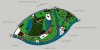
So here is my submission: West Africa – Journey into the Unknown

See attached text and maps.
Hope you like it :)

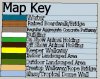
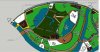
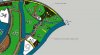
Key to the maps:
1 – 1100 sq. ft. Entrance Area (includes 780 sq. ft. bridge)
2 - 2700 sq. ft. Waterbird aviary with Black Crowned Crane, Grey Headed Gull, Spur Winged Lapwing, Black Winged Stilt, African Pygmy Goose, Spur Winged Goose, Knob-billed Duck, Egyptian Goose, Hartlaub's Duck, White-faced Whistling Duck, African Spoonbill, Abdim's Stork, African Sacred Ibis, Green-backed Heron and Squacco Heron.
3Raised Boardwalks allowing visitors to see down into the creek
4 - 1250 sq. ft. Saddle-bill Stork aviary
5 – 840 sq. ft. heated indoor building divided into two for the Saddle-Bill Storks and Waterbirds with viewing through windows from outside.
6Landscaped area
7Raised Boardwalk and bridge across the creek
8Area for Visitors with benches
9- 2400 sq. ft. Events Building with equal sized basement (accessible by lift) used as general multipurpose storage area for keepers
10 – 1100 sq. ft. Bushbuck Indoor Building with 800 sq. ft. used for Bushbuck and 300 sq. ft. public viewing area
11- 730 sq. ft. off show Bushbuck paddock
12 – 3200 sq. ft. Bushbuck Outdoor Paddock
13 – 300 sq. ft. Viewing Deck over Bushbuck Enclosure
14 – 1800 sq. ft. Diana Monkey Outdoor netted over area with viewing through glass windows from the path
15 - 1400 sq. ft. Mona Monkey Outdoor netted over area with viewing through glass windows from the path
16 – 7600 sq. ft. Chimpanzee Outdoors with public viewing across the creek though windows
17 Additional creek area as border for chimps with viewing areas
18 – 430 sq. ft. Nocturnal Primates Darkened cave-themed Building (Senegal Bushbaby and Potto in separate 100 sq. ft. on show enclosures with 50 sq. ft. off show enclosures behind, and 130 sq. ft. visitor viewing)
19 – 900 sq. ft. Visitor Seating Area (with benches, display of bushmeat and a toilet block)
20 – 3950 sq. ft. Chimp Indoor Area (can be divided into two if necessary)
21 – 630 sq. ft. Chimp off-exhibit holding
22 – 3100 sq. ft. indoor only Campbell’s Guenon Enclosure
23 – 500 sq. ft. Small primates off exhibit holding enclosures can be divided into up to five 100 sq. ft. sections
24 – 120 sq. ft. enclosure for free flying birds to be taken off exhibit, can be subdivided
25 – 2400 sq. ft. area of lush tropical planting for the free flying birds (though birds would be able to access the primate enclosures which would also be planted with trees, which would be hot-wired off if necessary)
26 – 1680 sq. ft. Mona monkey indoors
27 – 2500 sq. ft. Diana Monkey Indoors
28 Treetop walkway with viewing tower over forested area with bird feeders visible prominently from the viewing tower
29 – 2500 sq. ft. Yellow-backed Duiker Outdoor thickly wooded Paddock
30 – 900 sq. ft. Yellow-backed Duiker outdoor off-show holding yard
31 – 870 sq. ft. entry/exit to the Tropical Dome with decking area/viewing deck
32 – 8000 sq. ft. Yellow-backed Duiker indoor enclosure
33 – 700 sq. ft. Yellow-backed Duiker indoor off show holding yard
34 – 4100 sq. ft. Raised restaurant with panoramic viewing windows across the tropical dome. Has Toilet and fish tank with Featherfin Squeaker + Banded Jewelfish
35 Treetop Walkway with viewing deck over the ‘canopy’
36 – 10,000 sq. ft. (5700 sq. ft. water, 4300 sq. ft. land) Slender-snouted Crocodile Enclosure. Can be divided in two with discreetly hidden mesh
37 – 320 sq. ft. (240 sq. ft. land, 80 sq. ft. water) Home’s Hingeback Tortoise + West African Black Mud Turtle enclosure
38 – 200 sq. ft. Snake Cave with Western Green Mamba, Forest Cobra and Rhinoceros Viper in separate tanks
39 Waterfall going over the pathway and into the crocodile enclosure and the main waterway which goes to the pygmy hippo enclosure. From there water is filtered and pumped underground back to the waterfall to form a continuous loop.
40 – 160 sq. ft. Viewing deck over crocodile enclosure
41 – 1060 sq. ft. Off show crocodile holding area with small pools. Can be divided using fencing into as many smaller sections as necessary.
42a – 250 sq. ft. aviary for holding free flying birds and squirrels off show. Can be subdivided
42b – 230 sq. ft. enclosure for holding Bay Duikers
43 Pathway through the general forest area (25000 sq. ft.) for the free flying birds and the Bay Duiker
44 – 17200 sq. ft. (7500 sq. ft. water, 9660 sq. ft. land) Pygmy Hippo Enclosure
45 – 3x 340 sq. ft. off show Pygmy Hippo holding yards
46 – 1000 sq. ft. Pangolin Cave (200 sq. ft. visitor viewing, 2x 200 sq. ft. on show enclosures, 2 x 200 sq. ft. off show enclosures)
47 Pathway back to exit from main tropical dome
48 – 14700 sq. ft. Savannah Paddock with Defassa Waterbuck, Abyssinian Ground Hornbill, Roan Antelope and Common Warthog
49 – 3800 sq. ft. viewing deck with huge glass windows with tanks for Savannah Monitors and Fat-tail Geckos
50 – 2680 sq. ft. indoor Building with indoor area for savannah paddock (2200 sq. ft.) and Patas Monkey mixed exhibit (480 sq. ft.)
51 – 2000 sq. ft. Patas Monkey, Sulcata Tortoise, Secretary Bird, Pied Crow, Laughing Dove Mixed Exhibit/aviary
52 – 2400 sq. ft. Netted over Egyptian vulture, Northern White-faced Owl and Honey badger enclosure with underground den in mock rock structure in the middle for honey badger and nest boxes for vultures
53 – 6050 sq. ft. indoors + 2300 sq. ft. outdoors off show holding building with indoor and outdoor yards for hoofstock or honey badger and small tanks and cages inside for smaller species and birds. 3050 sq. ft. of indoors at ground level and 3000 sq. ft. basement.
54 Water Filtration
55 Keeper Access Bridge
 

Attachments

  • Exhibit Overview.jpg
    Exhibit Overview.jpg
    179.1 KB · Views: 66
  • West Africa Exhibit Design Write-up.pdf
    West Africa Exhibit Design Write-up.pdf
    426.4 KB · Views: 47
  • Map Key.jpg
    Map Key.jpg
    188 KB · Views: 36
  • Left Hand Side (2).jpg
    Left Hand Side (2).jpg
    258.1 KB · Views: 48
  • Right Hand Side.jpg
    Right Hand Side.jpg
    182.7 KB · Views: 38
Last edited:
HOMIN96

Thoughts:

1. I don't see a way to get over the creek
2. What's a typical "African hut?"
3. Get rid of the word "typical." Be specific.
4. Having animal housing and cafe settings within a single building/connecting building is a smell nightmare waiting to happen.
5. It seems to be just a series of animal followed by animal holding, animal followed by animal holding.
6. I'll echo what Drew said. It's very rectangular.
7. There's a lot of backtracking that the visitor will have to do. Try focusing it to a single route.
8. Personal preference, I'd rather not see so many animal holding facilities. The animals and keepers would like to have some privacy.
9. Only size issue is the giant eland exhibit. 4,000 sq. ft. is tiny for the largest of the antelope.
10. Try more mixed species exhibits with your mammals.
 
Thoughts:

1. I don't see a way to get over the creek
2. What's a typical "African hut?"
3. Get rid of the word "typical." Be specific.
4. Having animal housing and cafe settings within a single building/connecting building is a smell nightmare waiting to happen.
5. It seems to be just a series of animal followed by animal holding, animal followed by animal holding.
6. I'll echo what Drew said. It's very rectangular.
7. There's a lot of backtracking that the visitor will have to do. Try focusing it to a single route.
8. Personal preference, I'd rather not see so many animal holding facilities. The animals and keepers would like to have some privacy.
9. Only size issue is the giant eland exhibit. 4,000 sq. ft. is tiny for the largest of the antelope.
10. Try more mixed species exhibits with your mammals.

Thanks for the review. I´ll try to fix the issues. Can you specify over which creek you don´t see the way? The one in Chimp exhibit?
 
There's only supposed to be one entrance. You have some small things that could be bridges, but are nowhere near big enough to carry people.
 
One thing I have noticed is all of your enclosures, unless otherwise mentioned are one giant enclosure for all the animals in said enclosure. If there are babies, or if the animals need to be split into smaller groups because certain individuals just don't get along (multiple male animals, new animal getting used to the exhibit, new pecking order), they are stuck in their holdings and are not viewable which is not considered ethical, at least in Canada.

Also how do you plan to split your chimp enclosure "divided into two if necessary". Is it actual two enclosures with gates between?
 
LaughingDove

Thoughts

1. Save for 6 on the map, there is no green space to let the visitor rest from the constant stimulation of all animals all the time.
2. At 10,000 sf, the croc exhibit will probably be frustrating to guests trying to find the animals.
3. The savanna exhibit would be a good size for a large predator exhibit, but not for several herds of large antelope. Exhibits I've seen for similar species have ranged from 60,000 sf on up.
4. There are multiple dead ends in the primate area. Indoor chimp and guenon exhibits are completely inaccessible according to the map.
5. While technically allowable, imports of Bay Duikers and Bushbuck will wipe out the AZA population. There are maybe 5 duikers in the US and 10 or fewer bushbuck.
6. Consider mixing mammal species (primates and hoofstock). The interactions will be enrichment for the animals and entertaining for the guests.
7. The first thing the visitor sees when entering the exhibit is the off exhibit holding yards. Not an inviting way to enter. Also, those holding yards are not connected to any exhibits and are rendered useless.
8. Holding 10/11 need to be moved away from 9. Animal smells and events/eating aren't a winning combo.

My suggestion is to delete 48-50 entirely and use that as green space. Space out some of the exhibits so they don't all seem bunched up. Get rid of dead ends and think about a quasi "one way" route. Try and incorporate more of the creek into your design.
 
Back
Top