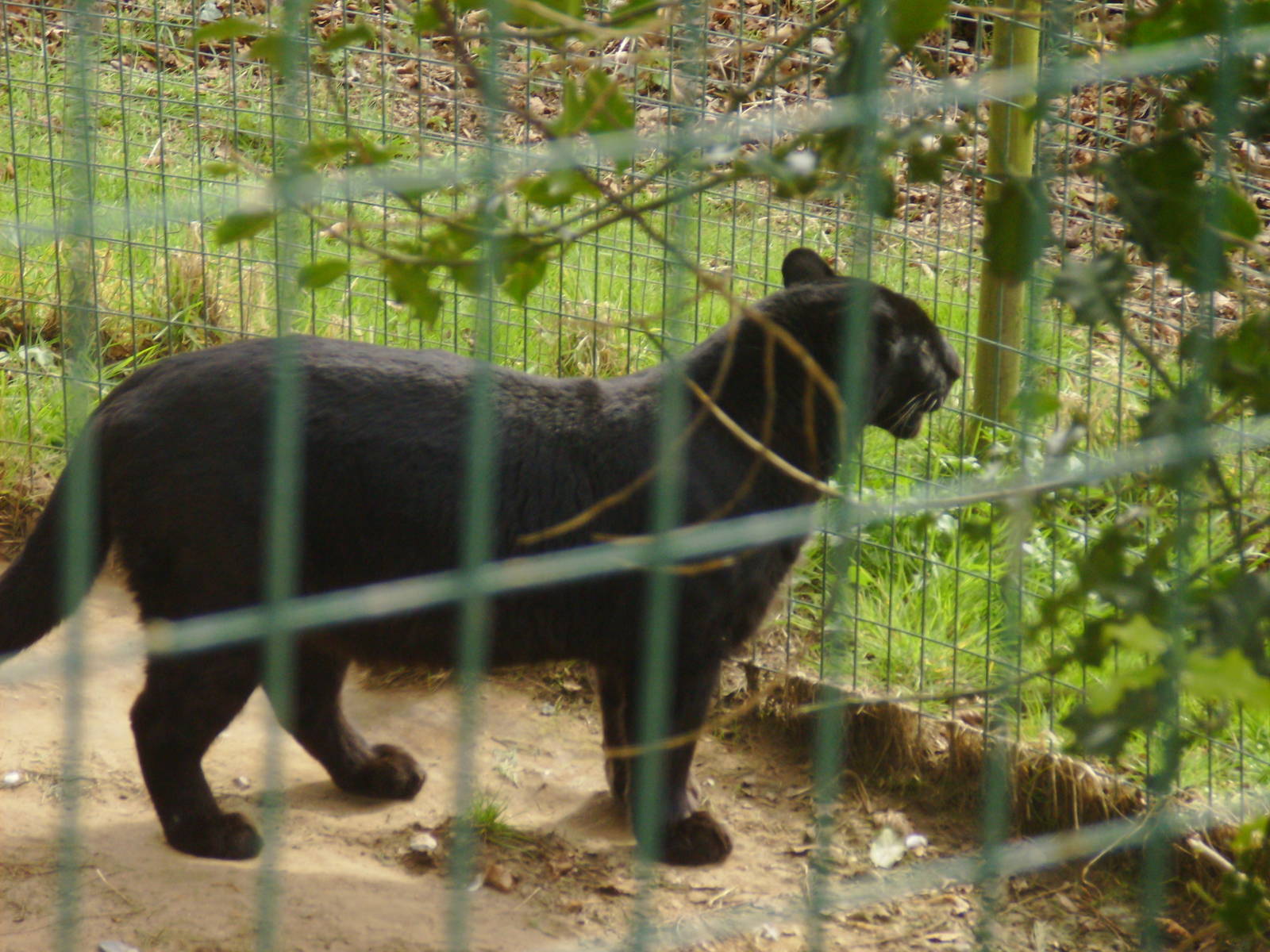
One of it´s cubs, a male called Rusher, was trasferred to Zoo Ústí / CZ and has been paired with a young female Kiara, one of the last remaining 100% pure Amurs in Europe. They´ve produced one daughter so far (Kaila, now in Nesles / France), and the zoo got a new breeding recommendation from EEP for this season.
Thank you for this link - mystery solved. The founder that so many EEP amurs have blood from is a South China leopard, NOT a North China. The South China (or Indochinese) is from a dense forest area well know to produce melanism. (Phoenix Zoo here in Arizona had a pureblooded black Indochinese many years ago).
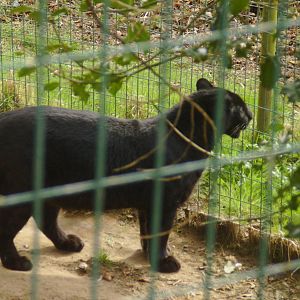
Slightly off topic, but since all the experts seem to be posting to this thread: are there any melanistic African leopards? In zoos or in the wild? I've never heard of any....
This one is a bit murky. Leopards occur in the rain forest of West Africa (as well as other parts of Africa), which is exactly the kind of environment that produces melanism. However, as far as I know, there is no confirmed documentation of melanistic leopards from this area. There are several claims of people seeing a melanistic leopard in more open tourist areas of Africa, particularly Lewa Downs in Kenya. But as far as I know, there is no hard evidence (a photograph or pelt) to support this. It has been claimed by guidebooks that black leopards occur in the mountain forests of Aberdares (Kenya), an area that does produce melanistic servals (confirmed by photographs and strong eyewitness accounts). But again, I've never seen hard evidence of black leopards. Until a certified skin or photograph appears, I remain doubtful.
As for zoos, any black leopards that are claimed to be African are almost certainly hybrids, with the black gene coming from southeast Asia.
Thank you for this link - mystery solved. The founder that so many EEP amurs have blood from is a South China leopard, NOT a North China. The South China (or Indochinese) is from a dense forest area well know to produce melanism. (Phoenix Zoo here in Arizona had a pureblooded black Indochinese many years ago).
Sorry to contradict (once again), but that is merely an assumption. Nobody knows for sure why melanism occurs more often in one population than in another. It could be an advantage in the specific environment, or a result of a (former) genetic bottleneck situation. In some species, like the European Adder, it is suspected that the darker colour is a metabolic advantage in colder, mountainous areas; in the case of melanistic wild felids (inclusive leopards, jaguars, clouded leopards...), it is assumed to provide better camouflage in dark rainforest. However, melanistic specimens of species like bobcats or caracals have been observed in areas where the camouflage theory doesn't seem to ring true.
My source was entry #11 on this very thread - the blue link called Amur Leopard (which leads to another thread on this site).
Black bobcats have only been seen in forested areas of Florida, black leopards are only confirmed in forested areas of southeast Asia, black jaguars only occur in the rainforests of South America, and I know of no solid documentation for black caracals (although many books mention them in passing without citing any specifics or sources). If you have any specific examples (ie photos or reputable accounts) of melanistic cats from non-forest environments, I would love to see them. (I'm not being sarcastic, I really mean it. I am interested in this topic, there's certainly a lot I don't know, and I always appreciate being shown something new. Any links would be greatly appreciated).
Example of a black serval and an African black panther-obviously not limited to a forest environment.
[ame=http://www.youtube.com/watch?v=HUhGnInNRXo]YouTube - Black Serval & Black Panther[/ame]
Fantastic video clip. THANK YOU! Although I've seen some nice photos of the black Aberdares serval, I didn't think there were any photos or videos of a black leopard from Africa. This is awesome. (The shot of a black and typical leopard walking side by side is incredible).