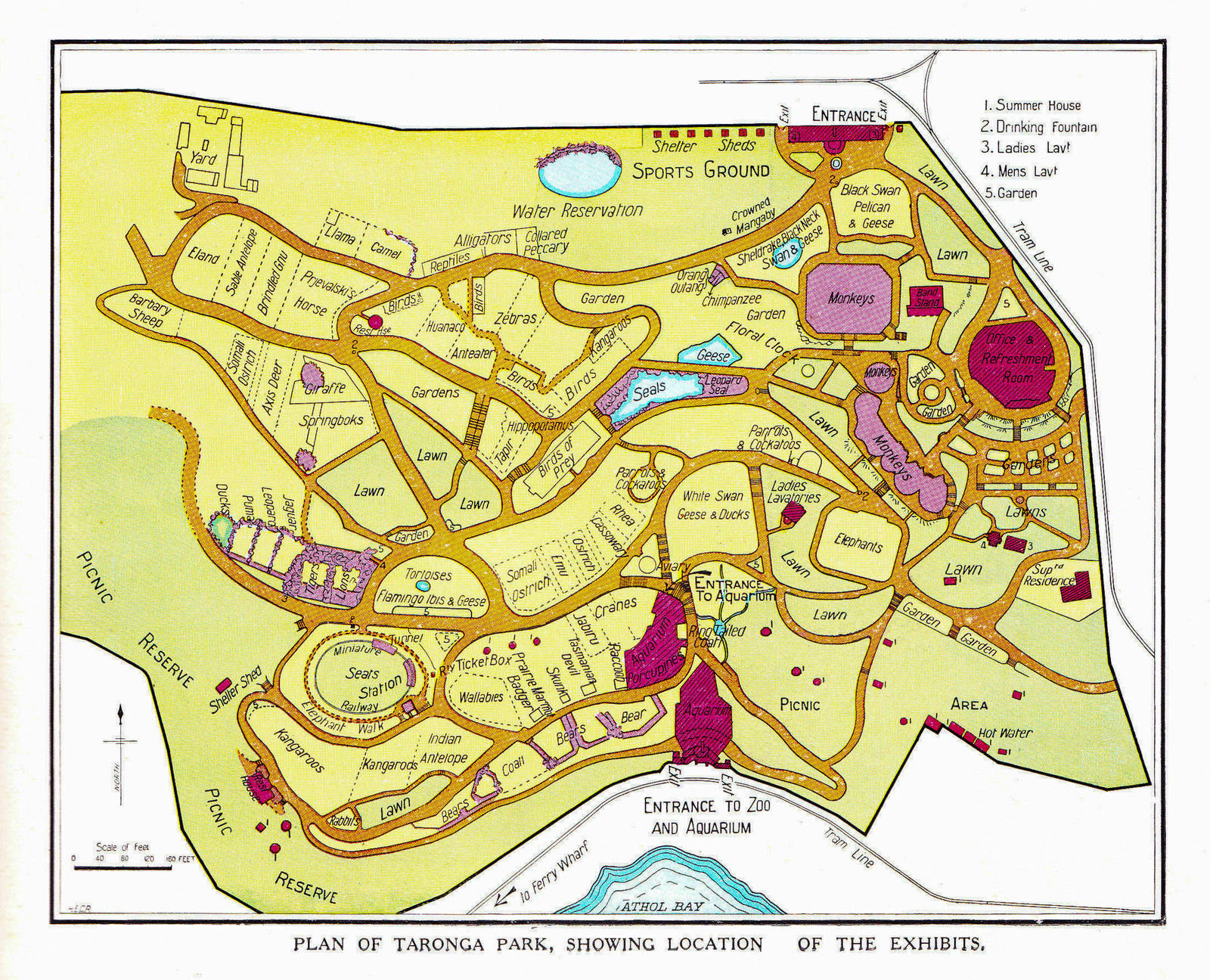
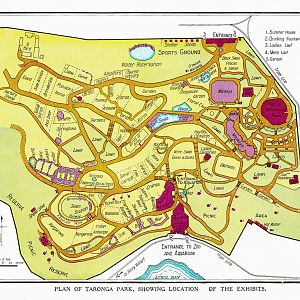
Love old zoo maps Hix, amazing to see how the overall layout of the zoo has changed very little in the last 85 years, and several species are still displayed in the same place after all that time.
Was this in a guide book? Does it say anything about the Leopard Seals?
I guess the lilac colour is rockwork? Does this mean the large monkey exhibits were open pits? Presumably the chimp and orang exhibits were just small cages though.
Another interesting species for them to have held way back then was Przewalski's Horse, which I hadn't realised were in Australia that early. Did any other zoos keep them during this period? They must have all been gone by 1945 regardless.
This map came from the middle of a 1930 Guidebook I bought on eBay last week (and many thanks to Nisha for bringing it to my attention!).
The lilac colour is rockwork, and the monkeys were all in pits. As for the chimps and orangs, I have no idea what their enclosure was like but also presume it to be a cages.
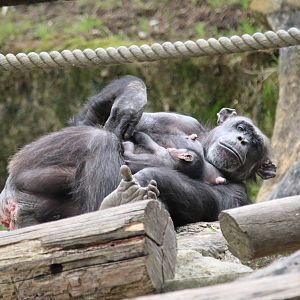
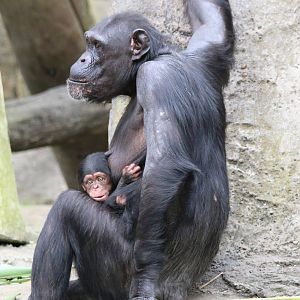
There is one photo of a chimp, but it's a close-up and you can see nothing of the enclosure he's in; the text says his name is Casey, and describes how he likes dancing to jazz. The photo shows a chain around his neck, so I'm guessing he was a hand-reared, humanised chimp.
There are two photos of Orangs; the background of their cages appears to be rockwork and although I can see no wire or bars in the foreground, it looks like it is probably a cage.
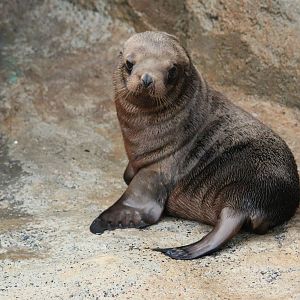
As far as Leopard Seals go, there is no mention of them in the book, apart from the name on the map in the eastern seal pool. There are photos of Australian Fur Seals, including one born at the zoo in 1929, and a photo of a Crab-eating Seal.
The bulk of the guide book (it's 84 pages) is photographs of the naimals, many with just the name of the species captioned underneath and no other information. The Przewalski Horses are in one photo and the text simple states the name is pronounced "Shevalskee", that they come from the Gobi Desert, and that they breed in the Park. There are only four animals in the pic.
Apart from the frontispiece on the first page - Jessie the elephant in front of the Elephant Temple - the first three pages are all text listing the Trustees of the Zoo (this is prior to the Zoological Parks Board of NSW), Opening Times, Admission prices, and some background history of the zoo and the Aquarium. It also states that at the time of going to press "two Sections of the Reptile House were under construction. The remaining six sections will be completed as soon as possible." The design is described as unique and will house Australian and foreign snakes. It also says they have Reticulated Pythons and Boa Constrictors. There is no other mention of reptiles in the book, apart from a photograph of a radiated tortoise.
The rest of the book is photographs, some accompanied by a few words, other by a few paragraphs. There are several photographs of the grounds and the buildings (Main entrance, lower entrance, aquarium, road to the wharf complete with tram, bandstand, floral clock, miniature train, and the refreshment rooms) and the rest is of the animals. The things I found most interesting were species I didn't know the zoo had (map has two separate enclosures for coatis, one just labelled "coati" and the other "Ring-tailed Coati"), and many of those species are currently not kept in Australia, such as Vervet Monkeys, Isabelline Bear, Prairie Dogs (8 in the photo), giant Anteater, Yak, Springboks (3 in the photo including a youngster), Crab-eating Seal, White Storks, Crowned Cranes and an unlabelled Stanley Crane, Black-necked Swans, an Asian Hornbill, Spot-billed Toucan and a "Yellow-plumed Bird of Paradise".
Other things I noticed was the Australian Shelduck or Mountain Duck labelled as "Ruddy Sheldrakes" (two males in the picture), a name I've never heard for this species; four photos of flamingos (most other species had only one photo), one of them with 19 birds, another in an enclosure with Cape Barren Geese; the ostriches identified as Somali Ostriches; quite a number of Indian Antelope - at least 20; a Sun Bear named "Pleading Percival" and a giraffe named "Rudolf".
Thanks Hix, great review. These old guidebooks are so interesting, although sometimes labels like "monkeys" or "birds" can be rather disappointingly vague.
I have a copy of the guidebook with that same cover back in NZ, I'll have to dig it out when I'm back there and see if its the same edition.
A lot of the historical features and buildings are still present. In many cases existing exhibits have been extensively overhauled and made suitable for new inhabitants, but are still old exhibits. The entry building, elephant temple, floral clock, and aquarium are still there, although the latter is not in use at all, and I'm not sure if the interior exists any more. Several exhibits on the map are still in use as they were then, including the giraffes, Moore Park aviary, and one of the monkey exhibits.
A lot of the historical features and buildings are still present. In many cases existing exhibits have been extensively overhauled and made suitable for new inhabitants, but are still old exhibits. The entry building, elephant temple, floral clock, and aquarium are still there, although the latter is not in use at all, and I'm not sure if the interior exists any more. Several exhibits on the map are still in use as they were then, including the giraffes, Moore Park aviary, and one of the monkey exhibits.
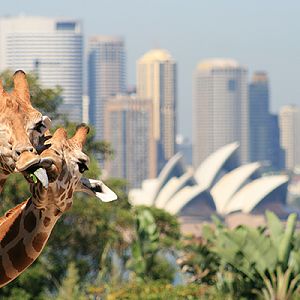
Thanks for the run down. I had a relatively quick visit through Taronga Zoo in 1987. That giraffe exhibit with the view of the harbor is quite iconic, as is the elephant temple. I remember those exhibits fondly as well as the (at least by 1987 standards) state-of-the-art chimpanzee exhibit and the nocturnal house with long beaked echidnas. I don't think that they had gorillas at that time.
Are there plans to renovate the aquarium or have they just stopped using it as an animal exhibit?
Thanks for the run down. I had a relatively quick visit through Taronga Zoo in 1987. That giraffe exhibit with the view of the harbor is quite iconic, as is the elephant temple. I remember those exhibits fondly as well as the (at least by 1987 standards) state-of-the-art chimpanzee exhibit and the nocturnal house with long beaked echidnas. I don't think that they had gorillas at that time.
Are there plans to renovate the aquarium or have they just stopped using it as an animal exhibit?