M

Gorillas enclosure - Schmutzer Primate Centre

  • Media owner Maxime
  • Date added
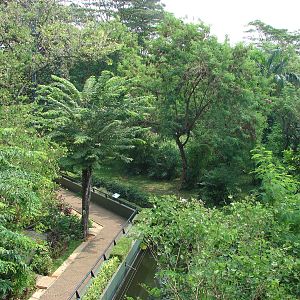
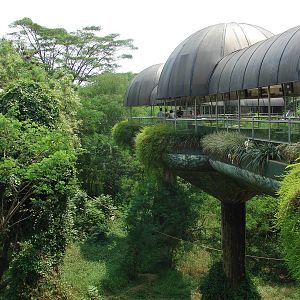
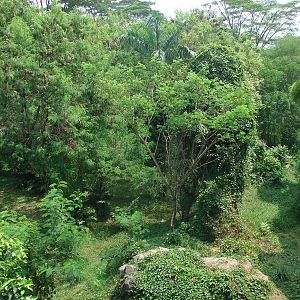
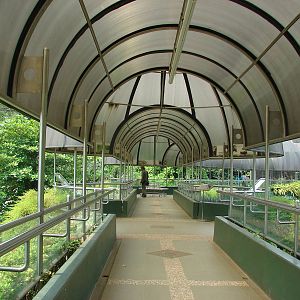
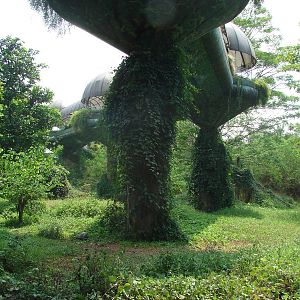
The Kebun Binatang Ragunan (Zoo of Jakarta) has, at the center of the park, a 32 acres (13 ha) primate section called « Schmutzer Primate Centre ». One of the most impressive exhibit of this area is the western lowland gorillas enclosure. This 2 ha (5 acres !) exhibit is just a part of the tropical forest left natural, where primates have free access to the trees and lots of other natural elements to discover. The visitors can see them from a big bridge or behind a moat.
Three gorillas live here (Komo, Kimi et Kumbo). They arrived in 2002 from Howletts (England).
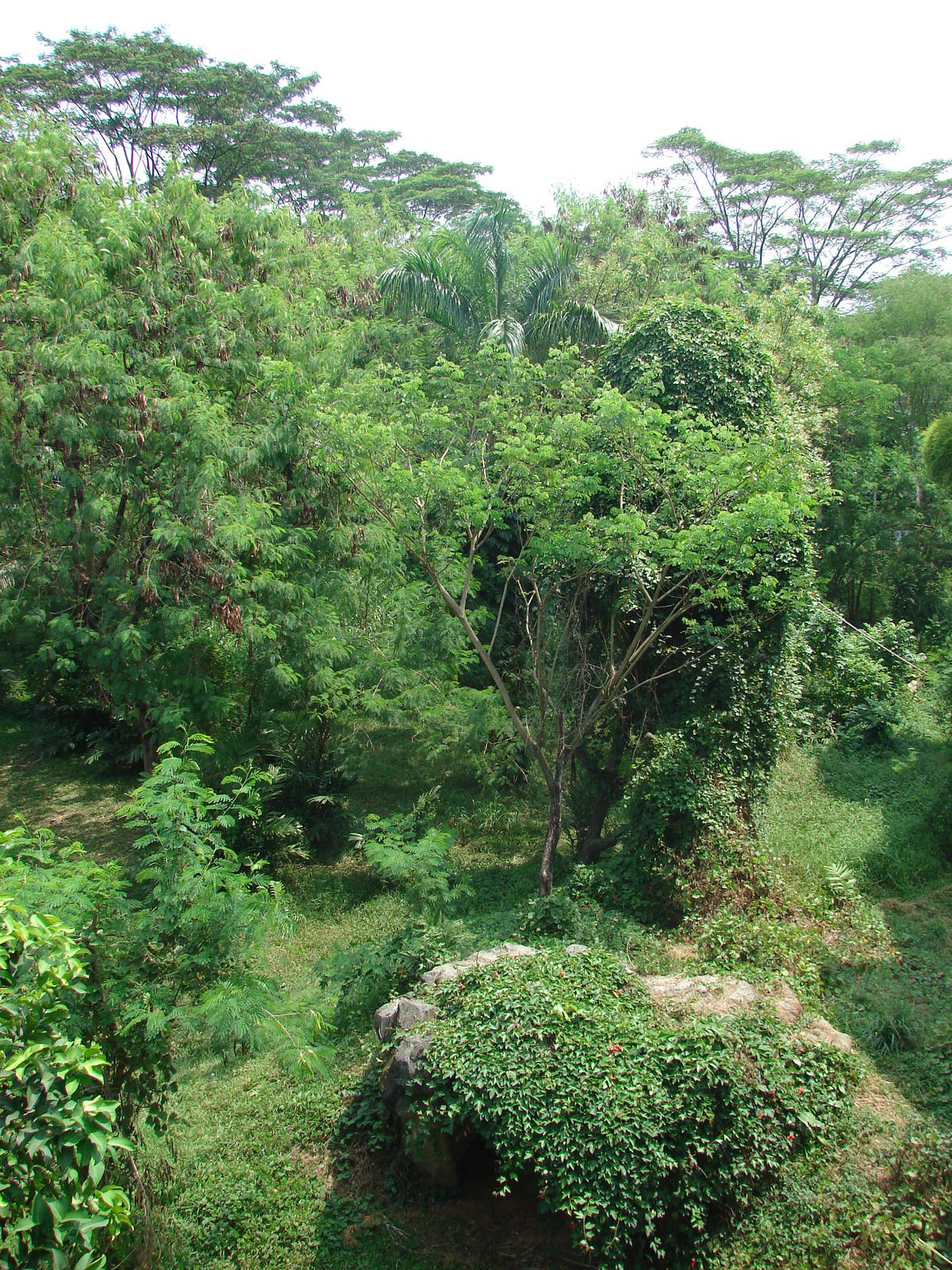
The Kebun Binatang Ragunan (Zoo of Jakarta) has, at the center of the park, a 32 acres (13 ha) primate section called «*Schmutzer Primate Centre*». One of the most impressive exhibit of this area is the western lowland gorillas enclosure. This 2 ha (5 acres !) exhibit is just a part of the tropical forest left natural, where primates have free access to the trees and lots of other natural elements to discover. The visitors can see them from a big bridge or behind a moat.
Three gorillas live here (Komo, Kimi et Kumbo). They arrived in 2002 from Howletts (England).
 
Are the gorillas easy to view?, but who cares, this is a quality example of how gorillas should be housed.
 
It's very hard to see the gorillas (you understand why !), and when I visited the park in 2008, I didn't see one of them...But I saw some photos of the animals at the top of the trees, it's just extraordinary...
 
Are the gorillas easy to view?, but who cares, this is a quality example of how gorillas should be housed.

This is definitely a quality example of how gorillas should be housed, and by all accounts it appears to be a magnificent habitat. The one major flaw is that having only 3 gorillas in a vast expanse of land such as 5 acres must make the apes difficult to locate. I know that when I visited Dallas Zoo in 2010 I had problems finding the 3 gorillas on less than 2 acres of "rainforest environment", so I can only imagine how hard it would be to find the great apes in this massive exhibit in Indonesia. Does anyone know if the zoo is aiming to acquire more gorillas?
 
but who cares, this is a quality example of how gorillas should be housed.

Housed, perhaps. Displayed, no.
If visitors cannot find gorillas at all then it is indeed a beautiful enclosure but not a successful one. Exhibits can be designed such that the animals prefer to frequent certain spots and so can be seen by visitors. Apparently that has not been done here.
And as Snowleopard says, 3 gorillas in 5 acres will make matters more difficult.
 
Zooplantman, the visitors, in modern zoos, must learn that it is not obligatory to see the gorillas ... If they don't see them; too bad, they should just say that gorillas are housed in a good enclosure for them where they can hide... But if they see them, leaving the foliage and approached, just imagine their enthusiasm...
It is more impressive and exciting than to see them in a concrete cage ?

I understand that visitors are frustrated to pay an entrance fee without seeing the animals, but they must learn the patience to wait in front of an enclosure, make several passes in front of the enclosure and ultimately abandon the idea to see them ....
 
Zooplantman, the visitors, in modern zoos, must learn that it is not obligatory to see the gorillas ... If they don't see them; too bad, they should just say that gorillas are housed in a good enclosure for them where they can hide... But if they see them, leaving the foliage and approached, just imagine their enthusiasm...
It is more impressive and exciting than to see them in a concrete cage ?

I understand that visitors are frustrated to pay an entrance fee without seeing the animals, but they must learn the patience to wait in front of an enclosure, make several passes in front of the enclosure and ultimately abandon the idea to see them ....

While I agree that in a perfect world zoo visitors would be re-trained to accept such conditions, unfortunately this approach has been tried and has proven to be a failure, at least in the US (where of course a culture of immediate gratification is very prevalent).

Big, multi-acre animal habitats developed at zoos in the 1980s in places like Kansas City, Minneapolis and even the San Diego Wild Animal Park are begin replaced or modified to provide better chances of closeup viewing, as core zoo visitors (families with small children) simply stopped coming to zoos where animal viewing was hit or miss.

The best zoo exhibits provide both spacious and rich habitats for the animals AND incentives for the animals to be visible and close. Designing in shade, heat, cool, water, food or other elements to attract animals to viewing areas is now quite common. No longer is it sufficient to simply enclose a huge tract of forest or grassland and let viewing be a happy accident--the investment and need to attract paying customers is just too great to justify "purist" zoos designed only for animals and a few hardcore enthusiasts like Zoochat members!
 
Yes I totally agree with you, Reduakari...But find the right balance between the enjoyment of visitors and the well-being of animals is very difficult...That's why we have zoos with huge enclosure where we not always see the animals (the best zoos for us, zoofreaks ! ) and other zoos with small and concrete exhibit where visitors often come very pleased after having seen all the animals ...
And in this gorilla enclosure in Schmutzer Primate Centre, gorillas can hide in their forest and have 5 acres to live, but visitors have also lots of opportunities to try to see them (bridge, water-moat...).
I think it's a good compromise and an example of a good exhibit for people and animals.
 
...That's why we have zoos with huge enclosure where we not always see the animals (the best zoos for us, zoofreaks ! ) and other zoos with small and concrete exhibit where visitors often come very pleased after having seen all the animals ....

But, Maxime, a well designed zoo falls in between these two extremes. You can have large, generous, complicated (for the animals' benefit) exhibits were most visitors are rewarded with inspiring views. Bronx Zoo's Congo Gorilla Forest is one example.
It is not merely a choice between nature preserve vs. concrete floor cage

This enclosure must be fantastic for the animals that live there, but it must serve the visitors equally well, I believe. To witness the animals emerge from the forest or high in the tree would indeed be worth waiting for. But if only a small percentage of visitors even glimpse an animal.....

well, in a few decades there will be no zoos
 
Yes, it was an image ;) There are some good zoos where we can see this well-designed exhibits, fortunately...But they are very rare. In the USA for example, the enclosure are sometimes (often ? ;) better for visitors than for animals...People are happy to see beautiful fake rock and be in immersion, but animals, often, haven't very large or natural exhibits...
In others european zoos for example, it's the opposite, we have some zoos with natural exhibits, only a giant natural forest where live freely the animals, without fake rock or immersion...Animals love, but visitors are disappointed...
(It's only an example...)
That's why it's very hard to find the right balance for the visitors AND the animals...
 

Media information

Category
Ragunan Zoo
Added by
Maxime
Date added
View count
5,962
Comment count
27
Rating
0.00 star(s) 0 ratings

Share this media

Back
Top