I`ve visited Howletts serveral times and I have no doubts that their gorillas are among the happiest and healthiest in the whole (zoo) world.
Re Jungle World: it is already outdated. The tapir and jaguar "enclosures" are among the very worst i`ve ever seen, and the enclosures for langurs are average at best, given that there are no outdoor areas. Looks nice for the eyes of the visitors, but I was shocked to see the conditions under which the animals have to live. I have to say that the jaguar cages and tapir enclosures in the Berlin Zoos are a MUCH, much better then "Jungle World".
Thanks for the insights Yassa. I would like to visit Howletts, the Berlin zoos, and other good European zoos someday. It is easy to look at pictures in the galleries here and pass judgement without knowing much about the actual animal care quality and conservation efforts of the zoos. Likewise, footage of John Aspinall romping with his gorillas which strikes some as distasteful does not mean that the gorillas are not kept in good conditions. One of the great things about this site is the opportunity to hear from people like you, Maguari, and Ian about what conditions are like on the ground.
My primary mission in life is wildlife conservation. This is the lens that I see zoos through. It is easy to be judgmental of exhibits that seem to be basic and seem to offer no obvious conservation value, but may in fact be very good ambassadors for wildlife conservation if they teach people about the animals and their habitats somehow through keeper talks, etc. I am learning through interaction with you guys that there are many perspectives on how a zoo can be good. I don't agree with them all, but it is good to hear other views.
I personally have no issue with immersion exhibits at all - but I do find it a bit frustrating that they are seen as the only 'correct' way to build exhibits in many quarters. The ethos of building immersion exhibits is fine, but I'm troubled that there is an ethos of building nothing but immersion exhibits. Plenty of times on here I've seen a new exhibit criticised for 'not being immersive' when it was clearly never intended to be. Many seem to assume that all new exhibits are trying to be fully immersive, which is not the case.
And a zoo not being immersive doesn't mean it doesn't have a wildlife conservation emphasis (Howletts would in fact be a prime example) - it often just means it goes about it differently, that's all.
We keep throwing the word "immersive" around, and in light of examples given, I would like the point out that Jungle World at Bronx is intentionally NOT an immersive exhibit. The visitor is standing in what is clearly a gallery-like people space looking out into the rainforest, not immersed in it themselves. In order for an exhibit to be "immersive" the guest must also be placed inside the habitat being recreated.
Just a clarification....please continue, I find the debate quite interesting.
I`ve visited Howletts serveral times and I have no doubts that their gorillas are among the happiest and healthiest in the whole (zoo) world.
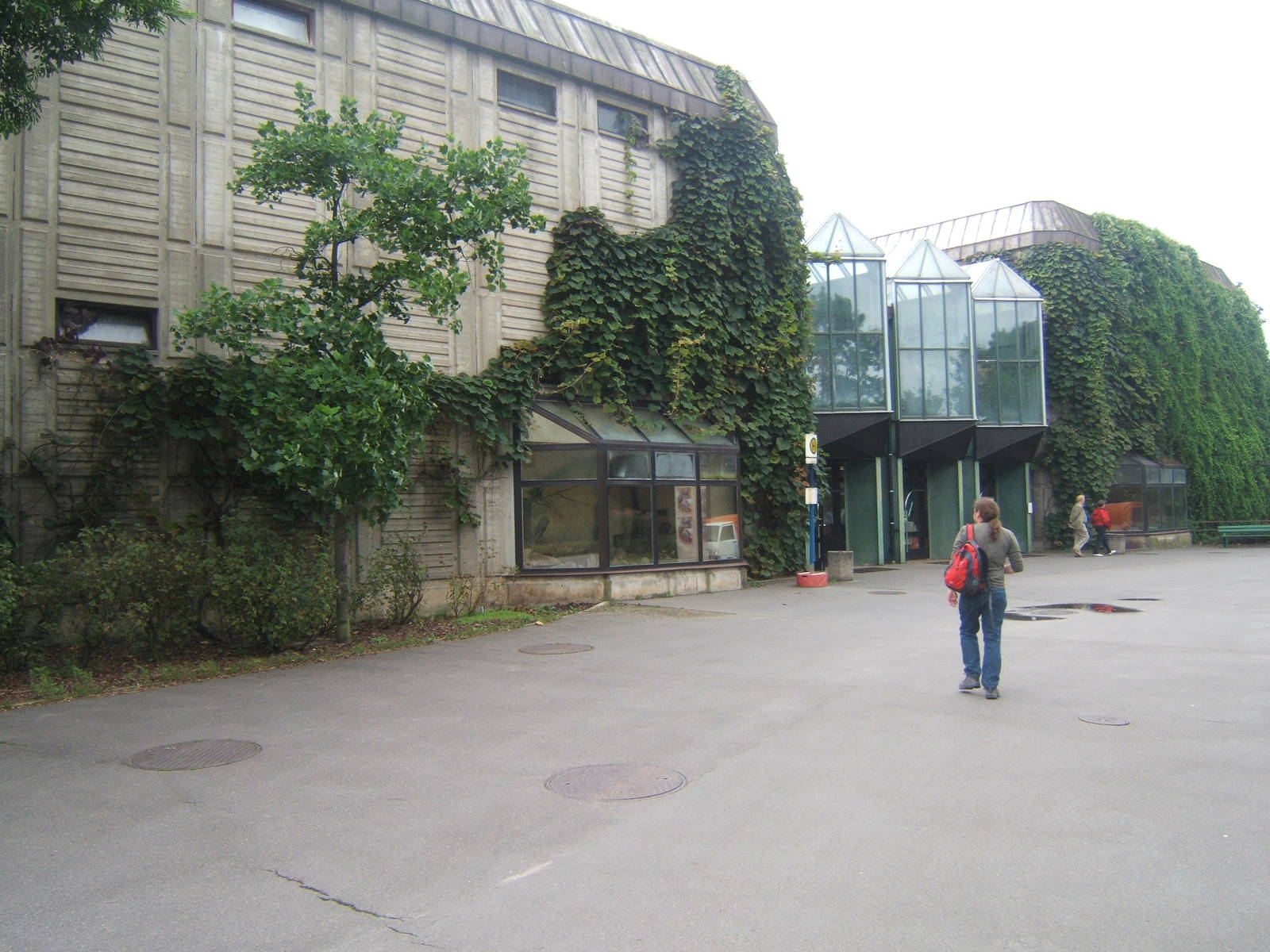
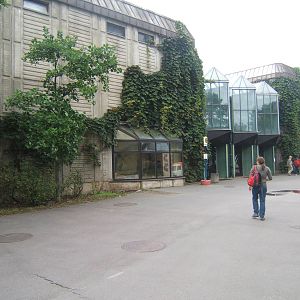
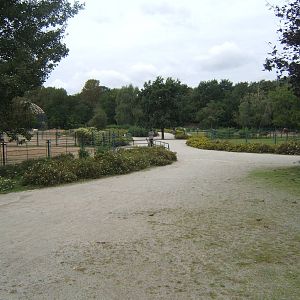
Re Berlin - neither park makes any effort to create immersion exhibits, which is fine with me. What is NOT fine (and that point is lacking in this discussion) is that almost all enclosures in the Tierpark are very barren and many lack even basic enrichment. Howletts is 100x better then the Tierpark. The hoofstock paddocks and the monkey cages are spacious, but that`s it - they`re barren and boring due to a total lack of ropes, trees, logs, shrubs, shade structures ect. The keepers are not allowed to give enrichment. The big cat cages in the Alfred Brehm house are much too small, too, like the indoor accommodation for elephants in the big Pachyderm house. The house itself is gigantic, but almost all of the space is just for the visitors, not the animals. It`s really awful. The Berlin Zoo is actually a lot better in that regard.
Re Jungle World: it is already outdated. The tapir and jaguar "enclosures" are among the very worst i`ve ever seen, and the enclosures for langurs are average at best, given that there are no outdoor areas. Looks nice for the eyes of the visitors, but I was shocked to see the conditions under which the animals have to live. I have to say that the jaguar cages and tapir enclosures in the Berlin Zoos are a MUCH, much better then "Jungle World".
Be as pedantic as you like, doesn't change the fact it's a very weak exhibit...
All this talk of wire and wood in European zoos is getting tired, there are lots of grottoes and wire cages in American zoos, even in the "number one" San Diego. Wire and mesh doesn't equal bad, it just isn't as attractive to the eye. I really don't think many animals care and I've seen many species (mainly primates) utilising the wire of the enclosure as an extra climbing structure. Surely that's better than having 4 walls to look at, even with an open sky?
We keep throwing the word "immersive" around, and in light of examples given, I would like the point out that Jungle World at Bronx is intentionally NOT an immersive exhibit. The visitor is standing in what is clearly a gallery-like people space looking out into the rainforest, not immersed in it themselves. In order for an exhibit to be "immersive" the guest must also be placed inside the habitat being recreated.
Just a clarification....please continue, I find the debate quite interesting.
What is a better word to define JungleWorld and similar exhibits? "Naturalistic"? I tend to use immersive to describe exhibits that are attempting to replicate the animal's natural habitat in some way.
The "fence vs. immersion" discussion certainly is not an Europe vs. US discussion. There are plenty of zoos in Europe that have built heavily themed exhibits in the last years and try to avoid fences and mesh at all cost. Especially in Germany - just look at Hannover and Gelsenkirchen. The results are often disastrous (especially in Hannover), because no visible fence and "immersion" does not mean the enclosure is actually good for the animals. A lot are NOT. (And in my opinion, the fake rock that usually comes with it does not make an exhibit look natural).
The Tierpark has limited finanial resources and is battling a huge deficit, so I am very glad they are not wasting millions on themed exhibits without fences. But they certainly should make more of an effort to make the Park interesting and pleasant for visitors, and they must make a hell of a lot more of an effort to make their paddocks, cages ect. suitable for the animal`s needs.
What is a better word to define JungleWorld and similar exhibits? "Naturalistic"? I tend to use immersive to describe exhibits that are attempting to replicate the animal's natural habitat in some way.
Naturalistic may be a better term, although many examples exist of exhibits that look natural but are not (ie hyraxes in Desert Dome at Henry Doorly), and then the argument becomes one of function. The Howlett's gorilla cages may perform "natural" functions, but do so without natural materials. A truly naturalistic display is one where the natural behavior of an animal is made possible by the addition of natural materials (ie access to live plants for climbing, roosting, hiding, shredding, eating, etc) in a way that simulates the animals natural environment as much as is possible. And under this definition, few such exhibits truly exist.
The "fence vs. immersion" discussion certainly is not an Europe vs. US discussion. There are plenty of zoos in Europe that have built heavily themed exhibits in the last years and try to avoid fences and mesh at all cost. Especially in Germany - just look at Hannover and Gelsenkirchen. The results are often disastrous (especially in Hannover), because no visible fence and "immersion" does not mean the enclosure is actually good for the animals. A lot are NOT. (And in my opinion, the fake rock that usually comes with it does not make an exhibit look natural).
The Tierpark has limited finanial resources and is battling a huge deficit, so I am very glad they are not wasting millions on themed exhibits without fences. But they certainly should make more of an effort to make the Park interesting and pleasant for visitors, and they must make a hell of a lot more of an effort to make their paddocks, cages ect. suitable for the animal`s needs.
The biggest problem with "naturalistic", habitat based zoo design in the US is a tendency for zoos to copy one another without an understanding of what they are trying to recreate. For example, many zoo rainforests are copies of other zoos rainforests much more than they are copies of real rainforests. This often leads to things like nonsensical rockwork spattered about willy-nilly with a big, dramatic waterfall from nowhere to punctuate it.