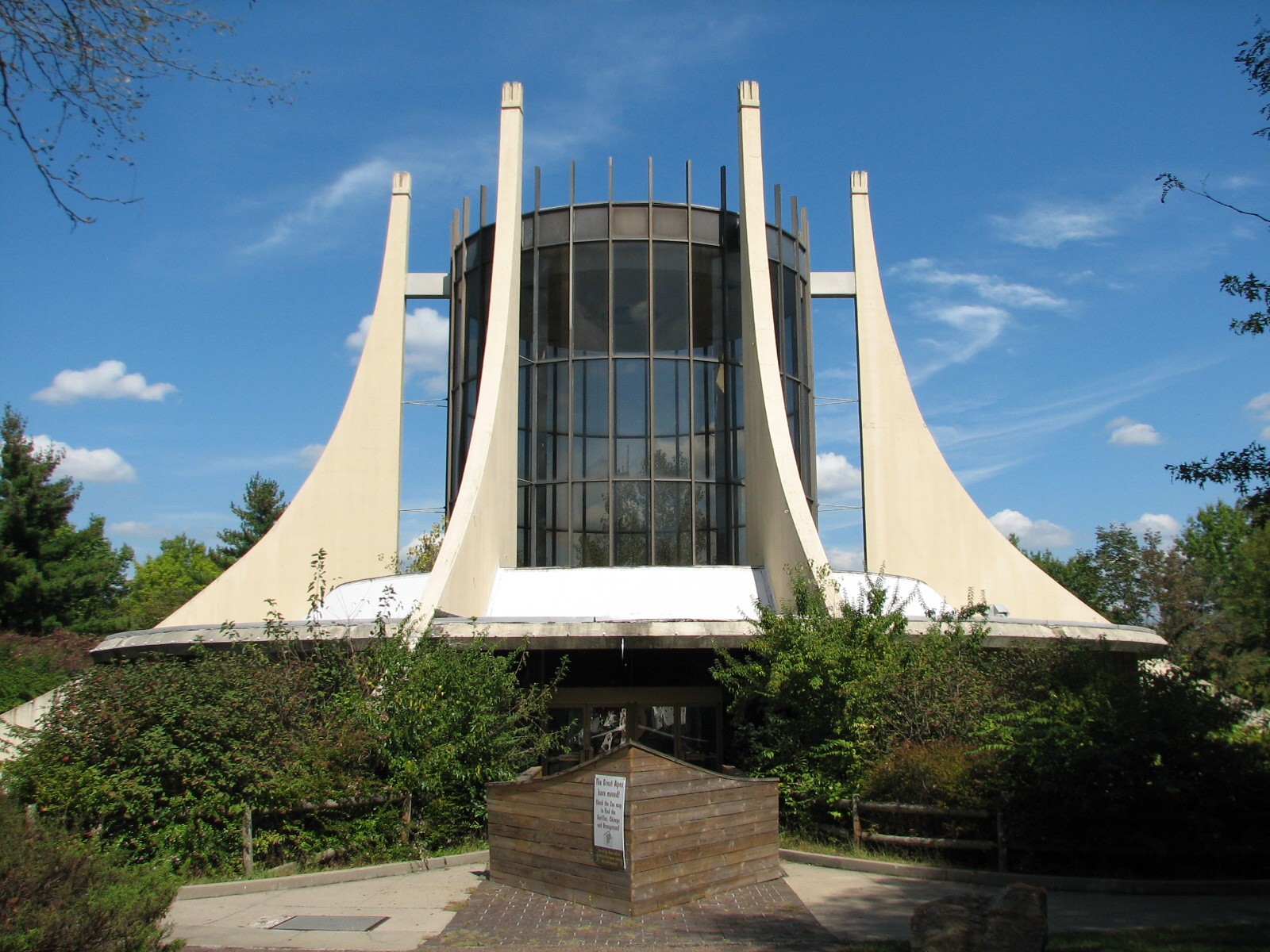
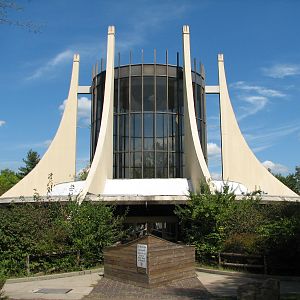
This building is not used anymore, unless they have small private events inside but I doubt it.
W
wearesiamese
This buiding is fairly large and when used it had 4 exhibits around the exterior with connecting interior exhibits inside. It still has very large bamboo growing in the middle of it in the glassed in area you see in the photo.
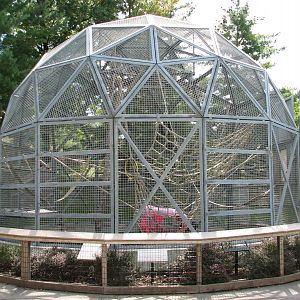
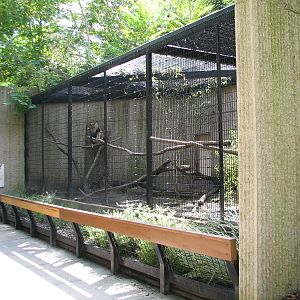
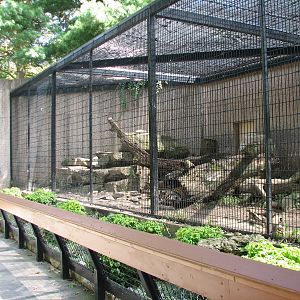
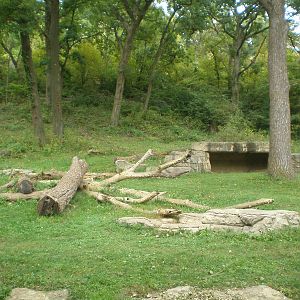
The exterior exhibits sloped down from the building so that they were pretty deep around the edges where visitors could look down into them.
I used to visit this when it was used and it was very hot and very smelly inside. I never thought it was a good place for the apes housed in it because of the heat and the lack of space for the apes. Even though the exhibits weren't tiny, they were very sloped and the apes just seemed to be mostly huddling up by the building whenever I visited. Of course, that could just be what I saw when I was there, but I do remember feeling sorry for the animals when I saw them in those exhibits.
I think they should tear this and the old bear grottos down and build an area for south American animals, such as jaguars, harpy eagles, anteaters, and tapirs.
@Maguari That's a VERY legit point. I mean, it's good that they're striving for more naturalistic environments, but it can all look quite samey after a while. What we need is zoos with creative and varied architecture that still provides quality animal environments. Right now, examples that come to mind are the Central Park Zoo's opposing tropical and polar buildings, London Zoo's rainforest house, Insectarium and Snowdon Aviary (and the reptile house, of course), Bronx Zoo's Aquatic Bird House, Madagascar and Jungle World exhibits (and World of Birds, though I found the exterior a little ugly) and quite a few others. Sure, most of the examples I provided are vintage, but they used their architecture effectively and with intelligence!
This exhibit would have been interesting to see when they had Orangutans. I hope they preserved this building but I hope there’s no large animals in there.