I don't dispute that but I think the average zoo visitor will have a greater sense of awe and appreciation if they know that, for example, seeing an aye-aye at Bristol Zoo is something which can only be done at three (I think) collections in the British Isles or that Sumatran tigers are significantly rarer in the wild than giant pandas.
I'm not talking about randomly assembled individual rarities, but advocating properly conveying the significance of what people are seeing and I don't think zoos do this enough.
I don't dispute that but I think the average zoo visitor will have a greater sense of awe and appreciation if they know that, for example, seeing an aye-aye at Bristol Zoo is something which can only be done at three (I think) collections in the British Isles
I don't dispute that but I think the average zoo visitor will have a greater sense of awe and appreciation if they know that, for example, seeing an aye-aye at Bristol Zoo is something which can only be done at three (I think) collections in the British Isles or that Sumatran tigers are significantly rarer in the wild than giant pandas.
I'm not talking about randomly assembled individual rarities, but advocating properly conveying the significance of what people are seeing and I don't think zoos do this enough.
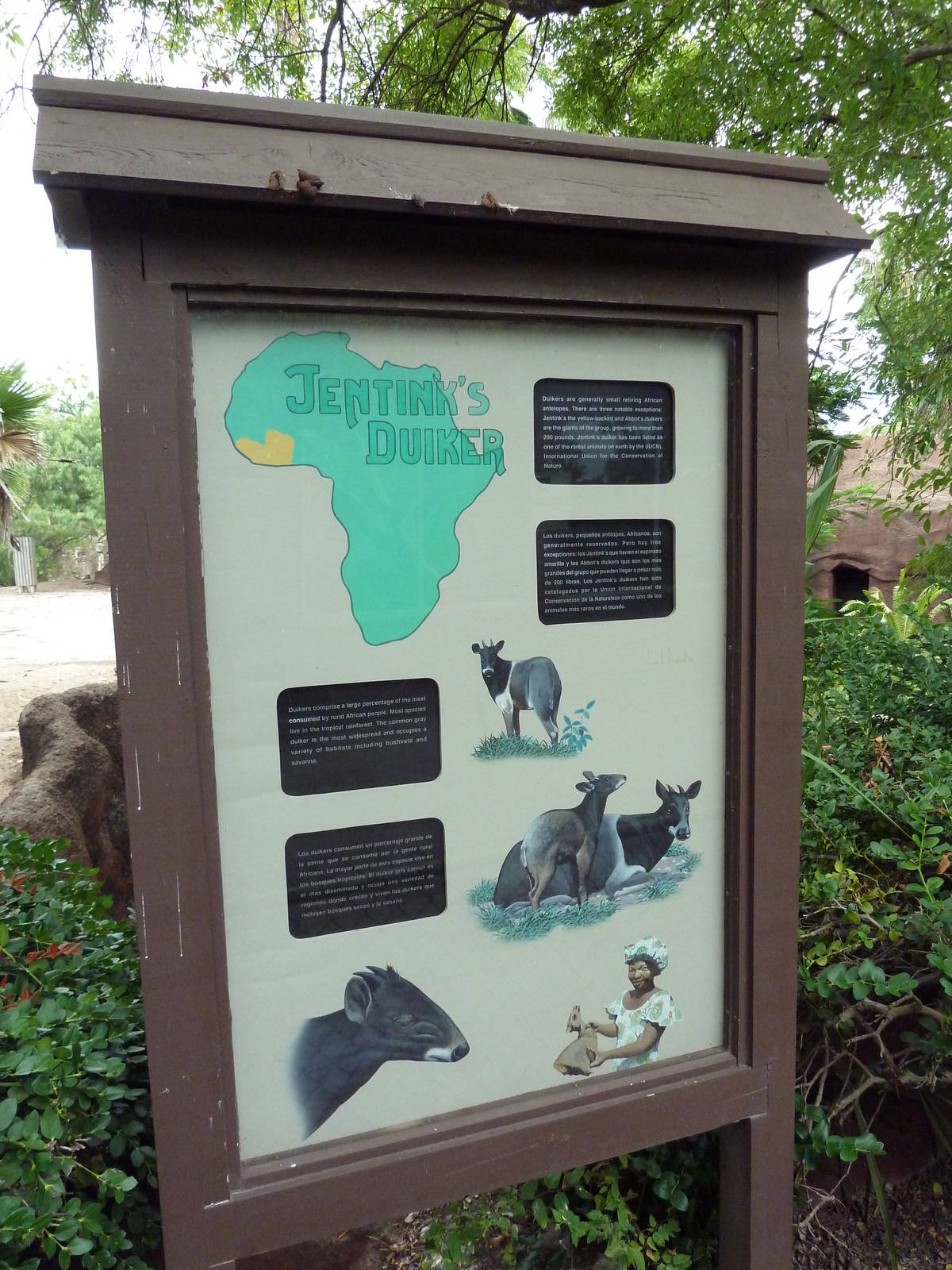
I agree--too often visitors have no appreciation of how special many animals are. But in Brownsville's case the graphics are like everything else there--basically a time capsule from the 70s when the place was built. My guess is they don't have the resources to update things like graphics, or that would be well down the list of priorities as they try to survive.
If we take that attitude what is the point of any intelligent interpretive material? Or for that matter any kind of sophistication or aspiration in animal exhibitry?
For the zoo's own sake (in terms of attendance numbers), they would do well to promote it. Let's face it, Brownsville, Texas, is not exactly a vacation hotspot and it is hundreds of miles from the nearest major Texas cities (San Antonio or Houston). It is also not a "world famous" zoo like San Diego or Columbus. But look at the people on this forum that have gone out of their way to go down there to see this animal and the harnessed bushbucks.
but I think the average zoo visitor will have a greater sense of awe and appreciation if they know that, for example, seeing an aye-aye at Bristol Zoo is something which can only be done at three (I think) collections in the British Isles
I have to say I agree with Dicerorhinus in this case. While Shirokuma's example has some merit, that's only because the "average zoo visitor" would look at an aye-aye and see something they have never seen (or even heard of before), that looks unlike anything they recognise. In this instance, to discover there are only a few in captivity would have some impact.
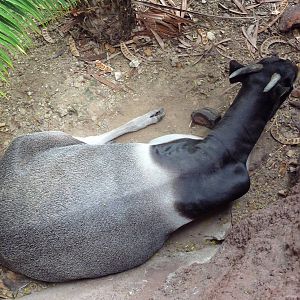
But in relation to Jentink's Duiker, the average zoo visitor probably won't be impressed with the last one in captivity because to most zoo visitors it will be "just another antelope".
Having said that - if I had my own zoo and the last Jentinks' in captivity, I'd certainly be promoting it at every opportunity.
No matter who is right in this argument,
I think if we care about the Jentink's Duiker future in captivity
and for its need to be highlighted as a flagship species for conservation
in the Upper Guinean Rainforest in West Africa, just like what has been
done to the Pygmy Hippo, (which is also breeding successfully in captivity)
I think we all ought to send emails to zoos that could potentially keep them
i.e San Diego Zoo, which also has the only quarantine facility to it's disposal!
They have the budget, climate and the attendance to successfully keep them!
I spoke to Patrick M.Burchfield about the Jentink's and also the Facilities Director Mr Stones, and it is a very sad and unfortunate story why there is only one left of this species!
Sure GPZ may not be a modern zoo, but the staff are doing a great job for the budget they are given by the city of Brownsville.
It's geographical location might not be ideal when we are talking about attendance, that will hands down go to SDZOO and LAZOO.
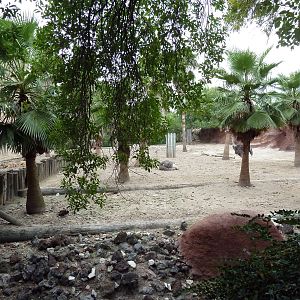
In the United States there are 35 zoos with an average attendance of at least one million, so Gladys Porter is by no means a jam-packed zoo at any time of the year. That is probably one of many factors in the lack of new exhibits or a major capital campaign. The zoo is definitely worth a visit for hardcore zoo fans due to the decent exhibits and outstanding collection, but much of the park was constructed in the 1970's and at times that is immediately obvious.