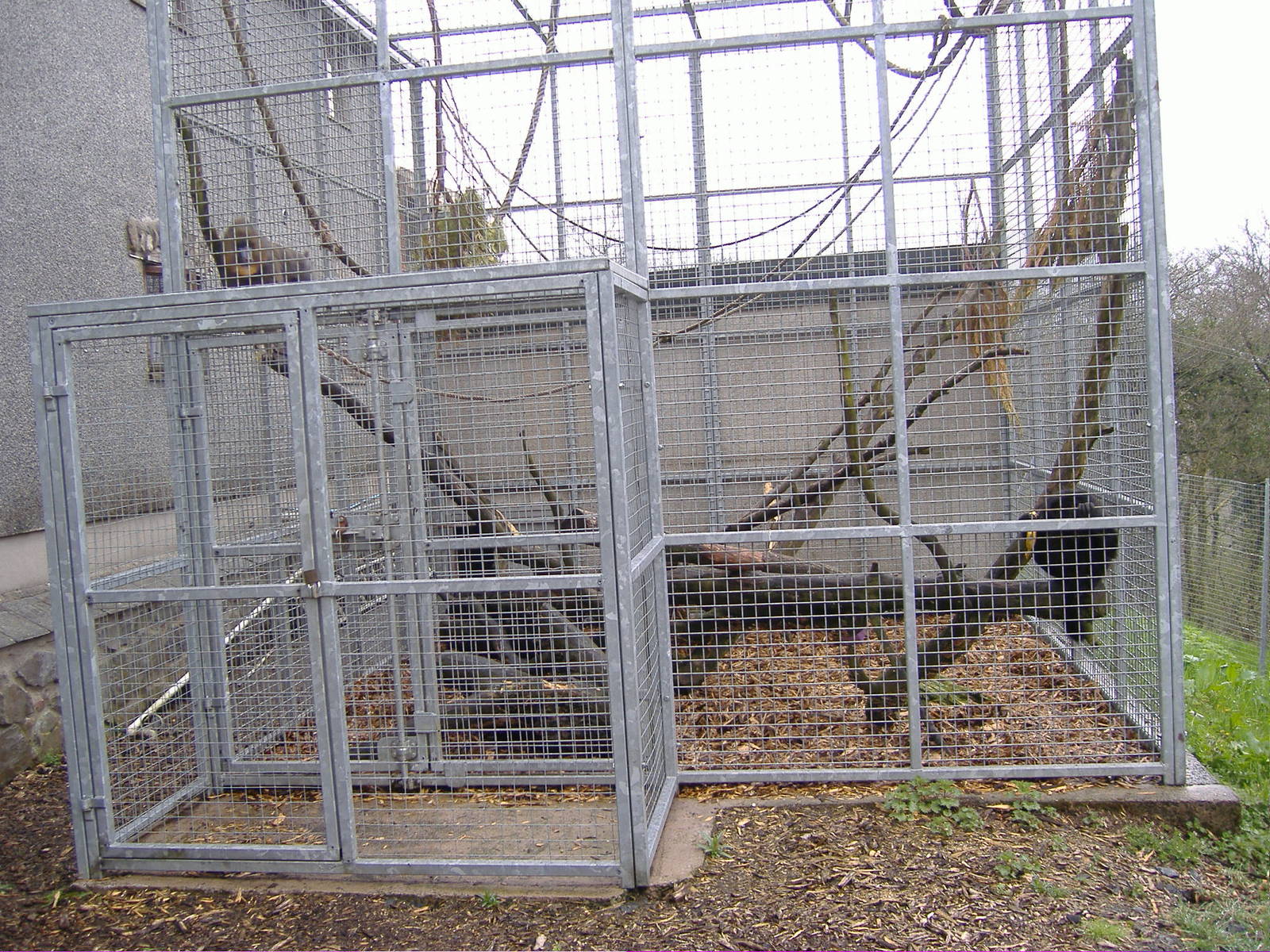
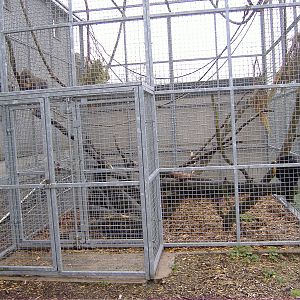
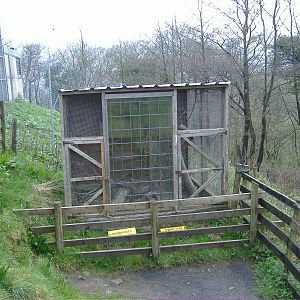
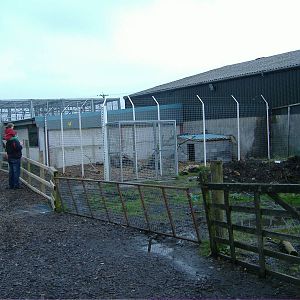
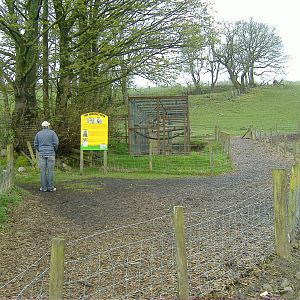
But would there be that much difference in overall cost between modern steel mesh enclosures like this, and a simple hotwire system which could encompass a much larger area?
On the long term a hotwire enclosure would be much more expensive then this style of enclosure with the electronics and maintainence. also mandrills are a dangerous ape which may pose a problem to planning. This style of enclosure will last for a very long time and requires very little maintainence.
On the long term a hotwire enclosure would be much more expensive then this style of enclosure with the electronics and maintainence. also mandrills are a dangerous ape which may pose a problem to planning. This style of enclosure will last for a very long time and requires very little maintainence.
I'd certainly class male Mandrills as dangerous, but not a single female as they have here. However that's being 'picky'. and for planning/legislation purposes its still a 'Mandrill.' Its still a bit odd to me that some species are being housed in open style enclosures while others are in the lab-style housing, even to the extent of having baboons in both types of enclosure, but I'm sure finance completely governs their overall developments..
The mandrill arrived as a baby , which was being hand-reared , along with other primates -spider monkeys and gibbons - when Southport Zoo closed . I assume that the spider monkey proved to be compatible with it . I do not believe the spider monkey to be one of the two very old animals from Southport . When I saw them they were being housed in a meshed-over stall in the Barn and looking sorry for themselves - I suspect they did not survive very long .
There is an internet article where there is an account of rescuing a spider monkey from a parrot cage in Wiltshire, so I would guess the remaining spider monkey at this sanctuary might be this one and not the Southport animals as you say.