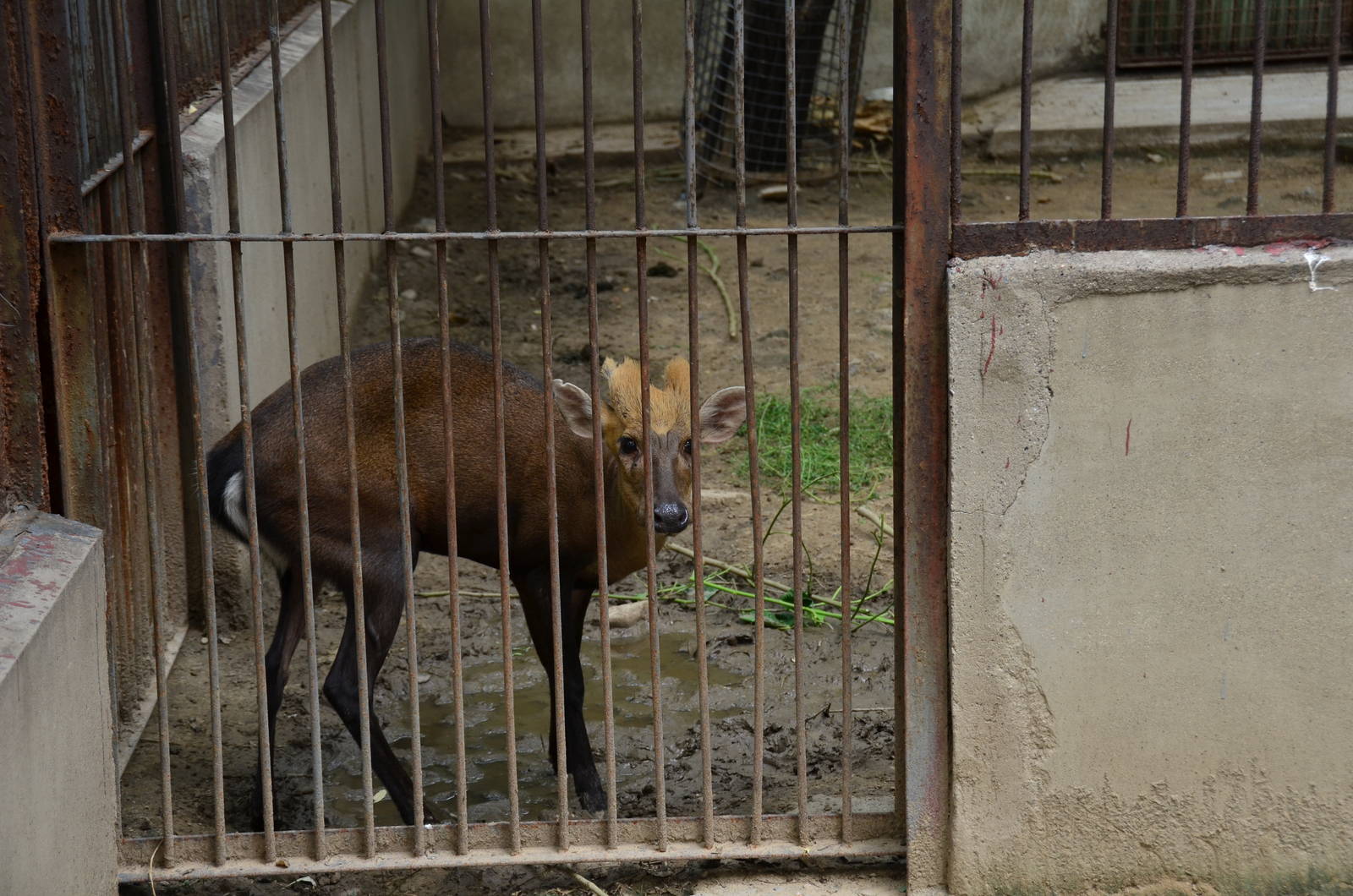
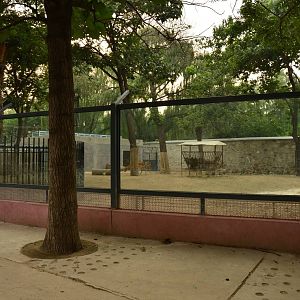
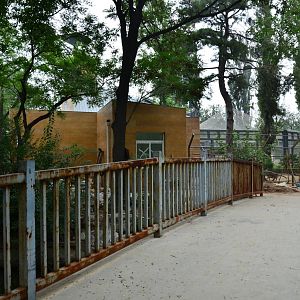
It doesn't open to public... In fact I have never heard any update information of that muntjac, and I even doubt that muntjac is not kept in Kunming but is kept in a reserve or field station in Yunnan.
Does anyone have any idea about what rarer muntjac are viable in captivity? My eyes always glaze over when I read about muntjac on display in the UK, as they are invariably Reeves', a species that is approaching Grey Squirrel status as an introduced pest.
But the very success of Reeves' muntjac does make me suspect that there are other, rarer, species for which European and North American zoos might be able to do good conservation work. Any comments?
only Reeves' and common (i.e. Indian or red) muntjac are in any numbers in captivity, both being common. All the others are in small to non-existent numbers. I reckon all the species would do equally well in captivity (in terms of creating large sustainable populations) and it is certainly something that should be looked at because some of the species are extremely rare or localised, and I'd wager that all species are heavily hunted where-ever they occur.
Ok, so it turns out that those "Truong son muntjacs" on that website are actually Indian muntjacs (Muntiacus muntjak) and considering the location those phptographs were taken, that animal most likely Muntiacus muntjak annamensis
As for Gongshan muntjacs at Shanghai Zoo, I read somewhere that Shanghai Zoo had Gongshan muntjacs in 1982 but they all died before 1998, and at Kumning Zoology Institute, I think they only have 0.1
About the Giant muntjacs, it is nice to know that they are still in captivity, that would be a nice species to see and photograph, if I managed to see and photograph that animal, I'd have a lot of jealous ZooChatters on my hands
In fact from what I read in the book "Horns, Tusks, Hooves, and Flippers" by Donald Prothero and Robert Schoch, the Menagerie in Laos that kept Saola (Pseudoryx nghetinhensis) also kept Giant muntjac (Muntiacus vuquangensis) and Truong son muntjacs (Muntiacus truongsonensis), in that book there are photos of those animals from that menagerie
Ok, so it turns out that those "Truong son muntjacs" on that website are actually Indian muntjacs (Muntiacus muntjak) and considering the location those phptographs were taken, that animal most likely Muntiacus muntjak annamensis
As for Gongshan muntjacs at Shanghai Zoo, I read somewhere that Shanghai Zoo had Gongshan muntjacs in 1982 but they all died before 1998, and at Kumning Zoology Institute, I think they only have 0.1
About the Giant muntjacs, it is nice to know that they are still in captivity, that would be a nice species to see and photograph, if I managed to see and photograph that animal, I'd have a lot of jealous ZooChatters on my hands
In fact from what I read in the book "Horns, Tusks, Hooves, and Flippers" by Donald Prothero and Robert Schoch, the Menagerie in Laos that kept Saola (Pseudoryx nghetinhensis) also kept Giant muntjac (Muntiacus vuquangensis) and Truong son muntjacs (Muntiacus truongsonensis), in that book there are photos of those animals from that menagerie
Why the muntjac is not Truong Son muntjac? It has black legs, white spot on the forelegs' knees, and its antlers are so short and hidden within the tufts of pedicels. It is so different from Red muntjac ~~
For the Kunming's Gongshan muntjac, maybe it is already dead......
And which zoo in Laos has saola and Truong Son muntjacs?! I only know there is a general keeping a giant muntjac.
Why the muntjac is not Truong Son muntjac? It has black legs, white spot on the forelegs' knees, and its antlers are so short and hidden within the tufts of pedicels. It is so different from Red muntjac ~~
For the Kunming's Gongshan muntjac, maybe it is already dead......
And which zoo in Laos has saola and Truong Son muntjacs?! I only know there is a general keeping a giant muntjac.
When comparing the Truong son muntjac in my book to the pictures of the so called "Truong son muntjacs" on Leszoodanslemonde, the specimens look quite different, the "Truong son muntjacs" on leszoodanslemonde have morphology similar to that of Indian muntjacs and unlike the Truong son muntjac in my book, you see a kind of yellowish coloration (not what comes to mind when most of us think of Indian muntjacs, but that is because Muntiacus muntjak annamensis is not seen outside of Asia)
As for Truong son muntjacs, they have a brownish black coloration and their antlers are covered by tufts of hair, to answer your question, nobody keeps Saola or Truong son muntjacs anymore, that was in the very early 1990s and that did not last long at all, and that zoo is now defunct.
When comparing the Truong son muntjac in my book to the pictures of the so called "Truong son muntjacs" on Leszoodanslemonde, the specimens look quite different, the "Truong son muntjacs" on leszoodanslemonde have morphology similar to that of Indian muntjacs and unlike the Truong son muntjac in my book, you see a kind of yellowish coloration (not what comes to mind when most of us think of Indian muntjacs, but that is because Muntiacus muntjak annamensis is not seen outside of Asia)
As for Truong son muntjacs, they have a brownish black coloration and their antlers are covered by tufts of hair, to answer your question, nobody keeps Saola or Truong son muntjacs anymore, that was in the very early 1990s and that did not last long at all, and that zoo is now defunct.
Thank you very much! The Annamensis red muntjac looks so different from other subspecies! What I mean is, I have seen red muntjac in southwest China, which is near Vietnam, but the muntjac is just similar to other "ordinary" red muntjacs. And on the photo, the white spots on its fore knees remind me the giant muntjac