'Manik'(male) was the second calf born. The first was 'Mohinija'(female) which was sent to Milwaukee with the first born Basel calf (male) but they never bred. 'Manik' stayed on at Whipsnade with his mother as a pair after his father 'Mohan' died.
Sorry for that error. It is a terrible shame that this original Whipsnade line went nowhere, and indeed that Whipsnade took so many years before building facilities for their Indian Rhino that weren't based around the concept of breeding a calf from one pair of animals, and sending it elsewhere when it matured.
I don't know the origin of the specimens of Alces alces kept in the present Reindeer paddock, until the mid 1980s, but ZSL has labelled the species "Moose" throughout my lifetime. When Cervus canadensis was kept at Whipsnade (and I think that I can remember them in 1973, kept on Bison Hill), they were labelled "Wapiti". Somebody must have decided that "Elk" was too confusing.
The current Whipsnade moose are, of course, Eurasian but I believe that the earlier moose to which you refer were of North American origin. The Zoo Life magazine for Spring 1956 states that Whipsnade supplied Quebec Zoo with a pair of Bactrian camels in exchange for a trio of moose.
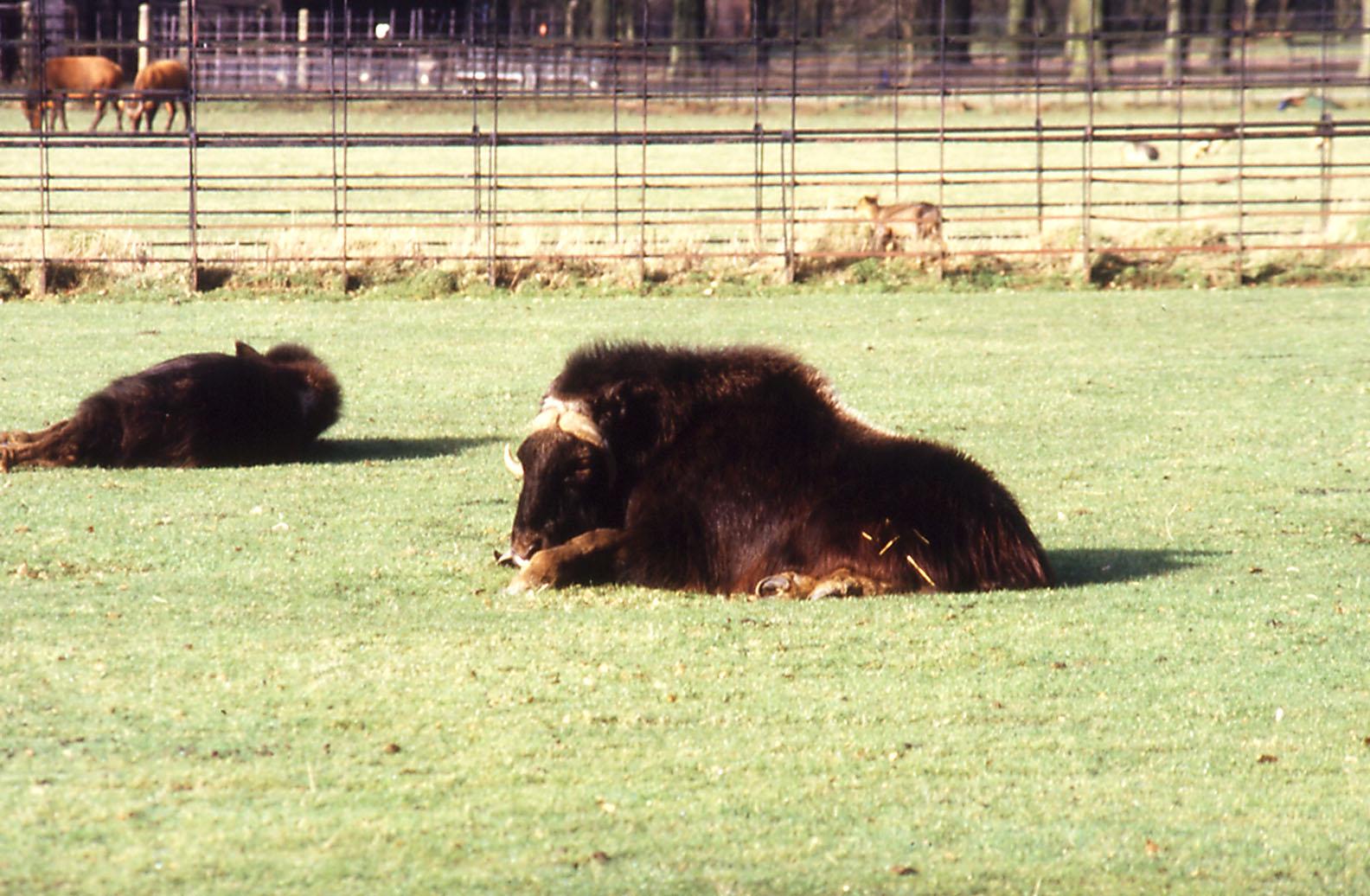
The Musk-ox/Moose paddock is one of Whipsnade's oldest, predating World War II; look at that ironwork. It used to be called Warren Paddock, and I think that it may once have held White-tailed Gnu.
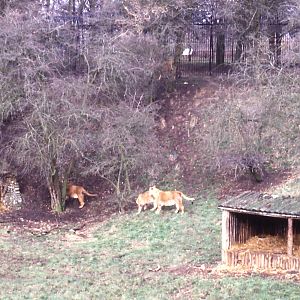
And the paddock that Maguari describes was Whipsnade's original rhino enclosure, again created in the 1930s. It was here that ZSL's first rhino calf and the country's first captive-bred Indian Rhino, "Manik", was born in 1957. It would be good to think that the area will be put back to use as the trees planted there mature.
I think I've mentioned before- so the story goes; Whipsnade and Basel produced the first(at Basel) and second (at Whipsnade) Indian Rhino born in Zoos. Basel had a male(Rudra) and Whipsnade the female. Basel suggested to ZSL(or vise versa) they make up a pair and send them somewhere else. This was done(to Milwaukee.) Second breeding, Basel had a female calf(Moola), Whipsnade a male(Manik). ZSL said to Basel- 'lets make up another pair and send them elsewhere'. To which Dr Lang at Basel replied- 'no thanks, we've got a female this time, we'll keep it for further breeding'- and they did. It shows the differing attitudes and outlooks of the respective managements in two different zoos at that time.
Even today's Indian rhinos at Whipsnade are not descended from their previous breedings. The 1980's breeding pair Kumar and Roopa (which were both unrelated to the first breeding pair) have some descendants in Europe, but not at Whipsnade, possiby because all their surviving calves were males so they had to send them elsewhere and couldn't keep any.
I'm pretty damn sure the wolves at Whipsnade are as common as muck if one watches the wolves at Highland Wildlife Park, they look and act pretty differently.
Whipsnade imported a pack of Canadian Timber Wolves in 1953 (?). I don't know of any subsequent acquisitions, and looking at the animals over forty years I have never noticed them looking different to that form.
Whipsnade imported a pack of Canadian Timber Wolves in 1953 (?). I don't know of any subsequent acquisitions, and looking at the animals over forty years I have never noticed them looking different to that form.
The ancestry of Whipsnade’s wolves has been discussed elsewhere in another thread.
The ZSL Annual Report for 1953 states that nine timber wolves were received at Whipsnade that year. According to the Zoo Life magazine (spring 1954) these timber wolves, which were imported from Canada, are housed in the (then) new Wolf Wood. (This article states that these new wolves were kept separate from Whipsnade’s other wolves which remained in the old wolf wood).
In her book Whipsnade: Captive Breeding for Survival (1981) Elspeth Huxley states that the Whipsnade wolves are pure bred Canadian timber wolves and that no new blood has been added since the founder stock was acquired in 1953.
For twenty odd years after the 1953 importation, the subsequent ZSL Annual Reports refer to the Whipsnade wolves as Canadian timber wolves (or sometimes just timber wolves). However, from 1977 onwards the Annual Reports refer to them under the more generic name grey wolf.
They are now labelled as European wolf but I haven’t been able to trace when any new stock arrived.
these timber wolves, which were imported from Canada, are housed in the (then) new Wolf Wood. (This article states that these new wolves were kept separate from Whipsnade’s other wolves which remained in the old wolf wood).
Now labelled as European wolf but I haven’t been able to trace when any new stock arrived.
At the risk of continuing the digression into wolves;
1. Do you know the location of the 'old' wolf wood? The 'new' one referred to here being part of the current Siberian tiger enclosure where I remember them clearly.
2. London's wolves of the 1970/80's era presumably were of earlier Whipsnade stock too and either returned there or (perhaps more likely) put down when they stopped keeping them?
I have never seen any reference( in literature, the press etc) to Whipsnade receiving 'European' wolves either.
on post #23 of this thread (http://www.zoochat.com/38/european-wolves-uk-88114/index2.html) tetrapod states the Whipsnade wolves are hybrids while listing the purity of the other wolves in the UK. No source given by him (I gather from personal information) but from everything else I read on Zoochat it seems like it is just a case of Whipsnade sticking a trendy label on existing wolf stock.
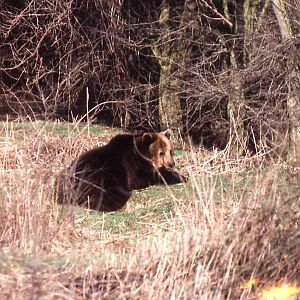
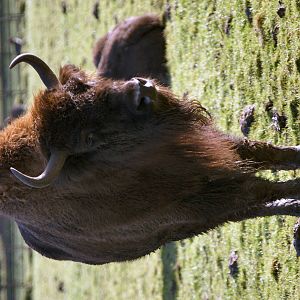
They moved them some years ago into a new larger enclosure. This was later incorporated into the new 'European zone' display they opened quite recently which includes a mixture of animals they already had (Wolves, Wisent, Reindeer, Brown Bear) + new species brought in to add to the display( Wild boar, Lynx, Wolverine, Elk) and all located in(roughly) the same part of the Park.
I'm not sure how recently the Whipsnade wolves became 'European' though...
Do you know the location of the 'old' wolf wood? The 'new' one referred to here being part of the current Siberian tiger enclosure where I remember them clearly.
There is no doubt that there were hybrid wolves in the early days of Whipsnade; the old guidebooks make that perfectly clear. However, the timber wolves imported in 1953 were kept separate from these hybrids which apparently died out shortly after the timber wolves were acquired.
Searching through the ZSL Annual Reports I could find no records of new wolves being imported after the timber wolves arrived in 1953.