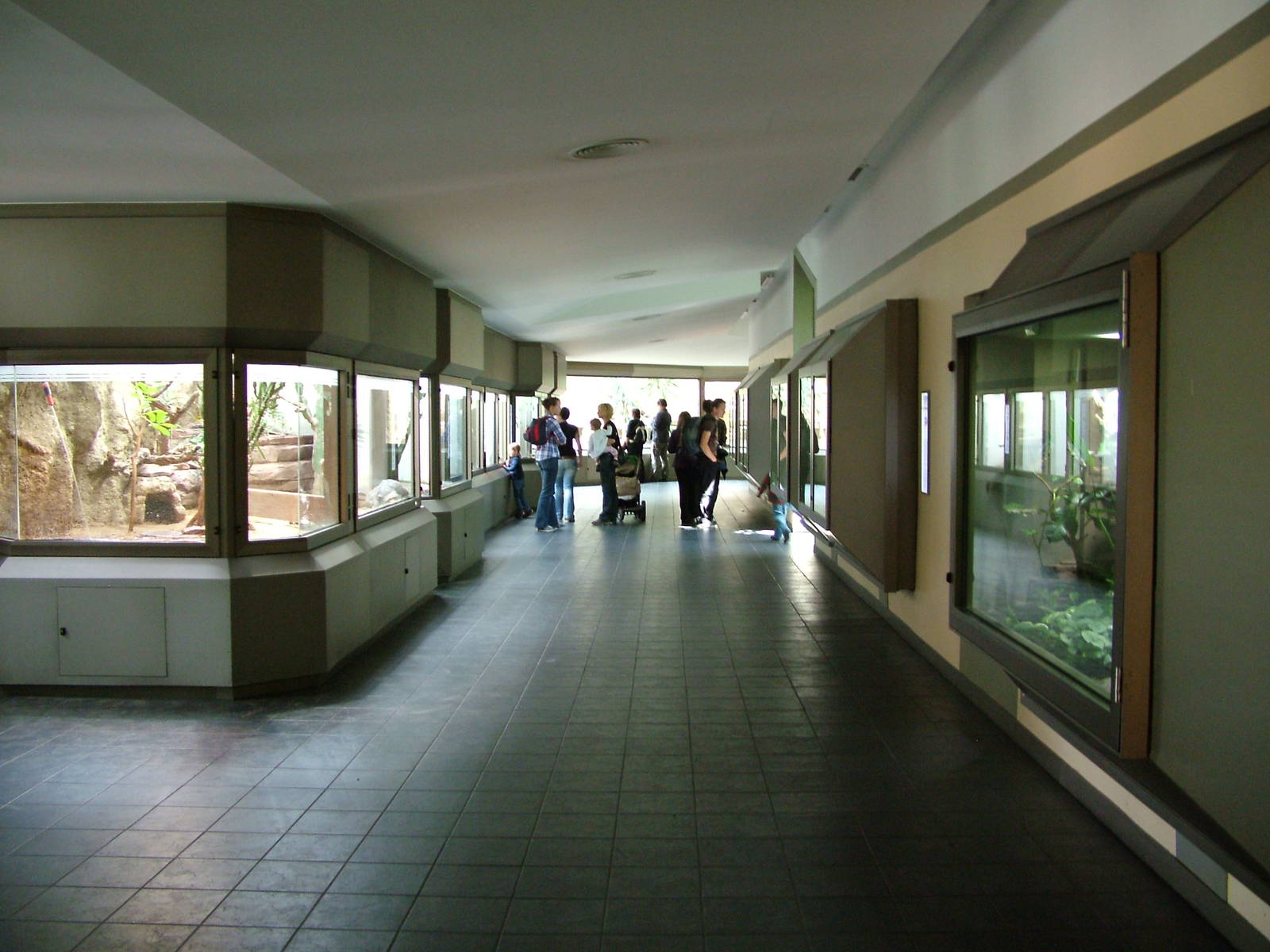
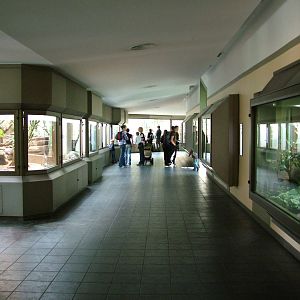
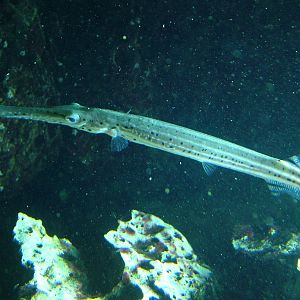
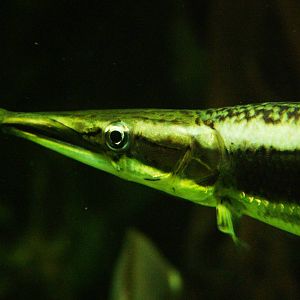
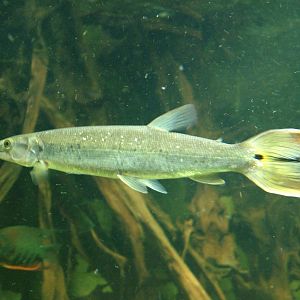
The ground floor is fish and aquatic invertebrates (and the odd turtle), the first floor is for reptiles, the second floor is divided between amphibians and invertebrates (so the building as a whole is more terrarium than aquarium in many ways).
I've been to the Berlin Zoo and its Aquarium last weekend (and many times before).
Although I'm not a fan of extra-paying in zoos normaly, at Berlin it is acceptable the way it is. I guess that historical/traditional reasons play a role as well. Before Berlin Zoo had its own Aquarium, there was a separate Aquarium, the Aquarium Unter den Linden (managed for a long time thru the famous Alfred Brehm) not far away from the Brandenburger Tor. It opened 1869. Besides Invertebrates, Fishes, Amphibians and Reptiles there were also Birds, Apes and other Mammals. Because of financial problems the Aquarium Unter den Linden closed in September 1910. It was replaced on the Zoo grounds thru the Aquarium Berlin (aka Zoo-Aquarium Berlin) which opened 1913.
As Maguari said, the Zoo-Aquarium can be considered as a (Water-)Zoo itself. To see everything in there, you need at least 1,5 hours (this means rushing thru it). If you like to take pictures, then it is at least the double.
Also for the Zoo Berlin itself. There are so many kind of species and many nice ornate buildings, that photographer could easily spend to days in there (and just with a few times walking the same path).
By the way: There is another Aquarium (at zoo perimeter) in Germany with separate entrance fee (and combi offers): The Tropen-Aquarium Hagenbeck in Hamburg. But as I wrote at the beginning, I prefere an all-in-one-admission (except pony rides or animatronic machines).
On some of my early visits to Berlin, the aquarium certainly used to be open sometimes in the evenings after the zoo closed and very nice it was too. Unfortunately, though, this has not been the case on any of my more recent visits.
Doubtless one of our German members will be able to tell us when this practice stopped.
It's worth remembering that the cost of entering the zoo - or the aquarium - is very small in comparison to most British, Dutch or French zoos. This is true of most german places - apart from the big commercial zoos, such as Hamburg, Hannover and Gelsenkirchen.
I like the fact that the aquarium is separate in this way. It acts as a sort of filter, meaning that the place isn't as crowded as it might otherwise be.
It's worth remembering that the cost of entering the zoo - or the aquarium - is very small in comparison to most British, Dutch or French zoos. This is true of most german places - apart from the big commercial zoos, such as Hamburg, Hannover and Gelsenkirchen.
I like the fact that the aquarium is separate in this way. It acts as a sort of filter, meaning that the place isn't as crowded as it might otherwise be.
Very good point, I imagine that if it were free then a lot more people would go into it. As a seperate attraction it possibly puts some people off whilst free reptile houses and aquaria can get very crowded at some points. I'm thinking of Crocodile Swamp in particular as whenever I've visited it is always full and quite hard to get close to exhibits, same thing applies to Bristol, London, WMSP and to a lesser extent (well at least now) Chester.
Any chance you can give a decent comparison of price of entry compared to a UK collection Sooty?
It currently costs €12 to enter the zoo, or €20 for a combined zoo-aquarium ticket. For a child, the prices are €6.50 or €10. The Tierpark costs €12, with no additional charges to come.
As a comparison, to enter London Zoo in summer, an adult pays £20.40, a child £15.80. The adult fee is, at the current exchange rate, equivalent to €23.89 - almost exactly double the cost of entry to Berlin Zoo, sans aquarium. And I think the definition of a child is rather less generous than is the case in Berlin too.
Other costs are far less pronounced as well: food relatively inexpensive, far fewer moments of commercial exploitation.
Residents of Berlin might argue that they pay for the zoo through their taxes, whilst Londoners do not contribute significantly to their zoo in this way.
Of course, Berlin itself is a far less expensive city than London - or even than many other cities in Europe.
Not to forget, that Zoo Berlin has much more public-drawing species (elephants, common hippos, polar bears, giant panda, seals or rhinos to name just a few) and generally more species as London Zoo.
So even when you count support by taxes (which is an will be less year after year) and the less expensive costs for living in comparsion with London, visitors in Zoo Berlin get more for their money then in London Zoo.
It currently costs €12 to enter the zoo, or €20 for a combined zoo-aquarium ticket. For a child, the prices are €6.50 or €10. The Tierpark costs €12, with no additional charges to come.
As a comparison, to enter London Zoo in summer, an adult pays £20.40, a child £15.80. The adult fee is, at the current exchange rate, equivalent to €23.89 - almost exactly double the cost of entry to Berlin Zoo, sans aquarium. And I think the definition of a child is rather less generous than is the case in Berlin too.
Other costs are far less pronounced as well: food relatively inexpensive, far fewer moments of commercial exploitation.
Residents of Berlin might argue that they pay for the zoo through their taxes, whilst Londoners do not contribute significantly to their zoo in this way.
Of course, Berlin itself is a far less expensive city than London - or even than many other cities in Europe.
@German Zoo World Sorry - that's an English idiom, not literally meant to mean that the turtles are odd! 'The odd turtle' = 'an occasional turtle mixed in'.