Well, this debate did not turn out to be as interesting as I hoped. You refuse to respond to my theories, but generously dish out insults. I am "lazy", my arguments are only "feelings" and they are not "rational".
Apparently there is no ground for further discussion, so let´s put an end this silly business right here.
Thanks for - finally - answereing my two simple technical questions, though.
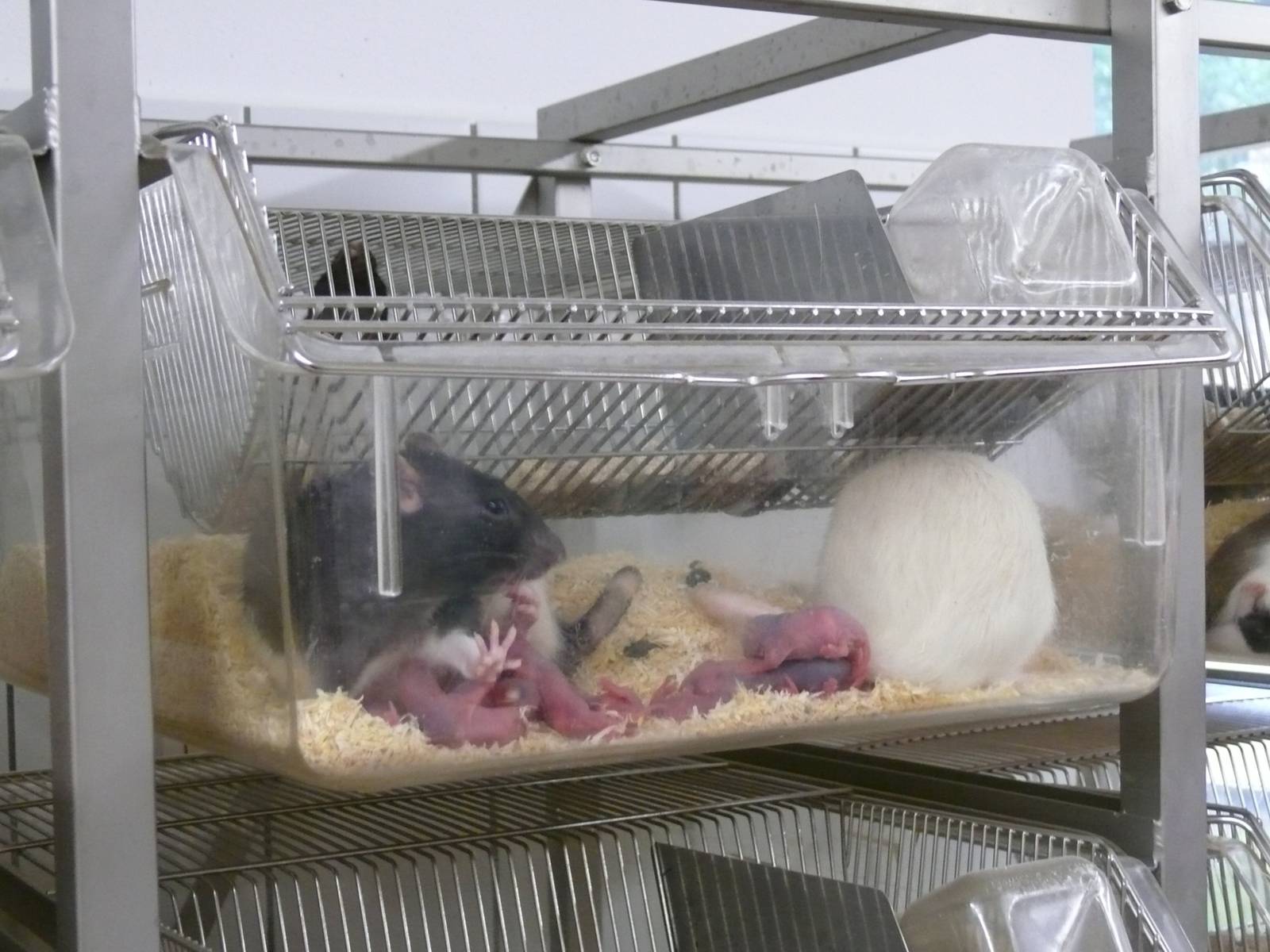
If you were to incarcerate a pair of dogs in a plastic container, the size of it relatively corresponding to the size of this container for rats, you would end up with two tormented and unhappy dogs. I suggest that these two rats are tormented and unhappy.
From my experience many wild rats and mice that i have encountered spend a great deal of time living and making their nests in some of the smallest cavities that you wouldnt think such an animal could live in.
From this picture...it really isnt the size of the cage that should be argued but how open it is. I would think that rats and mice would avoid being seen as much as possible to escape predators. Having little to no visual barriers would put a lot of stress on these animals, decreasing the eventualy nutritional value of these animals. There really is no where for the rats to hide and not really enough material to make a real nest.
Most probably a highly relevant observation on okapikpr´s behalf, though I would still stress the question of the size, or rather the lack of size, of this container. The wild rats have the opportunity to go outside of the nest and "stretch their legs", so to speak.
If that was really the case...then why are they all huddled in the smallest part of the container? Maybe because they feel more secure? They even trust this corner of the container in which to nest their offspring.