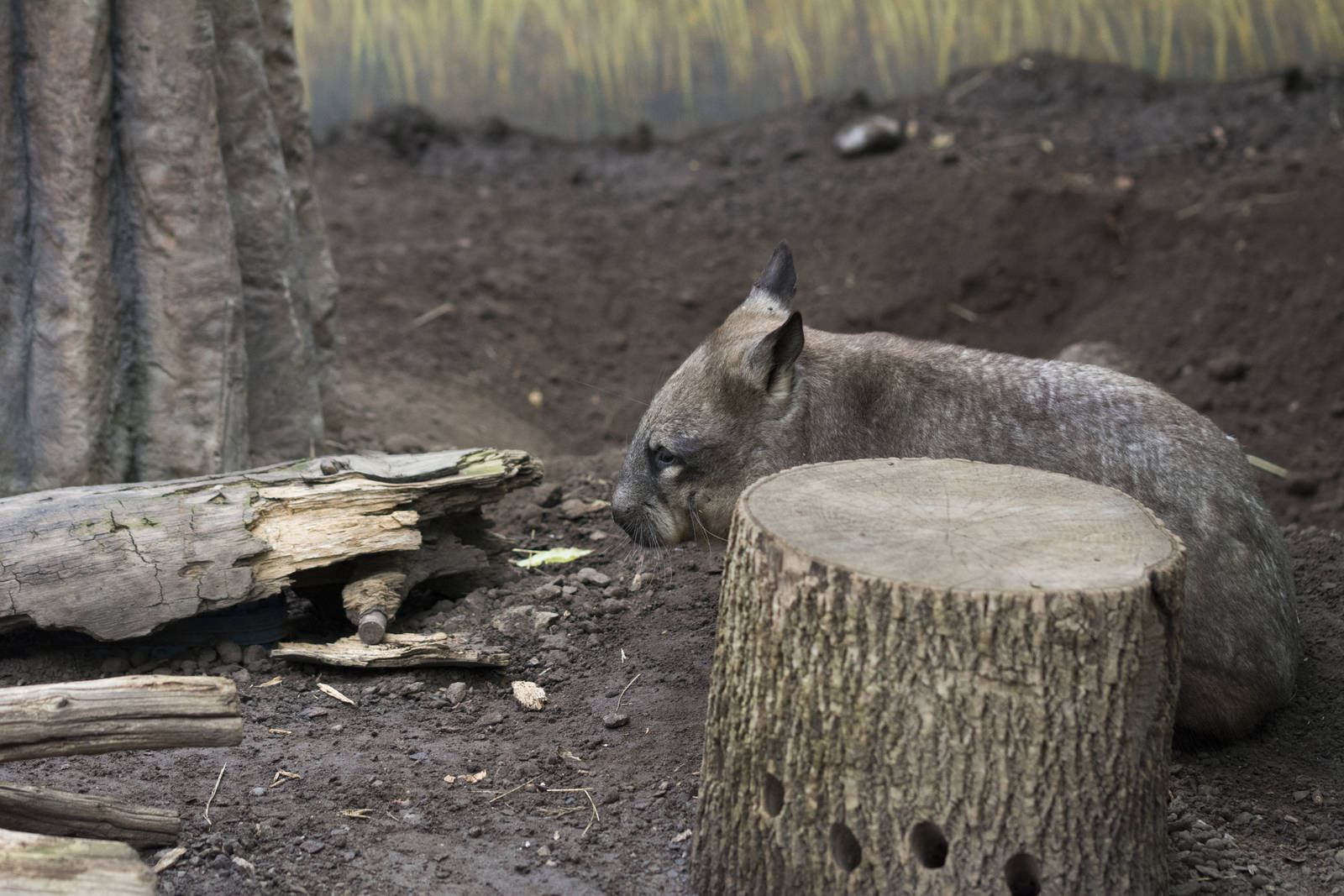
It would be fantastic if Australia would share their treasures more often. I mean other nations share their animals with Australia quiet freely otherwise their zoos would be barren. They should be just as willing to swap. They give us some devils we give them some moose. Koalas for beavers. Ect.
No.... neither can be culled, the wombat is endangered and the echidna is... well, it's an echidna. There's no reason to cull it. And you'd have a bugger of a time trying to cull them.
No.... neither can be culled, the wombat is endangered and the echidna is... well, it's an echidna. There's no reason to cull it. And you'd have a bugger of a time trying to cull them.
Are all species of wombat endangered? I know the northern hairy nosed wombat is, but not the other species. If the other two are endangered, I'm surprised that Australia would be willing to send them to other countries.
The common wombat is not threatened - except by farmers. They are still quite common.
The Southern Hairynose is certainly nowhere near common and has been either endangered or vulnerable for as long as I can remember. If that status has changed I'd be very interested to discover why.
I checked the three species of wombat and its the northern hairy nosed wombat thats critically endangered. The southern and common are both least concerns. I say send North American zoos the other two and free space up in Australian zoos and rescue centers for the endangered northerns.
I also checked all the echidnas and the short beaked is a least concern while the Western long beaked, Sir David's long beaked and Eastern Long beaked are all critically endangered.
I suppose that answers the question. Yes some wombats and echidnas are endangered but not the ones we have here in Toronto. Thats probably why we were allowed to have them. But Australia would be wise to open up its export policies. Look at the devils facial tumors which is crippling the population. Yes they have a healthy population in capitvity right now but what if some other disease comes along. It could wipe out the that safety net. By having healthy, genetically viable breeding populations in Europe, North America and Japan (I think they are known for good zoos), there would be at least 3 back up populations growing healthy and strong in isolation. Should something catastrophic happen to one group there is still hope for the others. With such a fragile and utterly unique ecosystem in Australia they would be wise to work with other countries to help perserve their wildlife.
Plus as I mentioned before what would zoos be populated with if all nations thought there way. No one could see a giraffe unless they went to africa? No red pandas unless you went to China? No polar bears unless you went to north america, northern Europe or Russia? It would make zoos rather boring. A wide variety of animals is what makes zoos so educational and great.