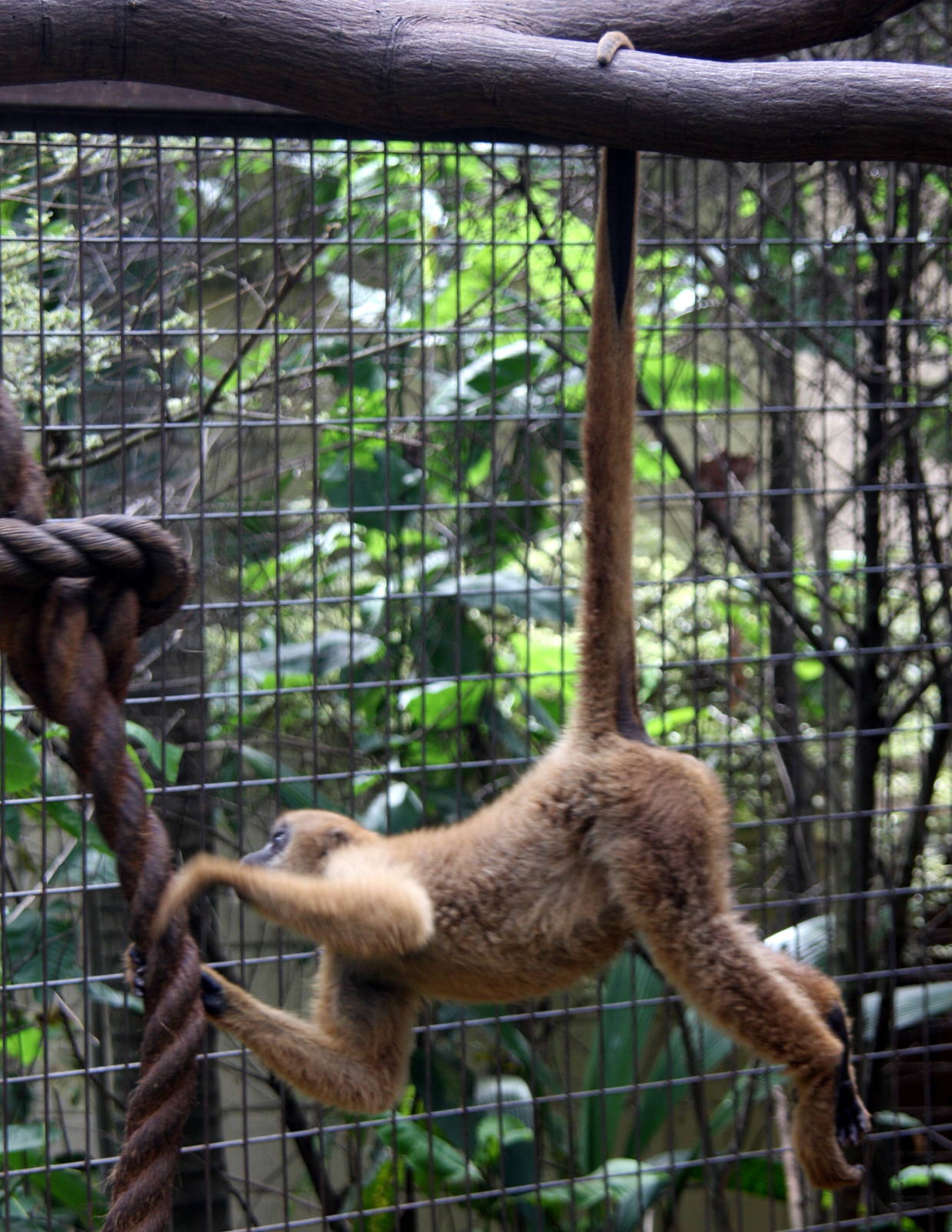
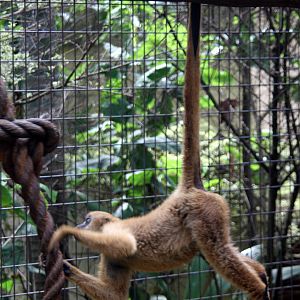
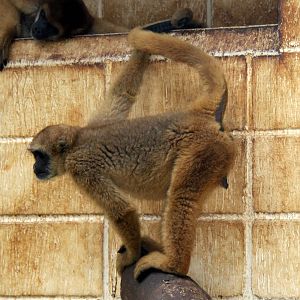
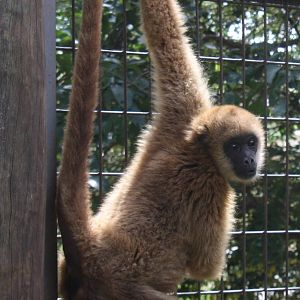
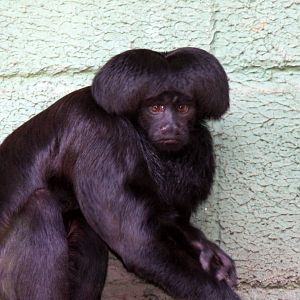
The map is great. According to the zoo website (in portuguese, of course ) the three muriquis, Preto, Daime and Robinho, are all confiscated primates.
On another note, should one really compare zoos in South america to the U.S. zoos with much larger budgets or to zoos in Eastern Europe or even Asia with similar limitations.
In the latter perspective many of the S.A. zoos are better.
O Mono-carvoeiro ou Muriqui mede 1,30m da cabeça a ponta da cauda. O macho pode pesar 15kg. Quando ameaçados, se abraçam e gritam muito para afugentar o adversário. Os monos do nosso Zôo são o Preto, o Daime e o Robinho. Todos eIes vieram da natureza, encontrados abandonados, provalmente porque as mães foram caçadas.
The primates are mentioned as eles not elas, so yes it seems all are male.
I assumed that Daime could be a girl's name, can't it? Also, if there are males in a given group then the plural form would be 'eles' even if there are females present.
Yes, devilfish is right, daime could be a girl´s name, and eles would be used as a plural form even it includes a females. The same in spanish as ellos would be used a plural even if it included one woman with males. So it could be 2 males and 1 female.
Very paternalistic , mediocre and erroneous view you have there which for your sake I'll restrain myself from giving my honest opinion on.
Sorocaba zoo is owned by the municipality and lacks funding as it's funds are consistently cut by the federal government under Temer and now Bolsonaro. This is no fault of the institution but indicative instead of the wider problems in Brazil with cuts to every kind of public spending, but it does a damn good job with what funds it has at its disposal (I would wager far better than any zoo in the US or Canada for that matter). The staff are absolutely dedicated to the care and wellbeing of the animals and the education department are similarly dedicated to environmental education of visitors.
They are actually predominately adult females and there is now only a single adult male in the group, the other males consisting of his infant male sons. The birth of the first male apart from being totally unexpected was a significant development for the zoo and Brazil because he marked the first breeding of the species in captivity in the world when he was born back in 2012. The most recent offspring was a little female who was born last year. She is called Açucena (After the plant).
There were indeed three males kept at the zoo for a number of years but they were all transferred to Sao Paulo zoo in the capital in 2013 as part of a breeding programe that sought to establish another ex situ breeding colony in the capital.
The founder of the Sorocaba zoo population was Mona (Mother of all offspring in the group so far), she was rescued in the early 2000's after having being found apparently abandoned by her mother in the wild in Carlos Boetelho National Park. In terms of her temperament Mona is quite a character , she shows a very strong preference for her human male keepers over female ones who she isn't keen on and really makes it known.