Z

Sumatran Rhion Begum

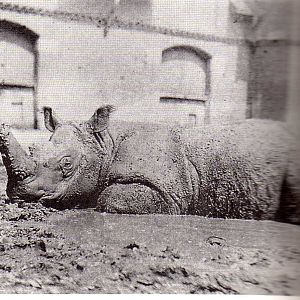
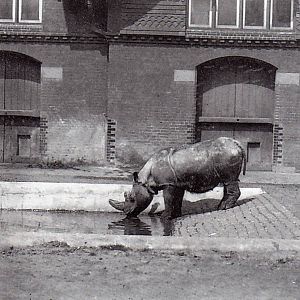
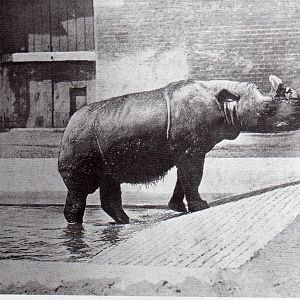
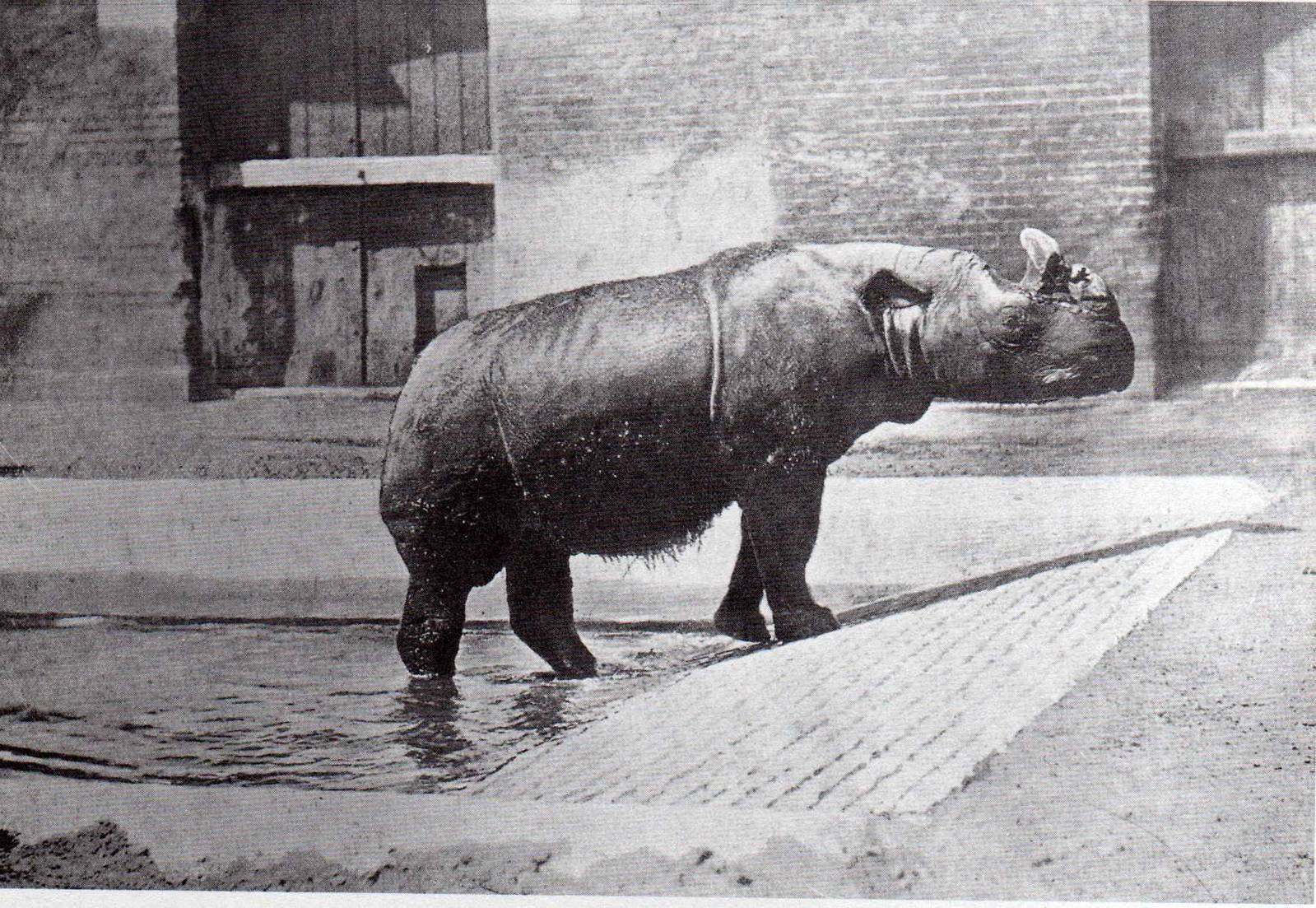
The London Zoo has imported 8 sumatran rhinos between 1872 and 1886. This is the female Begum,she arrived in 1872 aged five and died in 1900. She was until now the oldest sumatran rhino in captivity and she holds the longvitity record for the species.
But there is a Damian Aspinall :p
I'd love to see these some time, probably will never happen though.
 
Did Aspinall's animals have this particular eye problem? What were the main problems discovered during their stay in Kent?

The two females at Port Lympne did not live there very long. I don't know if the male Torgamba developed eye problems during his much longer residence there, but I believe it is related to bright/intense sunlight which the Uk doesn't get a lot of.

The only problem the Port Lympne animals seemingly had was that both females were apparently elderly when they arrived, and probably past their breeding span.

But I don't think PL will ever keep this species again,(even if they became available) having failed to breed them.
 
The London Zoo has imported 8 sumatran rhinos between 1872 and 1886. This is the female Begum,she arrived in 1872 aged five and died in 1900. She was until now the oldest sumatran rhino in captivity and she holds the longvitity record for the species.

London Zoo's long-lived Sumatran rhinoceros, “Begum”, was the type specimen of the sub-species Dicerorhinus sumatrensis lasiotis
 
Port Lympne had a really good outdoor paddock for the sumatran rhinos, with natural ground, water, mud, trees, grass, everything they need, but nevertheless, they had bad luck. The first female died soon after the arrival, and the second,"Meranti" was sterile, she was unable to breed.
 
Port Lympne had a really good outdoor paddock for the sumatran rhinos, with natural ground, water, mud, trees, grass, everything they need, but nevertheless, they had bad luck. The first female died soon after the arrival, and the second,"Meranti" was sterile, she was unable to breed.

The first female to arrive at port Lympne had an old leg injury from a poachers snare and not a young animal :(
 
The PL animals were unlikely to have eye problems if this is connected to UV light as the paddocks were in a wood (although the lower one had a more open grassed area towards the lower end. As pertinax says, a good barometer might be the incidences of cataracts in malayan tapirs in europe, which I believe are very low. I know the original female at London (in recent decades) had cataracts, but at the time of her arrival I don't think there were many at all in the UK and she may well have been imported.
 

Media information

Category
ZSL London Zoo
Added by
Zebraduiker
Date added
View count
5,171
Comment count
16
Rating
0.00 star(s) 0 ratings

Share this media

Back
Top