Many kept in substandard conditions in ones and twos. I'd like to see a bit more diversity - and rarity - in the current collection but let's not look back through rose-tinted spectacles.
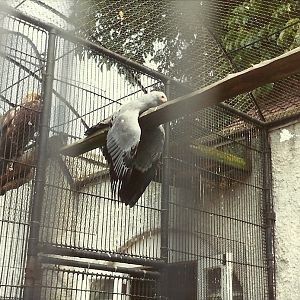
Of course I do live in the past! When I visited the Jungle Zoo last year I was delighted to find a number of single specimens (mostly parrots, presumably ex-pets, which increased my delight). I should emphasise they were kept in excellent conditions though. I think single specimens have more character especially when their names are public knowledge as was the case with many Regent's Park animals in years gone by. I accept I am in a minority here, but I think a single specimen that has a close relationship with its keepers should not suffer in any way.
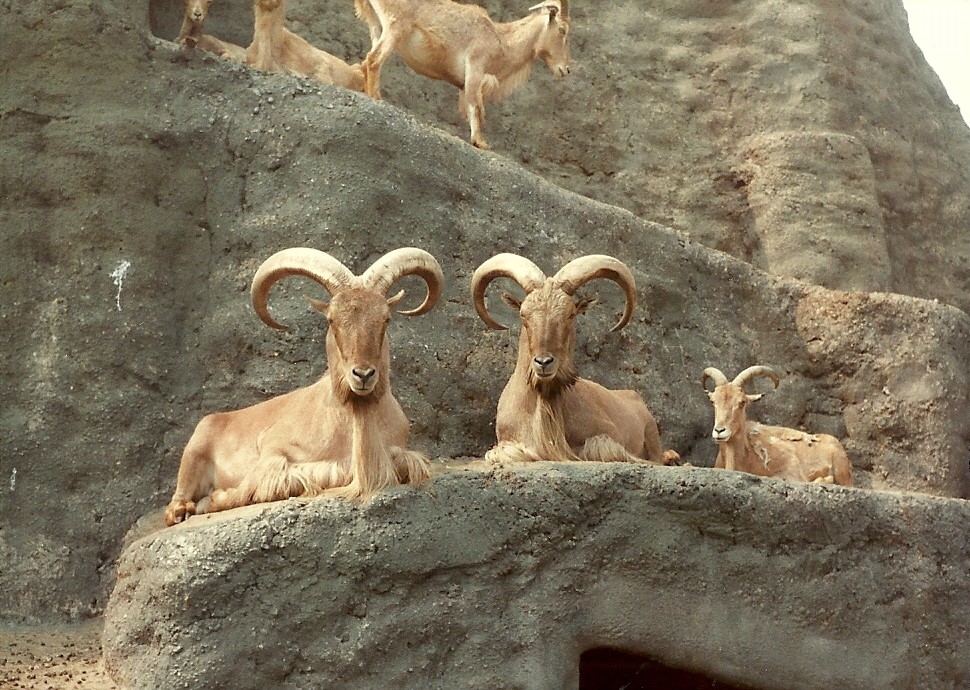
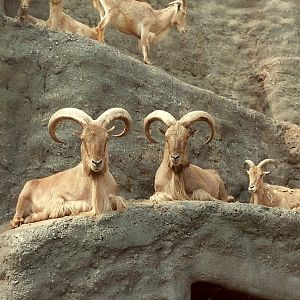
A bit more detail from research I did a few years ago.... the herd of Barbary Sheep on the Mapppins produced nearly 200 successful off-spring in their time there, during the 60s and 70s the herd numbered between 40 and 50 animals, the herd was in-bred, with only a single pair of unrelated animals being added during the whole time they lived on the Mappins, however despite being fairly in-bred and despite many descendants being moved to other UK zoos over the years, which also bred of course, the animals showed very little evidence of being in-bred apart from some poor horn formation, hoof minor problems and a few white patches which began to appear above the hind hooves on some animals. As far as I know, all the remaining Barbary Sheep left in the UK are descendants from UK stock, ie; no new stock has been imported since.
Current UK holders - West Mids, Paignton, Dudley and Africa Alive!
It sounds a very similar situation to the London Blackbuck.
Btw-and at risk of a slight deviation- does anyone know for sure where Marwell's Blackbuck went to? Was it Cotswold? And if so, where they went from Cotswold? The original Marwell pair were a handraised pair from Colchester (ex London stock) but their main breeding group came from Europe (I think it was Copenhagen). So they represented animals unrelated to the ZSL stock.
Actually, I agree inbreeding may not have been the principal cause of those deaths, but I don't remember bad weather or anything like that being responsible.. These lambs just kept dying. Although this flock obviously had a lot of livebirths over the years too, the mortality rates aren't available/recorded. If they were unusually high overall, as opposed to that single incident, then I suggest inbreeding may have played a part, by producing less robust lambs with a lower than normal survival rate.